Water boils at a lower temperature at altitude because the surrounding air pressure drops as elevation increases, allowing liquid water to turn into vapor with less heat energy. That simple fact shapes cooking, health, engineering, agriculture, and daily life in mountain regions. In science, boiling is not “water getting extremely hot” in a general sense; it is the moment when a liquid’s vapor pressure matches the external pressure pressing on its surface. At sea level, that match occurs at 100 degrees Celsius, or 212 degrees Fahrenheit, under standard atmospheric pressure. Higher up, where the atmosphere is thinner, the match happens sooner, so boiling begins at a lower temperature. I have explained this to cooks, students, and trekkers many times because it answers a practical question with consequences people feel immediately: why rice stays firm longer, tea tastes different, and pressure cookers matter so much above roughly 1,500 meters.
This topic sits at the intersection of science and culture because altitude changes the physical rules people live with, then communities adapt. Households in the Andes, Himalayas, Ethiopian Highlands, and Rocky Mountains do not just “cook differently” by preference. Their techniques evolved in response to lower air pressure, colder nights, limited fuel, and the need to prepare safe food efficiently. Understanding why water boils at a lower temperature at altitude clarifies broader ideas in thermodynamics, weather, physiology, and material design. It also connects directly to high-altitude communities, where boiling points influence kitchen architecture, crop choices, hospitality customs, and local technologies. As a hub topic, this article explains the core science, then shows how that science extends into everyday practice and regional culture, giving readers a framework for exploring related articles on mountain life, altitude adaptation, and environmental knowledge.
The physics of boiling: pressure, vapor, and temperature
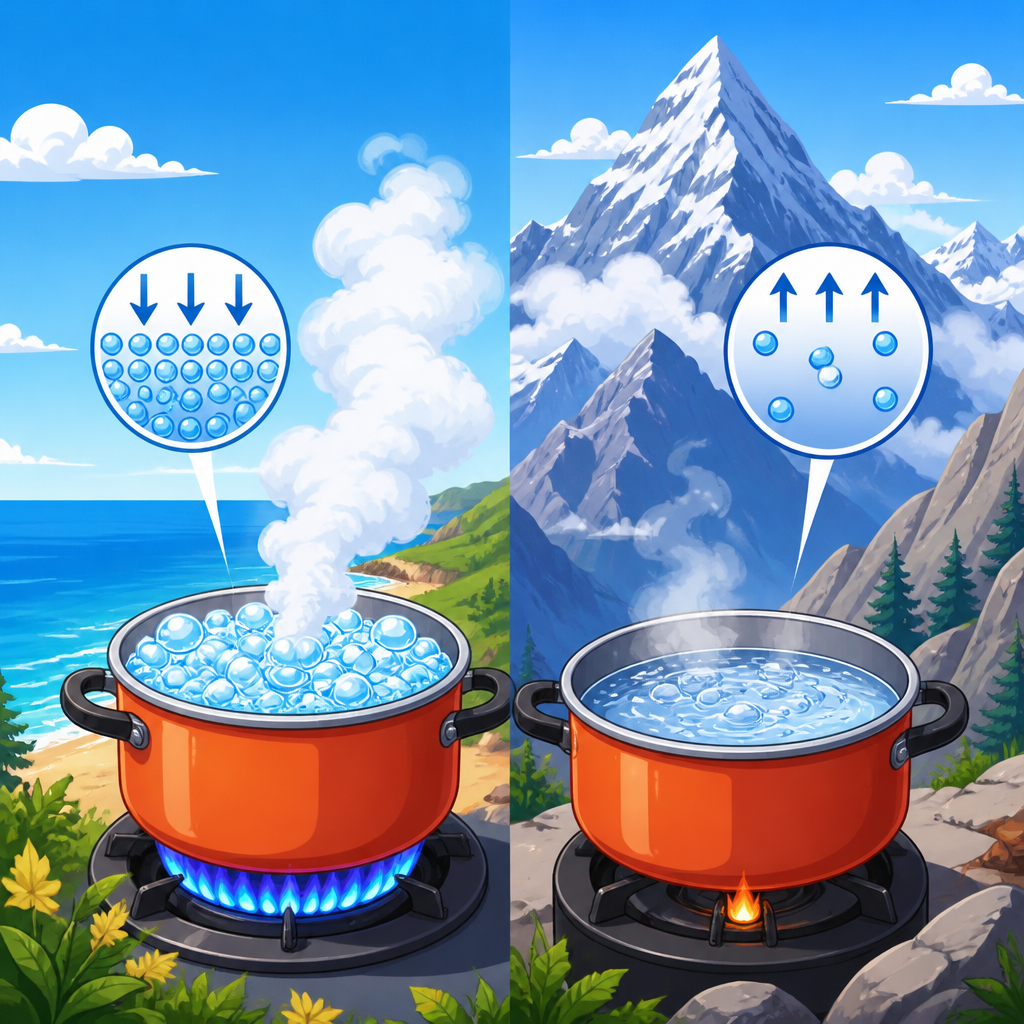
Boiling happens when bubbles of water vapor can form throughout the liquid and survive instead of collapsing. For that to occur, the pressure inside those bubbles must equal or exceed the pressure of the surrounding air. This is the key scientific principle: boiling point depends on external pressure. At lower pressure, molecules need less kinetic energy to escape the liquid phase, so the boiling temperature falls. That is why water on a high plateau can boil vigorously even though it is cooler than water in a pot at sea level.
The mechanism is grounded in vapor pressure, a measurable property of liquids. As water warms, more molecules at the surface gain enough energy to enter the gas phase, increasing vapor pressure. At 100 degrees Celsius and one atmosphere of pressure, pure water’s vapor pressure reaches 101.3 kilopascals. At an elevation where atmospheric pressure is lower, that threshold is reached earlier. For example, at about 2,000 meters above sea level, air pressure is often near 80 kilopascals, and water typically boils around 93 degrees Celsius. Near 3,000 meters, boiling is often close to 90 degrees Celsius. On very high settlements above 4,000 meters, it can drop to the mid-80s Celsius, enough to alter cooking times dramatically.
This is also why boiling and evaporation are related but not identical. Evaporation happens at all temperatures from the liquid surface. Boiling is a bulk process throughout the liquid, marked by bubble formation. In classrooms, people often assume bubbles indicate “maximum heat.” In reality, a boiling pot at altitude may contain water too cool to cook some foods efficiently. Once water reaches its local boiling point, additional heat mostly drives phase change from liquid to vapor rather than raising the liquid temperature much further, unless pressure changes.
How altitude changes the boiling point in real places
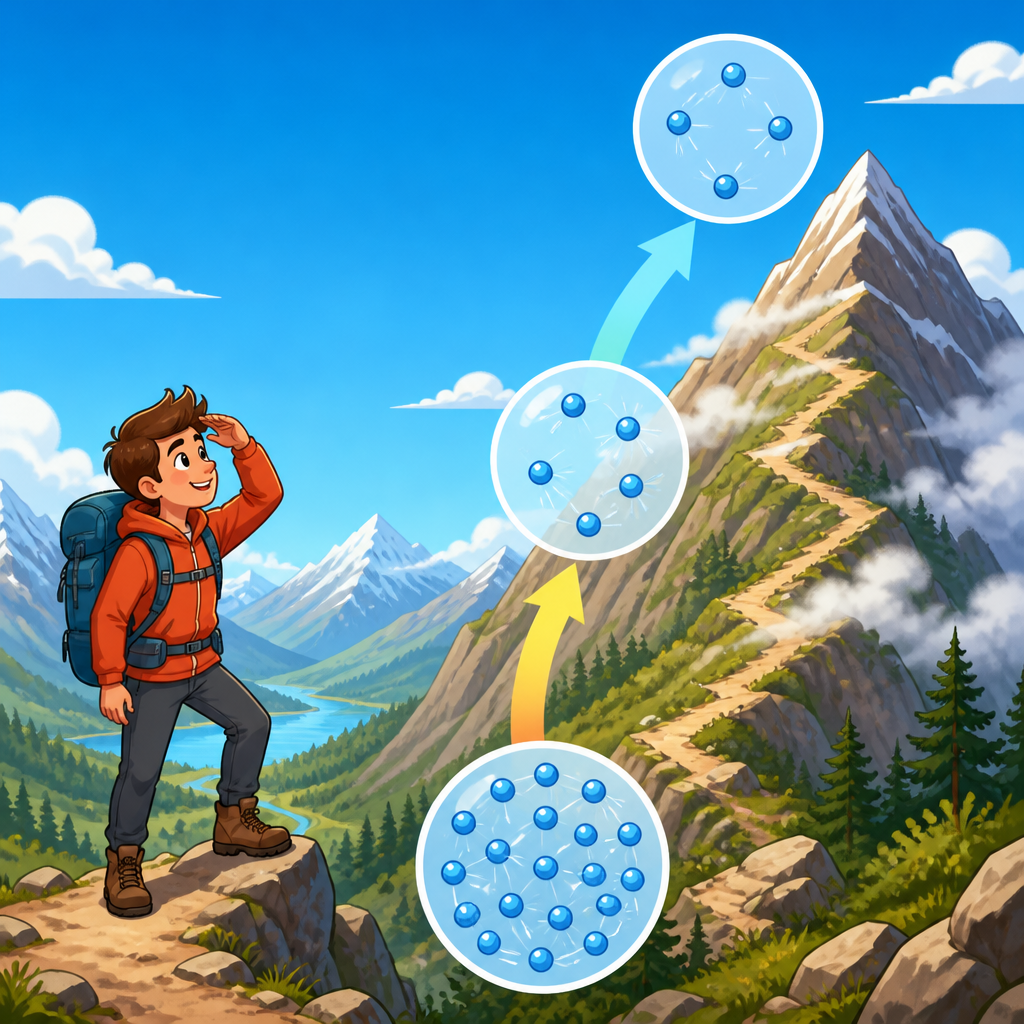
Altitude affects atmospheric pressure because there is less air above you. Gravity compresses the lower atmosphere more strongly than the upper layers, so pressure decreases with elevation in a predictable, though weather-sensitive, pattern. That is why a recipe tested in Boston behaves differently in Denver, La Paz, or Lhasa. Denver, at about 1,609 meters, often sees water boil near 95 degrees Celsius. Mexico City, above 2,200 meters, is lower still. La Paz and El Alto, among the world’s highest major urban areas, sit near 3,600 to 4,000 meters, where boiling temperatures can be low enough to frustrate visitors trying to make beans or pasta the way they do at sea level.
Weather matters too. Air pressure changes day to day, so boiling point is not fixed by elevation alone. A low-pressure weather system can lower the boiling point slightly even at the same altitude, while a high-pressure day raises it somewhat. The effect is usually small for home cooking, but in laboratory work, food manufacturing, and industrial processing, those differences can matter. This is one reason professional kitchens, canneries, and scientific facilities rely on calibrated thermometers and controlled equipment rather than assuming all boiling water is exactly 100 degrees Celsius.
| Location or altitude | Approximate atmospheric pressure | Typical boiling point of water | Practical effect |
|---|---|---|---|
| Sea level | 101.3 kPa | 100°C | Standard recipe times usually work |
| 1,500 m | 84–85 kPa | 95°C | Longer simmering for grains and eggs |
| 2,500 m | 75–76 kPa | 91–92°C | Baking and boiling both need adjustment |
| 3,500 m | 65–66 kPa | 88–89°C | Pressure cookers become highly useful |
| 4,500 m | 57–58 kPa | 84–85°C | Conventional boiling becomes inefficient for many foods |
These values are approximate because humidity, weather, dissolved minerals, and measurement methods introduce variation. Still, the pattern is universal: as pressure drops, boiling point drops. Climbers notice this quickly. A kettle whistles sooner, but the water may not be hot enough for optimal extraction in coffee or for softening legumes on schedule. That gap between visible boiling and effective cooking is one of the most misunderstood aspects of high-altitude life.
Why cooking changes so much in mountain communities
The most immediate consequence of lower boiling temperatures is slower heat transfer into food during boiling or simmering. Potatoes, dried beans, lentils, rice, and tough cuts of meat all rely on sustained internal temperatures to gelatinize starch, soften cellulose, denature proteins, and dissolve connective tissue. If the surrounding water tops out at 90 to 95 degrees Celsius instead of 100 degrees Celsius, those transformations take longer. In my experience, people new to altitude often think their stove is weak, when the real issue is the physics of the pot.
Mountain communities adapted long ago. One common strategy is cooking food for longer periods with tighter lids to conserve heat and water. Another is pre-soaking beans and grains to shorten required simmer time. In regions with fuel scarcity, such as parts of the Himalayas and Andes, efficiency is not only culinary but economic and environmental. Pressure cookers became especially important because they reverse the altitude problem by increasing pressure inside the vessel, raising the boiling point of water above the local ambient limit. At 15 psi above atmospheric pressure, water can reach roughly 121 degrees Celsius, which is why pressure cooking dramatically shortens cooking times and underpins safe pressure canning.
Baking changes too, though for different reasons. Lower air pressure causes gases in doughs and batters to expand more rapidly, which can make cakes rise too fast and collapse. Water also evaporates faster, drying mixtures sooner. High-altitude bakers often reduce leavening, increase liquid, strengthen structure with additional flour or eggs, and adjust oven temperature upward. These are not folk myths; they are practical responses to gas expansion, evaporation rates, and protein-starch setting behavior. Universities such as Colorado State and Utah State have long published tested high-altitude baking guidance for exactly this reason.
Safety, sanitation, and the limits of boiling water at altitude
Lower boiling temperatures also matter for sanitation and public health. Many people learn that boiling water makes it safer to drink, which is true, but altitude changes the timing guidance. The reason boiled water becomes microbiologically safer is not that it reaches 100 degrees Celsius specifically. Most disease-causing organisms are inactivated well below that temperature if exposure time is sufficient. The World Health Organization and public health agencies commonly advise bringing water to a rolling boil, then accounting for local conditions. At higher altitudes, some guidelines recommend longer boiling times because the water is cooler when it boils.
Food safety rules reflect the same logic. Pathogens, spores, and enzymes respond to temperature and time together, not to bubbling alone. This is why low-acid foods cannot be safely canned in a simple boiling-water bath at altitude. Clostridium botulinum spores survive ordinary boiling temperatures, especially when the boiling point itself is reduced by elevation. Pressure canning is required because it raises the internal temperature sufficiently to achieve lethal processing conditions. The United States Department of Agriculture and National Center for Home Food Preservation publish altitude adjustments precisely because incorrect assumptions about boiling point can create serious risk.
Even eggs illustrate the tradeoff. At sea level, a hard-boiled egg may set reliably within a familiar time range. At altitude, the cooler boiling water means the yolk and white set more slowly, while the shell may crack more readily due to handling, dissolved gases, or rapid temperature transitions. Experienced high-altitude cooks compensate by extending time, resting eggs in hot water off heat, or steaming instead of boiling. These are small decisions, but together they show how scientific constraints become everyday skills.
Science in culture: how high-altitude societies built knowledge around boiling
In high-altitude communities, the lower boiling point of water is not an abstract lesson; it is embedded in domestic routines, architecture, and social memory. In Andean homes, soups and stews are central partly because moist-heat cooking suits available ingredients and can be extended gradually over shared hearths. In Tibetan and Nepali contexts, butter tea, noodle soups, and steamed preparations reflect both climate and fuel considerations. Across mountain societies, kitchens often prioritize heat retention with enclosed stoves, insulated vessels, or thick-walled cooking spaces that reduce energy loss in cold air.
Traditional knowledge frequently anticipated the science later formalized in textbooks. Cooks learned that soaking grains mattered, that some legumes were best ground before cooking, and that certain tubers or grains should be dried, fermented, or freeze-processed to improve storage and preparation. The Andes offer a strong example in chuño, freeze-dried potato products developed through environmental knowledge of cold nights and intense daytime sun. While chuño is not a direct response only to boiling point, it belongs to the same adaptive system: mountain people transform food in ways that reduce fuel demand and improve reliability under altitude constraints.
Cultural practices around hospitality also reflect these conditions. Serving hot drinks in mountain regions is not merely about comfort; it is part of managing cold, dryness, and social rhythms shaped by labor at elevation. Yet even tea and coffee preparation changes. Specialty coffee standards often target water temperatures around 92 to 96 degrees Celsius for extraction. At sufficiently high elevations, boiling water may already sit in or below that range, narrowing the margin for technique and making grind size, contact time, and vessel insulation more important. Science and culture meet in the cup.
Broader implications for weather, health, and technology
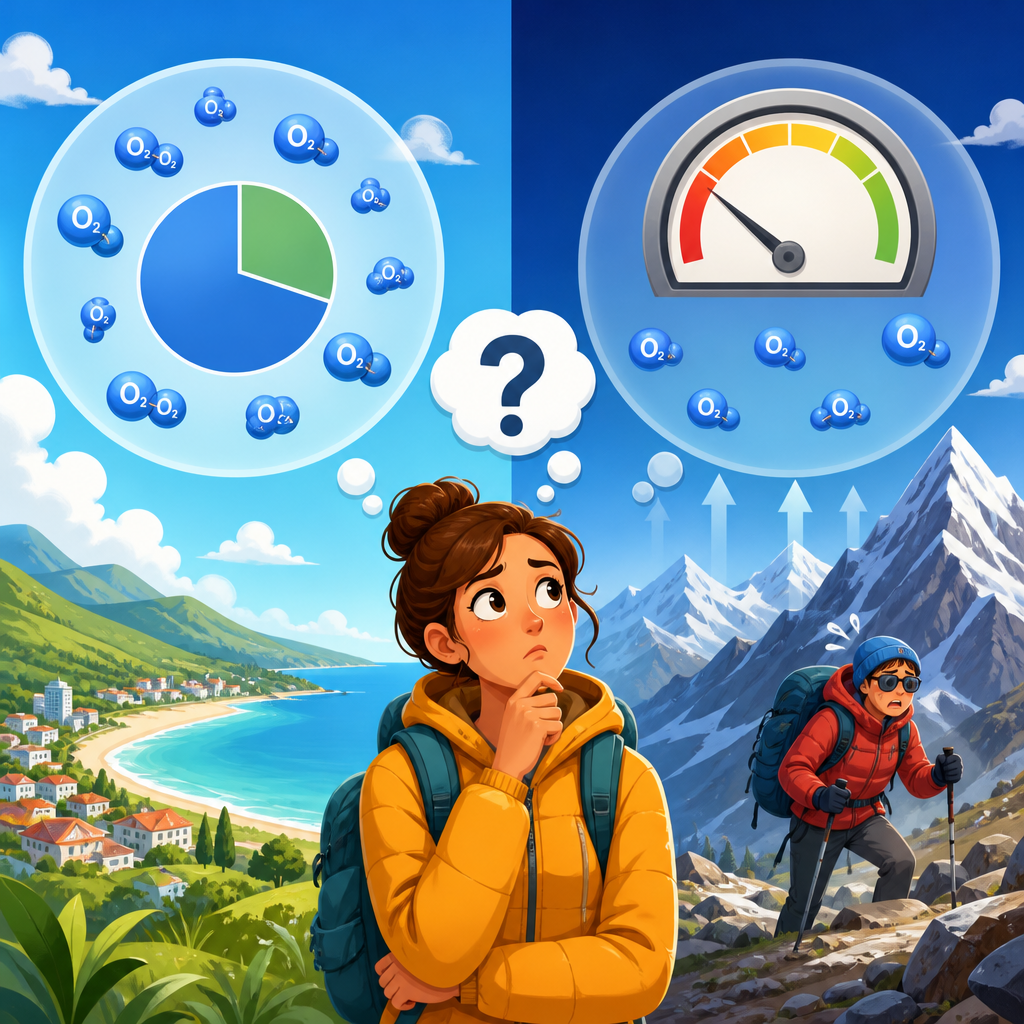
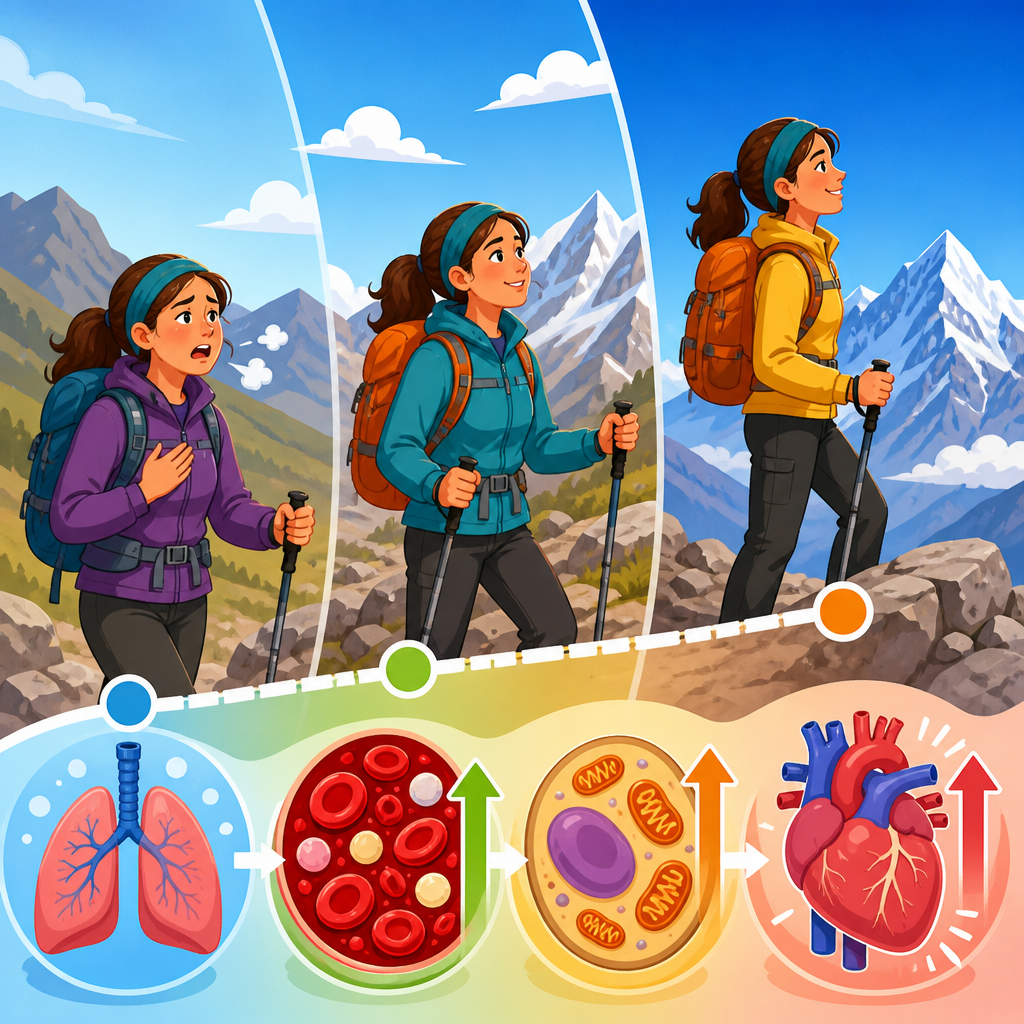
Understanding why water boils at a lower temperature at altitude helps explain several neighboring topics. Weather forecasts use pressure because atmospheric pressure drives many physical processes. Human physiology responds to altitude because lower pressure means lower oxygen partial pressure, even though oxygen remains about 21 percent of dry air. Engineering design changes because radiators, sterilizers, boilers, and chemical processes depend on pressure-temperature relationships. In laboratories, chemists use vacuum distillation on the same principle as high-altitude boiling: lower the pressure, and a liquid boils at a lower temperature, reducing thermal damage to sensitive compounds.
This principle appears in industry and medicine as well. Autoclaves sterilize effectively by using pressurized steam above 100 degrees Celsius. Freeze-drying removes water by combining freezing with low pressure so ice sublimates. Food manufacturers use vacuum evaporators to concentrate juices, milk, or sauces at lower temperatures to preserve flavor and nutrients. Once you understand boiling as a pressure balance rather than a fixed temperature fact, these technologies make immediate sense.
For residents and travelers in mountain regions, the practical lesson is straightforward. Expect water to boil sooner but cook less aggressively. Adjust recipe times, use lids, consider pressure cooking, monitor hydration, and follow altitude-specific food safety guidance. If you are building content around science and high-altitude communities, this topic is foundational because it links household experience with atmospheric physics, historical adaptation, and modern technology. Explore the related subjects of pressure cooking, altitude illness, mountain agriculture, and high-altitude architecture to see how one simple kitchen observation reveals an entire system of life at elevation.
Frequently Asked Questions
Why does water boil at a lower temperature at higher altitude?
Water boils at a lower temperature at higher altitude because air pressure decreases as elevation increases. Boiling happens when the vapor pressure inside the liquid becomes equal to the pressure of the surrounding atmosphere. At sea level, the atmosphere presses down more strongly on the surface of the water, so the water must be heated to 100°C (212°F) before bubbles of water vapor can form throughout the liquid and rise without being crushed. At higher elevations, there is less atmospheric pressure pushing down, so that same balance is reached at a lower temperature. In other words, the water does not need as much heat energy to begin changing from liquid to gas. This is a pressure effect, not a sign that mountain water behaves differently in composition. The chemistry of the water remains the same, but the physical conditions around it change, and that shift alters the boiling point in a predictable way.
Does lower boiling temperature at altitude affect cooking?
Yes, it affects cooking in very practical ways. Because water boils at a lower temperature in mountain regions, foods cooked in boiling water are actually cooking at a lower maximum temperature than they would at sea level. That means pasta, rice, beans, potatoes, soups, and braised foods often take longer to cook. Eggs may need extra time, and recipes that depend on precise heat transfer can behave differently than expected. The effect can be especially noticeable in baking as well. Lower air pressure changes how gases expand in batters and doughs, which can cause cakes to rise too quickly and then collapse, or make baked goods dry out faster. Cooks at altitude often compensate by increasing cooking times, adjusting oven temperatures, modifying liquid amounts, and using pressure cookers. A pressure cooker is especially useful because it raises the pressure around the food, which raises the boiling point of water and allows cooking temperatures to climb back above what open-pot boiling can achieve at altitude.
If water boils sooner at altitude, does that mean it is hotter?
No. This is one of the most common misunderstandings. At altitude, water may begin boiling sooner in the sense that it reaches its boiling point more quickly, but that boiling point is actually lower, not higher. Once the water is boiling in an open container, its temperature remains at its local boiling point unless pressure changes. Additional heat mainly goes into converting liquid water into steam rather than raising the temperature of the liquid much further. So boiling water in a high-altitude location can be visibly vigorous while still being cooler than boiling water at sea level. That is why food can cook more slowly even though the pot looks like it is boiling strongly. The visual action of bubbling is not a reliable indicator of higher temperature; it simply shows that the liquid has reached the point where vapor can form throughout the water under the existing atmospheric pressure.
How does this change in boiling point affect health, science, and daily life in mountain regions?
The lower boiling point of water at altitude influences much more than cooking. In health and sanitation, it matters because boiling is often used to disinfect water and sterilize tools. Since boiling water is cooler at higher elevations, recommendations may call for longer boiling times to ensure sufficient microbial kill, especially in backcountry or emergency situations. In science and engineering, the relationship between pressure and boiling point is fundamental to designing heating systems, industrial processes, lab experiments, and fluid-handling equipment. It also affects agriculture, especially in irrigation, greenhouse management, and food processing in elevated areas. In daily life, people may notice that hot drinks cool differently, recipes require adaptation, and appliances such as kettles, water heaters, and humidifiers may behave a little differently than they do at lower elevations. The principle is simple, but its consequences are broad because phase change temperature influences so many ordinary and technical processes.
Can the boiling point of water be raised again at high altitude?
Yes. The boiling point can be raised by increasing the pressure around the water. That is exactly how a pressure cooker works. Inside the sealed pot, steam builds up and increases internal pressure above the surrounding atmospheric pressure. Because the pressure is higher, water must reach a higher temperature before it boils, which means the cooking liquid and steam can become hotter than they would in an open pot at the same altitude. This speeds up cooking significantly and is one of the most effective tools for preparing beans, stews, grains, and other foods in mountainous areas. The same principle applies in industrial systems, where pressure is carefully controlled to manage boiling, evaporation, and heat transfer. So while altitude lowers the boiling point in open-air conditions, pressure can counteract that effect. This is a powerful example of a basic physical law shaping both everyday kitchen practice and advanced engineering design.