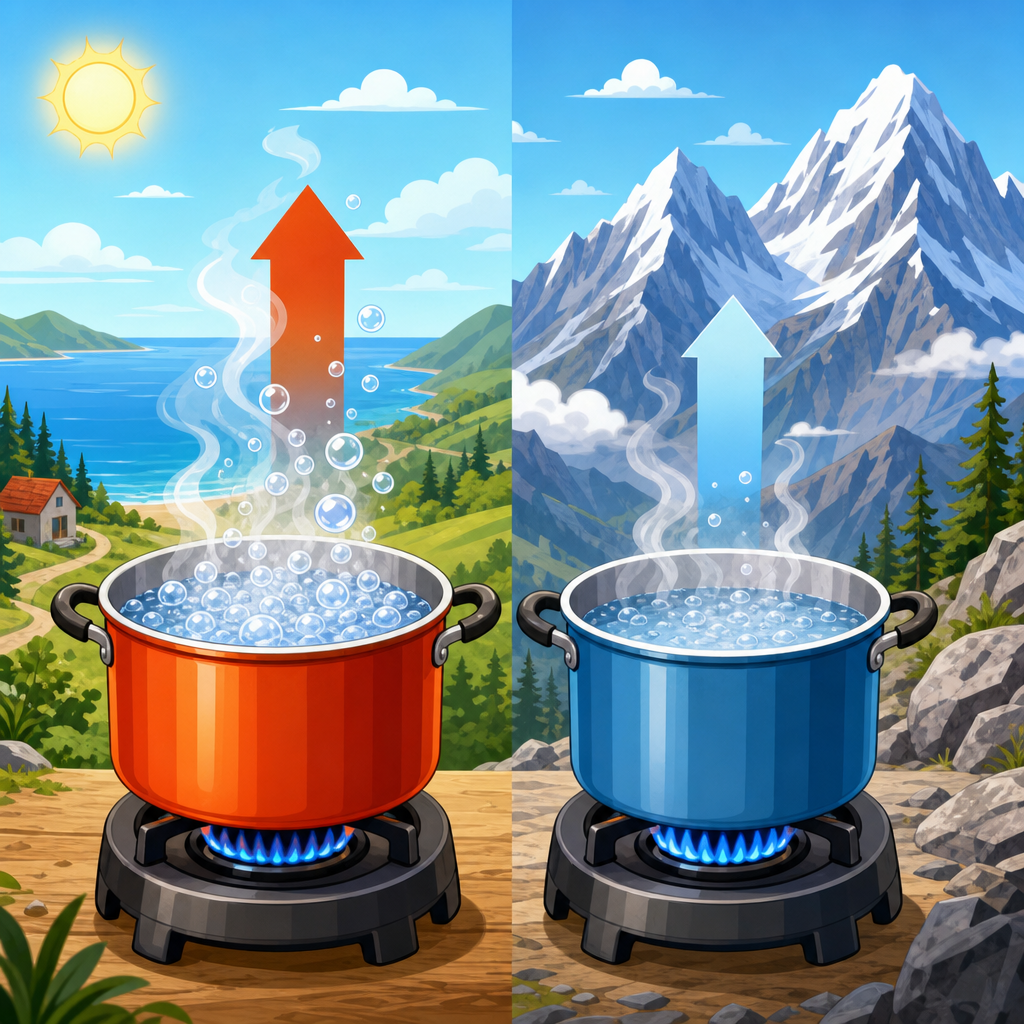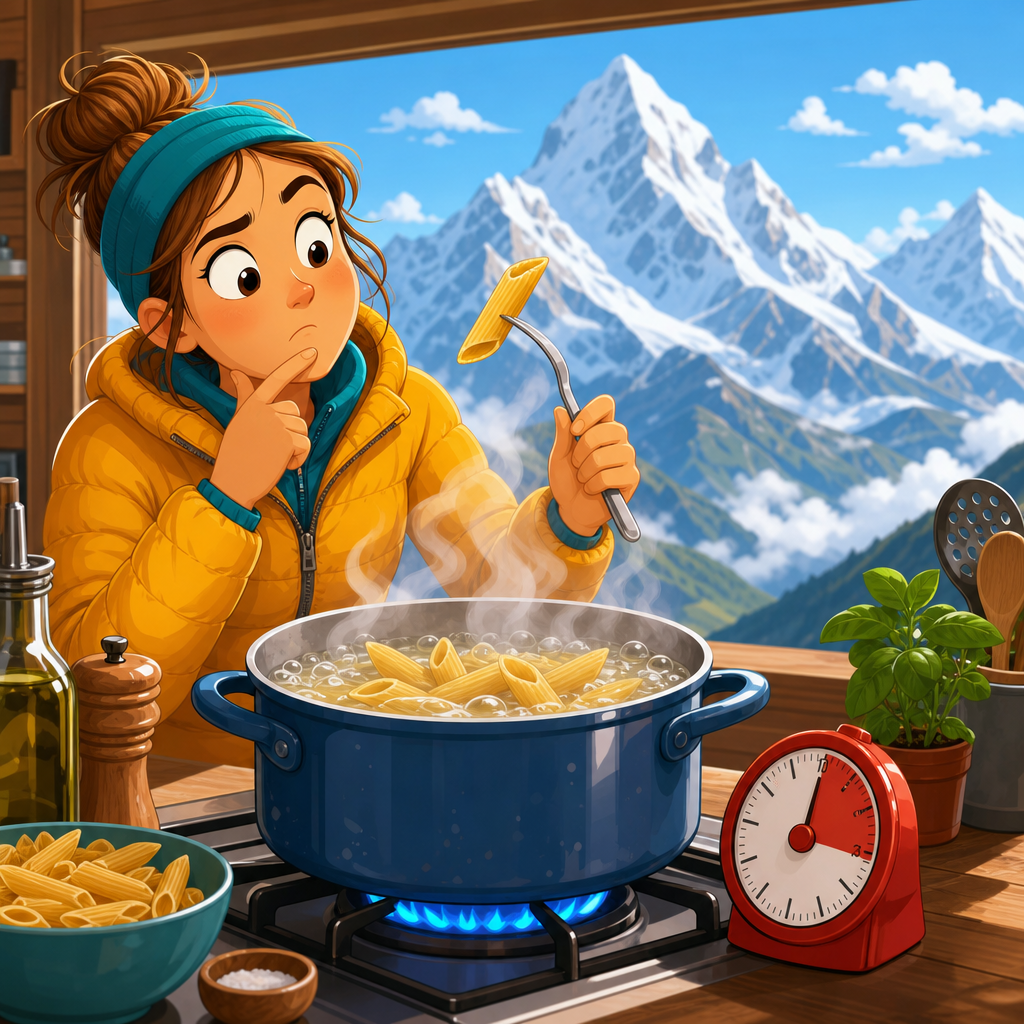
Pasta at altitude takes longer because water boils at a lower temperature as elevation increases, and that single physical change affects hydration, starch gelatinization, protein softening, sauce timing, and every cooking method from boiling to baking. In practical kitchen terms, the same penne that reaches al dente in ten minutes near sea level may need several minutes more in Denver, Santa Fe, or mountain towns well above 7,000 feet. I have tested this repeatedly in high-altitude kitchens, and the pattern is consistent: the box directions stop being reliable once the boiling point drops enough to slow heat transfer into the pasta’s center.
For cooks, “altitude” usually means any elevation high enough to lower boiling temperature enough to change results. Around 3,000 feet, many people start noticing delayed cooking. By 5,000 feet, it becomes a routine adjustment. At 7,500 feet and above, pasta timing, water management, and method selection matter a great deal. “Al dente” still means pasta that is tender but retains a slight bite at the core, yet reaching that texture requires more patience and more deliberate control than many recipes suggest.
This matters because pasta is often treated as foolproof. It is not. Timing errors at altitude can leave noodles chalky in the center, swollen on the outside, or diluted by too much cooking water left in the sauce. The issue becomes more important across the broader subject of cooking methods, because the same altitude physics that affect spaghetti also affect simmering, steaming, pressure cooking, casseroles, and one-pot meals. As a hub for cooking methods within high-altitude cooking and baking, this article explains why pasta behaves differently, how each method changes, and what adjustments consistently produce better texture, flavor, and efficiency.
The science behind longer pasta cooking times
The core reason pasta takes longer at altitude is straightforward: water boils when vapor pressure equals atmospheric pressure, and atmospheric pressure decreases with elevation. At sea level, water boils at 212°F, or 100°C. At 5,000 feet, boiling is roughly 203°F. At 7,500 feet, it is closer to 198°F. Exact numbers vary with weather and local pressure, but the trend never changes. Lower boiling temperature means the hottest water in an open pot is less hot, so pasta cooks more slowly.
That lower temperature changes the mechanics of pasta cooking. Dried pasta must absorb water, swell, and gelatinize starch while its protein matrix softens. Because the water is cooler, hydration moves inward more slowly. The outer layer may soften first while the center remains firm, which is why altitude cooks often see a misleading result: pasta looks done, especially in ridged or tubular shapes, but still has a dense core when bitten. Fresh pasta is less affected because it starts with higher moisture content, yet it still usually needs more time than printed guidance suggests.
Salt, despite common myths, does not meaningfully solve this problem. Salted water seasons pasta and slightly raises boiling point, but not enough to cancel the temperature loss caused by elevation. A heavily salted pot might shift the boiling point by a fraction of a degree in practical cooking. Lid management also matters less once the pasta is in actively boiling water. A lid speeds the return to a boil and saves energy, but the boiling temperature itself in an open pot remains constrained by altitude. If you want substantially higher cooking temperatures, pressure is the method that changes the equation.
How altitude changes boiling, simmering, and pasta method choices
Traditional boiling remains the default pasta method, but at altitude it becomes more variable. A large pot of water helps buffer temperature loss when pasta is added. I generally use at least 4 to 6 quarts for a pound of dried pasta in mountain kitchens, because crowded water loses its boil quickly and can increase surface starchiness. Stirring early is more important at elevation, especially with shapes like fusilli and farfalle, since slower recovery to a full boil gives pasta more opportunity to clump.
Simmered pasta dishes, including soups, ragù-finished pasta, and one-pot meals, become trickier because the liquid is already cooking below sea-level temperatures. In broth-based soups, noodles can absorb stock for a long time and still retain a firm center. That sounds harmless, but overextended simmering can make the soup cloudy, concentrate salt as liquid reduces, and overcook vegetables before the pasta is ready. In one-pot pasta, the risk is worse: by the time the pasta softens fully, the sauce may become too thick, too salty, or too broken from prolonged starch release.
Baked pasta is also affected because many recipes rely on partially boiled pasta before finishing in the oven. If the parboil stage is underdone at altitude, the oven finish may not compensate, especially in dense dishes like lasagna, baked ziti, or macaroni and cheese. The bake can set the cheese and dry the top while the pasta remains underhydrated. That is why altitude cooks often need either a longer covered bake with extra liquid or a more complete stovetop cook before assembly. Cooking method selection matters: open boiling is familiar, simmering requires liquid control, baked dishes need moisture planning, and pressure cooking can sharply reduce uncertainty.
Timing guidelines by pasta type and cooking method
Altitude adjustments are not one-size-fits-all because pasta shape, thickness, ingredients, and cooking method all affect how quickly heat and moisture reach the center. Thin spaghetti, angel hair, and fresh tagliatelle respond faster than rigatoni, paccheri, dried egg noodles, or whole-wheat rotini. Bronze-die extruded pasta often has a rougher surface that sauces cling to well, but internal doneness still depends mostly on thickness and composition. Whole-grain and legume-based pastas can need different handling entirely, since their starch and protein structures do not mimic traditional semolina exactly.
| Pasta or Method | Typical Sea-Level Range | Common High-Altitude Adjustment | Best Practice |
|---|---|---|---|
| Thin dried pasta | 4–8 minutes | Add 1–3 minutes | Start tasting early, every 60 seconds |
| Standard dried pasta | 9–12 minutes | Add 2–5 minutes | Use abundant water and vigorous boil |
| Large tubular shapes | 12–16 minutes | Add 3–6 minutes | Stir well and test the center, not the surface |
| Fresh pasta | 2–5 minutes | Add 30–90 seconds | Cook just to tenderness; it overcooks fast |
| Soup or one-pot pasta | Recipe dependent | Extend gently, add extra liquid | Adjust seasoning after pasta finishes |
| Pressure-cooked pasta | Shortened time | Often near sea-level or faster | Use manufacturer guidance and quick release carefully |
Those ranges reflect what I see most often between roughly 4,000 and 8,000 feet. They are starting points, not guarantees. Brand matters. Barilla, De Cecco, Rustichella d’Abruzzo, Banza, and store brands all behave differently. The only dependable rule is to treat package times as an initial reference and rely on repeated tasting. Bite through the thickest part. If the center is opaque and chalky, it needs more time. If the pasta is uniformly tender but still resilient, it is ready to finish in sauce.
Best cooking methods for pasta at altitude
The best overall method at altitude is still a large pot of rapidly boiling water, followed by finishing the pasta in sauce with reserved pasta water. This method gives the cook maximum control over doneness. The large water volume keeps starch concentration moderate, reducing gumminess, while finishing in sauce lets the pasta absorb flavor during the final minute or two. I reserve more pasta water at altitude than I would near sea level, because sauces often need extra loosening after the longer boil and because evaporation rates in dry mountain climates can be high even indoors.
For soups and one-pot pasta, the best method is staged cooking. Start aromatics and broth as usual, but add pasta later than the recipe suggests, and hold back part of the liquid. This allows you to extend cooking without turning the dish pasty. In chicken noodle soup, for example, I often cook the noodles separately at altitude if the soup will sit before serving. That prevents the noodles from overabsorbing broth and protects texture during reheating. The same principle works for minestrone, pasta e fagioli, and creamy skillet pastas.
Pressure cooking deserves special attention because it is often the most efficient correction for altitude. A pressure cooker raises the boiling point by increasing pressure inside the pot, effectively restoring or exceeding the thermal conditions lost at elevation. In an Instant Pot or stovetop pressure cooker, pasta can cook closer to expected timing, though exact settings vary by shape and recipe. The tradeoff is precision: a one-minute error under pressure can turn acceptable pasta mushy. For busy weeknight cooking, pressure is excellent for baked-style pasta dishes, macaroni and cheese, and saucy short pasta, but less ideal when you want meticulous al dente control for delicate long noodles.
Common mistakes and how to avoid them
The most common mistake is trusting the box time. Manufacturers print ranges based on controlled conditions that assume much lower elevation than many mountain cooks experience. Another frequent error is using too little water. At altitude, the drop in temperature after adding pasta is more damaging, so cramped pots compound slow cooking and sticking. A related mistake is failing to stir in the first two minutes, when released starch can glue strands or shapes together before the boil fully recovers.
Another problem is draining too aggressively without saving enough starchy water. Because pasta cooks longer at altitude, many cooks compensate by extending sauce cooking too, which can make the final dish tight and dry. A cup or more of reserved cooking water gives you flexibility to emulsify olive oil, butter, or cheese into a smoother sauce. This is especially important for cacio e pepe, Alfredo-style sauces, and tomato sauces that need a glossy finish rather than a watery pool or greasy separation.
For baked pasta, the biggest mistake is assuming oven time fixes everything. It does not. If pasta enters the casserole too firm, the dish often needs more liquid, more covered time, or both. Otherwise, exposed edges dry out while the center lags behind. With no-boil lasagna noodles, altitude can magnify inconsistencies because hydration depends entirely on sauce moisture and bake environment. Cover tightly with foil for most of the bake, use ample sauce, and let the dish rest before cutting so moisture redistributes. Resting is not optional at altitude; it often determines whether the center slices cleanly or collapses.
Building a high-altitude pasta workflow that works every time
A reliable high-altitude pasta workflow begins before the water boils. Choose the method based on the final dish, not habit. For plain boiled pasta with a finished sauce, use a wide pot, plenty of water, and a timer that reminds you to taste repeatedly after the earliest plausible doneness point. For soups, decide whether separate pasta cooking will protect texture better. For baked dishes, decide whether the pasta should be nearly done before assembly or whether the recipe includes enough liquid and covered baking time to finish it safely in the oven.
Keep notes. In my own testing, the most useful details are elevation, pasta brand, shape, package range, actual time to al dente, and whether the pasta finished in sauce or not. After only a few meals, patterns emerge. You stop guessing and start cooking from evidence. This is especially helpful if your household rotates between semolina pasta, whole-wheat pasta, gluten-free pasta, and refrigerated fresh pasta, since each responds differently at altitude.
The broader lesson for cooking methods is that altitude rewards process control. Heat, moisture, and timing all shift. Once you understand that boiling water is cooler, pasta stops seeming unpredictable. You can plan for the slower hydration, use the right amount of liquid, choose pressure cooking when speed matters, and adapt baked and one-pot methods without sacrificing texture. If you cook pasta regularly in the mountains, build your own timing references, taste more than you think you need to, and treat method choice as part of the recipe. That single habit will improve every high-altitude pasta dish you make.
Frequently Asked Questions
Why does pasta take longer to cook at high altitude?
Pasta takes longer to cook at high altitude because water boils at a lower temperature as elevation increases. Near sea level, boiling water reaches about 212°F, but in places like Denver, Santa Fe, and higher mountain communities, it boils several degrees lower. That means the pasta is cooking in water that is visibly boiling yet delivering less heat. Since pasta softens through a combination of hydration, starch gelatinization, and gradual protein relaxation, those changes simply happen more slowly when the cooking temperature drops. In real kitchen terms, that translates to longer boil times, a slower path to al dente, and a greater need to rely on tasting rather than the package directions. The rolling boil may look familiar, but the cooking power is not the same, which is why pasta that finishes in ten minutes at sea level may need two, three, or even more extra minutes at altitude.
How much longer should I expect pasta to cook in mountain towns or cities like Denver?
There is no single universal adjustment, but a practical expectation is that pasta often needs a few extra minutes beyond the package time once you are cooking well above sea level. In moderate high-altitude cities such as Denver, the difference may be noticeable but manageable, while at elevations above 7,000 feet the delay can become more pronounced. Shape and thickness matter too. Thin spaghetti may only need a modest extension, while ridged penne, rigatoni, dried shells, or thicker artisanal cuts can require significantly more time before the center loses its chalky bite. Fresh pasta behaves differently from dried pasta as well, but even fresh dough may not cook quite as quickly as expected. The most reliable method is to start checking at the low end of the recommended time, then continue tasting every minute or so until the texture is right. At altitude, package instructions are best treated as a starting point rather than a promise.
Does high altitude change more than just the boiling time for pasta?
Yes, and that is where many cooks get tripped up. The lower boiling temperature does not just stretch the clock; it changes how the entire dish comes together. Pasta hydrates more slowly, starches take longer to gelatinize, and the proteins in the dough soften more gradually. That affects texture in a very specific way: the outside can seem close to done while the center still feels firmer than expected. It also affects sauce timing. If you start your sauce based on sea-level cooking habits, it may be ready too early and sit too long while the pasta catches up. Baked pasta dishes are influenced as well, because the pasta may enter the oven slightly undercooked if it was boiled using standard times, and moisture can evaporate more quickly in the oven at altitude. Even one-pan pasta methods and pasta finished directly in sauce can behave differently, since the liquid is still cooking at a lower temperature. In other words, altitude changes the pace and texture of the whole process, not just the number on the timer.
What is the best way to cook pasta properly at high altitude without ending up with mushy or uneven results?
The best approach is to cook more attentively and make a few simple adjustments rather than trying to force the process. Use a generous amount of water so the pasta has room to move and the temperature recovers quickly after you add it. Salt the water as usual, bring it to a strong boil, and stir well at the beginning to prevent sticking. Then expect a longer cook and start tasting early, continuing at short intervals until the pasta reaches the texture you want. Tasting matters far more than strict timing at altitude. If you are finishing the pasta in sauce, pull it when it is just shy of perfect, since it will continue to soften as it simmers with the sauce. For baked dishes, consider boiling a little longer than you normally would before assembling the casserole, because the pasta may not catch up as easily in the oven as you expect. The key is not to overcorrect by cooking on autopilot for many extra minutes. Altitude cooking rewards observation: look at the pasta, feel the texture, and taste repeatedly instead of assuming the usual rules still apply.
Can I do anything to speed up pasta cooking at high altitude, or do I just have to wait longer?
In most cases, you do have to allow more time, but there are a few practical ways to make the process more efficient. Keeping a lid on the pot while you are bringing the water up to a boil helps shorten the preheat time, although you should watch carefully once it is boiling. Choosing smaller or thinner pasta shapes can also reduce the total cooking time compared with thick tubes or dense specialty cuts. Some cooks use slightly more heat to maintain an active boil, but that does not raise the boiling temperature itself; it mainly helps the pot recover quickly and stay vigorous. If speed matters for a baked pasta or a weeknight dinner, you can also plan around the physics by par-cooking earlier, using fresh pasta, or coordinating the sauce so everything is ready when the pasta finally reaches al dente. What usually does not work is assuming that a more aggressive flame will make the water hotter than its altitude-limited boiling point. At high altitude, patience is part of the technique. The best results come from understanding that the water is boiling, but it is not as hot as it would be closer to sea level.