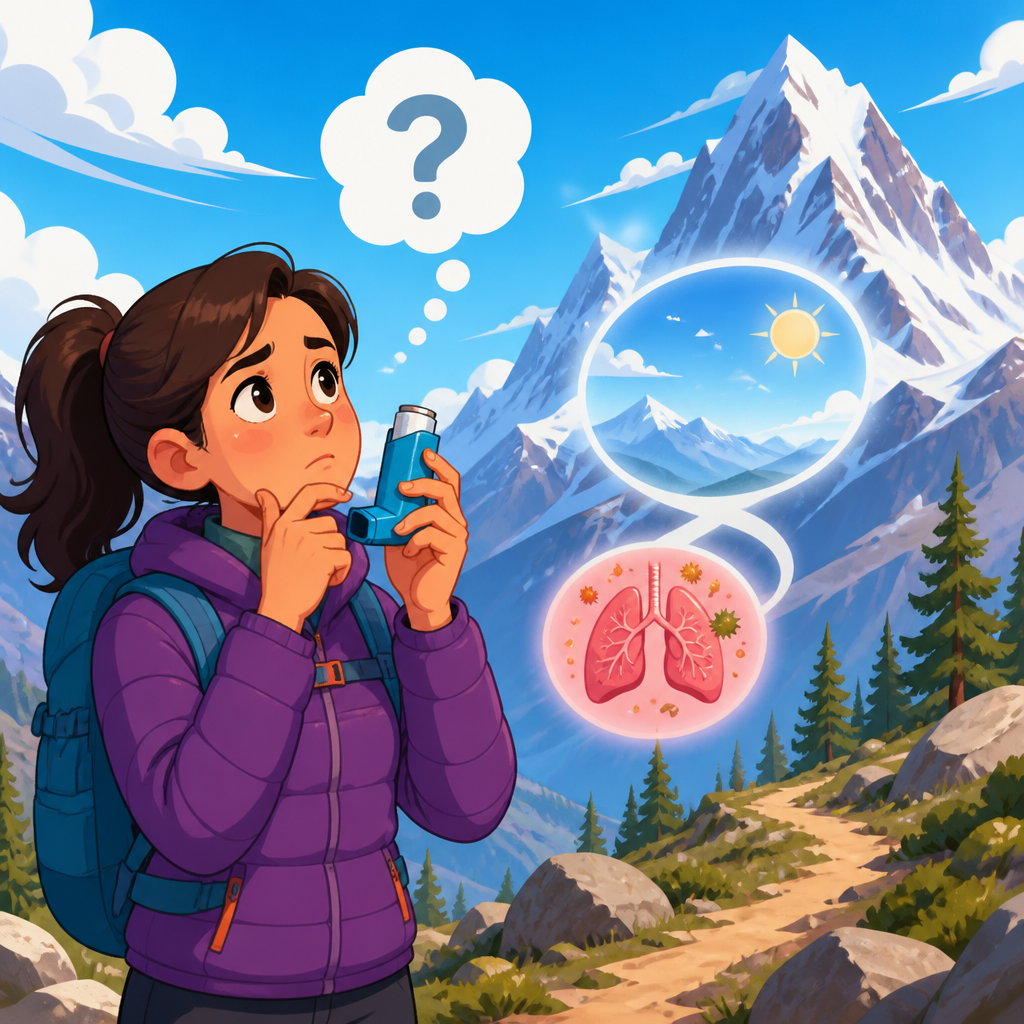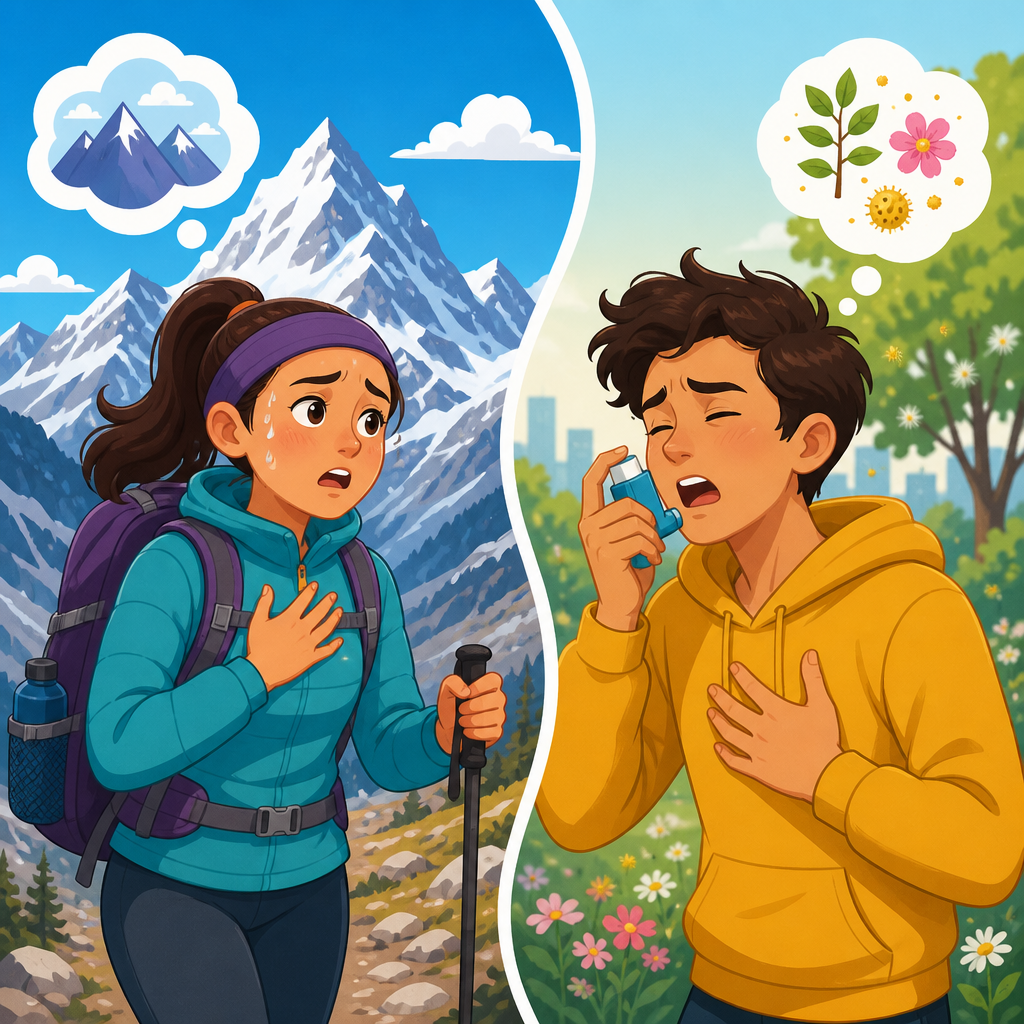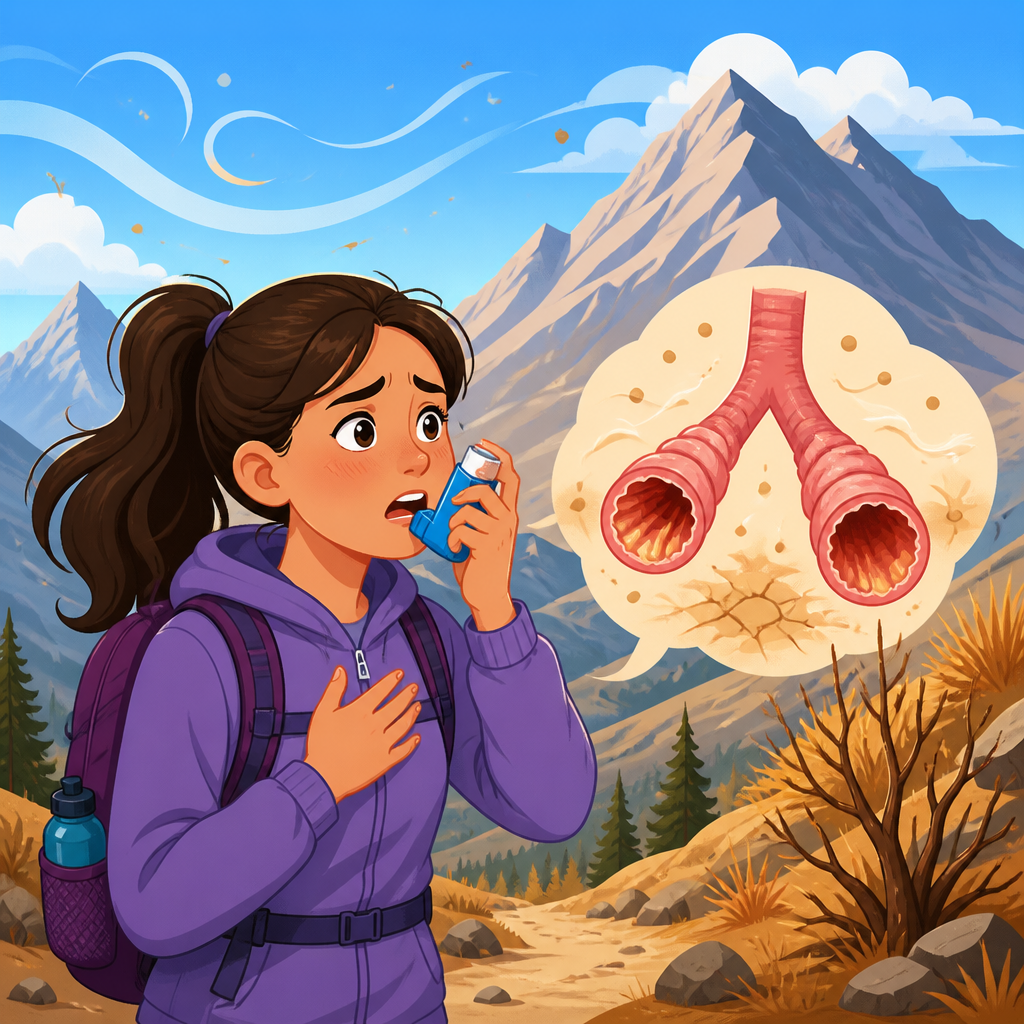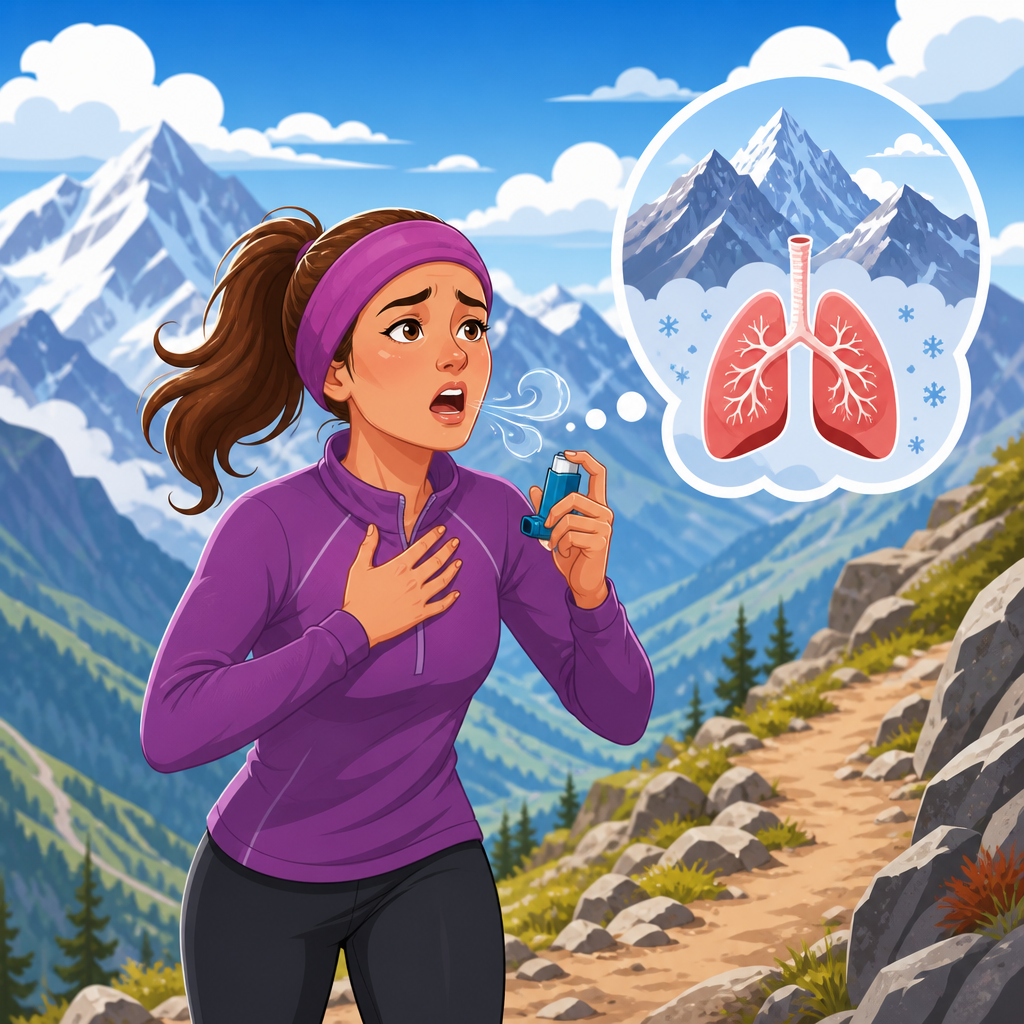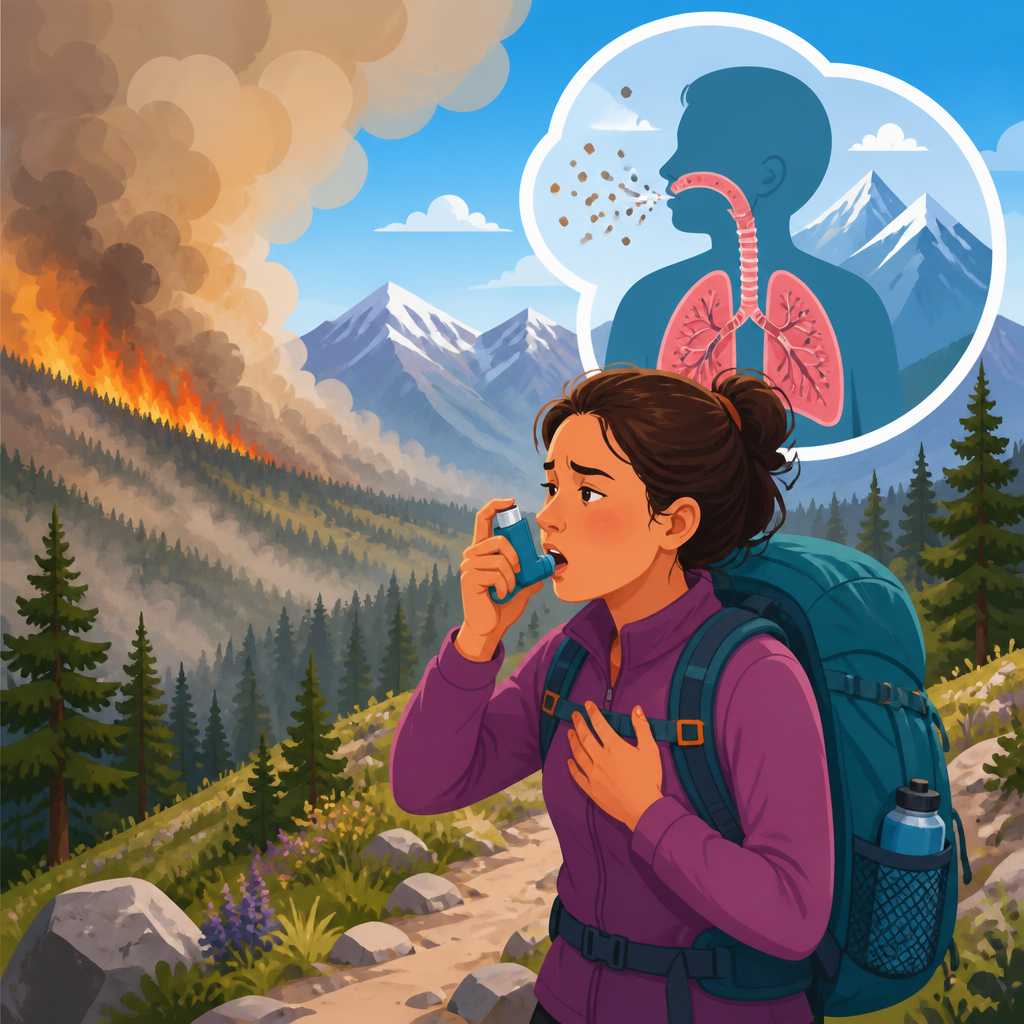
Wildfire smoke and altitude can each make asthma harder to control, but together they create a more demanding environment for the lungs, airways, heart, and daily routines of people who already live with airway inflammation. Asthma is a chronic respiratory condition marked by inflamed, hyperresponsive bronchial tubes that narrow in response to triggers such as allergens, infections, exercise, cold air, ozone, and particulate pollution. Wildfire smoke is a complex mixture of fine particulate matter, carbon monoxide, nitrogen oxides, volatile organic compounds, and irritant gases produced when vegetation, buildings, and other materials burn. Altitude refers to elevation above sea level; as altitude increases, barometric pressure falls, reducing the amount of oxygen available with each breath even though the percentage of oxygen in air stays the same.
This topic matters because the overlap is no longer rare. Longer fire seasons, larger burn areas, and more people living in mountain regions mean many patients now face smoke exposure while also traveling, hiking, working, or residing at higher elevations. In clinic and field settings, I have seen patients who normally manage asthma well at sea level develop chest tightness, cough, wheeze, poor sleep, and unusually fast fatigue after only modest smoke exposure at altitude. The combination changes symptoms, medication needs, and risk thresholds. What feels like a minor flare in one environment can become a more significant event in another, especially for children, older adults, pregnant people, athletes, and anyone with severe, eosinophilic, or poorly controlled asthma.
Understanding the interaction helps people prepare rather than react. The central issue is simple: wildfire smoke increases airway irritation and inflammation, while altitude raises ventilatory demand and lowers oxygen reserve. Together they can intensify shortness of breath, reduce exercise capacity, prolong recovery, and make it harder to tell whether symptoms are from asthma, smoke irritation, deconditioning, anxiety, or altitude illness. A useful asthma hub page should answer those practical questions directly, explain what changes biologically, and show how to reduce exposure, monitor symptoms, and know when to seek urgent care. That is the goal here.
What wildfire smoke does to asthmatic airways
Wildfire smoke aggravates asthma primarily through fine particulate matter known as PM2.5, particles small enough to travel deep into the bronchioles and alveoli. These particles carry oxidants and organic chemicals that injure airway lining cells, increase mucus production, and activate inflammatory pathways involving cytokines, eosinophils, neutrophils, and oxidative stress. For people with asthma, that means more bronchospasm, more airway edema, and more sensitivity to other triggers. Even when a person cannot smell smoke strongly, PM2.5 levels may still be high enough to worsen symptoms. This is why air quality alerts from AirNow, local health departments, or PurpleAir often detect risk before visible haze seems dramatic.
Symptoms from smoke-exposed asthma usually include cough, wheeze, chest tightness, shortness of breath, throat irritation, burning eyes, and reduced tolerance for activity. Children may show belly breathing, nighttime cough, irritability, or refusal to play. Adults often report that rescue inhalers work, but for less time than usual. Smoke can also increase the chance of an exacerbation over the next day or two, not just during visible exposure. If smoke is prolonged, patients may experience sustained airway inflammation that requires stepping up controller therapy under an asthma action plan, especially inhaled corticosteroids or an inhaled corticosteroid-formoterol strategy when prescribed.
Why altitude changes breathing demands
At higher altitude, lower barometric pressure reduces the partial pressure of inspired oxygen. The body compensates by breathing faster and deeper, increasing heart rate, and shifting blood flow dynamics. In healthy people this can cause breathlessness during exertion until acclimatization occurs. In asthma, the increased minute ventilation means more air, and therefore more irritants, move through already sensitive airways. Dry, cold mountain air can further provoke bronchoconstriction by dehydrating airway surfaces. The result is a setup in which lungs work harder, but the margin for irritation is smaller.
Altitude does not cause asthma by itself, and some people even note less allergen exposure in certain high mountain settings. But those potential advantages do not cancel out the immediate physiologic stress of reduced oxygen availability. Around 5,000 to 8,000 feet, many people with asthma can function well if their disease is controlled and smoke is absent. Problems rise when exertion, nighttime cold, poor sleep, dehydration, respiratory infection, or smoke are added. A patient who tolerates a walk at sea level may become symptomatic on an uphill path at elevation because the same task now requires significantly greater ventilation and cardiovascular effort.
How smoke and altitude interact
The combined effect is more than additive in practical terms. Smoke inflames and narrows airways, so airflow becomes less efficient. Altitude then forces a person to breathe more to maintain oxygen delivery. That extra breathing increases the dose of smoke inhaled, dries the airways further, and may trigger more coughing and bronchospasm. In simple terms, the lungs are asked to do more work in dirtier air with less oxygen available. This explains why people often feel “worse than the numbers suggest” when moderate smoke coincides with a mountain environment.
The overlap also complicates assessment. Smoke irritation can produce cough and throat symptoms without major wheeze, while altitude can cause breathlessness and fatigue even without asthma. Exercise at elevation may trigger chest tightness that resembles poor conditioning, and early altitude illness can include headache, nausea, dizziness, and sleep disturbance. Pulse oximeters can help but have limits; readings fall somewhat at altitude even in well people, and darker skin pigmentation, poor circulation, cold fingers, and motion can reduce accuracy. For asthma, the best interpretation comes from combining symptoms, peak flow trends, reliever use, and local air quality data rather than relying on one number alone.
Who is at highest risk and what symptoms matter most
Risk is highest in people with severe or uncontrolled asthma, recent oral steroid use, prior hospitalization or intubation, frequent rescue inhaler use, limited access to medications, pregnancy, older age, and coexisting heart or lung disease. Children are especially vulnerable because they breathe more air per body weight and often spend more time active outdoors. Outdoor workers, firefighters, guides, runners, and travelers sleeping at altitude face sustained exposure. People with allergic asthma may also flare more if smoke coincides with pollen season.
The most important warning signs are escalating breathlessness, persistent wheeze, inability to finish sentences, visible retractions, bluish lips, confusion, peak flow falling below personal action plan zones, and needing a reliever more often than every four hours. Night waking matters because it often signals worsening inflammation. A dry cough after a smoky walk may be mild; chest tightness at rest in a mountain cabin with poor indoor filtration is not. If symptoms do not respond promptly to prescribed rescue treatment, emergency evaluation is appropriate.
Prevention, monitoring, and safer day-to-day decisions
Preparation is the most effective protection. People with asthma should keep an updated written action plan, maintain controller adherence, and carry a quick-relief inhaler plus spacer if prescribed. Before travel or fire season, review inhaler technique and refill medications early. Check daily air quality using AirNow for official AQI reporting and PurpleAir for hyperlocal particle trends, preferably with the Wood Smoke conversion setting when available. Indoors, create a cleaner-air room using closed windows, recirculating air conditioning, and a portable HEPA purifier sized to the room. A MERV-13 or better central filter can help if the HVAC system supports it.
When outdoor exposure is unavoidable, reduce intensity and duration. Move exercise indoors when AQI rises, avoid roadsides and valleys where smoke can pool overnight, and schedule essential activity for times when smoke temporarily improves. A well-fitted N95 or P100 respirator can reduce particle inhalation for many adults and older teens, though it should not be treated as a substitute for clean air and may feel difficult during exertion. Surgical masks and cloth face coverings do not reliably filter fine smoke particles. Hydration, warm showers, saline rinses, and avoiding indoor sources such as candles, frying, and vacuuming without HEPA filtration also help reduce total irritant load.
| Situation | Recommended action for asthma | Why it helps |
|---|---|---|
| AQI 0-50, no symptoms | Usual activity, keep rescue inhaler available | Low smoke burden, routine control remains the priority |
| AQI 51-100 or mild haze | Shorten hard outdoor exercise, monitor cough and peak flow | Early irritation can precede a larger flare |
| AQI 101-150 | Move workouts indoors, use cleaner-air room, limit time outside | Unhealthy for sensitive groups including asthma |
| AQI 151-200 | Avoid outdoor exertion, consider N95 for essential trips | Particle exposure rises enough to trigger exacerbations |
| AQI above 200 or worsening symptoms | Stay in filtered indoor air, follow action plan, contact clinician | High-risk conditions can outpace usual self-management |
Medication strategy, medical care, and common misconceptions
Asthma treatment during smoke and altitude exposure should follow the patient’s established action plan, but several principles consistently matter. Controller therapy prevents trouble better than chasing symptoms after they build. Inhaled corticosteroids reduce airway inflammation; combination inhalers that include a long-acting bronchodilator may improve symptom control when prescribed appropriately. Reliever medication such as albuterol treats bronchospasm quickly, yet increasing use is a warning sign, not a long-term solution. Some patients need a temporary step-up directed by their clinician during smoke events. Others with severe disease may require biologics, oral corticosteroids, or evaluation for overlapping conditions such as vocal cord dysfunction, chronic sinus disease, gastroesophageal reflux, or sleep apnea.
One misconception is that if altitude breathlessness improves after a day or two, smoke is no longer a concern. In reality, acclimatization to lower oxygen does not protect the airways from PM2.5. Another misconception is that bronchodilators solve smoke exposure. They may relieve tightness, but they do not remove particles or stop all inflammation. It is also wrong to assume that a “natural” mountain setting is inherently lung-friendly during fire season. The right response combines exposure reduction, objective monitoring, and medication adherence. If you live with asthma, treat smoky high-altitude days as a preventable stress test: plan ahead, protect indoor air, and act early when symptoms change.
For long-term resilience, use this hub as the starting point for the full asthma topic: trigger control, controller medicines, rescue inhalers, peak flow monitoring, exercise-induced symptoms, severe asthma, pediatric care, and emergency planning. The main benefit is confidence. When you understand how wildfire smoke plus altitude affects people with asthma, you can separate routine breathlessness from danger, make better daily choices, and reduce the chance of a serious flare. Review your action plan before fire season, build a cleaner-air room, track local AQI, and speak with your clinician about travel or living at elevation if asthma is not fully controlled.
Frequently Asked Questions
Why are wildfire smoke and high altitude especially challenging for people with asthma when they happen at the same time?
Wildfire smoke and altitude can each strain the respiratory system on their own, but together they create a tougher breathing environment for people with asthma. Asthma already involves chronic airway inflammation and bronchial tubes that react too strongly to triggers. Wildfire smoke adds irritation from fine particulate matter, gases, and other combustion byproducts that can inflame the airways, increase mucus production, and make the muscles around the bronchial tubes tighten. At the same time, higher altitude means lower oxygen pressure in the air, so the body has to work harder to get enough oxygen into the bloodstream.
For someone with asthma, that combination can lead to more coughing, wheezing, chest tightness, shortness of breath, and lower exercise tolerance. Breathing may feel faster or more effortful, even during normal activities like walking, climbing stairs, or sleeping. Smoke exposure can also reduce the lungs’ ability to exchange oxygen efficiently, which matters even more when oxygen is already less available at elevation. In practical terms, the lungs are coping with both an irritant and a thinner-air environment, which can make asthma symptoms appear sooner, last longer, and become harder to control with routine habits alone. People may also notice that their rescue inhaler is needed more often, which is a sign that their asthma action plan may need attention.
What symptoms suggest that wildfire smoke and altitude are making asthma worse, and when should someone seek urgent medical care?
Symptoms can range from mild irritation to a dangerous flare. Common warning signs include more frequent coughing, wheezing, chest tightness, shortness of breath, noisy breathing, throat irritation, and unusual fatigue. Some people also develop headaches, dizziness, rapid breathing, or reduced stamina because smoke exposure and altitude can both affect oxygen delivery and overall breathing efficiency. Nighttime asthma symptoms, waking up coughing, or needing a rescue inhaler more than usual are important clues that asthma control is slipping.
Urgent medical care is warranted if a person is struggling to speak in full sentences, breathing very fast, using the muscles of the neck or ribs to breathe, showing blue or gray lips or fingernails, feeling confused, faint, or severely weak, or if symptoms are not improving after use of quick-relief medication as directed. A peak flow reading that drops significantly below the person’s usual range can also signal a serious flare, especially if it matches worsening symptoms. Children may show different warning signs, such as unusual sleepiness, poor feeding, flaring nostrils, or visible chest retractions. Because high altitude can complicate the picture, any asthma worsening that feels sudden, intense, or out of proportion to previous episodes should be taken seriously. If there is concern about severe respiratory distress, emergency care should not be delayed.
How can people with asthma reduce smoke and altitude exposure during travel, outdoor activities, or wildfire season?
The most effective approach is to reduce exposure before symptoms escalate. During wildfire season, people with asthma should monitor local air quality reports, smoke maps, and public health alerts, especially if they are traveling to or living in mountain regions. When air quality is poor, staying indoors in a cleaner-air room is often one of the best protective steps. That may include closing windows and doors, running a HEPA air purifier if available, and using air conditioning on recirculate when possible. Avoiding indoor sources of pollution such as candles, wood-burning stoves, fireplaces, smoking, and frying can further reduce the particle burden inside the home.
At altitude, pacing matters. People with asthma may benefit from ascending gradually when possible, limiting strenuous exercise during smoky periods, and planning outdoor activities for times when smoke levels are lower. If driving through smoky areas, keeping vehicle windows closed and using recirculated air can help. Some individuals may also use a well-fitted respirator such as an N95 in outdoor smoke, but tolerance can vary because tight-fitting masks can feel uncomfortable when breathing is already strained. They should not replace medical treatment or cleaner indoor air. It is also wise to carry all asthma medications, spacers, and copies of an asthma action plan when traveling, since wildfire conditions can shift quickly and altitude may make even familiar routines more demanding.
Do asthma medicines work differently at altitude or during wildfire smoke exposure, and should treatment plans be adjusted?
Core asthma medicines generally work the same way, but the need for them may change because smoke and altitude can increase symptoms and trigger flares. Quick-relief bronchodilators may be needed more often if wildfire smoke is causing bronchospasm or irritation, and controller medicines such as inhaled corticosteroids remain important because they help calm the underlying airway inflammation that makes asthma reactive in the first place. The main issue is not usually that the medicines stop working, but that environmental stress can overwhelm a person’s usual level of control if the plan is not optimized.
That is why an up-to-date asthma action plan is so important before wildfire season or mountain travel. Some people may need temporary adjustments under the guidance of a clinician, particularly if they have a history of severe asthma, past hospitalizations, frequent rescue inhaler use, or symptoms that worsen with exercise, cold air, or pollution. Inhaler technique also matters: poor technique can make it seem as though medicines are not helping when the real problem is that the medication is not reaching the lungs effectively. People should make sure rescue inhalers are not expired, spacers are available if prescribed, and refills are obtained before travel or fire season. If symptoms are increasing despite following the usual plan, medical follow-up is appropriate rather than simply pushing through worsening conditions.
Can healthy routines like hydration, sleep, exercise, and home air cleaning make a meaningful difference for people with asthma in smoky high-altitude conditions?
Yes, supportive routines can make a real difference, even though they are not substitutes for prescribed asthma treatment. Hydration can help keep airway secretions from becoming thicker and harder to clear, which may be useful when smoke irritation increases mucus production. Adequate sleep supports overall recovery and may reduce the strain of nighttime symptoms, which are common when asthma is destabilized. Gentle activity can still be beneficial for many people with asthma, but intensity often needs to be reduced when smoke is present or at higher elevations where oxygen is less available. It is usually better to prioritize lower-exertion indoor activity in cleaner air rather than pushing through outdoor exercise in visibly smoky conditions.
Home air cleaning is one of the most practical strategies. A portable HEPA purifier in the bedroom or main living area can lower indoor particle levels, and a well-maintained HVAC system with an appropriate filter can help as well. Creating a designated cleaner-air room is especially useful during prolonged wildfire events. People should also pay attention to non-smoke triggers that may stack on top of wildfire exposure, such as pollen, dust mites, pet dander, viral infections, cold dry air, and ozone. The overall goal is to lower the number of simultaneous triggers hitting already sensitive airways. When healthy routines are combined with medication adherence, exposure reduction, and a clear plan for worsening symptoms, people with asthma are in a much stronger position to cope with the added challenge of wildfire smoke at altitude.