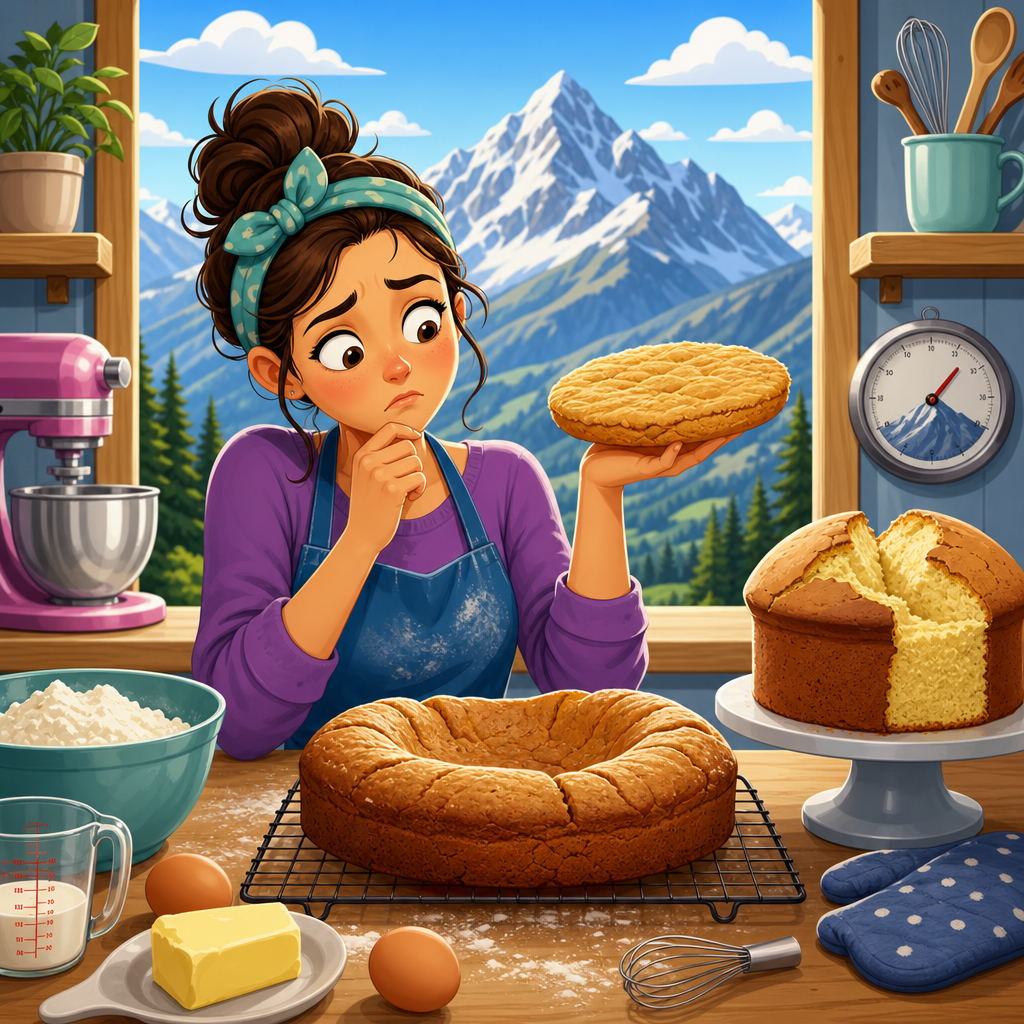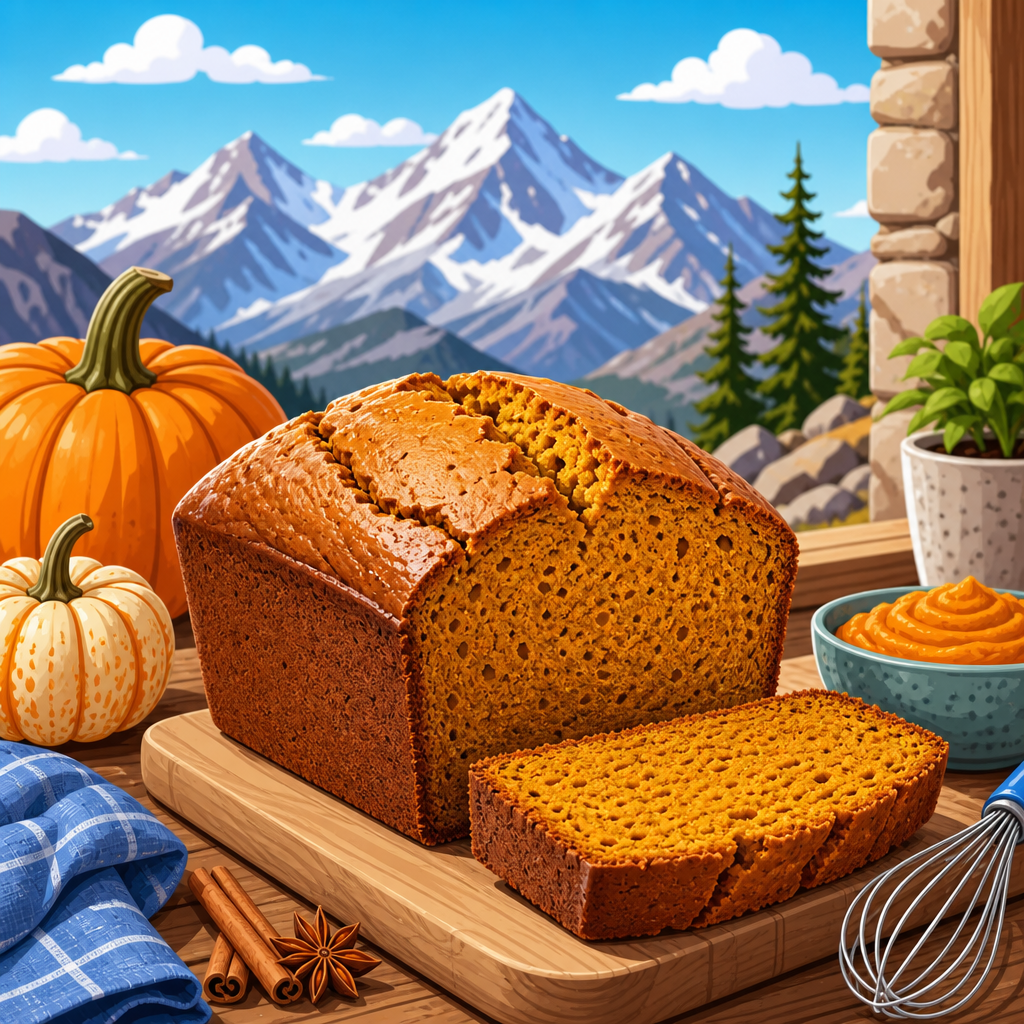
Pumpkin bread at altitude without collapse starts with understanding why quick breads behave differently in thin, dry mountain air. At higher elevations, lower air pressure makes gases expand faster, moisture evaporate more quickly, and batters set later than many bakers expect. That combination can turn a loaf that rose beautifully in the oven into one with a sunken center, a gummy line near the base, or a coarse, fragile crumb. When I began adapting pumpkin loaves in mountain kitchens, I learned quickly that standard sea-level recipes were not slightly off; they were structurally miscalibrated for altitude.
In practical terms, altitude baking usually means adjusting recipes once you are above 3,000 feet, with clearer changes often needed around 5,000 feet and beyond. Pumpkin bread falls into the quick bread category, meaning it relies on chemical leavening such as baking powder or baking soda rather than yeast. Breakfast bakes in this family include banana bread, zucchini bread, muffins, coffee cake, streusel loaves, baked oatmeal, and scones. They seem simple, but they are sensitive because they depend on a short window when bubbles expand, starches gelatinize, proteins coagulate, and moisture remains high enough to keep the interior tender.
This matters because pumpkin puree adds both value and complexity. It contributes water, fiber, natural sugars, pectin, and bulk, but it does not strengthen structure the way flour and eggs do. In mountain conditions, that means pumpkin bread can overrise before the crumb has enough support to hold itself up. The result is collapse, tunneling, dense streaks, sticky tops, or loaves that look done long before the center is actually baked. A reliable altitude strategy solves those problems by balancing leavening, sugar, liquid, flour, oven heat, and pan fill so the loaf rises steadily, sets on time, and cools without sinking.
As a hub for quick breads and breakfast bakes, this guide explains the core mechanics, then shows how to apply them across related recipes. If you want pumpkin bread with a domed top, even crumb, and clean slices at altitude, the goal is not one magic fix. It is a system of small, deliberate corrections that work together every time.
Why pumpkin bread collapses at altitude
Pumpkin bread usually collapses at altitude because gas expansion outpaces structure. Lower atmospheric pressure allows the carbon dioxide from baking soda and baking powder, along with steam and trapped air, to expand earlier and more aggressively. If the batter is weak or slow to set, the loaf rises fast, then falls as it cools. This is especially common in recipes built for sea level that use generous sugar, a full tablespoon or more of leavening, and a relatively low baking temperature.
Moisture loss is the second major cause. Water boils at a lower temperature as elevation increases, so batters lose moisture faster during mixing and baking. Pumpkin puree already creates a wet, heavy batter. If too much moisture escapes before starches and egg proteins fully set, the crumb becomes both dry at the edges and underbaked in the center. Bakers often misread this contrast and pull the loaf early, which increases the risk of collapse within minutes of leaving the oven.
Pan geometry also matters. A deep loaf pan encourages the center to lag behind the sides, and that gap widens at altitude because expansion is faster while setting is slower. Overfilled pans exaggerate doming and then cracking, followed by a dropped center. In my own tests above 5,000 feet, the same pumpkin batter that worked in two smaller 8.5-by-4.5-inch pans routinely sank when forced into one large loaf with more than two-thirds pan depth.
Ingredient ratios often reveal the real issue. Pumpkin bread formulas with too much sugar, too much leavening, or too little flour are the first to fail in mountain kitchens. Sugar weakens structure and delays setting. Leavening creates lift, but excess creates unstable lift. Flour supplies starch and protein, which help support the loaf once bubbles expand. The fix is not to strip a recipe of tenderness. It is to shift the balance toward controlled rise and earlier structure formation.
The altitude adjustments that actually work
The most effective altitude adjustments for pumpkin bread are straightforward: reduce leavening slightly, reduce sugar modestly, increase flour a little, raise oven temperature, and sometimes add a small amount of extra liquid. These changes are standard because they target the exact mechanisms that cause collapse. The challenge is knowing how much to adjust without turning a tender loaf into a dry brick.
For elevations around 3,000 to 5,000 feet, start by reducing baking powder or baking soda by about 1/8 to 1/4 teaspoon per loaf recipe. Between 5,000 and 7,500 feet, reductions often move closer to 1/4 to 1/2 teaspoon total, depending on the original amount. If a sea-level recipe uses both baking soda and baking powder, cut the total carefully rather than removing one completely. Baking soda also affects browning and pH, especially in recipes with acidic ingredients such as brown sugar, yogurt, buttermilk, or molasses.
Sugar usually benefits from a reduction of 1 to 3 tablespoons per cup. That sounds minor, but it has a measurable effect on structure and surface stickiness. Flour often needs an increase of 1 to 4 tablespoons per loaf. I prefer to add flour before adding extra egg because flour corrects spread and support without pushing the loaf toward a custardy texture. Oven temperature generally improves at 15 to 25 degrees Fahrenheit higher than the sea-level recipe, which helps set the crumb sooner.
| Altitude | Leavening | Sugar | Flour | Oven | Liquid |
|---|---|---|---|---|---|
| 3,000 to 5,000 ft | Reduce 1/8 to 1/4 tsp | Reduce 1 to 2 tbsp per cup | Add 1 to 2 tbsp | Increase 15°F | Add 1 to 2 tbsp if batter seems tight |
| 5,000 to 7,500 ft | Reduce 1/4 to 1/2 tsp | Reduce 2 to 3 tbsp per cup | Add 2 to 4 tbsp | Increase 15 to 25°F | Add 2 to 4 tbsp |
| Above 7,500 ft | Reduce cautiously, test in small increments | Reduce toward lower end first | Add enough for thicker batter | Increase 25°F if browning allows | Add only as needed to prevent dryness |
Extra liquid is more situational. Because altitude air is dry, a tablespoon or two of milk, water, orange juice, or extra pumpkin can protect tenderness. However, adding liquid without increasing oven heat or flour can worsen collapse. The best approach is to judge batter consistency. Pumpkin bread batter at altitude should be thick and scoopable, not pour like cake batter and not stand stiff like cookie dough.
Building a stable pumpkin bread formula
A stable altitude pumpkin bread formula begins with enough structure to support pumpkin’s moisture. For one standard loaf, a dependable framework is about 1 3/4 to 2 cups all-purpose flour, 1 cup pumpkin puree, 2 eggs, 1/2 to 3/4 cup oil, and 3/4 to 1 cup sugar, with restrained chemical leavening and a baking temperature around 360 to 375 degrees Fahrenheit depending on your oven. That ratio produces a batter with enough starch and protein to hold a rounded top without turning tough.
Flour choice matters. All-purpose flour is the easiest base because its protein level, usually around 10 to 12 percent, supports quick breads without making them bread-like. If you use whole wheat flour, keep it to 25 to 50 percent of the total at first because bran cuts gluten strands and can increase density. A spoonful of cornstarch is not the answer here; pumpkin bread usually needs more strength, not cake-flour softness. Weighing flour is ideal. A digital scale eliminates the common problem of undermeasured flour, which is a hidden cause of collapse.
Fat selection influences crumb. Neutral oil creates the moist, plush texture most people want in pumpkin bread, and it remains tender when chilled. Butter adds flavor but sets firmer and can make the loaf seem dry the next day if the formula is already lean. I often use a blend, with most fat from oil and a small amount of melted butter for flavor. Eggs provide structure and emulsification. An extra egg white can help at altitude, but a whole extra egg may make the loaf too rich and delay baking.
Spices and mix-ins should support, not sabotage, the loaf. Cinnamon, ginger, nutmeg, and cloves do not change structure much, but chocolate chips, fresh cranberries, chopped apples, and nuts do. Every add-in changes moisture distribution and weight. If you add one cup of chocolate chips or fruit, reduce the pan fill slightly and expect longer baking. Tossing mix-ins with a spoonful of flour helps suspension, especially in thinner high-altitude batters.
Mixing, panning, and baking for even rise
Technique decides whether good ratios become a good loaf. Overmixing develops too much gluten and can create tunnels, while undermixing leaves flour pockets and uneven leavening distribution. For pumpkin bread, whisk the dry ingredients thoroughly so the baking soda, baking powder, salt, and spices are evenly dispersed. In a separate bowl, blend the wet ingredients until smooth, then fold the dry into the wet just until no dry streaks remain. A few small lumps are fine; beating to a perfectly silky batter is usually a mistake.
Pan preparation should be deliberate. Use light-colored metal loaf pans when possible because dark pans brown the crust too quickly before the center sets. Grease the pan well and line the long sides with parchment for easy release. Fill the pan no more than half to two-thirds full. If your recipe makes too much batter, divide it into mini loaves or muffins. That one decision prevents many collapsed centers because smaller formats set faster and more evenly.
Bake on the center rack with enough airflow around the pan. Start checking for doneness near the early end of the adjusted baking range, but do not trust color alone. A finished loaf should spring back lightly, show a firm center, and register roughly 200 to 205 degrees Fahrenheit in the middle on an instant-read thermometer. This tool is one of the most useful investments for altitude bakers. A skewer can come out with moist crumbs while the center is still underbaked, especially in pumpkin batters rich in sugar and oil.
Cooling is part of baking. Let the loaf rest in the pan about 10 to 15 minutes, then transfer it to a rack. Too short a rest can cause breakage; too long traps steam and softens the crust. Do not slice while hot. Quick breads continue setting as they cool, and early slicing compresses the crumb into a gummy texture that many people mistake for underbaking alone.
Applying the same rules to quick breads and breakfast bakes
The same altitude logic that keeps pumpkin bread from collapsing also improves the broader quick breads and breakfast bakes category. Banana bread often needs similar leavening control because ripe bananas add sugar and moisture. Zucchini bread can require even more flour adjustment because shredded zucchini releases water unpredictably. Apple cinnamon loaves benefit from smaller dice and reduced fruit volume so the crumb can support the weight. In each case, think about water content, sugar load, and how quickly the center can set.
Muffins usually tolerate altitude better than large loaves because their smaller size bakes through faster. Still, domed muffins can peak and crater if the batter contains too much leavening or too much sugar. Coffee cakes are vulnerable when a heavy streusel layer sinks into a weak batter. For baked oatmeal, the issue is less collapse and more dryness at the edges before the custard-like center sets, so extra liquid and covered resting time matter more than leavening changes.
Scones and biscuits form a related but distinct group. They use chemical leavening, but structural control comes more from dough handling and lamination than from batter viscosity. At altitude, they still benefit from slightly reduced leavening and careful hydration, yet they collapse less often because they begin as doughs rather than pourable batters. That comparison is useful: the looser the mixture, the more aggressively altitude exposes weaknesses in structure.
For a sub-pillar hub, keep these links in mind when planning your recipe collection: pumpkin bread teaches balance, banana bread teaches sugar control, muffins teach portion scaling, coffee cake teaches topping weight management, baked oatmeal teaches moisture retention, and scones teach hydration discipline. Once you understand why one pumpkin loaf falls, you can diagnose nearly every breakfast bake on the rack.
Troubleshooting common failures at altitude
If your pumpkin bread sinks in the center, the most likely causes are excess leavening, underbaking, too much sugar, or an overfilled pan. If it rises high and then wrinkles as it cools, the batter probably expanded too fast before setting. Reduce leavening slightly, increase the oven temperature modestly, and verify the center temperature before removing it from the oven. If the loaf has a wet line near the bottom, the batter may have been too rich or the oven too cool.
If the loaf is dry but still collapses, do not assume you need only more liquid. Often the loaf lost moisture because it baked too long trying to set a structure that was too weak. Strengthen the formula first with a bit more flour or less sugar, then fine-tune liquid. If the crumb is coarse with tunnels, mix less aggressively and reduce leavening. If the top cracks dramatically, that is not necessarily a fault; a controlled center crack is common in quick breads. The problem is a crack followed by a dip.
Altitude baking becomes consistent when you change one variable at a time and keep notes. Record elevation, pan size, ingredient weights, oven setting, bake time, and results. That process is how dependable mountain bakers work, because humidity, pumpkin brand, and even your specific oven can shift the outcome.
Pumpkin bread at altitude without collapse is absolutely achievable when you treat the loaf as a structure problem, not a mystery. Reduce excessive lift, build support with flour and eggs, bake a little hotter, avoid overfilling pans, and confirm doneness in the center. Those same principles guide the entire quick breads and breakfast bakes category, from banana muffins to coffee cake. Use this hub as your foundation, then apply the method to each related recipe in your altitude kitchen. Start with one well-balanced pumpkin loaf, take notes, and build your breakfast baking confidence from there.
Frequently Asked Questions
Why does pumpkin bread collapse in the center at high altitude?
Pumpkin bread commonly collapses at high altitude because the batter rises too quickly before the structure is strong enough to hold that lift. In mountain environments, lower air pressure allows the gases created by baking powder, baking soda, steam, and beaten ingredients to expand faster than they do at sea level. At the same time, moisture evaporates more rapidly and the batter can dry on the outside before the center has fully set. That creates a loaf that looks impressive early in baking, then sinks as it cools because the middle was under-supported.
Pumpkin adds another challenge because it contributes both moisture and density. A pumpkin quick bread batter is heavier than a plain muffin or vanilla loaf batter, so it needs a careful balance of lift, structure, and baking time. If there is too much leavening, too much sugar, or too much liquid for your elevation, the loaf may balloon upward and then fall. If the oven temperature is too low, the loaf can keep expanding long before the starches and proteins are firm enough to lock everything in place. The result is the classic sunken center, a gummy layer near the bottom, or a crumb that tears instead of slicing cleanly.
To prevent collapse, high-altitude bakers usually reduce leavening slightly, increase oven temperature modestly, and make small adjustments to flour and liquid. Many also avoid overfilling the pan and resist opening the oven early. In practical terms, pumpkin bread at altitude succeeds when you slow down excessive rise and help the loaf set sooner. That is the basic principle behind nearly every reliable mountain-baking adjustment.
What recipe changes help pumpkin bread bake successfully at altitude?
The most effective high-altitude adjustments usually involve four areas: leavening, flour, liquid, and oven temperature. First, reduce baking powder or baking soda slightly so the loaf does not overexpand and then collapse. The exact amount depends on your elevation, but many bakers begin by trimming the leavening by about 1/8 to 1/4 teaspoon per teaspoon called for in the original recipe, then fine-tune from there. This often makes a bigger difference than people expect.
Second, consider adding a little more flour to strengthen the batter. Pumpkin puree can make quick breads wonderfully moist, but it can also leave the crumb too soft to support the rapid expansion that happens at altitude. An extra tablespoon or two of flour per loaf can help create a sturdier structure. Third, you may need a small increase in liquid if your batter seems unusually thick or if your loaves tend to bake up dry around the edges before the middle is done. High-altitude air is dry, and moisture loss happens faster both in the bowl and in the oven.
Fourth, raise the oven temperature slightly, often by 15 to 25 degrees Fahrenheit. A slightly hotter oven helps the loaf set earlier, which is especially useful with dense batters like pumpkin bread. However, this works best when paired with careful doneness checks so the crust does not overbrown before the center is baked through. Depending on the recipe, some bakers also reduce sugar a little, since sugar can weaken structure and slow setting. If your loaf repeatedly falls or stays gummy, small sugar reductions can help create a firmer crumb.
The best approach is to change one or two variables at a time and keep notes. Altitude baking is highly local. A formula that works at 4,000 feet may still need refinement at 7,500 feet. Once you find the right balance for your kitchen, your pumpkin bread becomes much more consistent from batch to batch.
How can I tell when high-altitude pumpkin bread is fully baked and not just browned on top?
This is one of the most important questions in mountain baking because pumpkin bread can look done long before the center is actually set. The top may brown beautifully while the middle remains underbaked, especially at altitude where moisture behavior is less forgiving. A loaf that is removed too early often sinks as it cools or reveals a dense, wet line near the bottom when sliced.
The most reliable method is to check internal temperature with an instant-read thermometer. For most quick breads, the center is properly baked when it reaches roughly 200 to 205 degrees Fahrenheit. That gives you a much clearer answer than judging color alone. If you do not use a thermometer, insert a tester into the center, but do not rely on a perfectly dry crumb as the only sign. Pumpkin bread is moist by nature, so a few tender crumbs are fine. What you do not want is wet batter or a heavy paste on the tester.
Also pay attention to the loaf’s overall feel. A fully baked pumpkin bread should have a gently domed or level top that springs back lightly when touched. The edges may begin to pull just slightly from the pan, and the center should no longer wobble. If the top is getting too dark before the loaf is done, tent it loosely with foil and continue baking. This is often necessary at altitude because a slightly higher oven temperature helps the structure set, but can also speed surface browning.
Finally, let the loaf cool in the pan for a short, controlled period, usually about 10 to 15 minutes, before turning it out. Too little cooling can make it break apart; too much can trap steam and soften the crust. Proper doneness plus proper cooling is what gives you slices that are moist, stable, and free from that disappointing collapsed center.
Why does my pumpkin bread have a gummy line near the bottom or a coarse, crumbly texture?
A gummy line near the bottom usually points to a loaf that did not fully set before being removed from the oven, or to a batter that had more moisture and lift than its structure could support. At altitude, this often happens when the batter rises fast, the top browns early, and the center lags behind. The loaf may seem done from the outside, but the lower interior remains dense and slightly underbaked. Too much pumpkin, too much sugar, excess leavening, or an oven running cool can all contribute to this problem.
A coarse or crumbly texture usually comes from the opposite side of the balance: the loaf may have too little moisture, too much flour, too little binding from eggs, or too much evaporation during baking. High-altitude air dries batters quickly, and even small measuring differences become more noticeable in recipes built on purees like pumpkin. Overmixing can also create problems. While quick breads do need thorough incorporation, aggressive mixing can disrupt the ideal crumb and lead to tunneling, uneven structure, or a loaf that feels fragile once cooled.
Ingredient choice matters too. Pumpkin puree varies by brand and by whether it is homemade or canned. Some purees are thicker and some hold more water, which can shift the texture of the loaf significantly. If your bread is repeatedly gummy, weigh your ingredients if possible, verify that you are using plain pumpkin puree rather than pumpkin pie filling, and make sure your baking soda and baking powder are fresh. If the loaf is too coarse or dry, consider a slight increase in liquid, a little less flour, or a shorter bake if you have been compensating too aggressively.
In short, both the gummy line and the fragile crumb are signs that the loaf’s moisture, lift, and structure are out of alignment. High-altitude success comes from bringing those three factors into balance so the pumpkin bread bakes evenly from edge to center.
What is the best mixing, pan-filling, and cooling method to keep pumpkin bread from sinking at altitude?
Technique matters almost as much as the formula. Start by mixing the batter only until the ingredients are fully combined and no obvious streaks remain. With quick breads, overmixing can encourage tunneling and an uneven crumb, but undermixing can leave pockets of flour or poorly distributed leavening that create weak spots in the loaf. A steady, moderate hand works best. If you are adding nuts, chocolate chips, or dried fruit, fold them in gently at the end so they do not deflate the batter or concentrate in one area.
Pan-filling is another overlooked detail. At altitude, overfilled loaf pans are more likely to produce dramatic rise followed by collapse because the batter has farther to climb before the center can set. As a rule, fill the pan about halfway to two-thirds full unless the recipe specifically says otherwise. This gives the loaf room to expand without becoming top-heavy. Use the correct pan size, because even a small mismatch can change baking depth and timing enough to affect the result.
Once the loaf is in the oven, avoid opening the door during the early and middle stages of baking unless absolutely necessary. Sudden temperature shifts can interrupt the setting process and encourage sinking. When the bread tests done, let it cool in the pan for about 10 to 15 minutes, then turn it out onto a rack. This brief rest allows the structure to firm up without trapping too much steam. If you leave it in the pan too long, the retained moisture can soften the sides and bottom. If you remove it immediately, the loaf may crack or collapse under its own weight.
For the cleanest texture and slices, let pumpkin bread cool completely before cutting. Quick breads continue to set as they cool, and this matters even more at altitude. Slicing