High altitude vanilla cake can be light, moist, and level, but it behaves differently above roughly 3,000 feet because lower air pressure changes how batter expands, how moisture evaporates, and how structure sets. In my own test bakes at mountain elevation, the two most common failures are tunneling, which shows up as long holes running through the crumb, and collapse, where a cake rises dramatically and then sinks during baking or cooling. Both problems come from the same core issue: gas forms and expands faster than the starches, proteins, and sugars in the batter can stabilize it. That is why high altitude baking is never just about adding a little more flour. It is a system of adjustments involving leavening, liquid, sugar, fat, eggs, mixing method, pan size, and oven temperature.
For a vanilla cake, those variables matter even more because the formula is usually delicate. Vanilla cakes often rely on butter for flavor, sugar for tenderness, eggs for structure, and chemical leaveners for lift. At sea level, a balanced recipe can tolerate small mistakes. At altitude, that margin shrinks. A batter mixed one minute too long may tunnel. A pan filled too high may collapse in the center. An oven running 15 degrees cool may let the cake overexpand before the crumb sets. Understanding why these issues happen is the fastest way to fix them consistently.
This hub article covers high altitude vanilla cake from the perspective of prevention first. You will learn what tunneling and collapse mean in practical terms, why they happen in cakes and cupcakes, how to adjust a standard vanilla recipe, and how to diagnose failures after the bake. It also serves as the central guide for the broader Cakes & Cupcakes section within Cooking & Baking at Altitude, so the methods here apply not only to layer cakes but also to sheet cakes, snack cakes, birthday cakes, cupcakes, and vanilla-based celebration bakes. If your goal is a fine, even crumb and a cake that rises cleanly without sinking, these are the adjustments that matter most.
Why high altitude changes vanilla cake structure
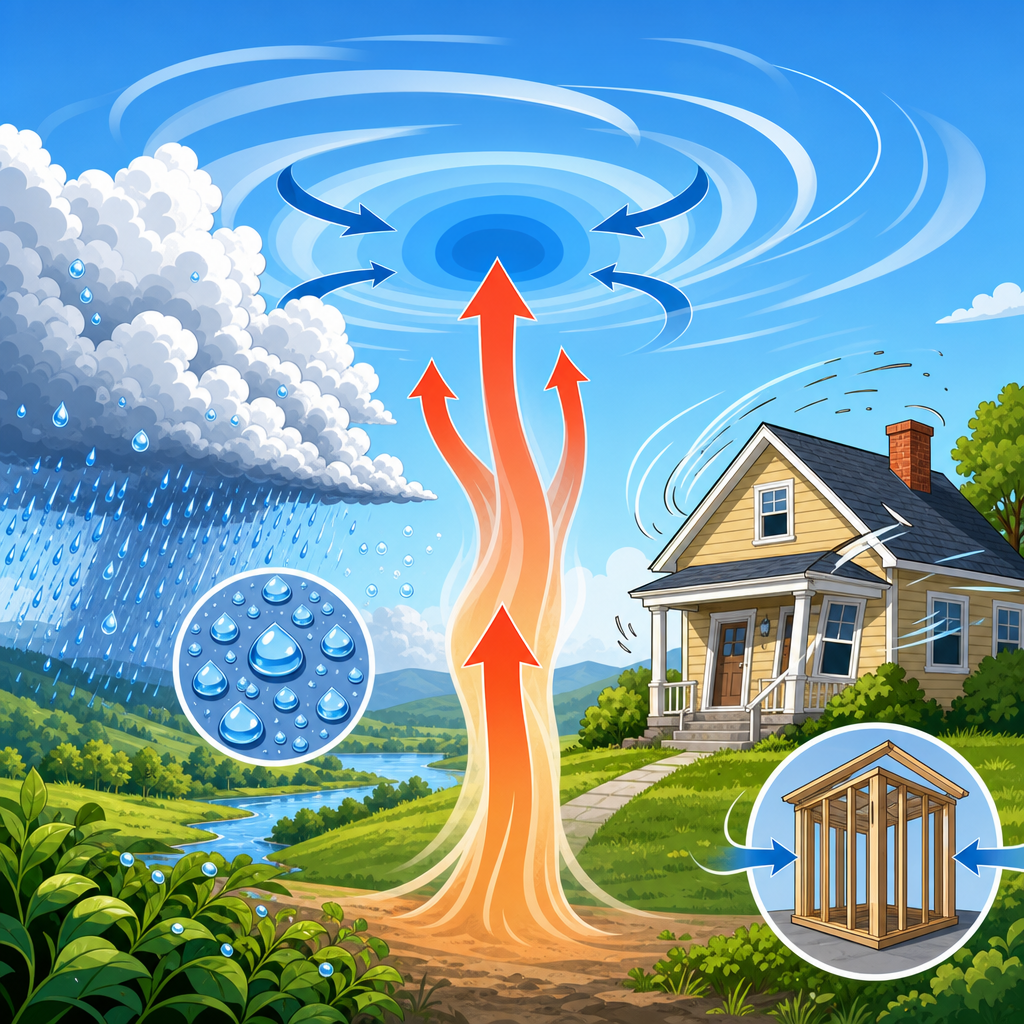
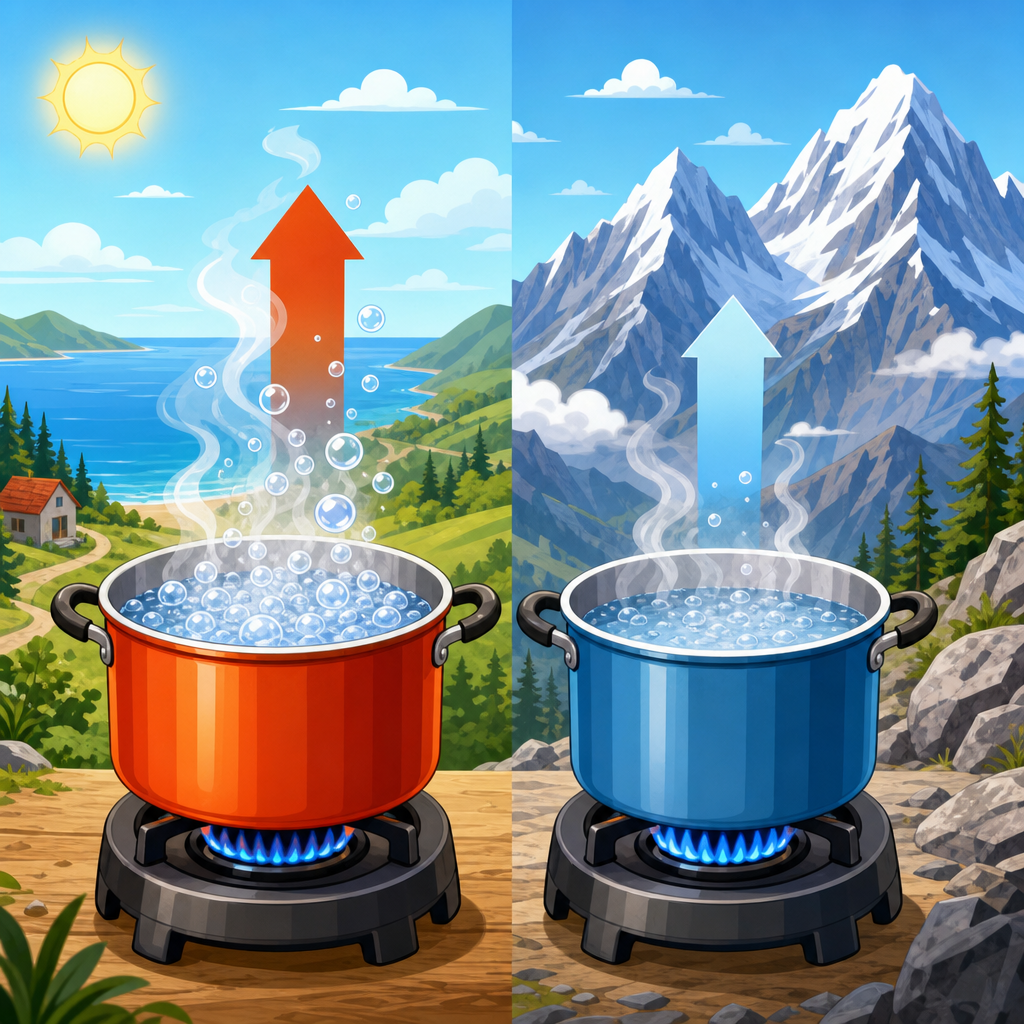
At higher elevations, atmospheric pressure is lower. That sounds abstract, but in cake batter it has direct effects. Air bubbles incorporated during creaming or mixing expand more easily. Carbon dioxide released by baking powder expands more aggressively. Water boils at a lower temperature, so moisture evaporates faster. The result is that a cake can rise earlier and higher before its internal structure has fully coagulated. In a vanilla cake, structure comes mainly from egg proteins, flour starch gelatinization, and the way sugar and fat interact with those components. If expansion outruns setting, the crumb stretches into coarse holes or loses support and falls.
Tunneling is usually linked to excess aeration or overactive leavening. When a batter at altitude contains too much baking powder, too much trapped air from overmixing, or a weak flour-to-liquid balance, the gas channels upward and leaves elongated pockets. Collapse is the next stage of the same imbalance. The cake domes, the outer edge sets, and the center lacks enough support, so it sinks either before removal from the oven or during cooling. This is why many mountain bakers increase oven temperature slightly while reducing leavener and sugar. A modestly hotter oven helps set the batter sooner; less leavening reduces uncontrolled expansion; and a bit less sugar strengthens the crumb by limiting excessive tenderness.
The exact altitude matters. Between 3,000 and 5,000 feet, you may only need minor changes. Between 5,000 and 7,000 feet, more noticeable formula adjustments become necessary. Above 7,000 feet, many standard cake recipes need a full rewrite rather than a tweak. The USDA and university extension baking guides commonly recommend decreasing baking powder, increasing liquid, and sometimes adding flour as altitude rises. Those principles are reliable, but vanilla cake still requires recipe-specific testing because butter cakes, oil cakes, reverse-creamed cakes, and chiffon-style vanilla cakes respond differently.
How to prevent tunneling in high altitude vanilla cake
The best answer to “What causes tunneling in high altitude cake?” is this: too much expansion combined with weak or delayed structure. In practice, I fix tunneling by controlling four things in order: mixing, leavening, batter consistency, and bake profile. Start with mixing because it is the easiest mistake to make. In a creamed butter cake, cream butter and sugar only until lighter and slightly fluffy, not until it looks like whipped frosting. At altitude, overcreaming loads the batter with extra air that later stretches into tunnels. Once flour is added, mix only until the batter is homogeneous. Gluten development plus trapped air is a classic route to coarse crumb.
Leavening is the next checkpoint. For many sea-level vanilla cakes, reducing baking powder by about 1/8 to 1/4 teaspoon per teaspoon used is a sensible starting point around 5,000 feet, though the final amount depends on pan depth, sugar level, and whether eggs are separately whipped. If a recipe uses both baking powder and baking soda, examine the acid source before changing soda. Baking soda reacts with acidic ingredients such as buttermilk or sour cream and affects browning and pH, so reducing it blindly can create separate problems. Baking powder is often the safer first reduction.
Batter consistency matters because thin batter cannot support expanding gases as well. A slight increase in flour, often 1 to 2 tablespoons per cake layer recipe, can tighten the crumb enough to stop channels from forming. Alternatively, increasing liquid by a tablespoon or two can help if the cake is actually drying out too fast and setting unevenly. The key is balance. Tunneling can come from batter that is too loose or from batter that is overaerated and understructured. That is why measuring by weight is so valuable. A cup of flour can vary dramatically by scoop method, but grams do not.
The bake profile finishes the job. Raise oven temperature modestly, usually by 15 to 25 degrees Fahrenheit, so the cake sets before gas expansion gets away from you. Use an oven thermometer; many home ovens are inaccurate. Avoid opening the door early, especially in the first two-thirds of baking, because a sudden temperature drop can destabilize a still-setting center. Finally, do not overfill pans. A batter depth that is manageable at sea level may climb too fast at altitude, creating large internal voids before the center can support itself.
How to prevent collapse in cakes and cupcakes at altitude
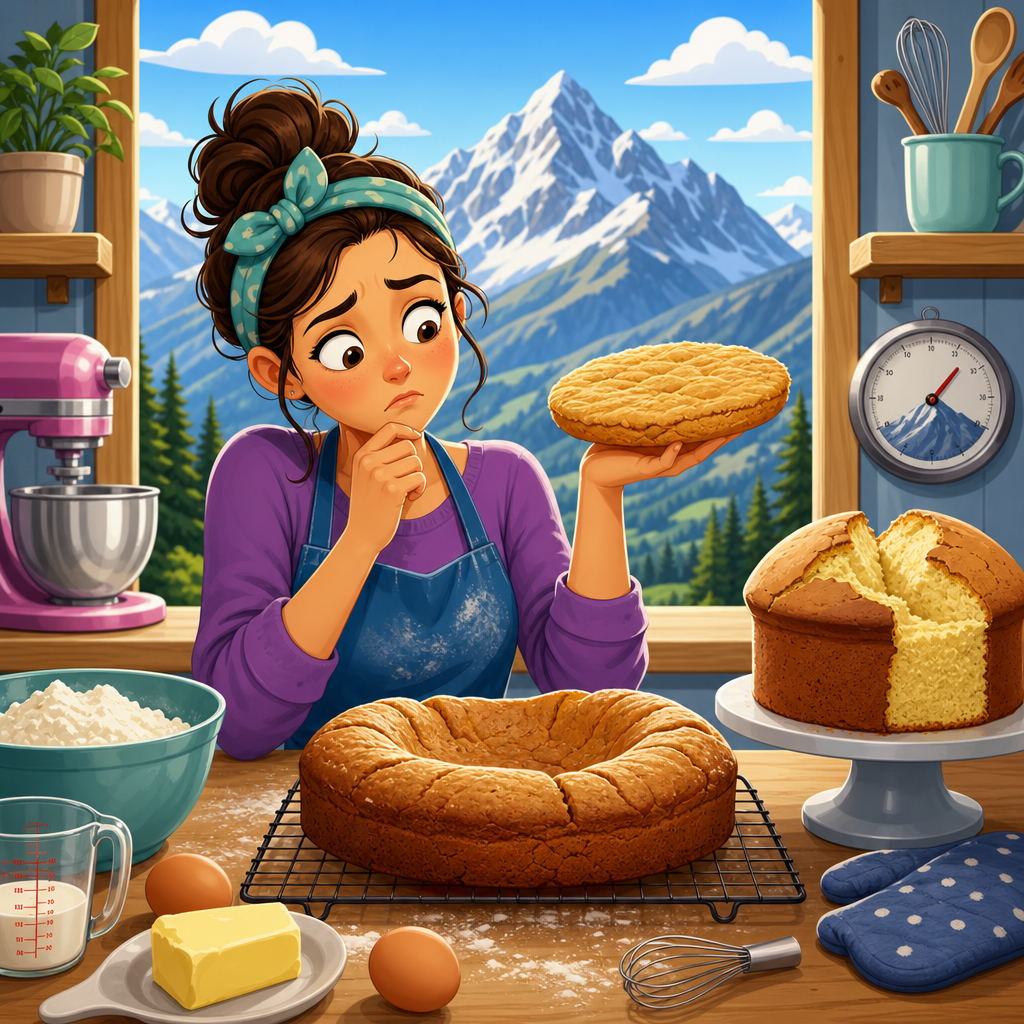
Collapse is often described as sinking, caving, or falling, but the mechanism is straightforward: the cake rose beyond what its structure could hold. In cupcakes, collapse may look like a cratered center. In layer cakes, it may show up as a sunken middle with dense, damp crumb below the dip. In both cases, prevention starts before baking. Choose the right pan size, fill cavities properly, and avoid formulas with extreme sugar or liquid unless they were developed specifically for altitude. Cupcakes should usually be filled about one-half to two-thirds full, not to the top. Layer cake pans need enough headroom for controlled expansion.
Eggs are one of the most useful tools for preventing collapse. At altitude, adding an extra egg white to a vanilla cake can strengthen structure without making the cake heavy. The additional protein helps the crumb set and support rise. Flour can also help, particularly if the original recipe is very tender. For butter-based vanilla cake, an extra tablespoon or two of flour per two-layer recipe is a practical test adjustment. Sugar often needs a slight decrease because it delays starch gelatinization and protein coagulation. A reduction of 1 to 2 tablespoons per cup of sugar is common in mountain baking tests.
Underbaking is another major reason cakes collapse. Many bakers rely on color alone, but a pale cake can still be done if the internal temperature and crumb structure are right, while a golden top can hide an unstable center. For butter cakes, the center should spring back lightly, the edges should just begin to pull from the pan, and a tester should come out clean or with a few moist crumbs, not wet batter. If you use an instant-read thermometer, many cakes finish around 200 to 210 degrees Fahrenheit in the center, though exact targets vary by formula. Cooling matters too. Let the cake rest briefly in the pan, then turn out according to the recipe so steam does not condense and weaken the crumb.
| Problem | Likely cause at altitude | Most effective fix |
|---|---|---|
| Tunnels or long holes | Too much leavening, overmixing, excess aeration | Reduce baking powder, mix less, raise oven temperature slightly |
| Sunken center | Overexpansion before structure sets | Add flour or egg white, reduce sugar, bake a little hotter |
| Dry edges with weak middle | Moisture loss happens too fast | Increase liquid slightly, check oven accuracy, avoid overbaking |
| Coarse crumb in cupcakes | Pan overfilled or batter too thin | Fill lower, strengthen batter, reduce leavening |
Recipe adjustments that work for vanilla layer cakes and cupcakes
When adapting a sea-level vanilla cake for altitude, make changes in small, controlled steps. For a standard two-layer butter vanilla cake at about 5,000 feet, a dependable first test is to reduce baking powder by 1/4 teaspoon total, reduce sugar by 1 to 2 tablespoons per cup, increase liquid by 1 to 2 tablespoons, and raise the oven temperature by 15 to 25 degrees Fahrenheit. If the crumb is still too open, add 1 to 2 tablespoons flour. If the cake becomes too tight or dry, pull back the flour increase and use an extra tablespoon of milk or buttermilk instead. This methodical approach gives you clear feedback.
For cupcakes, adjustments often need to be slightly more conservative because smaller cakes set faster and can overbake more easily. The same batter may work in cupcake form with a smaller temperature increase or a slightly higher fill level than in large pans, but it still benefits from reduced leavening. Watch the dome shape. A sharply peaked cupcake often signals too much leavening or an oven that is too hot; a flat, sunken top points to weak structure or underbaking. Because cupcakes cool quickly, remove them from the pan after a short rest so residual steam does not soften the liners and collapse the sides.
Mixing method influences which adjustment matters most. In reverse-creamed vanilla cake, where flour is mixed with fat before liquid is added, crumb is usually finer and tunneling risk is lower than in aggressively creamed butter cake. In chiffon or foam-based vanilla cakes, however, overbeaten egg whites can create instability at altitude. The foam expands beautifully and then falls if not supported. In those cakes, slightly less whipped volume and more careful folding can outperform extra flour. That is why a hub page for Cakes & Cupcakes has to emphasize method as much as ingredient ratios: not all vanilla cakes fail for the same reason.
This subtopic also connects naturally to related bakes across your altitude kitchen. If you are building a deeper collection, the next useful pages in a Cakes & Cupcakes hub would cover high altitude chocolate cake, red velvet cake, buttercream behavior in dry climates, cupcake doming and liner pull-away, and how to convert a sea-level birthday cake recipe for 3,500, 5,000, or 7,500 feet. Readers who master vanilla cake adjustments can apply the same structure-first thinking to most cake formulas.
Common mistakes, testing methods, and a practical troubleshooting workflow
The biggest mistake I see is changing too many variables at once without recording results. If you reduce sugar, add flour, raise the oven temperature, switch pan material, and bake on a different rack in the same test, you will not know which change solved the issue. Keep a simple bake log with altitude, room humidity, ingredient weights, pan dimensions, batter temperature, oven setting, actual bake time, and final result. Serious bakers and pastry teams do this because cake performance is cumulative, not random.
Another common mistake is assuming all-purpose flour behaves identically across brands. Protein levels vary. So does how finely the flour is milled. Gold Medal, King Arthur, and White Lily can produce different crumbs in the same vanilla cake, especially at elevation where tolerance is tighter. The same is true for butterfat percentage, cocoa acidity in flavored variations, and even the size of eggs. Weigh ingredients and use the same brands during testing if you want consistent conclusions.
A practical troubleshooting workflow is simple. If the cake tunnels but does not sink, first reduce mixing and then reduce baking powder. If it rises high and collapses, strengthen structure with a little more flour or an extra egg white and bake slightly hotter. If it is dense after those changes, you may have overcorrected; restore a small amount of sugar or liquid. If the center is gummy while the edges are dry, check oven accuracy and consider a lower rack position for better heat distribution. Aluminum pans generally bake more evenly than dark nonstick pans, which can set the outside too quickly.
Finally, remember that no single chart replaces observation. High altitude baking recommendations from Colorado State University Extension, Utah State Extension, and the USDA provide solid starting points, but your oven, cookware, and local climate still matter. Dry winter air, for example, can magnify moisture loss compared with summer monsoon conditions in the same mountain town. The bakers who get consistently excellent high altitude vanilla cake are the ones who treat each recipe as a controlled formula, not a guess.
High altitude vanilla cake stops being unpredictable once you understand the physics behind tunneling and collapse. Lower air pressure makes gases expand faster and moisture evaporate sooner, so successful cakes need earlier structure, steadier rise, and tighter control over mixing and leavening. That is why the most reliable fixes are modest but deliberate: cream less aggressively, reduce baking powder, consider a small sugar reduction, add a little liquid or flour as needed, strengthen with egg white when necessary, and bake slightly hotter in properly filled pans. These are the adjustments that protect both layer cakes and cupcakes.
As the Cakes & Cupcakes hub within Cooking & Baking at Altitude, this page gives you the framework for every cake article that follows. Whether you are adapting a classic birthday cake, troubleshooting cupcakes with cratered tops, or refining a favorite vanilla layer recipe for 5,000 feet and above, the process is the same: diagnose the failure, change one variable at a time, and bake by weight and observation rather than habit. Once you do that, the crumb becomes finer, the rise becomes more controlled, and the finished cake holds together from oven to serving plate.
Use this guide as your baseline, then test your own recipe systematically. Start with leavening, oven temperature, and pan fill, because those three changes solve a surprising number of altitude problems. From there, fine-tune sugar, flour, liquid, and eggs until your vanilla cake is stable, tender, and level. If you are building out your altitude baking repertoire, move next into the related Cakes & Cupcakes topics and apply the same principles one formula at a time.
Frequently Asked Questions
Why does vanilla cake behave so differently at high altitude?
Above about 3,000 feet, lower air pressure changes the way cake batter rises, bakes, and sets. Gases from air, steam, and chemical leaveners expand more quickly, so a high altitude vanilla cake often rises faster and higher than the same recipe would at sea level. That sounds helpful, but it creates a structural problem: the batter can overexpand before the proteins in the eggs and flour and the starches in the flour have time to fully set. When that happens, the cake may develop tunneling, which looks like long vertical or diagonal holes in the crumb, or it may rise dramatically and then collapse as the fragile structure gives way.
Moisture loss is also more aggressive at elevation because water evaporates faster. That means a batter can thicken too soon at the edges while the center is still rapidly expanding, which increases uneven texture and the chance of sinking. In practical terms, high altitude baking is a balancing act between expansion, moisture, and structure. If the batter expands too aggressively, you get tunnels and collapse. If you strengthen the batter slightly, moderate the leavening, and control mixing and oven temperature, you can produce a vanilla cake that is light, moist, and level instead of coarse, domed, or sunken.
What causes tunneling in a high altitude vanilla cake?
Tunneling usually happens when too much gas develops or when the batter is mixed in a way that creates an unstable structure. At high altitude, chemical leaveners such as baking powder become more forceful because gases expand more readily in lower air pressure. If the recipe has more leavening than the batter can support, those expanding gases push through the crumb and form long holes instead of a fine, even texture. Overmixing can make this worse by incorporating excess air and developing too much gluten, which gives the batter a stretchy structure that encourages channels to form as the cake bakes.
Another common cause is a batter that is too weak or too thin for altitude. If there is not enough flour, egg, or other structural support, the bubbles merge and race upward before the crumb can set around them. The result is not a soft, delicate cake but an uneven one with noticeable tunnels. To reduce tunneling, start by slightly decreasing the leavening compared with the sea-level version of the recipe, mix only until ingredients are combined, and make sure the batter has enough structural support. In many high altitude vanilla cake recipes, a small increase in flour or an extra egg white can help create a finer, tighter crumb. Baking in the correct pan size also matters, because a batter spread too thin or too deep can bake unevenly and exaggerate tunneling.
Why does my cake rise beautifully and then collapse in the oven or while cooling?
Collapse is usually a sign that the cake rose faster than it could set. In a high altitude oven, gases expand rapidly early in baking, so the cake may look impressive at first. But if the batter is too weak, too wet, or overleavened, that rise is not supported by enough stable structure. Once the delicate network of egg proteins, flour, and starch can no longer hold the expanded gases, the cake falls. This can happen near the end of baking, right after you open the oven, or during cooling when the internal steam and air begin to contract.
Several factors contribute to this problem. Too much sugar can delay structure setting and leave the crumb overly tender. Too much baking powder can force an exaggerated rise. Too low an oven temperature can allow the cake to keep expanding before the center firms up. Even underbaking plays a major role: a cake that looks done on top but has not fully set in the middle often sinks as it cools. The fix is usually a combination of adjustments rather than one dramatic change. Reduce leavening modestly, consider increasing the oven temperature slightly so the structure sets sooner, and check doneness carefully with both visual cues and a tester. A properly baked high altitude vanilla cake should spring back lightly when touched, pull just slightly from the pan, and show a clean or nearly clean tester in the center.
What recipe adjustments help prevent both tunneling and collapse at high altitude?
The most reliable strategy is to control expansion while strengthening structure and preserving moisture. For many vanilla cake recipes at elevation, that means using a little less baking powder than the sea-level formula calls for, because too much leavening is one of the fastest routes to both tunneling and collapse. It also often helps to add a bit more flour, which gives the batter additional support, and in some cases slightly reduce sugar so the crumb sets sooner and does not remain overly delicate. Some bakers also increase liquid modestly to offset faster evaporation, but this must be done carefully; too much extra liquid can weaken the batter and contribute to sinking.
Eggs are another valuable tool because they improve structure. Depending on the formula, adding a little more egg or an extra egg white can help the cake hold its rise without becoming tough. Oven temperature is just as important as ingredient ratios. A slightly hotter oven often works well at altitude because it helps the cake set before overexpansion causes failure. That said, the adjustment should be measured, not extreme, because too much heat can create a peaked top and overbaked edges. The best approach is to make small, deliberate changes, test one variable at a time, and keep notes. High altitude baking rewards precision. A cake that tunnels or collapses is usually telling you the batter expanded faster than the structure could support, so every successful adjustment should move those two factors back into balance.
How should I mix and bake high altitude vanilla cake to get a fine, even crumb?
Technique matters just as much as the formula. Start by measuring carefully, ideally by weight, because small ingredient errors become more noticeable at altitude. Cream butter and sugar only until light and slightly fluffy rather than trying to force maximum volume into the batter. Excess aeration at this stage can contribute to overexpansion in the oven. Once you begin adding dry ingredients, mix gently and stop as soon as the batter is smooth. Overmixing develops gluten and can create the kind of elastic structure that encourages tunneling instead of a tender, even crumb.
Prepare your pans well and avoid overfilling them, since too much batter depth can cause the outside to set while the center is still surging upward. Bake on the center rack in a fully preheated oven, and avoid opening the oven door too early. Sudden temperature changes can destabilize a cake that is already vulnerable to collapse. Begin checking for doneness at the early end of the baking window, but rely on several signs rather than just color. The top should look set, the center should spring back lightly, and a tester should come out clean or with a few moist crumbs, not wet batter. After baking, let the cake rest briefly in the pan, then turn it out according to the recipe so steam does not get trapped and soften the structure. With high altitude vanilla cake, a calm mixing hand, accurate measurement, and careful baking are what turn a fragile batter into a light, moist, level cake with a smooth crumb and no tunnels.