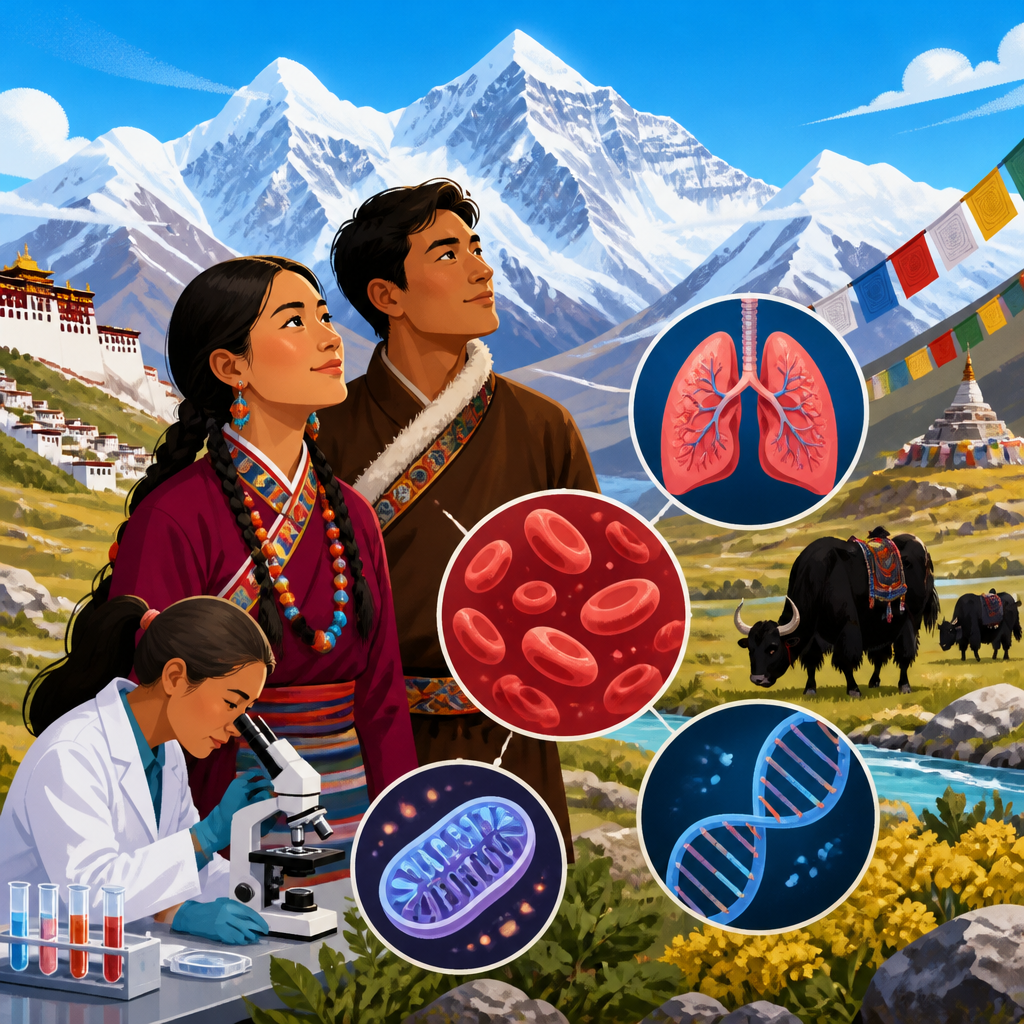
Ethiopian high-altitude adaptation deserves far more scientific and public attention because it sits at the intersection of human biology, history, and culture, yet it is often overshadowed by better-known research on Tibet and the Andes. High-altitude adaptation refers to heritable and developmental traits that help people live where oxygen pressure is low, typically above 2,500 meters. In these environments, every breath delivers less oxygen to the lungs, challenging the brain, heart, muscles, pregnancy, and long-term growth. When I have worked through comparative studies of mountain populations, one pattern has repeatedly stood out: Ethiopia is central to the story of human resilience, but it is still treated as a footnote. That gap matters because the Ethiopian highlands contain one of the world’s largest and longest-established highland populations, making them essential for understanding evolution, medicine, and community life in thin air.
The topic also matters because adaptation is not only a laboratory concept. It shapes farming calendars, settlement patterns, architecture, religious practice, migration, athletic training, and maternal health. Ethiopia’s highland regions, including areas inhabited by Amhara, Oromo, Tigrayan, and other communities, have supported dense populations for centuries. Unlike short-term acclimatization, which happens over days or weeks, long-term adaptation emerges across generations and may involve distinctive respiratory responses, blood parameters, vascular regulation, and fetal growth outcomes. Researchers have documented that Ethiopian highlanders often show patterns different from both Andean and Tibetan populations, suggesting multiple biological routes to living well at altitude. A hub article on science and culture therefore needs to do two jobs at once: explain the physiology clearly and place it within the social worlds that make the Ethiopian highlands historically important and scientifically indispensable.
The science of altitude is broader than most coverage suggests
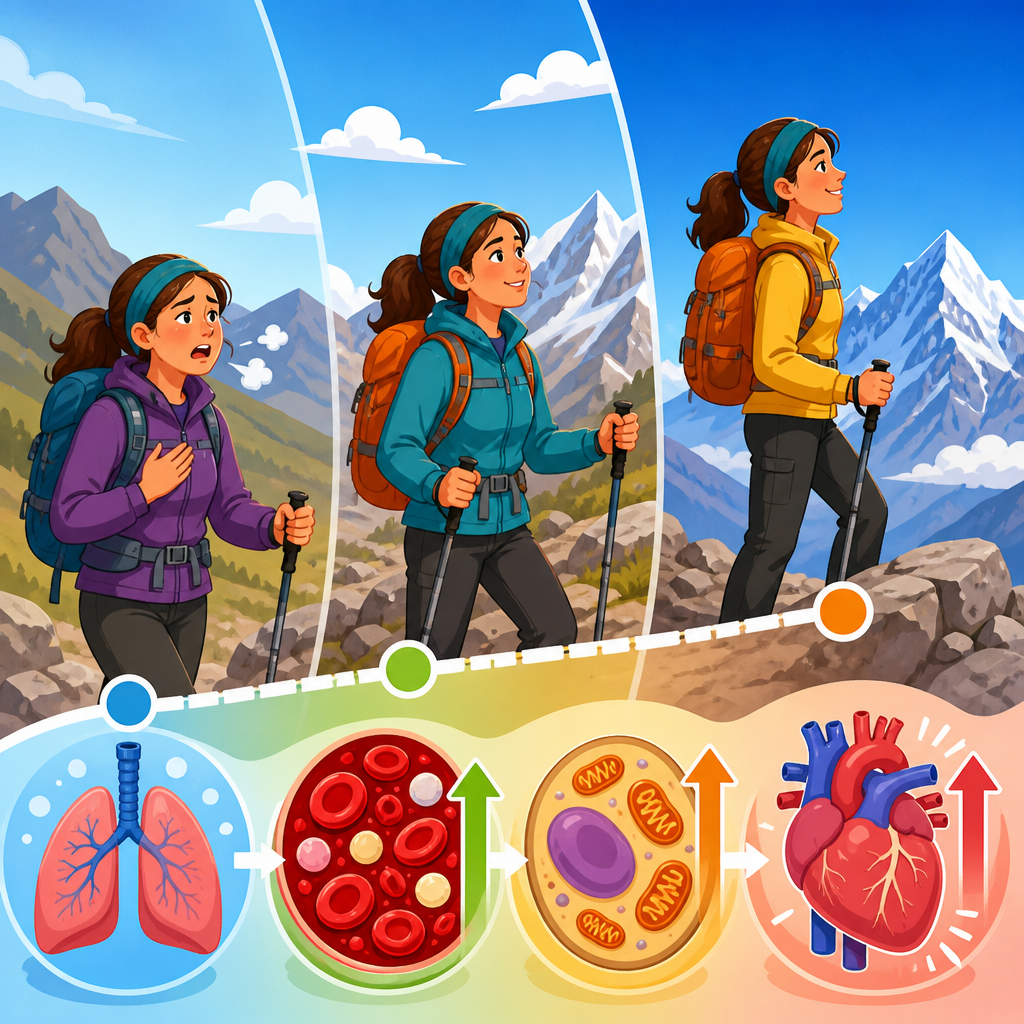
At sea level, oxygen makes up about 21 percent of the atmosphere, but what changes with elevation is barometric pressure, which reduces the partial pressure of oxygen available for gas exchange. That lower pressure is why altitude stresses the body even though the percentage of oxygen stays constant. In practical terms, the lungs pull in air with fewer oxygen molecules per breath, arterial oxygen saturation falls, and tissues must compensate. The immediate responses are familiar: faster breathing, elevated heart rate, disrupted sleep, and lower exercise capacity. Over time, some people increase hemoglobin concentration, alter ventilation, and change blood flow. However, the central scientific point is that no single adaptive blueprint exists. Human populations have reached workable solutions through different combinations of genetics, development, and behavior.
Ethiopia matters here because its highland populations challenge simplistic assumptions. In public discussion, altitude adaptation is often reduced to one image: residents of thin-air regions simply have more red blood cells. That is only partly true and can even be misleading. Excessively high hemoglobin thickens blood and can create costs, including elevated strain on the cardiovascular system. Tibetan populations, for example, are often discussed because they maintain relatively modest hemoglobin levels compared with Andean highlanders, relying more on ventilation and oxygen delivery efficiency. Ethiopian highlanders have shown yet another pattern in several studies: many maintain oxygenation and function at altitude without the extreme hemoglobin elevations expected under standard lowland models. That makes Ethiopia a valuable comparative case for evolutionary physiology and for clinical understanding of hypoxia.
What makes Ethiopian high-altitude adaptation scientifically distinctive
Several features make Ethiopia a uniquely informative setting. First is time depth. The Ethiopian highlands have supported settled agricultural and pastoral communities for a long period, giving natural selection and developmental adjustment considerable time to act. Second is ecological diversity. Elevation, temperature, rainfall, pathogen exposure, diet, and livelihood vary dramatically across the country, allowing researchers to compare highland and lowland populations within a shared national history. Third is population complexity. Ethiopia contains substantial linguistic, ethnic, and genetic diversity, which means adaptation cannot be treated as a single national trait. Good science must distinguish among regions and communities rather than speak of “Ethiopians” as one uniform group.
In the research literature, scientists have examined hemoglobin concentration, arterial oxygen saturation, pulmonary function, nitric oxide biology, uterine blood flow, and candidate genes linked to hypoxia pathways. Some Ethiopian highlanders appear to avoid the pronounced hemoglobin increase common in Andean populations while also not matching Tibetan patterns exactly. That matters because it suggests convergent adaptation through partially different mechanisms. Studies of genes in oxygen-sensing pathways, including loci discussed in broader high-altitude research such as EPAS1 and EGLN1, have transformed how scientists think about adaptation, yet Ethiopian findings indicate that these famous markers do not explain every highland population equally well. In other words, the Ethiopian case tells researchers where current models are incomplete. It pushes the field away from one-size-fits-all explanations and toward a more accurate map of human biological diversity.
Why Ethiopia receives less attention than Tibet and the Andes
The attention gap is real, and it has several causes. One is research history. The Himalayas and Andes became iconic sites for mountaineering, expedition medicine, and military physiology, which brought funding, institutions, and global storytelling power. Ethiopia, despite its immense highland geography, did not occupy the same place in Western adventure narratives, and scientific visibility often follows narrative prestige more than intellectual merit. Another reason is infrastructure. Longitudinal field studies require stable funding, laboratory partnerships, transport, and sustained local collaboration. Political instability, uneven research investment, and publication barriers have made Ethiopian high-altitude science harder to sustain and amplify internationally.
There is also a citation cascade problem. Once a few populations become standard examples in textbooks and review papers, newer work keeps referencing them, and other populations remain peripheral. I have seen this repeatedly in synthesis articles: Tibetans and Andeans serve as default contrasts, while Ethiopian evidence is mentioned briefly, if at all. That imbalance affects grant priorities, conference panels, teaching syllabi, and media coverage. It can even shape what graduate students think counts as a “classic” question. The result is not merely unfair representation. It narrows scientific inference. If researchers rely too heavily on two mountain systems, they risk mistaking regional patterns for universal principles. Ethiopia is precisely the kind of case that corrects that error.
Science and culture cannot be separated in the Ethiopian highlands
Any serious hub on science and culture must stress that physiology unfolds inside lived environments. Highland adaptation is influenced not only by oxygen pressure but also by diet, disease load, labor patterns, housing, religion, and social organization. In Ethiopia, terraced agriculture, grain cultivation, pastoral mobility in some zones, and historically dense settlement have shaped daily energy use and childhood development. Orthodox Christian fasting traditions in many highland communities, local grain staples such as teff and barley, and differing access to animal-source foods all interact with iron status and metabolic health. Those factors matter when interpreting hemoglobin, growth, or pregnancy outcomes. A blood value never speaks alone; it reflects biology embedded in social practice.
Cultural history also shapes who remains at altitude and for how long. Marriage networks, land inheritance, seasonal migration, and urbanization influence gene flow between highland and lowland populations. Linguistic identity and local political history affect where communities settle and how they move. Even architecture matters. Traditional stone or earthen homes, fuel use, smoke exposure, and sleeping arrangements can influence respiratory health, especially in children. Researchers who ignore these contexts risk attributing every difference to genes when many outcomes emerge from layered environmental causes. The most credible work on Ethiopian high-altitude adaptation therefore combines genomics, physiology, anthropology, demography, and local historical knowledge rather than treating mountain life as a narrow biomedical case study.
Key questions this subtopic hub should organize
Because this page serves as a hub, it should orient readers to the major questions that future articles explore in depth: genetics, maternal and infant health, athletic performance, archaeology, language, religion, diet, migration, and climate resilience. The value of the hub is not just to summarize but to show how these themes connect. For example, the same oxygen constraints that influence fetal growth also matter for work capacity, military history, and patterns of settlement. The same crop choices that support highland livelihoods also shape micronutrient intake relevant to adaptation studies. A strong hub helps readers understand that mountain science is a network, not a silo.
| Question | Why it matters in Ethiopia | Example angle for deeper coverage |
|---|---|---|
| How do highlanders maintain oxygen delivery? | Tests whether Ethiopian biology follows or diverges from Tibetan and Andean models | Hemoglobin, ventilation, nitric oxide, and vascular function |
| What happens during pregnancy at altitude? | Birth outcomes reveal adaptation with direct medical relevance | Placental blood flow, fetal growth, maternal oxygen saturation |
| How do culture and diet affect altitude outcomes? | Separates genetic effects from developmental and social influences | Teff, fasting practices, workload, household smoke exposure |
| How old is highland residence? | Time depth helps explain the pace of selection and settlement history | Archaeology, historical records, migration patterns |
| Why is Ethiopia underrepresented? | Improves research design and public understanding | Funding, publishing, field access, textbook bias |
Medical relevance goes beyond curiosity
The Ethiopian case is not only interesting for evolutionary theory; it has real medical implications. Hypoxia underlies conditions ranging from chronic lung disease to sleep apnea, critical care injury, and complications in pregnancy. When scientists learn how healthy highland populations maintain tissue oxygenation without excessive pathology, they gain clues for medicine more broadly. One longstanding concern at altitude is chronic mountain sickness, a syndrome associated with excessive erythrocytosis, headaches, sleep disruption, and reduced quality of life. If some Ethiopian populations maintain successful function with different blood profiles, that comparison may help clarify protective pathways and risk thresholds. It can also sharpen clinical interpretation of what counts as normal or concerning at elevation.
Maternal and infant health is especially important. Across high-altitude regions worldwide, lower birth weight is a common challenge because reduced oxygen can constrain fetal growth. Yet not all mountain populations are affected equally. Research in Tibet and the Andes has shown population-specific protection patterns, often linked to uterine artery blood flow and placental efficiency. Ethiopia deserves equal attention here because understanding whether and how highland communities protect pregnancies could inform both local care and global obstetrics. Public health planning in the Ethiopian highlands must account for altitude, nutrition, anemia, infection, and access to skilled birth services together. Treating altitude as an isolated variable misses the clinical reality that families actually face.
Why better coverage would improve both science and public understanding
Giving Ethiopian high-altitude adaptation the attention it merits would improve three conversations at once. First, it would make science more accurate by expanding the comparative base beyond the most famous mountain populations. Second, it would make cultural coverage richer by showing how communities build enduring lives in demanding ecologies rather than appearing only as exotic examples in physiology papers. Third, it would strengthen public understanding of Africa as a site of foundational scientific knowledge, not merely a location from which data are extracted. Ethiopia is already central to discussions of human origins, deep history, and linguistic diversity; it should be equally central to the story of how humans adapted to life in thin air.
The clearest takeaway is simple: Ethiopian highland populations are not a side note to altitude science. They are one of its essential test cases. Their relative absence from mainstream discussion reflects historical research patterns more than scientific importance. If you are building a reading list, planning content in the science and culture of high-altitude communities, or designing a comparative study, put Ethiopia near the center. Follow the evidence across biology, history, and everyday life, and the field becomes more complete. The next step is straightforward: explore the linked subtopics through this hub and treat Ethiopian high-altitude adaptation as a primary chapter in the human story, not an afterthought.
Frequently Asked Questions
What is Ethiopian high-altitude adaptation, and why is it scientifically important?
Ethiopian high-altitude adaptation refers to the biological and developmental traits that help some populations living in Ethiopia’s highlands function well in environments where oxygen pressure is significantly lower than at sea level. In practical terms, that means people are living, growing, reproducing, and working at elevations where each breath delivers less oxygen to the body. For the brain, heart, lungs, muscles, and developing fetus, that is a major physiological challenge. What makes the Ethiopian case so important is that it expands the scientific picture of how humans respond to the same environmental stress in different ways.
For years, high-altitude research has been dominated by discussions of Tibetans in Asia and Andean populations in South America. Those are essential case studies, but they do not tell the whole human story. Ethiopian populations add a third major high-altitude context, and one that may involve distinctive evolutionary pathways, physiological profiles, and historical timelines. Studying Ethiopia helps researchers test a central question in human biology: can different populations arrive at different solutions to the same problem of low oxygen availability? The answer appears to be yes, and that matters enormously for evolutionary science.
The Ethiopian highlands also provide a valuable bridge between biology, history, and anthropology. They are not just a laboratory for oxygen-related traits; they are places with deep histories of settlement, agriculture, language diversity, trade, and cultural continuity. That means scientists can ask more nuanced questions about migration, ancestry, environmental exposure, and adaptation over time. In short, Ethiopian high-altitude adaptation is scientifically important because it helps move the field beyond a simplified, one-size-fits-all model of human adaptation and toward a richer understanding of how evolution works in real populations.
Why does Ethiopian high-altitude adaptation receive less attention than research on Tibet and the Andes?
There are several reasons, and they have as much to do with the history of science as with the biology itself. First, Tibetan and Andean high-altitude populations became classic examples in textbooks, medical studies, and evolutionary research decades ago. Once a field builds around a small number of “standard” case studies, those examples tend to attract even more funding, more researchers, more citations, and more public recognition. That kind of momentum is powerful, and it can unintentionally sideline equally important populations.
Second, research visibility is shaped by infrastructure and access. Some regions become easier for international teams to study because of long-established institutional partnerships, better-known field sites, or stronger representation in high-profile scientific networks. Ethiopian highland populations have certainly been studied, but often not at the same scale, frequency, or media prominence. As a result, their importance is sometimes recognized by specialists without becoming part of broader public understanding.
Third, there is a storytelling problem. The public often learns science through familiar narratives, and the narrative of “high-altitude adaptation” has been strongly associated with Tibet and the Andes. Once those examples become iconic, other populations may be treated as secondary or supplementary rather than central. That is unfortunate, because Ethiopia is not a minor footnote. It is one of the most important comparative cases available for understanding how human populations adapt to low-oxygen environments.
Finally, there may be a broader bias in whose histories and biological experiences get amplified. African populations are foundational to human history and human diversity, yet they have often been underrepresented or oversimplified in mainstream science communication. Giving Ethiopian high-altitude adaptation more attention would not just correct a narrow gap in one research field; it would improve the overall fairness and accuracy of how human biological diversity is presented to the world.
How might Ethiopian high-altitude adaptation differ from adaptation in Tibetans and Andean populations?
This is one of the most fascinating parts of the subject. High-altitude adaptation is not a single universal package of traits. Different populations may show different combinations of genetic changes, developmental responses, blood characteristics, breathing patterns, and cardiovascular strategies. Tibetans, for example, are often discussed in relation to relatively distinctive oxygen-use patterns and genetic variants associated with high-altitude living, while Andean populations are frequently noted for different hemoglobin-related responses. Ethiopian highlanders may not fit neatly into either of those models.
That is exactly why they deserve more attention. If Ethiopian populations show successful long-term adaptation without mirroring the best-known Tibetan or Andean patterns, then they demonstrate that human evolution can produce multiple workable solutions to hypoxia, the condition of low oxygen availability. In science, that is a major insight. It means adaptation is flexible, context-dependent, and shaped by local history rather than following a single predictable formula.
Researchers are especially interested in traits related to blood oxygen transport, lung and cardiovascular function, growth and development, and reproductive success at altitude. One of the most important questions is not simply whether Ethiopian highlanders differ from lowland populations, but how they maintain health and function without necessarily showing the same signatures emphasized elsewhere. This has implications for understanding natural selection, physiology, and even medical treatment, because it reminds us that what counts as a “normal” or “optimal” response may vary across populations and environments.
In other words, Ethiopian high-altitude adaptation matters precisely because it complicates easy assumptions. It pushes science away from treating Tibet or the Andes as universal templates and toward a more accurate model in which high-altitude human biology has several legitimate forms. That makes Ethiopia indispensable to the field, not peripheral to it.
Why does this topic matter beyond academic research?
It matters because high-altitude adaptation is not just an abstract evolutionary puzzle. It is directly connected to human health, maternal and infant well-being, physical performance, environmental resilience, and the lived experience of communities who have inhabited challenging landscapes for generations. When researchers understand how populations cope with low oxygen over long periods, that knowledge can inform medicine in areas such as hypoxia, cardiopulmonary disease, pregnancy at altitude, and the body’s response to oxygen stress more generally.
There is also a deeper public value here. Ethiopian high-altitude adaptation highlights the fact that human diversity is biologically meaningful without fitting into simplistic or outdated categories. It shows that populations have histories written not only in language and culture but also in physiology and development. That can improve public understanding of evolution by making it more concrete, more human, and more connected to real communities rather than to abstract diagrams in a textbook.
Just as important, this topic matters because recognition itself has social significance. When a major example of human adaptation receives limited attention, the result is not merely an incomplete scientific record. It can also reinforce uneven patterns of visibility in global knowledge. Giving Ethiopian high-altitude adaptation the attention it deserves helps acknowledge African scientific relevance in a field where it should already be central. That has implications for education, research priorities, collaboration, and the broader cultural story we tell about humanity.
For readers outside science, the takeaway is simple: this subject matters because it connects the body, the environment, and human history in a vivid way. It helps explain how people thrive in places that would challenge newcomers, and it reminds us that some of the most important human stories are still underappreciated.
What should future research and public discussion focus on to give Ethiopian high-altitude adaptation the attention it deserves?
Future research should focus on depth, comparison, and collaboration. Scientifically, that means expanding long-term studies of Ethiopian highland populations across genetics, physiology, development, and reproductive outcomes. It also means avoiding the mistake of treating Ethiopia as a mere comparison group for better-known populations. Ethiopian highlanders should be studied as a major case in their own right, with research questions designed around their specific histories, environments, and biological patterns.
Comparative work is especially valuable. Scientists need better frameworks for asking not just whether Ethiopian high-altitude adaptation exists, but what kind of adaptation it represents and how it emerged over time. That includes integrating archaeology, history, linguistics, demography, and anthropology alongside biology. Human adaptation never unfolds in a vacuum. Population movement, marriage patterns, subsistence strategies, disease environments, and developmental conditions all shape what researchers observe in the present.
Equally important is ethical and institutional collaboration. The strongest future work will involve Ethiopian scholars, institutions, and communities as leaders, not simply as sources of data. That approach improves science because it brings local knowledge, historical context, and continuity to the research. It also helps ensure that findings are interpreted responsibly and that the benefits of research are shared more fairly.
In public discussion, journalists, educators, and science communicators should widen the narrative. Instead of repeating the same two examples of high-altitude adaptation, they should present Ethiopia as one of the core cases for understanding human evolution in low-oxygen environments. That shift would make the conversation more accurate, more inclusive, and more interesting. The big point is not just that Ethiopian high-altitude adaptation deserves “more attention” in a vague sense. It deserves recognition as a crucial piece of the larger human story, one that can reshape how we think about biology, adaptation, and the diversity of human possibility.