Sponge cake at altitude depends on one fragile structure: a foam made from eggs, sugar, and air that must expand in the oven without collapsing before the starches set. In high-elevation kitchens, that balance changes fast because lower air pressure makes bubbles enlarge sooner, moisture evaporates faster, and batters dry out before they gain enough strength. I have tested genoise, chiffon, angel food, jelly roll sponge, and separated-egg layer cakes in mountain ovens, and the same lesson appears every time: successful altitude baking is less about adding random flour and more about managing foam stability from bowl to cooling rack. For anyone building reliable cakes and cupcakes above roughly 3,000 feet, sponge methods are the foundation because they teach how aeration, protein coagulation, sugar concentration, and oven heat interact.
In practical terms, sponge cake refers to cakes leavened primarily by whipped eggs or whipped egg whites rather than by a large dose of chemical leaveners. Genoise uses whole eggs, chiffon combines whipped whites with oil and flour, angel food relies on a meringue structure, and many cupcakes borrow sponge principles even when they include baking powder. A stable foam means bubbles are small, evenly distributed, and supported by dissolved sugar and partially denatured egg proteins, so they survive folding and early oven spring. At altitude, weak foams overexpand, tunnels form, tops crack, centers sink, and crumb turns coarse or dry. A stable foam produces a finer crumb, flatter layers, cleaner slices, and cupcakes that dome without bursting. Mastering that control gives bakers a hub skill that improves nearly every cake style in the broader cakes and cupcakes category.
Why altitude changes sponge cake behavior
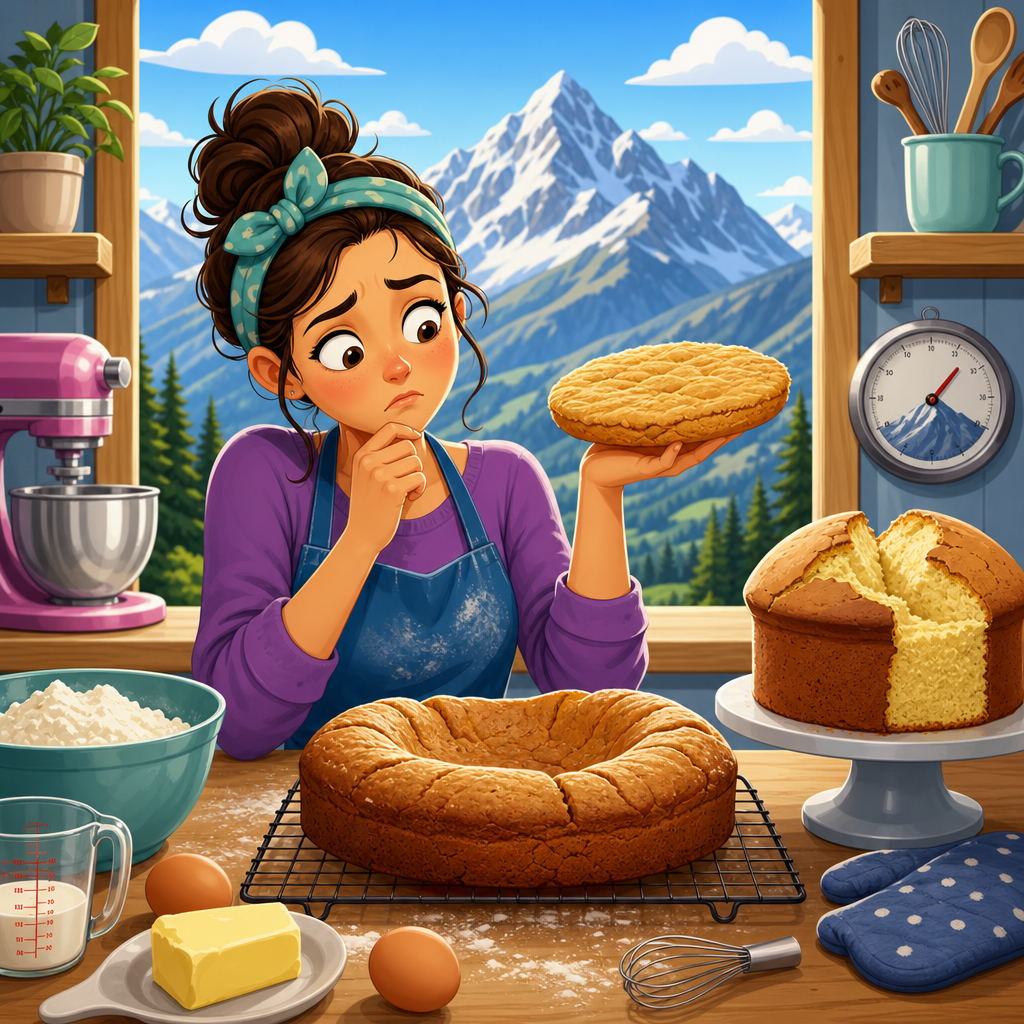
Altitude baking problems are not mysterious; they follow predictable physical changes. Atmospheric pressure drops as elevation rises, so gases expand more readily. In a sponge batter, the air beaten into eggs and the steam generated in the oven both push upward faster than they would at sea level. That sounds helpful, but the expanding cells stretch the protein walls before they are fully set. If the batter is also overbeaten, underbaked, or too wet, those stretched walls rupture and the cake falls. Faster evaporation compounds the issue by concentrating sugars on the surface while drying the interior batter too early. The result can be a crust that sets before the center stabilizes, causing peaked tops, cracking, or a compressed band near the base.
Temperature and humidity matter too. Many mountain regions have dry indoor air, especially in winter, so meringues lose moisture quickly and sugar dissolves less efficiently if mixed carelessly. Flour can absorb differently from one day to the next. Standard formulas written for sea level often contain more sugar and liquid than a high-altitude sponge can tolerate because they assume slower evaporation and gentler expansion. The common fixes—slightly higher oven temperature, somewhat less sugar, controlled liquid changes, and shorter whipping—work because they address the underlying structure, not because altitude baking requires completely different chemistry. Once you see sponge cake as a race between expansion and setting, recipe decisions become more consistent.
Foam science: what actually stabilizes the batter
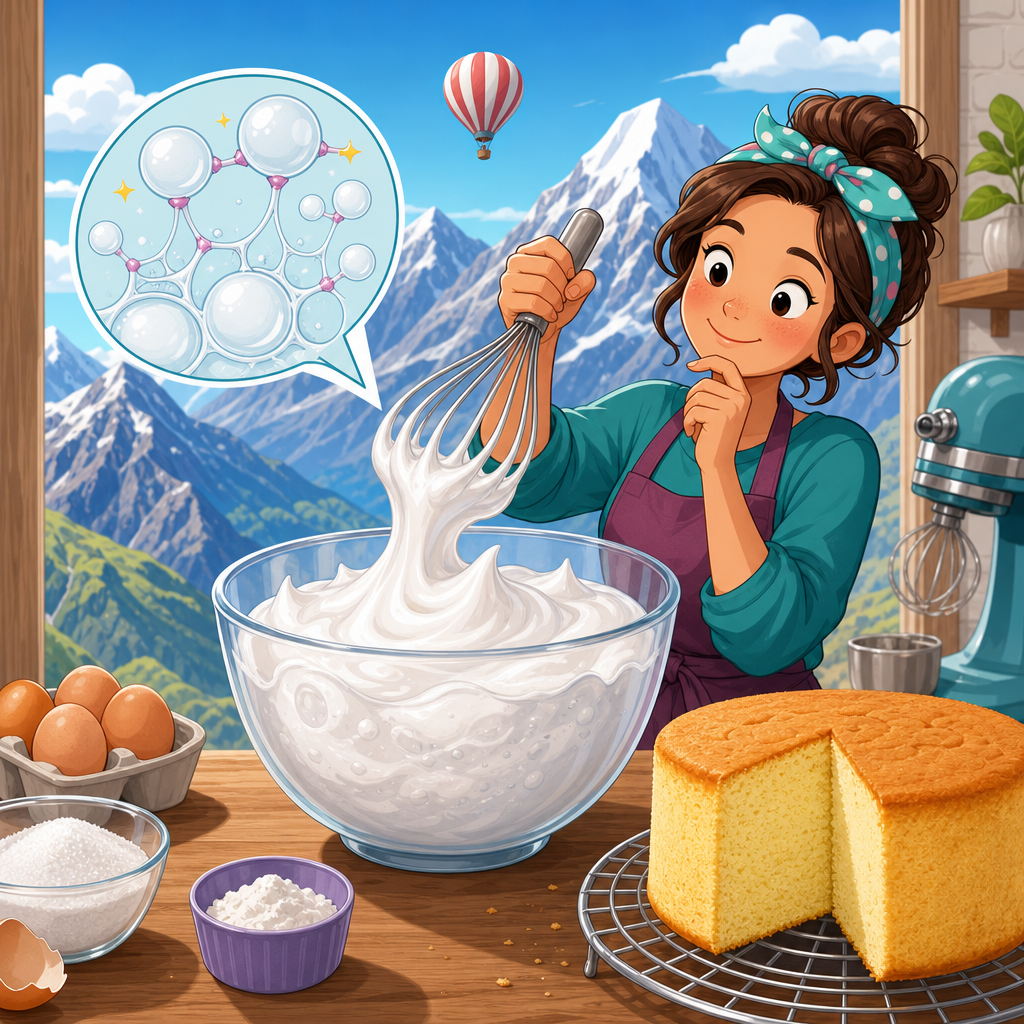
Egg proteins are the core stabilizers in sponge cake. When you whip eggs, proteins unfold and form a network around air bubbles. Sugar slows and protects that process by helping bubbles stay small and reducing the risk of grainy, brittle foam, but too much sugar delays coagulation in the oven. Acid ingredients such as cream of tartar or lemon juice lower pH and help egg white foams remain elastic; this is why angel food and chiffon formulas often include an acid. Flour and starch then reinforce the network during baking, while heat firms the proteins permanently. In my own testing, the most reliable altitude sponges are those that enter the oven with a glossy, moderately whipped foam rather than a dry, towering foam that looks impressive in the bowl but breaks down during folding.
Fat is the great complication. In whole-egg sponges, a little melted butter can improve tenderness, but any fat residue in the bowl can sabotage a meringue. Oil-based chiffon succeeds because the oil is kept away from the whites until after the meringue forms, then folded into a batter designed to accept it. Sugar particle size also matters. Fine granulated or caster sugar dissolves faster, creating a smoother foam; coarse crystals can tear at the structure and leave undissolved grit. Professional pastry kitchens often warm whole eggs and sugar to about 100°F to 110°F before whipping genoise because warmer eggs trap air more efficiently. At altitude, that technique remains useful, but overwhipping warm eggs is even easier, so visual cues matter more than mixer time.
How to adjust recipes for cakes and cupcakes at altitude
Most sponge and foam-based cake adjustments fall within a narrow range, but they must be deliberate. For elevations around 3,000 to 5,000 feet, reduce sugar modestly, often by 1 to 2 tablespoons per cake layer recipe; above 5,000 feet, reductions may reach 2 to 4 tablespoons, depending on style. Increase oven temperature by about 15°F to 25°F so the structure sets sooner. In recipes with baking powder, cut the leavener slightly because whipped eggs already provide lift and extra gas expansion at altitude can be destructive. Add a little more flour when the batter seems too loose, especially in roulades and cupcake batters that must hold shape in smaller molds. Liquids are more nuanced: some butter cakes need more liquid at altitude, but sponge cakes often need restraint because eggs already carry significant water.
The table below summarizes the adjustments I reach for first when converting cakes and cupcakes in the altitude range most home bakers face.
| Style | Main risk at altitude | Best first adjustment | Typical second adjustment |
|---|---|---|---|
| Genoise or whole-egg sponge | Overexpansion then collapse | Raise oven 15°F to 25°F | Reduce sugar slightly |
| Angel food | Dry foam, tunnels, broken dome | Whip to medium peaks, not stiff | Use fine sugar and add acid |
| Chiffon cake | Coarse crumb, sinking center | Reduce baking powder modestly | Add a little extra flour |
| Sponge cupcakes | Burst tops, shrinkage after cooling | Fill cups slightly less | Increase bake heat slightly |
| Roll cakes | Dry sheet, cracking when rolled | Shorten bake time | Protect moisture during cooling |
These are starting points, not universal rules. A formula heavy in cocoa behaves differently from one built on cake flour and warm eggs. Pan size changes the rate at which the center sets, and convection ovens can exaggerate drying. For that reason, the strongest hub strategy for cakes and cupcakes is to keep a baking log: record elevation, pan size, exact sugar reduction, oven setting, and the look of the foam before folding. After two or three tests, patterns become obvious. That evidence-based approach outperforms generic altitude charts because it reflects your flour brand, your mixer, your oven calibration, and your climate.
Mixing method: the moments where foams usually fail
The bowl stage determines whether a sponge survives altitude. Start with impeccably clean equipment. Even a trace of yolk in egg whites lowers foam volume. If using whole eggs, warm them gently with sugar over a bain-marie or in short bursts of careful heating until just warm, then whip until the batter forms ribbons that briefly sit on the surface before dissolving. Stop before the foam turns dry or excessively thick. If using separated eggs, beat whites first on medium speed until foamy, add acid, then rain in sugar gradually. Medium peaks are safer than stiff peaks in mountain baking because they remain flexible during folding and oven spring. Stiff, chalky peaks often produce large, unstable cells.
Folding is where many otherwise solid cakes are lost. Flour should be sifted, added in stages, and folded with broad strokes that reach the bottom of the bowl. Scraping aggressively knocks out air, but timid folding leaves pockets of flour that collapse into gummy streaks. If the formula includes melted butter or oil, temper it first with some batter so it disperses instead of sinking. For cupcakes, portion immediately after mixing; a sponge batter left standing on the counter loses volume while you prepare pans. I also recommend baking one test cupcake from the first scoop when developing a formula. Its rise, grain, and top shape will tell you whether the remaining batter needs one tablespoon more flour, slightly less fill, or a tiny reduction in oven heat.
Baking, cooling, and troubleshooting common failures
Once the pans enter the oven, the goal is rapid but even setting. Preheat thoroughly; many altitude failures are simply underheated ovens. An oven thermometer is not optional because residential ovens commonly run off by 15°F or more. Place sponge layers in the center rack where heat is balanced. Avoid opening the door early, especially during the first two-thirds of baking, because pressure and temperature swings can collapse a still-fluid crumb. Cupcakes should be filled a little less than at sea level, often around one-half to two-thirds full depending on the formula, to reduce mushrooming and side spill. Doneness cues matter more than time: the top should spring back lightly, the crumb should not hiss with steam when pressed, and a skewer should emerge with only a few moist crumbs.
Cooling strategy depends on style. Angel food and some chiffons benefit from cooling inverted so their own weight does not compress the crumb before it sets fully. Genoise layers should cool in the pan briefly, then be unmolded to prevent sweating. Roll cakes need immediate release and protection with parchment or a towel to preserve flexibility. If a sponge sinks in the middle, review three likely causes first: underbaking, too much sugar, or an overwhipped foam. If the cake rises sharply and cracks, the oven is often too hot or the pan overfilled, though excess leavener can contribute in chiffon and cupcake formulas. Tunneling points to an unstable foam or aggressive mixing after flour addition. A rubbery layer near the bottom usually means butter or oil was not incorporated evenly. These symptoms are diagnostics, and reading them accurately is how experienced altitude bakers improve fast.
Building a dependable cakes and cupcakes system
As a hub topic, cakes and cupcakes at altitude extends beyond classic sponge layers. The same foam principles guide chiffon birthday cakes, angel food, Swiss roll sheets, ladyfingers, sponge-based cupcakes, and even some butter cakes that use whipped eggs for lift. The most dependable system starts with recipe selection. Choose formulas written in baker’s percentages or by weight, because gram measurements expose whether sugar is disproportionately high relative to egg and flour. Cake flour usually gives a finer crumb in delicate sponges, while all-purpose flour can help support heavier chiffon or cocoa versions. Stand mixers are useful, but hand mixers can produce excellent results if you watch the foam instead of the clock. Parchment-lined pans, a digital thermometer, and a scale contribute more consistency than any altitude “hack.”
From here, organize your baking library so each article under this cakes and cupcakes hub solves one problem clearly: adjusting genoise, stabilizing angel food, preventing chiffon collapse, converting cupcakes, handling cocoa, and storing finished layers in dry climates. That structure helps bakers find the right method quickly and creates a repeatable workflow in the kitchen. The central takeaway is simple: stabilize the foam, and altitude stops feeling unpredictable. Use slightly less sugar, moderate the whip, set the structure earlier with calibrated heat, and fold with intent. Those small decisions produce cakes with finer crumb, better volume, and fewer failures than broad rule-of-thumb changes applied blindly. If you bake above sea level, start with one sponge recipe, log every adjustment, and turn your next cake into a controlled test. That disciplined approach is the fastest route to reliable cakes and cupcakes in any mountain kitchen.
Frequently Asked Questions
Why does sponge cake collapse more easily at high altitude?
Sponge cake is especially vulnerable at altitude because its structure depends on a delicate foam rather than a large amount of fat or chemical leavening. In a sponge, whipped whole eggs or whipped whites trap air, and that air expands in the oven to lift the batter. At higher elevations, lower air pressure allows those bubbles to expand more quickly and more dramatically. That sounds helpful at first, but it often causes the foam to overextend before the proteins and starches have fully set. When that happens, the cake rises fast, then sinks, wrinkles, or shrinks as it cools.
The second problem is moisture loss. Water evaporates faster at altitude, so the batter can dry out before it has enough internal strength to support its own rise. That is why a sponge that looks beautifully inflated at the midpoint of baking may later become coarse, rubbery, or sunken. On top of that, the rapid expansion of air cells can make the crumb uneven, with large tunnels at the top and a compressed layer near the bottom. In practical terms, high-altitude bakers are managing timing: the foam expands sooner, the moisture disappears faster, and the cake needs to set before the structure tears itself apart. Stabilizing the foam is really about slowing that imbalance and helping the batter hold on long enough to bake into a fine, resilient crumb.
What is the best way to stabilize the egg foam before baking?
The most effective way to stabilize a sponge foam at altitude is to build strength gradually and avoid overwhipping. Eggs should usually be at room temperature so they whip efficiently and form a more elastic foam. Sugar matters too: instead of dumping it in quickly, add it gradually once the eggs or whites have started to foam. Sugar slows foaming slightly, but it strengthens the bubble walls and helps the foam hold moisture. That tradeoff is valuable in mountain baking, where a fragile, fast-rising foam is exactly what causes trouble.
Acid is another useful tool. A small amount of cream of tartar, lemon juice, or another acid can help egg white foams stay tighter and less prone to breaking. This is especially helpful in angel food cake, chiffon, and separated-egg sponge formulas. The key, however, is not to whip to a dry, clumpy peak. Many high-altitude failures begin with a foam that looked “stiff” but was actually overbeaten. Overwhipped foam loses flexibility, making it harder to fold in flour and more likely to expand and burst in the oven. Aim for glossy, smooth peaks that stand up but still curve slightly at the tip. For whole-egg foams such as genoise, whip until the mixture is thick and aerated but still fluid enough to ribbon cleanly. A stable foam should feel strong, silky, and foldable, not brittle.
Finally, handle the batter with restraint after whipping. Sift dry ingredients well, fold gently but thoroughly, and bake immediately. A perfectly whipped foam can still fail if it sits too long on the counter, waits in the pan, or is aggressively mixed after flour is added. At altitude, delays are less forgiving, so stability comes from the full chain of technique, not just the mixer stage.
How should I adjust the ingredient ratios for sponge cake at altitude?
Most high-altitude sponge cakes improve when you make small, targeted adjustments rather than drastic changes. Because moisture escapes faster, many bakers benefit from a slight increase in liquid, especially in chiffon cakes or separated-egg layer cakes that already contain oil, milk, or water. Even a modest addition can help delay drying and allow the crumb to set more evenly. In some formulas, a slight increase in flour can also help by giving the batter more structure to support the expanding foam. This is often more effective than trying to force extra lift from the eggs.
Sugar deserves careful attention. While sugar stabilizes foam and helps retain moisture, too much of it can weaken the structure and delay setting, which is risky at altitude. If a sponge rises dramatically and then falls, or if it remains overly soft and sticky, a small reduction in sugar may help. The adjustment should usually be conservative, because cutting too much sugar can create a dry, tough cake that stales quickly. The goal is balance: enough sugar to support the foam and tenderness, but not so much that the cake cannot set in time.
For formulas using baking powder, such as some jelly roll sponges and separated-egg cakes, reducing the leavening is often important. At altitude, the egg foam is already providing substantial lift, and excess chemical leavening can push the batter beyond what it can support. In pure foam cakes like genoise and angel food, the more useful adjustments usually center on whipping, sugar management, flour proportion, and baking conditions rather than adding extra leavening. The best approach is to change one variable at a time and keep notes, because the ideal ratio depends on both elevation and cake style.
Does baking temperature matter more for sponge cake at high altitude?
Yes, temperature matters enormously because sponge cake needs its structure to set before the expanded bubbles begin to collapse. In high-altitude baking, a slightly higher oven temperature often helps because it encourages faster protein coagulation and starch gelatinization. That means the cake can “lock in” its rise before the foam stretches too far. If the oven is too cool, the bubbles keep enlarging while the batter remains weak, leading to a dramatic rise followed by sinking, wrinkling, or a gummy center.
That said, hotter is not always better. If the temperature is pushed too high, the exterior can set and brown before the inside has expanded evenly, creating doming, cracking, or a dense lower crumb. This is why sponge cakes require a measured increase rather than an aggressive one. Oven accuracy is especially important. An oven thermometer is one of the most useful tools for altitude baking, because even a small temperature error can change the timing between rise, evaporation, and setting. Preheating thoroughly also matters more than many people realize. A sponge placed into an underheated oven loses precious foam strength before the structure begins to form.
Pan size and placement influence this as well. A batter spread too deep takes longer to set in the center, increasing the risk of collapse. Properly sized pans, parchment lining where appropriate, and center-rack baking all contribute to a more even result. In mountain kitchens, successful sponge cakes often come from a coordinated system: a stable foam, a batter mixed without deflation, and an oven hot enough to set the crumb at the right moment.
Which sponge cake styles are easiest to adapt at altitude, and which are the trickiest?
Not all sponge cakes behave the same way in mountain conditions. Chiffon cakes are often among the more adaptable styles because they contain oil and liquid, which help with moisture retention and tenderness. The oil makes the crumb less prone to drying out, and the formula usually offers more room for careful ratio adjustments. Separated-egg layer cakes can also adapt well because they combine some foam lift with a bit more structural support than a classic foam-only cake. These styles tend to be forgiving when you slightly increase liquid, moderate the leavening, and pay close attention to the meringue texture.
Angel food cake can work beautifully at altitude, but it is less forgiving than many bakers expect. It relies almost entirely on egg white foam, sugar, and careful baking, so there is very little margin for overwhipping, underbaking, or imbalanced sugar levels. A strong but pliable meringue is essential. Genoise is also tricky because whole-egg foam is naturally less stable than some meringues, and the batter can lose volume quickly during folding. Since genoise has little moisture and often includes melted butter, it is particularly sensitive to both deflation and drying at altitude.
Jelly roll sponge introduces a different challenge: it is thin, bakes quickly, and must remain flexible enough to roll without cracking. At altitude, fast evaporation can make it dry and brittle if it bakes even slightly too long. The easiest way to choose your starting point is to look for a sponge with some built-in moisture and a formula that does not depend on extreme volume from the eggs alone. Once you understand how your oven and elevation affect one style, you can apply the same core lesson across all of them: protect the foam, control the rise, and get the structure set before the cake loses the race against expansion and evaporation.