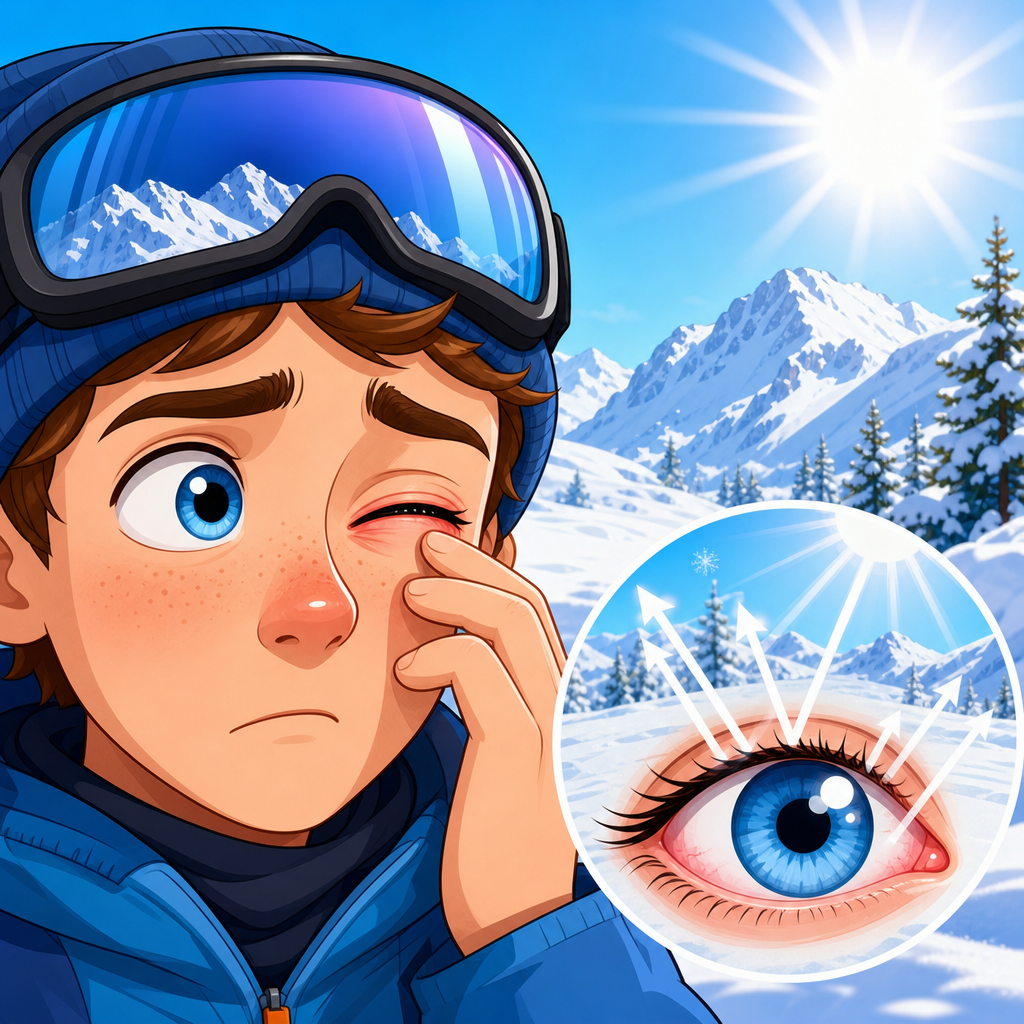
Blue eyes do not burn faster in bright snow conditions, but they can feel more light-sensitive because lighter irises contain less melanin to absorb stray light. That distinction matters for anyone spending time skiing, snowshoeing, driving through winter glare, or working outdoors, because discomfort, tearing, and squinting are often confused with actual eye injury. In eye care, “burn” usually refers to photokeratitis, a sunburn-like injury to the cornea caused by excessive ultraviolet exposure. Bright snow raises the risk because fresh snow can reflect a very high percentage of incoming UV radiation, and high-altitude winter environments often combine strong reflection with thinner atmosphere. As a result, a person with blue, green, hazel, or brown eyes can all develop snow blindness if protection is inadequate. What differs is how light is perceived, how quickly glare becomes uncomfortable, and how likely someone is to notice strain before damage occurs.
I have had patients and outdoor workers describe the same pattern repeatedly: the blue-eyed person in the group starts squinting first, yet the brown-eyed skier who feels fine may still end the day with red, painful eyes because UV exposure is not judged reliably by comfort alone. This is why the question deserves a precise answer. Iris color affects visible light sensitivity more than it affects corneal UV injury. The cornea and conjunctiva bear the direct burden of reflected ultraviolet light, while the retina can also be stressed by intense brightness. Snow conditions add another variable: cloud cover does not eliminate UV, and cold temperatures do not protect the eye. People often remember sunscreen on exposed skin but forget that wraparound sunglasses or ski goggles are just as essential for vision health. For a hub page on eye care and vision, this topic is useful because it connects anatomy, risk prevention, everyday symptoms, protective gear, and the larger habits that keep eyes comfortable throughout daily life.
To answer the headline plainly: blue eyes are not inherently more likely to “burn” in snow, but people with blue eyes may notice glare sooner and should treat that early discomfort as a practical warning sign. The larger lesson is that eye protection should be based on exposure, not eye color. Whether you are managing winter glare, dry indoor air, digital eye strain, contact lens comfort, or age-related vision changes, the core principle is the same: understand the mechanism, recognize early symptoms, and use evidence-based protection before small irritation becomes preventable injury.
What bright snow does to the eyes
Bright snow creates a uniquely harsh visual environment because it increases total light exposure from above and below at the same time. Sunlight reaches the eye directly, then reflected light bounces upward from the snowfield into areas ordinary flat-framed sunglasses may not fully block. In practical terms, this means a skier on an overcast mountain can still receive significant UV exposure despite feeling less heat than on a summer beach. The danger is mostly from ultraviolet A and ultraviolet B radiation. UVB is strongly associated with acute corneal injury, while UVA penetrates differently and contributes to cumulative ocular stress over time. Because snow can reflect much of the available UV, exposure compounds quickly during midday, at altitude, and on long outings where the eyes are open to glare for hours.
Photokeratitis develops when UV damages the corneal epithelium. The cornea has many nerve endings, so symptoms can become dramatic several hours after exposure: pain, tearing, redness, gritty sensation, blurred vision, halos, eyelid twitching, and intense sensitivity to light. Many people are surprised that the pain is delayed. They may feel merely dazzled on the mountain and then wake in the evening or night with eyes that feel scratched. That delay explains why eye color myths persist. If the person with blue eyes complained earlier, others assume the discomfort proved greater injury. In reality, visible-light sensitivity may have prompted earlier squinting, while the actual UV dose was affecting everyone exposed.
Snow glare also reduces contrast sensitivity, making terrain, ice patches, and obstacles harder to judge. This matters for injury prevention beyond eye health. The right lens tint, polarization where appropriate, and full UV400 protection improve comfort and visual performance together. Eye care is not only about avoiding disease; it is also about seeing clearly enough to move safely in the environment.
Does eye color change snow blindness risk?
Eye color is determined largely by the amount and distribution of melanin in the iris stroma and posterior pigment epithelium. Brown eyes generally contain more visible pigment; blue eyes appear blue because of light scattering and lower stromal melanin rather than blue pigment. In everyday life, that can translate into greater subjective photophobia, or light sensitivity, among some people with lighter eyes. However, the cornea itself does not become meaningfully shielded from UV because the iris is darker. Snow blindness is a corneal surface injury, so iris color is not the main determinant of whether it occurs. Time outdoors, altitude, reflective conditions, eyewear quality, fit, and whether the lenses actually block UV are far more important.
There is nuance here. A person with light-colored eyes may blink more, squint sooner, and seek shade earlier, which could reduce exposure behaviorally. Another may remove sunglasses because dark lenses seem to make contrast worse in flat light, increasing risk. Contact lens wear, dry-eye disease, recent eye surgery, and medications that increase photosensitivity may also influence symptoms more than iris color does. In clinics, I treat snow-related irritation by looking first at exposure history and protection used, not at eye color. If someone spent five hours on an exposed slope in fashion sunglasses without side coverage, their risk is elevated regardless of whether their irises are blue or brown.
The best concise answer is this: blue eyes may be more sensitive to brightness, but all eye colors can suffer equal or greater UV injury in snow if protection fails. That is the point searchers need, because it replaces a simple myth with the correct prevention strategy.
Symptoms, first aid, and when to get help
If your eyes feel painfully light-sensitive after time in snow, assume UV overexposure is possible. Common symptoms include burning, tearing, redness, swollen lids, blurred vision, headache, foreign-body sensation, and difficulty keeping the eyes open. Remove contact lenses immediately. Go indoors or into shade, avoid rubbing, and use preservative-free artificial tears for comfort. A cool compress can reduce irritation. Oral pain relievers may help if they are safe for you. Most mild cases improve within twenty-four to forty-eight hours as the corneal surface heals.
What should you avoid? Do not use leftover antibiotic drops, do not patch the eye, and do not keep driving or skiing if vision is impaired. Numbing drops used in clinics are not for home use because they can delay healing and mask worsening injury. Seek prompt medical care if pain is severe, vision remains reduced, one eye is much worse than the other, discharge is present, you had trauma in addition to glare exposure, or symptoms last beyond two days. People with only one functional eye, recent corneal surgery, or significant immune compromise should have a lower threshold to call an eye professional.
For daily life, this guidance extends beyond winter sports. Welding arcs, tanning beds, and water reflection can cause similar UV injuries. Understanding the symptom pattern helps people respond quickly no matter the setting.
How to protect your eyes in snow and everyday glare
The best eye protection in bright snow is simple: use eyewear that blocks 100 percent of UVA and UVB, fits close to the face, and shields from side-entry light. Ski goggles are often superior to standard sunglasses in severe conditions because they cover more area and maintain performance in wind. For driving, polarized sunglasses can reduce reflected glare from snowbanks and wet roads, but polarization is not a substitute for UV protection. Lens darkness alone does not guarantee safety; clear lenses can block UV fully, while dark fashion lenses may not. That is why the label matters.
| Situation | Best eyewear choice | Why it works |
|---|---|---|
| Downhill skiing or snowboarding | UV400 goggles with close facial seal | Blocks direct and reflected UV, wind, and side glare |
| Winter hiking or snowshoeing | Wraparound sunglasses or glacier glasses | Improves comfort and limits peripheral reflection |
| Driving in winter sun | UV400 polarized sunglasses | Reduces road glare and visual fatigue |
| Cloudy high-altitude conditions | Protective eyewear worn continuously | UV remains significant even without strong warmth |
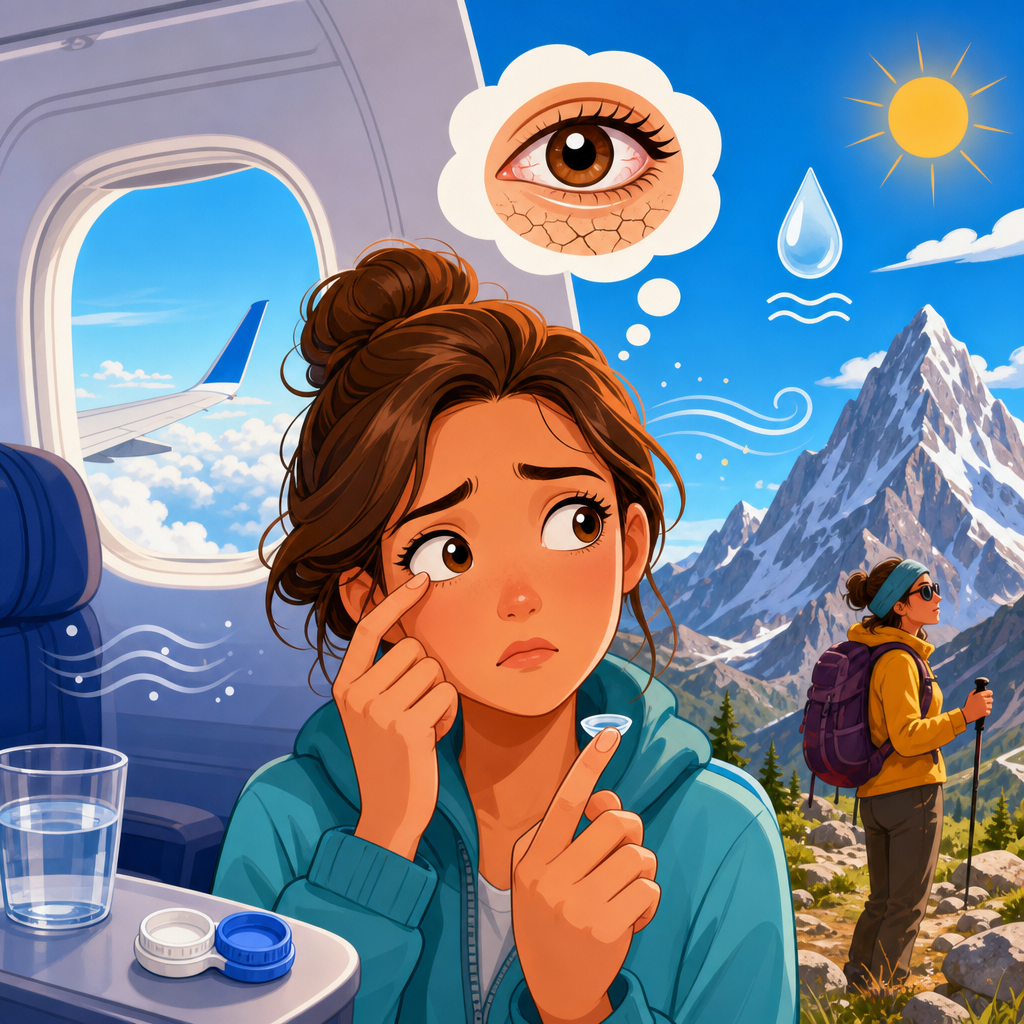
Hat brims help, but they do not replace eye protection because reflected light rises from below. Children need the same standards as adults, and they often need reminders because bright snow is novel and exciting. If you wear prescription lenses, ask for verified UV coatings or prescription sport frames. Contact lens wearers should carry lubricating drops, since cold wind and dry air can worsen lens discomfort and make glare feel harsher.
Protection also means routine eye habits at home and work. Dry indoor heating in winter destabilizes the tear film, making eyes feel more irritated outside. Regular artificial tears, humidification, blinking breaks from screens, and up-to-date prescriptions all reduce background strain so intense light is less overwhelming when you step outdoors.
Building a complete eye care and vision routine
A good eye care routine is broader than reacting to snow glare. In everyday practice, the people who do best are the ones who treat vision health as maintenance, not crisis management. Start with regular comprehensive eye exams at intervals recommended by your optometrist or ophthalmologist, especially if you wear contacts, have diabetes, take hydroxychloroquine or steroid medications, or have a family history of glaucoma, macular degeneration, or retinal detachment. Many serious eye diseases are initially painless. Clear vision is not proof that everything is healthy.
Next, manage the most common comfort problems. Digital eye strain responds well to intentional blinking, monitor positioning slightly below eye level, larger font sizes, and periodic distance viewing. Dry eye often improves with preservative-free lubricants, warm compresses for meibomian gland dysfunction, and environmental changes such as avoiding direct fan airflow. Contact lens hygiene remains non-negotiable: wash hands, replace lenses on schedule, never top off solution, and do not sleep in lenses unless specifically approved. I have seen avoidable corneal ulcers start with exactly those shortcuts.
Nutrition and systemic health matter too. Blood sugar control protects the retinal blood vessels. Smoking increases the risk of cataract and macular degeneration. Protective eyewear is essential not only in snow but also during home repairs, yard work, and sports involving projectiles. For parents, watch for signs such as persistent squinting, sitting too close to screens, frequent eye rubbing, headaches after reading, or one eye drifting. For older adults, sudden flashes, new floaters, a curtain-like shadow, or abrupt central blur require urgent evaluation.
This hub article supports every major question within eye care and vision: why eyes become dry, how to choose sunglasses, when floaters are concerning, how screen habits affect focus, why contact lenses irritate, and what symptoms need immediate attention. The unifying message is practical. Most preventable eye problems are reduced by a few consistent habits: block UV, respect symptoms, keep the ocular surface healthy, and seek care early when vision changes unexpectedly.
Bottom line on blue eyes, snow glare, and lifelong vision comfort
Blue eyes do not burn faster in bright snow conditions, but they often register brightness more intensely, which can make glare feel worse sooner. That sensation is useful if you respond correctly. Take it as a cue to improve protection, not as proof that darker-eyed companions are safe. Snow blindness is driven by ultraviolet exposure to the cornea, and that risk applies to every eye color. The strongest predictors are reflective snow, altitude, time outdoors, and inadequate eyewear.
If you remember only a few points, make them these: use verified UV-blocking wraparound sunglasses or goggles, keep them on even when the sky is cloudy, treat delayed pain and tearing after snow exposure as possible photokeratitis, and build year-round eye care habits that support comfort and clear vision. Daily life places steady demands on the eyes, from winter glare and heated indoor air to screens, driving, and aging. Small protective choices prevent bigger problems.
Use this page as your starting point for eye care and vision decisions across the wider Daily Life, Skin, Eyes & Home Comfort topic. Review your current eyewear, replace any pair without confirmed UV protection, and schedule an eye exam if you have persistent irritation, changing vision, or overdue preventive care. Your eyes handle more than you notice every day; protecting them is one of the simplest high-value health habits you can keep.
Frequently Asked Questions
Do blue eyes burn faster in bright snow conditions?
No. Blue eyes do not burn faster than brown or hazel eyes in bright snow conditions. The common confusion comes from the fact that blue eyes often feel more sensitive in intense glare, but light sensitivity is not the same thing as eye tissue burning. In winter environments, the real concern is usually ultraviolet exposure reflecting off snow, which can injure the cornea and lead to photokeratitis, a sunburn-like condition of the eye’s surface. That process is driven by UV intensity and exposure time, not by whether the iris is blue, green, or brown. A person with blue eyes may squint more, tear up sooner, or feel more discomfort in bright alpine or snowy settings because lighter irises contain less melanin to absorb stray light. Even so, the underlying risk of UV injury comes from inadequate protection, not eye color itself.
Why do blue eyes seem more uncomfortable in snow glare if they are not actually burning faster?
Blue eyes can seem more vulnerable because they are often more light-sensitive in very bright conditions. The iris helps manage incoming light, and lighter-colored irises generally contain less melanin than darker ones. With less pigment to absorb scattered light, some people with blue eyes notice more glare, more squinting, more tearing, and more visual discomfort when sunlight bounces off snow. Snow is highly reflective, so it can amplify brightness dramatically, especially at higher elevations or during long days outdoors. That can make someone feel as though their eyes are being damaged more quickly, when in reality they may simply be perceiving the brightness more intensely. This distinction matters because discomfort can happen before injury, but discomfort alone is not proof of a burn. True eye injury from snow and sun exposure typically involves UV damage to the cornea rather than the iris, and that can affect people of any eye color if they do not protect their eyes properly.
What does it mean when people say their eyes were “burned” by snow or winter sun?
In eye care, when people say their eyes were “burned,” they are often referring to photokeratitis. This is a temporary but painful injury to the cornea caused by excessive ultraviolet exposure, much like a sunburn on the skin. Snow can reflect a significant amount of UV radiation, which means you can get enough exposure to damage the eye even on cold days and even when the sun does not feel particularly intense. Symptoms usually do not appear instantly. Instead, they may develop several hours after exposure and can include eye pain, redness, tearing, blurred vision, sensitivity to light, a gritty sensation, or the feeling that something is in the eye. In more severe cases, keeping the eyes open can become difficult. Photokeratitis is not caused by having blue eyes, but bright snow conditions can increase the chance of it if proper sunglasses or goggles are not used. Because the symptoms can be quite uncomfortable and can interfere with vision, anyone with significant pain or visual changes should seek medical evaluation.
How can you tell the difference between normal light sensitivity and photokeratitis in snowy conditions?
Normal light sensitivity in snow usually shows up as immediate discomfort while you are in the bright environment. You might squint, water at the eyes, feel annoyed by glare, or want to look away, but once you move indoors or put on effective eye protection, those symptoms often improve fairly quickly. Photokeratitis tends to be more than simple annoyance. It may develop after a period of UV exposure, sometimes with a delay of several hours, and it often feels distinctly painful. People frequently describe burning, stinging, intense tearing, redness, marked sensitivity to light, blurred vision, or a scratchy, gritty sensation. In some cases, both eyes are affected because both were exposed to the same reflected sunlight. The key difference is that normal glare sensitivity is mostly about brightness discomfort, while photokeratitis is actual UV injury to the corneal surface. If symptoms are severe, persist, or involve vision loss, it is important not to dismiss them as “just glare,” especially after skiing, snowmobiling, mountaineering, snowshoeing, or long hours driving through winter sun.
What is the best way to protect blue eyes and all eyes from snow glare and UV damage?
The best protection is the same for everyone, regardless of eye color: use high-quality eyewear that blocks 100% of UVA and UVB rays. Wraparound sunglasses or well-fitted snow goggles are especially helpful because they reduce both direct sunlight and reflected light entering from the sides. Polarized lenses can improve comfort by cutting glare, particularly when driving or spending time on open snowfields, although polarization alone is not a substitute for full UV protection. In harsh alpine conditions or during prolonged outdoor work, goggles are often the better choice because they provide more complete coverage against wind, reflected light, and airborne snow. A hat or helmet with a brim can add another layer of shielding. It also helps to limit long unprotected exposure during peak daylight hours and to remember that cloudy winter days do not eliminate UV risk. For people with blue eyes who feel more light-sensitive, comfort may improve with darker lenses or better side coverage, but the real priority is reliable UV blocking. If symptoms such as pain, redness, heavy tearing, or blurred vision occur after snow exposure, stop the exposure and seek professional care if symptoms are significant or do not improve.