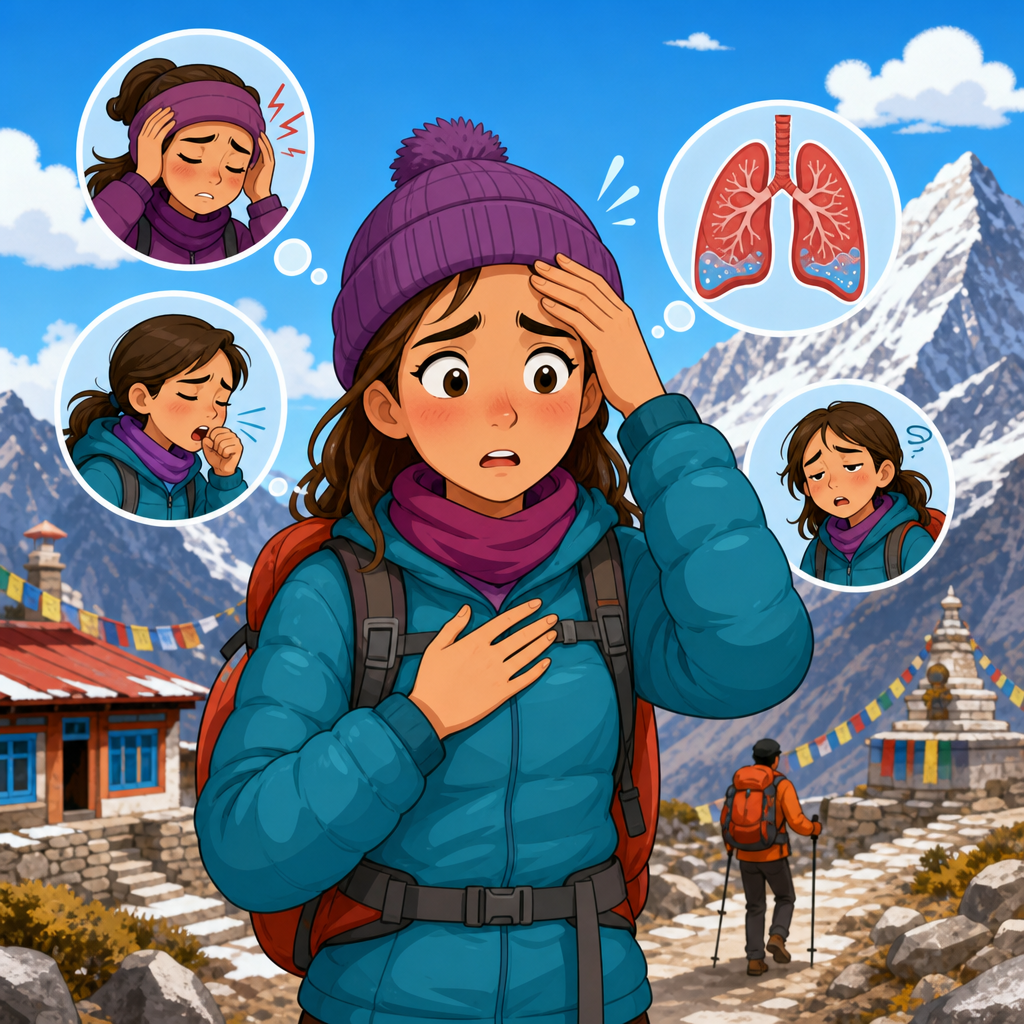
High-altitude pulmonary edema, usually shortened to HAPE, is the most dangerous common altitude illness because it can progress from mild breathlessness to life-threatening respiratory failure within hours. Every traveler going to trekking routes, ski towns, pilgrimage sites, or high mountain roads should understand the early signs of HAPE before ascent, not after symptoms begin. I have had to evaluate breathless trekkers at altitude, and the pattern is memorable: people often blame fatigue, a cold, poor fitness, or anxiety until their oxygen level drops and walking across camp becomes hard.
HAPE happens when low oxygen at altitude causes uneven constriction of the blood vessels in the lungs. That raises pressure in the pulmonary circulation, stresses capillaries, and allows fluid to leak into the air spaces where oxygen exchange should occur. Unlike pneumonia, HAPE is not primarily an infection. Unlike simple acclimatization discomfort, it does not improve by pushing through. It usually develops above 2,500 meters, though risk rises substantially with rapid ascent, heavy exertion, cold exposure, prior history of HAPE, and sleeping higher before the body has adapted.
Why does this matter so much? Because early recognition changes outcomes. HAPE is highly treatable when caught early with descent, oxygen, rest, and appropriate medication support, but delayed action can be fatal. This hub article explains what HAPE looks like in its first stages, how to distinguish it from acute mountain sickness and chest infection, who is most at risk, what to do immediately, and how to prevent it on future trips. If you travel in the Andes, Himalaya, Rockies, Alps, Ethiopian Highlands, or any other high region, knowing these signs is as practical as carrying water or checking the weather.
What HAPE feels like in the earliest stage
The earliest signs of HAPE are often subtle and easy to dismiss. The hallmark is reduced exercise tolerance that is out of proportion to the altitude, terrain, and your usual ability. A hiker who was moving comfortably yesterday may suddenly lag badly, need frequent pauses, or feel unusually winded on gentle slopes. Shortness of breath during hard exertion is normal at altitude; shortness of breath during routine walking that seems to worsen quickly is not. Many travelers describe a sense that their lungs cannot “catch up,” even when they are trying to go slowly.
A dry cough is another early clue. At first it may seem trivial, especially in cold air, but in HAPE the cough tends to become more persistent and is joined by chest tightness, reduced stamina, and unusual fatigue. Resting heart rate may be higher than expected, and recovery after effort takes longer. Sleep can become difficult because lying flat makes breathing feel harder. Some people notice they cannot keep pace while carrying the same pack weight that felt manageable before. These changes often appear after a recent gain in sleeping altitude, particularly on the second night at a new height.
As HAPE advances, the signs become clearer: breathlessness at rest, a wet or rattling cough, crackling sounds in the lungs, blue lips, and profound weakness. Sputum can become frothy or pink, although that is a later and more serious finding. The danger is waiting for these advanced signs before acting. In real mountain settings, the best trigger for suspicion is this simple question: is the person more breathless than they should be for this altitude and getting worse instead of better with rest?
Why HAPE develops and who is most vulnerable
HAPE is caused by exaggerated pulmonary vasoconstriction in response to low oxygen. At altitude, everyone’s pulmonary artery pressure rises somewhat, but susceptible people can develop markedly higher pressures. Research from mountain medicine centers has shown that individuals with prior HAPE episodes often have stronger pulmonary vascular responses to hypoxia. The leaked fluid in the lungs is typically protein-rich and noncardiogenic, meaning it is not caused by heart failure in otherwise healthy travelers. This distinction matters because the treatment priority is altitude illness management, especially descent and oxygenation, not routine outpatient cough remedies.
Risk increases with rapid ascent more than with age, sex, or baseline athletic ability. Fit travelers are not protected; in fact, they sometimes ascend too quickly because they feel strong. Common high-risk patterns include flying into a high city and immediately trekking higher, sleeping at a new maximum altitude after a strenuous day, and climbing despite a previous history of severe altitude illness. Cold weather, dehydration, respiratory infections, and intense exertion can contribute. Children can develop HAPE, and so can experienced mountaineers. A prior episode is one of the strongest predictors of future susceptibility.
It is also important to understand timing. HAPE usually develops within two to five days after arrival at a new altitude, though it can appear sooner with aggressive ascent. Many cases follow a climb from moderate altitude to significantly higher sleeping elevation without rest days. Travel itineraries that look efficient on paper often create this exact setup. That is why acclimatization planning is not optional logistics; it is the main preventive tool.
How to tell HAPE from normal acclimatization, AMS, or infection
Travelers often ask whether they are dealing with HAPE, acute mountain sickness, bronchitis, or simply being out of shape. The shortest answer is this: HAPE is primarily a lung problem marked by worsening breathlessness and declining performance, while acute mountain sickness is primarily a brain-related altitude syndrome marked by headache, nausea, dizziness, and malaise after ascent. The two can occur together, but they are not the same condition. A person with HAPE may have little headache and still be very sick.
Chest infection can look similar because both conditions can involve cough and fatigue. The difference is context and progression. HAPE often follows recent ascent, worsens with continued altitude exposure, and may improve dramatically with oxygen or descent. Fever is usually absent or low grade, whereas significant fever raises concern for infection. Lung sounds in HAPE can begin as subtle crackles, often more noticeable in the right middle lobe early on, then spread as fluid increases. Pulse oximetry can help, but numbers must be interpreted in context because normal saturation varies by altitude. A saturation that is much lower than companions at the same elevation supports concern.
| Condition | Typical early features | Clues that raise concern | Immediate priority |
|---|---|---|---|
| Normal acclimatization | Mild breathlessness on exertion, poor sleep, reduced pace | Improves over one to two days, no worsening at rest | Rest, hydrate, gradual ascent |
| Acute mountain sickness | Headache, nausea, dizziness, fatigue | Headache after ascent plus systemic symptoms | No further ascent, rest, consider acetazolamide |
| HAPE | Unusual breathlessness, dry cough, falling exercise tolerance | Shortness of breath at rest, wet cough, crackles, low oxygen | Immediate descent, oxygen, exertion stopped |
| Respiratory infection | Cough, sore throat, congestion, fever | Prominent fever, sick contacts, symptoms not linked to ascent | Medical assessment, treat cause, watch altitude risk |
Red flags that mean descend now
Some altitude symptoms allow watchful rest. Suspected HAPE does not. The red flags are shortness of breath at rest, inability to walk normally without stopping, persistent cough that is worsening, audible crackles or gurgling in the chest, confusion, blue lips, or oxygen saturation that is strikingly below expected for the altitude and clearly below companions. If a traveler cannot keep up on easy terrain and seems to be deteriorating over several hours, that is enough reason to stop ascent and start descent. Waiting for pink frothy sputum is dangerous and medically unnecessary.
The standard field response is straightforward. Stop all ascent. Keep the person warm. Minimize exertion because walking hard can worsen the problem. Give supplemental oxygen if available and target visible clinical improvement rather than chasing a specific number alone. Descend as soon as possible, ideally at least 500 to 1,000 meters, and farther if symptoms do not improve. Portable hyperbaric chambers can be lifesaving in remote settings when descent is temporarily impossible. Nifedipine is widely used as an adjunct treatment because it lowers pulmonary artery pressure, but it does not replace descent and oxygen.
If local rescue, clinic care, or evacuation is available, use it early. A traveler with suspected HAPE should not be left alone in a tent to “sleep it off.” At altitude, deterioration often becomes more apparent overnight. In guided groups, this is where having a clear escalation plan matters more than group summit goals.
Diagnosis in the field and in clinic
HAPE is a clinical diagnosis supported by history, examination, and response to treatment. In the field, the most useful inputs are recent ascent profile, symptom progression, breathing rate, pulse, work of breathing, lung sounds, and pulse oximetry. A person with HAPE often looks visibly unwell: they breathe faster, talk in shorter sentences, and struggle with simple tasks. On examination, crackles may first appear in one lung region and then become bilateral. Cyanosis, tachycardia, and inability to lie flat are late warning signs.
In clinic or hospital, chest imaging may show patchy infiltrates, often unevenly distributed, without the heart enlargement expected in cardiogenic pulmonary edema. Ultrasound can reveal B-lines consistent with interstitial fluid. An electrocardiogram may be used to exclude other causes of breathlessness. The Lake Louise framework is often discussed for altitude illness overall, but HAPE specifically depends heavily on respiratory findings and functional decline after ascent. Clinicians also consider pneumonia, asthma, pulmonary embolism, and underlying heart disease when the picture is atypical.
One practical point from experience: pulse oximeters are helpful, but not decisive by themselves. Cold fingers, poor perfusion, nail polish, movement, and cheap devices can all mislead. Use the reading as one data point alongside symptoms and observed performance. A traveler who is obviously getting more breathless and weak at altitude needs action even if the device reading seems only moderately low.
Best prevention strategies before and during travel
The best way to prevent HAPE is to control ascent. Above about 3,000 meters, most mountain medicine guidance recommends increasing sleeping altitude gradually and adding a rest day every few days, especially after major gains. “Climb high, sleep low” can help when done sensibly, but it is not permission for reckless elevation jumps. I advise travelers to look at their itinerary with one question in mind: where are we sleeping each night, and how quickly is that changing? Day-trip altitude matters, but sleeping altitude drives acclimatization stress.
Travelers with a prior history of HAPE should seek personalized medical advice before the trip. Preventive nifedipine is sometimes prescribed for high-risk individuals, and some specialists consider tadalafil or dexamethasone in selected circumstances, depending on the broader altitude illness history and itinerary. Acetazolamide helps acclimatization and is useful for preventing acute mountain sickness; it is not the primary preventive drug for HAPE, though better acclimatization overall may reduce risk indirectly. Avoiding overexertion during the first days at altitude, maintaining warmth, and not ascending while sick also reduce risk.
Group leaders should build prevention into logistics. That means conservative first nights, extra acclimatization days before high passes, objective check-ins on symptoms, and a culture where reporting breathlessness is treated as smart rather than weak. Many serious cases happen when travelers hide symptoms because they do not want to delay the team. Good planning prevents that social pressure from becoming a medical emergency.
What every traveler should pack and discuss before departure
A HAPE-ready traveler does not need a hospital backpack, but a few items and decisions matter. Carry a written itinerary with sleeping altitudes, travel insurance that covers high-altitude evacuation, and a simple symptom plan agreed on with companions or guides. If you have had HAPE before, carry the medication your clinician prescribed and know the dose, schedule, and side effects. A reliable pulse oximeter can be useful for trend monitoring in a group, though it should never delay descent when symptoms are convincing.
Ask operators and guides concrete questions before booking: What is the highest sleeping altitude on each day? How many acclimatization days are included? Is oxygen carried? Is there a portable hyperbaric bag? What is the evacuation route if someone develops severe breathlessness at night? Professional teams answer these questions clearly. Vague answers are a warning sign. If you are traveling independently, identify nearby clinics, road access points, and the local emergency number before you leave cell coverage behind.
Early signs of HAPE every traveler should know are not obscure medical trivia. They are practical, observable warning signals: unusual breathlessness, falling exercise capacity, persistent cough, and worsening symptoms after ascent. The benefit of recognizing them early is simple and enormous: prompt descent and oxygen can reverse a potentially fatal condition. Build a slower itinerary, monitor your group honestly, and act fast if the pattern fits. If you are planning a high-altitude trip, review your route now and make sure your acclimatization plan is as detailed as your packing list.
Frequently Asked Questions
What is HAPE, and why is it considered the most dangerous common altitude illness?
High-altitude pulmonary edema, or HAPE, is a serious condition in which fluid leaks into the lungs after ascent to high elevation. That fluid interferes with oxygen exchange, so the body becomes progressively more starved of oxygen even while the person is breathing hard. What makes HAPE especially dangerous is how quickly it can worsen. A traveler may first notice what seems like ordinary shortness of breath during a hike, a restless night, or an unusual drop in stamina, then within hours become severely breathless at rest, unable to walk normally, and at risk for respiratory failure.
Unlike a simple adjustment problem or expected exertional fatigue, HAPE is not something to “push through.” It often begins subtly enough that people explain it away as being out of shape, carrying a heavy pack, having a cold, or just not being used to altitude yet. That delay in recognition is one reason it becomes so dangerous. It can affect trekkers, skiers, pilgrims, road travelers, and even people who reach altitude without strenuous activity. The key point is that HAPE is a medical emergency because worsening oxygen levels can spiral quickly, and the safest response is prompt descent, oxygen if available, and urgent medical evaluation.
What are the earliest signs of HAPE every traveler should watch for?
The earliest signs of HAPE are often easy to miss because they overlap with normal altitude discomfort. The most important early clue is shortness of breath that seems out of proportion to the activity being done. A person may notice that a gentle uphill walk, climbing a few steps, or even moving around camp suddenly feels much harder than expected compared with companions at the same altitude. Another common early sign is a clear drop in exercise tolerance. Someone who was walking comfortably earlier may start falling behind, stopping often, or feeling wiped out after minimal effort.
A persistent dry cough is another warning sign, especially when it appears along with breathlessness and reduced stamina. Many travelers also feel unusual fatigue, chest tightness, or a sense that they cannot get a satisfying breath. Resting heart rate may be noticeably higher than expected, and sleep can become disturbed because breathing feels uncomfortable when lying down. As HAPE progresses, symptoms become more obvious: breathlessness at rest, worsening cough, crackling sounds in the chest, fast breathing, bluish lips or fingernails, and sometimes pink or frothy sputum. The earliest stage matters most, because recognizing those subtle changes before severe symptoms develop can be lifesaving.
How can travelers tell the difference between early HAPE and normal altitude breathlessness or simple fatigue?
Normal altitude adjustment usually causes mild shortness of breath during exertion, but that breathlessness should match the level of effort and improve with rest. Early HAPE is different because the symptoms feel excessive for the situation and tend to worsen rather than stabilize. If a traveler is unusually winded on easy terrain, cannot recover normally after stopping, or is performing much worse than expected despite a reasonable pace, that should raise concern. One of the most useful practical clues is comparison: if everyone is climbing the same slope and one person is dramatically more breathless, more exhausted, or unable to keep up in a way that seems out of character, HAPE needs to be considered.
Another important difference is progression. Ordinary fatigue improves with food, hydration, sleep, or a slower pace. Early HAPE often does not. Instead, the traveler may become more breathless over several hours, develop a cough, and start struggling with tasks that should be manageable. Breathlessness at rest is never a reassuring sign at altitude. A declining ability to walk in a straight line, speak comfortably, or carry on basic activity without gasping should never be dismissed as “just altitude.” If there is uncertainty, it is safer to treat the situation seriously, stop ascending, monitor closely, and seek medical help rather than assume it is harmless acclimatization.
Who is most at risk for HAPE, and can it happen even on a well-planned trip?
Yes, HAPE can happen even on a carefully organized trip, and that is one reason every traveler should know the warning signs. The biggest risk factors are rapid ascent, going too high too fast, sleeping at a new altitude before the body has adjusted, and previous history of HAPE. Exertion soon after arrival, cold exposure, and respiratory infections may also increase risk. Some people appear more biologically susceptible than others, which means two travelers on the same itinerary can respond very differently. A fit person is not protected simply because they are athletic. In fact, confident, strong travelers sometimes ignore early symptoms longer because they expect to tolerate altitude well.
Risk is not limited to remote expeditions. HAPE can develop on trekking routes, at ski resorts, in mountain pilgrimage areas, and during road travel to high passes or plateau towns. It can occur after flying into altitude, driving up quickly, or resuming heavy activity before acclimatization. Even when an itinerary looks reasonable on paper, individual variation matters. That is why prevention plans should include gradual ascent when possible, rest days, attention to symptoms, and a willingness to change plans. Knowing you are on a “proper” itinerary should never override what the body is showing you in real time.
What should someone do immediately if early HAPE is suspected?
If early HAPE is suspected, the first priority is to stop ascending immediately. Do not climb higher to “see how it goes,” and do not assume rest alone will solve the problem. The person should reduce exertion, stay warm, and be assessed as soon as possible by someone experienced in altitude illness if that is available. Supplemental oxygen, if available, is highly helpful and may quickly improve symptoms, but improvement with oxygen does not mean the danger has passed. The essential treatment is descent, especially if symptoms are worsening, the person is short of breath at rest, walking poorly, coughing persistently, or showing any sign of confusion or blue discoloration.
Urgent descent should not be delayed for convenience, weather optimism, or group plans. If the person cannot descend safely on foot, assisted evacuation is appropriate. In some settings, portable hyperbaric therapy and prescribed medications may be used by trained teams, but these are not substitutes for recognizing the seriousness of the condition. The most common mistake is waiting too long because the symptoms seemed mild at first. When HAPE is caught early, descent and treatment are often very effective. When ignored, it can become life-threatening with alarming speed. At altitude, unexplained breathlessness that is getting worse deserves action, not reassurance.