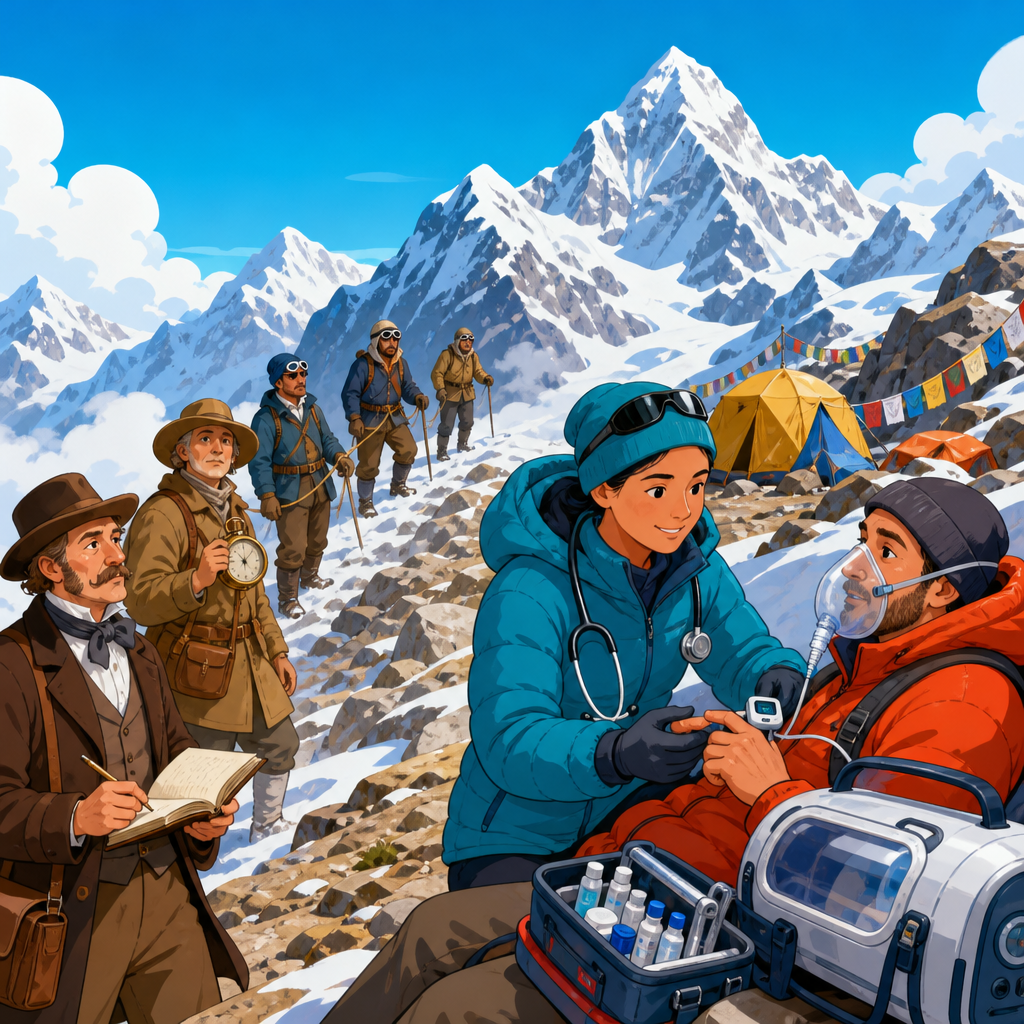
The history of high-altitude medicine in exploration and travel is a story of curiosity, survival, and hard-won scientific progress. High-altitude medicine studies how reduced barometric pressure and lower oxygen availability affect the human body, especially above roughly 2,500 meters, where acute mountain sickness becomes common. In practical terms, it explains why trekkers gasp on arrival in Cusco, why climbers on Denali move camp slowly, and why pilots, soldiers, pilgrims, and highland communities have all shaped medical knowledge. I have worked with expedition risk planning and altitude briefing materials, and one lesson repeats across every mountain environment: altitude punishes ignorance quickly, but rewards preparation reliably.
This subject matters because high places have always pulled people upward for different reasons. Imperial surveyors crossed Himalayan passes to map territory. Miners built towns in the Andes. Alpinists chased unclimbed summits in the Alps, Karakoram, and Himalaya. Traders, herders, monks, and indigenous communities established enduring cultures at elevations that lowlanders often considered uninhabitable. As travel widened in the nineteenth and twentieth centuries, doctors had to answer urgent questions. Why did some people acclimatize while others collapsed? Were headaches, insomnia, and breathlessness signs of weakness, infection, heart disease, or a distinct syndrome caused by altitude itself? Could prevention be standardized for expeditions, military movement, aviation, and tourism?
The answers emerged slowly. Early travelers described mountain illness in vivid but imprecise terms, often blaming cold, fatigue, or miasma. Later physiologists measured pulse, ventilation, hemoglobin concentration, and arterial oxygen saturation, building a more accurate framework around hypoxia. Modern high-altitude medicine now covers acclimatization, acute mountain sickness, high-altitude cerebral edema, high-altitude pulmonary edema, frostbite, ultraviolet injury, sleep disturbance, dehydration, thrombosis risk, and the long-term biology of highland populations. It also connects science and culture. The field cannot be understood only through summit bids and laboratory chambers; it also depends on Sherpa expertise, Andean adaptation, Tibetan medicine, military logistics, rescue systems, and travel medicine protocols used by ordinary tourists.
Early observations: from mountain mystery to medical pattern
Long before altitude physiology became a discipline, people living and traveling in mountain regions recognized a recurring pattern of illness. Spanish chroniclers in the Andes wrote about soroche, a term still used for altitude sickness today. In the Alps, early ascensionists reported pounding headaches, nausea, weakness, and strange fatigue after rapid gains in elevation. These descriptions matter because they show a key historical transition: mountain sickness was first understood as an environmental effect, even when its mechanism was unknown. Communities did not need pulse oximeters to notice that newcomers suffered more than residents, or that rest and descent often worked better than willpower.
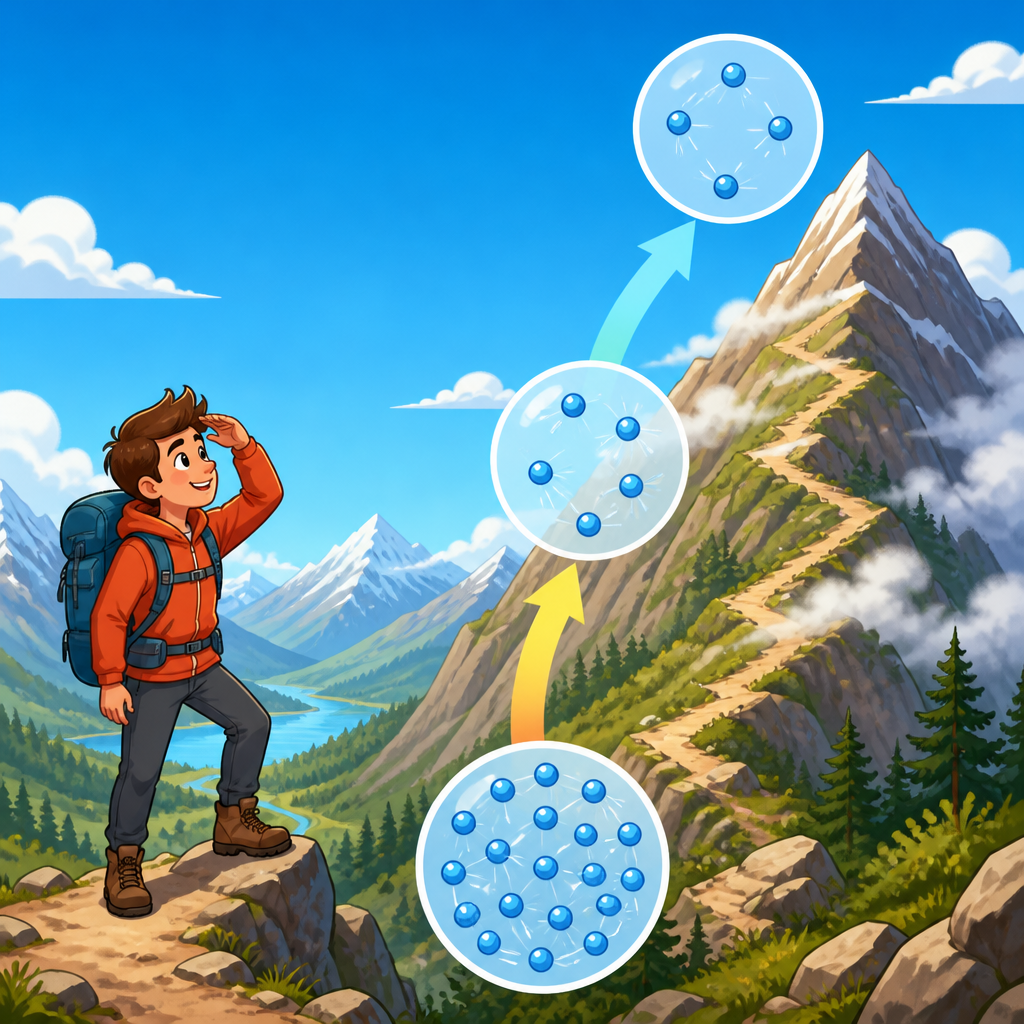
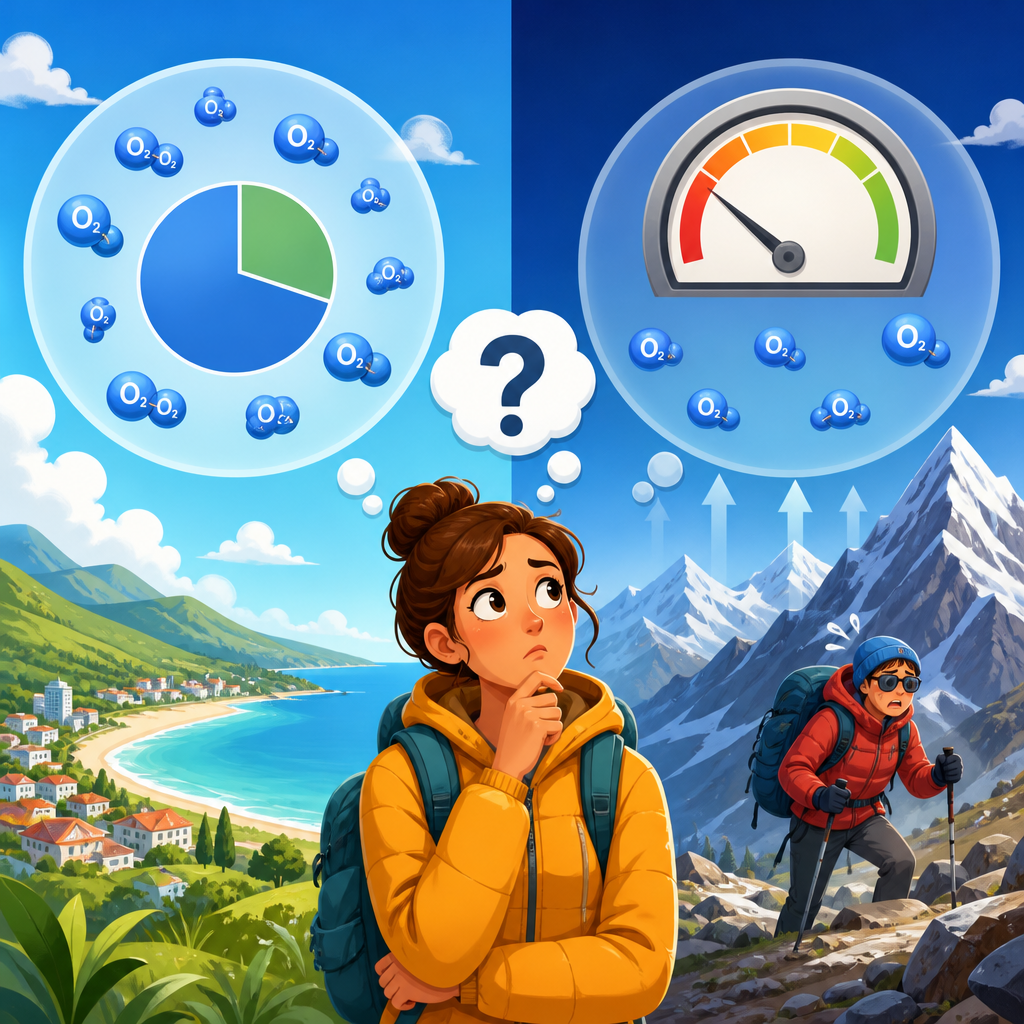
In the eighteenth and nineteenth centuries, exploration intensified and observations became more systematic. Alexander von Humboldt’s Andean journeys helped connect altitude, climate, and physiology in the scientific imagination. French scientist Paul Bert later established a decisive principle: the problem at altitude is not “thin air” in a vague sense but reduced partial pressure of oxygen. That distinction transformed the field. It clarified why a fit sea-level athlete could perform poorly high on a mountain and why pressure chambers could reproduce altitude exposure. Once physicians understood that barometric pressure drives oxygen availability, symptoms that once seemed random began to fit a coherent model of hypoxia and acclimatization.
These early accounts also reveal the cultural limits of exploration literature. European narratives often portrayed altitude knowledge as a discovery of science, when in practice local guides, traders, and pastoralists had generations of practical expertise. They knew which valleys allowed gradual ascent, which camps were safer, when storms trapped parties at dangerous elevations, and how appetite, sleep, and pace changed above tree line. Modern histories of high-altitude medicine are stronger when they treat local knowledge not as folklore beside science, but as observational evidence that influenced survival long before formal journals did.
Expeditions, physiology, and the birth of modern altitude science
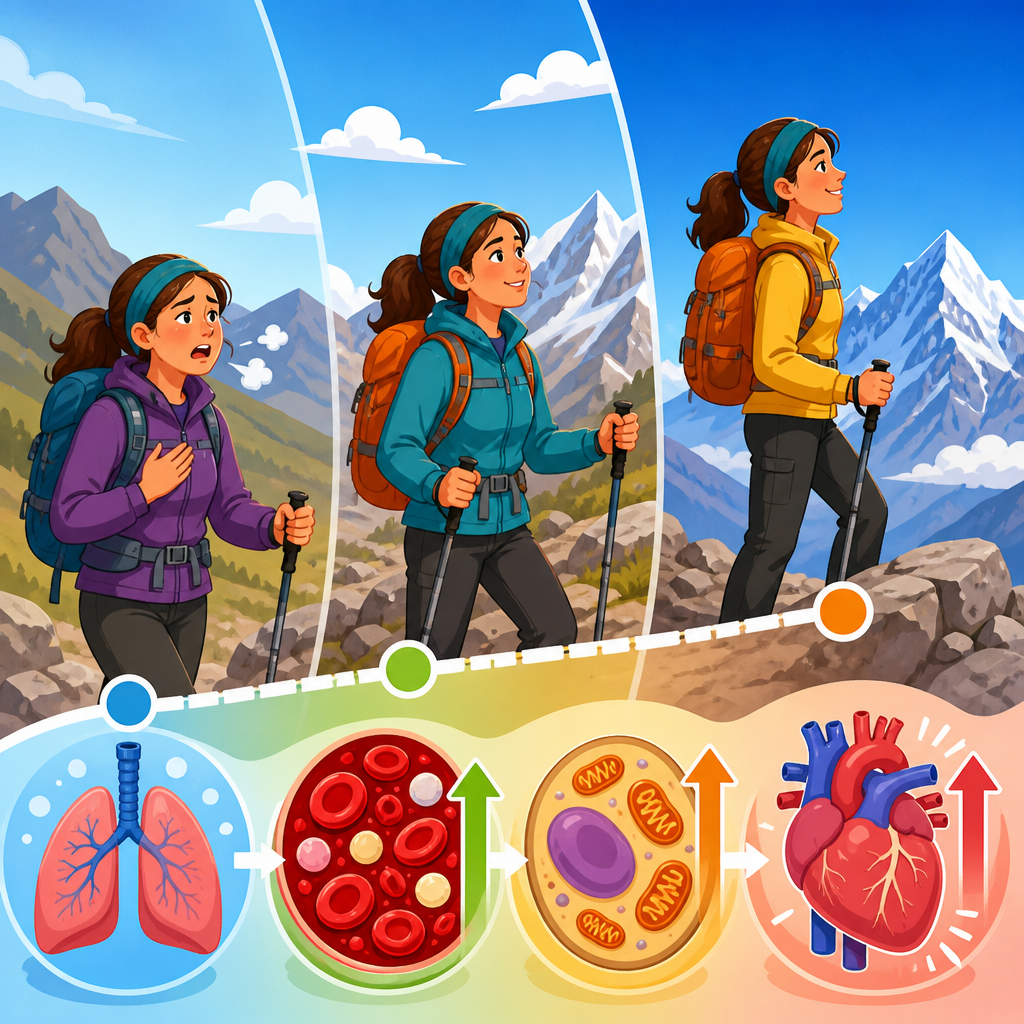
The late nineteenth and early twentieth centuries turned mountain travel into a laboratory. Alpine clubs normalized repeated ascents, while imperial expeditions to the Himalaya, Andes, and polar ranges generated records detailed enough for comparison. Researchers tracked breathing patterns, pulse rates, urine chemistry, and work capacity. John Scott Haldane and other physiologists advanced the understanding of respiratory control and oxygen transport, helping explain why hyperventilation is a central acclimatization response. Climbers at altitude breathe faster not because they are panicking, but because the body is defending oxygen delivery. That adaptation improves oxygenation, though it can also disturb sleep and acid-base balance.
The great Everest expeditions were especially influential. Before the first successful ascent in 1953, Everest served as a proving ground for equipment, supplemental oxygen systems, and competing physiological theories. George Mallory’s generation climbed with incomplete knowledge, inconsistent gear, and a culture that often valued stoicism over symptom reporting. By the mid-twentieth century, repeated Himalayan expeditions made one fact undeniable: rapid ascent above about 3,000 meters predictably caused illness in many otherwise healthy people. That helped establish modern ascent guidelines based on staging, rest days, and conservative camp placement rather than on ambition alone.
This period also sharpened debate over supplemental oxygen. Some purists viewed oxygen use as diminishing the athletic ideal, while physicians saw it as a powerful risk-reduction tool. History settled the argument pragmatically. At extreme altitude, where atmospheric pressure is so low that acclimatization reaches its physiological limits, oxygen can preserve judgment, warmth, movement efficiency, and survival. The ethics of its use in sport remain debatable, but in medical and expedition terms its value is clear. High-altitude medicine matured when it moved from romantic ideas about toughness to measurable outcomes: fewer deaths, better decision-making, and more consistent performance.
How doctors classified altitude illness and improved treatment
As expedition reports accumulated, clinicians separated altitude illness into distinct syndromes. Acute mountain sickness usually presents with headache plus symptoms such as nausea, dizziness, fatigue, or poor sleep after recent ascent. High-altitude cerebral edema is a severe progression marked by ataxia, confusion, and altered consciousness. High-altitude pulmonary edema causes breathlessness at rest, cough, reduced exercise tolerance, and low oxygen levels, often with crackles in the lungs. This classification changed travel medicine because it replaced vague advice with targeted action. Not every altitude headache is fatal, but every severe symptom demands respect.
Several standards and tools helped make diagnosis more reliable. The Lake Louise Scoring System, first developed in the 1990s and later revised, gave researchers and expedition medics a common language for acute mountain sickness. Portable pulse oximeters improved field assessment, though experienced clinicians know they support judgment rather than replace it. A low reading matters, but context matters more: trend over time, degree of exertion, temperature, baseline variability, and visible function. I have seen travelers become falsely reassured by numbers while ignoring worsening coordination, which is often the more dangerous sign.
Treatment also became more precise. The first-line response to serious altitude illness is descent, because it directly improves oxygen availability. Supplemental oxygen helps when descent is delayed or the patient is unstable. Dexamethasone is effective for severe acute mountain sickness and high-altitude cerebral edema, while nifedipine has long been used in high-altitude pulmonary edema because it lowers pulmonary artery pressure. Acetazolamide is the best-established preventive medication for many travelers; by promoting bicarbonate excretion, it stimulates ventilation and supports acclimatization. Portable hyperbaric bags, such as the Gamow bag, added another lifesaving option for remote expeditions by simulating descent when terrain or weather blocked evacuation.
| Milestone | Period | Why it mattered |
|---|---|---|
| Recognition of soroche and mountain illness | Colonial and early modern travel | Established that high places caused a recurring, identifiable syndrome |
| Paul Bert’s oxygen-pressure theory | Late 1800s | Explained altitude illness through reduced oxygen partial pressure |
| Everest expedition physiology | 1920s–1950s | Linked acclimatization, oxygen use, and staged ascent to survival |
| Lake Louise Scoring System | 1990s onward | Standardized research and field assessment of acute mountain sickness |
| Portable hyperbaric therapy in expeditions | Late twentieth century | Created an emergency bridge when immediate descent was impossible |
Indigenous high-altitude communities and the science of adaptation
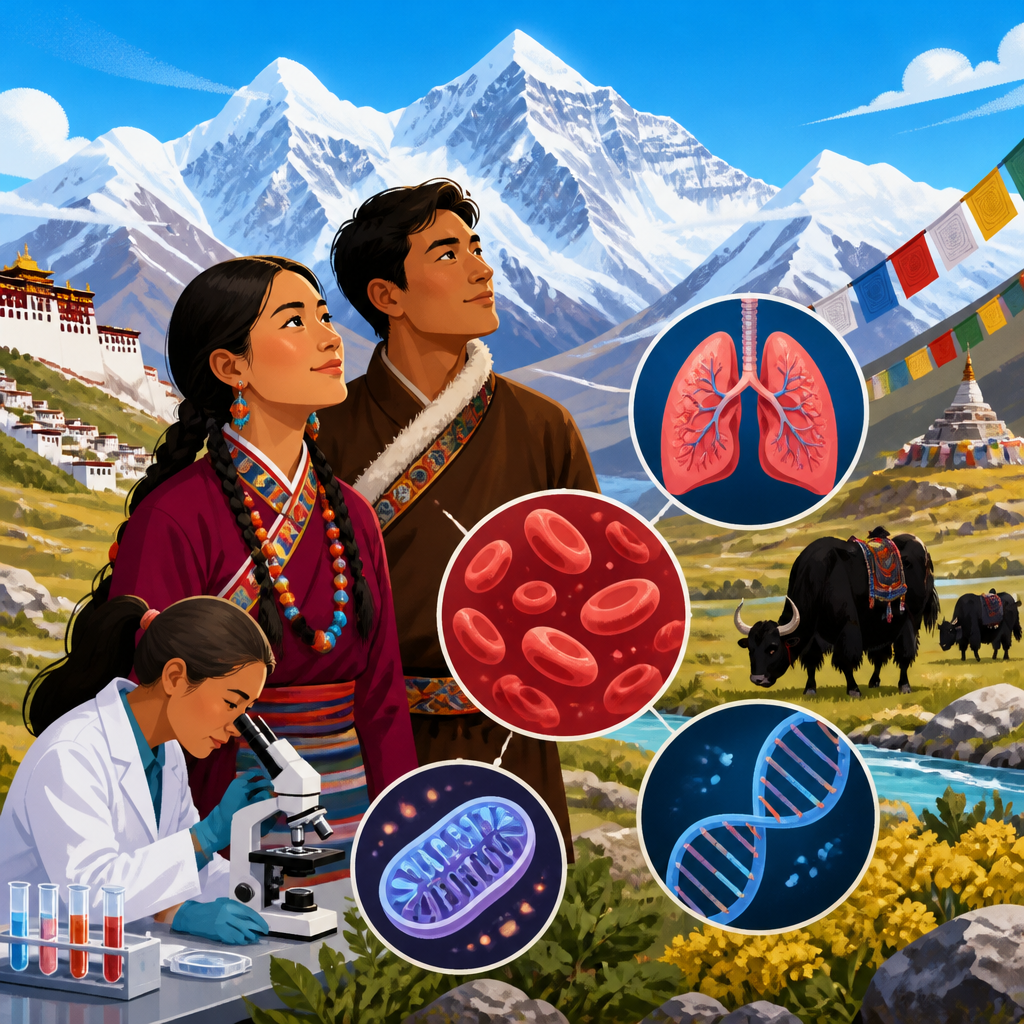
No history of high-altitude medicine is complete without the people who have lived for millennia at elevation. Andean, Tibetan, and Ethiopian highland populations are often grouped together in popular writing, but they do not represent one uniform adaptation. Research in evolutionary physiology has shown distinct patterns. Tibetans commonly exhibit relatively high ventilation rates and genetic adaptations involving pathways such as EPAS1, associated with efficient oxygen use without the extremely high hemoglobin levels seen in some newcomers. Many Andean highlanders show higher hemoglobin concentrations, while Ethiopian highlanders display yet another pattern, demonstrating that there is no single “high-altitude body.”
These differences reshaped the field. They proved that acclimatization over days or weeks is not the same as adaptation across generations. A trekker can increase ventilation, alter plasma volume, and produce more red blood cells, but that is different from inherited traits shaped by long residence at altitude. The distinction matters medically because it prevents false assumptions. A visiting mountaineer cannot train for a month and expect the same physiology as a family from the Tibetan Plateau. It also matters culturally, because highland communities should not be reduced to case studies; their agriculture, architecture, ritual life, and labor systems are inseparable from the environments that medicine studies.
Chronic mountain sickness, sometimes called Monge’s disease after Carlos Monge Medrano, further expanded understanding. Seen mainly in long-term residents at high altitude, it involves excessive erythrocytosis, hypoxemia, headaches, sleep disturbance, and reduced function. Its recognition showed that living at altitude is not automatically benign, even for acclimatized or adapted populations. High-altitude medicine therefore serves both travelers and residents. It addresses pregnancy outcomes, childhood growth, occupational exposure in mining, hypertension patterns, and access to emergency care in mountain regions where transport is difficult. The science is strongest when it respects people not merely as subjects of altitude, but as communities with health systems, livelihoods, and rights.
Travel medicine today: what explorers, trekkers, and pilgrims should know
Modern travel has democratized altitude exposure. You no longer need to be a Victorian explorer or elite alpinist to sleep above 3,500 meters. Commercial trekking routes in Nepal and Peru, ski resorts in Colorado, pilgrimage journeys in Tibet and the Andes, and road access to places like La Paz and Lhasa mean millions encounter altitude quickly. As a result, high-altitude medicine shifted from a niche expedition specialty to a mainstream travel medicine concern. The International Society for Mountain Medicine, the Wilderness Medical Society, and the CDC’s travel guidance all reinforce the same core principle: prevention is far more effective than rescue.
The practical rules are straightforward. Ascend gradually once above about 2,500 to 3,000 meters. Build rest days into itineraries. Avoid sleeping elevation gains that outpace acclimatization. Treat new headache, nausea, unusual fatigue, or poor coordination as altitude-related until proven otherwise. Keep hydration sensible, but do not assume dehydration is the main cause of symptoms. Alcohol and sedatives can worsen respiratory depression during sleep. Acetazolamide is useful for prevention in travelers with tight schedules or prior problems, but it does not make reckless ascent safe. Fitness helps with workload, not with immunity to altitude illness; very fit people often ascend too fast because they feel strong early.
Technology has improved safety, but it has not removed judgment from mountain travel. Satellite communicators, helicopter rescue, weather forecasting, and lighter oxygen systems save lives. Yet accidents still stem from classic errors: ignoring symptoms, relying on itinerary pressure, misreading cough or confusion, and assuming altitude problems only happen near major summits. The most successful mountain travelers combine science with humility. They understand that high-altitude medicine is not only about emergency treatment; it is about pacing, route design, cultural respect, and knowing when to turn around. That lesson links nineteenth-century expeditions with today’s guided treks more clearly than any device ever could.
Why this history matters for science, culture, and mountain futures
The history of high-altitude medicine in exploration and travel shows how science advances when observation, local knowledge, and disciplined measurement meet real human need. Early travelers recognized mountain illness without understanding oxygen pressure. Physiologists then explained the mechanism, expedition doctors classified the syndromes, and modern guidelines turned hard lessons into practical prevention. At the same time, highland communities demonstrated that altitude is not just a medical hazard but a lived environment that shapes culture, labor, adaptation, and identity. That combined perspective makes this topic central to any serious discussion of science and culture in mountain regions.
For readers using this page as a hub, the key themes are clear. High-altitude medicine connects exploration history, evolutionary biology, travel health, indigenous knowledge, rescue practice, and public health in remote communities. It explains why acclimatization works, why rapid ascent fails, and why treatment starts with descent when symptoms become severe. It also reminds us that mountain expertise is not owned by laboratories or famous expeditions alone. Guides, porters, herders, and residents helped build the knowledge that keeps travelers alive today. If you are planning further reading on high-altitude communities, start with adaptation, expedition medicine, and the cultural history of mountain travel, then use that knowledge to travel more carefully and ask better questions.
Frequently Asked Questions
What is high-altitude medicine, and why did it become so important in exploration and travel?
High-altitude medicine is the branch of medicine that studies how the body responds to reduced barometric pressure and lower oxygen availability at elevation, especially above about 2,500 meters, where altitude-related illness becomes much more common. Its importance grew directly out of exploration and travel because people kept pushing into mountains, plateaus, and high passes long before they fully understood what altitude was doing to the body. Early travelers, traders, soldiers, pilgrims, and mountaineers often described breathlessness, headaches, weakness, insomnia, confusion, and sudden collapse, but for centuries these experiences were treated as mysterious hazards rather than predictable physiological responses.
As exploration expanded in the Andes, Himalaya, Alps, and other high regions, it became clear that altitude was not just an inconvenience but a major medical and logistical challenge. Expeditions could fail not because of weather or terrain alone, but because climbers and support teams became ill, lost judgment, or developed life-threatening conditions such as high-altitude pulmonary edema or high-altitude cerebral edema. High-altitude medicine became essential because it transformed anecdotal suffering into practical knowledge: ascend gradually, allow time for acclimatization, recognize symptoms early, descend when needed, and use oxygen and other treatments appropriately. In that sense, the field sits at the intersection of science, survival, and human ambition. It exists because exploration repeatedly proved that the mountain environment changes the rules of human physiology.
How did early explorers and travelers understand altitude sickness before modern science explained it?
Before modern physiology, early understandings of altitude sickness were often descriptive rather than explanatory. Travelers recognized patterns: people new to high places became short of breath, developed pounding headaches, lost appetite, slept poorly, and sometimes died unexpectedly. In the Andes, Spanish chroniclers and colonial observers recorded these effects in people crossing high passes, while local populations already had practical knowledge about pacing, rest, and living at elevation. Similar observations appeared in accounts from the Alps and later from Asian mountain travel. What was missing was a clear scientific mechanism.
Early explanations reflected the medical ideas of their time. Some blamed cold, fatigue, fear, “bad air,” or toxic mountain vapors. Others thought altitude illness came from exertion alone. These theories were not unreasonable given the evidence available; after all, mountains combine steep climbing, harsh weather, dehydration, and isolation. But as more expeditions documented similar symptoms in very different ranges, altitude itself emerged as the common factor. The shift from folklore and speculation to scientific understanding happened gradually, especially in the eighteenth and nineteenth centuries, when ballooning, mountain ascents, and laboratory experiments allowed physicians and natural philosophers to compare conditions at different elevations. This historical transition matters because it shows how high-altitude medicine developed: not from one dramatic discovery, but from generations of observation, debate, and increasingly careful measurement.
What major scientific breakthroughs shaped the history of high-altitude medicine?
Several major breakthroughs turned high-altitude medicine into a modern scientific field. One of the most important was the realization that the core problem at altitude is not simply “thin air” in a vague sense, but reduced barometric pressure, which lowers the partial pressure of oxygen and makes it harder for the lungs to load oxygen into the blood. That insight helped explain why even healthy people can struggle at elevation. Nineteenth-century physiology, along with studies of respiration and gas exchange, laid much of this foundation. Later, research in decompression, aviation, and exercise physiology refined it further.
Another breakthrough was the recognition that acclimatization is a real, measurable biological process. Scientists learned that the body responds to altitude by increasing breathing, altering fluid balance, and over time producing changes in blood and tissue oxygen delivery. This helped explain why slow ascent is so effective and why rapid ascent is so dangerous. A third crucial advance was the clinical distinction between mild acute mountain sickness and severe altitude illnesses such as high-altitude pulmonary edema and high-altitude cerebral edema. Once physicians understood that these were not random tragedies but identifiable syndromes with recognizable warning signs, prevention and treatment improved dramatically.
The development of supplemental oxygen systems, portable hyperbaric methods, pulse oximetry, and evidence-based drug use also transformed care. Twentieth-century military, aviation, and expedition medicine all contributed to these advances. Research stations at altitude, controlled chamber studies, and data from major climbs added practical detail: how fast people can ascend, who is at risk, how exertion interacts with altitude, and when immediate descent is necessary. Together, these breakthroughs changed altitude medicine from a collection of expedition lessons into a disciplined field with direct applications for trekkers, climbers, travelers, rescue teams, and clinicians worldwide.
How did famous expeditions influence what doctors and climbers know about staying healthy at high altitude?
Famous expeditions played a huge role because they functioned as real-world laboratories, often under extreme conditions. Early Alpine climbs provided some of the first systematic reports of how elevation affects breathing and endurance. Later expeditions to the Andes and Himalaya added much more detailed observation, especially as mountaineering became increasingly organized and scientific. Climbers, physicians, and expedition leaders began recording ascent rates, symptoms, sleep quality, work capacity, and recovery. These records helped establish one of the most important rules in mountain travel: the body needs time to acclimatize, and no amount of determination can fully override physiology.
Twentieth-century Himalayan expeditions were especially influential. Attempts on Everest and other very high peaks forced researchers to study how little oxygen the human body can tolerate, how judgment declines with hypoxia, and how survival depends on careful pacing, camp placement, nutrition, and descent decisions. Expedition medicine also clarified the dangers of “summit fever,” when impaired decision-making at altitude can lead climbers to ignore symptoms that would be obvious at lower elevations. Military operations and high-altitude deployments contributed as well, because large groups moving quickly into mountainous terrain offered further evidence about prevention, screening, and field treatment.
These expeditions did more than produce heroic stories. They generated practical doctrine still used today: climb high and sleep lower when possible, build rest days into itineraries, treat headache with nausea or fatigue at altitude as meaningful warning signs, and never delay descent when severe symptoms appear. Modern travel medicine for trekkers in places like Nepal, Peru, or Tanzania owes a great deal to lessons learned on difficult expeditions where mistakes had immediate consequences.
What lessons from the history of high-altitude medicine still matter for travelers today?
The biggest lesson is that altitude affects ordinary travelers, not just elite climbers. A person can fly from sea level to a high city such as Cusco, La Paz, or Lhasa and develop symptoms within hours, even without doing anything especially strenuous. History repeatedly shows that fitness does not guarantee protection. Strong athletes can get altitude sickness, while less athletic travelers may acclimatize well if they ascend gradually. That is why the classic advice remains so consistent: go up slowly, avoid overexertion during the first days, stay aware of symptoms, and respect what your body is telling you.
Another enduring lesson is that early recognition matters. The history of high-altitude medicine is full of accounts where mild symptoms were dismissed until they became dangerous. Today, travelers benefit from a much clearer framework. Headache, nausea, dizziness, unusual fatigue, poor sleep, and loss of appetite after ascent should not be ignored. If symptoms worsen, especially with shortness of breath at rest, confusion, poor coordination, or a severe decline in function, descent is urgent. The core treatment principles known now were earned through generations of trial, tragedy, and research.
Finally, the history of the field reminds travelers that adaptation is possible, but it has limits. Human beings can live, work, worship, fight, and explore in very high places, and many highland communities have done so for centuries. But short-term visitors must not confuse local adaptation with instant personal readiness. Modern high-altitude medicine gives travelers a practical advantage previous generations lacked: a strong understanding of prevention, acclimatization, oxygen use, medication options, and emergency response. The most important takeaway is simple and timeless: at altitude, patience is not weakness. It is one of the most effective medical strategies ever discovered.