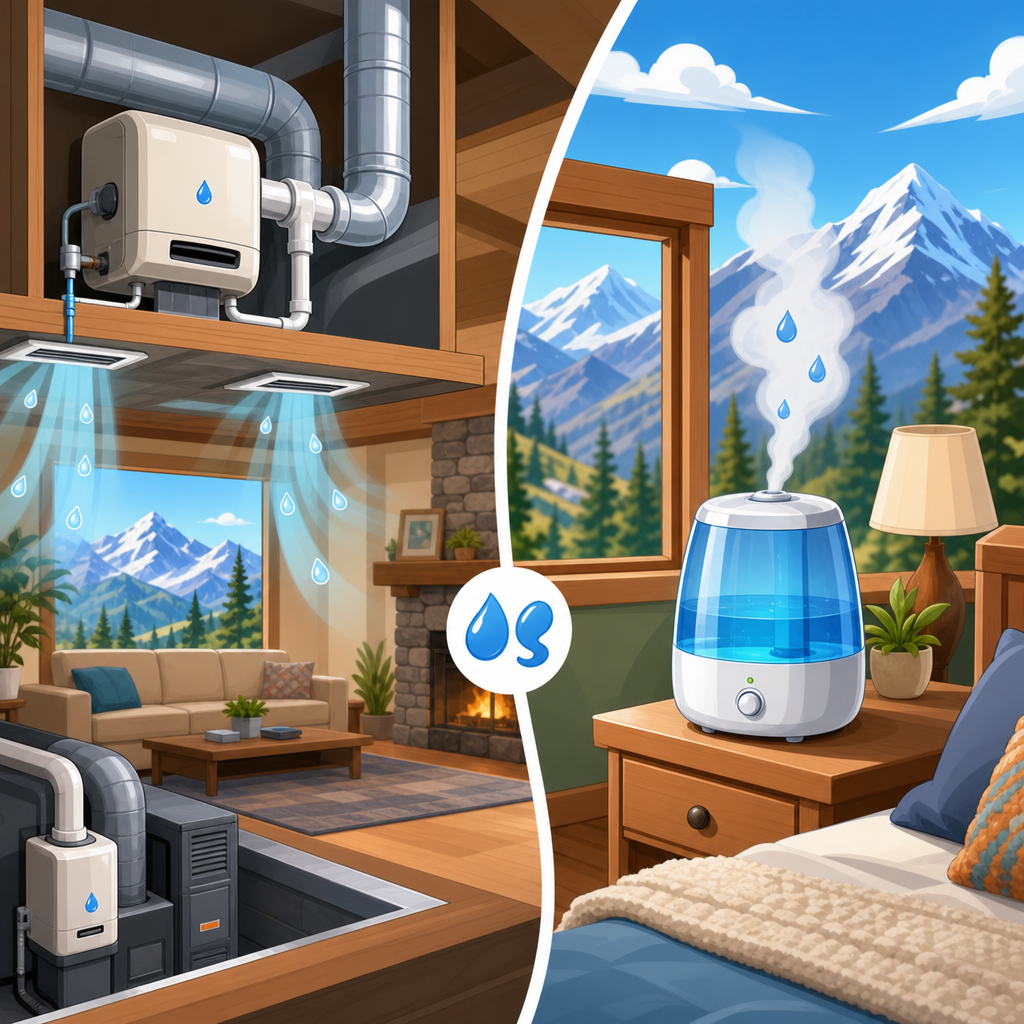
Dry indoor air is a constant issue in high-elevation climates, and choosing between a whole-house humidifier and portable humidifiers for altitude homes affects comfort, health, maintenance, and energy use. In practical terms, altitude homes are houses located well above sea level, where lower outdoor humidity, colder winters, stronger solar gain, and longer heating seasons often combine to pull indoor relative humidity down to uncomfortable levels. A whole-house humidifier is a system tied into a forced-air HVAC setup or, less commonly, a steam distribution system, delivering moisture across the home through ducts. Portable humidifiers are standalone room units, usually evaporative, ultrasonic, or warm mist models, designed to treat one area at a time.
This comparison matters because humidity is not just about dry skin. Indoor relative humidity influences respiratory comfort, sleep quality, static electricity, wood floor movement, instrument preservation, and even how warm a room feels at a given thermostat setting. In mountain regions, I have repeatedly measured winter indoor humidity below 20 percent in occupied homes, especially when gas furnaces run hard and occupants rely on exhaust fans, kitchen hoods, and leaky envelopes. That level is dry enough to crack trim, aggravate sinuses, and create constant static shocks. At the same time, adding too much moisture in a cold-climate house can lead to window condensation, attic frost, or hidden mold in wall cavities.
The core question is simple: which approach gives altitude homeowners the right amount of moisture with the least downside? The answer depends on house size, HVAC type, insulation quality, occupancy, maintenance habits, and budget. This hub article explains how indoor humidity works, what target levels make sense, where whole-house systems perform best, where portable units are more practical, and how to avoid common mistakes. It also connects the wider indoor systems and humidity topic: source control, ventilation, filtration, smart monitoring, and seasonal operation. If you want a single guide to understand humidity control in mountain homes, this is the foundation.
Why altitude homes have unique humidity problems
High-altitude air often contains less moisture to begin with, and when that outdoor air is brought indoors and heated, its relative humidity drops sharply. Relative humidity measures how much water vapor is in the air compared with the maximum the air can hold at that temperature. Warmer air can hold more moisture, so cold outdoor air at a moderate relative humidity can become extremely dry after heating. For example, winter air entering a Colorado home at 30 degrees Fahrenheit and 60 percent relative humidity may end up well under 20 percent relative humidity when warmed to normal room temperature unless moisture is added.
Altitude homes also face stronger stack effect in winter. Warm indoor air rises and leaks out through upper levels, pulling in dry replacement air at lower levels. Many mountain homes add to the issue with large glazing areas, vaulted ceilings, wood stoves, and powerful bath fans. Newer homes with tighter envelopes can retain moisture better, but they still dry out when ventilation rates are high or radiant and forced-air heating systems run continuously. Older homes leak enough that portable humidifiers may struggle to keep up, while oversized whole-house units can create condensation if the shell has cold weak points.
The practical implication is that humidity control at elevation must be matched to building science, not guessed. You need to know the home’s heat source, duct layout, insulation level, window performance, and air leakage before choosing equipment. That is why a one-size-fits-all recommendation usually fails.
Whole-house humidifier vs portable humidifiers: direct comparison
Whole-house humidifiers are usually installed on the supply or return plenum of a furnace or air handler. Common types include bypass evaporative units from Aprilaire and Honeywell Home, fan-powered evaporative units, and steam humidifiers from brands such as AprilAire and GeneralAire. They are controlled by a humidistat and can often integrate with a smart thermostat. Their main advantage is distribution: one system can treat the entire home consistently, assuming ducts are balanced and the blower circulates enough air. They also reduce the chore of moving units, refilling tanks, and managing several devices at once.
Portable humidifiers treat individual rooms. Evaporative consoles like those from AIRCARE can cover large zones, while compact bedside units are built for bedrooms, nurseries, or home offices. Ultrasonic models are quiet and efficient but can release white dust if used with hard water unless demineralization cartridges or distilled water are used. Warm mist models can help in small spaces but consume more electricity and require careful placement around children and pets. Portables shine when the home lacks ductwork, when only one or two rooms need support, or when the homeowner wants low upfront cost and flexible placement.
| Factor | Whole-house humidifier | Portable humidifiers |
|---|---|---|
| Coverage | Entire ducted home | Single room or zone |
| Upfront cost | Higher equipment and installation cost | Lower initial purchase price |
| Maintenance | Seasonal pad, canister, drain, and control service | Frequent tank cleaning and refilling |
| Water use | Can be high on bypass models | Lower per unit, but varies by use |
| Best fit | Large homes with forced-air HVAC | Apartments, cabins, targeted rooms, homes without ducts |
For altitude homes, the most important difference is consistency. A whole-house system can maintain a steadier humidity band, which matters for wood finishes, guitars, pianos, and sleep comfort. Portable units can absolutely work, but they often create pockets of high humidity in one room while the rest of the home stays dry. That tradeoff is acceptable in many situations, especially if the priority is the primary bedroom or a nursery.
Performance, comfort, and health outcomes
Most altitude homeowners should target winter indoor relative humidity between 30 and 40 percent, then adjust downward when outdoor temperatures plunge and windows begin to condense. ASHRAE guidance and cold-climate building practice both support moderate indoor humidity rather than maximum humidity. Around 30 to 50 percent is generally the broad comfort range, but in cold mountain weather, the upper end is not always realistic without condensation risk. In real homes, I often set 35 percent as a starting point, then watch windows, hygrometer readings, and occupant comfort for two weeks.
When humidity is too low, people commonly report sore throats on waking, dry nasal passages, more frequent nosebleeds in children, itchy skin, and static electricity. Hardwood floors may gap, cabinet doors may shrink, and houseplants struggle unless watered carefully. Humidity also changes perceived warmth. Air at 35 percent relative humidity can feel more comfortable than air at 15 percent relative humidity at the same thermostat setting, which sometimes lets occupants lower temperature slightly without sacrificing comfort.
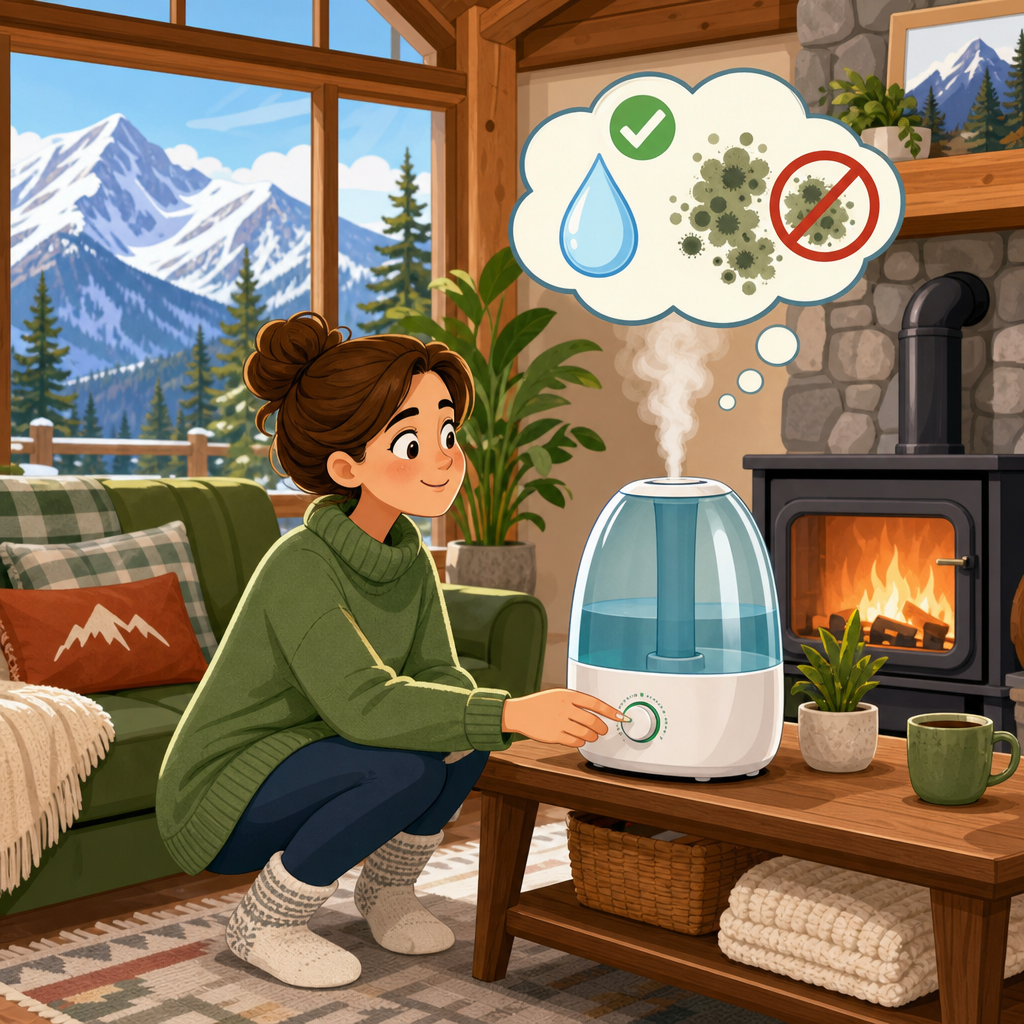
Neither type of humidifier should be treated as a cure for illness, but proper humidity can support mucous membrane function and reduce irritation. The caveat is critical: excessive humidity creates its own health risk by encouraging dust mites and mold growth. In bathrooms, basements, and bedrooms with poor air circulation, a humidifier that is too large or poorly managed can push surfaces above safe moisture levels. This is why accurate measurement with a calibrated hygrometer matters more than guesswork.
Installation, operating costs, and maintenance reality
A whole-house humidifier typically costs more upfront because installation involves plumbing, drainage, electrical connections, duct modifications, and controls. Bypass units are usually the least expensive installed option, fan-powered units cost more, and steam systems cost the most but deliver the strongest output and the most precise control. Steam becomes especially relevant in large custom mountain homes, tight envelopes, or houses with zoning where airflow through the furnace is not constant enough for an evaporative unit to perform well.
Operating cost depends heavily on type. Bypass humidifiers are simple and reliable but can waste water because excess water runs to a drain to keep the pad free of mineral buildup. In dry western regions where water efficiency matters, that is a meaningful drawback. Steam humidifiers use more electricity but waste less water and can humidify even when the furnace is not actively heating, depending on controls. Every whole-house system needs maintenance: evaporative pads or panels usually need annual replacement, steam canisters need service based on water quality and run time, and drains must stay clear.
Portable humidifiers seem cheaper until daily habits are included. Tanks need refilling, especially in dry climates where output is high. Units need regular descaling and disinfection to prevent biofilm, bacterial growth, or mold in reservoirs. The U.S. Environmental Protection Agency and the Mayo Clinic both emphasize routine cleaning and use of the right water type. In practice, neglected portables are one of the most common indoor air quality mistakes I see. A homeowner buys three units, uses them heavily for two weeks, then maintenance fatigue sets in. Output drops, odors begin, and the units stop helping.
Which homes should choose each option
A whole-house humidifier is usually the better fit for a full-time altitude residence with central forced-air heating, especially if the home exceeds roughly 1,800 square feet, has multiple occupied bedrooms, contains substantial wood finishes, or experiences persistent winter humidity below 25 percent. It is also the stronger option when homeowners want a set-and-monitor system rather than a refill-and-clean routine. If the house includes a piano room, a library, or expensive millwork, stable humidity across the building envelope is often worth the higher installation cost.
Portable humidifiers are often the right answer for cabins, rental properties, homes heated mainly with boiler systems or mini-splits, apartments, older houses without usable ductwork, and households that only need nighttime humidity in bedrooms. They also make sense as a test strategy. Before investing in a whole-house unit, some owners run a high-quality evaporative console in the main living area and a separate bedroom unit for one winter. That trial reveals how much moisture the home needs, whether windows condense easily, and whether occupants will actually maintain equipment.
Hybrid strategies are common and effective. A whole-house humidifier can maintain baseline moisture at 30 to 35 percent while a portable unit boosts one especially dry bedroom. In a large mountain home with radiant floor heat and a small ducted ventilation system, a steam humidifier may cover main areas while a portable serves an upstairs office exposed to more sun and infiltration. The best choice is often not ideological; it is zone-specific.
How this hub connects indoor systems and humidity decisions
Humidity control never stands alone. It sits inside a broader indoor systems plan that includes air sealing, insulation, ventilation, filtration, drainage, and monitoring. If a home is extremely leaky, adding larger humidifiers is an expensive way to chase escaping moisture. If bath fans dump steam into an attic, a humidifier will not solve the resulting frost problem. If ducts are unbalanced, one bedroom may stay dry no matter how capable the central unit is. Good humidity management starts with blower door thinking: control unintended air leakage first, then add moisture in a measured way.
Monitoring is the overlooked piece. Use at least two reliable hygrometers, compare them side by side, and place them away from supply registers and windows. Smart IAQ monitors from brands like Airthings or ecobee can log humidity trends, helping homeowners match humidifier settings to outdoor temperature swings. Ventilation strategy matters too. Energy recovery ventilators and heat recovery ventilators can improve indoor air quality, but they also affect moisture balance. In dry climates, some ERV cores retain a portion of moisture better than HRV-only approaches, though performance varies by model and conditions.
The larger lesson for this indoor systems and humidity hub is that the best equipment is the one that fits the house as a system. Choose coverage carefully, measure results, maintain components on schedule, and adjust seasonally. If you are deciding between a whole-house humidifier and portable humidifiers for altitude homes, start with your heating system, square footage, and maintenance tolerance. Then verify performance with data, not assumptions. Done well, proper humidity control protects comfort, finishes, and indoor air quality all winter. Evaluate your home’s needs, compare the two approaches honestly, and use this guide as the starting point for a smarter humidity plan.
Frequently Asked Questions
What is the main difference between a whole-house humidifier and a portable humidifier in an altitude home?
A whole-house humidifier is integrated into your home’s HVAC system and is designed to add moisture to the air as it moves through the ductwork, helping maintain a more consistent humidity level across multiple rooms. In altitude homes, where outdoor air is often much drier and the heating season tends to be longer, that whole-home coverage can make a major difference. Instead of chasing dry air room by room, the system works in the background to support more stable indoor comfort throughout the house.
Portable humidifiers, by contrast, are standalone units intended to humidify a single room or a limited area. They can be very useful in bedrooms, nurseries, home offices, or any space where you want targeted relief from dry air symptoms like scratchy throats, dry skin, static electricity, and irritated sinuses. For smaller homes or households that only need moisture in a few key rooms, portable units can be a practical option.
The key tradeoff is consistency versus flexibility. Whole-house humidifiers usually provide more even humidity control, less day-to-day interaction, and better coverage for larger altitude homes. Portable humidifiers offer lower upfront cost and easier installation, but they require regular refilling, cleaning, and monitoring, and they may leave the rest of the house feeling dry. In high-elevation climates, where low humidity is often a whole-home issue rather than a room-specific one, many homeowners find that the choice depends on whether they want broad, automatic humidity management or spot treatment in selected areas.
Which option is better for comfort and health in high-elevation, dry-climate homes?
For overall comfort and long-term indoor air balance, a whole-house humidifier is often the stronger solution in altitude homes. Dry mountain and high-plains climates can pull indoor relative humidity down quickly, especially in winter when the furnace runs often. That can contribute to nosebleeds, dry nasal passages, itchy skin, irritated eyes, sore throats, and increased static electricity. A whole-house system is generally better at keeping humidity in a healthier and more comfortable range throughout the home instead of allowing major swings between overly dry and slightly humid rooms.
That consistency matters because the body usually responds better to stable indoor conditions. When humidity is maintained more evenly, people often sleep better, feel less respiratory irritation, and notice fewer comfort complaints from room to room. Wood furniture, flooring, trim, and even musical instruments may also benefit from more balanced humidity levels, which can be especially important in altitude regions where prolonged dry air can cause shrinking, cracking, or gaps in wood materials.
Portable humidifiers can still provide meaningful health and comfort benefits, especially when used strategically. If one family member has chronic sinus irritation, frequent winter colds, or nighttime dryness, placing a quality portable unit in a bedroom may deliver noticeable relief. However, if the rest of the home remains very dry, those benefits are more localized. In other words, portable humidifiers can be excellent for personal comfort zones, but whole-house humidifiers are typically better when dry air is affecting the entire household and home environment.
It is also important to avoid over-humidifying, particularly in cold climates. Too much indoor moisture can lead to window condensation, damp surfaces, and in some cases mold risk. The best system is not simply the one that adds the most moisture, but the one that allows controlled, appropriate humidity for changing outdoor conditions. In altitude homes, that level of control is often one of the biggest advantages of a properly sized whole-house unit.
Are portable humidifiers more affordable, or does a whole-house humidifier save more money over time?
Portable humidifiers usually win on initial cost. You can buy one unit quickly, set it up without modifying your HVAC system, and start adding moisture to a room right away. For renters, budget-conscious homeowners, or people testing whether humidification improves symptoms, that lower entry cost is appealing. If you only need one or two rooms covered, portable units can be the most economical short-term choice.
Over time, however, the cost comparison becomes more nuanced. A whole-house humidifier has a higher upfront price because it typically involves equipment, installation, and integration with the heating system. But once installed, it may offer better value for larger homes or for families who otherwise would need several portable units running throughout the winter. Multiple portable humidifiers can add up in purchase price, electricity use, filter replacements if applicable, and the time required to refill and sanitize each unit regularly.
In altitude homes, where humidity challenges often last for months rather than days, convenience has real value too. A whole-house system can reduce the daily labor associated with managing several separate appliances. It may also help protect wood finishes, floors, furnishings, and instruments from prolonged dryness, potentially preventing damage that can be expensive to repair. That preservation benefit is easy to overlook, but in very dry climates it is part of the long-term cost picture.
Energy use depends on the type of equipment, the home, and how it is operated. Portable units draw electricity individually, and using several at once can increase consumption. A whole-house humidifier may be more efficient at distributing humidity broadly, but actual operating cost varies by model and by how often the heating system runs. In practical terms, if your altitude home needs humidity in most rooms for much of the winter, a whole-house humidifier often makes more financial sense over the long run. If your needs are limited and targeted, portable units may remain the lower-cost option.
What kind of maintenance do whole-house and portable humidifiers require in mountain or high-altitude conditions?
Both options require maintenance, but the type and frequency are different. Whole-house humidifiers generally need seasonal inspection, cleaning, and replacement of components such as water panels, evaporator pads, or filters depending on the design. They should also be checked to confirm the drain is clear, the water supply is functioning properly, and the humidistat is set correctly for outdoor conditions. In altitude homes with long heating seasons, these systems may run for extended periods, so routine service becomes especially important for performance and hygiene.
Portable humidifiers require more frequent hands-on care. Most need to be refilled regularly, sometimes daily in very dry climates. They also need consistent cleaning to prevent mineral buildup, slime, and microbial growth inside the tank and base. In high-elevation regions, water can evaporate quickly, which means a portable unit may run through its tank faster than homeowners expect. If cleaning is neglected, the unit can start releasing unpleasant odors or fine particles back into the room, which undermines the health benefits you were trying to gain.
Water quality also matters. Homes in certain regions may have hard water, which can create scale in both portable and whole-house systems. Some portable units are especially prone to dispersing mineral dust if the water contains a lot of dissolved solids. Whole-house systems can also develop deposits that affect efficiency if they are not serviced properly. This is why following manufacturer recommendations and using professional maintenance when needed is so important.
From a workload standpoint, whole-house humidifiers usually demand less daily attention but benefit from periodic professional service. Portable humidifiers are simpler mechanically, but they shift more responsibility onto the homeowner every week. If you know you are unlikely to refill and clean multiple units consistently, a whole-house humidifier may be the more reliable choice for maintaining healthy indoor humidity in an altitude home.
How do you choose the right humidifier for an altitude home with long winters and very dry indoor air?
The best choice starts with your home’s size, layout, heating system, and how widespread the dryness problem is. If dry air affects the entire house, if you have forced-air heating, and if you want automatic humidity control with minimal daily effort, a whole-house humidifier is usually the better fit. It is particularly well suited for larger altitude homes, multi-story layouts, and households that experience persistent winter dryness in nearly every room.
If your home is smaller, if you do not have ductwork, if you only need relief in one or two spaces, or if you want a lower-commitment solution, portable humidifiers may be the smarter starting point. They are also useful for supplementing a whole-house system in rooms that run drier than the rest of the home, such as sunny upper-level bedrooms with strong solar gain or areas far from the main HVAC airflow.
You should also think about your tolerance for maintenance and your expectations for control. Homeowners who want set-it-and-monitor-it convenience often prefer whole-house systems. Homeowners who want flexibility and room-by-room adjustment may like portable units better. In altitude climates, good humidity management is not just about adding moisture; it is about adding the right amount without causing condensation problems. That means sizing, controls, and seasonal adjustments matter as much as the equipment choice itself.
For many households, the decision becomes simple when framed this way: choose a whole-house humidifier if you want broad, steady, integrated humidity management across the home; choose portable humidifiers if you want affordable, targeted moisture in selected rooms. If you are unsure, a qualified HVAC professional can evaluate your home’s winter humidity levels, insulation, air leakage, and HVAC setup to recommend the most effective and safest solution for your specific altitude conditions.