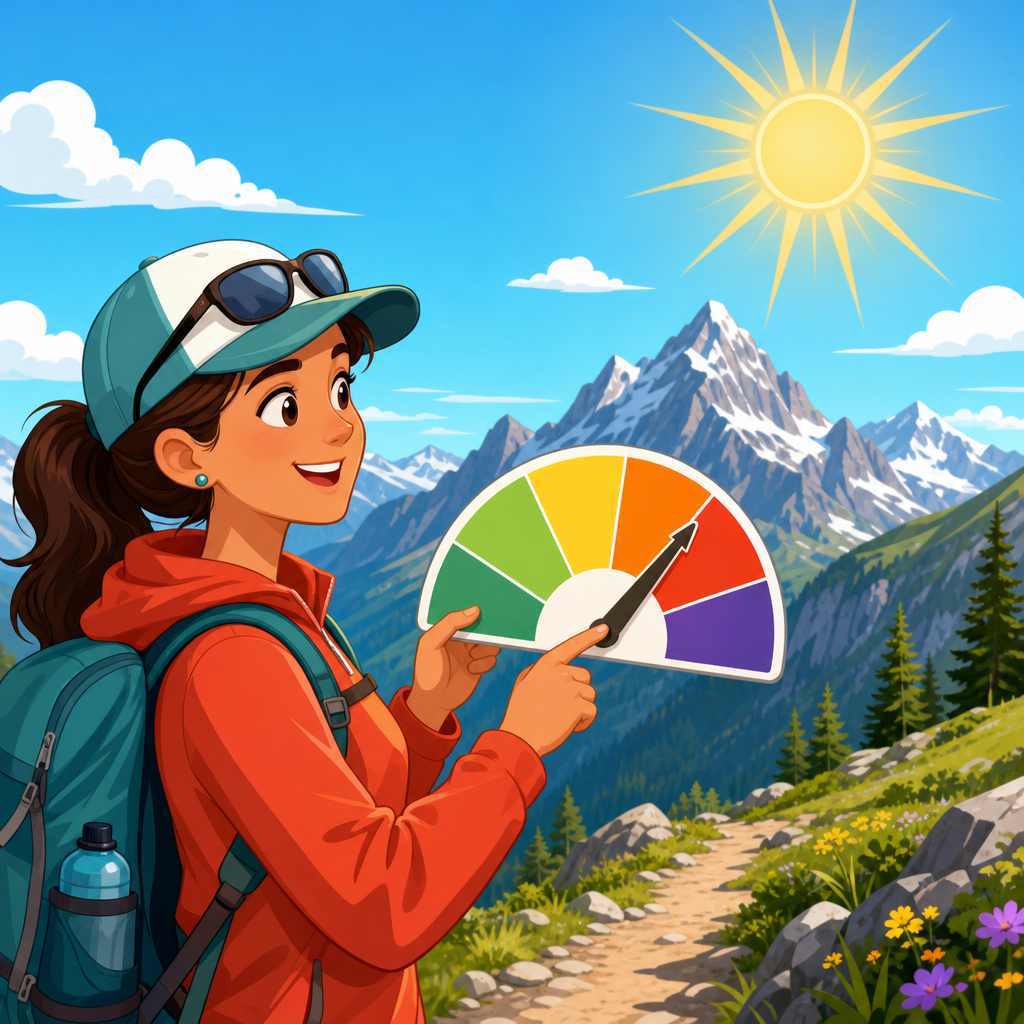
Planning a mountain day without checking the UV Index is a common mistake, because high-elevation sunlight can damage skin and eyes faster than many hikers expect. The UV Index is a standardized scale that estimates the strength of sunburn-causing ultraviolet radiation at a specific place and time, usually from 0 upward, with higher numbers meaning greater risk. For mountain hikers, that number matters more than the air temperature, the cloud cover you can see from the trailhead, or even the season. I have watched hikers apply sunscreen once at breakfast, then spend six reflective, high-altitude hours on open ridgelines and come back with severe burns, swollen eyelids, and dehydration headaches made worse by heat and glare.
Reading the UV Index correctly means understanding what it measures, what it does not measure, and how mountain conditions amplify exposure. Ultraviolet radiation includes UVA and UVB. UVB is more closely tied to sunburn, which is why the index is designed around erythemal risk, but UVA also contributes to skin aging, pigment changes, and some skin cancers, and it remains significant throughout daylight hours. In practical hiking terms, the UV Index helps you decide when to start, what to wear, how often to reapply sunscreen, whether your sunglasses are adequate, and when exposed terrain becomes a poor choice. Used well, it is not just a weather detail. It is a route-planning tool for sun protection and UV safety across daily life, skin health, eye protection, and overall mountain comfort.
What the UV Index actually tells you on a mountain hike
The UV Index converts complex atmospheric measurements into a simple public-facing risk scale. Values of 0 to 2 are considered low, 3 to 5 moderate, 6 to 7 high, 8 to 10 very high, and 11 or more extreme. Those categories are useful, but hikers should treat them as action thresholds rather than labels. At moderate levels, fair skin can begin burning in well under an hour. At very high or extreme levels, especially above treeline, damage can begin much faster. The key point is that the number reflects the expected intensity of sunburn-producing ultraviolet radiation reaching the ground around solar noon under forecast conditions.
That definition explains why the UV Index is easy to misuse. It is not a temperature score, so a cool windy day can still produce a dangerous reading. It is not a brightness score, so haze or thin cloud can still allow strong exposure. It is not a personal burn timer either, because skin tone, medications, altitude, sweating, reflection from snow or pale rock, and how much skin is exposed all change your real-world risk. On a mountain, I read the index as the baseline hazard, then adjust upward mentally if the route is high, exposed, snowy, or extends through midday. That habit produces better decisions than treating the forecast number as the whole story.
Most weather apps now show hourly UV forecasts, and that is far more useful than a single daily maximum. The daily peak tells you the highest expected hazard, but the hourly curve shows when exposure becomes serious and when it falls enough to make summit pushes or exposed traverses safer. For example, a summer trail with a peak UV Index of 10 may already be at 6 by late morning and still at 7 in early afternoon. If the route includes two hours above treeline, those hours matter more than the valley forecast at breakfast. The best practice is to look at the trailhead location, the nearest mountain forecast if available, and the timing of your most exposed terrain.
Why altitude, snow, rock, and cloud make mountain UV more intense
Mountain hikers need to know that the same UV Index number often feels harsher at elevation because the environment reduces your margin for error. As altitude increases, there is less atmosphere to absorb and scatter ultraviolet radiation. A common rule of thumb is that UV levels rise roughly 10 to 12 percent for every 1,000 meters of elevation gain, though the exact increase varies with latitude, surface reflectivity, aerosols, and cloud conditions. That means a valley forecast can underestimate what you experience on a summit ridge. If your route climbs from 1,000 to 3,000 meters, your protection strategy should be built for the upper mountain, not the parking lot.
Reflection is another major multiplier. Fresh snow can reflect a large share of UV radiation, often cited as up to 80 percent under strong conditions, which increases exposure to the underside of the chin, the nostrils, and especially the eyes. Light-colored granite, sand, and water also reflect enough UV to matter. This is why skiers, glacier hikers, and summer hikers crossing lingering snowfields can burn in places they did not expect. It is also why wraparound sunglasses and broad-spectrum sunscreen around the jawline and nose are not optional on bright alpine terrain.
Clouds confuse many hikers. Thick storm clouds may reduce UV substantially, but broken cloud, high thin cloud, and fast-moving mountain weather can still allow intense bursts. In some cases, the edges of broken clouds can scatter and enhance surface UV for short periods, a phenomenon sometimes called cloud enhancement. I have seen hikers skip hats because the morning looked gray, then spend the next hour on an exposed slope under bright, shifting sun. The lesson is simple: if the forecast UV Index is high, prepare for high exposure even when the sky is inconsistent. Visible cloud cover is not a reliable substitute for the forecast.
| Mountain factor | How it changes UV exposure | What hikers should do |
|---|---|---|
| Higher altitude | Less atmosphere filters ultraviolet radiation | Upgrade protection as you gain elevation; reapply earlier |
| Snowfields or glaciers | Strong reflection increases exposure to skin and eyes | Use wraparound UV-blocking eyewear and cover lower face |
| Open ridgelines | Long direct exposure with little shade | Shift timing to early morning or later afternoon |
| Thin or broken cloud | May still transmit or briefly intensify UV | Do not reduce protection based on appearance alone |
| Wind and cool air | Masks the sensation of heat while UV remains high | Use the UV forecast, not comfort, to judge risk |
How to check the UV Index before you hike and what numbers should change your plan
The most reliable approach is to use a recognized weather source that provides hourly UV data, then compare that with your route timeline. National weather agencies, the World Health Organization guidance, meteorological services, and major apps such as Weather Underground or Apple Weather can be useful, though source quality varies by region. If a mountain-specific forecast is available, use it. I usually check three things the evening before: the peak UV Index, the hourly progression, and the forecast cloud pattern during the hours I expect to be above treeline. On the morning of the hike, I check again for timing changes. A one- or two-hour shift in cloud breakup can completely change the exposure window.
What number should make you alter your plan? At 3 or above, sun protection should already be active, including sunscreen, sunglasses, and protective clothing. At 6 or above, most mountain hikes with prolonged exposure deserve more deliberate timing, such as an earlier start, shaded breaks, and strict reapplication. At 8 or above, exposed summit blocks, snow travel, and ridgeline lunches become poor choices unless you have full protective systems and disciplined habits. At 11 or above, which occurs in some high-altitude or low-latitude environments, you should actively minimize exposed skin and cut unnecessary midday exposure. For families, children, and anyone with photosensitivity, those action points should be even more conservative.
It also helps to connect the UV forecast to route design. A forested ascent with a brief exposed summit is very different from a six-hour alpine traverse. If the index peaks between 11 a.m. and 2 p.m., ask whether that is when you will be on snow, above treeline, or climbing slowly on a south-facing slope. If yes, change something: start earlier, shorten the route, reverse the direction, or choose a shaded objective. This is the same planning logic hikers already use for thunderstorms, avalanche windows, or soft afternoon snow. Sun protection and UV belong in that same category of objective hazard management.
Sun protection systems that work on the trail
The best trail protection is a system, not a single product. Start with clothing because it does not wear off. A wide-brim hat or cap with a cape protects the scalp, ears, and neck better than sunscreen alone. Long-sleeve shirts and pants made with dense weave or labeled UPF 30 to 50+ provide consistent coverage. Darker or brighter tightly woven fabrics generally block more ultraviolet radiation than thin, stretched, light fabrics, though comfort and ventilation still matter for hiking effort. I prefer lightweight hooded sun shirts for ridgeline travel because they protect the neck and sides of the face without constant adjustment.
Sunscreen is the next layer. Use broad-spectrum protection, which means it covers both UVA and UVB, and choose SPF 30 or higher. For long mountain days, SPF 50 is a practical default because real-life application is often thinner than laboratory testing requires. Apply generously 15 minutes before sun exposure when possible, and do not forget ears, eyelids if your product is suitable for that area, the back of the neck, the tops of feet if wearing low footwear, and the backs of hands. Reapply at least every two hours, and sooner after heavy sweating or wiping with a towel or buff. Mineral formulations with zinc oxide or titanium dioxide can be useful for sensitive skin, while water-resistant chemical formulas often spread more easily during active movement.
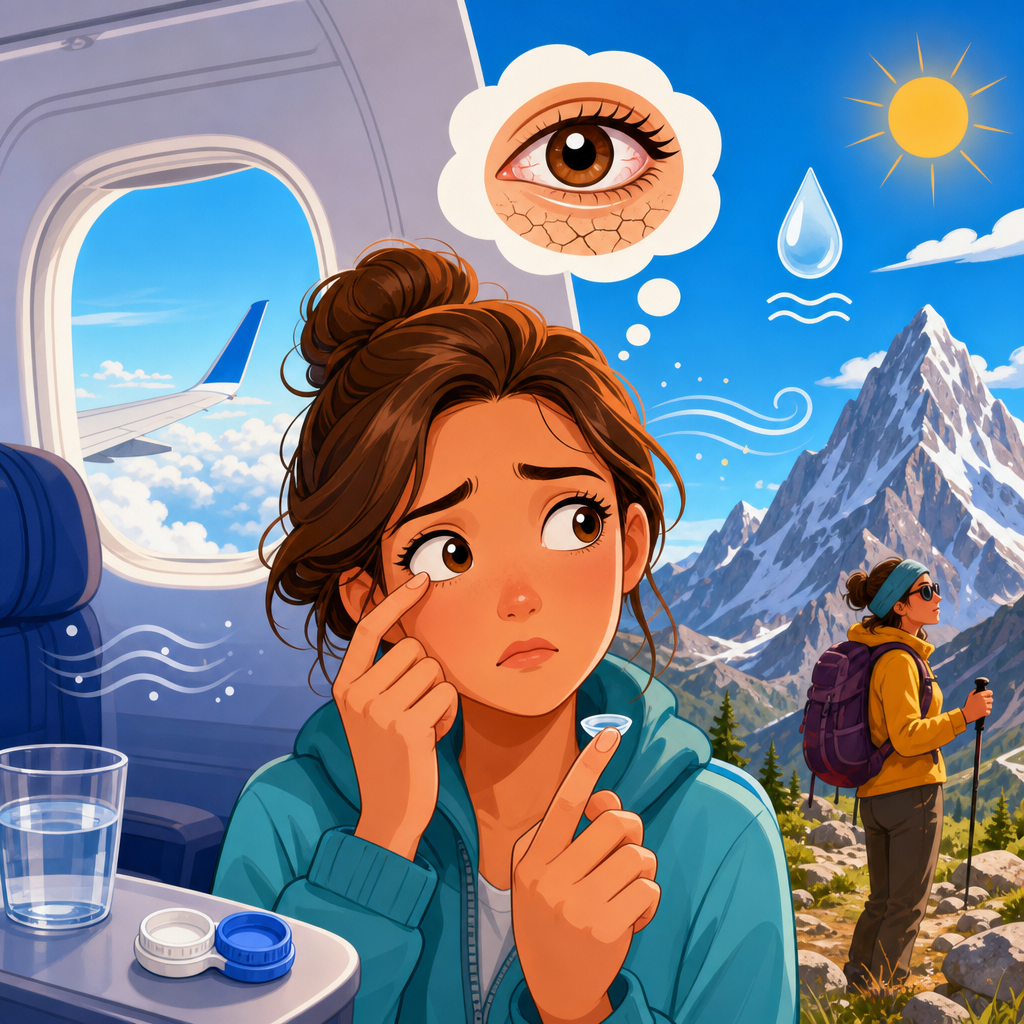
Eye protection is equally important. The right hiking sunglasses should block 99 to 100 percent of UVA and UVB and fit closely enough to reduce peripheral light. Category 3 lenses are suitable for many bright trail days, while Category 4 glacier-style eyewear is intended for intense high-alpine or snow conditions and is not appropriate for driving. Snow blindness, or photokeratitis, is essentially a sunburn of the cornea and can become debilitating hours after exposure. Symptoms include severe eye pain, tearing, light sensitivity, and the sensation of grit in the eyes. In the mountains, that is not a minor inconvenience; it is a safety issue that can complicate descent and navigation.
Common mistakes hikers make with UV safety
The most common mistake is trusting temperature instead of radiation. Cool air, wind, and even drizzle can hide how much ultraviolet exposure is accumulating. Another frequent error is applying sunscreen once and assuming it lasts all day. Sweat, friction from pack straps, face wiping, and time all reduce protection. Hikers also miss high-risk areas: ears, scalp part lines, lips, eyelids, under the chin from reflection, and the backs of calves on steep ascents. Lip balm with SPF 30 or higher is worth carrying because lips burn quickly and crack painfully.
A second category of mistakes involves gear selection. Fashion sunglasses without verified UV protection are unreliable, and cheap dark lenses without proper filtration can be worse than clear lenses because pupil dilation may allow more harmful radiation in. Cotton shirts can become less protective when wet or stretched. Mesh trucker caps leave the scalp exposed. Small habits matter too. Taking off your hat for summit photos, lingering shirtless during lunch on a reflective slab, or storing sunscreen deep in the pack where you will avoid using it all add up. Effective sun protection and UV management is mostly about removing friction from the routine.
Medication and skin history also deserve attention. Certain antibiotics, retinoids, acne treatments, anti-inflammatory drugs, and herbal products can increase photosensitivity. People with melasma, a history of skin cancer, actinic keratoses, lupus, or recent cosmetic procedures need a stricter margin. Darker skin tones have more natural protection against sunburn, but they are not immune to UV damage, hyperpigmentation, eye injury, or long-term skin cancer risk. The right message is not fear. It is precision: know your personal risk factors, then match your protection to the actual mountain environment.
Building a daily habit that turns the UV Index into better decisions
The most useful habit is simple: check the hourly UV Index when you check wind, precipitation, and temperature. Then turn that information into one clear decision about timing, one about clothing, and one about reapplication. For example: “Peak UV 9 from 11 to 2, exposed ridge at noon, so we start at sunrise, wear hooded sun layers, and reapply at the saddle.” That level of planning is realistic, repeatable, and much more effective than vague intentions. It also creates an internal linking logic for your broader sun-protection routine: forecast, clothing, sunscreen, eyewear, hydration, and route choice all support each other.
As the hub for Sun Protection and UV within daily life, skin, eyes, and home comfort, the core lesson is straightforward. The UV Index is the fastest way to translate a weather forecast into protective action before a mountain hike. Read the hourly values, adjust for altitude and reflection, respect exposed midday terrain, and use a full protection system rather than relying on sunscreen alone. When you make UV checks routine, you reduce burns, protect vision, preserve long-term skin health, and finish hikes more comfortably. Before your next mountain day, look up the hourly UV Index first, then build your plan around it.
Frequently Asked Questions
What does the UV Index actually measure, and why is it so important for a mountain hike?
The UV Index measures the intensity of ultraviolet radiation that can damage your skin and eyes at a particular place and time. In practical terms, it tells you how quickly unprotected sun exposure can become harmful. The scale usually starts at 0 and rises upward, with higher numbers meaning a greater risk of sunburn and eye damage. For hikers, this matters because ultraviolet exposure is not the same thing as temperature. A cool, breezy mountain morning can still come with a very high UV Index, and that often catches people off guard.
In mountain environments, the UV Index deserves special attention because elevation increases your exposure. As you climb higher, there is less atmosphere above you to filter ultraviolet radiation. That means the sun’s rays can be more intense than they feel. Hikers often rely on comfort cues such as cool air, light wind, or patchy clouds, but those clues can be misleading. You may not feel hot, yet your skin and eyes can still be accumulating damage quickly. Reading the UV Index before you start helps you plan clothing, sunscreen use, sunglasses, hat choice, and break timing with much more accuracy than simply checking the forecast temperature.
How should I interpret UV Index numbers before heading into the mountains?
A simple way to read the UV Index is to think of it as a risk scale. Lower numbers generally mean lower immediate danger, while higher numbers mean you need stronger protection and stricter timing. A UV Index of 0 to 2 is considered low, 3 to 5 is moderate, 6 to 7 is high, 8 to 10 is very high, and 11 or more is extreme. Those categories are useful because they help you quickly translate a weather number into action. On a mountain hike, even a moderate reading can deserve serious respect if you plan to be outside for several hours, especially during late morning through mid-afternoon when UV levels are usually strongest.
Before your hike, compare the forecasted peak UV Index with your route, duration, and the amount of exposed terrain you expect. A forested trail may offer periods of shade, but an alpine ridge, summit push, snowfield crossing, or open scree slope can leave you exposed for long stretches. As the number rises, your margin for error shrinks. Higher readings mean you should apply broad-spectrum sunscreen before setting out, reapply it on schedule, wear UV-blocking sunglasses, cover exposed skin, and avoid assuming that “I’m only out for a short time” will protect you. In the mountains, a high or very high UV Index should be treated as a planning factor, not a minor detail.
If it is cloudy or cool at the trailhead, can the UV Index still be high?
Yes, absolutely. This is one of the most common and costly misunderstandings hikers make. The UV Index can remain high even when the air feels cool, the sky looks hazy, or clouds seem to block the sun. Air temperature tells you how warm the atmosphere feels, not how much ultraviolet radiation is reaching your skin. At elevation, you can be chilly enough to wear a fleece while still getting enough UV exposure to burn surprisingly fast.
Clouds are also not a reliable shield. Some cloud cover reduces UV radiation, but not always enough to remove the risk, and thin or broken clouds may still allow significant ultraviolet exposure through. In some situations, reflected light and shifting cloud patterns can make the sun feel less obvious while exposure continues. That is why checking the UV Index forecast is far more dependable than making a visual guess from the parking area. If the forecast says the UV Index will be high, it is wise to act as though the risk is real even if the day does not look especially bright. Mountain hikers should trust the measured forecast more than their first impression of the sky.
When during the day is the UV Index usually strongest, and how should that affect my hiking plan?
The UV Index is usually highest from late morning to mid-afternoon, often peaking around solar noon rather than exactly at the clock time of noon. This matters because many hikers begin early, feel comfortable in the first part of the day, and then reach the most exposed portions of their route just as ultraviolet intensity is strongest. If your itinerary includes a summit, ridge traverse, or long section above tree line, it is smart to estimate when you will be on that terrain and compare it with the projected UV peak.
If the forecast calls for high or very high UV levels, plan to reduce direct exposure during the peak window whenever possible. That could mean starting earlier, choosing a route with more shade, taking breaks in sheltered areas instead of open overlooks, or wearing more protective clothing than you otherwise would. It is also helpful to reapply sunscreen before entering exposed terrain rather than waiting until you already feel the sun. Timing is important because sun damage builds before you notice symptoms. A good mountain plan uses the UV Index the same way it uses wind, storms, or temperature: as a factor that shapes pace, route choice, and gear decisions.
What sun protection steps should I take if the UV Index is moderate, high, or very high on hike day?
If the UV Index is moderate or above, you should assume that some level of protection is necessary, and as the number rises, your protection should become more complete. Start with broad-spectrum sunscreen that protects against both UVA and UVB rays, and apply it before you leave the trailhead so it has time to form an even layer on your skin. Do not forget commonly missed spots such as ears, neck, nose, scalp line, backs of hands, and lower legs if they are exposed. Reapply according to the product directions, especially after heavy sweating, wiping your face, or extended time outdoors.
Clothing is just as important as sunscreen and often more reliable over long days. A brimmed hat, UV-blocking sunglasses, and lightweight long sleeves can dramatically reduce total exposure. In the mountains, eye protection matters because ultraviolet radiation can irritate and damage the eyes, and bright high-altitude conditions can increase discomfort and glare. If your route includes snow, pale rock, or open alpine terrain, be even more careful because reflective surfaces can add to your exposure. The best approach is layered protection: check the UV Index before the hike, understand when it will peak, dress for exposure, use sunscreen correctly, and avoid letting cool temperatures trick you into underestimating the sun.