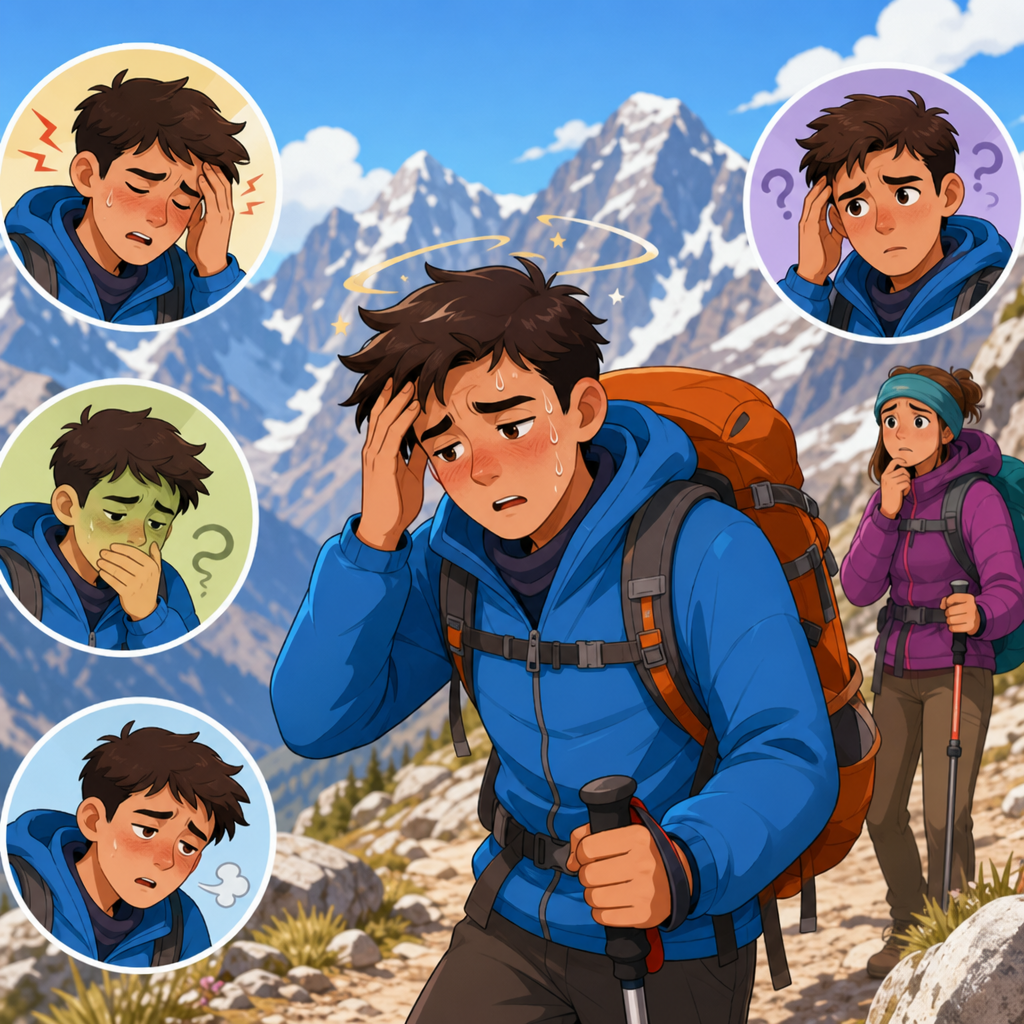
High-altitude cerebral edema, usually shortened to HACE, is a life-threatening form of altitude illness that often begins with symptoms people dismiss as simple exhaustion. That confusion is dangerous because HACE can progress quickly, impair judgment, and become fatal without prompt descent and treatment. In mountain environments, I have seen strong hikers explain away the earliest warning signs as poor sleep, dehydration, overexertion, or a hard summit day. That mistake is common precisely because the first clues can look ordinary. A tired climber who is moving slowly, forgetting simple tasks, or complaining of a severe headache may seem like someone who just needs water and rest. In reality, those can be signs that the brain is swelling in response to altitude.
HACE is generally considered the end stage of acute mountain sickness, though it can occasionally appear with striking speed. It usually develops above about 2,500 to 3,000 meters, and risk rises with rapid ascent, previous altitude illness, heavy exertion, cold exposure, poor acclimatization, and sometimes concurrent high-altitude pulmonary edema. The core problem is swelling in the brain caused by altitude-related physiologic stress. As pressure and oxygen availability change, the brain can become leaky and inflamed, leading to altered mental status and impaired coordination. Those two findings—changes in thinking and changes in walking—are central. If a person at altitude has confusion, unusual behavior, or trouble walking a straight line, HACE must be assumed until proven otherwise.
This matters because timing determines outcome. Early recognition can mean a safe descent, oxygen, dexamethasone, and recovery. Delayed recognition can mean collapse, coma, and death. For anyone planning trekking, mountaineering, skiing, high passes, or work at altitude, understanding what HACE looks like before it becomes dramatic is essential. This guide explains the early signs of HACE that people mistake for simple exhaustion, how to tell the difference, what risk factors make those signs more concerning, and what immediate actions protect the person and the team. As the main resource in this topic area, it also provides a framework you can use when reading related articles on altitude illness, acclimatization schedules, AMS symptoms, HAPE, and emergency descent decisions.
What HACE is and why “just tired” is the wrong assumption
HACE is a severe neurologic altitude illness marked by brain dysfunction at high elevation. In plain terms, the brain is not tolerating the altitude, and the person begins to lose normal mental clarity and motor control. Exhaustion can make someone quiet, slow, and irritable, but exhaustion alone should not cause ataxia, marked confusion, irrational decisions, or a declining level of consciousness. That is the practical distinction. Many mountain teams miss early HACE because fatigue is expected on hard days. When everyone is cold, sleep deprived, and working above their normal capacity, subtle neurologic decline blends into the background unless someone is actively assessing it.
The classic progression often starts with symptoms of acute mountain sickness: headache, nausea, poor appetite, fatigue, dizziness, and disturbed sleep. Then the pattern changes. The headache becomes severe or persistent. The person becomes clumsy or walks as if mildly intoxicated. Conversation grows oddly repetitive, slow, or illogical. They may stare, forget what they were doing, struggle to zip a jacket, fail to follow route instructions, or insist they are fine when they are plainly not. This loss of insight is one reason HACE is so dangerous. The affected person may be the least reliable judge of their own condition.
Clinicians and expedition medics use mental status and gait as high-value bedside clues because they can be checked quickly in the field without equipment. Ask the person where they are, what day it is, what the plan is, and whether they can perform a simple task. Then watch them walk heel-to-toe if terrain allows, or at least walk a straight line. If they cannot do that safely, the working diagnosis shifts away from ordinary exhaustion and toward altitude-related brain involvement. Wilderness Medical Society guidance and high-altitude medicine texts consistently treat new ataxia or altered mentation at altitude as red flags requiring immediate action.
Early signs of HACE that are commonly misread
The earliest signs are usually not dramatic. They are subtle shifts in behavior, coordination, and thinking that are easy to rationalize after a long climb. One common sign is unusual slowing. Not normal fatigue slowing, but a noticeable lag in processing. You ask a simple question and there is a long pause. They answer with the wrong detail, or forget the question halfway through. Another early sign is poor coordination with routine tasks. A person who normally packs efficiently may fumble buckles, misplace gloves, drop equipment, or take an oddly long time to organize basic gear.
Gait change is especially important. Teams often label it “jelly legs” or “bonking,” but true ataxia looks different. The walker drifts, widens their stance, stumbles on easy ground, or cannot place feet accurately. On snow, scree, or ladders, that can become deadly before anyone names it. Mood and behavior changes also matter. Irritability, apathy, inappropriate joking, social withdrawal, or unusual risk-taking can all be early neurologic warning signs. So can a severe headache that does not improve with rest, hydration, and simple analgesics. Vomiting, worsening dizziness, and profound weakness increase concern, especially when paired with confusion or gait instability.
Sleepiness is another trap. At altitude, everyone sleeps poorly and feels drained, so drowsiness seems normal. But if someone is unusually hard to rouse, falls asleep mid-conversation, or seems mentally absent, that is not routine mountain fatigue. Partners may also notice handwriting changes, poor navigation choices, repeated mistakes with stoves or rope systems, and a flat, vacant affect. The pattern matters more than any single symptom. HACE is suspected when symptoms trend downward despite stopping, eating, hydrating, and resting, or when neurologic signs appear at all.
| Sign | Often mistaken for | Why it raises concern for HACE |
|---|---|---|
| Slow, confused answers | Ordinary fatigue | Suggests altered mental status rather than simple tiredness |
| Stumbling or wide-based walking | “Tired legs” | Points to ataxia, a key field sign of brain involvement |
| Severe persistent headache | Dehydration | Common in altitude illness and more concerning when worsening |
| Unusual irritability or apathy | Bad mood after exertion | Behavior change can be an early neurologic clue |
| Difficulty with simple gear tasks | Cold hands or exhaustion | Shows impaired coordination and executive function |
How to distinguish HACE from normal exhaustion, dehydration, or poor sleep
The simplest rule is this: exhaustion explains tiredness, but it does not explain new neurologic deficits. A person who is merely overworked usually improves after calories, fluids, warmth, and a break. They remain oriented, can walk steadily, and make coherent decisions. Dehydration can cause headache, weakness, and dizziness, but it should not cause a drunk-looking gait or progressive confusion. Poor sleep can make someone foggy and irritable, yet they can still usually follow instructions and coordinate ordinary tasks. HACE, by contrast, produces a quality change in mental function and balance.
Context strengthens the diagnosis. If symptoms appeared after a rapid ascent, sleeping high without acclimatization, or pushing hard after previous AMS symptoms, concern should rise sharply. A climber who had a mild altitude headache yesterday and today cannot walk heel-to-toe has not simply “had a rough night.” They have progressed into a medical emergency until proven otherwise. Another clue is deterioration at rest. Exhaustion usually plateaus or improves once effort stops. HACE often continues to worsen even in camp.
Field assessment does not need to be sophisticated. Ask the person to state their name, location, altitude if known, date, and plan. Have them do a serial task such as counting backward by sevens only if safe and appropriate; many teams simply use conversation because it is more practical. Watch them put on gloves, secure their pack, or handle a zipper. Then assess gait. If terrain is dangerous, support them rather than forcing a formal test, but note whether they lurch, weave, or cannot coordinate foot placement. When I have seen teams hesitate, it is often because they are waiting for a dramatic collapse. That is a mistake. HACE should be recognized in the subtle phase, not the coma phase.
Who is at higher risk and when the early signs tend to appear
Anyone can develop HACE, including fit athletes. Fitness does not protect against altitude illness. The strongest people are sometimes at higher practical risk because they ascend aggressively and ignore early symptoms. The biggest risk factor is rapid gain in sleeping altitude. Standard prevention advice emphasizes staged ascent, rest days, and caution once sleeping altitude exceeds roughly 2,500 meters. Going much higher too fast increases the chance that ordinary AMS can progress into HACE. Previous history of severe altitude illness also matters. Someone who has had HACE or HAPE before deserves a conservative ascent plan and low threshold for intervention.
Heavy exertion, cold stress, infection, inadequate acclimatization, and continued ascent despite symptoms all increase risk. HACE often develops after one to three days at a new altitude, but timing varies. It may emerge during a summit push after inadequate acclimatization, overnight in a high camp, or while descending from an even higher point if the person has already become ill. Importantly, HACE can coexist with HAPE. If someone has cough, breathlessness at rest, low exercise tolerance, and crackles or gurgling respirations along with confusion or ataxia, the situation is especially urgent.
Real-world patterns are consistent across trekking routes and climbing expeditions. People get into trouble when itineraries are compressed, weather windows create pressure, or a group normalizes symptoms because many members feel unwell. Commercial expeditions sometimes call this summit fever; trekking groups may simply call it keeping to the schedule. Either way, the body does not care about the itinerary. Early signs often appear when the team is busiest or most committed to moving upward, which is exactly why objective checks and pre-agreed turnaround rules matter.
What to do immediately if you suspect early HACE
If HACE is suspected, the priority is immediate descent. Do not let the person continue upward, do not leave them alone, and do not assume they will sleep it off. Descent is the definitive field treatment, and even a few hundred meters can help while larger descent is arranged. Supplemental oxygen, if available, is highly effective. Dexamethasone is the standard medication used in many expedition and wilderness protocols because it can reduce brain swelling and improve symptoms, but it is an adjunct, not a substitute for descent. Portable hyperbaric bags can be lifesaving in remote settings when weather, darkness, or terrain delays evacuation.
Keep the person warm, minimize exertion, and monitor airway, breathing, and level of consciousness. If walking is unsafe because of ataxia, assist or carry them using the safest team method available. Do not give sedatives or alcohol. Be cautious about attributing symptoms to low blood sugar, dehydration, or migraine without addressing altitude illness first. Those problems can coexist, but they should not delay descent. In organized settings, activate rescue early; people with HACE can deteriorate rapidly. If oxygen saturation is available, it may support the picture, but a normal or moderately low reading does not rule HACE out. Clinical signs lead the decision.
Once lower and stable, the person needs medical evaluation. Brain imaging is not required to make the initial field diagnosis, but hospital assessment may be needed to exclude other causes such as stroke, infection, toxic exposure, or head injury. Most importantly, do not re-ascent the person until they are fully recovered and have been advised by a qualified clinician. Many tragedies happen because symptoms briefly improve with medication, and the team mistakes temporary improvement for resolution.
Prevention and why this hub matters for the broader altitude illness picture
The best way to avoid HACE is to prevent the chain of events that leads to it. Ascend gradually, limit increases in sleeping altitude, build in rest days, and stop ascent if symptoms of acute mountain sickness are worsening. Many trekkers use acetazolamide prophylactically based on itinerary and prior history, and that decision is worth discussing with a travel or altitude medicine clinician before the trip. Good hydration, sensible pacing, warmth, and honest symptom reporting help, but none of them replaces acclimatization. The core prevention principle is simple: gain altitude slowly enough for the body to adapt.
This article serves as the central resource for HACE within altitude illness and acclimatization because the topic cannot be understood in isolation. HACE sits on a continuum with AMS and frequently intersects with HAPE, itinerary design, medication choices, sleep altitude strategy, and group decision-making. If you are building a complete altitude plan, the next useful subjects are acclimatization schedules, early AMS recognition, HAPE warning signs, pulse oximetry limits, and descent protocols. Understanding those related topics makes it easier to spot HACE before it becomes obvious. The practical takeaway is straightforward: at altitude, confusion or clumsiness is never “just exhaustion.” Treat it as HACE until proven otherwise, descend promptly, and make conservative choices before the mountain forces them on you.
Frequently Asked Questions
What are the earliest signs of HACE that people often mistake for simple exhaustion?
The earliest signs of high-altitude cerebral edema, or HACE, often look deceptively ordinary at first. A person may seem unusually tired, mentally slow, irritable, withdrawn, or less coordinated than expected after a hard day. They may complain of a headache that feels worse than a typical altitude headache, have trouble focusing on routine tasks, forget simple steps, or struggle to follow a conversation. Some people appear clumsy when walking around camp, fumble with gear, or move with a subtle loss of balance that others dismiss as fatigue. Sleepiness out of proportion to the effort, confusion about time or plans, poor decision-making, and behavior that seems “off” are especially important warning signs.
What makes these symptoms dangerous is that exhaustion, dehydration, poor sleep, and normal altitude discomfort can overlap with them. The difference is that early HACE involves the brain, so the pattern usually includes worsening mental status or coordination problems, not just tired muscles. If someone at altitude is becoming confused, unusually drowsy, or unsteady, that should never be written off as a tough day alone. Those are red flags that need immediate attention because HACE can progress rapidly.
How can you tell the difference between normal altitude fatigue and a possible case of HACE?
Normal altitude fatigue usually improves with rest, fluids, food, warmth, and time. A tired hiker may be slow, but they can still think clearly, answer questions appropriately, and walk in a controlled way. With HACE, the problem goes beyond feeling worn out. The person may have a worsening headache, increasing confusion, strange behavior, poor judgment, slurred speech, difficulty performing simple tasks, or trouble walking heel-to-toe in a straight line. That loss of coordination, called ataxia, is one of the most important clues. If someone cannot walk steadily or seems mentally altered, the situation should be treated as HACE until proven otherwise.
Another useful distinction is trajectory. Ordinary fatigue tends to level off or improve once exertion stops. HACE often worsens despite rest. A person may become more withdrawn, harder to wake, increasingly forgetful, or more unstable over hours. In practical terms, ask simple questions, observe whether they can handle basic camp tasks, and watch them walk. If their thinking or balance is clearly impaired, that is not something to monitor casually overnight. Immediate descent and emergency treatment are the safest response.
Why do experienced hikers and climbers sometimes miss early HACE symptoms in themselves or others?
HACE is easy to miss in the real world because mountain travel already creates conditions that make people feel bad. Long summit pushes, cold weather, calorie deficits, dehydration, poor sleep, and altitude itself can all produce headache, fatigue, and reduced performance. Strong hikers are especially prone to explaining symptoms away because they are used to pushing through discomfort and may see slowing down as a normal part of a hard climb. Group culture can add to the problem when everyone expects to be tired, quiet, and mentally dulled after a demanding day.
There is also a more troubling reason: HACE can impair insight and judgment. The person developing it may genuinely believe they are fine and resist help. Teammates may notice that they are acting strangely, but interpret it as stubbornness, irritability, or simple overexertion. That is why objective checks matter. Watching for changes in coordination, asking orientation questions, and paying attention to unusual behavior can catch what subjective self-assessment misses. In altitude illness, denial is common, and with HACE it can be part of the disease itself.
If you suspect HACE, what should you do immediately?
Suspected HACE is a medical emergency. The most important action is immediate descent. Do not wait until morning, do not assume sleep will fix it, and do not leave the person alone in a tent to “recover.” Descending to a lower altitude is the key life-saving step because the condition can deteriorate quickly into severe confusion, inability to walk, loss of consciousness, and death. If supplemental oxygen is available, give it. If dexamethasone is available and you are trained or instructed to use it, it is commonly used as an emergency treatment while arranging descent. A portable hyperbaric bag can also be used where available, but it does not replace descent.
The person should not continue ascending under any circumstances. They need close supervision because judgment may already be impaired. Evacuation may be necessary if they cannot walk safely or if terrain, weather, or severity of symptoms makes self-descent unsafe. In remote settings, activate rescue services early rather than late. HACE is not a “see how they feel in a few hours” problem. Fast recognition and decisive action are what save lives.
Can HACE start with only mild symptoms, and how quickly can it become dangerous?
Yes, HACE can begin with symptoms that seem mild enough to dismiss. That is exactly what makes it so dangerous. It may start as unusual tiredness, a headache that seems stronger than expected, difficulty concentrating, subtle clumsiness, or behavior changes that are easy to rationalize. Someone may just seem more exhausted than everyone else, slower packing up, less talkative, or oddly indecisive. In a mountain setting, those signs can blend into what people expect after a strenuous day, which delays recognition.
But HACE is not simply “feeling bad at altitude.” It is swelling in the brain, and it can progress fast. Mild confusion can become obvious disorientation. Slight instability can become an inability to walk. Excessive sleepiness can become decreased responsiveness. Once those changes are underway, the window for safe action narrows quickly. That is why even mild neurological symptoms at altitude deserve serious attention. If the person’s thinking, behavior, or coordination is changing, it is far safer to act early than to hope it is only exhaustion.