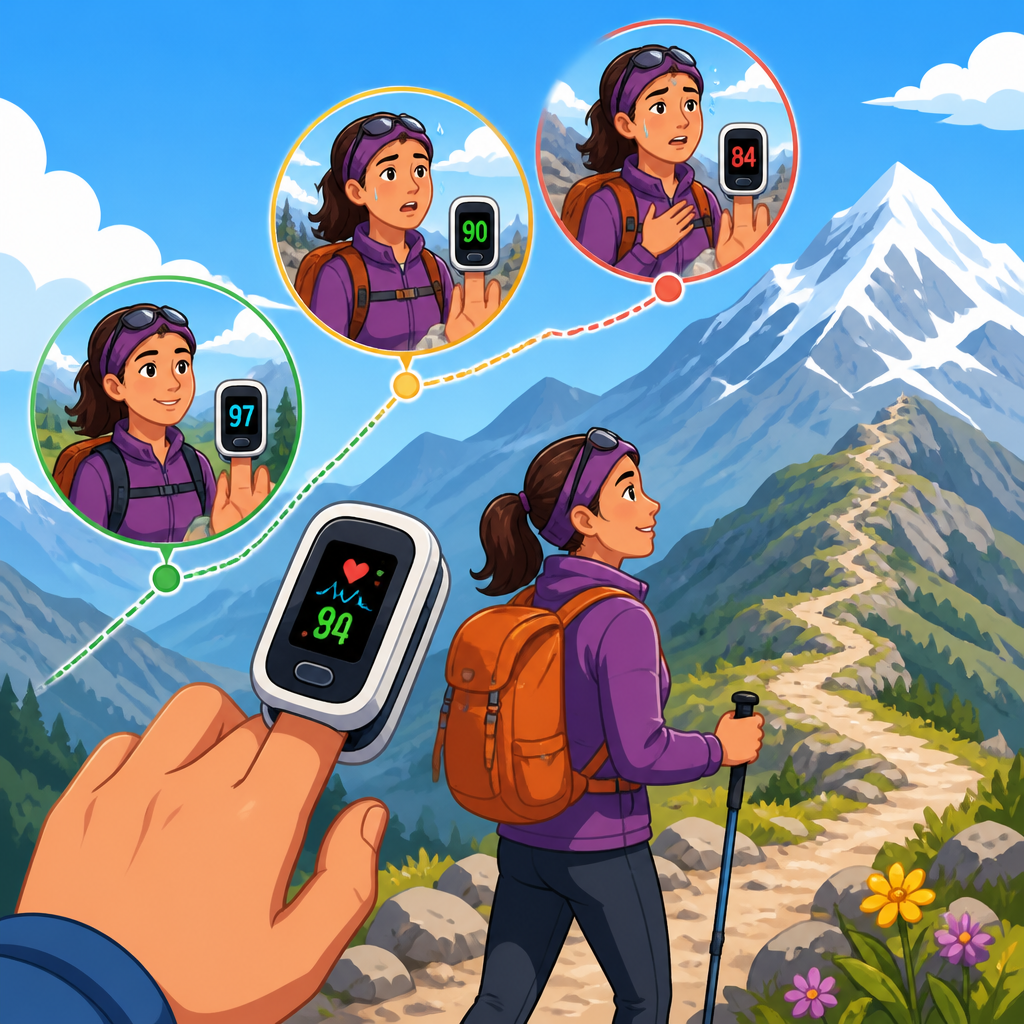
Pulse oximeter trends at elevation matter far more than any single number because oxygen saturation changes continuously with altitude, exertion, sleep, temperature, hydration, breathing pattern, and device quality. In mountain medicine, a pulse oximeter is a small noninvasive device that estimates peripheral oxygen saturation, usually written as SpO2, by shining red and infrared light through a fingertip and analyzing how hemoglobin absorbs each wavelength. That estimate can be useful, but it is not a direct arterial blood gas measurement, and it never tells the whole story on its own.
I have used pulse oximeters on trekking teams, alpine climbs, and high sleeping camps, and the same lesson repeats itself: context determines whether a reading is reassuring, irrelevant, or a warning sign. At sea level, many healthy adults sit around 95 to 100 percent. At elevation, normal ranges drop as barometric pressure falls and less oxygen enters the lungs with each breath. A reading that looks alarming to someone at home may be expected at 11,000 feet, while a reading that seems acceptable can still be dangerous if it is falling quickly or paired with headache, ataxia, severe fatigue, or breathlessness at rest.
This matters because people increasingly use pulse oximeters as self-monitoring tools during travel, trekking, skiing, and climbing. The devices are inexpensive, easy to pack, and widely marketed as objective decision aids. They can absolutely help, especially when tracked over time alongside symptoms, heart rate, sleeping altitude, and rate of ascent. But they also create false confidence when users treat one isolated reading as a diagnosis. This hub page explains how to interpret pulse oximeter trends at elevation, what affects accuracy, how to pair readings with symptom scoring and basic field assessment, and when numbers should prompt descent, rest, or medical evaluation.
Monitoring and decision tools for altitude illness include much more than a clip-on sensor. Good judgment comes from combining repeated SpO2 readings, resting heart rate, respiratory rate, symptom questionnaires such as the Lake Louise Score, daily ascent logs, sleep quality, urine color, and direct observation of walking balance, mentation, and cough. Each tool answers a different question. Together, they create a far more reliable picture of acclimatization than any one metric. For trekkers, guides, expedition leaders, and clinicians advising travelers, learning that layered approach is the difference between informed monitoring and number chasing.
What pulse oximeter readings mean at altitude
Pulse oximeters estimate the percentage of hemoglobin carrying oxygen in pulsatile blood flow. At altitude, the main driver of lower SpO2 is reduced inspired oxygen pressure, not equipment failure or automatic illness. As elevation rises, oxygen saturation usually falls, especially during the first days before ventilatory acclimatization improves oxygenation. For example, a healthy person newly arrived at 8,000 feet may record low to mid 90s, while the same person sleeping above 12,000 feet may commonly dip into the 80s, particularly overnight. Those ranges vary by individual, ascent rate, fitness-independent ventilatory response, and recent exertion.
The crucial point is that there is no universal “safe number” that applies at every altitude. A saturation of 86 percent at 14,000 feet in a calm, symptom-free person who has been acclimatizing well may be less concerning than 90 percent at 10,000 feet in someone whose values were 95 percent yesterday and who now has worsening headache, nausea, poor coordination, and unusual exhaustion. Trends tell you whether acclimatization is progressing, plateauing, or deteriorating. In practice, I care most about the direction of readings, the altitude where they were taken, the person’s symptoms, and whether recovery occurs with rest.
Heart rate adds useful context. When SpO2 falls, the body often compensates by increasing pulse and ventilation. A lower saturation paired with a normalizing morning heart rate and improving symptoms may reflect successful adaptation. A lower saturation paired with rising resting pulse, poor sleep, appetite loss, and slowing pace often signals accumulating strain. Respiratory patterns matter too. Periodic breathing at altitude can create temporary overnight desaturations that look dramatic on spot checks but do not automatically indicate high-altitude pulmonary edema or high-altitude cerebral edema.
Why one reading is not the whole story
A single pulse oximeter reading is a snapshot collected under conditions that may be unstable. Cold fingers cause peripheral vasoconstriction and weak signal quality. Recent uphill movement can depress SpO2 transiently while pushing heart rate up. Hyperventilation during anxiety can artificially improve the number for a minute without solving the underlying problem. Nail polish, dark gloves removed into freezing wind, tremor, dehydration, poor battery power, and low-cost sensors with inconsistent algorithms can all distort results. That is why experienced guides wait, warm the hand, seat the person, and repeat measurements after several calm minutes.
Timing is just as important as technique. Readings taken immediately after arriving at camp are less informative than standardized checks done at the same time each morning before breakfast and before packing. Standardization lets you compare like with like. If a trekker records 91 percent, 90 percent, and 91 percent over three mornings at the same altitude while symptoms improve, the pattern is stable. If another trekker records 93 percent, then 89 percent, then 86 percent after sleeping at progressively higher camps and also develops headache and reduced exercise tolerance, that trend deserves action.
Clinical signs can outweigh a “decent” SpO2. I have seen people with acceptable numbers struggle with balance and simple cognitive tasks, a red flag for cerebral involvement. I have also seen low readings in perfectly functional climbers with warm hands, clear lungs, normal gait, and no headache. Oximetry is one input, not the judge. Mountain medicine organizations consistently emphasize symptoms and functional change because altitude illness is diagnosed clinically. Devices support that assessment; they do not replace it.
How to build a useful monitoring routine
The best pulse oximeter trend is one collected consistently. Use the same device throughout a trip if possible. Measure at rest, seated, with warm hands, after removing gloves for long enough to restore perfusion. Wait for a stable waveform or pulse indicator and record both SpO2 and pulse rate. Take two or three readings over one to two minutes and write down the most stable value rather than the first flashing number. Then log the sleeping altitude, current altitude, symptoms, medications such as acetazolamide, and major exertion from the previous day.
For a practical field routine, I recommend morning checks before caffeine, breakfast, or strenuous movement, plus targeted checks when someone reports symptoms or performs unusually poorly. During guided programs, I also note nighttime cough, appetite, urine output, and pace changes on moderate terrain. A trend log becomes valuable quickly because patterns emerge earlier than crises. You can spot a person who is not acclimatizing as expected even before severe symptoms appear.
| Monitoring tool | What it tells you | Best use at altitude | Main limitation |
|---|---|---|---|
| Pulse oximeter | Estimated oxygen saturation and pulse rate | Track morning trends and response to rest | Highly affected by cold, motion, and device quality |
| Lake Louise symptom score | Headache, nausea, fatigue, dizziness, sleep disturbance | Screen for acute mountain sickness consistently | Subjective and influenced by dehydration or poor sleep |
| Resting heart rate | Physiologic strain and recovery status | Identify stress, overexertion, or poor adaptation | Shifted by caffeine, anxiety, illness, and fitness |
| Gait and mentation check | Balance, coordination, cognition | Detect concerning neurologic decline fast | Requires direct observation and baseline awareness |
| Ascent log | Sleeping elevation gain and rapid exposure | Estimate illness risk and guide rest days | Does not measure individual susceptibility |
This layered system is the core of sound monitoring and decision tools in the mountains. No one metric carries enough signal alone, but together they reduce uncertainty. They also improve communication. When a guide radios a base physician saying a client has dropped from 92 to 86 percent over two mornings at 13,500 feet, with resting pulse rising from 78 to 98, Lake Louise symptoms worsening, and new dry cough at night, that report is actionable. A message saying “their oximeter looked low” is not.
Interpreting trends during acclimatization
Acclimatization follows recognizable physiology. Within hours of altitude exposure, ventilation increases as the body responds to lower oxygen pressure. Over days, the kidneys excrete bicarbonate to support sustained hyperventilation, improving oxygenation. Over longer periods, erythropoietin stimulates red blood cell production, though that change matters less during short trips than many travelers assume. In the first few days, pulse oximeter trends often dip, wobble, and then stabilize or improve slightly as breathing adapts. That pattern is normal if symptoms stay mild and function remains intact.
Trouble appears when numbers decline in parallel with worsening symptoms or impaired performance. A falling morning SpO2 after a large sleeping altitude jump suggests the person may need an extra acclimatization day. If they also have significant headache unrelieved by hydration or simple analgesics, reduced appetite, and marked fatigue, continuing upward is a bad decision. If they have breathlessness at rest, persistent cough, crackles, declining exercise capacity, or confusion, descent is urgent regardless of whether the number looks only modestly low.
Medication changes interpretation slightly. Acetazolamide often improves acclimatization by stimulating ventilation, which may raise SpO2 relative to an unmedicated ascent. Dexamethasone can blunt symptoms temporarily without fixing the altitude stressor, so a person may “look better” than their risk profile justifies. Supplemental oxygen, obviously, changes the number immediately and should be documented whenever readings are taken. A useful trend log always records these factors because numbers without context are easy to misread.
Common mistakes with pulse oximeters in the mountains
The most common mistake is treating consumer devices as precision laboratory instruments. Most fingertip oximeters perform best in the 90 to 100 percent range under stable perfusion. Accuracy often degrades as saturation falls, exactly when users care most. Another mistake is comparing one person to another. Baseline ventilatory response differs significantly between individuals, so one trekker may sit at 94 percent while another sits at 88 percent at the same camp and both may be fine. Personal trends beat group averages.
People also overvalue daytime spot checks after hard movement. After a steep carry, a low reading may simply reflect temporary exertional desaturation and poor peripheral perfusion. That can still be useful information, especially if recovery is unusually slow, but it should not be confused with a rested baseline. Inaccurate placement is another issue. Fingers should be clean, still, and fully inserted. Bright direct sunlight can interfere with some sensors. Cold-induced vasoconstriction remains the classic cause of misleadingly low results.
A more subtle mistake is ignoring severe symptoms because the number is “not that bad.” High-altitude cerebral edema and high-altitude pulmonary edema are clinical emergencies. They can present with pulse oximeter values that overlap with less sick people at the same altitude. If someone cannot walk a straight line, becomes confused, or is short of breath at rest with a wet cough, the action is descent and treatment, not repeated gadget checks hoping for reassurance.
When oximetry should change your decision
Pulse oximeter trends should influence decisions when they align with the rest of the picture. A stable or improving trend with mild symptoms supports continuing a conservative acclimatization plan. A downward trend after a rapid ascent argues for holding altitude, adding a rest day, reducing exertion, and reassessing. A sharp decline combined with escalating symptoms supports descent. This is where monitoring becomes practical rather than academic: it helps you act earlier, before a manageable problem becomes a rescue.
For hub-level decision making, think in three questions. First, is the person improving, stable, or worsening compared with yesterday at a similar time and state of rest? Second, do the oximeter readings match the clinical picture, including symptoms, gait, cognition, cough, and breathing? Third, what modifiable factors are present, such as cold hands, recent exertion, dehydration, medication use, or a large sleeping altitude gain? If the answers point toward deterioration, the safest decision is usually to stop ascending. If signs suggest serious altitude illness, descend immediately and use oxygen, portable hyperbaric therapy, or medication as available and appropriate.
How this hub connects the full monitoring toolkit
Pulse oximeter trends at elevation are best understood as the center of a wider monitoring and decision framework, not a standalone verdict. The most useful next topics under this sub-pillar are symptom scoring for acute mountain sickness, resting vital sign tracking, field neurologic checks, cough and breathing assessment for pulmonary edema, acclimatization schedule planning, and emergency action thresholds for descent. Each fills a gap that oximetry cannot. Together they help travelers decide when to continue, when to pause, and when to go down.
The key takeaway is simple: use the pulse oximeter, but never use it alone. Look for trends, standardize how you measure, pair readings with symptoms and function, and respect changes over time more than isolated values. That approach turns a cheap device into a genuinely useful mountain tool. If you are building an altitude illness and acclimatization plan, start a monitoring log before your next trip and use this hub to connect every decision tool into one safer system.
Frequently Asked Questions
Why is one pulse oximeter reading at elevation not enough to tell me how I’m doing?
A single SpO2 reading is only a snapshot of a moving target. At elevation, oxygen saturation naturally shifts throughout the day and night in response to altitude gain, pace, recent exertion, body position, temperature, hydration status, breathing pattern, sleep quality, and how well your body is acclimatizing. Even a brief walk uphill, cold fingers, or a few minutes of shallow breathing in a tent can change the number you see on the screen. That is why experienced mountain travelers and clinicians look for trends over time rather than attaching too much meaning to one isolated result.
In practical terms, a pulse oximeter is most useful when you compare readings taken under similar conditions. For example, a morning resting reading before breakfast, taken with warm hands and after sitting quietly for several minutes, tells you more when it is compared with your own prior morning readings than when it is judged against a generic sea-level expectation. A downward trend over hours or days, especially if it comes with worsening headache, unusual fatigue, shortness of breath at rest, poor coordination, confusion, or cough, deserves more attention than one low reading that quickly returns to baseline. The device helps provide context, but your symptoms, rate of ascent, and overall function still matter more than any single number.
What causes pulse oximeter readings to change so much in the mountains?
Several normal and abnormal factors can move SpO2 up or down at altitude. The biggest driver is lower barometric pressure, which means less oxygen is available in each breath as you climb higher. Your body responds by breathing faster and deeper, shifting blood chemistry, increasing heart rate, and gradually acclimatizing over time. During that adjustment period, readings can fluctuate noticeably even if nothing is “wrong.” It is also common for oxygen saturation to dip during sleep because breathing becomes more irregular at elevation, and periodic breathing can produce cycles of lower and higher readings overnight.
Other variables are more mechanical. Cold exposure can reduce blood flow to the fingers and make the signal weak or unreliable. Recent exercise can transiently lower readings or make them bounce around until you have rested. Dehydration, anxiety-driven breathing changes, nail polish, dirty sensors, loose clip placement, motion, and lower-quality devices can all distort results. Even where you place the sensor can matter if one finger has better circulation than another. The takeaway is that variation is expected, so the smartest approach is to control as many variables as possible and interpret the number in context rather than treating every change as a medical emergency.
How should I use a pulse oximeter correctly at altitude to get the most reliable trend?
Consistency is everything. If you want a pulse oximeter to help you track acclimatization, measure under similar conditions each time. Warm your hands first, sit still, place the device securely on a clean finger, and wait for the reading and pulse waveform or pulse display to stabilize before recording it. Taking readings after several minutes of quiet rest is generally more informative than checking immediately after climbing a hill, crawling out of a sleeping bag, or stepping in from the cold. If a number seems unexpectedly low, repeat it after warming the hand, slowing your breathing naturally, and resting a bit longer.
It also helps to pair the number with notes. Record altitude, time of day, symptoms, recent activity, and whether the reading was taken at rest or after exertion. Over a few days, that creates a far more useful picture than disconnected spot checks. For example, a stable morning trend with mild expected variation may reassure you that acclimatization is progressing, while a steady drop combined with worsening symptoms may signal trouble. A pulse oximeter is a supportive tool, not a standalone decision-maker, so use it alongside common-sense mountain habits: ascend gradually, hydrate reasonably, eat, rest, and pay close attention to how you actually feel and function.
What SpO2 number is “too low” at elevation?
There is no single universal cutoff that applies to every person at every altitude, which is exactly why trend interpretation matters so much. A reading that would seem concerning at sea level may be expected at a much higher campsite, especially in someone who is otherwise alert, breathing comfortably, walking normally, and improving as they acclimatize. Individual variation is substantial. Some people maintain relatively higher saturations at a given elevation, while others run lower despite feeling well and functioning normally. That makes context essential.
What matters more than chasing a perfect number is watching for deterioration. A falling SpO2 trend, especially when paired with symptoms such as severe headache, vomiting, marked fatigue, breathlessness at rest, persistent cough, chest tightness, poor balance, confusion, or decreasing exercise tolerance, is more concerning than a lone low reading in an otherwise stable person. If symptoms suggest acute mountain sickness, high-altitude pulmonary edema, or high-altitude cerebral edema, do not let the device delay action. Descent, supplemental oxygen if available, and prompt medical evaluation can be far more important than repeated rechecking. In other words, the “too low” threshold is not just a number on a screen; it is the combination of the number, the trend, the altitude, and the person in front of you.
Can a pulse oximeter help identify altitude illness, or can it be misleading?
It can do both. A pulse oximeter can be helpful because it offers an objective estimate of peripheral oxygen saturation and may reveal a concerning downward trend that fits with a worsening clinical picture. In mountain medicine, that can add useful information when you are deciding whether someone is acclimatizing normally or showing signs that warrant rest, closer observation, descent, oxygen, or medical care. When used thoughtfully, it can support decision-making and make it easier to notice patterns that might otherwise be missed.
At the same time, pulse oximeters can absolutely be misleading if they are treated as definitive. They do not diagnose altitude illness on their own, and they can read inaccurately when circulation is poor, hands are cold, the person is moving, the sensor fit is poor, or the device quality is limited. A “normal-looking” reading does not rule out serious illness, especially if the person has alarming symptoms. Likewise, a low reading in isolation does not automatically mean someone is in danger if they are otherwise stable and the measurement conditions were poor. The best way to think about the device is as one piece of evidence. In the mountains, the whole story includes symptoms, mental status, breathing, walking ability, rate of ascent, sleep, and how the readings are trending over time.