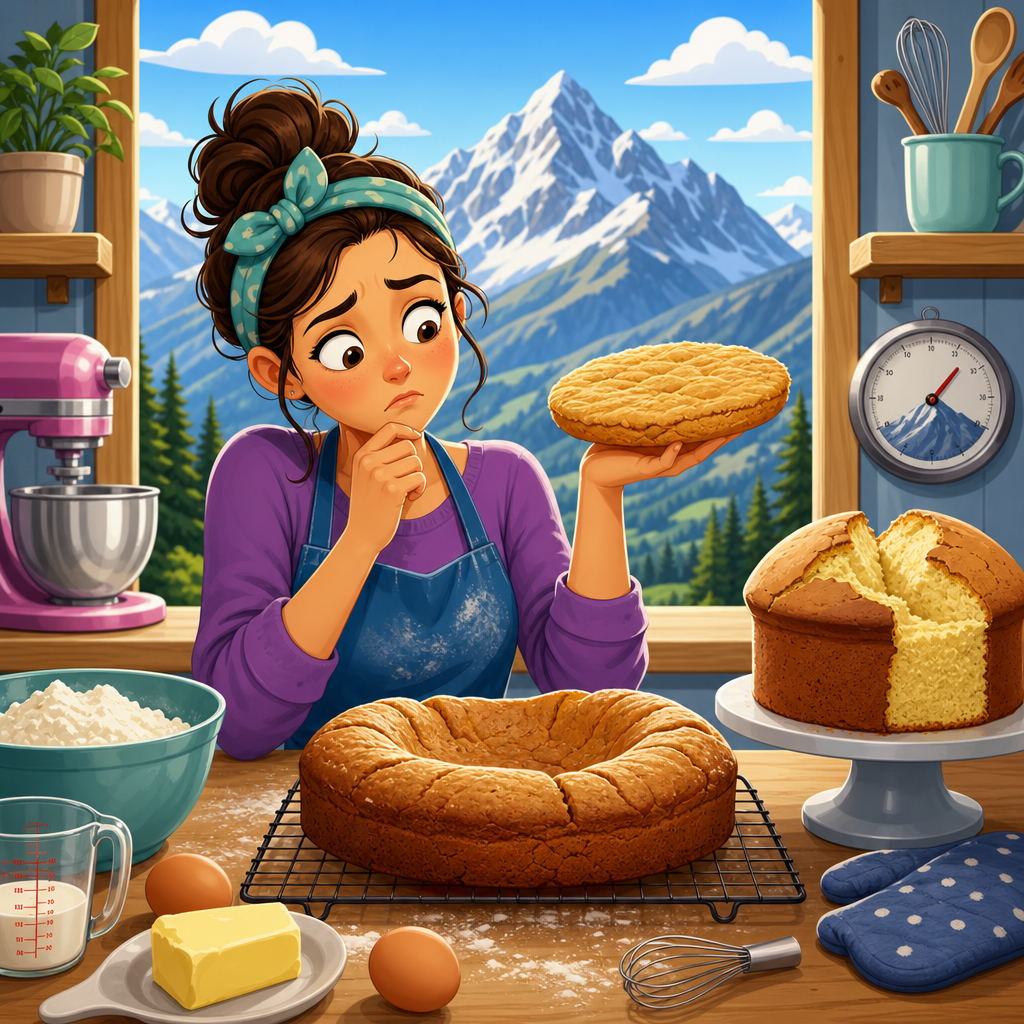
Should you chill cookie dough longer at altitude? In most cases, yes: higher elevation speeds moisture loss, changes how fat behaves, and can make cookies spread, puff, crack, or dry out faster, so a longer rest often improves texture and shape. For home bakers working in mountain regions, “altitude” usually means 3,000 feet above sea level and up, where lower air pressure alters boiling point, evaporation rate, gas expansion, and baking time. “Chilling” means refrigerating dough before baking so flour hydrates, butter firms, and dissolved sugars redistribute. I have tested drop cookies, shortbread, blondies, and bar cookies in kitchens around 5,000 to 7,500 feet, and the pattern is consistent: the dough itself is not magically different, but the environment makes every small formulation choice matter more. That is why cookie and bar recipes that work perfectly at sea level often become thinner, drier, or more fragile at altitude unless the baker adjusts mixing, pan choice, hydration, sugar balance, and resting time.
This matters because cookies and bars are usually treated as simple baking projects, yet they are among the most sensitive altitude desserts. Cakes often have well-known elevation adjustments, but many bakers are surprised that chocolate chip cookies can fail just as dramatically. A hub page for cookies and bars at altitude has to answer the practical question first: should you chill dough longer? It also needs to show when chilling helps, when it does not, and how that decision fits into the larger system of altitude baking. Dough temperature affects spread. Flour hydration affects chew. Pan depth affects edge browning. Oven calibration affects set. Bars add another layer because batter depth and carryover baking determine whether the center turns fudgy or gummy. If you understand those mechanics, you can troubleshoot nearly any cookie or bar recipe with confidence instead of relying on guesswork.
Why altitude changes cookie dough behavior
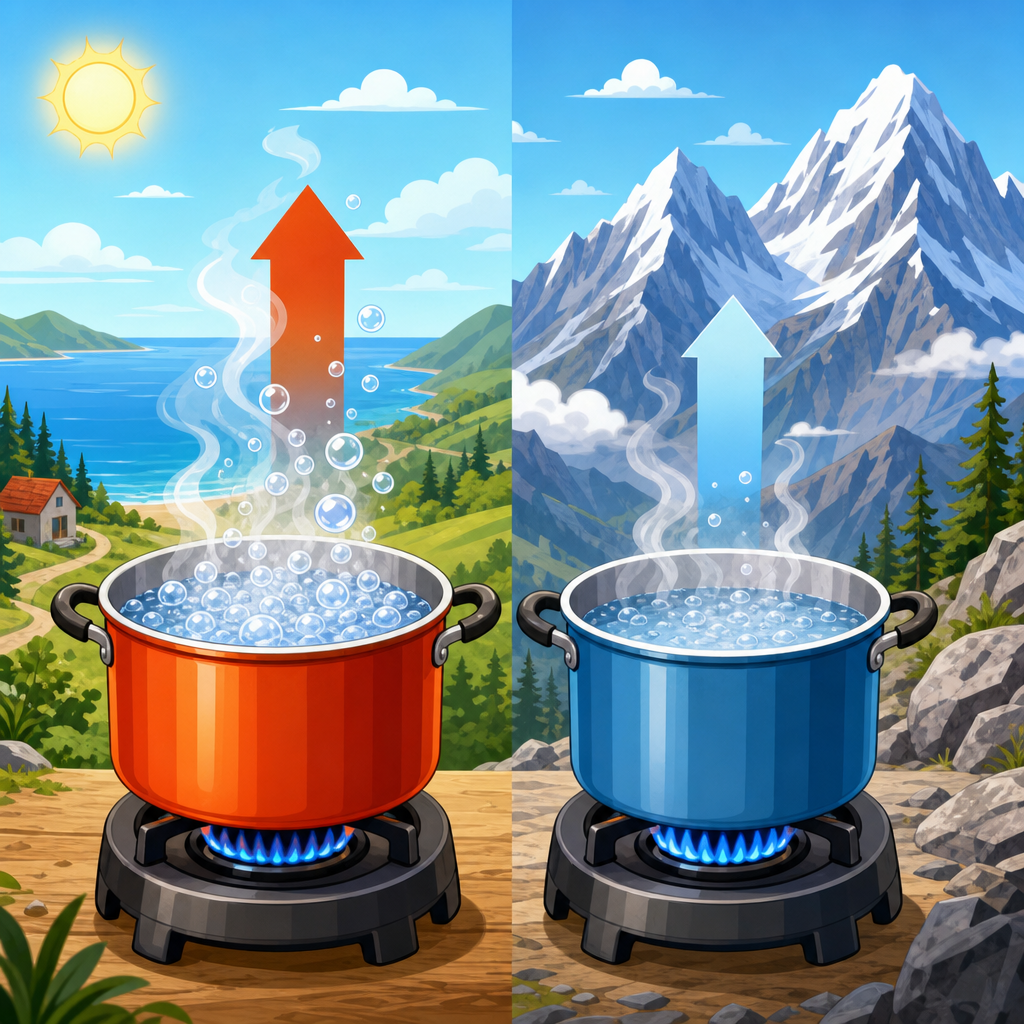
At altitude, lower atmospheric pressure changes baking in four major ways. First, water evaporates more quickly, so dough and batter lose moisture faster both before and during baking. Second, gases expand more readily, which can exaggerate lift early in the bake and then cause collapse or coarse texture if structure does not set in time. Third, boiling happens at a lower temperature, which can affect syrup concentration and how quickly moisture leaves the dough. Fourth, the air is often drier, especially in mountain climates, so flour and sugar can behave differently during storage and mixing. In cookies, these effects usually show up as excessive spread, dry edges, thin centers, greasy surfaces, or a crumbly texture that lacks chew.
Chilling helps because it slows several of those problems at once. Cold butter melts later, giving the dough more time to set before it spreads too far. Resting also lets flour fully hydrate, which improves structure and can reduce the sandy, underbound texture common in high-altitude drop cookies. Brown sugar and granulated sugar absorb liquid during the rest, changing how the dough flows in the oven. In practical terms, a sea-level recipe that bakes well after a 30-minute chill may benefit from 45 to 90 minutes at 5,000 feet, while a dough baked from room temperature may need an overnight rest to perform consistently. That does not mean every recipe requires the longest possible chill; it means altitude increases the value of controlling dough temperature deliberately.
When longer chilling is the right adjustment
Longer chilling is most useful for butter-rich drop cookies, cookies with a high sugar-to-flour ratio, and doughs mixed until very soft. Classic chocolate chip cookies are the best example. At altitude, many bakers report flat puddles with dark edges and pale centers. In my tests, extending the chill from one hour to twelve hours improved thickness, flavor, and edge definition more than simply adding a spoonful of flour. The reason is not only firmer butter. Overnight rest increases hydration and slightly reduces the immediate flow of the dough in the first minutes of baking, when altitude-related spread is hardest to control. The same principle helps oatmeal cookies, peanut butter cookies, and many bakery-style cookie formulas that start with creamed butter.
Longer chilling also benefits slice-and-bake doughs and rolled doughs. Sugar cookies at altitude often lose sharp cutter edges unless the dough is cold all the way through. Refrigerating the dough after mixing, then chilling the cut shapes again before baking, preserves clean outlines and limits puffing. For shortbread, which already contains limited water, chill time is less about hydration and more about firming fat and preventing edge slump. If your dough contains melted butter rather than creamed butter, as in many chewy chocolate chip cookie recipes, an extended chill is even more important because the fat is fully fluid at mixing and the dough needs time to resolidify and absorb moisture.
When chilling alone will not solve the problem
Chilling is powerful, but it is not a universal fix. If your cookies are dry and cakey at altitude, adding more chill can actually reinforce the wrong texture by increasing hydration without correcting formula balance. In those cases, the issue may be too much flour, too little sugar, or overbaking. Likewise, if your bars sink in the center, the core problem may be leavening or pan depth rather than dough temperature. Brownies that crater after rising too fast usually need less chemical leavener, a lower oven temperature, or a shorter bake in a lighter-colored pan. Blondies that bake up greasy may need more flour or a different mixing method because excess melted butter can separate before the starches set.
I also would not rely on longer chilling to compensate for inaccurate measuring. High-altitude baking punishes volume-based flour scoops that can vary by 20 percent or more. Using a digital scale matters more than an extra half hour in the refrigerator. The same is true for oven calibration. An oven running 25 degrees hot can set cookie edges before the center has spread properly, creating misleading results that look like a dough problem. Before changing chill time, confirm your baseline with weighed ingredients, an oven thermometer, and a consistent scoop size. Then evaluate the baked outcome: too flat suggests more chill, slightly more flour, or less sugar; too domed suggests less flour, warmer dough, or reduced chill.
How to adjust cookies and bars at altitude
Altitude cookie success comes from stacking small adjustments rather than making one dramatic change. Start with the dough temperature, then refine moisture, structure, leavening, and bake profile. The exact combination depends on style: a crisp lace cookie needs a different strategy than a thick bakery cookie or a pan of fudgy brownies. The table below summarizes the adjustments I use most often between roughly 3,500 and 7,500 feet.
| Item | Common altitude issue | Best adjustment | Typical range |
|---|---|---|---|
| Drop cookies | Excessive spread | Chill longer; add flour; bake slightly hotter | Chill 1 to 12 hours; add 1 to 2 tbsp flour per batch; raise oven 10 to 15°F |
| Rolled sugar cookies | Loss of shape | Double chill dough and cut shapes | Chill dough 1 hour; chill cut cookies 10 to 20 minutes |
| Brownies | Sunken or dry center | Reduce leavening; shorten bake; use metal pan | Reduce baking powder 25 to 50%; check 3 to 5 minutes early |
| Blondies | Greasy, dense texture | Increase flour slightly; avoid overmixing | Add 1 to 3 tbsp flour; mix only to combine |
| Bar cookies with fruit | Soggy bottom | Prebake crust; reduce juicy add-ins | Prebake 8 to 12 minutes; cut fruit 10 to 15% |
One important pattern appears across these examples: altitude adjustments are cumulative. If a chocolate chip cookie is spreading badly at 6,500 feet, the winning fix may be an overnight chill, 15 grams more flour, and a 15-degree hotter oven, not any single adjustment alone. For brownies and bars, pan geometry matters just as much. Glass dishes retain heat differently from aluminum, and dark nonstick pans brown edges faster. I prefer light-colored metal pans lined with parchment because they provide more predictable conduction and easy removal for clean cutting. That consistency is especially useful for hub recipes such as brownies, blondies, lemon bars, shortbread bars, and oatmeal bars, where one underbaked center can ruin the whole pan.
Cookie-specific guidance across the category
Because this page serves as the cookies and bars hub within altitude baking, it helps to separate the major cookie families. Drop cookies, including chocolate chip, oatmeal, peanut butter, and snickerdoodles, usually need the most active spread control. Start by chilling longer, then evaluate flour and sugar balance. Rolled cookies, such as cut-out sugar cookies and gingerbread, depend on firm dough and even thickness; altitude exaggerates warping if the dough warms during handling. Slice-and-bake cookies benefit from a very cold log so the rounds stay circular and the fat remains stable. Shortbread and sablé-style cookies are less about rise and more about tenderness, so watch oven temperature and avoid overbrowning. Meringue cookies represent a separate category, because low humidity can help drying, but gas expansion and fast moisture loss make timing and temperature critical.
For bar cookies, depth is everything. Brownies are easiest to overbake at altitude because edges set quickly while the center continues steaming. Pull them when a tester shows moist crumbs, not a fully clean pick. Blondies need enough flour and careful mixing to avoid an oily layer. Lemon bars and fruit bars need a crust that is partially baked first, or the filling can soak through before the base sets. Crumb bars often need a slightly firmer topping mixture because butter softens quickly in warm mountain kitchens. If you build your category knowledge this way, each recipe becomes easier to diagnose. Instead of asking, “Why did this fail?” you ask the more useful question: “Did this formula need more structure, more chill, less leavener, or a different bake profile?”
Practical testing method for home bakers
The fastest way to answer the chill question in your own kitchen is to run a side-by-side bake. Mix one batch of dough, portion it evenly, and bake small test groups after different rest times: no chill, 1 hour, 4 hours, and overnight. Use the same sheet pan type, parchment, scoop size, and rack position. Measure cookie diameter after cooling for ten minutes. Note edge color, center thickness, and texture the next day, because altitude often affects shelf life as much as fresh-from-the-oven appearance. I keep a simple baking log with date, elevation, room humidity if known, flour brand, dough temperature, and final outcome. After two or three sessions, patterns become obvious.
Use objective cues whenever possible. An instant-read thermometer can confirm whether browned butter has cooled enough before mixing. A scale keeps flour additions precise in 5- or 10-gram increments. An oven thermometer shows whether your supposed 350-degree bake is actually 365. This sounds technical, but it saves money and frustration. In my experience, the best altitude bakers are not guessing artists; they are disciplined observers. Once you know your kitchen, you can adapt nearly any cookie or bar recipe into a reliable house version. That is the real benefit of understanding whether to chill cookie dough longer at altitude: it gives you a repeatable control point that connects directly to spread, chew, flavor development, and overall consistency.
So, should you chill cookie dough longer at altitude? Usually yes, but the smartest answer is to chill with purpose. Longer resting helps most soft cookie doughs by firming fat, improving hydration, and slowing early spread, yet bars and some cookie styles also need formula and baking adjustments. If you remember the core altitude effects—faster evaporation, quicker gas expansion, and more sensitive setting—you can predict what each dough needs instead of copying random fixes. For this cookies and bars hub, the key takeaway is that altitude baking works best when you combine measured ingredients, controlled chill time, correct pan choice, and careful doneness checks. Start with a side-by-side chill test in your kitchen, keep notes, and use those results to guide every batch. That approach will improve chocolate chip cookies, sugar cookies, brownies, blondies, and fruit bars far more reliably than any one-size-fits-all rule.
As you build out your altitude baking repertoire, treat this page as your starting framework for the entire cookies and bars category. Use it to decide when chilling is enough, when to adjust flour or leavening, and when pan depth or oven temperature is the bigger issue. Then apply those lessons recipe by recipe until your results become consistent. Bake one test batch this week, compare chill times, and let your own data shape the perfect altitude cookie.
Frequently Asked Questions
Should you chill cookie dough longer at altitude?
In most cases, yes. At higher elevations, usually starting around 3,000 feet above sea level, lower air pressure changes how cookie dough behaves before and during baking. Moisture evaporates faster, gases expand more readily, and butter can soften and melt in ways that encourage extra spread, uneven puffing, cracking, or a drier finished texture. A longer chill gives the flour more time to hydrate, helps the fat firm up, and allows the dough to become more stable before it goes into the oven. That often translates to cookies that hold their shape better, bake more evenly, and develop a more balanced texture.
For many home bakers, extending the chill from a quick 30 minutes to 1 to 2 hours is a practical starting point, and some doughs benefit from an overnight rest. The exact timing depends on the recipe, the amount of butter, the sugar ratio, and whether the dough is meant to be thick and chewy or thin and crisp. If your cookies consistently spread too much or bake up dry around the edges before the centers set, increasing the chill time is one of the simplest altitude adjustments you can make.
Why does altitude make chilling cookie dough more important?
Altitude affects several baking variables at once, which is why chilling becomes more useful in mountain regions than it might be at sea level. Lower atmospheric pressure means water boils at a lower temperature, so moisture escapes more quickly. At the same time, leavening gases and steam expand more readily, which can make cookies puff quickly and then collapse or crack as they cool. If the dough is warm or under-rested, softened fat can melt too soon in the oven, increasing spread before the structure has time to set.
Chilling works as a buffer against those changes. Cold dough starts out firmer, so the butter does not liquefy immediately. That short delay matters because it gives proteins and starches more time to set before the cookie flattens too much. Resting dough also improves hydration, especially in recipes with flour-heavy bases, oats, cocoa, or mix-ins that absorb moisture. In altitude baking, where dryness and rapid evaporation are common concerns, better hydration can mean the difference between cookies that are tender and cookies that turn crumbly or hard by the next day.
How much longer should you chill cookie dough at high altitude?
There is no single rule that fits every recipe, but a good guideline is to add 30 to 60 minutes beyond whatever the original recipe recommends, then adjust based on results. If a sea-level recipe says to chill for 30 minutes, bakers at altitude may get better consistency with 60 to 90 minutes. For very buttery doughs, chocolate chip cookies, sugar cookies meant to hold a defined shape, or doughs that seem glossy and soft right after mixing, 2 hours or even overnight can be especially effective.
Pay attention to the dough itself, not just the clock. Well-chilled dough should feel firmer, less sticky, and easier to portion. If scooped dough mounds hold their shape on the tray instead of slumping, that is usually a sign the chill is doing its job. If your cookies still spread too much, try a longer chill on the next batch. If they bake up too thick or do not spread enough, you may have gone a little too far and can shorten the rest slightly. Altitude baking is often about testing in small increments until you find the timing that matches your kitchen, your oven, and your elevation.
Can chilling too long at altitude cause problems?
Yes, it can, although over-chilling is usually easier to correct than under-chilling. Dough that is refrigerated for a very long time can become so firm that it bakes unevenly if placed directly into the oven straight from the refrigerator. The outside may set before the center has time to spread properly, leaving cookies that are thicker than intended or slightly underdone in the middle. In some recipes, especially those with less moisture, a long rest can also make the dough seem dry or harder to scoop.
The solution is usually simple: if the dough has chilled overnight or longer, let it sit at room temperature for 5 to 15 minutes before portioning, depending on how firm it is. You can also scoop the dough before chilling, which makes it easier to bake directly from cold while keeping portions consistent. If the recipe is already designed for slice-and-bake or freezer baking, a long chill may be completely appropriate. The key is to use chilling as a tool for control, not as an automatic fix. At altitude, longer chilling often helps, but it still needs to match the style of cookie you want to produce.
What other adjustments should you make along with chilling cookie dough at altitude?
Chilling helps a lot, but it works best as part of a broader altitude strategy. If cookies are spreading too much, you may also need to reduce sugar slightly, especially white sugar, because sugar encourages spread and liquefies as cookies bake. Some bakers increase flour by a tablespoon or two per batch to strengthen the dough, or reduce butter very slightly in recipes that seem overly rich and loose. If cookies puff too much and then fall, cutting back a little on baking soda or baking powder can help compensate for faster gas expansion at higher elevations.
Oven management matters too. Because moisture loss happens faster at altitude, a slightly higher oven temperature can sometimes help cookies set before they over-spread, but that adjustment should be small and tested carefully to avoid over-browning. Keeping baking sheets cool between batches, using parchment, and baking one test tray first are smart habits. The best approach is to change one factor at a time. Start with a longer chill, then evaluate shape, texture, browning, and moisture. From there, fine-tune flour, sugar, leavening, or bake temperature as needed. That method gives you clearer results and helps you build a reliable cookie process for your exact elevation.