How to sleep better in a dry hotel room at altitude starts with understanding why the environment feels so different from home. Altitude usually means lower barometric pressure, thinner air, lower humidity, stronger respiratory water loss, and often a warmer, overly conditioned hotel room. Those factors combine to disrupt sleep onset, deepen overnight dehydration, dry nasal passages, and increase awakenings. In my work helping travelers, athletes, and conference teams prepare for mountain destinations, I have seen the same pattern repeatedly: people blame the mattress, but the bigger issue is physiology meeting an unfamiliar room. Better sleep and recovery at elevation depends on controlling both.
Dry hotel rooms are common in mountain towns because outdoor air holds less moisture when temperatures are low, and indoor heating reduces relative humidity even further. At 5,000 to 8,000 feet, some travelers also notice periodic breathing, a cycle of deeper and shallower breaths that can fragment sleep in the first nights after arrival. Add late meals, alcohol, jet lag, and inconsistent hydration, and recovery gets worse quickly. This matters because poor sleep at altitude affects reaction time, mood, appetite regulation, exercise performance, and next-day illness risk. The good news is that most people can sleep substantially better by making a few targeted adjustments before bed and immediately after checking in.
This page is the central guide to sleep and recovery within Sleep, Hydration & Nutrition. It defines the main problems, explains what actually works, and points you toward practical routines you can adapt whether you are on a ski trip, attending a work event in Denver, or stopping overnight before trekking higher. The goal is not perfection. The goal is stable breathing, better airway comfort, fewer awakenings, and enough overnight restoration to feel functional the next day.
Why altitude and hotel dryness disrupt sleep
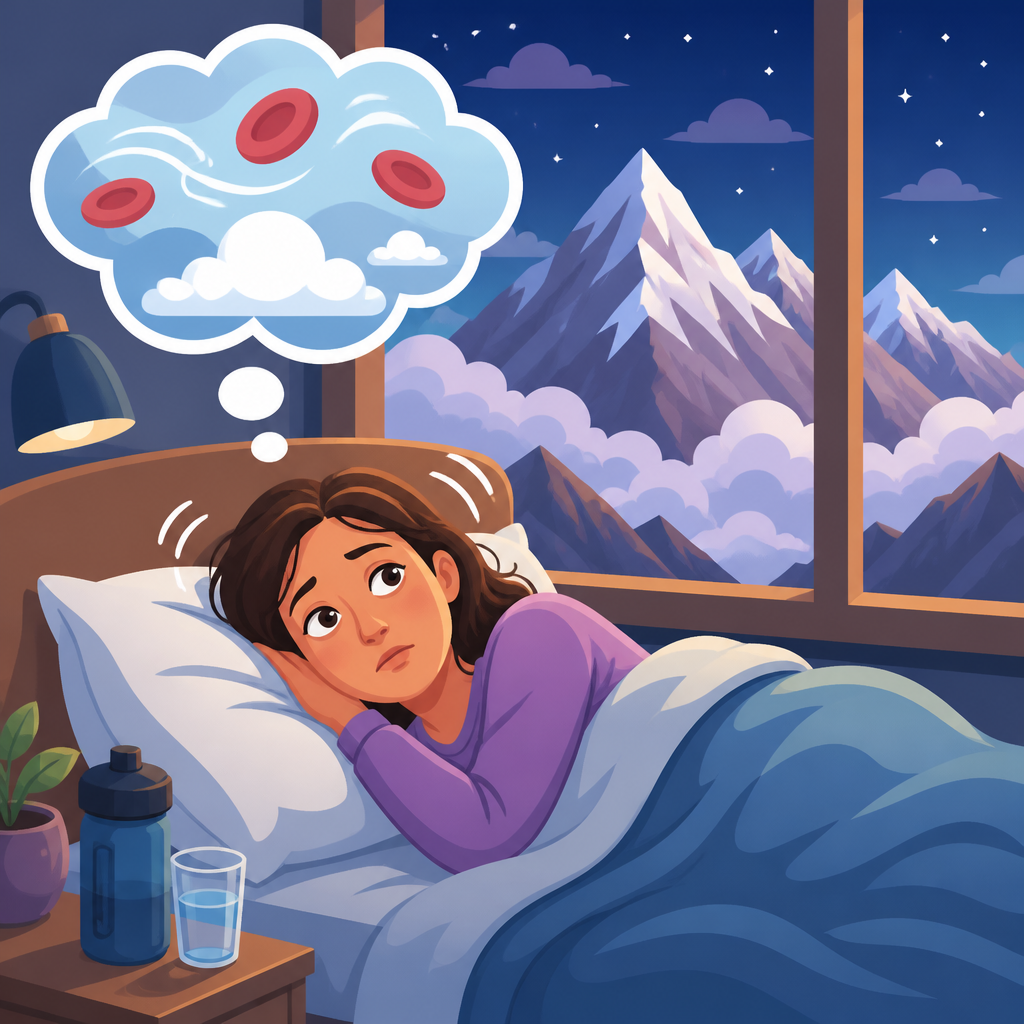
Altitude changes sleep through several mechanisms at once. First, the partial pressure of oxygen drops as elevation rises, even though the percentage of oxygen in air stays about 21 percent. Your body responds by breathing faster and deeper, which increases water loss through respiration. Second, low indoor humidity dries the nose, throat, and upper airway. That can increase mouth breathing, irritation, snoring, and the sensation of waking up thirsty. Third, your autonomic nervous system works harder during acclimatization, often raising resting heart rate for the first day or two. Together, those shifts make sleep feel lighter and less continuous.
In practice, most healthy travelers begin to notice measurable sleep disturbance somewhere above 5,000 feet, though sensitivity varies. If you normally sleep well at sea level, you may still wake more often at 7,000 feet in a heated hotel room with 20 percent humidity. Travelers with allergies, asthma, sleep apnea, chronic nasal congestion, or a habit of drinking alcohol close to bedtime usually feel the effects sooner. Hotel conditions amplify the problem because thermostats are often set too warm, blackout curtains reduce ventilation, and mini fridges or hallway noise create subtle arousal through the night.
When people ask what matters most, I answer directly: the biggest levers are room air, airway moisture, hydration timing, and acclimatization behavior. Fancy sleep gadgets help less than a cool room, a humidified airway, and a calm first evening. If your recovery priority is high, treat the first night at altitude as a transition night rather than a normal night.
Build a first-night setup that protects airway moisture
The fastest way to sleep better in a dry hotel room at altitude is to reduce airway drying before you turn out the lights. Start with room temperature. Most people sleep best around 60 to 67 degrees Fahrenheit, yet hotel rooms in cold climates are commonly set much warmer. Lowering the thermostat decreases the sensation of stale air and reduces overnight thirst. If the system blasts hot air directly at the bed, redirect the vent with a towel or luggage stand so the stream is not hitting your face for hours.
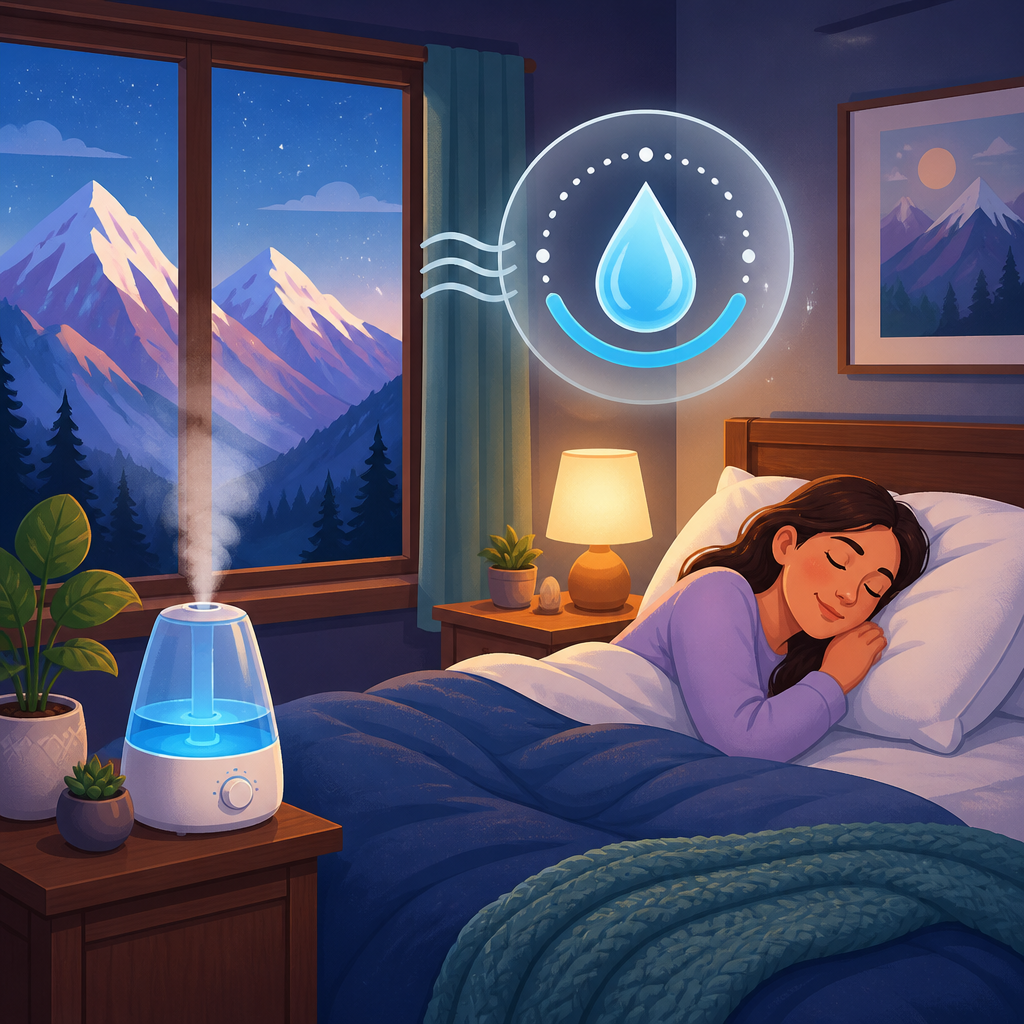
Next, add moisture where you can. A portable travel humidifier is the most reliable option; many ultrasonic bottle-top models are small enough for carry-on luggage. If you do not have one, run a hot shower briefly before bed with the bathroom door open, then stop it once the room feels slightly less dry. This is not as effective as active humidification, but it can ease severe dryness for the first hour of sleep. Saline nasal spray works even better because it directly hydrates the nasal mucosa. I recommend isotonic saline before bed and again if you wake overnight with a dry nose or mouth.
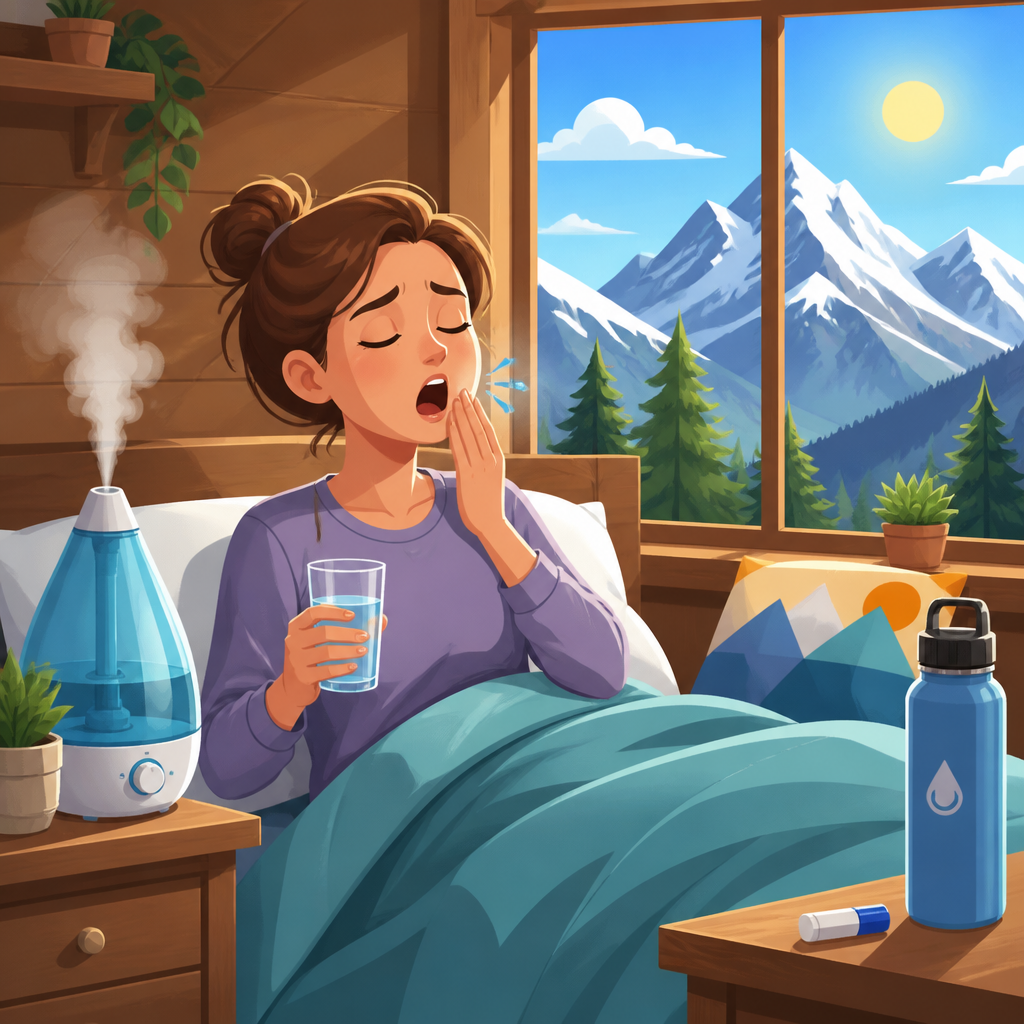
Nasal breathing is worth protecting because it warms, filters, and humidifies inhaled air better than mouth breathing. If congestion makes nose breathing difficult, try a saline rinse earlier in the evening, followed by a nasal strip if needed. For travelers who already use CPAP, altitude and dry air can be rough without heated humidification; if your device has that feature, use it. Lip balm and a simple bedside water bottle also matter more than most travelers expect, because minor discomforts become wake triggers in an unfamiliar room.
| Problem | Why it happens at altitude | Most effective hotel-room fix |
|---|---|---|
| Dry nose and throat | Low humidity plus faster breathing increases moisture loss | Saline spray before bed, portable humidifier, cooler room |
| Frequent awakenings | Airway irritation, overheating, and acclimatization stress fragment sleep | Lower thermostat, reduce noise and light, keep water nearby |
| Mouth breathing | Nasal passages dry out or swell, making nose breathing harder | Saline rinse, nasal strip, treat allergies before travel |
| Morning headache | Dehydration, poor ventilation, alcohol, or inadequate acclimatization | Hydrate steadily, skip heavy drinking, prioritize first-night recovery |
Use hydration strategically, not excessively
Hydration is essential for sleep and recovery at altitude, but many travelers overcorrect and create a different problem: multiple bathroom trips. The aim is not to flood your system at bedtime. It is to arrive well hydrated by late afternoon and then taper. A practical rule I use is front-loading fluids from morning through dinner, with electrolytes included if you flew that day, exercised, or spent hours in heated air. Urine that is pale yellow by evening is a better guide than forcing extra liters right before bed.
Electrolytes help when intake has been low or losses have been high, but they are not magic. What matters is replacing both fluid and sodium in a balanced way. A simple oral rehydration style drink, a lower-sugar electrolyte tablet, or even salty food with water can work. Travelers sometimes assume caffeine is the main problem; in reality, the larger issue is the combination of alcohol, late dehydration, and dry air. A coffee in the morning is usually fine. Several drinks at dinner are not. Alcohol worsens airway dryness, relaxes upper airway muscles, and reduces sleep quality even if it makes you sleepy initially.
If you tend to wake thirsty, put measured hydration into the evening meal rather than the final hour before sleep. Soup, fruit, yogurt, and water consumed earlier often work better than chugging from the bedside at 10:30 p.m. For athletes or hikers arriving from sea level, I also advise a recovery snack with carbohydrate and protein, because under-fueling raises overnight stress hormones and can make sleep feel brittle. Good hydration supports good sleep, but timing is what prevents hydration from becoming sleep disruption.
Create an acclimatization routine for better sleep and recovery
The first 24 to 48 hours at altitude have outsized effects on sleep quality. If you arrive and immediately stack hard exercise, alcohol, dehydration, and a late restaurant meal, you are setting up the worst possible night. Acclimatization is simply the body adjusting to reduced oxygen availability through changes in breathing, fluid balance, and circulation. You cannot force it, but you can make it smoother. Keep physical effort moderate on day one, eat normally, hydrate steadily, and avoid turning a business dinner into a physiological stress test.
Light exposure and timing matter as much as oxygen. If travel has shifted your schedule, get outdoor daylight early in the destination morning to reinforce your circadian rhythm. If you arrive late, keep lighting dim, skip prolonged screen use, and preserve your normal pre-sleep sequence as much as the hotel allows. I have found that travelers sleep better when they anchor the evening with the same three or four cues they use at home: shower, light stretch, saline spray, reading, lights out. Familiarity lowers arousal, which matters more when the environment is already challenging your breathing and hydration.
Some people ask about sleeping pills. They can be appropriate in specific situations, but they are not my first recommendation for altitude sleep because some sedatives can worsen breathing instability or leave you groggy in a place where hydration and oxygen are already less forgiving. If you have a history of altitude illness, insomnia, or diagnosed sleep-disordered breathing, discuss preventive strategies with a clinician before travel. Acetazolamide is sometimes prescribed to support acclimatization and reduce altitude-related sleep disruption, but it is a medical decision, not a casual travel hack.
Control the hotel environment like a recovery space
Hotel rooms are usually optimized for turnover, not sleep recovery. Treat the room like a temporary performance environment. Start by checking for hidden heat sources, bright standby lights, and noise. Many mountain hotels use forced-air systems that cycle loudly, so setting a stable, cooler temperature often helps more than allowing large thermostat swings. If outside temperatures are safe and windows open, even a small amount of fresh air can make a big difference in perceived dryness and morning stuffiness.
Bedding deserves attention too. Heavy duvets can trap heat and trigger waking. I often fold the duvet back and sleep with a sheet plus a light layer if available. If pillows are thick and push your chin toward your chest, airflow may feel worse, especially if you already snore. Adjusting pillow height to keep the neck neutral can reduce airway collapse and improve comfort. Side sleeping is usually preferable to sleeping flat on your back when dryness, snoring, or mild altitude-related breathing instability show up.
Recovery also depends on what you remove. Skip aggressive room fragrances, steaming hot baths right before bed, and large late meals. All three can worsen overheating, reflux, or nasal irritation. If the minibar is packed with salty snacks and alcohol, move it out of your immediate visual field. Environmental design is not complicated here. You are aiming for cool, dark, quiet, and slightly less dry than the hotel would otherwise be. Those basics outperform most supplements.
Common mistakes that make altitude sleep worse
The most common mistake is arriving under-hydrated and trying to fix it in the last hour before bed. The second is assuming exhaustion guarantees sleep. At altitude, overtired people often sleep worse because stress hormones stay elevated and breathing feels less settled. Another frequent problem is drinking alcohol to “knock yourself out.” In a dry hotel room, alcohol almost always produces lighter second-half sleep, more snoring, and a rougher morning.
I also see travelers ignore nasal care until symptoms become severe. Once the nose is very dry or congested, people default to mouth breathing, then wake repeatedly because the throat dries out. Preventive saline is more effective than emergency saline. Finally, people often overheat the room out of habit from cold weather outside. A warm room may feel cozy at first, but it usually produces restlessness, thirst, and fragmented sleep. If you remember only one hotel adjustment, remember this: cooler rooms generally produce better altitude sleep.
This hub supports the broader Sleep & Recovery topic by connecting the moving parts travelers usually treat separately. Sleep quality at altitude is not just about the bed. It sits at the intersection of hydration, airway management, circadian timing, room conditions, and workload. When those pieces line up, recovery improves fast. When they do not, even a luxury hotel can feel impossible to sleep in.
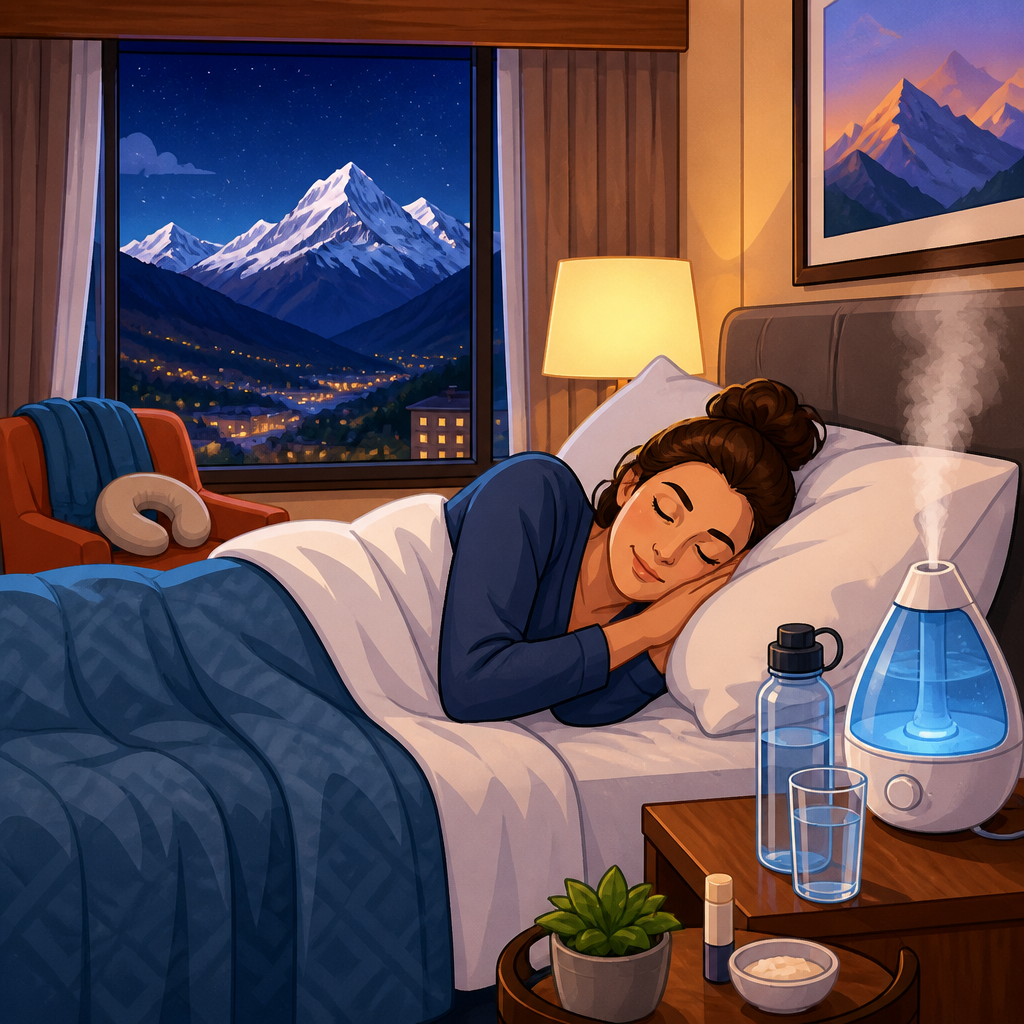
Sleeping better in a dry hotel room at altitude is less about chasing perfect rest and more about removing the main stressors that keep your body alert. Keep the room cool, protect nasal moisture, hydrate earlier rather than later, limit alcohol, and treat the first night as an acclimatization window. Those steps directly improve airway comfort, reduce awakenings, and support stronger next-day recovery.
The central lesson across Sleep & Recovery is that small environmental and behavioral adjustments create outsized results when oxygen is lower and indoor air is dry. You do not need an elaborate protocol. You need a repeatable one: check the thermostat, set out water, use saline, eat a sensible dinner, dim the lights, and keep the evening calm. Travelers who do that consistently almost always report better sleep than those who rely on luck.
Use this page as your starting point for the wider Sleep, Hydration & Nutrition hub, then build a personal altitude routine before your next trip. If you know you struggle with nasal dryness, dehydration, or first-night insomnia, pack for those problems on purpose. Better sleep at altitude is achievable, and better recovery begins with the choices you make the moment you enter the room.
Frequently Asked Questions
Why do I sleep worse in a dry hotel room at altitude even if I feel fine during the day?
Many people are surprised that they can function reasonably well during the day yet struggle the moment they try to sleep. The reason is that altitude and hotel conditions create a layered stress on the body. At higher elevations, the air is thinner and usually much drier, so you lose more moisture through breathing without noticing it. At the same time, hotel rooms often have forced-air heating or strong climate control that further dries the environment. That combination can leave your mouth, throat, and nasal passages irritated by bedtime, which makes it harder to settle into uninterrupted sleep.
Altitude also changes breathing patterns. Even at moderate elevations, some travelers breathe a little faster or more shallowly overnight, and that can lead to more awakenings, light sleep, and a feeling that sleep never became fully restorative. Add in travel fatigue, late meals, alcohol, conference schedules, skiing, hiking, or simply a room that is too warm, and the effect is magnified. In other words, poor sleep at altitude is usually not caused by just one thing. It is the combined effect of lower humidity, increased respiratory water loss, room temperature, nasal dryness, dehydration, and a body that is still adjusting to a different environment.
What is the best way to keep a hotel room from feeling so dry at altitude?
The most effective strategy is to manage both the room and your body at the same time. If the room feels hot and dry, lower the thermostat if possible. People generally sleep better in a cooler room, and reducing excess heat can make the air feel less oppressive. If there is a fan setting on the climate system, use it carefully; nonstop forced air can increase dryness, so choose the gentlest comfortable setting. If the window can be cracked safely and outdoor conditions allow it, a little fresh air may help the room feel less stuffy, though this depends on noise, temperature, and local air quality.
For moisture, a travel humidifier is ideal if you stay at altitude often. If you do not have one, practical workarounds can still help a little, such as hanging a damp towel in the bathroom with the door open or running a warm shower briefly before bed to add temporary humidity. These are not perfect solutions, but they can reduce the sharp dryness many people notice overnight. More important, prepare your airways before sleep. A saline nasal spray or rinse can rehydrate dry nasal passages, and a simple lip balm or moisturizer can prevent the uncomfortable cycle of waking up with a painfully dry mouth and nose. If you tend to breathe through your mouth when congested, addressing nasal dryness before bed often improves sleep quality more than people expect.
How much water should I drink before bed, and how do I avoid waking up all night to use the bathroom?
The goal is not to flood yourself with water right before lying down. A large amount of fluid at bedtime often trades dehydration for multiple bathroom trips, which solves one problem by creating another. Instead, hydrate steadily throughout the afternoon and evening so you arrive at bedtime well hydrated rather than trying to catch up at the last minute. At altitude, because water loss through breathing increases, many travelers need more total fluids than they do at sea level, but timing matters just as much as quantity.
A practical approach is to drink consistently during the day, include fluids with dinner, then taper in the last hour or two before sleep. If you have exercised, flown that day, had caffeine, or spent time outdoors in sun or wind, be especially mindful because all of those can increase fluid loss. Electrolytes can also be helpful, particularly after heavy activity, because hydration is not only about water volume. If your urine is very dark, your lips are dry, and you have a mild headache, those are common signs you may be behind. On the other hand, if you are drinking excessively right before bed, frequent awakenings are likely. The sweet spot is proactive daytime hydration with a modest bedtime top-off rather than a large late-night intake.
Are there specific bedtime habits that help me fall asleep faster in a dry mountain hotel room?
Yes. The best bedtime routine at altitude is simple, calming, and designed to reduce dryness, overheating, and sleep disruption. Start by making the room cool, dark, and quiet. If the hotel thermostat tends to swing warm during the night, lower it earlier than you think you need. Use blackout curtains fully, and consider white noise if outside sounds or hallway noise are an issue. Then focus on your airways: use saline spray or a gentle nasal rinse before bed if your nose feels dry or blocked. This can improve nasal breathing and reduce the tendency to wake with a dry mouth.
Next, keep the evening low-stimulation. Heavy meals, alcohol, and intense exercise close to bedtime can all make altitude sleep worse. Alcohol is especially deceptive because it may make you feel sleepy at first while increasing dehydration, worsening snoring, and fragmenting sleep later in the night. Caffeine late in the day can also linger longer than expected when you are already physiologically stressed from travel and elevation. If you are hungry, choose a light snack rather than a large rich meal. A warm shower, a few minutes of slow breathing, and putting devices away can help signal the nervous system that it is time to settle. The key is consistency: when the environment is already challenging, a stable pre-sleep routine becomes more valuable than usual.
When should I worry that poor sleep at altitude is more than just dryness or normal adjustment?
Mild sleep disruption is common for the first night or two, especially if you arrived quickly from a much lower elevation. However, there are times when symptoms deserve more attention. If poor sleep comes with significant shortness of breath at rest, chest tightness, severe headache, vomiting, confusion, marked dizziness, or symptoms that are rapidly worsening, that goes beyond routine dryness or ordinary adjustment. Those signs can indicate altitude illness or another medical issue and should not be brushed off as “just bad hotel air.”
You should also pay attention if you have an underlying condition such as asthma, COPD, sleep apnea, cardiovascular disease, or a history of altitude intolerance. These factors can make overnight breathing and recovery more complicated. If you use CPAP, bring it and consider the impact of very dry air on comfort and adherence. Persistent insomnia, pounding heartbeat, repeated gasping awakenings, or daytime symptoms that do not improve with hydration, nasal care, rest, and temperature control are good reasons to seek medical advice. In most cases, dry hotel rooms at altitude cause manageable sleep disruption, but it is wise to know the line between normal travel adjustment and symptoms that need proper evaluation.