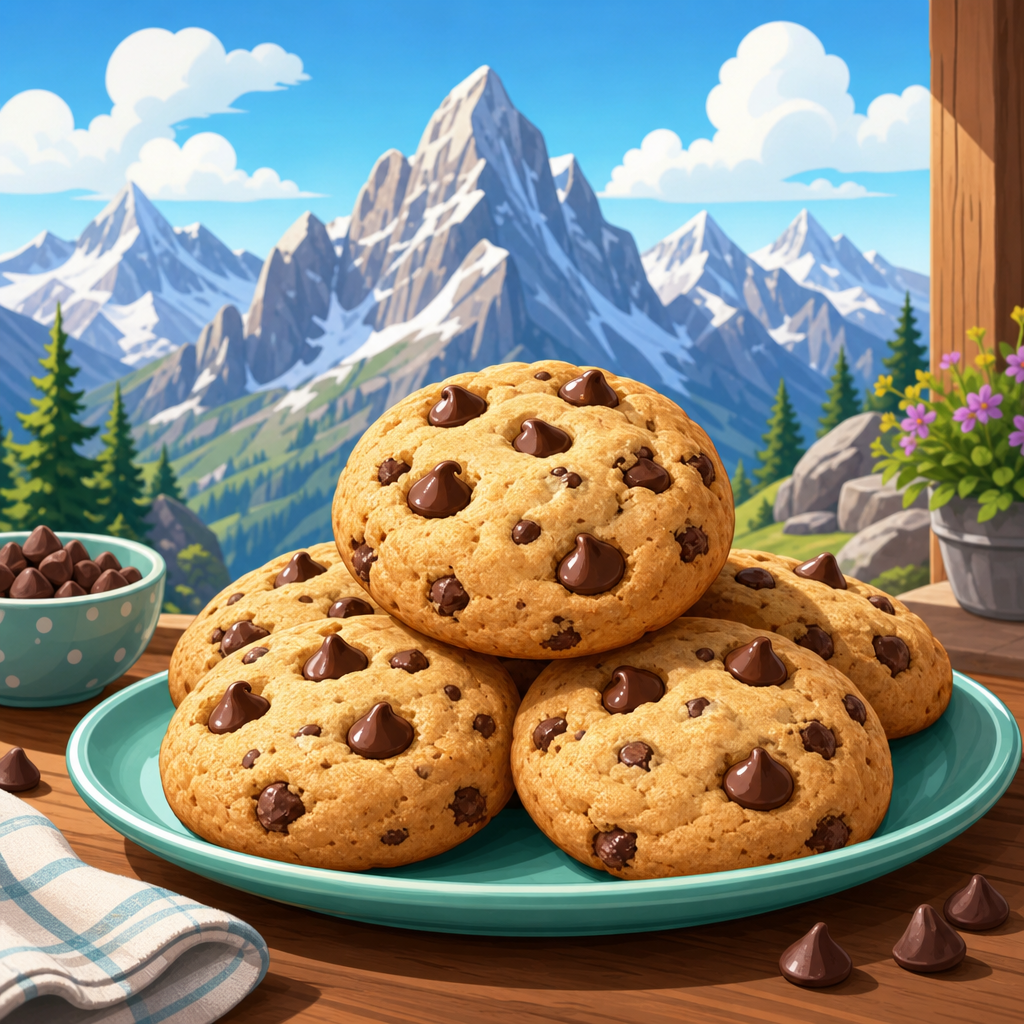
High altitude chocolate chip cookies that do not go flat start with understanding what altitude changes inside the mixing bowl and inside the oven. In baking, “high altitude” usually means 3,000 feet above sea level, though many home bakers notice bigger differences once they cross 5,000 feet. Lower air pressure makes water evaporate faster, sugar concentrate sooner, and trapped gases expand more aggressively. That sounds technical, but the result is easy to recognize: cookies spread too fast, set too late, and come out thin, greasy, or brittle instead of thick and chewy. I have baked cookies repeatedly between 5,000 and 7,500 feet, and the patterns are consistent enough that a reliable system beats trial and error every time.
This hub page explains how to bake high altitude chocolate chip cookies that hold their shape and why the same rules help with cookie bars, blondies, brownies, shortbread, oatmeal cookies, and other drop cookies. If you want cookies that do not go flat, focus on structure, moisture balance, dough temperature, pan setup, and oven accuracy. Altitude baking is not about one magic ingredient. It is about adjusting the recipe so flour, fat, sugar, eggs, and leavening reach equilibrium before the dough melts. Once you understand those relationships, you can fix almost any cookie recipe and build a dependable “Cookies & Bars” playbook for your kitchen.
Why cookies spread more at altitude
Cookies go flat at altitude because several forces favor early spreading. Butter melts before the dough structure is fully set. Sugar dissolves and liquefies faster. Eggs and chemical leaveners create expansion sooner because gases enlarge more in lower pressure. At the same time, moisture leaves the dough quickly, which can make the edges set while the center collapses. In practical terms, high altitude chocolate chip cookies often need slightly more flour, a little less sugar, and less leavening than the sea-level version.
The first question bakers ask is simple: what actually prevents flat cookies? The answer is enough starch and protein to hold shape, controlled fat flow, and an oven hot enough to set the edges before the center turns oily. Bread flour can help because its higher protein builds stronger structure, but all-purpose flour works well when you add one to three extra tablespoons per batch. Chilling matters too. A warm dough made with softened butter is almost guaranteed to spread more at 6,000 feet than it would near sea level.
Another common cause is over-aeration during creaming. At altitude, too much trapped air can inflate quickly and then collapse, leaving wide, rippled cookies. Cream butter and sugars only until combined and slightly lighter, not fluffy for several minutes. I also see inaccurate oven temperatures cause more flat cookies than most people realize. A home oven that runs 25 degrees cool can turn a good altitude recipe into a spreading mess. Use an oven thermometer, not the dial alone.
The ingredient adjustments that matter most
When adapting a standard chocolate chip cookie recipe for altitude, start with the variables that most directly control spread. Add flour first. In a classic batch with about 2 1/4 cups flour, increase by 2 to 4 tablespoons at 5,000 to 7,000 feet. If the dough still bakes thin, go up gradually until the scoop holds a rounded shape. Reduce sugar modestly, usually by 1 to 2 tablespoons total. Too much sugar weakens structure because it delays coagulation and encourages the dough to liquefy before the cookie sets.
Leavening deserves equal attention. Many sea-level recipes use 1 teaspoon baking soda for a batch. At altitude, that amount can create too much lift followed by collapse, especially in doughs with acidic brown sugar. Try reducing baking soda by 1/8 to 1/4 teaspoon. If a recipe combines baking soda and baking powder, reduce the baking powder first because it contributes additional gas release without adding browning. Salt should usually remain unchanged; it strengthens flavor and balances sweetness, which can taste more pronounced when sugar is reduced.
Eggs and liquid can go either direction depending on the dough. Because moisture evaporates faster, some altitude cakes need extra liquid, but cookies often flatten when they are too wet. For chocolate chip cookies, I usually keep the egg constant and increase flour before adding liquid. If a dough becomes crumbly after flour adjustment, add 1 to 2 teaspoons milk, not a full tablespoon. Butter choice also matters. European-style butter with higher fat and lower water can increase spread. If your cookies routinely flatten, standard American butter or a partial swap to shortening can improve thickness.
| Problem | Likely cause at altitude | Best adjustment |
|---|---|---|
| Cookies spread into thin circles | Too little flour, warm dough, oven too cool | Add 2 to 4 tablespoons flour, chill dough, verify oven temperature |
| Centers puff then collapse | Too much leavening or over-creamed butter | Reduce baking soda or powder slightly, mix less during creaming |
| Greasy edges and lacy texture | Too much sugar or butter melting too fast | Reduce sugar by 1 to 2 tablespoons, bake from cold dough |
| Dry, cakey cookies | Too much flour or too long in oven | Scale flour carefully, pull at set edges and soft centers |
| Bars sink in the middle | Pan too large, excess leavening, underbaking | Use correct pan, reduce leavening, bake to center set |
Mixing method, dough temperature, and pan setup
The method is as important as the formula. For high altitude chocolate chip cookies that do not go flat, start with butter that is cool room temperature, around 65 degrees Fahrenheit, not glossy or partially melted. If you press it with a finger, it should dent but still resist. Cream butter with sugars just until smooth and slightly aerated. Add eggs one at a time and stop mixing when the batter looks emulsified. Overmixed dough traps extra air and warms up, both of which increase spreading once the tray hits the oven.
After adding flour, mix only until no dry pockets remain. Fold in chocolate by hand if possible. Then chill the dough for at least 30 minutes; 12 to 24 hours is even better. Resting lets flour hydrate and firms the fat, which reduces spread and improves flavor. Many bakers know long rests deepen caramel notes because enzymes and sugar migration continue in the dough. At altitude, the more immediate benefit is physical stability. A cold scoop enters the oven with a head start against melting.
Pan choice affects spread too. Heavy-gauge light-colored aluminum sheets give the most even results. Dark pans absorb more heat and can overbrown the bottom before the center sets. Silicone mats often increase spread slightly because they insulate the bottom and slow edge setting. Parchment usually gives a thicker cookie. Space dough balls generously and bake one sheet at a time on the center rack if your oven has hot spots. For a bakery-style look, use a scoop, stack a few extra chocolate chunks on top, and rotate the pan once halfway through.
A reliable formula for thick high altitude chocolate chip cookies
If you need a dependable starting point, use this pattern rather than chasing random internet recipes. For about 24 medium cookies at 5,000 to 7,000 feet, combine 226 grams unsalted butter, 150 grams brown sugar, 100 grams granulated sugar, 1 large egg plus 1 yolk, 2 teaspoons vanilla, 300 to 315 grams all-purpose flour, 3/4 teaspoon baking soda, 3/4 teaspoon kosher salt, and 300 grams chocolate chips or chopped chocolate. This ratio favors chew, controlled spread, and strong edges. The extra yolk adds emulsifiers and richness without introducing as much water as a whole extra egg.
Portion the dough into 45 to 55 gram balls and chill until firm. Bake at 375 degrees Fahrenheit, not 350, for 9 to 12 minutes depending on size and oven behavior. A slightly higher temperature helps the edges set faster, which is one of the cleanest ways to stop flat cookies at altitude. The cookies are done when the edges look set and lightly browned while the centers still appear soft and a bit puffed. Let them rest on the sheet for 5 minutes before moving. Carryover heat finishes the center without overbaking.
If your first batch still spreads too much, make one change at a time. Add 1 tablespoon flour to the remaining dough, or chill the next tray longer, or increase the oven by 10 degrees after verifying with a thermometer. Avoid changing flour, sugar, and leavening all at once because you will not know which fix worked. In my testing, the biggest gains usually come from colder dough and hotter baking, followed by a modest flour increase. That sequence solves more cookie problems than dramatic ingredient overhauls.
How the same altitude rules apply to bars, blondies, and brownies
Cookies and bars share the same physics, but the pan changes the outcome. In bars, the batter is supported by pan walls, so spreading is less of a concern than sinking, gumminess, dry edges, or a greasy top. Blondies at altitude often benefit from a small flour increase and a slight reduction in baking powder, if present. Brownies generally need careful baking more than major formula changes because overbaking is easy when moisture evaporates quickly. Fudgy brownies rely on sugar and fat for texture, so cutting both aggressively can make them dull and cakey.
For cookie bars, use the pan size specified in the recipe. An oversized pan creates a thin layer that bakes too fast and dries at the edges before the center sets. Line the pan with parchment and check early. At altitude, bars can go from underdone to overdone within minutes. The center should no longer wobble sharply, and a tester should show moist crumbs rather than raw batter. Residual heat in a metal pan is substantial, so cool bars completely before slicing. Many crumbly bars are not bad recipes; they were simply cut too soon.
Shortbread and slice-and-bake cookies are often easier at altitude because they contain little or no chemical leavening. If you struggle with drop cookies, these are forgiving options within the Cookies & Bars category. Biscotti also performs well because its dry, twice-baked structure is less sensitive to rapid gas expansion. Oatmeal cookies, peanut butter cookies, and snickerdoodles all need the same core checks: enough flour, moderate leavening, cool dough, and accurate oven heat. Once those controls are in place, altitude becomes a variable you manage, not a mystery you fear.
Troubleshooting common failures and building your altitude baking system
The best high altitude bakers keep records. Note your elevation, room temperature, dough temperature, flour brand, butter type, scoop size, oven setting, and actual bake time. Those details matter because flour protein varies by brand, and dry mountain air changes ingredient behavior by season. A recipe that works in winter may spread more in summer if your kitchen is warmer. I recommend weighing ingredients in grams, using an instant-read thermometer for butter and dough if you are fine-tuning, and keeping one trusted base recipe for each major cookie style.
If cookies are thick but tough, you probably overcorrected with flour or overmixed after adding it. If they are thick yet pale, your oven may be too cool or the sugar ratio too low for proper caramelization. If the flavor is flat, use better vanilla, increase salt slightly, or switch from standard chips to chopped couverture chocolate for better melt pockets. If the bottoms burn while tops remain pale, double-pan the sheet or move the rack higher. These are practical fixes, not guesswork, and they translate across most cookies and bars.
As this hub grows, your best next steps are to build a small altitude library: a thick chocolate chip cookie, a chewy oatmeal cookie, a sturdy brownie, a classic blondie, a no-spread sugar cookie, and a dependable bar cookie for bake sales or holiday trays. Master those templates and you can branch into mix-ins, browned butter, whole grains, and sourdough discard versions with confidence. High altitude chocolate chip cookies that do not go flat are not a lucky exception. They are the result of controlled ratios, cold dough, proper heat, and disciplined testing. Start with one batch, document every variable, and refine from there.
Frequently Asked Questions
Why do chocolate chip cookies go flat at high altitude?
Chocolate chip cookies go flat at high altitude because the baking environment changes in ways that affect both the dough and the way the cookies set in the oven. At elevations above about 3,000 feet, and especially above 5,000 feet, air pressure is lower. That lower pressure allows moisture to evaporate faster, gases to expand more quickly, and sugar to become concentrated earlier in the baking process. In practical terms, the butter softens and melts sooner, the dough loses structure faster, and the cookies spread before the flour, eggs, and starches have enough time to set.
Another major reason is imbalance. A cookie recipe written for sea level often contains just enough sugar, fat, and leavening to create the right texture under normal pressure. At high altitude, that same formula can suddenly behave very differently. Too much sugar encourages spreading, too much butter weakens structure, and too much baking soda can cause the dough to rise quickly and then collapse. The result is often a cookie that looks promising for the first few minutes, then thins out into a wide, flat round with crisp edges and a center that lacks thickness.
The good news is that flat cookies are usually fixable. Small changes such as adding a little more flour, slightly reducing sugar, decreasing leavening, chilling the dough thoroughly, and baking at a slightly higher temperature can help the cookies set before they over-spread. Once you understand that high altitude speeds up expansion and moisture loss, it becomes much easier to make adjustments that produce thicker chocolate chip cookies with better texture and height.
What ingredients should I adjust first to keep high altitude chocolate chip cookies thick?
If your goal is to keep high altitude chocolate chip cookies from going flat, start by adjusting the ingredients that most directly control spread: flour, butter, sugar, and leavening. Flour is often the first and most effective adjustment. A small increase in flour gives the dough more structure and helps absorb excess moisture and melted fat. Even an extra 1 to 3 tablespoons per batch can make a noticeable difference, depending on the original recipe and your elevation.
Butter is another major factor. At high altitude, cookies can spread too quickly if the dough contains more fat than the flour can support. You may not need to dramatically reduce butter, but if a recipe consistently bakes too flat, cutting back by 1 to 2 tablespoons can help. Sugar also matters because it liquefies as the cookies bake and encourages spread. A slight reduction in white sugar, or even total sugar, can help the cookies hold their shape better while still staying tender. Many bakers find that brown sugar is slightly more forgiving because it contributes moisture and chew, but balance is still important.
Leavening is the other key place to look. At higher elevations, baking soda and baking powder can act more aggressively because gases expand faster. If there is too much leavening, cookies may puff up quickly and then collapse, leaving them thin. Reducing the baking soda or baking powder slightly can improve the final shape. Eggs can also help support structure, so in some recipes adding a little extra egg yolk can improve richness and thickness without making the dough too loose. If you are troubleshooting, make one or two changes at a time rather than rewriting the whole recipe at once. That approach makes it much easier to identify what actually fixes the spreading problem in your kitchen.
Does chilling the dough really help high altitude cookies stay thick?
Yes, chilling the dough is one of the most reliable ways to help high altitude chocolate chip cookies stay thick. When dough is cold, the butter takes longer to melt in the oven. That delay gives the flour, eggs, and starches more time to set the cookie’s structure before the fat spreads outward. At high altitude, where evaporation and expansion happen faster, that extra margin of time can make a very noticeable difference in how tall or flat the cookies become.
Chilling also improves the dough in other ways. As the dough rests, flour hydrates more fully, which strengthens consistency and reduces uncontrolled spreading. The flavor also improves because the ingredients have more time to meld. For many bakers, a quick chill of 30 to 60 minutes helps, but for the thickest cookies, several hours or even overnight can be even more effective. If your dough is especially soft, warm from mixing, or made with a high proportion of butter and sugar, a longer chill is usually worth it.
That said, chilling is not a complete substitute for proper recipe balance. If the formula contains too much butter, too little flour, or too much leavening, the cookies may still spread even after a long chill. Think of chilling as a powerful support strategy rather than the only solution. For best results, combine chilled dough with correct measuring, slightly increased flour if needed, and a properly preheated oven. Scooping the dough before chilling can also help, since cold portions can go straight from the refrigerator to the oven with less handling and less warming.
Should I change the oven temperature or baking time for cookies at high altitude?
In many cases, yes. A slightly higher oven temperature is often helpful for high altitude chocolate chip cookies because it allows the edges and outer structure to set sooner, before the dough has a chance to spread too much. Raising the baking temperature by about 15 to 25 degrees Fahrenheit is a common adjustment. That faster initial set can be especially useful when you are trying to prevent thin, flat cookies.
When you increase the oven temperature, you usually need to watch the baking time more carefully. Cookies may finish a little sooner, and even one extra minute can change the texture from soft and thick to overbaked. Rather than relying only on the clock, look for visual signs: lightly golden edges, a center that looks set but still slightly soft, and a surface that no longer appears shiny or wet. Because every oven runs differently, testing one or two cookies first is a smart way to fine-tune both temperature and timing.
It is also important to make sure the oven is fully preheated before the tray goes in. If the oven temperature is too low at the start, the butter may melt before the cookie structure begins to set, which almost guarantees extra spread. Using light-colored baking sheets, parchment paper, and the center rack can also improve consistency. If your cookies brown too quickly on the outside before the centers are done, your oven may be running hot, so an oven thermometer can be very helpful. At high altitude, small temperature shifts have a big effect, which is why controlled heat is one of the best tools for baking cookies that stay thick.
What is the best way to troubleshoot a batch of high altitude chocolate chip cookies that still spread too much?
The best way to troubleshoot is to work systematically and change only one variable at a time. Start by checking the basics, because many spreading problems come from simple issues rather than altitude alone. Make sure your flour was measured correctly, preferably by weight if possible. Too little flour is one of the fastest routes to flat cookies. Check that your butter was not overly soft or melted before mixing, and confirm that your baking soda is fresh but not overused. Also make sure your oven is actually reaching the temperature shown on the dial.
If the basics are correct, move to targeted recipe adjustments. First, chill the dough thoroughly if you have not already done so. If the cookies still spread, add a small amount of extra flour to the remaining dough, usually 1 tablespoon at a time per batch, and test again. If they are still too thin, consider reducing the sugar slightly or decreasing the butter by a small amount the next time you bake. If the cookies puff and then collapse, reduce the leavening a bit. If they are flavorful but too delicate, adding an extra yolk or using more brown sugar than white sugar can sometimes help improve chew and structure.
It also helps to evaluate your method. Over-creaming butter and sugar can incorporate excess air, which can lead to cookies rising quickly and then falling. Warm baking sheets can cause the dough to spread the moment it is placed on the tray, so always use cool sheets for each batch. If your kitchen is very warm, keep portions of dough refrigerated between rounds. Most importantly, keep notes. Record your altitude, ingredient amounts, dough temperature, chill time, oven temperature, and baking time. High altitude baking becomes much easier once you identify the exact combination that works in your oven and climate. With a few careful adjustments, you can turn a flat-cookie problem into a dependable recipe for thick, bakery-style chocolate chip cookies.