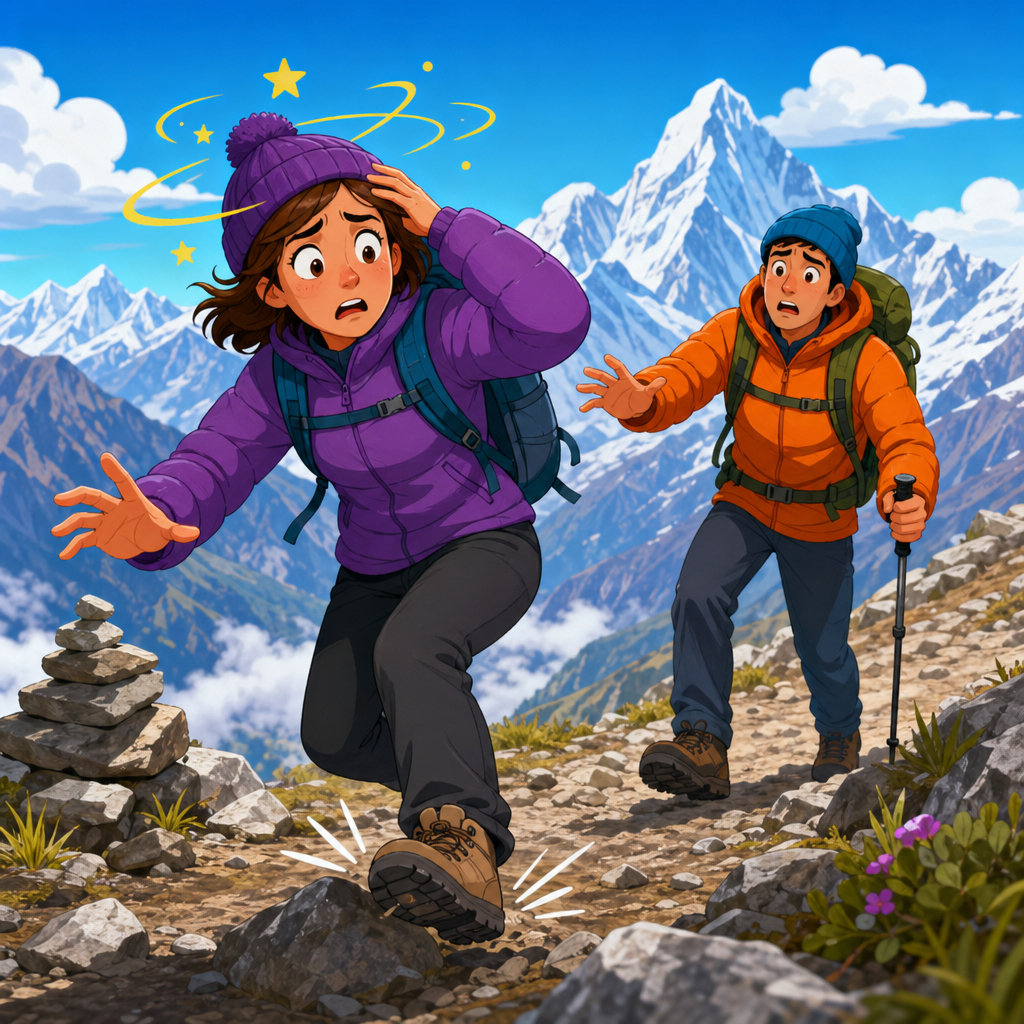
Stumbling, unusual clumsiness, and mental confusion at altitude are emergency warning signs because they can indicate high-altitude cerebral edema, commonly called HACE, a life-threatening form of altitude illness that can progress rapidly and kill within hours if it is ignored. HACE is the severe end of the altitude illness spectrum, usually developing after acute mountain sickness and sometimes alongside high-altitude pulmonary edema, but it can also appear in people who seemed only mildly unwell earlier in the day. In practical terms, HACE means the brain is no longer coping with reduced oxygen pressure at elevation. As swelling and dysfunction increase, judgment fades, coordination breaks down, and the person often becomes unable to recognize how sick they are. That loss of insight is exactly why partners, guides, and family members must take early neurological symptoms seriously.
I have seen experienced hikers dismiss a teammate’s zigzag walking or irrational campsite decisions as simple fatigue, dehydration, or a bad night’s sleep. At sea level, those explanations can be reasonable. At altitude, they are dangerous assumptions. A person who cannot walk heel to toe, keeps dropping gear, forgets basic tasks, or gives slowed, inappropriate answers may be showing classic signs of HACE. The core message of this article is simple: if someone at altitude is stumbling or confused, descend and treat first, debate later. Understanding what HACE is, why it happens, how to recognize it, and how to respond can prevent a manageable situation from becoming a fatal rescue.
HACE matters because more people than ever travel quickly to high elevations for trekking, skiing, climbing, mining, military work, and high-mountain tourism. Roads, cable cars, and flights allow ascent faster than human physiology can adapt. Most altitude illness is mild and reversible with rest or descent, but HACE is different. It is a neurological emergency. The Wilderness Medical Society and standard high-altitude medicine texts treat altered mental status and ataxia in a recently ascended person as HACE until proven otherwise. That default saves lives because there is no reliable field test that safely rules it out while symptoms are evolving.
What HACE is and why it develops
High-altitude cerebral edema is severe altitude-related brain dysfunction caused by inadequate acclimatization to hypobaric hypoxia, the lower oxygen pressure found at elevation. The exact biology is complex, but the practical mechanism is well established: the brain responds to low oxygen with changes in blood flow, capillary pressure, inflammatory signaling, and fluid balance that can lead to vasogenic edema, impaired neural function, and rising intracranial stress. In plain language, the brain swells and stops working normally. The person becomes neurologically unreliable, and that unreliability itself is a major hazard on steep terrain, around crevasses, during navigation, or even inside a tent in severe weather.
HACE usually occurs above about 2,500 to 3,000 meters, with risk rising as altitude and speed of ascent increase. It is more common after sleeping at a new high elevation, after a recent gain of more than 500 meters in sleeping altitude per day without acclimatization days, and in people who continue ascending despite headache, nausea, fatigue, dizziness, or poor sleep. Exertion, cold stress, concurrent respiratory infection, and alcohol or sedative use can cloud the picture and worsen outcomes. Importantly, fitness does not protect against HACE. I have watched very strong athletes assume their conditioning made them safe, only to develop severe symptoms because acclimatization, not fitness, determines tolerance to altitude.
Most cases evolve from acute mountain sickness, but not every patient reads the textbook. Some people minimize earlier symptoms. Others improve briefly with rest, then deteriorate overnight. HACE can also accompany high-altitude pulmonary edema, creating a combined emergency with both brain and lung involvement. When that happens, you may see confusion plus breathlessness at rest, cough, fast heart rate, low oxygen saturation, and inability to keep pace even on easy ground. Combined HACE and HAPE is especially dangerous and requires immediate descent, oxygen if available, and urgent medical support.
Early signs, hallmark symptoms, and red flags
The hallmark features of HACE are ataxia and altered mental status in a person who has recently gained altitude. Ataxia means impaired coordination that is not explained by an obvious injury. In the field, it often shows up as stumbling on flat ground, weaving while walking, trouble putting on crampons, missing a boot buckle repeatedly, or failing a simple tandem gait test. Altered mental status can be subtle at first: slowed answers, unusual irritability, poor decisions, confusion about route or time, apathy, or behavior that feels out of character. As HACE progresses, speech may become slurred, the person may not recognize companions, and drowsiness can deepen toward stupor or coma.
Searchers often ask what symptoms should trigger immediate action. The answer is straightforward. Treat these as medical emergencies at altitude: new stumbling, inability to walk a straight line, confusion, hallucinations, marked drowsiness, repeated vomiting with neurological symptoms, severe headache that is worsening, or any decline in consciousness. Cyanosis and severe breathlessness suggest concurrent HAPE. A pulse oximeter can provide context, but normal or mildly reduced readings do not exclude HACE. Field diagnosis is clinical. If the brain appears impaired after recent ascent, assume HACE and act.
| Sign | What it looks like in real life | Why it matters |
|---|---|---|
| Ataxia | Weaving on easy trail, falling while turning, failing heel-to-toe walk | Most useful field clue that brain function is impaired |
| Confusion | Wrong campsite decisions, forgetting simple tasks, strange answers | Indicates altered mental status and poor self-awareness |
| Severe headache | Persistent, escalating pain not relieved by rest | Often accompanies worsening altitude illness |
| Drowsiness | Hard to wake, wants to lie down and sleep continuously | Can signal progression toward coma |
| Breathlessness at rest | Cannot speak full sentences without pausing, cough, chest tightness | Raises concern for concurrent HAPE |
How HACE is diagnosed in the field and what can be mistaken for it
There is no single mountain-side blood test or scan that confirms HACE. In real expedition medicine, diagnosis is based on history, ascent profile, symptoms, and examination. The Lake Louise scoring system helps identify acute mountain sickness, but once ataxia or altered consciousness appears, the question is no longer scorekeeping. The person needs treatment. A simple neurological assessment is useful: ask orientation questions, watch speech, check finger-to-nose movement, assess tandem gait if safe, and look for escalating lethargy. If the patient cannot walk normally or think clearly after recent ascent, that is enough to justify emergency descent.
Several conditions can mimic or coexist with HACE. Severe hypoglycemia can cause confusion and poor coordination, so checking glucose in an organized medical setting is ideal when available. Stroke, seizure, head injury, intoxication, carbon monoxide exposure in enclosed shelters, meningitis, and profound dehydration can all resemble altitude-related brain dysfunction. However, the field mistake that causes deaths is not over-treating HACE. It is under-recognizing it. If you are high, recently ascended, and facing ataxia or confusion, HACE stays at the top of the list until descent and medical evaluation prove otherwise. Do not leave someone in a tent overnight because you hope it is only exhaustion.
One nuance matters. Mild fatigue can make anyone clumsy late in the day, and language barriers or cultural communication styles can look like hesitation. That is why trend matters. Are symptoms new? Are they worsening? Is the person behaving unlike themselves? Can they walk a straight line on easy terrain? When I assess a sick trekker, I focus less on one isolated complaint and more on the pattern: recent gain in sleeping altitude, headache or nausea earlier, now poor balance and slowed thinking. That pattern is classic and actionable.
Immediate treatment: descent, oxygen, medication, and evacuation
The definitive treatment for HACE is immediate descent. Not after breakfast, not after a nap, and not after seeing whether ibuprofen helps. Descend as far as necessary to improve symptoms, typically at least 500 to 1,000 meters, and more if the patient remains impaired. Keep the person with assistance at all times because judgment and coordination are unreliable. Supplemental oxygen, if available, is highly effective and should be started early. Portable hyperbaric chambers, such as a Gamow bag or Certec bag, are valuable when weather, darkness, avalanche hazard, or terrain temporarily prevents descent. They are a bridge, not a substitute for getting lower.
Dexamethasone is the standard medication for HACE in the field. Adult dosing commonly used in wilderness protocols is 8 milligrams initially, then 4 milligrams every six hours, though clinicians may adjust details based on context and route of administration. Dexamethasone often produces striking short-term improvement, which can mislead teams into staying high. That is a serious error. Improvement after dexamethasone confirms the altitude-related component but does not remove the need to descend. If HAPE is also suspected, nifedipine may be considered under trained medical guidance, and oxygen becomes even more important. The patient should be kept warm, monitored closely, and evacuated to definitive care as soon as practical.
What should companions do step by step? Stop ascent. Protect the patient from falls and cold. Give oxygen if you have it. Administer dexamethasone if trained and equipped. Begin descent immediately with support, stretcher assistance, animal transport, or rescue activation depending on terrain. Do not let the patient remain alone, operate vehicles, or make expedition decisions. In remote settings, satellite communication devices such as Garmin inReach or Zoleo can speed rescue coordination and should be part of serious high-altitude planning.
Prevention, acclimatization, and why this hub matters
The best way to prevent HACE is disciplined acclimatization. Above roughly 3,000 meters, increase sleeping altitude gradually, commonly no more than 300 to 500 meters per night, and add a rest or acclimatization day every three to four days or after larger gains. “Climb high, sleep low” is useful when done conservatively, but it is not a license for aggressive itineraries. Acetazolamide can help prevent altitude illness in higher-risk situations by accelerating acclimatization; it is preventive support, not a mask for reckless ascent. Good hydration, adequate calories, avoiding unnecessary alcohol and sedatives, and honest symptom reporting all matter, but none replaces a sane ascent profile.
This article serves as the hub for the wider HACE subtopic because prevention and response rely on connected knowledge. Readers should understand how HACE relates to acute mountain sickness, how it can overlap with HAPE, how acclimatization schedules are built, when medications are used, what a portable hyperbaric chamber can and cannot do, and how to decide whether symptoms are mild, moderate, or severe. In my experience, teams do best when they pre-commit to objective rules before the trip: no further ascent with headache plus nausea, mandatory buddy checks after arrival at camp, immediate descent for ataxia or confusion, and clear authority for guides or trip leaders to turn people around.
The key takeaway is not complicated. At altitude, stumbling and confusion are never normal until a qualified clinician proves another cause. HACE is treatable when recognized early and unforgiving when minimized. Learn the signs, build conservative ascent plans, carry the right equipment and medications, and empower everyone in the group to speak up when behavior changes. If you spend time in the mountains, review your altitude illness protocols now and make descent decisions automatic before the next trip.
Frequently Asked Questions
Why are stumbling and confusion at altitude considered a medical emergency?
Stumbling, loss of coordination, unusual clumsiness, poor balance, slowed thinking, irrational behavior, and confusion at altitude should never be brushed off as simple fatigue or “just the altitude.” These are classic red-flag signs of high-altitude cerebral edema, or HACE, a severe and life-threatening form of altitude illness caused by swelling in the brain. HACE can develop quickly, often after symptoms of acute mountain sickness such as headache, nausea, poor sleep, or loss of appetite, but it can also seem to appear suddenly in someone who looked only mildly unwell. Once coordination and mental status are affected, the situation has moved beyond routine altitude discomfort and into a true emergency. Without immediate action, HACE can worsen over hours and may progress to inability to walk, severe confusion, coma, and death. The correct response is to stop ascent immediately, treat the person as having HACE unless proven otherwise, and begin descent as soon as possible while providing oxygen, dexamethasone, or portable hyperbaric treatment if available.
What exactly is HACE, and how is it related to other types of altitude sickness?
HACE stands for high-altitude cerebral edema. It is the severe end of the altitude illness spectrum and reflects dangerous swelling of the brain that occurs when the body fails to adapt adequately to reduced oxygen at high elevation. In many cases, HACE develops from acute mountain sickness, or AMS, which often begins with headache, nausea, dizziness, fatigue, and poor sleep after ascent. If those early symptoms are ignored and the person continues climbing or remains at altitude, the illness can escalate into brain dysfunction marked by ataxia, meaning loss of coordination, and altered mental status, meaning confusion, disorientation, unusual behavior, or decreased alertness. HACE may also occur alongside high-altitude pulmonary edema, or HAPE, which is fluid buildup in the lungs. That combination is especially dangerous because it affects both the brain and the ability to get oxygen into the bloodstream. While mild altitude symptoms are common and often reversible with rest and acclimatization, HACE is not something to “wait out.” It demands urgent treatment and descent because it can become fatal very quickly.
How can you tell the difference between normal altitude effects and dangerous neurological symptoms?
Many people at altitude feel tired, short of breath on exertion, mildly headachy, or a little slower than usual, especially during the first days of acclimatization. Those symptoms can occur with normal adjustment or mild acute mountain sickness. The danger sign is when the brain is clearly not functioning normally. Someone with possible HACE may walk as if drunk, stumble on easy terrain, have trouble standing heel-to-toe, fumble simple tasks, forget where they are, speak unclearly, make poor decisions, act unusually irritable or withdrawn, or seem confused about basic questions. If a person cannot walk in a straight line, cannot perform simple coordination tasks they could normally do, or seems mentally “off” in a noticeable way, that should be treated as HACE until proven otherwise. It is especially concerning if these neurological symptoms appear together with headache, vomiting, severe fatigue, or worsening altitude illness after recent ascent. A useful rule in the mountains is simple: headache alone may be altitude sickness, but headache plus ataxia or confusion is an emergency. Do not assume the person just needs sleep, food, or motivation. At altitude, impaired coordination and altered thinking are never reassuring signs.
What should you do immediately if someone shows signs of HACE at altitude?
The priorities are immediate recognition, stopping ascent, and getting the person to a lower altitude without delay. Descent is the most important treatment and should begin as soon as it is safe and feasible, even at night or in poor conditions if the risk of staying put is greater. Do not leave the person alone, and do not let them keep climbing. Give supplemental oxygen if it is available, because increasing oxygen levels can improve symptoms and buy time. If dexamethasone is available and someone in the group is trained to use it, it is commonly given as an emergency medication for suspected HACE because it can reduce brain swelling and improve neurological symptoms. A portable hyperbaric bag can also be life-saving in remote settings when descent is delayed, but it is a bridge, not a substitute for evacuation. Keep the person warm, minimize exertion, monitor breathing and mental status, and be prepared for deterioration. If the person also has breathlessness at rest, cough, gurgling breathing, or bluish lips, HAPE may be present too, making the emergency even more urgent. In practical terms, if someone is stumbling or confused at altitude, the correct mindset is not “let’s see how they are in the morning,” but “we need to descend and treat this now.”
Can HACE happen even if someone seemed only mildly sick before, and can it be prevented?
Yes. Although HACE often follows worsening acute mountain sickness, it can sometimes emerge in someone who previously appeared only mildly affected, especially after rapid ascent, inadequate acclimatization, heavy exertion, dehydration, sleeping high too quickly, or continuing upward despite symptoms. People sometimes underestimate risk because they are fit, experienced, or have done well at altitude before, but none of those factors makes someone immune. Prevention centers on slow, disciplined ascent and respecting early symptoms. That means building in acclimatization days, avoiding large jumps in sleeping altitude, descending or at least holding altitude when headache, nausea, or unusual fatigue develop, and never pushing higher when symptoms are getting worse. In some cases, preventive medication such as acetazolamide may be appropriate, particularly for people with prior altitude illness or itineraries that force faster ascent, but medication does not replace good judgment. The most important preventive habit is taking symptoms seriously early, before neurological signs appear. Once a person becomes clumsy, unsteady, or confused at altitude, prevention has ended and emergency response must begin. Ignoring those signs is dangerous because HACE can progress rapidly and may kill within hours if it is not recognized and treated promptly.