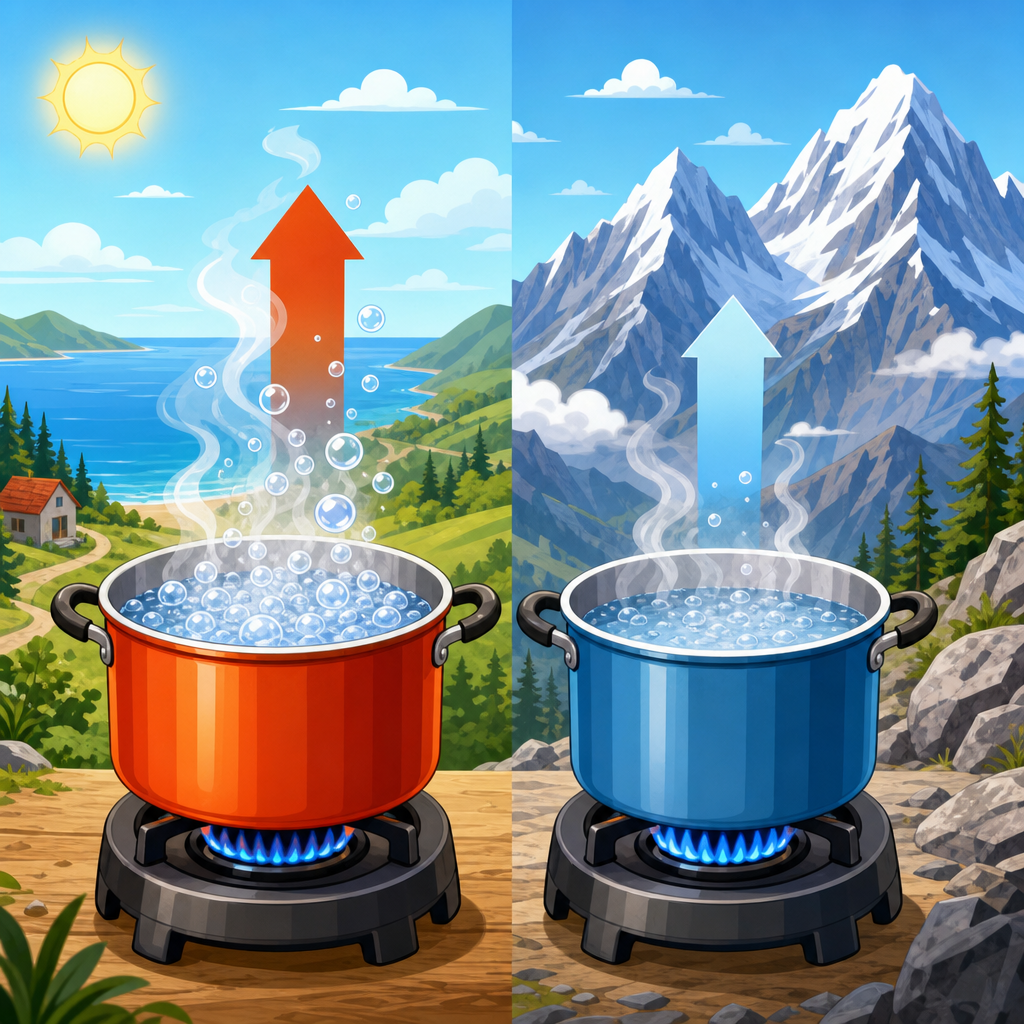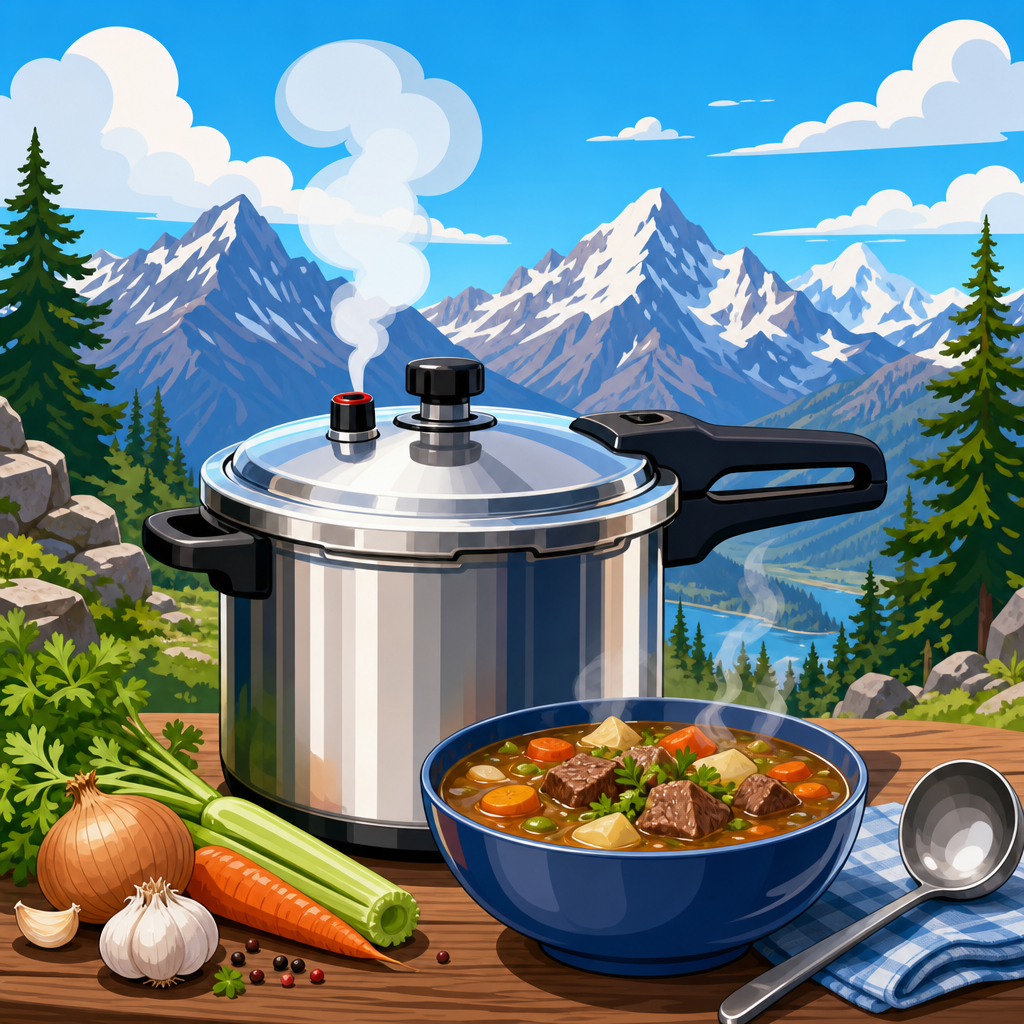
Pressure cooking at altitude for soups and stews solves one of the most common mountain-kitchen problems: water boils at a lower temperature as elevation rises, so long-simmered dishes take longer, lose more moisture, and often finish with undercooked beans, tough meat, or flat flavor. In practical terms, altitude cooking changes the physics inside your pot. At 5,000 feet, water boils around 203°F instead of 212°F at sea level; at 7,500 feet, it drops to roughly 198°F. That lower boiling point matters because soups and stews rely on sustained heat to soften collagen, gelatinize starch, and hydrate legumes. A pressure cooker restores much of that lost thermal energy by raising the boiling point inside a sealed vessel, making it one of the most reliable cooking methods for altitude kitchens.
When I started adapting recipes for mountain clients, soups and stews were where the biggest frustrations showed up. A beef stew that was tender in two hours at sea level could stay chewy after three hours of stovetop simmering in Denver. Split pea soup thickened unevenly in Santa Fe. Black bean soup in Flagstaff often needed both longer soaking and longer cooking. Pressure cooking changed that immediately, but only after we stopped treating altitude as a minor tweak and started treating it as a system. The method is not just “cook a little longer.” It involves understanding pressure level, liquid balance, ingredient size, natural versus quick release, and how altitude affects evaporation and seasoning concentration.
This hub article covers pressure cooking at altitude for soups and stews as part of the broader cooking methods approach to high-elevation food. It defines the core adjustments, explains why they work, and points to the major decision points you need for daily cooking: choosing electric versus stovetop pressure cookers, setting time by ingredient, building flavor without over-reducing, and troubleshooting texture problems. If you want dependable braises, bean soups, chicken stock, chili, lentil stew, or vegetable soup above sea level, this is the method that gives the most control with the least guesswork.
Why pressure cooking works so well at altitude
The short answer is temperature recovery. At altitude, a conventional pot cannot exceed the local boiling point of water unless it is sealed and pressurized. That means a stovetop Dutch oven simmering stew in Aspen or Albuquerque is cooking at a lower temperature than the same pot at sea level. Lower heat slows every process that makes soups and stews satisfying: meat fibers relax more slowly, connective tissue converts to gelatin more slowly, beans absorb water more slowly, and aromatic vegetables take longer to fully soften. A pressure cooker compensates by increasing internal pressure, which raises the boiling point of water and allows food to cook at a higher temperature.
In most modern electric pressure cookers, the high-pressure setting reaches about 10.2 to 11.6 psi above atmospheric pressure, while many stovetop models operate around 15 psi. That difference matters at altitude. A stovetop unit usually reaches a slightly higher cooking temperature and can be more forgiving for large cuts of chuck roast, dried chickpeas, and dense stocks. Electric models, however, offer repeatability, safer hands-off operation, and easier scheduling for weekday meals. In my testing at elevations between 5,000 and 8,000 feet, both types outperform open-pot simmering for soups and stews, but stovetop pressure cookers often finish collagen-rich meats faster and with slightly better broth body.
Pressure cooking also reduces evaporation, which is especially useful in dry mountain climates. Traditional simmering at altitude can strip too much water from the pot before the ingredients are fully tender. The result is a stew that looks concentrated but tastes harsh or muddy because flavors have not had enough time to integrate before the liquid disappears. In a sealed cooker, the broth stays in the pot. You keep more dissolved gelatin, more volatile aromatics, and more predictable salinity. That is why pressure cooking is often the best first-choice method for altitude soups, while a final uncovered simmer can handle last-stage thickening or flavor adjustment.
Core altitude adjustments for soups and stews
The most important rule is this: at altitude, increase pressure-cooking time modestly rather than adding large amounts of extra liquid. For most soups and stews, a good starting point is adding about 5 percent more cook time for elevations above 3,000 feet, then adjusting upward by another 5 percent around 6,000 feet if ingredients are still underdone. This is a starting framework, not a law. Ingredient age, bean variety, meat cut, and cooker design all matter. Older dried beans may need significantly more time than fresh-crop beans. Grass-fed beef chuck often behaves differently from heavily marbled commodity chuck. Wide electric inserts reduce depth and can influence heating patterns compared with narrower stovetop vessels.
Liquid management is the second adjustment. Electric pressure cookers require a minimum volume of thin liquid to come to pressure, usually at least 1 to 1.5 cups depending on model. At altitude, resist the urge to flood the pot just because stovetop cooking usually needs more water. Sealed pressure cooking does not lose much moisture, so excess liquid can wash out flavor and delay thickening. For soups, use enough broth to maintain the intended texture after pressure release. For stews, start with less than you would for open-pot braising, because vegetables and meat will release water as they cook. If the final consistency is too thin, simmer uncovered using sauté mode or reduce on the stovetop after pressure cooking.
Salt timing deserves attention. Because pressure cooking traps liquid, the salt concentration you start with is closer to the salt concentration you finish with. At altitude, cooks accustomed to long uncovered simmering often overseason early and end up with broth that tastes aggressive. I prefer salting in layers but holding back the last 20 percent until the end, especially for bean soups and tomato-based stews. Acid timing matters too. Tomatoes, wine, vinegar, and citrus can slow bean softening and keep vegetables firmer. If you are cooking dried beans directly in the soup, add strong acids after the beans are tender unless the recipe is specifically balanced for a longer cook.
Pressure cooker settings by ingredient and dish type
Reliable pressure cooking at altitude begins with matching the cook time to the hardest ingredient in the pot. Lentils, split peas, diced potatoes, and chopped kale cook quickly. Beef chuck, dried chickpeas, and large cubes of turnip do not. If everything goes in together for the full time, fast ingredients can disintegrate before the meat or beans are ready. The better approach is staging. Cook the slowest ingredients first, then add quick-cooking vegetables, dairy, delicate herbs, or seafood after pressure release. This is especially important in mountain kitchens because you may extend the initial pressure time, increasing the risk of overcooking the tender components.
For example, at 5,000 to 7,000 feet, I often cook soaked black beans for soup at high pressure for 12 to 16 minutes in an electric cooker, followed by a natural release of at least 15 minutes. Unsoaked black beans may need 28 to 35 minutes depending on age. Beef stew cubes from chuck commonly need 28 to 35 minutes for spoon-tender texture, while lamb shoulder pieces often finish in 22 to 28 minutes. Chicken thigh stew may need only 10 to 14 minutes, and vegetable soup built on potatoes, carrots, celery, and cabbage can be done in 3 to 6 minutes if the pieces are cut evenly. Split pea soup usually lands around 12 to 18 minutes, while brown lentil soup tends to be closer to 8 to 12.
| Dish or ingredient | Typical high-pressure time at moderate altitude | Best release method | Key note |
|---|---|---|---|
| Beef chuck stew cubes | 28–35 minutes | Natural release | Brown first for deeper flavor |
| Soaked black beans for soup | 12–16 minutes | Natural release | Add acid after beans soften |
| Unsoaked chickpeas | 35–45 minutes | Natural release | Older beans may need more time |
| Split pea soup | 12–18 minutes | Natural release | Stir well after opening |
| Chicken thigh stew | 10–14 minutes | 5-minute natural, then quick | Add tender vegetables later |
| Vegetable soup | 3–6 minutes | Quick release | Prevents mushy texture |
Release method is not a minor detail. Natural release keeps boiling intensity lower as pressure drops, which protects beans from bursting and helps meat fibers relax instead of tightening suddenly. Quick release is useful for delicate vegetables and seafood soups because it stops the cooking fast. In altitude cooking, carryover heat can still be significant, particularly in large electric cookers filled near the maximum line. If a recipe turns potatoes grainy or carrots too soft, the issue is often not just the pressure time; it is the release strategy.
Building flavor without losing texture
One misconception about pressure cooking is that it is only about speed. In reality, good soups and stews depend on layered flavor, and altitude makes those layers more important because open-pot reduction behaves differently. Start with browning when the recipe benefits from it. Searing beef, lamb, or mushrooms develops Maillard compounds that pressure alone cannot create. In electric cookers, brown in batches so the surface actually sears instead of steams. Deglaze thoroughly with stock, wine, or water to dissolve the fond. Those browned bits carry a large part of the finished depth.
Aromatics need strategy as well. Onion, carrot, celery, garlic, ginger, and spice pastes can all go bitter if sautéed too hard in a dry pot, especially at altitude where evaporation is fast during the initial browning stage. I build the base gently, then add spices such as cumin, coriander, paprika, or chili powder for only 30 to 60 seconds before adding liquid. Woody herbs like thyme and rosemary tolerate pressure cooking well. Tender herbs like parsley, dill, basil, and cilantro are better added after cooking. The same principle applies to dairy. Cream, yogurt, coconut milk, and cheese should generally be stirred in after pressure release to avoid curdling or dulling their flavor.
Texture control usually comes down to cut size and starch management. Large meat cubes survive extended pressure cooking better than small ones. Waxy potatoes hold shape better than russets in stews. Pearl barley can go directly into hearty soups, but pasta is usually better cooked separately or added after release, because even one or two extra minutes under pressure can push it past al dente. If you want a thicker body, blend a portion of beans or vegetables, or use a beurre manié, slurry, or mashed potato finish after cooking instead of forcing a long reduction that overcooks the rest of the pot.
Choosing the best pressure cooker and method for mountain kitchens
For altitude cooking methods, the electric versus stovetop decision is less about convenience alone and more about pressure performance, batch size, and control. Electric pressure cookers excel at consistency. They are ideal for weekday lentil soup, chicken stew, and batch-cooked beans because the cycle repeats with little supervision. Many models also provide delayed start and keep-warm functions, which help with meal planning. Their main limitation is lower peak pressure than most stovetop cookers and slower preheat time, which can slightly extend total cooking time for tough cuts and large batches.
Stovetop pressure cookers are the workhorses I recommend for serious altitude cooks who make stock, chili, beef barley soup, or bean stew often. They generally reach 15 psi, come to pressure faster, and let you adjust burner heat with immediate feedback. That makes them efficient at elevations where every degree matters. They also vent more audibly, which some cooks find reassuring and others find annoying. Safety is excellent in modern units from brands such as Kuhn Rikon, Fissler, and Presto, provided the gasket, valve, and locking system are maintained. Electric models from Instant Pot and Ninja remain strong choices for users who prioritize simplicity and repeatable results.
This hub sits within the broader world of altitude cooking methods, where no single technique fits every dish. Pressure cooking is usually the best method for legumes, tough braising cuts, and broths because it neutralizes low boiling temperatures. Slow cookers are less effective at altitude because their operating temperature margin is narrower and they cannot raise the boiling point meaningfully. Open-pot simmering still has a place when you want aggressive reduction, emulsified fat distribution, or precise vegetable doneness. The smartest approach is hybrid cooking: pressure-cook for tenderness, then finish uncovered for texture, gloss, and final seasoning.
Troubleshooting common altitude pressure-cooking problems
If beans stay firm, the usual causes are old beans, insufficient pressure time, hard water, or acid added too early. Add a pinch of baking soda only when appropriate and only in small amounts, because too much can create soapy flavor and weaken skins excessively. If meat is dry, it is often not overcooked in the classic sense; it is undercooked for that cut. Collagen-heavy cuts feel dry and tight until enough connective tissue converts to gelatin. Give beef chuck another 5 to 10 minutes at pressure and use a natural release. If vegetables are mushy, cut them larger or add them after the first pressure cycle.
Scorching in electric pressure cookers is usually caused by thick purees, flour-heavy bases, sugary sauces, or ingredients stuck on the bottom after sautéing. Always deglaze thoroughly before sealing. Layer thick tomato products on top instead of stirring them into the bottom liquid. For cream-based soups, cook the vegetables and stock first, then blend and add dairy after release. If the finished soup tastes flat, the fix is rarely more cooking. It is usually acid, salt, or aromatic freshness. A spoonful of vinegar, a squeeze of lemon, chopped herbs, black pepper, or a drizzle of good olive oil can sharpen the bowl immediately.
Pressure cooking at altitude for soups and stews is the most dependable path to tender meat, fully cooked beans, and balanced broth when mountain conditions work against traditional simmering. The key principles are straightforward: use pressure to recover lost temperature, increase cooking time modestly rather than drowning the pot, stage quick-cooking ingredients, and choose the right release method for the texture you want. Build flavor before sealing with proper browning and deglazing, then finish thoughtfully with herbs, acid, or a brief reduction. Those steps turn altitude from a source of frustration into a manageable variable.
As the hub for cooking methods within Cooking & Baking at Altitude, this page gives you the framework for all pressure-cooked soups and stews, from black bean soup and chicken chile to beef bourguignon-style stew and split pea soup. Use it as your starting reference, then apply the same method-first thinking to related articles on slow cooking, stovetop simmering, braising, and stock making at elevation. If your soups have been thin, your beans stubborn, or your stew meat chewy, start with one pressure-cooked recipe this week, take notes on time and release, and build your own altitude baseline from there.
Frequently Asked Questions
Why does altitude make soups and stews harder to cook properly?
At higher elevations, atmospheric pressure is lower, which means water boils at a lower temperature than it does at sea level. That matters a lot for soups and stews because these dishes depend on steady heat over time to soften vegetables, break down collagen in tougher cuts of meat, and fully hydrate ingredients like beans, lentils, barley, or split peas. At sea level, water boils at 212°F, but around 5,000 feet it boils at roughly 203°F, and by 7,500 feet it is closer to 198°F. Even though that difference sounds small, it has a big effect in the pot. Your soup may simmer actively, but the actual cooking temperature is lower, so everything takes longer.
In practical kitchen terms, altitude often leads to several frustrating results at once: broth evaporates faster during a long simmer, beans stay firm longer, stew meat remains chewy, and flavors can taste diluted or oddly flat because the balance between reduction and cooking time changes. A recipe that works beautifully at sea level can end up with too much liquid, too little tenderness, or uneven doneness in the mountains. Pressure cooking helps solve this by creating a sealed, high-pressure environment that raises the boiling point of water back above what you could achieve in an open pot at altitude. That higher internal temperature speeds up cooking, improves consistency, and reduces moisture loss, which is exactly why pressure cookers are so effective for mountain soups and stews.
How does a pressure cooker help at altitude when making soups and stews?
A pressure cooker compensates for the lower boiling point at altitude by trapping steam and increasing the pressure inside the pot. As pressure rises, the boiling point of water rises too, allowing the contents to cook at a higher temperature than they would in a regular uncovered or loosely covered pot. This is especially useful at elevation, where conventional simmering can feel sluggish and inefficient. Instead of struggling to get enough heat into the food through a lower-temperature boil, a pressure cooker restores the higher cooking temperatures needed to tenderize meat, soften legumes, and deepen flavor in a much more predictable way.
For soups and stews, the benefits are practical and immediate. Tough cuts like chuck, brisket, shank, or pork shoulder break down more effectively because connective tissue has a better chance to convert into gelatin. Dried beans cook more evenly and are less likely to stay stubbornly firm after an hour of simmering. Root vegetables soften without requiring excessive reduction of the broth. Because the pot is sealed, you also lose far less liquid to evaporation, which is important in dry mountain climates where open-pot cooking can concentrate some flavors while leaving other ingredients undercooked. The result is a dish that tastes more balanced and finishes in less time with less guesswork. In short, pressure cooking does not just make altitude cooking faster; it makes it more reliable.
Do I need to increase pressure-cooking time for soups and stews at higher elevations?
Yes, in most cases you should increase the cooking time somewhat as altitude rises, even when using a pressure cooker. While pressure cooking dramatically reduces the problems caused by lower atmospheric pressure, it does not erase altitude completely. Many pressure cooker manufacturers and experienced high-altitude cooks recommend adding about 5 percent more cooking time for every 1,000 feet above 2,000 feet elevation, though exact adjustments depend on the recipe, the type of cooker, and the ingredients involved. Soups with quick-cooking vegetables may need only a small increase, while stews with dried beans or large chunks of beef may need a more noticeable adjustment.
The smartest approach is to use sea-level timing as your starting point and then make controlled increases based on your altitude and your results. For example, if a beef stew normally cooks for 35 minutes at high pressure, a cook at 5,000 feet may need several extra minutes to get the same tenderness. Beans are another ingredient that often benefits from added time, particularly if they are older or were not soaked. It is better to think in terms of “test and refine” than “one exact number,” because bean age, meat cut, ingredient size, and even your specific appliance can all affect the outcome. Once you find the timing that works in your kitchen, write it down. High-altitude pressure cooking becomes much easier when you build your own reliable reference points for favorite soups and stews.
Should I change the liquid amount or seasoning when pressure cooking at altitude?
Usually, you do not need to add dramatically more liquid in a pressure cooker just because you are cooking at altitude, and that is one of its biggest advantages. In traditional stovetop simmering, longer cook times and faster evaporation often force you to add extra broth or water throughout the process. In a pressure cooker, the sealed environment sharply limits evaporation, so the liquid you start with is much closer to the liquid you finish with. That said, you still need to meet the cooker’s minimum liquid requirement to build pressure safely, and brothy soups generally need more starting liquid than thick stews. If you are adapting a recipe written for open-pot cooking, you may actually need less total liquid in the pressure cooker than the original recipe calls for.
Seasoning deserves special attention. Because pressure cooking retains moisture and limits reduction, flavors may not concentrate in quite the same way they do during a long uncovered simmer. At the same time, ingredients like beans, meat, and aromatics can release strong savory notes into the broth under pressure. A good strategy is to season in layers: add enough salt and spices at the beginning to build a solid foundation, but reserve some finishing salt, acid, and fresh herbs for the end. This is particularly helpful for soups and stews cooked at altitude, where flavor can sometimes seem muted during conventional cooking. A splash of vinegar or lemon juice, a final pinch of salt, or fresh parsley, thyme, or cilantro added after pressure cooking can make the entire dish taste brighter and more complete. Taste after cooking, then adjust deliberately instead of trying to force all the flavor development to happen upfront.
What are the most common mistakes to avoid when pressure cooking soups and stews in the mountains?
One of the most common mistakes is assuming pressure cooking times stay exactly the same at every elevation. Many cooks buy a pressure cooker expecting it to erase altitude completely, then end up with slightly firm beans or meat that is almost tender but not quite there. Another frequent issue is overfilling the pot, especially with ingredients that expand, foam, or release starch, such as beans, split peas, barley, or thick pureed soup bases. Pressure cookers need headspace to function safely and correctly, and soups that bubble up can interfere with valves if the pot is too full. It is also easy to add too many delicate vegetables at the beginning. Potatoes, carrots, squash, and greens can turn overly soft if they are pressure cooked for the full time needed by meat or beans, so staggered cooking often gives better texture.
A second major mistake is neglecting the finish. Pressure cooking gets the food cooked, but great soups and stews often still need a final adjustment once the lid comes off. If the broth is thinner than you want, simmer uncovered for a few minutes. If the flavor tastes heavy or dull, add acid or fresh herbs. If the meat is tender but the stew lacks depth, stir in tomato paste, a small amount of soy sauce, Worcestershire, or a concentrated stock element and simmer briefly. Also, avoid quick-releasing when the recipe benefits from a natural release, especially with large cuts of meat, beans, and heavily filled soups. Natural release helps ingredients settle, continue cooking gently, and retain moisture. The most successful high-altitude pressure-cooked soups and stews come from treating the pressure cooker as a powerful tool, not a fully automatic solution: adjust time for elevation, use enough but not excessive liquid, avoid overcrowding, and always finish the dish with a final taste and texture check.