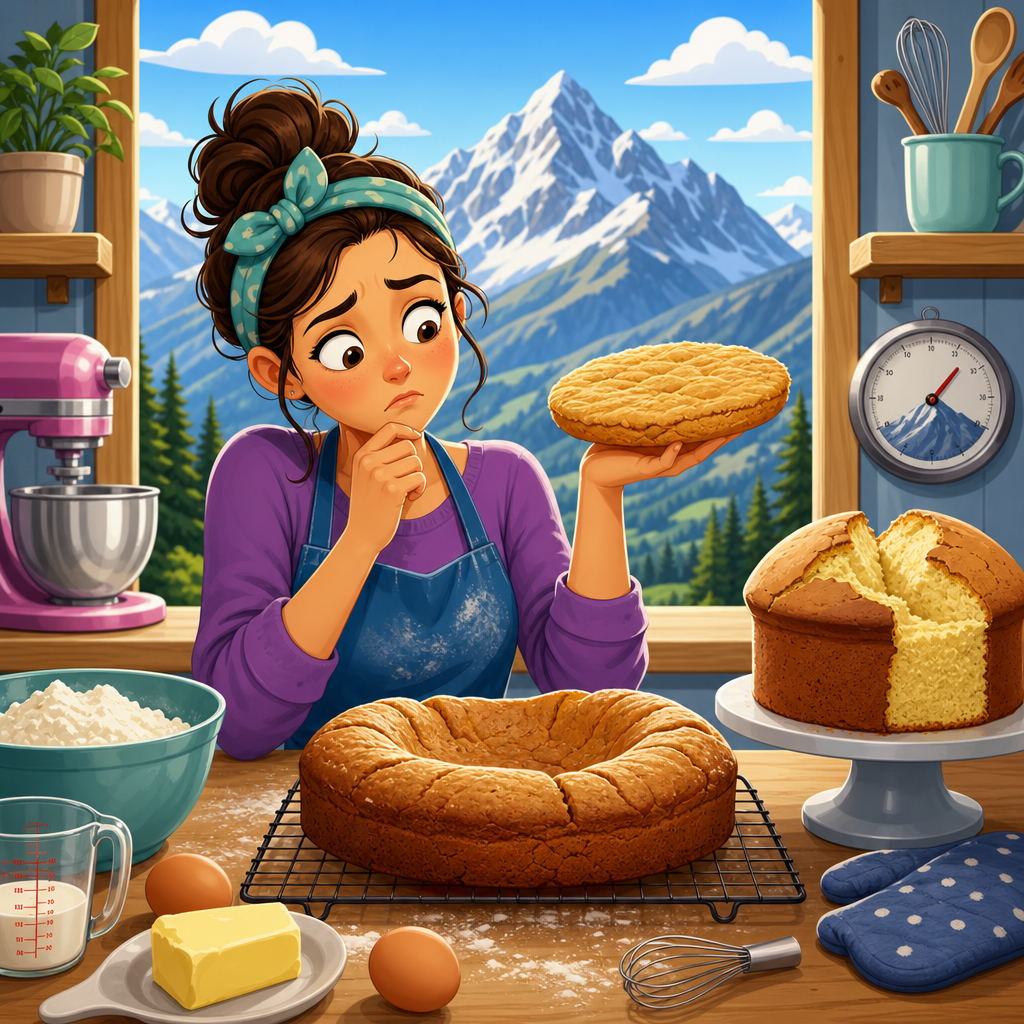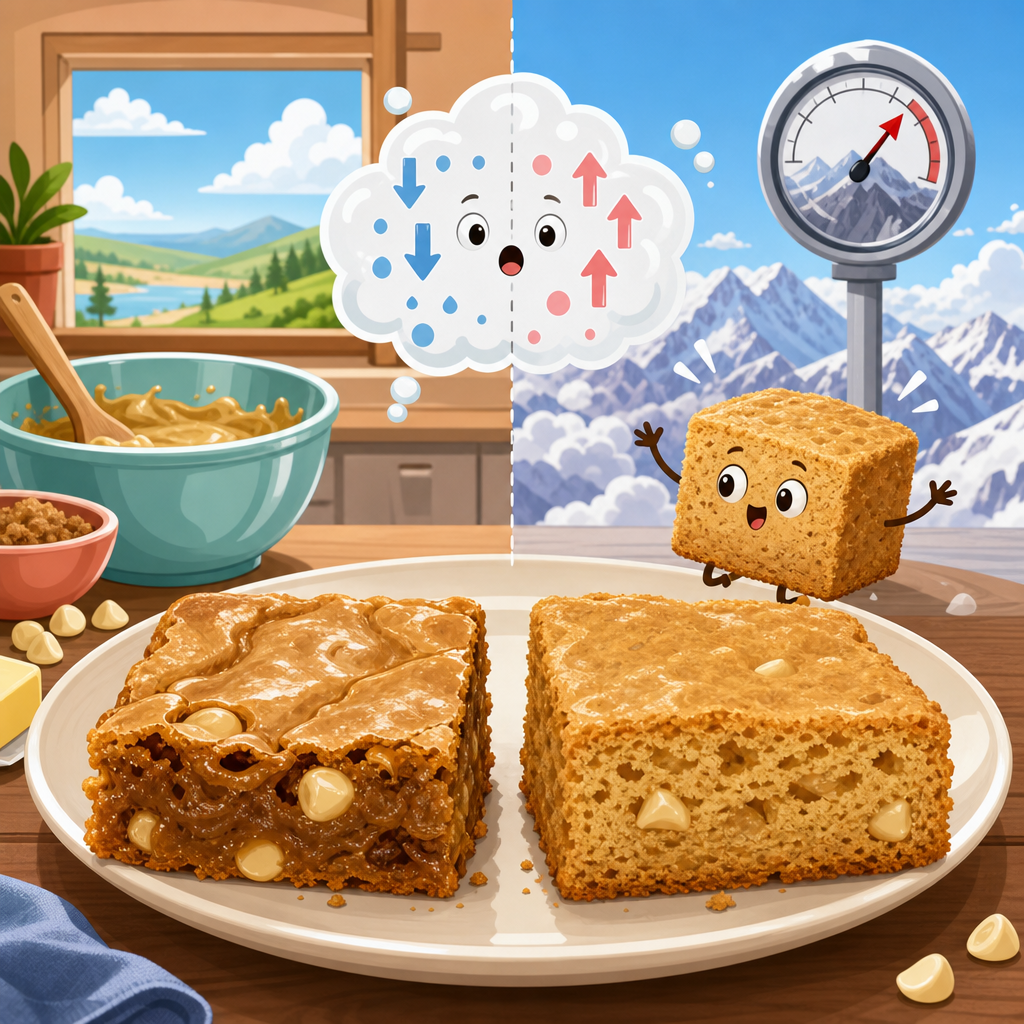
Blondies seem simple, but at altitude they often bake up airy, dry, and cake-like instead of dense and chewy. That shift happens because reduced air pressure changes how gases expand, how water evaporates, how sugar concentrates, and how structure sets in the pan. In practical terms, the same blondie formula that works near sea level can over-rise, lose moisture too quickly, and develop too much crumb when baked in Denver, Santa Fe, or any mountain town above roughly 3,000 feet. For home bakers focused on cookies and bars, understanding why blondies turn cakey at altitude is the key to fixing texture across the entire category.
Blondies are bar cookies built around butter, sugar, flour, eggs, and usually brown sugar or mix-ins such as chocolate chips, nuts, or toffee. Unlike cake, a good blondie relies on limited aeration, controlled gluten development, concentrated sweetness, and enough moisture to stay fudgy after cooling. At altitude, every one of those variables moves. I learned this the hard way after relocating from a low-elevation test kitchen to a mountain climate. My first batches looked beautiful at minute twenty, then collapsed slightly, baked dry at the edges, and sliced with a fine crumb more like sheet cake than a classic bar cookie.
This matters beyond one dessert. Cookies and bars are the most deceptively sensitive category in high-altitude baking because they sit between two systems: they need enough spread and tenderness to avoid toughness, but enough structure to hold shape and slice cleanly. The same forces that make blondies cakey can affect brownies, cookie bars, shortbread, oatmeal bars, and pan-baked doughs. If you can diagnose altitude problems in blondies, you can make smarter adjustments across your broader cookies and bars repertoire. That is why blondies are an ideal hub topic within cooking and baking at altitude.
Altitude baking starts with a few core definitions. Leavening includes baking powder, baking soda, steam, and air incorporated during mixing. Structure comes from coagulated egg proteins, gelatinized starch, and any gluten formed when flour hydrates and is agitated. Moisture retention depends on ingredients such as brown sugar, egg yolks, invert sugars, and fat, plus process choices like pan size and bake time. At higher elevations, lower atmospheric pressure allows bubbles to expand more easily and water to boil at lower temperatures. Those two facts explain most of what happens in blondies and in many other cookie and bar recipes baked in mountain regions.
The science behind cakey blondies at altitude
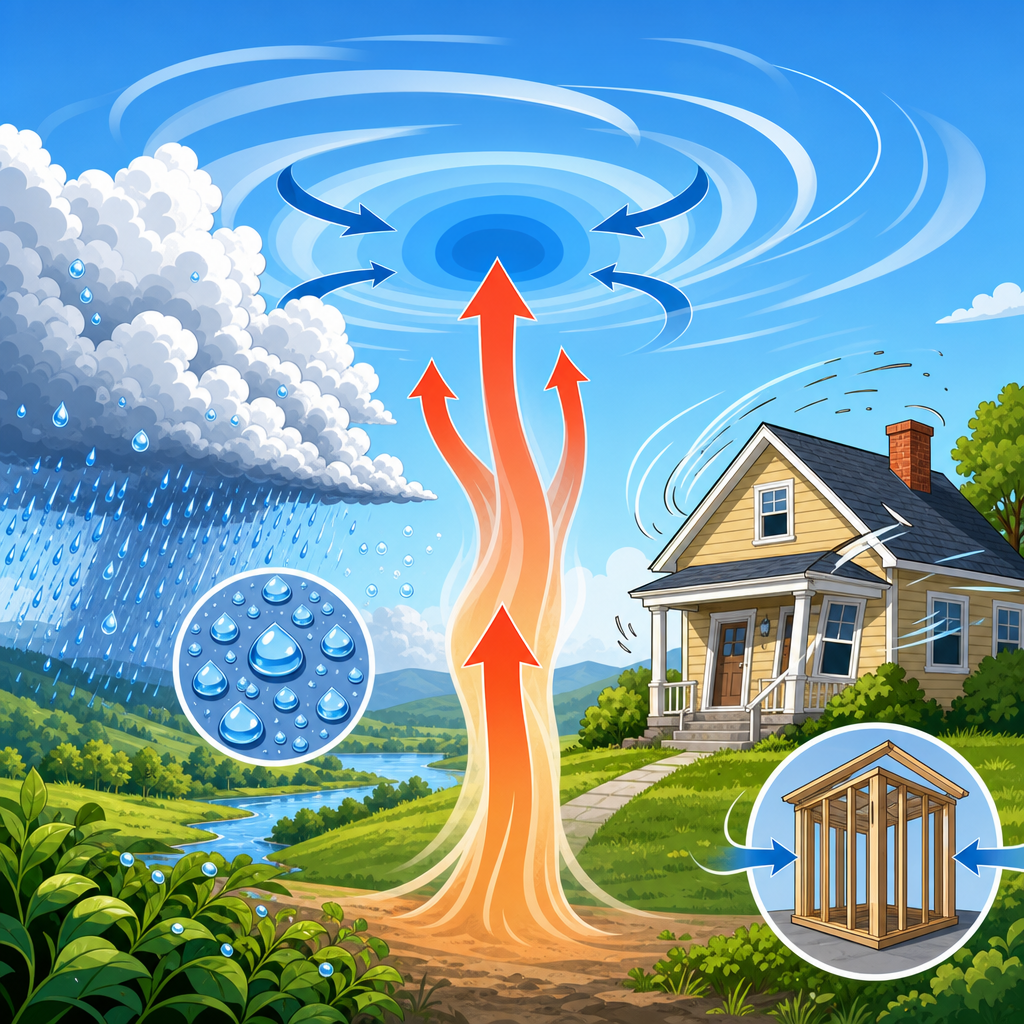
Blondies turn cakey at altitude primarily because gas expansion outpaces structural control. In a standard batter or thick dough, trapped air from creaming, dissolved carbon dioxide from chemical leaveners, and steam generated during baking all expand more aggressively when external pressure is lower. If the formula contains enough egg and flour to catch that expansion, the bars rise higher and set into a more open, cake-like crumb. If the structure is weaker, they can dome, then sink, leaving a coarse but still airy texture. Either way, chewiness is reduced because dense concentration is replaced by excess internal lift.
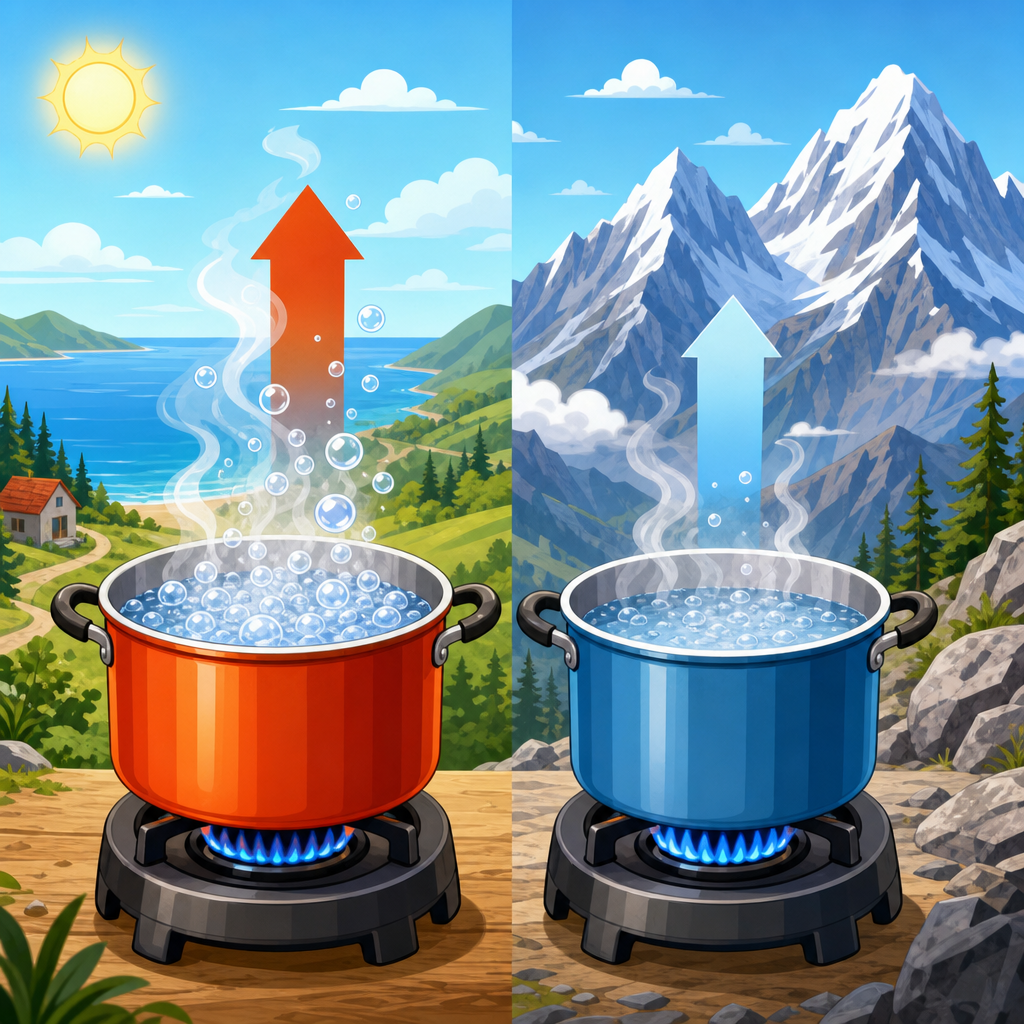
Water loss accelerates the problem. Since water boils at a lower temperature as elevation increases, moisture turns to steam sooner in the oven. That can sound helpful, but for blondies it often means the edges and upper layer dry out before the center fully sets. As moisture escapes, sugar concentration changes and starches firm earlier. The result is a bar that feels lighter and less gooey even when not technically overbaked. In my own testing around 5,000 feet, a sea-level blondie formula that needed 28 minutes in a metal pan reached acceptable color in 22 minutes, yet still cooled with a dry, cakelike bite.
Mixing method matters more than many bakers realize. Recipes that start by creaming butter and sugar introduce thousands of tiny air pockets. At sea level, those can create a pleasant lift in blondies. At altitude, they become overachievers. Melted-butter blondies generally stay denser because they begin with less incorporated air. That is one reason many mountain bakers prefer formulas stirred by hand rather than whipped with a mixer. The style of sugar matters too. Brown sugar is hygroscopic, meaning it attracts and holds water better than white sugar, so a higher brown-sugar ratio usually supports chewiness better than formulas dominated by granulated sugar.
Which ingredients push blondies toward a cake texture
The fastest route to cakey blondies at altitude is too much leavener. Many blondie recipes use baking powder, some use baking soda, and some need none at all. At elevation, even a modest amount can become excessive because gas expansion is amplified. If your bars puff dramatically, develop a finer crumb, and lose that glossy, dense center, start by cutting chemical leavening. A reduction of 25 to 50 percent is common around 3,500 to 7,000 feet, though the exact amount depends on pan depth, sugar level, and how much air you mixed in before baking.
Eggs are another common culprit. They add moisture, emulsification, and structure, but too much whole egg makes blondies more cake-like because proteins set firmly and support rise. One whole egg plus one yolk usually creates a denser texture than two whole eggs. The extra yolk contributes fat and emulsifiers without as much water and albumen, which is why it often improves chewiness in high-altitude bars. I use this adjustment regularly for brownies and blondies alike. It is especially effective in recipes baked in 8-inch or 9-inch square pans where the center can otherwise dome and set fluffy.
Flour choice also matters. Higher-protein all-purpose flour can create more structure than necessary, especially if the batter is mixed vigorously. Measuring flour by volume instead of weight compounds the issue because packed cups easily add an extra 15 to 25 percent flour. At altitude, that surplus flour absorbs precious moisture and builds a tighter crumb. Weighing ingredients is one of the most reliable fixes for cookies and bars. If your blondies consistently taste dry and cakey, compare your flour weight against the original formula before changing anything else. In many kitchens, the scale solves the mystery immediately.
Pan and oven variables can magnify ingredient problems. Dark metal pans brown fast and can dry the perimeter before the center finishes. Glass bakes more slowly but retains heat longer, sometimes pushing bars past the ideal endpoint after removal. An oven running hot by even 15 degrees Fahrenheit encourages rapid rise and quick crust formation, both of which steer blondies away from fudgy texture. I always verify with an oven thermometer, then choose a light-colored metal pan lined with parchment. That setup gives the most even heat and the best chance of preserving a moist, dense interior at altitude.
How to adjust blondie recipes for mountain baking
The most effective altitude adjustments for blondies are simple and cumulative: reduce leavening, lower incorporated air, increase moisture slightly, and avoid overbaking. Start with the mixing method. If a recipe instructs you to cream butter and sugar until fluffy, stop after the mixture is combined and only slightly lightened, or switch to melted butter if the formula allows. That alone can transform texture. Next, trim baking powder or baking soda modestly. Then consider adding one to two tablespoons of extra liquid, or replacing part of a whole egg with an additional yolk to support richness without encouraging rise.
Temperature control is equally important. Many high-altitude bakers increase oven temperature for cakes to help structure set before overexpansion. Blondies are different: too much heat can set the top fast, trap expansion, and dry the crumb. I usually keep the oven close to the original recipe temperature, or lower it by 10 to 15 degrees if the formula is already sugary and darkens quickly. What changes more often is bake time. Begin checking early. Pull the pan when the edges are set and the center shows a slight underdone wobble; carryover heat will finish the bars as they cool.
Use visual and tactile cues instead of strict clock time. Perfect blondies should have lightly browned edges, a glossy or crackled top depending on the sugar ratio, and a center that springs minimally when touched. A toothpick should not come out clean. It should show moist crumbs, and in fudgier formulas even a light smear. If you wait for a fully dry tester at altitude, you will usually overshoot into cake territory. Cooling also matters. Let the pan cool on a rack until just warm, then lift out with parchment. Trapped steam in a hot pan can continue setting the crumb if left too long.
| Problem | Likely altitude cause | Best adjustment |
|---|---|---|
| Blondies rise high and feel airy | Too much leavening or too much creamed-in air | Reduce leavening 25 to 50 percent and mix less aggressively |
| Bars are dry at edges and cakey overall | Moisture evaporates too fast | Add 1 to 2 tablespoons liquid, use more brown sugar, check earlier |
| Center domes, then sinks slightly | Expansion outpaces structure | Use one egg plus one yolk, verify oven temperature, reduce leavening |
| Texture is firm and bread-like | Too much flour or overmixing | Weigh flour and stir only until combined |
| Top browns before center is done | Pan or oven running too hot | Use light metal pan and lower oven 10 to 15 degrees |
What blondies teach you about all cookies and bars at altitude
As a hub topic for cookies and bars, blondies illustrate nearly every altitude principle that matters in this category. Brownies behave similarly, though cocoa and melted chocolate change moisture balance and structure. Cookie bars share blondie issues when they contain eggs and chemical leaveners, especially chocolate chip cookie bars baked in thick slabs. Oatmeal bars can turn puffy if eggs are too high and the dough is overmixed. Even shortbread teaches the opposite lesson: because it relies on minimal water and little to no leavening, it often performs better at altitude, though flour measurement and oven calibration still matter.
Drop cookies reveal another side of the same science. At altitude, some spread too much because sugar melts before structure sets, while others puff and then dry out because leavening is too strong. The fix depends on the style of cookie, but the diagnostic sequence stays the same. Ask how much air was incorporated, how fast moisture is leaving, how quickly structure is setting, and whether sugar and fat ratios support chew. Once you understand those relationships in blondies, troubleshooting snickerdoodles, peanut butter cookies, chocolate crinkle cookies, and pan cookies becomes far less guesswork and much more controlled adjustment.
Bar cookies with fruit, caramel, or dairy layers add another wrinkle: water activity. A jam swirl, sweetened condensed milk layer, or cream cheese ribbon can protect moisture in one area while the base dries underneath. At altitude, that uneven moisture migration often produces bars with a tender top and cakey bottom. The solution may be partially blind-baking a crust less, using a slightly thicker base, or shortening total oven time and relying on cooling to finish the set. These are not random tricks; they come from the same altitude principles that govern blondies, only applied to more complex, multi-component bars.
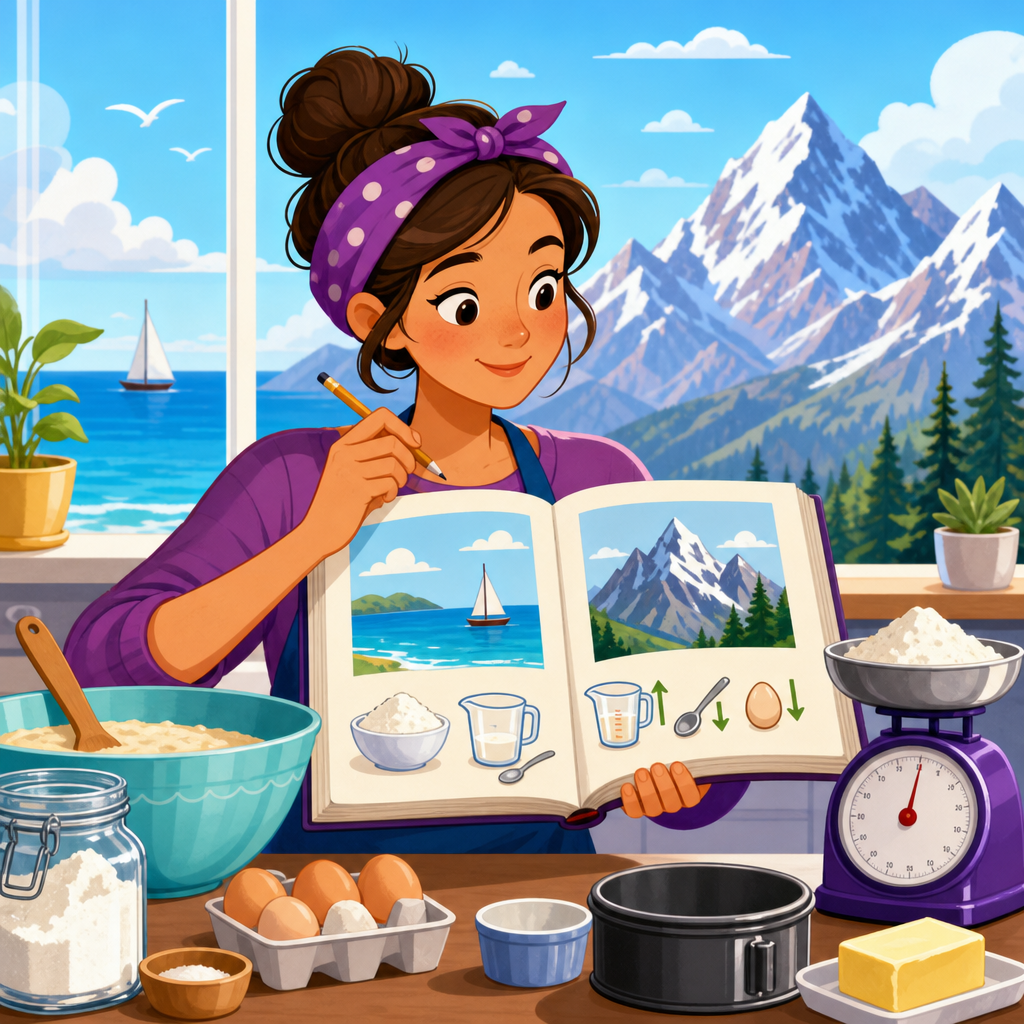
If you maintain a baking notebook, cookies and bars are where it pays off fastest. Record elevation, pan size, ingredient weights, sugar types, egg count, mixing time, oven setting, actual thermometer reading, and sensory results after cooling. Over several batches, patterns become obvious. You may discover that your kitchen needs a consistent 15-degree reduction for dark-sugar bars, or that one brand of all-purpose flour absorbs more and makes blondies cakier. That level of observation is how experienced altitude bakers improve quickly. Small, measured changes outperform dramatic recipe rewrites almost every time.
Common mistakes and the most reliable path to chewy blondies
The most common mistake is treating blondies like cake batter. When bakers whip butter and sugar until very fluffy, beat eggs for volume, and then bake until a clean toothpick appears, they create the exact conditions that produce cakey bars at altitude. Another mistake is changing too many variables at once. If you cut flour, cut leavening, add liquid, switch pans, and lower temperature in the same test, you cannot tell which change worked. A better approach is to fix the biggest likely cause first: usually too much air, too much leavener, or too much bake time.
The most reliable path to chewy blondies is a formula with melted butter, predominantly brown sugar, measured flour, restrained mixing, reduced leavening, and careful early removal from the oven. Add-ins should support rather than disrupt texture. Chopped chocolate melts into pockets that preserve softness better than dry chips alone. Toasted nuts add contrast but should not dominate the batter. A small amount of flaky salt sharpens sweetness and makes buttery notes more pronounced. Vanilla matters more than many expect because blondies have no cocoa to hide behind; use real extract or paste for a fuller, warmer flavor.
When your blondies still turn cakey at altitude, resist the urge to blame altitude alone. Check fundamentals: ingredient temperature, expired baking powder, incorrect pan size, inaccurate measuring cups, convection settings, and oven hot spots. Altitude amplifies weaknesses, but it does not replace sound technique. Mastering these details will improve every cookie and bar you bake, from fudgy brownies to crisp-edged sugar cookie bars. Start with one blondie recipe, document your adjustments, and refine until the center stays dense and chewy. Once you own that process, the rest of high-altitude cookies and bars become far more predictable and far more rewarding.
Frequently Asked Questions
Why do blondies turn cakey at altitude instead of staying dense and chewy?
At altitude, the lower air pressure changes the way blondie batter behaves from the moment it goes into the oven. Gases from beaten eggs, trapped air, and chemical leaveners expand more easily, so the batter rises faster and farther than it would at sea level. That sounds helpful, but for blondies, too much lift is usually the opposite of what you want. Blondies are supposed to be compact, rich, and chewy, not aerated like a light cake bar.
Moisture loss is the other major reason. Water evaporates more quickly at higher elevations, so the batter can dry out before the structure has a chance to set properly. As moisture escapes, the sugar concentration changes and the texture shifts away from fudgy density toward a firmer, more crumb-like bite. On top of that, proteins in the eggs and flour can set in a way that supports a more open crumb. The result is a blondie that rises too much, dries too fast, and bakes up with a cake-like interior instead of the tight, chewy texture most bakers expect.
What altitude-related baking changes affect blondies the most?
Several altitude effects stack on top of each other, and blondies are especially sensitive because they rely on a careful balance of fat, sugar, flour, eggs, and limited lift. First, reduced air pressure means leavening becomes more aggressive. Even a small amount of baking powder or baking soda can create more expansion than intended, which can make the bars puff up and then set with a lighter crumb.
Second, liquids evaporate faster at altitude. That quick moisture loss can make blondies dry around the edges and less chewy in the center. Third, water boils at a lower temperature in mountain environments, so the batter loses steam earlier in the baking process. That changes how long the interior stays fluid and how quickly the top and edges set. Fourth, sugar and fat behave differently when moisture escapes faster; the batter can become more concentrated and structurally firm before the center has had a chance to bake evenly. Finally, oven temperature and bake time matter even more at altitude because a few extra minutes can push blondies from moist and dense into overbaked and cakey. Together, these changes explain why a reliable sea-level recipe may need specific altitude adjustments to produce the same texture.
How can I adjust a blondie recipe so it stays chewy at altitude?
The best strategy is to reduce excess rise, preserve moisture, and prevent overbaking. Start by cutting back slightly on chemical leavening if the recipe uses it. Many blondie recipes need very little, and some of the chewiest versions use none at all. If your blondies puff dramatically, too much leavening is often part of the problem. You can also slightly reduce the sugar if the bars are rising and setting too quickly, though this should be done carefully because sugar also helps create tenderness and chew.
Adding a bit more liquid can help offset rapid evaporation. Depending on the recipe, that may mean an extra egg yolk, a tablespoon or two of milk, or a small increase in brown sugar, which contributes moisture as well as flavor. Brown sugar is especially helpful in blondies because its molasses content supports softness and chewiness. Many altitude bakers also slightly increase the oven temperature while shortening the bake time. This sounds counterintuitive, but it can help the structure set before the blondies over-expand, while also reducing prolonged moisture loss. Just as important, avoid overmixing the batter, because too much mixing can build structure and encourage a more cake-like texture. The goal is a batter that is rich, minimally aerated, and baked just until the center is set but still slightly soft.
Does using more flour or more eggs help fix cakey blondies at altitude?
Usually not, at least not if your goal is a dense, chewy blondie. More flour often makes the problem worse because it gives the bars more structure and can push the texture toward dry, thick, and crumbly. Extra whole eggs can also create a more cake-like result because egg whites contribute protein and lift. At altitude, where expansion is already exaggerated, increasing structure-building ingredients without a clear reason can reinforce the airy texture you are trying to avoid.
If you need to strengthen the batter slightly, a more targeted approach works better. For example, adding an extra egg yolk instead of a whole egg can increase richness without introducing as much protein-driven lift. Similarly, a modest adjustment to liquid or brown sugar can improve moisture retention more effectively than simply adding flour. It is also worth checking whether the original recipe is already borderline cakey at sea level. Recipes with a high flour-to-fat ratio, multiple eggs, or noticeable leavening are much more likely to become cake-like in mountain conditions. In other words, the best fix is not always “add more structure.” More often, it is “reduce lift and protect moisture.”
What are the biggest mistakes home bakers make when baking blondies at altitude?
One of the most common mistakes is treating blondies like a standard cookie bar recipe that will automatically adapt to mountain baking. At altitude, small imbalances become obvious quickly. Using the full amount of leavening from a sea-level recipe, baking too long, or relying on visual cues like a fully dry center can all produce blondies that are over-risen and overbaked. Another frequent issue is assuming that if the blondies look pale or soft in the middle, they need significantly more time. In reality, blondies continue to set as they cool, and waiting for a completely firm center in the oven often leads to dryness.
Another mistake is overmixing the batter or beating in too much air. Blondies benefit from restraint. The more air you incorporate, the more the batter can expand in the oven, which encourages a cake-like crumb. Pan choice matters too. A thin or dark pan can overcook the edges before the center is done, exaggerating dryness. Home bakers also sometimes skip note-taking, which makes altitude baking harder than it needs to be. Because elevation, humidity, oven behavior, and recipe style all interact, the best results often come from making one or two measured adjustments at a time and tracking what changes. For bakers in places like Denver, Santa Fe, or other areas above 3,000 feet, the path to chewy blondies is usually not a full recipe overhaul. It is a series of thoughtful tweaks that reduce rise, hold onto moisture, and pull the bars from the oven at exactly the right moment.