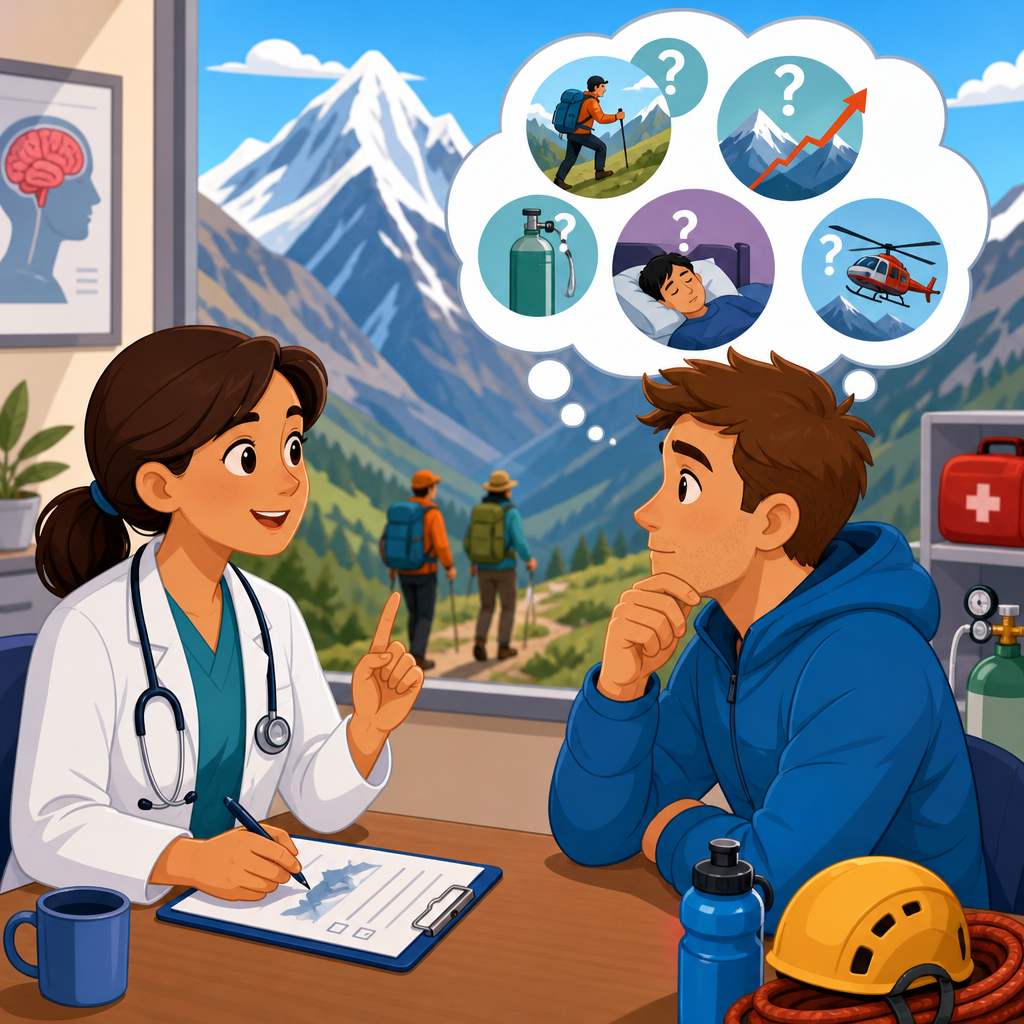
After emergency care for HACE, future mountain travel should never begin with itinerary planning; it should begin with a careful review of what happened, why it happened, and what must change before you go high again. HACE, or high-altitude cerebral edema, is the most severe form of altitude illness affecting the brain. It usually develops from acute mountain sickness that worsens after continued ascent, though it can occasionally appear rapidly without dramatic warning. The core problem is swelling in the brain triggered by exposure to low oxygen at altitude, which can lead to confusion, loss of coordination, altered behavior, and coma. In practical terms, HACE is a medical emergency that demands immediate descent, supplemental oxygen when available, dexamethasone, and evacuation.
I have helped travelers and expedition teams review altitude incidents after hospital discharge, and the same pattern appears repeatedly: people want reassurance that they can go back to the mountains, but they often ask the wrong first question. The right question is not, “Can I travel again?” It is, “What specific factors caused my HACE, and how can I lower those risks next time?” That distinction matters because prior HACE increases concern for recurrence, yet it does not automatically end a person’s mountain goals. Many people return safely to altitude after a well-documented episode, but only when they approach future trips with discipline, medical input, conservative ascent planning, and clear stop rules.
This article serves as a complete hub for HACE aftercare and future trip planning within the wider altitude illness and acclimatization topic. It explains what to ask your doctor, what trip details to reconsider, how to think about prevention, and what warning signs should change your plans. It also clarifies common misconceptions, including the dangerous belief that fitness prevents altitude illness or that a previous successful trip guarantees safety on the next one. Whether you are preparing for trekking, climbing, skiing, or high-elevation work, the goal is the same: make future mountain travel decisions using evidence, not optimism.
What should you understand about your HACE episode before planning another trip?
Before returning to altitude, get a precise account of the original event. Ask for your discharge summary, emergency department notes, hospital records, and any evacuation documentation. You need more than a memory of “I got very sick.” You need specifics: sleeping altitude, rate of ascent, highest altitude reached, timing of symptoms, oxygen saturation if recorded, weather stress, hydration problems, respiratory infection, exertion level, and response to descent or dexamethasone. If you had imaging, understand that a normal scan does not rule out HACE; diagnosis is usually clinical, based on symptoms and altitude context.
The key diagnostic features to review are ataxia and altered mental status. Ataxia means loss of coordination, often seen as an unsteady gait, stumbling, or inability to walk heel-to-toe. Altered mental status can include confusion, slowed thinking, bizarre decisions, irritability, poor judgment, or decreasing responsiveness. In mountain settings, these signs can be misread as exhaustion or dehydration. That is why asking witnesses what they saw is valuable. In one common scenario, a climber insists they are fine, but teammates report weaving on the trail, forgetting simple tasks, or speaking incoherently. Those details help confirm severity and guide future risk discussions.
You should also ask whether the event was isolated HACE or part of a broader altitude illness pattern involving acute mountain sickness or high-altitude pulmonary edema. Mixed presentations are not rare. Someone may have headache, nausea, poor sleep, shortness of breath, reduced exercise tolerance, and then progress to neurologic symptoms. That matters because a history of multiple altitude syndromes may justify more conservative ascent limits and stronger preventive planning. Clarifying these details creates the foundation for every later decision, from destination choice to medication strategy.
What questions should you ask your doctor before future mountain travel?
Your follow-up conversation should ideally involve a clinician familiar with altitude medicine, such as a wilderness medicine physician, travel medicine specialist, or neurologist or pulmonologist with relevant experience. Start with direct questions. Was the diagnosis definitely HACE, probable HACE, or altitude illness with neurologic symptoms not fully characterized? Do I need further evaluation for other conditions that could mimic or worsen HACE, such as seizure disorder, migraine with neurologic features, sleep-disordered breathing, anemia, heart or lung disease, or prior brain injury? If I had severe confusion or prolonged symptoms, should I have cognitive follow-up before remote travel?
Next, ask about recovery status. Most patients improve significantly after descent and treatment, but a return to baseline matters more than simple hospital discharge. Ask: Have my balance, attention, reaction time, and judgment fully recovered? Is there any reason to avoid driving, technical climbing, diving, or high-consequence backcountry travel until more time has passed? If you still notice headaches, slowed thinking, unusual fatigue, or disequilibrium weeks later, say so clearly. Residual symptoms may reflect incomplete recovery or another issue that deserves workup before exposure to altitude again.
Then move to recurrence and prevention. A useful consultation should cover prior altitude history, destination altitude, itinerary, emergency access, and medication options. Ask whether acetazolamide prophylaxis is appropriate for your next trip, whether dexamethasone should be carried as backup, and whether portable oxygen or a hyperbaric bag is warranted for the kind of expedition you plan. Also ask what altitude should trigger extra caution for you personally. There is no universal safe number, but individualized thresholds are far better than vague advice like “just go slower.”
How do you evaluate your personal risk before returning to altitude?
Past HACE is a serious risk marker, but risk is shaped by several interacting factors. The strongest practical predictors are how high you sleep, how fast you ascend, and whether you continue climbing despite symptoms. Many cases occur after sleeping above roughly 3,000 meters, with risk increasing as altitude rises and ascent accelerates. However, people vary greatly. I have seen travelers feel well on one trip to 4,000 meters and become ill on another because they flew in tired, rushed the ascent, drank alcohol, and ignored early symptoms.
Physical fitness does not protect against HACE. Fit hikers may ascend faster because they can, which can raise exposure risk. Prior success at altitude also does not eliminate concern. Acclimatization history changes with age, illness, itinerary, sleep quality, and starting elevation. Ask yourself whether you have any added risk factors now that were not present before: asthma flare-ups, recent viral infection, poor iron status, medication changes, unstable blood pressure, pregnancy, or untreated obstructive sleep apnea. These may not directly cause HACE, but they can reduce physiological reserve and complicate recognition of altitude illness.
| Question to Ask | Why It Matters | Example of a Safer Answer |
|---|---|---|
| How high will I sleep each night? | Sleeping altitude drives acclimatization stress. | Gradual increases with planned rest days. |
| How fast is the ascent? | Rapid gain is a major HACE trigger. | No abrupt jump from sea level to very high camps. |
| What is the exit plan? | Descent is the definitive emergency treatment. | Vehicle access, porter support, or helicopter options known in advance. |
| Who will notice early symptoms? | Judgment often declines before the patient realizes it. | Experienced partners using daily symptom check-ins. |
| What treatment is available on site? | Time to oxygen, dexamethasone, and evacuation affects outcomes. | Medication kit, oxygen source, trained guide, communication device. |
A realistic risk assessment also includes motive. Are you trying to resume mountain travel thoughtfully, or are you trying to “prove” the last event was a fluke? Ego is a hidden hazard in altitude decisions. If your identity is tied to summits, speed, or self-reliance, write your turn-around and descent rules before the trip and share them with partners. The people who do best after HACE are rarely the boldest; they are the most structured.
What itinerary changes reduce the chance of HACE on future trips?
The most important preventive measure is a slower ascent profile. Standard guidance often recommends avoiding major increases in sleeping altitude once above about 2,500 to 3,000 meters and adding rest days at intervals, especially after large cumulative gains. Exact numbers vary by route, but the principle is fixed: the brain needs time to adapt to hypobaric hypoxia. If your prior HACE followed a fast fly-in itinerary, choose a trip with a staged approach from lower elevations. If it happened on a climb with aggressive camp carries, reduce daily altitude gain and add contingency days.
“Climb high, sleep low” can support acclimatization, but it is not a license to overreach. Day trips above sleeping elevation should still be conservative, especially on your first return trip after HACE. Many trekkers make another mistake by ascending reasonably during the day, then sleeping much too high because accommodation or camp placement forces a jump. Review lodging elevations in advance. A beautiful route is not a safe route if the overnight profile is wrong.
Itinerary redesign should also account for non-altitude stressors. Poor sleep, alcohol, sedating medications, heavy exertion on arrival, dehydration from long travel days, and intercurrent illness all make good judgment harder. Build a first-day routine that protects acclimatization: light activity, regular meals, conservative hydration, no alcohol, and symptom checks. On guided trips, ask whether the operator has written altitude protocols, staff training in neurologic assessment, and authority to mandate descent. If a company cannot explain how it handles ataxia, confusion, oxygen use, and evacuation communication, choose another operator.
What prevention tools and emergency plans should be in place?
Medication planning should be individualized. Acetazolamide is the standard preventive medication for many travelers at meaningful risk of altitude illness because it speeds acclimatization by stimulating ventilation. Dexamethasone is not a routine substitute for acclimatization, but it has an important role in prevention for select cases and in emergency treatment when descent is delayed or symptoms are severe. If your doctor recommends either drug, understand the dose, timing, contraindications, side effects, and what to do if vomiting prevents oral intake. Do not improvise medication use in the field.
Monitoring matters, but tools have limits. A pulse oximeter can be useful for trend awareness, yet oxygen saturation alone does not diagnose or exclude HACE. Some people with concerning symptoms have numbers that look acceptable for altitude, while others with low readings remain clinically stable. Symptoms and function outrank gadgets. A simple daily assessment works better: headache level, appetite, nausea, sleep, pace tolerance, coordination, mood, and ability to perform routine tasks. On expeditions, I prefer a written check-in because subtle decline is easier to spot when yesterday’s answers are visible.
Your emergency plan should answer five points before departure: when to stop ascending, when to give dexamethasone, when to start oxygen, how descent will happen at night or in bad weather, and who makes the final call if the sick person resists help. In true HACE, hesitation is dangerous. The definitive treatment remains descent. Portable hyperbaric chambers can buy time in remote settings, but they do not replace evacuation to lower altitude. Satellite communication, route knowledge, spare batteries, and local rescue contacts are not optional details; they are part of medical preparedness.
When should you cancel, delay, or descend on a future mountain trip?
If you develop severe headache, vomiting, worsening fatigue, unusual behavior, clumsiness, confusion, or difficulty walking in a straight line, stop ascent immediately and reassess. If neurologic symptoms appear, assume HACE until proven otherwise and descend. Waiting for morning, waiting for better weather, or waiting to see whether food helps can cost critical time. Many serious altitude cases worsen because teams mislabel early HACE as simple exhaustion. The rule is straightforward: loss of coordination or altered mental status at altitude is an emergency.
There are also reasons to cancel before the trip starts. Do not go if you have not returned to neurologic baseline after the previous event, if your clinician recommends further evaluation that remains incomplete, or if your planned itinerary still requires rapid ascent without reliable treatment access. Delay travel if you have a significant respiratory infection, uncontrolled asthma, unstable cardiovascular disease, or severe sleep deprivation from recent travel. These are not arbitrary restrictions; they reduce margin for error in an environment where oxygen is already limited.
Long-term, the best way to protect future mountain travel is to treat every return to altitude as a fresh physiological challenge. Respect the prior HACE episode, learn from it, and build a plan that makes early recognition and fast response possible. Ask better questions: What altitude am I sleeping at? Who is watching for neurologic changes? What is my descent threshold? Where is oxygen? Those questions turn a frightening history into a manageable risk framework. If you have had HACE and still want the mountains in your life, schedule an altitude-focused medical review, redesign your itinerary conservatively, and commit to descending the moment warning signs appear.
Frequently Asked Questions
What should I review with my doctor before considering another high-altitude trip after HACE?
Before planning another mountain trip, the most important step is a detailed medical review of your previous HACE episode. That conversation should cover exactly where you were, how quickly you ascended, what symptoms appeared first, how long they progressed before treatment, what emergency care was given, and how fully you recovered afterward. Your doctor should also help you examine whether the event followed a classic pattern of worsening acute mountain sickness or whether it developed unusually fast, because that distinction can affect how cautious you need to be in the future.
You should also ask whether any other medical factors may have increased your risk. These can include a prior history of altitude illness, a rapid ascent profile, recent illness, dehydration, extreme exertion, poor sleep, use of sedating medications, or underlying heart and lung issues. In some cases, a clinician may recommend further evaluation if there is any question about a neurological condition, persistent balance problems, cognitive symptoms, or another issue that could complicate altitude exposure. The goal is not simply to get “cleared” for travel. It is to understand whether future altitude exposure is reasonable at all, and if it is, what specific precautions, medications, and ascent limits should guide every part of the trip.
How do I know if I should avoid high altitude entirely after a HACE episode?
That is one of the most important questions to ask, because a past HACE event means you have already demonstrated serious vulnerability to altitude stress. Some people can safely return to altitude under a very conservative plan, but others should reconsider high-altitude travel altogether, especially if the earlier episode was severe, recovery was prolonged, or the circumstances remain unclear. If you had confusion, loss of coordination, altered consciousness, or needed urgent descent and significant medical intervention, your future plans should be approached with much more caution than an average traveler’s itinerary.
You should ask your clinician to help you think in terms of risk tolerance, not just possibility. A mountain destination may still be a bad choice if the route offers limited evacuation options, long distances from medical care, weather-related delays, or group pressure to keep ascending. If you still have lingering neurological symptoms, if you have had more than one serious altitude illness event, or if you cannot commit to a slower ascent and immediate descent at the first warning signs, then avoiding high altitude may be the safest decision. The key point is that previous HACE is not something to “test” casually. Future exposure should only happen if the medical, logistical, and personal conditions are clearly safer than they were before.
What questions should I ask about preventing HACE on future mountain travel?
Prevention starts with asking how your next trip must be different from the one that ended in emergency care. In most cases, the most effective protection is a slower ascent. Ask what altitude limits make sense for your situation, how many rest days you should build in, whether you should sleep lower than your maximum daytime altitude, and how conservative your itinerary needs to be compared with standard trekking or climbing schedules. People often focus too much on destination altitude and not enough on sleeping altitude, rate of ascent, and the ability to stop or reverse course early.
You should also ask whether preventive medication is appropriate. Many travelers at increased risk use acetazolamide, but whether it is right for you depends on your health history, prior reaction to altitude, and the exact profile of the trip. It is important to understand how and when to take it, what side effects to expect, and that medication lowers risk but does not replace good ascent habits. You should also ask about emergency backup measures, such as carrying dexamethasone in remote settings, when it should be used, and why it is an emergency measure rather than a license to continue upward. Other prevention questions should cover hydration, sleep, alcohol use, overexertion in the first days at altitude, and how to structure the trip so turning around is easy rather than emotionally or financially difficult.
What warning signs mean I should stop ascending or descend immediately on a future trip?
After a history of HACE, you should be especially alert to early symptoms and have a much lower threshold for stopping ascent than someone without that history. Ask your doctor to help you identify the signs that matter most: headache that worsens rather than improves, nausea, unusual fatigue, dizziness, poor sleep, and reduced exercise tolerance can all signal altitude illness. These symptoms may sound mild at first, but they become dangerous when they are ignored and ascent continues. The lesson after HACE is that waiting to “see how you feel tomorrow” can be the wrong move if symptoms are trending in the wrong direction.
More urgent red flags include clumsiness, trouble walking in a straight line, confusion, unusual behavior, slowed thinking, severe weakness, and any decline in alertness. Those signs suggest the illness may be affecting the brain, which is exactly why HACE is considered a medical emergency. If any of these symptoms appear, the right question is not whether you can push on. It is how quickly you can descend and access treatment. You should also make sure your travel partners know these warning signs, because people developing HACE may underestimate their own impairment. A strong future travel plan includes a shared rule: symptoms get reported early, ascent stops immediately when warning signs appear, and descent is not debated once neurological symptoms begin.
How should I prepare my itinerary, companions, and emergency plan differently after recovering from HACE?
Future mountain travel after HACE should be built around safety margins, not ambition. That means choosing an itinerary with a slower ascent profile, extra acclimatization days, flexible turnaround options, and immediate access to descent routes whenever possible. You should ask whether the route has road access, nearby clinics, communication coverage, and realistic evacuation options if weather changes or symptoms appear at night. A peak, pass, or remote lodge that looks manageable on paper may not be appropriate if it locks you into continued ascent or delays descent once trouble starts.
Your companions matter just as much as the route. Travel with people who understand your history, take altitude symptoms seriously, and will support conservative decisions without argument. Everyone in the group should know what happened during your prior HACE event, what your early warning signs might look like, what medications and emergency supplies you are carrying, and when the plan changes from monitoring to descending. It is also wise to review who will make decisions if you become confused or impaired. In practical terms, your emergency plan should answer basic questions before you leave: where is the nearest lower sleeping altitude, how fast can you get there, who can help, what treatment is available, and what symptom threshold triggers action. After HACE, good preparation is not excessive. It is the foundation of responsible mountain travel.