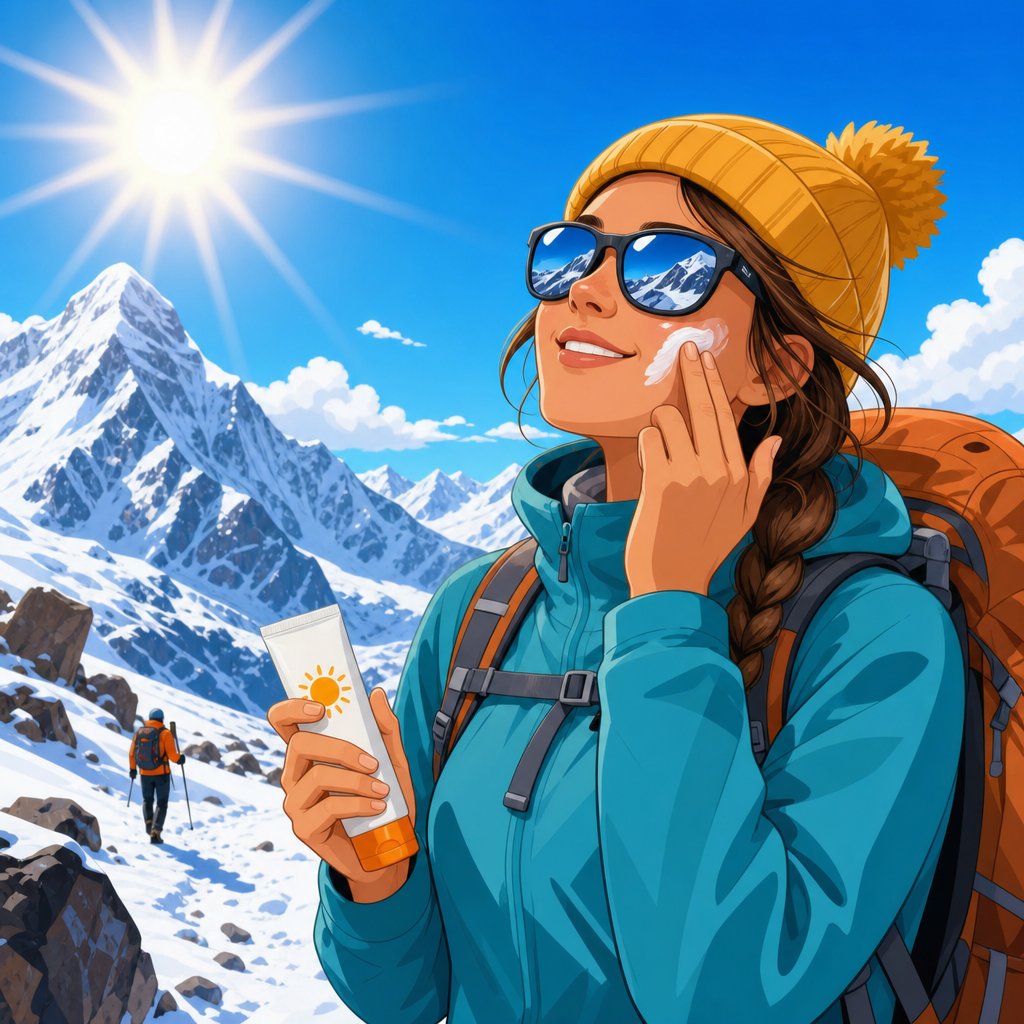
Choosing the best sunscreen for high altitude hiking and snow reflection is not a simple matter of buying the highest SPF on the shelf. Mountain sun behaves differently from beach sun, and snow can turn a bluebird day into an intense ultraviolet exposure event that overwhelms unprepared skin and eyes. This hub explains how sun protection works in alpine conditions, what sunscreen features matter most, how to apply it correctly, and how to build a complete routine around hats, clothing, lip care, and eye protection. If you hike, ski, snowshoe, climb, or work above treeline, understanding Sun Protection & UV is essential because altitude, reflective terrain, wind, cold, and long exposure hours combine to raise both immediate burn risk and long-term skin damage.
High altitude increases ultraviolet intensity because there is less atmosphere to absorb and scatter UV radiation. Snow reflection compounds that exposure by bouncing a large share of UV back toward the face, chin, nostrils, and underside of the jaw, areas many people miss. UVB is the main driver of sunburn, while UVA penetrates more deeply and contributes to photoaging, pigment changes, and skin cancer risk. Both matter in the mountains. In practice, I have seen experienced hikers burn badly on cold days because they judged risk by temperature instead of radiation. The best sunscreen for high altitude hiking and snow reflection must therefore deliver broad-spectrum protection, stay in place through sweat and friction, and be pleasant enough that people will reapply it on route.
This article serves as a practical hub for the wider Sun Protection & UV topic within daily life, skin, eyes, and home comfort. It covers sunscreen types, SPF and PA interpretation, mineral versus chemical filters, water resistance, altitude and snow science, application technique, eye and lip protection, gear integration, and mistakes to avoid. It also points naturally toward related subtopics such as UV-protective clothing, sunglasses for snow glare, after-sun skin barrier repair, and home strategies for managing dry, sun-stressed skin. The goal is straightforward: help you choose and use protection that performs reliably in real alpine conditions, not just in marketing claims.
Why mountain sun is stronger than it feels
At elevation, ultraviolet exposure rises because the air column above you is thinner. A commonly cited rule of thumb is that UV intensity increases by roughly 4 to 10 percent for every 1,000 feet of elevation gain, depending on latitude, season, cloud cover, ozone, and surface reflectivity. That range matters because mountain conditions vary, but the practical takeaway is stable: a hike at 9,000 feet exposes skin to significantly more UV than a walk at sea level. Add snow, and the terrain reflects a substantial amount of radiation back upward. Fresh snow can reflect up to about 80 percent of UV, much higher than grass or soil. That means sunscreen must protect not just from overhead sun, but from reflected exposure that reaches the lower face and eyelids.
Cold air also creates a false sense of safety. People often associate sunburn with heat, yet ultraviolet radiation is independent of air temperature. Wind can numb the skin, delaying the feeling that the face is getting stressed. In winter and spring, many hikers also skip sunscreen because the sun angle feels weaker, but snowpack amplifies exposure dramatically. Clouds are not a reliable shield either; significant UV can penetrate haze and thin cloud. That is why weather apps that show a UV Index are useful planning tools. For alpine days, check the UV Index before departure and build your protection plan the same way you would pack insulation or traction devices.
What makes the best sunscreen for high altitude hiking and snow reflection
The best sunscreen for high altitude hiking and snow reflection has five core characteristics: broad-spectrum coverage, SPF 30 or higher with SPF 50 preferred for prolonged exposure, strong UVA performance, water and sweat resistance, and a texture that encourages generous reapplication. Broad-spectrum means the formula protects against both UVB and UVA. In the United States, that wording is regulated by the FDA for over-the-counter sunscreens. In many international products, UVA strength may also be signaled by PA ratings or a UVA-in-circle mark. For alpine use, choose a product with clear broad-spectrum labeling from a reputable manufacturer that publishes active ingredients and water-resistance duration.
SPF tells you how well a sunscreen reduces UVB reaching the skin when applied at the tested amount, which is 2 milligrams per square centimeter. Most people apply far less. That is one reason I often recommend SPF 50 for mountain travel even though SPF 30 blocks about 97 percent of UVB and SPF 50 blocks about 98 percent. The difference looks small on paper, but it creates a useful margin when real-world application is imperfect, sweat disrupts the film, and days are long. Water resistance is equally important. Look for 40- or 80-minute water resistance if you will be sweating, crossing snowfields, or wiping your face. No sunscreen is truly sweatproof or all-day; reapplication remains necessary.
Stick, cream, fluid, and lotion formats all have a place. Creams and lotions usually give the most dependable, even film on dry or wind-chapped skin. Fluids can feel lighter and are often elegant under sunglasses and buffs, but some run into the eyes. Sticks work well for the nose, cheekbones, lips perimeter, and quick reapplication in cold wind. Sprays are less ideal in alpine conditions because wind reduces coverage and inhalation is a concern. For serious mountain use, a face-specific cream or mineral fluid plus a stick for touch-ups is a dependable combination.
Mineral versus chemical sunscreen in alpine conditions
Mineral sunscreens use zinc oxide, titanium dioxide, or both to protect the skin. Modern formulas rely on micronized particles that spread more evenly than older pastes, though some still leave a white cast. Chemical sunscreens, more accurately called organic UV filters, use ingredients such as avobenzone, octocrylene, octisalate, homosalate, or newer filters found in European and Asian formulas like Uvinul A Plus, Uvinul T 150, Tinosorb S, and Tinosorb M. In practice, both categories can work very well in the mountains. The best choice depends on skin sensitivity, eye sting, cosmetic tolerance, and the need for stable UVA coverage.
For people with reactive skin, rosacea, or a history of sunscreen stinging around the eyes, zinc-based mineral sunscreens are often easier to tolerate. I routinely suggest them for hikers who sweat heavily because many report less eye irritation during climbs. Zinc oxide also provides reliable broad-spectrum coverage, including UVA. The tradeoff is cosmetic: some mineral sunscreens feel thicker, cling to facial hair, or leave a cast on deeper skin tones. Tinted mineral formulas can solve much of that problem and may offer additional visible-light protection helpful for melasma-prone skin.
Chemical sunscreens often spread more transparently and can be easier to apply in the full amount required. High-performance international formulas sometimes deliver excellent UVA protection with less residue than mineral products. The downside is that some users experience irritation, especially around the eyelids, and certain formulas break down faster without photostabilizers. Avobenzone, for example, needs proper stabilization in a well-formulated product. The practical rule is simple: choose the sunscreen you can apply generously and reapply without dread. A theoretically superior filter system is worthless if it stays in your pack because it pills, burns your eyes, or feels unbearable on wind-dry skin.
How to compare mountain sunscreen options
| Feature | Why it matters at altitude | Best practical choice |
|---|---|---|
| SPF | Higher UVB load, imperfect application, long days | SPF 50 for face; at least SPF 30 elsewhere |
| UVA protection | Deep skin damage continues during all-day exposure | Broad-spectrum label, strong UVA reputation, PA++++ if listed |
| Water resistance | Sweat, snow glare, wiping, and wind reduce film integrity | 80 minutes when possible |
| Texture | Comfort determines whether you reapply | Cream or fluid for base layer; stick for touch-ups |
| Eye tolerance | Eye sting is common during climbs | Zinc-based or tested face formulas near eyes |
| Cast and finish | Visible residue can reduce adequate application | Tinted mineral or transparent high-UVA fluid |
Well-regarded examples include EltaMD UV Sport Broad-Spectrum SPF 50 for active outdoor use, La Roche-Posay Anthelios UVMune or Anthelios Melt-in Milk lines depending market availability, Blue Lizard Sensitive Mineral SPF 50+ for mineral preference, Thinksport Safe Sunscreen SPF 50+ for sport-focused mineral coverage, and Neutrogena Ultra Sheer or Sport Face options for widely available chemical formulas. Product lineups change, so active ingredients and labeling should be checked before purchase. For lips, use a dedicated SPF 30 or higher balm; common examples include Vanicream Lip Protectant SPF 30 and Sun Bum SPF lip balm. The best sunscreen for high altitude hiking and snow reflection is usually a system, not one bottle.
How much sunscreen to apply and when to reapply
Application quantity is where good intentions usually fail. The tested amount for sunscreen is 2 milligrams per square centimeter of skin, which works out to roughly a quarter teaspoon for the face alone and about a shot glass for the whole adult body. For mountain travel, apply sunscreen 15 minutes before sun exposure if the product directions call for it. Cover the ears, hairline, temples, nose bridge, nostrils edge, under the chin, back of the neck, and tops of the hands. On snow, the underside of the jaw and around the nose deserve extra attention because reflected UV reaches them easily. If you wear a helmet, hat, or gaiter, apply before putting gear on so you do not miss contact zones.
Reapply at least every two hours, and sooner after heavy sweating, face wiping, or eating if the product is on and around the lips. In winter, people reapply less because hands are cold and routines feel cumbersome, so sticks are useful for compliance. If you are out for six hours above treeline, think in planned intervals: pre-trailhead application, first reapplication at a break, second near midday, and another for descent if sunlight remains strong. Sunglasses can create pressure points that rub sunscreen away on the nose and cheeks, so those areas need deliberate touch-ups. If you return with raccoon-eye burn or a red nose despite using SPF 50, the issue is usually underapplication or missed reapplication, not necessarily the label strength.
Beyond sunscreen: clothing, sunglasses, and lip protection
Sunscreen is only one layer of alpine sun safety. UPF-rated clothing reduces reliance on frequent reapplication and is often more protective than sunscreen alone. A sun hoodie, brimmed cap, neck gaiter, and lightweight gloves can make a major difference, especially during snow travel when reflected light hits the underside of the chin and wrists exposed by pole straps. Darker, densely woven fabrics usually block more UV than thin white cotton, though heat management matters in summer. Brands that publish UPF ratings according to recognized testing standards provide more certainty than generic claims.
Eye protection is non-negotiable in snow. Snow blindness, also called photokeratitis, is essentially a UV burn of the cornea and can occur after intense reflected exposure. Symptoms include pain, tearing, light sensitivity, and the sensation of grit in the eyes. Proper mountain sunglasses should block 99 to 100 percent of UVA and UVB, fit close to the face, and ideally include side coverage. For glaciers or high albedo snowfields, category 4 lenses are sometimes appropriate, though they are too dark for driving. Goggles add protection in wind and blowing snow. Cheap fashion sunglasses without verified UV filtration are worse than useless because dark tint can cause the pupil to dilate while allowing damaging radiation through.
Lips are another weak point. The lower lip in particular catches reflected UV and burns easily, especially in dry cold air. Use an SPF lip balm of at least SPF 30 and reapply often, especially after drinking or eating. If your lips crack despite protection, an occlusive balm at night helps restore the barrier, but it does not replace daytime UV defense. This broader approach is what makes Sun Protection & UV management effective in real life: sunscreen, clothing, eye protection, lip care, timing, and behavior all reinforce one another.
Common mistakes and a reliable mountain routine
The most common mistakes are using too little sunscreen, relying on last season’s expired tube, skipping cloudy days, forgetting the ears and neck, and assuming one morning application is enough. Another frequent error is choosing a formula solely for cosmetic elegance when it slides off during exertion. Expiration dates matter because active ingredients can degrade and packaging can fail after freeze-thaw cycles in a car or pack. Store sunscreen within the temperature range recommended by the manufacturer. If a product separates, smells odd, or changes texture, replace it.
A reliable routine is simple. Before leaving, check the UV Index, apply a broad-spectrum SPF 50 sunscreen generously to exposed skin, and pack a reapplication format you will actually use. Wear UV-blocking sunglasses, an SPF lip balm, and protective clothing. Reapply every two hours and after sweat or friction. After the day ends, cleanse gently and restore the skin barrier with a bland moisturizer, especially if wind and cold have left the face tight or stinging. Consistency is what prevents both immediate burns and the cumulative damage that shows up years later as pigmentation, rough texture, actinic change, and skin cancer risk.
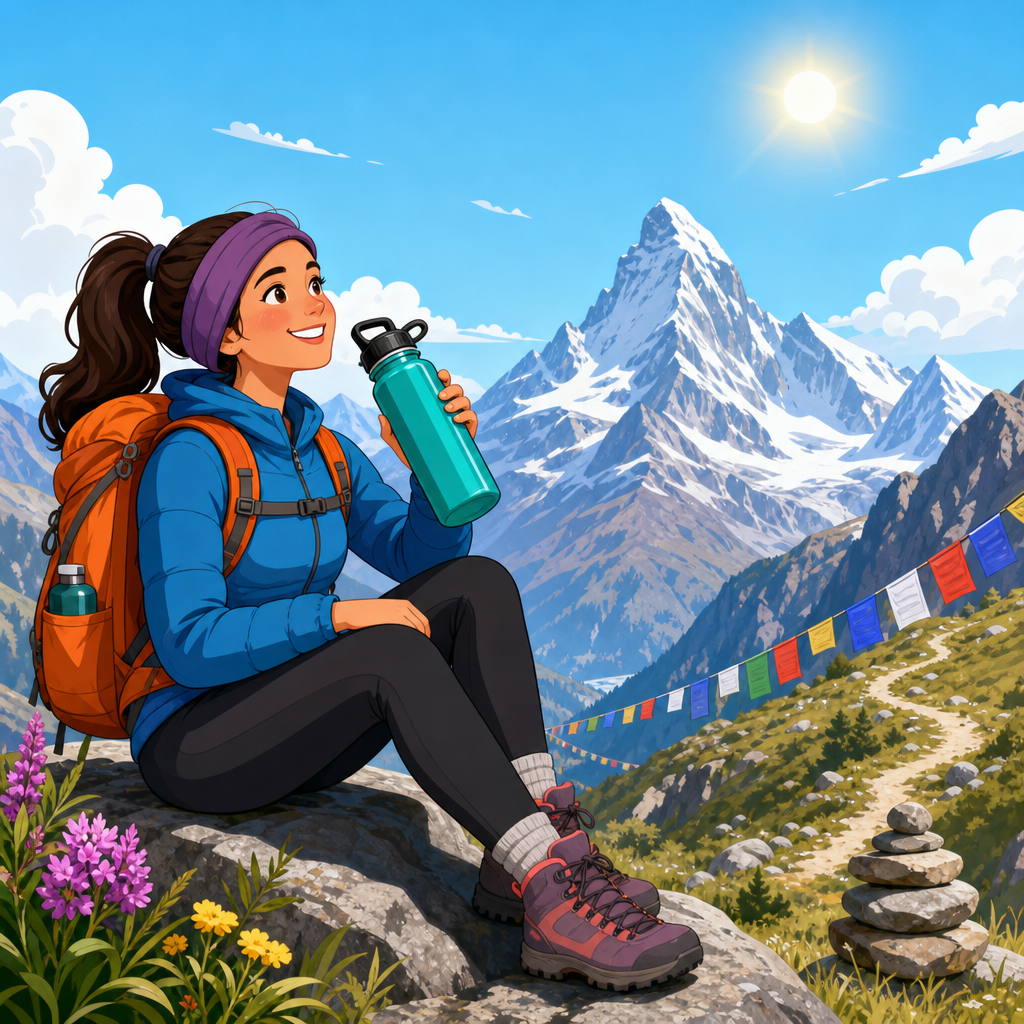
The best sunscreen for high altitude hiking and snow reflection is the one that combines strong broad-spectrum protection, high real-world wearability, and disciplined reapplication. Mountain sun is intense because altitude boosts UV exposure and snow reflects it back at your skin and eyes from unexpected angles. A good alpine setup uses SPF 50 face protection, water resistance, eye-safe formulas, SPF lip balm, UV-blocking sunglasses, and UPF clothing rather than sunscreen alone. If you treat Sun Protection & UV as part of your essential mountain system, you will hike more comfortably now and protect your skin and vision for the long term. Review your kit before your next trip, replace weak links, and build a routine you can follow every time.
Frequently Asked Questions
Why is sunscreen so important for high altitude hiking and snow reflection?
Sunscreen matters more in alpine environments because ultraviolet exposure is amplified in two ways at once. First, at higher elevations there is less atmosphere available to filter UV radiation, so your skin is exposed to stronger sun than it would be at sea level. Second, snow reflects a large percentage of UV rays back upward, which means you are not only getting direct sunlight from above but also bounced radiation from the ground. That combination can lead to faster burning, more cumulative skin damage, and a higher risk of long-term issues such as premature aging and skin cancer.
Many hikers underestimate this risk because mountain air often feels cool, windy, or even cold. Temperature, however, is not a reliable indicator of UV intensity. It is entirely possible to get a severe sunburn on a freezing day, especially during long climbs, ridge walks, glacier travel, ski tours, or spring hikes over lingering snowfields. Areas that are commonly missed, such as under the chin, around the nose, the ears, and the lower face, can be exposed by reflected light and burn surprisingly quickly. That is why high altitude sun protection should be treated as essential safety gear rather than an optional comfort item.
What SPF and sunscreen type work best for hiking above treeline or on snowy terrain?
For high altitude hiking and snow reflection, the safest choice is usually a broad-spectrum sunscreen with SPF 30 or higher, with many hikers preferring SPF 50 for added margin during long days in intense conditions. The key phrase is broad-spectrum, which means the product protects against both UVB rays, the main cause of sunburn, and UVA rays, which penetrate more deeply and contribute to skin aging and long-term damage. In mountain settings, that full-spectrum protection is more important than chasing the highest possible SPF number alone.
Water resistance is also extremely important. Even if you are not swimming, you may be sweating under layers, wiping your face, dealing with wet snow, or encountering rain and sleet. A water-resistant formula tends to hold up better under real hiking conditions. Creams and lotions usually give more even coverage than sprays, especially in windy environments where product can drift away before it reaches the skin. Sticks are useful for the nose, cheeks, ears, and lips, and they are easy to reapply quickly on the move.
As for mineral versus chemical sunscreen, both can work well if they are broad-spectrum and comfortable enough that you will apply them generously and consistently. Mineral sunscreens with zinc oxide or titanium dioxide are often favored by people with sensitive skin, and zinc oxide in particular provides dependable broad-spectrum coverage. Chemical formulas may feel lighter or less chalky for some users and can be easier to spread over facial hair or larger areas. The best sunscreen is the one that performs well in cold, wind, and sweat while encouraging frequent reapplication without irritation.
How should I apply sunscreen correctly when hiking in alpine sun and snow?
Proper application makes a major difference. Even an excellent sunscreen will underperform if it is applied too thinly, too late, or only once at the trailhead. A good routine is to apply sunscreen 15 to 30 minutes before sun exposure so it has time to form an even protective layer, especially if you are using a chemical sunscreen. Cover all exposed skin thoroughly, including often-forgotten spots such as the ears, the back of the neck, the scalp along a part line, the eyelids if your product is safe for that area, and the underside of the jaw where reflected light can reach.
Reapplication is just as important as the first coat. On a mountain hike, reapply at least every two hours, and more often if you are sweating heavily, wiping your face with gloves or buffs, or spending extended time on bright snow. If you stop for lunch on an exposed ridge or remove a hat during a climb, that is a good time to refresh coverage. For many hikers, carrying a small face stick or travel-size tube makes reapplication much more realistic than relying on a large bottle buried deep in a pack.
Lip protection should not be overlooked. Lips burn easily in cold, dry, reflective environments, so use a lip balm with SPF 30 or higher and reapply frequently. It is also smart to treat sunscreen as part of a layered system rather than your only defense. Wear a brimmed hat or cap, UV-blocking sunglasses or glacier glasses, and UPF-rated clothing whenever possible. In severe alpine exposure, physical coverage reduces the amount of skin that depends on sunscreen alone.
Is the highest SPF always the best choice for mountain hiking?
Not necessarily. Higher SPF does provide more UVB filtering, but the difference between very high numbers is often smaller in practice than people assume. What matters more is whether the sunscreen is broad-spectrum, whether you apply enough of it, and whether you reapply consistently throughout the day. A poorly applied SPF 100 can protect less effectively than a properly used broad-spectrum SPF 30 or SPF 50.
There is also a behavioral issue with very high SPF products. Some people assume they are protected all day and delay reapplication, which can create a false sense of security. In intense alpine conditions, durability, comfort, and regular use matter more than marketing claims. Choose a sunscreen that you are willing to use generously on your face, neck, hands, and other exposed areas without stinging your eyes or feeling so greasy that you avoid reapplying it.
For most hikers, broad-spectrum SPF 30 is considered a solid minimum, while SPF 50 is a common and sensible upgrade for all-day exposure above treeline, spring snow travel, glacier routes, or multi-day trips where conditions are especially harsh. Instead of focusing only on the SPF label, prioritize full UVA and UVB coverage, water resistance, and a formula that performs well in your specific mountain environment.
What else should be part of a complete sun protection routine for high altitude and snow travel?
The best sunscreen is only one piece of a complete alpine sun protection strategy. Sunglasses are essential because intense UV exposure can damage the eyes and lead to painful conditions such as snow blindness, also known as photokeratitis. For snowy hikes, glacier travel, or open high-elevation terrain, choose high-quality sunglasses with strong UV protection and enough wrap or side coverage to block reflected light. In very bright conditions, glacier glasses are often the best tool because they are designed specifically for sustained exposure to snow and ice.
Protective clothing makes a huge difference. A brimmed hat shields the forehead, nose, and scalp, while a neck gaiter or buff can protect the lower face and neck from reflected light and wind. Long sleeves, sun hoodies, and UPF-rated fabrics reduce the amount of exposed skin and lower the need for constant reapplication on large body areas. Gloves can help protect the backs of the hands, which are frequently exposed during trekking, climbing, or skiing and are commonly forgotten until they burn.
Timing and route planning matter too. UV exposure is often strongest around midday, so if your itinerary allows, take extra care during the late morning through early afternoon window. Seek shade when possible, though this can be limited in alpine zones. Finally, monitor your skin during the day. If your face feels hot, looks pink, or your lips are becoming dry and tender, treat that as a signal to reapply and add coverage immediately. A smart mountain routine combines sunscreen, lip SPF, sunglasses, hats, clothing, and frequent touch-ups so that no single layer has to do all the work alone.