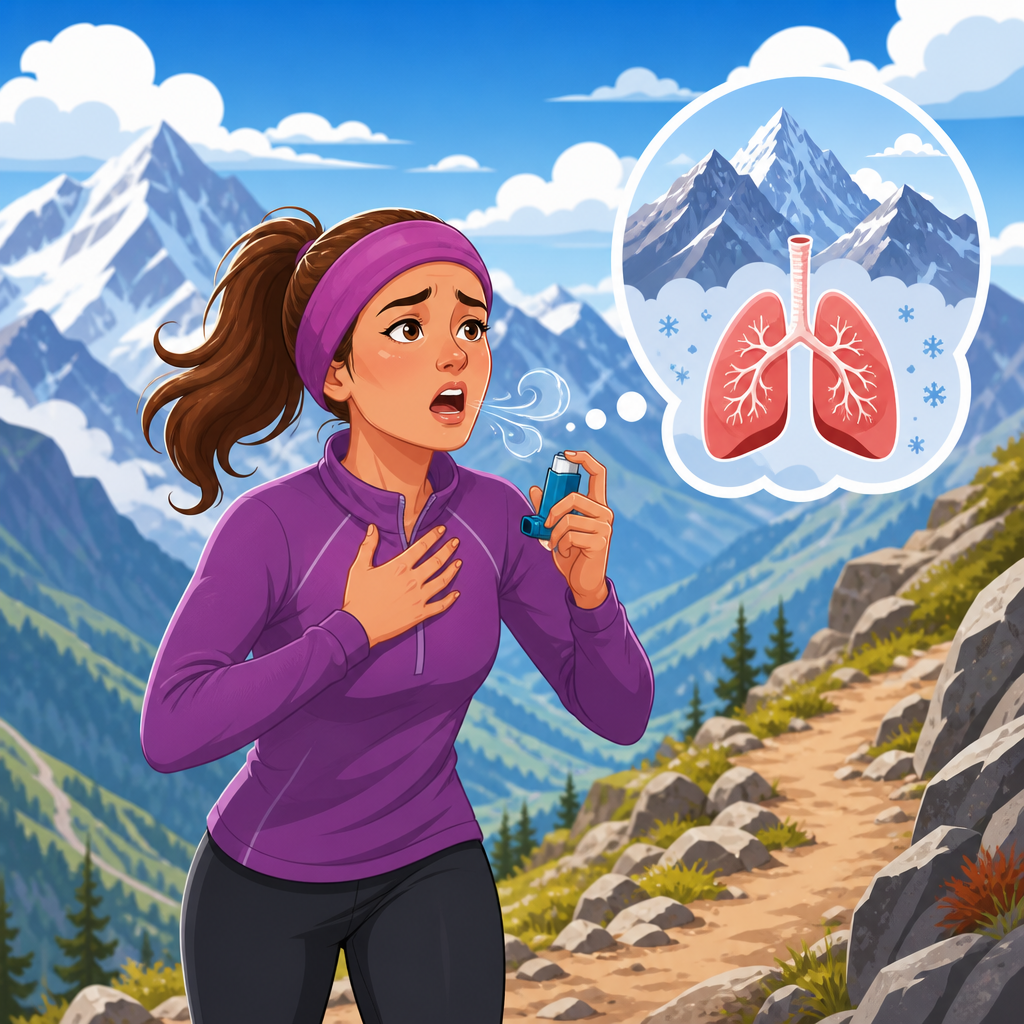
Why underlying lung disease makes sleeping altitude the key decision is a practical question with serious consequences for anyone planning travel with medical conditions. In respiratory medicine, sleeping altitude means the elevation at which you spend the night, not simply the highest viewpoint reached during the day. That distinction matters because the body tolerates brief daytime exertion very differently from hours of overnight exposure to lower oxygen pressure. For travelers with asthma, COPD, interstitial lung disease, pulmonary hypertension, cystic fibrosis, post-COVID lung impairment, or overlapping cardiac disease, the place you sleep often determines whether a trip is comfortable, miserable, or dangerous.
I have planned altitude trips with patients and families often enough to know the pattern. People focus on scenic passes, hiking routes, or airport logistics, then overlook the quiet risk of the hotel itself. A lodge at 8,500 feet can create more physiologic stress than a short daytime drive to 11,000 feet followed by a descent to sleep near sea level. When clinicians assess fitness for altitude or air travel, the central issue is oxygen availability. As barometric pressure falls with elevation, the partial pressure of inspired oxygen drops. Even healthy travelers see lower oxygen saturation during sleep. People with underlying lung disease begin with less reserve, so normal overnight dips can become clinically important hypoxemia.
This hub article explains travel with medical conditions through the lens that matters most in respiratory and cardiopulmonary planning: where you will sleep. It defines the mechanisms behind altitude intolerance, shows how to evaluate risk before a trip, and outlines practical decisions about oxygen, medications, destination choice, and emergency planning. It also connects the broader subtopic of respiratory, cardio, and chronic conditions, because lung disease rarely travels alone. Sleep altitude intersects with heart failure, sleep apnea, anemia, obesity hypoventilation, prior thrombosis, and frailty. If you understand this one decision well, every other travel choice becomes clearer, safer, and easier to manage.
Why sleep altitude changes the risk equation
Altitude illness discussions often center on acute mountain sickness, but travelers with lung disease face a different core problem: sustained oxygen stress. At 8,000 feet, barometric pressure is substantially lower than at sea level, so every breath delivers less oxygen into the alveoli. During sleep, ventilation naturally decreases, respiratory drive changes, and brief desaturation episodes become more common. In COPD or interstitial lung disease, gas exchange is already impaired. In pulmonary hypertension, lower oxygen levels can increase pulmonary vasoconstriction and strain the right heart. In severe asthma, dry cold air and exertion can further narrow airways.
The practical consequence is simple. The altitude where you sleep predicts your lowest oxygen levels of the trip. That is why two itineraries with the same daytime activities can carry very different risk. A traveler who takes a cable car to 10,000 feet for lunch and returns to sleep at 3,000 feet may do well. The same traveler sleeping at 8,500 feet for three nights may need supplemental oxygen, medication changes, or a different destination entirely. Overnight symptoms such as headache, insomnia, palpitations, breathlessness when lying flat, morning confusion, and unexplained fatigue deserve attention because they may reflect hypoxemia rather than ordinary travel discomfort.
Which conditions require the most careful altitude planning
Not every respiratory diagnosis carries the same altitude risk, but several groups need deliberate planning. COPD is the most common. Even patients who are stable at home can desaturate during flight and at moderate altitude, especially if they have emphysema, low diffusion capacity, or prior oxygen use. Interstitial lung disease can be even less forgiving because diffusion impairment worsens when oxygen pressure falls. Pulmonary hypertension deserves special caution; modest hypoxemia can trigger clinically meaningful hemodynamic stress. Cystic fibrosis, bronchiectasis, and neuromuscular weakness add concerns about secretion clearance and ventilatory reserve.
Asthma is more variable. Many people with mild, well-controlled asthma tolerate altitude travel without major issues, and some even feel better in low-allergen environments. But poorly controlled asthma, recent steroid use, frequent rescue inhaler dependence, or exercise-induced bronchospasm changes the picture. Obstructive sleep apnea is another major factor, especially when combined with COPD, obesity hypoventilation, sedatives, or alcohol use. In those travelers, the sleep altitude decision is not separate from CPAP adherence and equipment planning. Cardiac conditions matter too. Heart failure, coronary disease, and arrhythmias can all worsen when hypoxemia increases sympathetic drive and sleep quality falls.
How to assess fitness before the trip
The best pre-trip assessment starts four to eight weeks before departure, not in the final days. Travelers should review recent symptoms, baseline oxygen saturation, exercise tolerance, exacerbation history, and current medication adherence with their clinician. Useful data include spirometry, diffusion capacity when available, resting pulse oximetry, and, for selected patients, a six-minute walk test. If someone already qualifies for long-term oxygen therapy, altitude planning becomes straightforward: expect higher oxygen needs during flight, sleep, and exertion unless a specialist advises otherwise.
For borderline cases, a hypoxia altitude simulation test may help. This test estimates how someone may respond to cabin-equivalent oxygen levels, often around 8,000 feet. It is not perfect for mountain travel because real trips include exertion, cold, sleep, dehydration, and several days of exposure, but it can guide decisions about in-flight oxygen or destination limits. Professional guidance from organizations such as the British Thoracic Society and aerospace medicine groups supports structured assessment rather than guesswork. In practice, I treat recent exacerbations, unstable symptoms, and unexplained desaturation as red flags. If a traveler is struggling at home, altitude rarely improves the situation.
Questions that should guide destination choice
The smartest destination planning begins with direct questions. What altitude is the airport? What altitude is the hotel? Will you sleep in one place or move higher each night? How long is the drive from lower elevation medical care? Is there reliable electricity for oxygen concentrators and CPAP? Can the property confirm room-level access without steep stairways? Is nighttime heating dry enough to irritate the airways? Travelers who ask these questions early avoid preventable problems.
Another overlooked issue is itinerary shape. “Climb high, sleep low” is useful because sleeping altitude is the main stressor, but only if the daytime high point is brief and descent is guaranteed. Ski trips, mountain weddings, train routes through the Andes, trekking lodges, and high desert road trips can involve sleeping elevations above 7,000 or 8,000 feet for multiple nights. A lower base town is often the safer compromise. It preserves the trip while reducing physiologic strain. That decision also improves contingency planning, because sudden descent is the fastest way to reduce altitude-related hypoxemia when symptoms escalate.
Common scenarios and practical responses
| Scenario | Main concern | Practical response |
|---|---|---|
| COPD traveler sleeping at 8,000 feet | Nocturnal desaturation and morning breathlessness | Check baseline saturation, discuss overnight oxygen, choose lower lodging if possible |
| Asthma traveler on a winter ski trip | Cold dry air and exertional bronchospasm | Optimize controller therapy, carry rescue inhaler, warm inspired air with face covering |
| Sleep apnea traveler using CPAP | Poor sleep and worsened desaturation at elevation | Bring CPAP, confirm power supply, avoid sedatives and excess alcohol |
| Interstitial lung disease on a mountain rail tour | Low reserve during repeated altitude exposure | Request specialist review, pace activity, consider portable oxygen, sleep lower |
Oxygen, devices, and medication strategy
Supplemental oxygen changes what is possible, but only when arranged correctly. Portable oxygen concentrators approved for airline use can solve in-flight and some ground needs, yet they are not interchangeable with home equipment and may not deliver adequate flow for sleep in every patient. Continuous flow versus pulse dose matters. Sleeping patients often do poorly with pulse-dose settings if the device does not sense breaths reliably. Hotels and tour operators also vary widely in their ability to store tanks, provide backup power, or accommodate medical equipment.
Medication plans should be equally specific. Travelers with asthma or COPD need enough controller therapy and rescue medication for delays, weather changes, and lost baggage. Spacer devices are worth packing. Nebulizers require power planning and often can be replaced by metered-dose inhalers with spacers for portability. People using diuretics should discuss dehydration risk at altitude. Anyone on anticoagulation should confirm dosing schedule across time zones. If a clinician prescribes acetazolamide, patients need clear instructions because it helps acclimatization but does not substitute for oxygen in significant lung disease. Sedative-hypnotics, opioids, and heavy alcohol use deserve caution because they can worsen overnight hypoventilation.
Air travel is part of altitude exposure
Many travelers think only of mountains, but commercial flight itself is an altitude event. Aircraft cabins are pressurized to a level commonly equivalent to about 6,000 to 8,000 feet. For healthy passengers, that usually causes a modest drop in oxygen saturation. For travelers with underlying lung disease, it can reveal hidden vulnerability before the vacation even starts. Someone who arrives short of breath after a two-hour flight may not do well sleeping at the same effective altitude for several nights.
This is why hub planning for travel with medical conditions should combine flight, ground transfer, and lodging into one oxygen strategy. A passenger may manage the flight with prearranged oxygen, then need a lower-elevation overnight stop before continuing into the mountains. Others may tolerate flight but not sustained resort elevation. Airlines require documentation, battery planning, and device approval well in advance. Travelers should carry medications in hand luggage, keep prescriptions accessible, and bring a concise medical summary listing diagnoses, oxygen settings, allergies, recent test results, and clinician contact information. Those simple steps consistently reduce disruption when plans change or symptoms flare.
Warning signs, emergency thresholds, and when not to go
The symptoms that justify immediate reassessment are predictable. Breathlessness out of proportion to activity, persistent resting oxygen saturation lower than the agreed threshold, cyanosis, chest pain, fainting, new confusion, severe headache with vomiting, inability to sleep because of dyspnea, or rapidly worsening cough should not be pushed through. In travelers with pulmonary hypertension or advanced interstitial lung disease, even milder deterioration can matter. Descending to a lower sleeping altitude is often the safest first response while arranging medical care.
Sometimes the right decision is to postpone or redesign the trip. Recent hospitalization, an unresolved COPD exacerbation, pneumonia within weeks, unstable angina, decompensated heart failure, uncontrolled asthma, or poor adherence to home oxygen or CPAP are strong reasons to avoid altitude travel until stability returns. That is not alarmism; it is basic risk management. The benefit of careful planning is not merely avoiding catastrophe. It is preserving energy for the purpose of travel itself: enjoying family, scenery, and routine without every night becoming a physiologic test.
For travelers in the respiratory, cardio, and chronic conditions category, the most reliable rule is also the simplest: choose your sleeping altitude before you choose your activities. Overnight elevation determines oxygen stress, symptom burden, and whether the rest of the itinerary works. Start planning early, ask direct questions about lodging altitude and device support, and involve your clinician when reserve is limited. Lower sleeping altitude, adequate oxygen strategy, and realistic pacing prevent most preventable problems. Use this hub as your starting point for travel with medical conditions, then build the trip around the altitude at which your lungs can truly rest.
Frequently Asked Questions
What does “sleeping altitude” mean, and why is it more important than the highest point reached during the day?
Sleeping altitude is the elevation where you actually spend the night, not the highest overlook, pass, or hiking point you visit for a short time during the day. That difference is especially important for people with underlying lung disease because the body handles a brief period of altitude exposure very differently from many uninterrupted hours spent breathing thinner air overnight. During the day, travelers are usually awake, moving, and able to notice symptoms early. At night, breathing patterns change, oxygen levels naturally drift lower, and there is no opportunity to “take a break” from the reduced oxygen pressure while asleep.
For someone with asthma, COPD, interstitial lung disease, pulmonary vascular disease, or other chronic respiratory conditions, overnight altitude exposure can place sustained stress on a system that may already have limited reserve. Even if a person feels reasonably well on a daytime drive to a scenic viewpoint, that does not automatically mean their lungs will tolerate sleeping at the same elevation. The practical decision is not just “How high will I go?” but “How high will I sleep, and for how many nights?” That is why clinicians often focus on hotel elevation, lodge elevation, or the altitude of a mountain town rather than the maximum elevation reached for a few minutes during sightseeing.
In simple terms, sleeping altitude is the key decision because it determines the duration of low-oxygen exposure. For travelers with respiratory disease, duration matters as much as height. A short daytime visit may be manageable, while an overnight stay at the same elevation may trigger breathlessness, poor sleep, low oxygen saturation, worsening cough, or fatigue the next day. That is why trip planning should start with the question of where you will sleep, not just where you will briefly visit.
Why does underlying lung disease make altitude more risky during sleep?
At higher elevations, the amount of oxygen in the air does not change, but the air pressure drops, which means less oxygen is pushed into the lungs with each breath. Healthy lungs can often compensate reasonably well, especially at modest altitudes. However, when a person already has lung disease, that reserve may be reduced. The lungs may not transfer oxygen into the bloodstream as efficiently, airways may be narrowed or inflamed, or breathing mechanics may already be strained. As a result, even a moderate drop in available oxygen can have a much larger effect.
Sleep adds another layer of challenge. Breathing naturally becomes slower and less responsive during sleep, especially during REM sleep. Oxygen levels that are acceptable during the day may fall further overnight. People with chronic lung disease are therefore at greater risk of sustained overnight hypoxemia, meaning oxygen levels remain too low for extended periods. This can lead to poor sleep quality, morning headaches, unusual fatigue, faster heart rate, worsening shortness of breath, and in some cases more serious complications.
Some travelers also have overlapping conditions that increase risk further, such as sleep apnea, obesity hypoventilation, pulmonary hypertension, heart disease, or a history of oxygen use at sea level. In those situations, sleeping altitude becomes even more important because nighttime breathing may already be vulnerable before altitude is added. This is why altitude planning for people with lung disease should never rely solely on how fit they feel during daytime activity. The real concern is whether their lungs and cardiovascular system can safely tolerate hours of lower oxygen pressure while asleep.
Which lung conditions require the most caution when choosing a sleeping altitude?
Any chronic respiratory illness deserves attention before a high-altitude trip, but some conditions call for especially careful planning. COPD is a major example because many patients already live close to the lower end of acceptable oxygen levels at sea level. Even a modest altitude gain can drop oxygen saturation significantly, particularly overnight. Interstitial lung disease also deserves caution because scarring in the lungs can impair oxygen transfer even when symptoms seem mild at rest. Pulmonary hypertension is another high-risk condition, since low oxygen can increase strain on the pulmonary circulation and the heart.
Asthma is more variable. Some people with well-controlled asthma do well at moderate elevations, while others are more vulnerable because of cold air, dry air, exercise, respiratory infections, or poor access to urgent treatment. Altitude itself does not affect all asthma patients the same way, but if symptoms are unstable, recent flare-ups have occurred, or rescue inhaler use is frequent, sleeping high may be a bad choice. People with cystic fibrosis, bronchiectasis, prior lung surgery, neuromuscular weakness affecting breathing, or any condition requiring home oxygen also need individualized medical review before travel.
What matters most is not just the diagnosis label, but the severity and stability of the disease. A person with mild, well-controlled asthma may tolerate an itinerary that would be unsafe for someone with moderate COPD or advanced fibrosis. Likewise, a traveler who has had a recent hospitalization, steroid burst, infection, or unexplained drop in exercise tolerance should be more cautious than someone whose condition has been stable for months. The safest approach is to discuss the exact sleeping altitude, number of nights, planned exertion, and access to medical care with a clinician who understands the respiratory condition involved.
How can a traveler with asthma, COPD, or another lung condition decide whether a planned sleeping altitude is safe?
The best starting point is a pre-travel medical review focused on respiratory status, not just general fitness. A clinician may look at baseline oxygen saturation, recent symptoms, medication use, spirometry or other lung function results, prior exacerbations, exercise tolerance, and whether the person has ever had trouble on flights or at altitude before. In some cases, especially for people with COPD, interstitial lung disease, or borderline oxygen levels, formal testing may be considered to estimate how the body will respond to lower oxygen conditions. The details depend on the underlying disease and the altitude planned.
Travelers should also think practically about the itinerary. Sleeping at 5,000 to 6,000 feet may be very different from sleeping at 8,000 to 10,000 feet, and one night may pose less risk than a week. A trip that allows gradual ascent, rest days, and the option to sleep lower is usually safer than one that requires immediate arrival at a high mountain resort. If symptoms develop, the ability to descend quickly matters. It is also wise to confirm where the hotel or lodge is actually located, because “near the mountains” can mean very different elevations.
Preparation should include making sure routine treatment is optimized before departure. Rescue inhalers, maintenance inhalers, spacers, oxygen equipment if prescribed, and backup medications should all be available and easy to access. Travelers should know the warning signs that mean the altitude may be too much: breathlessness out of proportion to activity, persistent cough, chest tightness, wheezing, dizziness, low pulse oximeter readings compared with usual values, poor sleep, or morning symptoms that are clearly worse than normal. If a person feels fine during a daytime excursion but worsens overnight, that is exactly the pattern that highlights why sleeping altitude is the more important metric.
What steps can reduce risk if someone with lung disease still wants to visit a higher-altitude destination?
The most effective strategy is often to sleep lower and visit higher places only during the day. This lets travelers enjoy mountain scenery, viewpoints, or short excursions while limiting the longest period of oxygen stress. Choosing accommodations at a lower elevation can make a meaningful difference, especially for anyone with limited pulmonary reserve. Gradual ascent also helps. If possible, spending a night or two at a moderate altitude before going higher may improve tolerance compared with arriving and sleeping high on the first night.
Medication and equipment planning are just as important. People with asthma should have well-controlled symptoms before travel and carry both rescue and maintenance inhalers. Those with COPD or other chronic lung disease should bring all regular medications, a current medication list, and any prescribed oxygen or nighttime support equipment. If supplemental oxygen has been recommended for altitude or sleep, travelers should arrange it well in advance rather than assuming it will be easy to obtain on arrival. A pulse oximeter can be useful for some patients, but it should support a medical plan, not replace one.
Finally, travelers should build flexibility into the trip. Avoid overexertion on arrival, stay hydrated, protect against cold and dry air when relevant, and monitor for symptoms that are new or clearly worse than usual. Most importantly, have a low threshold to descend or seek medical care if breathing becomes difficult. In altitude travel, especially with underlying lung disease, the goal is not simply to reach a destination. The goal is to match the sleeping altitude to what the lungs can safely handle. That is why this single detail often becomes the most important decision in the entire trip plan.