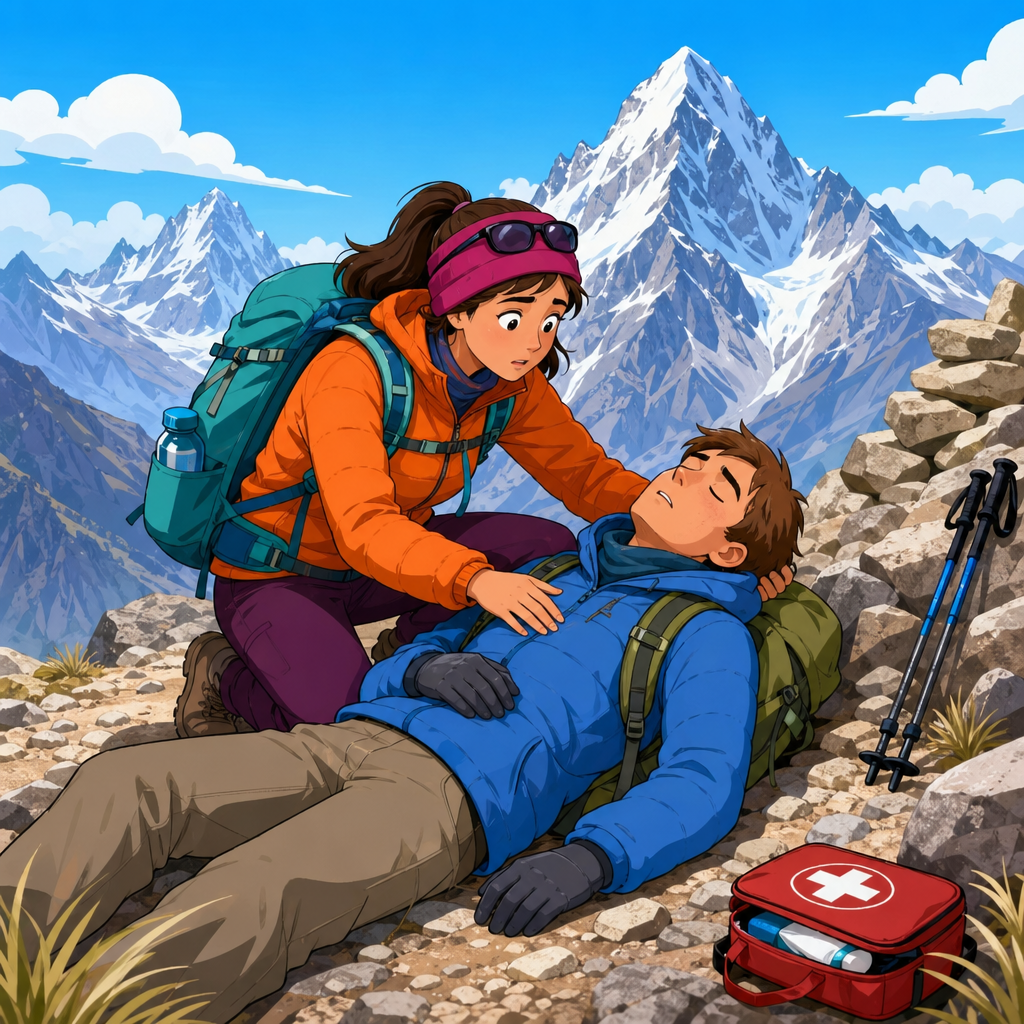
When someone collapses at altitude, the situation can deteriorate in minutes, and the safest response is immediate assessment, oxygen if available, protection from cold, and descent unless another clearly reversible cause is identified. In mountain rescue training and high-altitude trip planning, collapse is treated as a red-flag event because it may signal severe altitude illness, trauma, hypothermia, dehydration, low blood sugar, stroke, heart problems, or exhaustion. The practical challenge is that these conditions can look similar at first, especially above 2,500 meters, where reduced oxygen pressure amplifies every weakness in the body.
Altitude changes how you interpret symptoms. A mild headache during acclimatization is common, but collapse is never normal acclimatization. Key terms matter. Acute mountain sickness, or AMS, usually causes headache, nausea, fatigue, dizziness, and poor sleep. High-altitude cerebral edema, HACE, is a life-threatening progression involving brain swelling, confusion, ataxia, altered behavior, and reduced consciousness. High-altitude pulmonary edema, HAPE, is fluid accumulation in the lungs that causes breathlessness at rest, cough, fast heart rate, low exercise tolerance, and sometimes frothy sputum. A collapsed person may have one of these conditions, but they may also have a fractured ankle after a fall, carbon monoxide exposure in a tent, an arrhythmia, sepsis, or severe hypoglycemia.
This topic matters because delayed decisions kill people in the mountains more often than lack of technical gear. In my own field protocols, the first question is not “What summit were they aiming for?” but “Can they protect their airway, breathe effectively, and move downhill now?” The core principle is simple: altitude illness improves with descent; staying high while observing a deteriorating patient is a common and dangerous mistake. International climbing medicine guidance, including recommendations reflected by the Wilderness Medical Society and UIAA medical resources, consistently supports descent for severe symptoms, especially neurological changes or breathing difficulty at rest.
This guide serves as a hub for descent, treatment, and emergency response within altitude illness and acclimatization. It explains how to recognize dangerous patterns, what to do in the first ten minutes, how to decide between assisted descent and rescue, what medications and equipment help, and where the limits of field care are. If someone collapses at altitude, do not wait for a perfect diagnosis. Stabilize, treat obvious causes, and get them lower.
Recognize the immediate threats first
The first priority is scene safety and a rapid primary assessment. Check for avalanche risk, rockfall, lightning exposure, crevasse danger, unstable snow, stove fumes, or cliff edges before kneeling beside the patient. Then assess responsiveness, airway, breathing, and circulation. If the person is unresponsive and not breathing normally, begin CPR if conditions make it feasible and call for rescue immediately. If they are breathing but altered, place them in a position that protects the airway, usually on their side if vomiting or deeply drowsy.
At altitude, collapse often follows a visible progression. The person slowed down earlier, stumbled, acted unusually quiet or irritable, stopped eating, or could not keep pace on terrain they should have managed. Those clues strongly suggest HACE or HAPE when paired with altitude gain in recent days. Ataxia is especially important. If a person cannot walk heel to toe, keeps falling sideways, fumbles routine tasks, or seems drunk without alcohol, suspect HACE until proven otherwise. If they are breathless while resting in a sleeping bag, breathing fast, coughing, or showing blue lips and fingernails, suspect HAPE.
Not every collapse is altitude illness, and experienced leaders avoid tunnel vision. Severe hypothermia can produce slurred speech, confusion, collapse, and low heart rate. Hypoglycemia can cause sweating, tremor, bizarre behavior, and sudden unconsciousness, especially in climbers who have underfueled for hours. Heat illness can occur at altitude on exposed glaciers or desert mountains. Trauma, seizure, intoxication, and cardiac events remain possible. The useful field mindset is broad differential diagnosis with altitude illness high on the list, not the only item on it.
The first ten minutes: what to do right away
Once immediate hazards are controlled, move fast through a structured response. Call for help early if you have satellite communication, radio, or cell coverage. High mountains punish delayed escalation, and rescue teams would rather be canceled than activated too late. Note the patient’s altitude, recent ascent profile, symptoms, medications taken, allergies, fluid intake, urine output, and any prior altitude illness history. These details guide rescue physicians and receiving clinics.
Give supplemental oxygen if available. Oxygen is one of the most effective treatments for severe altitude illness because it raises the amount of oxygen reaching the brain and lungs without requiring immediate movement. In practical field use, enough oxygen to improve alertness, reduce breathlessness, and maintain adequate saturation is the goal. Pulse oximeters can help track trends, but they are not diagnostic on their own. Cold fingers, nail polish, poor perfusion, and movement make readings unreliable. Treat the patient, not the number.
Keep the person warm, dry, and sheltered. Wet clothing, wind exposure, and inactivity accelerate heat loss, which worsens confusion and cardiac stress. Give glucose if the patient is awake enough to swallow safely. A gel, sweet drink, or simple carbohydrates can rapidly reverse hypoglycemia. Do not force food or drink into a reduced-consciousness patient. If trauma is possible, immobilize obvious fractures and protect the spine only when mechanism and symptoms support it; prolonged immobilization in the cold can create new problems.
| Problem suspected | Clues you see | Immediate action | Descent priority |
|---|---|---|---|
| HACE | Ataxia, confusion, altered behavior, collapse, reduced consciousness | Oxygen, dexamethasone, warmth, assisted evacuation | Immediate |
| HAPE | Breathlessness at rest, cough, fast breathing, crackles, blue lips | Oxygen, nifedipine if trained to use it, warmth, rest | Immediate |
| Hypoglycemia | Sweating, tremor, sudden confusion, missed food intake | Give oral glucose if safe to swallow | Depends on recovery |
| Hypothermia | Cold skin, slurred speech, clumsiness, apathy, shivering or no shivering | Insulation, shelter, gentle handling, rewarming | High |
| Trauma or cardiac cause | Pain, fall history, chest pain, one-sided weakness, seizure | Standard emergency care and rescue activation | Immediate |
When collapse is probably altitude illness
Severe altitude illness usually develops after recent ascent without adequate acclimatization, but it can also appear in fit, experienced climbers who ascend too fast. AMS commonly starts within six to twelve hours after gaining sleeping altitude. HACE often evolves from untreated AMS, though not always. HAPE often appears on the second to fifth night at a new altitude. Children and very strong athletes are not protected. I have seen disciplined trekkers miss early warning signs because they assumed fitness would compensate for physiology. It does not.
If the collapsed person has confusion, cannot walk straight, or shows reduced consciousness, manage as HACE. Dexamethasone is the standard field medication used to reduce cerebral edema risk while descent is arranged. It is not a substitute for descent. If the main picture is breathlessness at rest, wet cough, and low exercise tolerance, manage as HAPE. Oxygen and descent are the mainstays. Nifedipine may be used in appropriate field protocols because it lowers pulmonary artery pressure, but it should be part of a trained expedition plan, not improvised by guesswork.
Portable hyperbaric chambers, such as the Gamow bag or Certec bag, can be life-saving when weather, darkness, or terrain delays evacuation. They simulate descent by increasing pressure around the patient. In remote expeditions, I treat these devices as a bridge, not an endpoint. Patients often improve inside the bag, then worsen after removal if they remain at the same altitude. That rebound is expected. The chamber buys time for safer evacuation or daylight movement; it does not cure the underlying problem if the person stays high.
How to decide between assisted descent and full rescue
The descent decision hinges on the patient’s mental status, walking ability, breathing, weather, terrain, and available team strength. If the person is awake, improving on oxygen, able to follow commands, and can walk with support on nontechnical ground, an assisted descent may be reasonable. If they are confused, combative, unable to stand, severely breathless at rest, or exposed to technical terrain, call for full rescue and prepare for litter or improvised carry. One exhausted partner cannot safely drag a sick climber down a glacier in a storm.
How far down is enough? Any descent helps, but the usual field target is at least 500 to 1,000 meters lower, or until symptoms clearly improve. For HACE and HAPE, more descent is usually better if it can be done safely. Night descents create hazards, yet waiting until morning can be fatal in severe cases. Leaders must balance objective danger against the certainty of ongoing hypoxia. If the patient’s neurological status or breathing is deteriorating, remaining in camp is rarely the safer option.
During evacuation, assign roles. One person monitors airway and mental status. Another manages navigation and communication. Another handles medications, oxygen cylinder changes, and timing. Reassess every fifteen to thirty minutes. If the patient worsens, stop to correct immediate problems, then continue descending as soon as feasible. Document vital signs, treatments, and response. Even simple notes on a phone or paper improve handover quality and reduce repeated dosing errors.
Field treatment details that actually matter
Dexamethasone is used for suspected HACE or severe AMS with neurological features. Acetazolamide is helpful for acclimatization and moderate AMS, but it is not the primary rescue medication for a collapsed patient with severe symptoms. For HAPE, oxygen remains first-line treatment. Nifedipine can be considered in known or suspected HAPE when oxygen or immediate descent is limited, especially in expedition medicine kits built around protocol-driven use. Phosphodiesterase inhibitors such as tadalafil have preventive and adjunct roles in some settings, but they are not the standard first move during a collapse scenario.
Hydration needs nuance. Many climbers assume every sick person is dehydrated and push liters of water. Overhydration can worsen nausea and create dangerous low sodium levels. Give fluids if the patient is thirsty, dry, and able to swallow, but avoid aggressive forcing. Pain control can help, yet sedating medications complicate neurological assessment and may suppress breathing. Anti-nausea treatment is useful when vomiting prevents oral medication or fluid intake. Keep interventions targeted and deliberate.
Oxygen delivery systems vary widely. Small canisters sold for recreation are not substitutes for medical oxygen in severe altitude illness. Expedition teams should know cylinder duration at different flow rates, regulator compatibility, and mask fit before leaving home. The same applies to communication gear. A satellite messenger that only sends preset texts is far less useful than a device supporting two-way updates when rescue coordination becomes complicated by weather or moving coordinates.
Common mistakes that make a bad situation worse
The most common error is denial. Teams reinterpret confusion as fatigue, cough as a chest cold, and repeated stumbles as clumsiness. The second error is separating the patient from observation by letting them “sleep it off.” A drowsy person with HACE or HAPE can worsen dramatically overnight. The third error is ascent despite symptoms, often driven by itinerary pressure, permit timing, summit weather windows, or sunk cost. A person who has collapsed at altitude has lost all margin for continued gain.
Another mistake is treating one number as truth. Pulse oximetry can support decisions, but normal readings do not rule out HACE, and low readings alone do not diagnose HAPE. Likewise, heart rate can be high from fear, cold, effort, or dehydration. Good field medicine combines pattern recognition with repeated reassessment. Finally, teams often underprepare for carries. A lightweight shelter, insulation, spare gloves, headlamps, and a rehearsed evacuation plan matter more than another energy gel.
Prevention after the emergency and planning for the next trip
After a collapse event, the patient should not re-ascend until fully evaluated and recovered. Severe altitude illness warrants medical review, especially if symptoms were neurological, involved oxygen need, or required rescue. For future trips, prevention centers on ascent rate, rest days, conservative sleeping altitude increases, and honest symptom reporting. Many itineraries improve dramatically by adding a single acclimatization day before a major gain. Preacclimatization strategies, staged driving, and medication plans can help, but none erase the need to descend when severe symptoms appear.
The main benefit of knowing what to do if someone collapses at altitude is speed with judgment. You do not need a perfect mountain diagnosis to save a life. You need a disciplined sequence: assess airway and breathing, give oxygen if available, protect from cold, treat obvious reversible causes, suspect HACE or HAPE when the pattern fits, and descend early. Build your expedition kit and training around that reality, review your evacuation plan before every trip, and treat collapse at altitude as the emergency it is.
Frequently Asked Questions
What should I do first if someone suddenly collapses at altitude?
The first priority is to treat the collapse as a medical emergency and make the scene safe for both the casualty and the group. Approach quickly, check for immediate dangers such as rockfall, avalanche exposure, steep ground, severe cold, or incoming weather, and then assess responsiveness. If the person is unconscious or not responding normally, open the airway, check breathing, and look for signs of circulation. If they are not breathing normally, begin CPR if you are trained and send someone to call emergency services or mountain rescue immediately. If they are breathing, place them in the recovery position if appropriate, protect the airway, and keep them still while you continue to monitor them closely.
At altitude, collapse must be treated as a red-flag event because the cause may be serious and time-sensitive. Severe altitude illness, head injury, low body temperature, low blood sugar, dehydration, stroke, heart rhythm problems, and exhaustion can all present with weakness, confusion, collapse, or loss of consciousness. That is why the safest mindset is not to assume it is “just fatigue.” If oxygen is available, administer it early, especially if the person is breathless, confused, blue around the lips, or showing other signs of severe altitude illness. Keep them warm by insulating them from the ground, adding dry layers, and shielding them from wind and precipitation. Unless there is a clearly reversible cause that has been corrected and the person rapidly returns to normal, prepare for descent and urgent evacuation.
How can I tell whether the collapse is related to altitude illness or another medical problem?
In the mountains, you often will not be able to make a perfect diagnosis on the spot, so it is better to think in terms of life-threatening possibilities rather than trying to be overly certain. Severe altitude illness is high on the list if the person has recently gained elevation, especially if symptoms worsened after ascent or overnight at altitude. Warning signs include severe headache, repeated vomiting, marked fatigue, confusion, poor coordination, unusual behavior, breathlessness at rest, persistent cough, frothy sputum, and difficulty walking in a straight line. These can suggest high-altitude cerebral edema or high-altitude pulmonary edema, both of which require immediate descent and urgent medical help.
At the same time, collapse can be caused by many non-altitude emergencies. Trauma may be obvious after a fall, but head injury can also be missed if the person is confused. Hypothermia may cause lethargy, slurred speech, clumsiness, and eventual collapse, especially in wet, windy conditions. Low blood sugar is a realistic cause if the person has diabetes, has not eaten, or has done prolonged exertion; sweating, shakiness, confusion, and rapid improvement after sugar in a conscious person can support that. Cardiac causes may present with chest pain, palpitations, sudden collapse, or breathlessness. Stroke may show facial droop, arm weakness, speech problems, or one-sided symptoms. Because the overlap is large, the practical rule is simple: assess airway, breathing, circulation, mental status, temperature, and injury; give oxygen if available; protect from cold; correct obvious reversible causes if safe to do so; and descend or evacuate early rather than waiting for certainty.
Should I give oxygen, food, water, or medication to someone who has collapsed at altitude?
Oxygen should be given as early as possible if it is available and the person is collapsed, severely short of breath, confused, blue, or suspected of having serious altitude illness. Supplemental oxygen can stabilize someone while you arrange descent, and in severe altitude illness it is one of the most important immediate interventions. It does not replace evacuation, but it can buy valuable time. If you have a pulse oximeter, low oxygen saturation may support your concern, but do not delay treatment or descent just to obtain a reading. Clinical signs matter more than device numbers in a deteriorating casualty.
Food and fluids depend on the person’s level of consciousness and ability to swallow safely. If they are drowsy, vomiting, confused, or not fully alert, do not give food, drink, or oral medication because of the risk of choking. If they are fully awake, able to swallow, and you suspect dehydration or low blood sugar, small sips of fluid and fast-acting carbohydrate may help. If they have known diabetes and are conscious, giving sugar can be appropriate for suspected hypoglycemia. Altitude medications can have a role in a planned expedition or when advised by a clinician, but they should not distract from the essentials: oxygen, warmth, monitoring, and descent. If the person has a known rescue medication prescribed for a specific condition, such as an inhaler or glucose gel, help them use it if they are conscious and it is safe. Otherwise, avoid improvising medications beyond your training.
Is descent always necessary after a collapse at altitude, even if the person seems to recover?
In most cases, yes. Collapse at altitude is a warning sign that deserves a low threshold for descent, even if the person appears better after a short rest, sugar, warming, or oxygen. Some serious conditions fluctuate. A person with severe altitude illness may rally temporarily and then worsen again. Someone who fainted from exhaustion or dehydration may still have an underlying problem that has not been fully addressed. If the collapse involved confusion, loss of consciousness, poor coordination, chest symptoms, severe breathlessness, repeated vomiting, or any suspicion of head injury, stroke, or cardiac issues, descent and medical evaluation are the safest course.
The only time continued stay at altitude might be considered is when there is a clearly identifiable, quickly reversible cause, the person returns fully to normal, there are no red-flag symptoms, and experienced judgment supports careful reassessment. Even then, caution is essential. Continued monitoring is important because deterioration can happen fast in cold, remote environments. In practical mountain decision-making, “they seem okay now” is not enough reassurance after a collapse. The consequence of underreacting can be severe, while the downside of descending early is usually much smaller. When in doubt, go down.
When should I call mountain rescue or emergency services, and what information should I give them?
Call for help as early as possible if the person is unconscious, not breathing normally, confused, unable to walk, severely short of breath, coughing pink or frothy sputum, having chest pain, showing signs of stroke, seizing, hypothermic, badly injured, or not improving promptly after immediate first aid. You should also call if your group cannot descend safely on its own, weather or terrain makes evacuation difficult, or the person’s condition could deteriorate before you reach lower ground. In remote mountain settings, delays can be critical, so early activation of rescue is usually the right choice.
When you contact rescue services, give a clear location using grid reference, GPS coordinates, altitude, trail name, route description, and any nearby landmarks. State the number of people in the party, the age and sex of the casualty if known, how long ago the collapse happened, whether the person is conscious and breathing, and what symptoms are present. Mention possible altitude illness, trauma, hypothermia, diabetes, heart history, medications, allergies, and recent ascent profile if relevant. Report what treatment you have already given, such as oxygen, CPR, sugar, fluids, insulation, or descent started. Also tell them the weather, landing possibilities if a helicopter is being considered, and whether you have communication limitations. Good information helps rescuers judge urgency and arrive prepared for the most likely causes.