Making marshmallows at elevation requires more than a standard recipe because boiling point, evaporation rate, and sugar concentration change as altitude rises. In practical terms, that means the syrup temperature that creates a light, sliceable marshmallow at sea level can produce a stiff, dry slab or a loose, sticky foam in Denver, Santa Fe, or Leadville. For anyone cooking and baking at altitude, marshmallows are an ideal lesson in how candy science, preserves, and canning all depend on water activity, dissolved sugar, and temperature control.
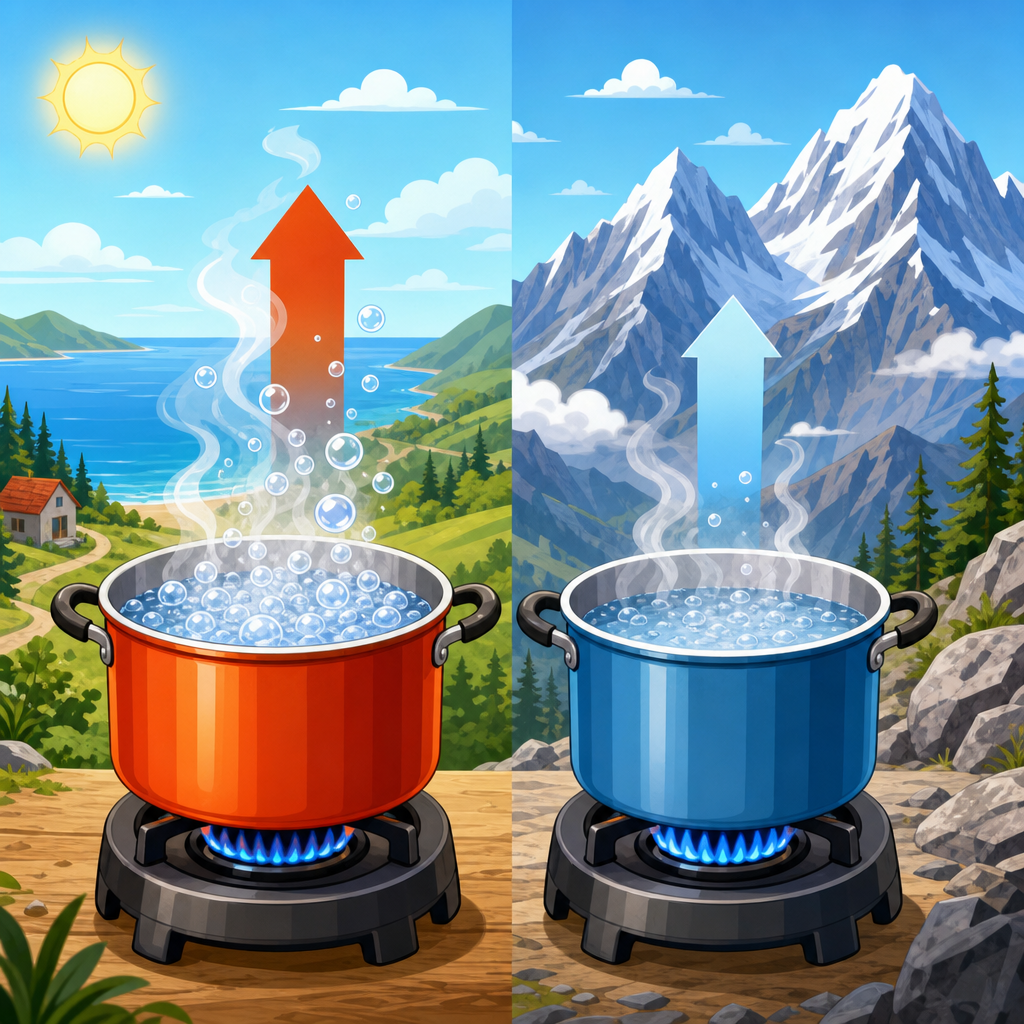
This hub page explains candy, preserves, and canning through the lens of altitude adjustment, with marshmallows as the anchor example. In confectionery, syrup temperature determines final solids concentration. In preserves, target gel and shelf stability depend on soluble solids, acid balance, and safe processing. In canning, altitude affects both boiling-water and pressure-canning schedules because lower atmospheric pressure changes heat transfer and the temperature at which water boils. These are different techniques, but the same physical principle sits underneath them: at higher elevation, water boils at a lower temperature, and recipes calibrated for sea level drift out of spec unless you compensate.
I have tested marshmallows and fruit preserves in mountain kitchens where a thermometer reading that looked correct on paper gave the wrong texture in the pan. The fix was never guesswork. It came from calibrating the boiling point of water that day, adjusting syrup endpoints accordingly, and paying attention to structure cues such as foam volume, whip temperature, and set time. That same disciplined approach applies across this subtopic, whether you are cooking caramel, making peach jam, or processing pickles safely. If you understand how altitude affects syrup temperature and texture, you can produce reliable results and troubleshoot failures quickly.
Use this page as the central guide to candy, preserves, and canning at altitude. It defines the core terms, explains the governing science in plain language, and points to the adjustments that matter most. If you want marshmallows with a tender bite, jams that set cleanly, and jars processed to recognized safety standards, start here and build every recipe from measured boiling point and verified endpoint, not from sea-level assumptions.
Why marshmallows change at altitude
Marshmallows are a sugar foam stabilized by gelatin, sometimes egg white, and controlled crystallization. The syrup is usually cooked to the soft-ball range, then streamed into bloomed gelatin and whipped until opaque, expanded, and cool enough to hold shape. At sea level, many formulas target about 240°F to 245°F, depending on glucose syrup ratio, invert sugar, and desired chew. At elevation, that number often needs to come down because the local boiling point of water is lower. A common working rule is to reduce target syrup temperature by about 2°F for every 1,000 feet above sea level, but the better method is to calibrate from the actual boiling point of water in your kitchen and preserve the same temperature spread above boil that the original recipe intended.
Texture follows solids concentration. If you overshoot the corrected syrup endpoint, your marshmallows lose moisture, whip denser, and set firm or even rubbery. If you undershoot, they remain tacky, slump after cutting, and can weep. Relative humidity also matters because marshmallows are hygroscopic; they absorb moisture from the air. At altitude, many climates are dry, which can make the surface crust while the interior remains soft. That mismatch confuses bakers into adding extra cook time when the real issue is environmental moisture loss during curing. The reliable path is a calibrated thermometer, a verified boiling point, and attention to the finished whip temperature before depositing.
How to adjust syrup temperature accurately
The most reliable way to adjust candy at elevation is to measure the boiling point of plain water on the day you cook. If your original sea-level marshmallow recipe says to cook syrup to 245°F, and that recipe assumes water boils at 212°F, the syrup endpoint is 33°F above local boil. If water in your kitchen boils at 203°F, your adjusted target becomes about 236°F. This method outperforms broad altitude charts because barometric pressure changes daily. A storm front can alter boiling behavior enough to matter in sugar work, especially for small-batch marshmallows where a few degrees noticeably shift texture.
Use a fast, accurate digital thermometer from a reputable maker such as ThermoWorks, and test it in both boiling water and an ice bath. Clip placement matters: the probe tip must sit in the syrup, not touch the pan. Choose a heavy saucepan because thin pans create localized hot spots that can caramelize sugars before the bulk syrup reaches target. When the syrup approaches endpoint, lower the heat rather than chasing the number with abrupt burner changes. Sugar solutions carry thermal momentum, so they keep climbing after the flame drops. In professional kitchens, I watch both the absolute temperature and the bubble pattern. Near the correct endpoint, bubbles become tighter and more glassy, and the syrup sheets differently from the spoon.
| Altitude | Approximate water boiling point | Typical marshmallow syrup target if sea-level recipe uses 245°F | Likely texture if unadjusted |
|---|---|---|---|
| Sea level | 212°F | 245°F | Expected texture |
| 3,000 feet | 206°F | 239°F | Too firm if still cooked to 245°F |
| 5,000 feet | 203°F | 236°F | Dense, dry, less fluffy if unadjusted |
| 7,000 feet | 199°F | 232°F | Rubbery or tough if unadjusted |
This same temperature logic extends beyond marshmallows. Caramels, nougat, fondant, and divinity all depend on syrup concentration. A sea-level caramel cooked to 248°F at 6,000 feet will often set too hard because the syrup has reached a higher solids concentration than intended relative to local boiling conditions. Once you adopt the boiling-point-difference method, candy recipes become more portable from one kitchen to another.
Texture troubleshooting for marshmallows
If your marshmallows are tough, the usual cause is overcooked syrup, overwhipping, or both. Overcooked syrup raises solids, while overwhipping cools the mass too far before panning, producing a tight cell structure and reduced expansion. If they are sticky and never quite set, the syrup likely stopped too soon, the gelatin was under-measured, or the finished mass was deposited before enough structure developed. I also see failures from old gelatin. Bloom strength matters. Many recipes assume standard powdered gelatin around 225 bloom; weaker gelatin yields a softer set and changes cut quality.
Crystallization is another common issue. Grainy marshmallows usually start with sugar crystals on the pan wall, inadequate glucose or corn syrup, or aggressive stirring once the syrup begins boiling. Wash down the pan sides with a wet pastry brush early, then stop stirring. Invert sugar, corn syrup, or glucose syrup helps inhibit crystallization by interrupting sucrose alignment. Salt, vanilla, and other flavorings matter less structurally, but fat contamination matters a lot. Even a trace of grease in the bowl can reduce foam volume, especially in formulations that include egg white.
Curing time is often overlooked. Freshly whipped marshmallow mass is not fully set when spread into the pan. It needs time for gelatin network formation and moisture equilibration. In a dry mountain climate, loosely covered marshmallows may skin over quickly, so I prefer a controlled cure in a lightly dusted pan with moderate covering once the top is no longer tacky. Then I cut with an oiled knife or guitar cutter and toss in confectioners’ sugar mixed with starch. Good marshmallows should compress easily, spring back slowly, and dissolve cleanly rather than chew like taffy.
What altitude changes in candy making beyond marshmallows
Candy making at altitude is fundamentally an exercise in endpoint control. Hard crack, soft crack, firm ball, and thread stages all correspond to approximate sugar concentrations, but the printed temperatures on classic charts assume sea-level atmospheric pressure. At altitude, use the same adjustment logic you use for marshmallows. For fudge, this affects not only cooking temperature but cooling temperature before beating, which determines crystal size. Fine crystals create smooth fudge; large crystals create graininess. In high, dry climates, evaporative loss can happen quickly, so an uncovered pan can overshoot even after the heat is cut.
Caramel deserves special mention because dairy proteins and lactose introduce additional browning and scorching risk. At altitude, lower boiling temperatures can tempt cooks to increase time aggressively, but prolonged cooking may darken flavor before the desired solids concentration is reached. A wider pan increases evaporation and can help, but then you must stir strategically to prevent hot spots. Brittle, toffee, and lollipops are less sensitive to foam structure than marshmallows, yet they still require corrected endpoints and close humidity control. Pulling a sugar batch at the right concentration on a rainy day versus a dry alpine afternoon can change snap, shine, and shelf life dramatically.
Preserves at altitude: jams, jellies, marmalades, and fruit butters
Preserves rely on a balance of sugar, acid, pectin, and concentration. Altitude changes evaporation rate and boiling behavior, so your jam may reach gel point later on the thermometer than expected unless you correct for local boiling point. Traditional gel temperature for many high-sugar jams is often cited around 220°F at sea level, which is roughly 8°F above the boiling point of water. At 5,000 feet, if water boils near 203°F, gel point may occur around 211°F. The exact number also depends on fruit variety, ripeness, pectin level, and dissolved solids measured as degrees Brix.
For accuracy, many preserve makers pair temperature with another test: sheeting from the spoon, a chilled plate wrinkle test, or refractometer reading. Commercial producers often target around 65 percent soluble solids for standard jam because that concentration improves preservation and set. Low-sugar pectin systems follow different rules and should be treated according to the manufacturer’s instructions, not traditional temperature cues alone. Fruit butters differ from jam because they are concentrated purees rather than gelled fruit pieces. At altitude, they can scorch before they thicken if cooked too fast. A wide, heavy pot and patient reduction are safer than cranking the burner.
Marmalade adds another layer because peel contributes pectin and bitterness. Over-reduction can toughen peel and muddy fresh citrus notes. At elevation, I watch mass and viscosity more than the clock. Weighing the pot before and after reduction is an underrated professional method. It tells you exactly how much water has left the system, which is often more meaningful than time. This technique also helps standardize tomato jam, pepper jelly, and apple butter from batch to batch.
Safe canning at altitude: what changes and what never changes
Altitude affects canning safety because boiling-water canners operate at the local boiling point of water, and that temperature falls as elevation rises. Lower process temperature means jars need longer processing times for many high-acid foods. For low-acid foods in a pressure canner, the issue is pressure selection. To achieve the required internal temperature, pressure must be increased as altitude climbs. These are not optional refinements. They are essential safety adjustments defined by tested guidance from the USDA Complete Guide to Home Canning and National Center for Home Food Preservation.
What never changes is recipe authority. Use tested formulas for salsa, pickles, jams, fruits, tomatoes, and vegetables because acidity, density, and jar size determine safe processing. Do not thicken pie fillings before canning unless a tested recipe permits it. Do not improvise starch, purees, or extra low-acid vegetables into acidified products. In practical kitchen terms, altitude adjustment cannot rescue an untested recipe. It only modifies a recipe that was already safe. For boiling-water canning, common altitude guidance adds processing time above 1,000 feet. For pressure canning, dial-gauge and weighted-gauge canners have different adjustment rules, and following the manufacturer’s venting and cooldown instructions is just as important as reaching target pressure.
For home cooks building confidence in this subtopic, the best workflow is simple: identify whether the food is high acid or low acid, start from a tested formula, determine local elevation, apply the correct process adjustment, and label every jar with product and date. If seals fail, refrigerate and use promptly, or reprocess within the approved window. Reliable altitude cooking is not about intuition alone; it is about measured control from kettle to jar.
Building a dependable altitude workflow
The main benefit of understanding marshmallows at elevation is that the lesson scales to every candy and preserve project you will make. Calibrate your thermometer, record your local boiling point, adjust syrup endpoints by temperature difference rather than guesswork, and verify texture with physical cues. For preserves, combine corrected temperature with plate, spoon, or Brix testing. For canning, use only tested recipes and recognized altitude schedules. Those habits produce better texture, better consistency, and safer food.
As this hub for candy, preserves, and canning under cooking and baking at altitude, the key message is straightforward: elevation changes outcomes, but it does not need to reduce quality. Marshmallows can be soft and springy, caramels can be smooth, jams can set cleanly, and jars can process safely when you anchor every decision to the physics of boiling point and concentration. Keep notes on each batch, especially altitude, weather, endpoint, and final texture. That record becomes your most valuable kitchen reference.
Start with marshmallows, because they teach the relationship between syrup temperature and texture faster than almost any other confection. Then apply the same method to fudge, caramel, jam, marmalade, and home canning. If you want consistently successful results at elevation, make this page your base guide and use it to inform every recipe in your candy and preserving kitchen.
Frequently Asked Questions
Why do marshmallows behave differently at higher elevation?
Marshmallows change dramatically with elevation because altitude alters the way water behaves during cooking. As elevation increases, atmospheric pressure drops, which lowers the boiling point of water. That means a sugar syrup cooked to a familiar temperature at sea level does not necessarily contain the same amount of water when made in places like Denver, Santa Fe, or Leadville. In candy making, that difference matters a great deal because marshmallow texture depends on precise sugar concentration. A syrup that is too concentrated can set into a firm, dense, even slightly dry slab, while a syrup that retains too much water can whip into a sticky foam that never fully stabilizes.
Evaporation also tends to happen differently at altitude, and that further affects consistency. Since marshmallows are essentially a structured foam built from cooked syrup, gelatin, and air, even small shifts in moisture level can change how well the mixture whips, how quickly it sets, and how cleanly it slices. This is why marshmallows are such a useful example of broader high-altitude kitchen science. The same principles that affect candy also influence preserves, syrups, and canning: temperature readings only tell part of the story unless you understand how pressure and water loss are changing the final concentration.
How should I adjust syrup temperature for marshmallows when cooking at altitude?
The most reliable adjustment is to stop thinking of the sea-level target temperature as universal. At higher elevations, many candy makers lower the finishing temperature of the syrup to account for the reduced boiling point of water. A common rule of thumb is to reduce the target by about 1 to 2 degrees Fahrenheit for every 1,000 feet above sea level, though the exact amount can vary with recipe design, thermometer accuracy, humidity, pan size, and how aggressively the syrup is boiled. That means a marshmallow recipe that calls for a sea-level syrup temperature may need a meaningful reduction in mountain locations to avoid over-concentrating the sugar.
In practice, it helps to first determine the boiling point of water in your own kitchen on that day. Once you know how much lower it is than 212 degrees Fahrenheit, you can use that difference as a guide for adjusting your syrup endpoint. For example, if your water boils several degrees lower than it would at sea level, your syrup target often needs to come down by a similar amount. This approach is usually more dependable than making blind altitude guesses because weather and barometric pressure can affect boiling behavior too. The goal is not simply to hit a textbook number, but to reach the sugar concentration that creates a light, tender, sliceable marshmallow rather than a rubbery block or a slack, wet mass.
What texture problems happen when the syrup is overcooked or undercooked at elevation?
When marshmallow syrup is overcooked at altitude, the finished candy often turns out stiffer than expected because too much water has been driven off. You may notice that the mixture starts setting unusually fast during whipping, becomes thick before it has fully expanded, or pours into the pan with difficulty. Once cured, it can feel dense, dry, chewy, or resistant to a clean bite instead of soft and springy. In severe cases, the marshmallows may seem more like a firm nougat or a compressed sponge than the light, pillowy texture most people want.
Undercooked syrup creates the opposite problem. The mixture may whip up with volume at first, but it can remain tacky, unstable, and difficult to cut after setting. Instead of holding a defined shape, the marshmallow may slump, stick to the knife, or weep moisture over time. It can feel overly soft, wet, and stretchy rather than airy and elastic. Because altitude changes syrup concentration so easily, these problems can happen even when the recipe seems to have been followed carefully. If you are troubleshooting, pay attention to how the mixture behaves during whipping, how quickly it sets in the pan, and how it feels after several hours. Those clues often reveal whether your syrup endpoint needs to be nudged lower or higher next time.
Is thermometer accuracy more important when making marshmallows at altitude?
Yes, thermometer accuracy becomes especially important at elevation because the margin for error is smaller than many people realize. If your thermometer reads even a few degrees high or low, you can end up with a syrup concentration that is significantly off, and that directly affects texture. At sea level, a small thermometer error can already be enough to change a batch. At altitude, where you are often adjusting the target temperature downward and relying on a narrow range to get the right set, that same error becomes even more costly.
Before making marshmallows, it is smart to test your thermometer in boiling water and compare the reading to your local boiling point rather than assuming 212 degrees Fahrenheit. If the reading is off, mentally correct for that difference when cooking your syrup. Also make sure the probe placement is correct in the pan; if it touches the bottom, it can give a false reading because the metal surface is hotter than the syrup itself. A well-calibrated thermometer, combined with observation of syrup behavior and finished texture, gives you the best chance of repeatable results. For high-altitude candy work, consistency comes from combining precise measurement with an understanding of what the syrup should be doing at each stage.
What is the best way to fine-tune a marshmallow recipe for my specific elevation?
The best approach is to treat your first successful batch as the beginning of your formula, not the end of it. Start by measuring your local boiling point of water and adjusting the syrup endpoint accordingly. Then make a batch and take careful notes on everything: the adjusted target temperature, the time the syrup cooked, the way the mixture looked while whipping, how long it took to begin setting, and the final texture after curing. If the marshmallows are too firm or dry, lower the syrup temperature slightly on the next batch. If they are too soft, sticky, or unstable, raise it slightly. Small changes can make a big difference, so it is usually better to adjust by a degree or two at a time rather than making a large jump.
It also helps to control other variables while testing. Use the same pan, mixer, gelatin quantity, and resting time so you can clearly see the effect of temperature changes. Humidity can influence stickiness and surface drying, so note the weather if you are trying to understand inconsistent results. Over time, you will arrive at a reliable temperature range that fits your kitchen, your tools, and your elevation. That is the real lesson of making marshmallows at altitude: successful candy making is less about rigidly following a printed number and more about understanding how water, sugar concentration, and pressure work together to create the texture you want.