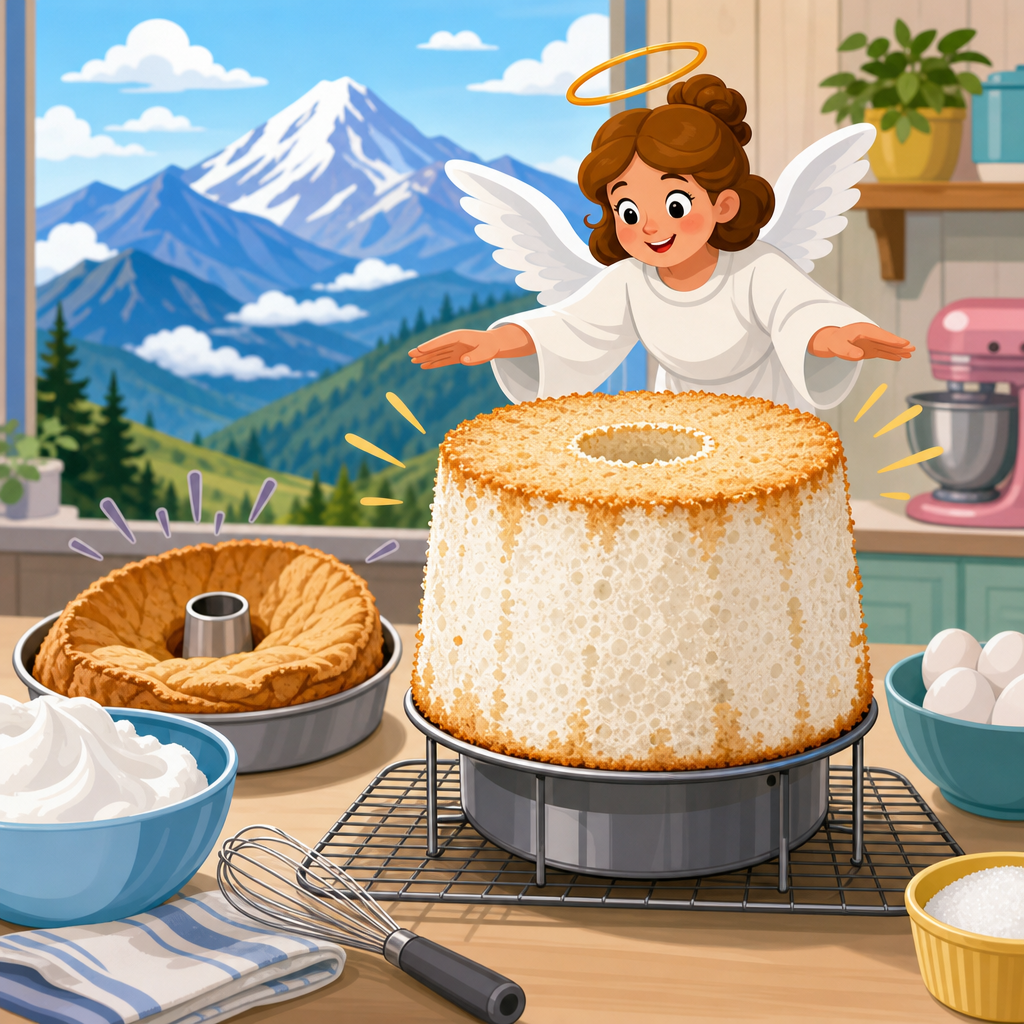
Angel food cake at altitude rewards precision and punishes shortcuts. This foam cake depends on whipped egg whites, dissolved sugar, and careful starch structure instead of butter or oil, so higher elevation changes every step. At altitude, lower air pressure makes batters rise faster, moisture evaporate sooner, and proteins set differently. The result is familiar to many mountain bakers: a beautiful rise in the oven followed by shrinkage, gummy streaks, or a full collapse while cooling. I have baked angel food cake in sea-level kitchens and above 5,000 feet, and the pattern is consistent. Success comes from understanding why the cake rises, when the foam becomes stable, and how small formula changes affect the final crumb.
For this cakes and cupcakes hub within cooking and baking at altitude, angel food cake is the ideal anchor topic because it teaches the core mechanics that apply to many high-altitude sponge-style desserts. If you can keep an angel food cake tall and tender at elevation, you can make better chiffon cakes, jelly roll sponges, cupcakes, and meringue-based layers. Key terms matter here. A foam cake is leavened mainly by trapped air in beaten eggs. Structural setting refers to the point when proteins and starches firm enough to hold that expanded shape. Collapse means the cake loses volume after baking because the internal framework was too weak, too wet, underbaked, or shocked by handling. Preventing collapse is not luck. It is a repeatable process built on ratio control, mixing discipline, pan choice, and baking temperature.
Why does this matter beyond one dessert? Because altitude baking is cumulative. The same low-pressure environment that causes angel food cake to overexpand also affects cupcakes doming too fast, layer cakes sinking in the center, and sponge cakes drying out before they set. Learning the corrections for angel food cake gives you a practical map for the whole cakes and cupcakes category. In this article, you will learn exactly why angel food cake collapses at altitude, what to change in the ingredient list, how to whip and fold for maximum stability, and how these lessons connect to other altitude cake recipes you may bake next.
Why angel food cake collapses at altitude
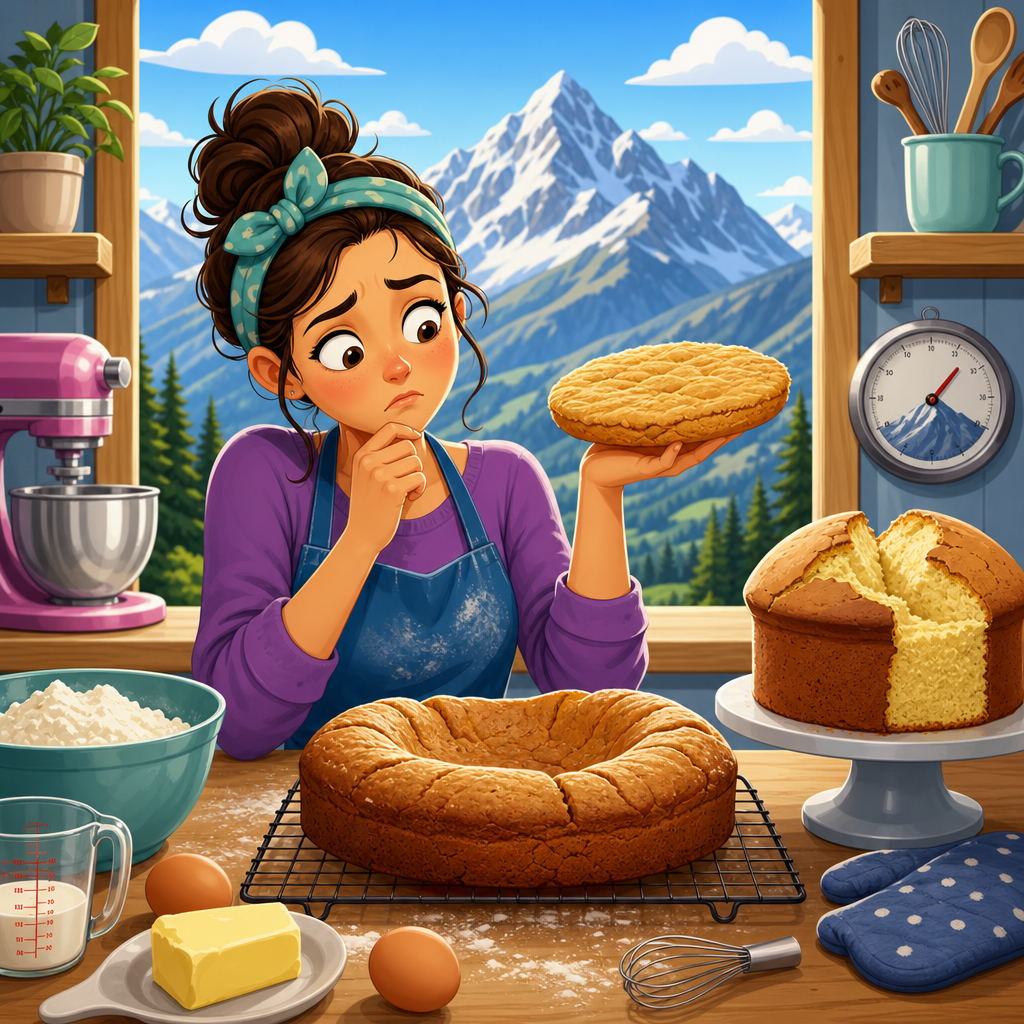
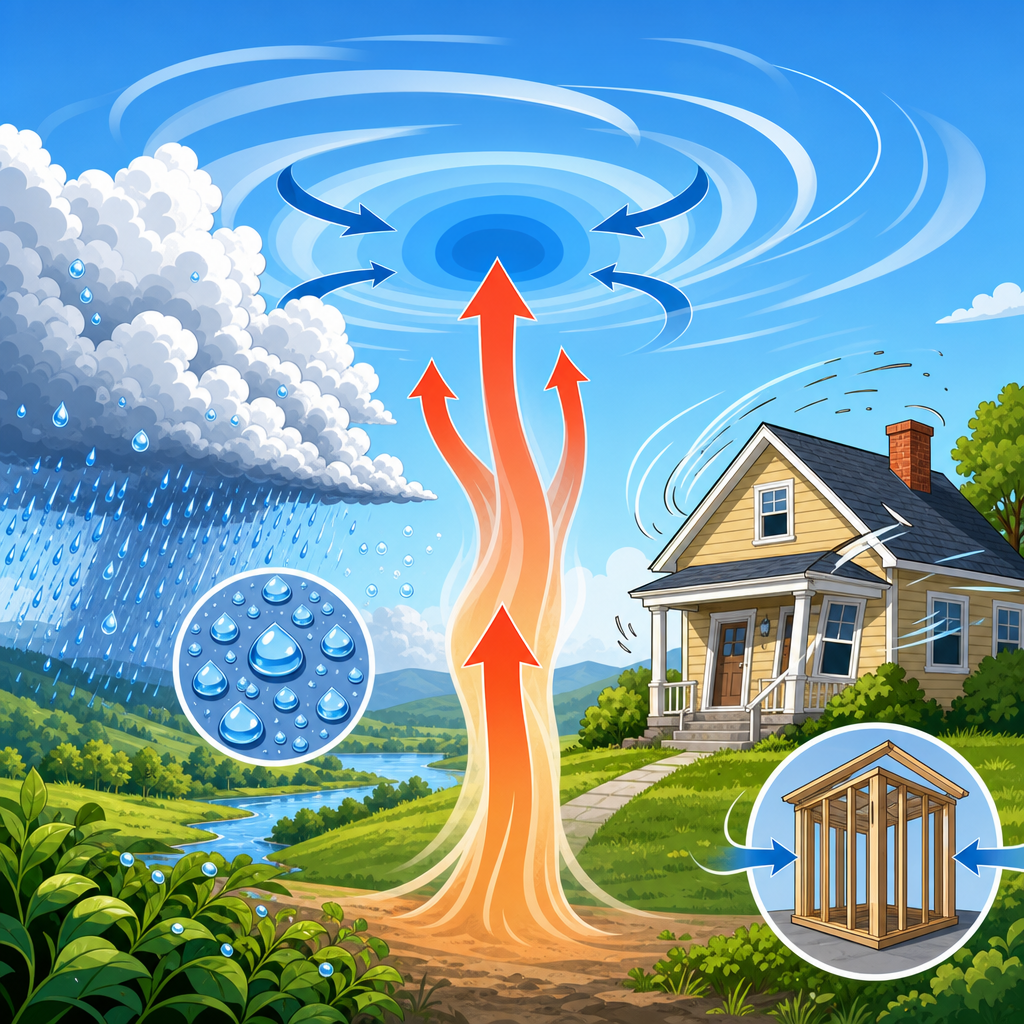
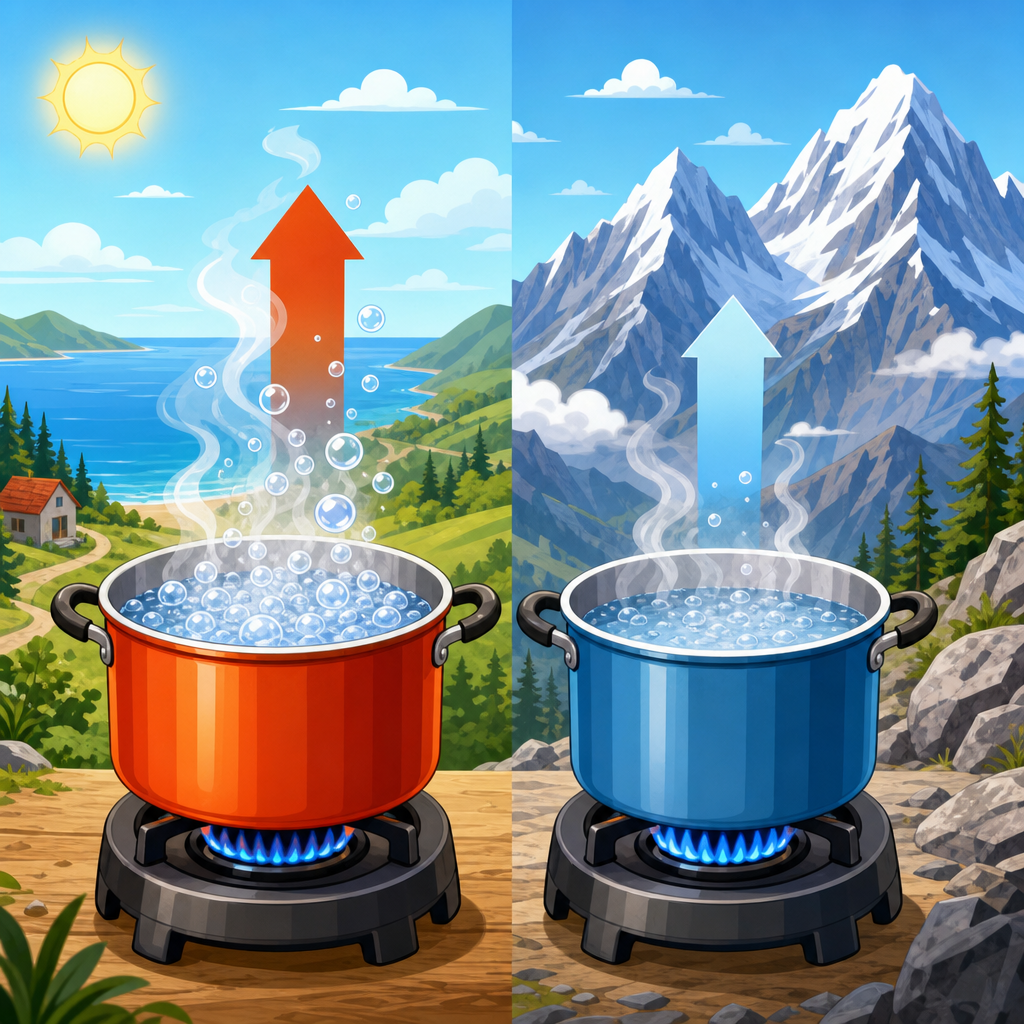
Angel food cake collapses at altitude because expanding air bubbles outpace the cake’s ability to set. Lower atmospheric pressure means gases in the whipped foam and steam generated in the oven expand more readily than they do near sea level. That sounds helpful, but the rise can become too aggressive. The cell walls around those bubbles stretch thin, moisture evaporates quickly, and the cake may look done before the interior proteins and starches have fully stabilized. When you remove the cake, gravity wins, the fragile network contracts, and the structure sinks.
Three failure points show up repeatedly. First, underwhipped or overwhipped whites create unstable foam. Underwhipped whites lack enough fine bubbles to support lift. Overwhipped whites become dry and clumpy, making folding difficult and causing uneven tunnels. Second, sugar and flour balance may be off for your elevation. Sugar weakens structure if excessive, while too little sugar can reduce tenderness and interfere with foam stability. Flour, especially cake flour, provides starch that helps the foam set; at altitude, a slight increase often improves support. Third, underbaking is common because cakes brown before they are structurally ready. A deep golden top is not reliable proof of doneness in a tall tube pan.
I also see bakers create collapse by using the wrong pan or cooling method. Angel food cake needs an ungreased tube pan so the batter can climb and grip the sides. Nonstick coatings reduce that grip, often limiting rise and encouraging slippage while cooling. A removable-bottom tube pan is useful, but only if it is left ungreased and cooled upside down immediately after baking. Inverting the pan is not old-fashioned ceremony. It prevents the tender crumb from compressing under its own weight while the cake finishes setting.
Ingredient adjustments that keep the structure standing
The most effective altitude adjustments for angel food cake are modest, not dramatic. At 3,000 to 5,000 feet, increase oven temperature by about 15 to 25 degrees Fahrenheit, reduce sugar slightly, and add a little more cake flour. Above 5,000 feet, some bakers also increase liquid through extra egg white or a spoonful of water, but this depends on the dryness of the formula you use. Cream of tartar remains essential because acid lowers egg white pH and helps proteins coagulate into a finer, more stable foam.
Use room-temperature egg whites for volume, but separate the eggs while cold for cleanliness and less yolk contamination. Even a trace of yolk or grease interferes with foam formation because fat disrupts the protein film needed to trap air. Superfine sugar dissolves faster than coarse granulated sugar, which matters in angel food cake because undissolved crystals can weigh down the foam and leave sticky streaks. If superfine sugar is unavailable, pulse granulated sugar briefly in a food processor rather than substituting powdered sugar, which contains starch in uncontrolled amounts.
Flour choice is equally important. Cake flour is the standard because its lower protein content yields a finer crumb, but at altitude the structure still needs enough starch support. I usually sift cake flour with part of the sugar several times to distribute it evenly and minimize deflation during folding. Bleached cake flour often performs better in classic angel food cake because it absorbs liquid differently and helps the batter hold shape. If you use all-purpose flour, the cake can become tougher and less delicate, especially once you compensate for altitude with added flour.
| Altitude | Oven temperature | Sugar adjustment | Flour adjustment | What this change does |
|---|---|---|---|---|
| 3,000 to 5,000 feet | Increase 15 to 25°F | Reduce 1 to 2 tablespoons per cake | Add 1 to 2 tablespoons cake flour | Helps structure set sooner and limits overexpansion |
| 5,000 to 7,500 feet | Increase 25°F | Reduce 2 to 3 tablespoons per cake | Add 2 to 3 tablespoons cake flour | Balances faster evaporation and weaker bubble walls |
| Above 7,500 feet | Increase 25 to 35°F | Reduce 3 tablespoons gradually | Add 3 tablespoons cake flour | Strengthens framework before the foam overexpands |
These ranges are starting points, not rigid laws, because pan dimensions, regional humidity, and your base recipe all matter. Recipes with a very high sugar-to-white ratio often need slightly more reduction. Recipes using extra flavoring, cocoa, or freeze-dried fruit powders may need additional flour or altered folding. Keep notes every time. Altitude baking becomes predictable when you track exact elevation, oven calibration, baking time, and cooling results.
Mixing method: the difference between lofty and sunken
Technique matters as much as formula. Begin with a scrupulously clean bowl, ideally stainless steel or glass. Plastic can retain invisible grease. Whip the egg whites on medium speed until foamy, add cream of tartar and salt, then continue to soft peaks before gradually raining in sugar. This sequence matters because adding sugar too early slows foam formation, while adding it too late can create a coarse, unstable meringue. For altitude, aim for glossy medium-stiff peaks rather than very stiff ones. The peak should stand with a slight curl. That texture gives enough strength to hold shape without becoming dry and difficult to fold.
Flavorings also require judgment. Vanilla is standard, almond extract is common, and citrus zest can brighten the cake, but all additions slightly affect the foam. Add liquid extracts near the end of whipping, and keep volumes restrained. If you want cocoa angel food cake or a coffee variation, sift dry flavorings with the flour mixture rather than adding moisture that can destabilize the batter. For cupcakes, the same principle applies but the margin for overbaking is even smaller because their individual size speeds moisture loss.
Folding is where many cakes lose volume before they ever reach the oven. Sift the flour-sugar mixture over the whipped whites in several additions, not all at once. Use a wide spatula and cut through the center, sweep across the bottom, and fold upward while rotating the bowl. Do not stir in circles. Circular stirring crushes bubbles and creates dense bands. The batter should remain airy but homogeneous, with no pockets of dry flour. I tell new altitude bakers to stop folding the moment the mixture looks integrated; one extra minute can remove the lift you need to compensate for thinner air.
Baking, cooling, and pan handling for a stable crumb
Once the batter is in the pan, run a thin spatula or knife through it to break large trapped pockets, then smooth the top lightly. Bake on the center rack where heat is most even. Avoid opening the oven door early. Angel food cake relies on uninterrupted heat to expand and set, and altitude exaggerates the effect of temperature drops. In many ovens, the cake is done when the top is deeply golden, the surface springs back, and a skewer shows moist crumbs rather than wet batter. An instant-read thermometer in the thickest section should typically read around 205 to 210 degrees Fahrenheit.
As soon as the cake leaves the oven, invert the pan. Many tube pans have feet for this; if yours does not, balance the center tube over a bottle neck. Cooling upside down until fully room temperature is mandatory, not optional. During this stage, steam redistributes and the crumb finishes stabilizing. If you turn it upright too soon, the still-soft interior can compress. To release the cake, use a thin offset spatula or flexible knife around the sides, center tube, and bottom. Sawing aggressively tears the crumb and can make a well-baked cake seem dry.
Storage affects texture too. Angel food cake is best the day it is made, but it can hold well for one to two days if wrapped airtight after cooling completely. Refrigeration tends to dry it out. If you need advance production, freeze slices tightly wrapped and thaw them covered to reduce moisture loss. For altitude bakers serving the cake with berries and whipped cream, wait to assemble until just before serving. Excess syrup or macerated fruit can soak the crumb and make a successful cake seem collapsed or gummy at the plate.
How this applies to cupcakes, sponge cakes, and your cakes hub planning
Angel food cake teaches the same structural lessons you need for other cakes and cupcakes at altitude. In cupcakes, low air pressure can produce high domes that then sink because the batter rose before its gluten and egg proteins set. The correction is similar: slightly higher oven temperature, measured sugar reduction, and attention to mixing so air cells remain fine rather than coarse. Chiffon cake adds oil and yolks, which create a richer crumb but also more weight, so stability depends on a well-made meringue plus enough bake time. Genoise and sponge cakes rely on whole-egg foam, making temperature control and gentle folding just as important.
This is why cakes and cupcakes work best as a connected altitude baking category rather than isolated recipes. If you are building out your own recipe collection, think in clusters. Start with angel food cake, then move to chiffon cake, vanilla cupcakes, chocolate cupcakes, sponge roll cake, and high-altitude layer cakes. Each recipe teaches a variation on the same variables: evaporation rate, sugar’s tenderizing effect, protein coagulation, starch gelatinization, and pan geometry. A tube pan supports a tall foam better than a shallow sheet pan; a cupcake tin bakes faster and dries faster; a layer pan may need adjusted leavening because chemical rise behaves differently than egg foam.
The practical takeaway is simple. When a high-altitude cake fails, diagnose it by structure, not emotion. If it collapsed, ask whether the foam was too weak, the sugar too high, the flour too low, the oven too cool, or the bake too short. If it is dry, ask whether evaporation outran your formula. If it tunneled, ask whether the whites were overbeaten or the batter overmixed. This problem-solving framework turns one tricky angel food cake into a reliable system for your entire cakes and cupcakes repertoire.
Conclusion
Keeping angel food cake from collapsing at altitude comes down to controlling expansion and setting the structure before gravity takes over. Use an ungreased tube pan, whip clean egg whites to glossy medium-stiff peaks, reduce sugar slightly, add a little more cake flour, and bake a bit hotter than you would at sea level. Fold gently, avoid early oven-door openings, confirm doneness with spring, color, and internal temperature, then cool the cake upside down until completely set. None of these steps is complicated, but each one matters because foam cakes have almost no margin for careless handling.
The broader benefit is that mastering angel food cake improves every other altitude cake you bake. You begin to recognize the signs of overexpansion, weak structure, underbaking, and moisture loss across cupcakes, sponges, and chiffon cakes. That knowledge saves ingredients, reduces frustration, and gives you confidence to adapt recipes instead of hoping they work unchanged. If you are building skills in cooking and baking at altitude, use this article as your cakes and cupcakes starting point, then apply the same principles to the next recipe in your kitchen and keep detailed notes as you refine it.
Frequently Asked Questions
Why does angel food cake collapse so often at high altitude?
Angel food cake is especially vulnerable at altitude because its entire structure depends on a delicate foam made from whipped egg whites, sugar, and flour. There is no butter or oil to provide extra support, so the cake has to rise, set, and cool correctly to hold its shape. At higher elevation, lower air pressure allows the foam to expand more quickly in the oven. That sounds helpful, but it often causes the batter to overinflate before the proteins and starches are fully set. The cake can look tall and beautiful at first, then sink as it cools because the structure was stretched beyond what it could support.
Altitude also speeds moisture loss, which can leave parts of the cake dry before the interior is fully baked. At the same time, if the sugar has not dissolved well or the flour was folded in too aggressively, the foam becomes uneven and weak. That leads to common problems such as gummy streaks, wet patches near the bottom, large tunnels, or a dramatic collapse when the cake is inverted to cool. In most cases, collapse is not caused by one single mistake. It is usually the combined effect of overwhipped whites, too much sugar for the elevation, too little flour support, too low an oven temperature, or underbaking. At altitude, small errors become big ones, so precision matters more than ever.
What changes should I make to an angel food cake recipe when baking at altitude?
The best altitude adjustments usually focus on strengthening the batter while controlling how fast it rises. A common starting point is to slightly reduce the sugar, increase the flour by a small amount, and raise the oven temperature modestly so the structure sets sooner. Too much sugar can weaken the foam and delay setting, especially at elevation, while a little extra flour helps reinforce the cake’s internal network. Even a tablespoon or two can make a meaningful difference in stability, depending on the original recipe and your elevation.
You also want to pay close attention to the egg whites. They should be whipped to a stable, glossy stage with firm peaks that still look moist, not dry or clumpy. At altitude, overwhipped whites are a common cause of collapse because they lose elasticity and cannot expand evenly in the oven. Cream of tartar is particularly important here because it helps stabilize the foam and improves tolerance during mixing and baking. Sifting the flour and a portion of the sugar several times helps the dry ingredients fold in more gently without deflating the batter. Many high-altitude bakers also have better results with a slightly hotter oven so the cake sets before it overexpands, but the increase should be moderate rather than extreme. The goal is not to force a rise; it is to support one that is controlled and sustainable.
How do I know if I whipped the egg whites correctly for angel food cake at altitude?
Properly whipped egg whites should look glossy, smooth, and voluminous, with peaks that stand up but still have a slight curve at the tip. This stage is critical because underwhipped whites do not provide enough lift, while overwhipped whites create a dry, fragile foam that expands unevenly and then deflates. At altitude, the margin for error is narrower because the batter rises more aggressively in the oven. Whites that are whipped just a little too far can turn from strong to brittle, and that brittleness often shows up later as collapse, coarse texture, or cracks and shrinkage.
To improve your chances, start with very clean tools and egg whites free of any trace of yolk or grease. Letting the whites come closer to room temperature can help them whip more efficiently, but they still need to be handled carefully. Add cream of tartar at the appropriate stage to stabilize the foam, then gradually add sugar rather than dumping it in all at once. The sugar should dissolve into the whites and help create a fine, satiny texture. If the mixture looks dull, grainy, or chunky, it has likely gone too far. A well-whipped foam should hold shape without looking dry. Think resilient rather than stiff. That distinction matters enormously for angel food cake, especially in mountain baking conditions where the foam needs both volume and flexibility.
Why did my angel food cake have gummy streaks or a wet, dense layer near the bottom?
Gummy streaks and dense, wet areas usually point to a problem with mixing, ingredient balance, or baking time. One of the most common causes is flour that was not folded in evenly. Because angel food cake batter is so light, dry ingredients must be sifted thoroughly and incorporated gently in stages. If flour or sugar settles into the foam instead of dispersing evenly, it can create heavy streaks that never bake into the same texture as the rest of the cake. At altitude, this issue becomes more pronounced because the batter rises fast and moisture evaporates quickly, so any unevenness in structure shows up clearly in the finished crumb.
Another likely cause is underbaking. A cake can appear done on top while the lower interior is still too moist and weak. This happens often when the oven temperature is too low for the elevation or when the cake is removed as soon as it looks browned. The interior needs enough time to fully set before cooling. Excess sugar can also contribute because it interferes with structure and retains moisture, which is especially problematic at higher elevation. In some cases, overwhipped whites are part of the problem too, since they make folding more difficult and create an uneven batter that bakes irregularly. To prevent gummy streaks, sift dry ingredients multiple times, fold gently but thoroughly, use an ungreased tube pan, and bake until the cake springs back and looks fully dry across the surface rather than merely lightly colored.
What is the best way to cool angel food cake so it does not shrink or fall out of the pan?
Angel food cake should be cooled upside down immediately after it comes out of the oven. This is not just tradition; it is part of the cake’s structural process. While the cake cools, the foam is still setting and stabilizing. If it cools upright, gravity can pull the delicate interior downward before it has fully firmed, causing shrinkage or collapse. Inverting the pan helps the cake maintain its height and keeps the crumb from compressing under its own weight. A traditional tube pan with feet makes this easier, but if your pan does not have feet, you can carefully invert it over a bottle neck or another stable support, as long as airflow remains unobstructed.
Just as important, the pan should be ungreased. Angel food batter needs to cling to the sides of the pan as it rises and cools. If the sides are greased, the batter cannot grip the surface properly, and the cake is more likely to slide, shrink, or drop out while inverted. Let the cake cool completely before attempting removal. Rushing this step is a common reason for tearing and settling. Once fully cooled, use a thin knife or offset spatula to loosen the edges and center tube gently. At altitude, where the cake has already endured a more extreme rise and greater moisture loss, proper cooling is one of the final safeguards against collapse. Even a well-mixed, well-baked cake can lose height if it is not cooled correctly.