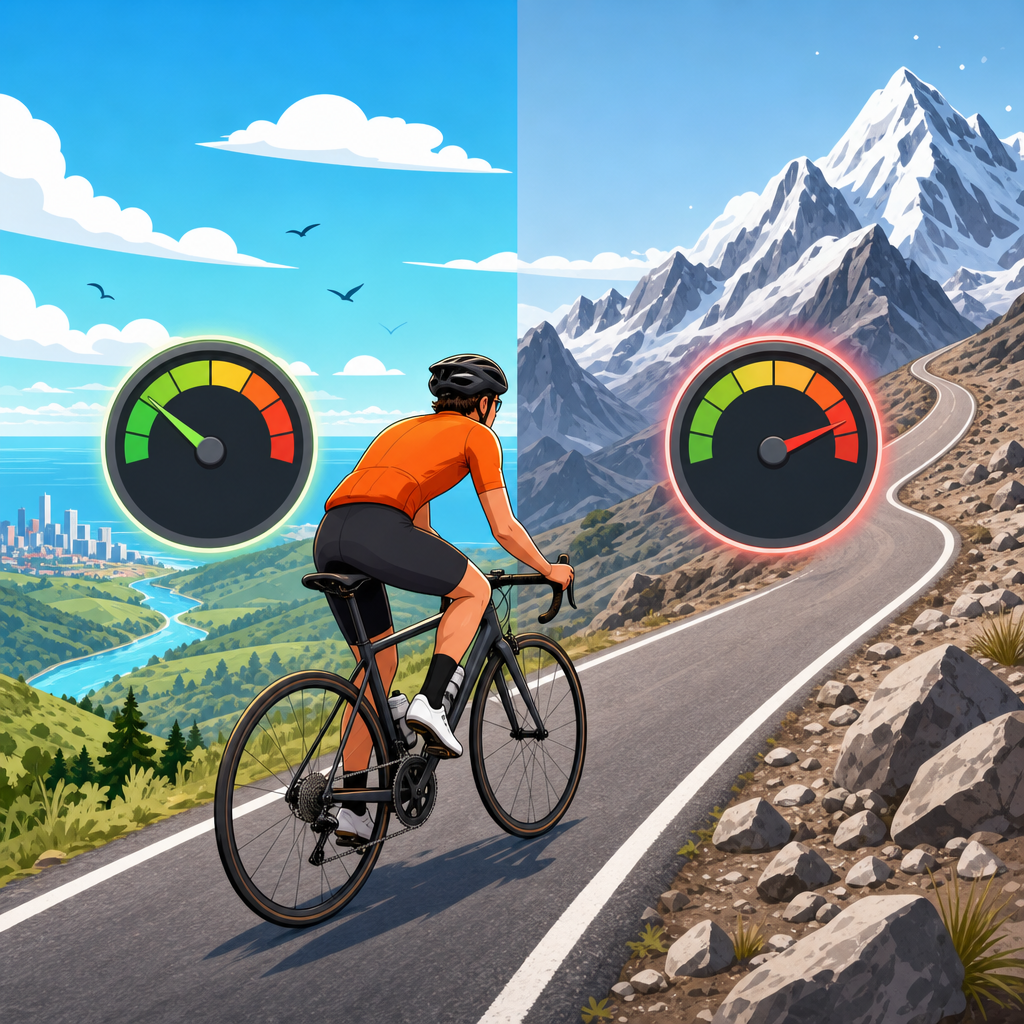
Can you train hard on day one at altitude? Usually, no—at least not if your goal is quality work, good recovery, and steady adaptation. Altitude changes the oxygen pressure that drives aerobic metabolism, so the same pace, power, or hiking speed that feels routine at sea level can become disproportionately stressful within hours of arrival. In practical terms, “altitude” for training usually starts around 1,500 meters or 5,000 feet, becomes clearly performance limiting above 2,000 meters, and creates meaningful physiological strain above 2,500 meters. For hikers, runners, cyclists, and mountain athletes, that matters because the first day sets the tone for the rest of the trip.
I have seen this repeatedly with endurance athletes arriving in Colorado, the Alps, and the Andes: the athletes who try to prove fitness on day one often turn a productive camp into two or three compromised days. The reason is straightforward. Barometric pressure falls with elevation, reducing the partial pressure of oxygen in inspired air. Your lungs still breathe the same percentage of oxygen, but less oxygen reaches the alveoli, arterial oxygen saturation drops, heart rate rises, ventilation increases, and perceived exertion spikes. The body can adapt, but it does not do so instantly.
Training physiology is the study of how the body responds to exercise stress and how those responses change with workload, recovery, environment, and repeated exposure. In the altitude context, the key concepts are oxygen delivery, aerobic power, lactate dynamics, autonomic stress, hydration, and acclimatization. Understanding them helps answer the central question with precision rather than folklore. Day one at altitude is not just “a bit harder.” It is a different physiological environment, and your training plan needs to respect that reality if you want performance, safety, and long-term progress.
This hub article explains what happens on arrival, when hard training can make sense, how to modify sessions, and which signals tell you to back off. It also maps the broader training physiology topics that support mountain performance, from aerobic base development to fueling and recovery. If you hike, run, climb, ski tour, or race in the mountains, this is the foundation.
What changes in your body on day one at altitude
The immediate limiter at altitude is reduced oxygen availability. At 2,500 meters, maximal aerobic capacity typically declines by roughly 10 to 15 percent in many trained athletes, though the exact drop depends on fitness, genetics, iron status, and the absolute elevation. Above that, the reduction becomes steeper. This means a threshold interval set, uphill hike, or long climb that is manageable at sea level can instantly move above your sustainable metabolic range. You breathe harder, heart rate rises faster, and the same external workload produces more internal strain.
Several acute responses begin within minutes. Ventilation increases because peripheral chemoreceptors detect lower arterial oxygen. Heart rate at rest and during submaximal exercise usually rises. Plasma volume can decrease over the first day or two, partly from increased ventilation and fluid shifts, which can make you feel dry and elevate cardiovascular strain further. Sleep quality often worsens during the first night, especially above 2,500 meters, adding another recovery cost. None of this means you are unfit. It means your environment changed faster than your physiology can.
A common question is whether altitude only affects endurance. It primarily affects aerobic performance, but that spills into almost every mountain activity. Heavy strength work with long rests may be less impaired than a tempo run, yet compound fatigue still matters. Technical climbing, downhill trail running, and loaded hiking can all suffer because cognition, pacing judgment, and coordination can decline when oxygen saturation is lower and fatigue rises quickly. The first day is therefore not just about watts or pace; it is about total systems stress.
Acclimatization begins immediately but unfolds in phases. Early changes include higher breathing rate and increased sympathetic drive. Over days to weeks, the kidneys help adjust acid-base balance so you can sustain higher ventilation, erythropoietin stimulates red blood cell production, and many athletes regain some submaximal efficiency at the new elevation. Full adaptation takes time. That timeline is why coaches rarely prescribe an all-out session immediately after arrival unless the athlete is already acclimatized or the event itself starts on day one and there is no choice.
Can you ever train hard on arrival
Yes, but only under specific conditions. If “hard” means a short neuromuscular stimulus such as strides, brief hill sprints with full recovery, or a few explosive movements to maintain coordination, many athletes tolerate that well. Those sessions depend more on the phosphagen system than on sustained oxygen delivery. By contrast, long threshold intervals, high-volume VO2 max work, race-pace climbs, and big vertical days are poor choices for most people on arrival. The cost is high and the quality is usually low.
The biggest factor is prior acclimatization. An athlete who has spent the previous two weeks at 2,000 meters can often handle a moderate quality session on day one at 2,200 meters. A sea-level resident flying into 2,800 meters cannot assume the same. The second factor is target outcome. If your priority is adaptation across a week-long camp, the smartest first-day session is almost always conservative. If you are peaking for a race that starts the same afternoon, strategy shifts toward protecting freshness, warming up carefully, and accepting that performance metrics will differ from sea level.
Practical coaching experience supports a simple rule: reduce either intensity, volume, or both for the first 24 to 48 hours. When athletes ignore this, the pattern is predictable—higher RPE, elevated morning heart rate, poor sleep, reduced appetite, and a second-day workout that feels worse than the first. When they respect the transition, they usually recover better and produce more usable training by day three or four.
| Arrival situation | Best day-one approach | Why it works |
|---|---|---|
| Sea-level athlete arriving at 1,500–2,000 m | Easy aerobic session, reduced by 20–30% | Limits early stress while allowing movement and pacing adjustment |
| Sea-level athlete arriving at 2,000–3,000 m | Easy session or complete rest plus short walk | Higher risk of excessive intensity drift and sleep disruption |
| Already acclimatized athlete at similar elevation | Moderate quality session, not maximal | Prior exposure preserves tolerance, but travel still adds fatigue |
| Competition starts on arrival day | Protect energy, extend warm-up, pace conservatively | You cannot create adaptation in hours, only manage stress |
How to adjust training variables the right way
The most effective day-one adjustment is to manage output by internal load rather than external load. In plain terms, do not force your usual sea-level pace, speed, or power. Use heart rate, breathing, and perceived exertion to cap effort. For aerobic work, keep intensity comfortably conversational. For intervals, shorten repetitions, increase recovery, and reduce the total number of hard minutes. A sea-level runner who normally completes 6 x 5 minutes at threshold might switch to 4 x 3 minutes at controlled effort, or postpone the session entirely.
For hiking and mountain days, vertical gain is often the hidden intensity driver. A route that looks easy on paper can become a major stressor when steep grades, load carriage, sun exposure, and altitude combine. On the first day, reduce pack weight if possible, choose a shorter ascent, and plan a strict turnaround time. This is especially important for groups, because the strongest person can unintentionally set a pace that pushes everyone else into unsustainable effort.
Hydration and fueling deserve more attention than many athletes give them. Altitude increases respiratory water loss, and many people arrive mildly dehydrated from flights, dry air, and disrupted routines. Start drinking early, but do not force extreme fluid intake. Pair fluids with sodium and eat carbohydrate consistently, because carbohydrate yields more energy per liter of oxygen than fat and supports high-intensity work when oxygen is limited. In camp settings, I generally encourage athletes to eat a familiar, carbohydrate-rich meal soon after arrival and avoid turning the first day into a fasting experiment.
Sleep and recovery tools also matter. If you arrive late, the best training decision may be a short walk, mobility work, dinner, and bed. Wearables can help, but they should not overrule symptoms. Resting heart rate, heart rate variability, and nocturnal oxygen saturation can provide useful trend data, yet the athlete who has a headache, unusual breathlessness, or nausea should not rationalize those signs away because an app says readiness is acceptable.
Risk management, red flags, and common mistakes
Not everyone responds to altitude the same way. Some athletes tolerate 2,000 meters with minor adjustment; others struggle at 1,800. Acute mountain sickness can begin with headache, loss of appetite, dizziness, fatigue, and poor sleep. It is more likely with rapid ascent, higher sleeping altitude, prior history, dehydration, and excessive effort immediately after arrival. Hard training does not cause altitude illness by itself, but it can worsen the stress that unmasks it. That is why “push through it” is bad advice when symptoms are building.
Another common mistake is using sea-level heart-rate zones without context. Heart rate can be elevated at altitude for the same mechanical workload, especially during the first days, so rigidly chasing a target pace or wattage often drives athletes too hard. The smarter method is to anchor the session to effort and breathing first, then review metrics afterward. The same principle applies to hiking groups and guided trips: conversation pace is a better first-day governor than summit fever.
Iron status is a longer-term but important issue in altitude training physiology. Red blood cell production requires adequate iron availability, and athletes with low ferritin often adapt poorly and feel flat. This is not a day-one fix, but it is a major reason some people fail to get the expected benefit from altitude blocks. Screening before extended altitude camps is standard practice in high-performance endurance programs for exactly this reason.
The final mistake is treating acclimatization as linear. Many athletes feel decent on day one, worse on day two, and better again later. That delayed dip is normal. Do not mistake a tolerable arrival day for proof that a maximal workout is wise. Good altitude planning assumes your body is still negotiating the environment even if the first session seems easy.
How this fits into the bigger picture of training physiology
Altitude is only one branch of training physiology, but it connects to every major performance system. Aerobic base determines how economically you can move at submaximal effort. Lactate threshold influences how high a pace you can sustain before acidosis and ventilation spike. VO2 max sets the upper ceiling for oxygen use. Strength and tendon capacity shape how well you tolerate climbing, descending, and loaded movement. Fueling affects whether you can support work when oxygen is scarce. Recovery determines whether the stress becomes adaptation or just fatigue.
That is why this page serves as a hub for the wider subtopic. If you want to perform better in the mountains, you need more than altitude advice. You need to understand pacing, heat and cold stress, hydration strategy, durability, downhill eccentric load, interval design, and the tradeoffs between volume and intensity. In practice, the best mountain athletes build a large aerobic engine, maintain strength year-round, practice specific climbing and descending demands, and use altitude strategically rather than romantically. The mountain does not reward wishful thinking; it rewards preparation matched to conditions.
For most readers, the actionable answer is clear. On day one at altitude, train easy, keep duration modest, fuel well, hydrate normally but consistently, and watch symptoms closely. Add only brief high-quality pickups if you are experienced and they truly serve a purpose. Save hard sessions for after your body has had time to adjust, unless your event schedule leaves no alternative. That choice protects performance better than bravado ever will.
The key takeaway from training physiology is that stress must be dosed, not merely survived. Altitude magnifies every training decision, especially the first one. Respect the reduced oxygen availability, accept lower outputs, and let acclimatization begin before demanding peak work. If you do, you will usually train better on the days that follow, recover faster, and enjoy the mountains more. Use this hub as your starting point, then build your plan around the fundamentals that actually drive endurance, hiking strength, and mountain performance.
Frequently Asked Questions
Can you train hard on day one at altitude?
In most cases, no. If your goal is high-quality training, solid recovery, and a smooth adaptation process, day one at altitude is usually the wrong time to force a hard session. The main reason is simple: altitude reduces the oxygen pressure available to working muscles, which makes aerobic metabolism less efficient almost immediately. That means a pace, power output, or climbing speed that feels manageable at sea level can become unexpectedly taxing within hours of arrival. Even if you feel motivated and physically fresh, your body is operating under different conditions, and the stress cost of hard work rises faster than most athletes expect.
Practically speaking, many athletes begin to notice training effects around 1,500 meters or 5,000 feet, and the performance impact becomes much more obvious above 2,000 meters or roughly 6,500 feet. Early on, heart rate can drift higher, breathing feels harder, and recovery between intervals is often slower and less complete. Because of that, a “normal” hard workout on day one often turns into poor-quality work: paces fade, technique deteriorates, and the session creates more fatigue than fitness. A much better approach is to treat the first 24 to 72 hours as an adjustment window. Easy aerobic work, short strides, relaxed drills, or brief low-volume pickups can help you assess how your body is responding without digging a hole you will spend the next several days trying to climb out of.
Why does altitude make the same workout feel so much harder?
Altitude changes the environment your body has to perform in, even though the workout itself may look identical on paper. The biggest factor is lower oxygen pressure. You are still breathing air that contains about the same percentage of oxygen, but the reduced atmospheric pressure means less oxygen moves from your lungs into your bloodstream with each breath. As a result, your body has to work harder to deliver enough oxygen to support aerobic energy production. That is why steady efforts feel less steady, threshold work becomes harder to control, and hard intervals may become unsustainably hard much sooner than expected.
On top of that, altitude often increases ventilation, heart rate, and perceived exertion. You may breathe faster, feel unusually dry, and notice that your legs become heavy at workloads that normally feel routine. Sleep can also be disrupted during the first few nights, which further reduces your ability to absorb hard training. Dehydration can compound the issue because altitude environments are commonly dry, and increased breathing losses can accelerate fluid loss without you realizing it. All of these factors combine to make “same pace” or “same power” a misleading target. At altitude, internal load matters more than sea-level benchmarks, especially at the start.
How should you train during the first few days after arriving at altitude?
The best strategy is usually to reduce intensity, lower expectations, and let your body settle in. For the first day or two, easy aerobic training is often the smartest choice. That could mean an easy run, an easy ride, a light hike, or a shortened technical session with generous recovery. If you want a little sharpness, short strides or a few brief controlled accelerations can work well, but they should be limited, smooth, and far from all-out. The goal is not to prove fitness on arrival. The goal is to preserve training quality over the entire altitude block.
During the first 48 to 72 hours, it is especially helpful to train by effort rather than rigidly chasing sea-level pace, speed, or power targets. Many athletes benefit from cutting interval volume, extending rest periods, and keeping threshold work very conservative until they know how they are responding. Hydration, carbohydrate intake, and sleep become more important than usual, because altitude can magnify the consequences of underfueling and underrecovering. If the camp or trip is short, some athletes will reintroduce moderate work sooner, but that still needs to be guided by how they are actually feeling, not by what the training plan originally said. The most successful altitude starts are patient, not heroic.
Are there any situations where a hard session on day one might make sense?
There are a few exceptions, but they are narrower than many people think. Highly experienced athletes who know their personal response to a specific altitude may occasionally handle a controlled quality session soon after arrival, especially if the altitude is only moderate and the workout is adjusted appropriately. Likewise, if someone is arriving for a competition rather than a training camp, the timing strategy can be different, because race scheduling sometimes forces athletes into less-than-ideal conditions. Even then, “hard” should not mean blindly copying a sea-level workout. It should mean carefully chosen, tightly controlled work with an understanding that the physiological cost is higher.
Another exception is when the session is neuromuscular rather than metabolically demanding. For example, brief hill sprints, short strides, or low-volume speed touches with full recovery may be tolerated much better than a long threshold workout or VO2 max intervals. These sessions can maintain coordination and economy without creating the deep aerobic stress that altitude amplifies. But for most recreational and competitive athletes, the safer default remains the same: arrive, assess, ease in, and build. Hard training on day one is not automatically dangerous, but it is often inefficient, unnecessarily fatiguing, and more likely to compromise the days that follow.
What are the risks of pushing too hard too soon at altitude?
The biggest risk is not just one bad workout, but a cascade of poor training decisions that follow from it. If you push hard on day one, you are more likely to accumulate excessive fatigue, sleep poorly, and struggle with recovery over the next several days. That often leads to a frustrating pattern: your effort feels high, your output stays low, and you keep trying to “make up for it” with more work. Instead of adapting well, you spend the early part of the altitude block surviving it. Training quality drops, motivation can dip, and confidence often takes an unnecessary hit.
There are also health and safety considerations. Going too hard too soon can worsen dehydration, headaches, dizziness, nausea, and general altitude-related discomfort. While most training at moderate altitude does not lead to serious altitude illness, aggressive early efforts can make symptoms more likely or more intense, especially in people who have traveled quickly to higher elevations. From a performance standpoint, the cost-benefit ratio is usually poor: the session feels harder than it should, yields less quality than expected, and interferes with the adaptation you came for in the first place. A measured start is not a sign of weakness. It is the most reliable way to protect performance, recovery, and the overall success of your altitude training period.