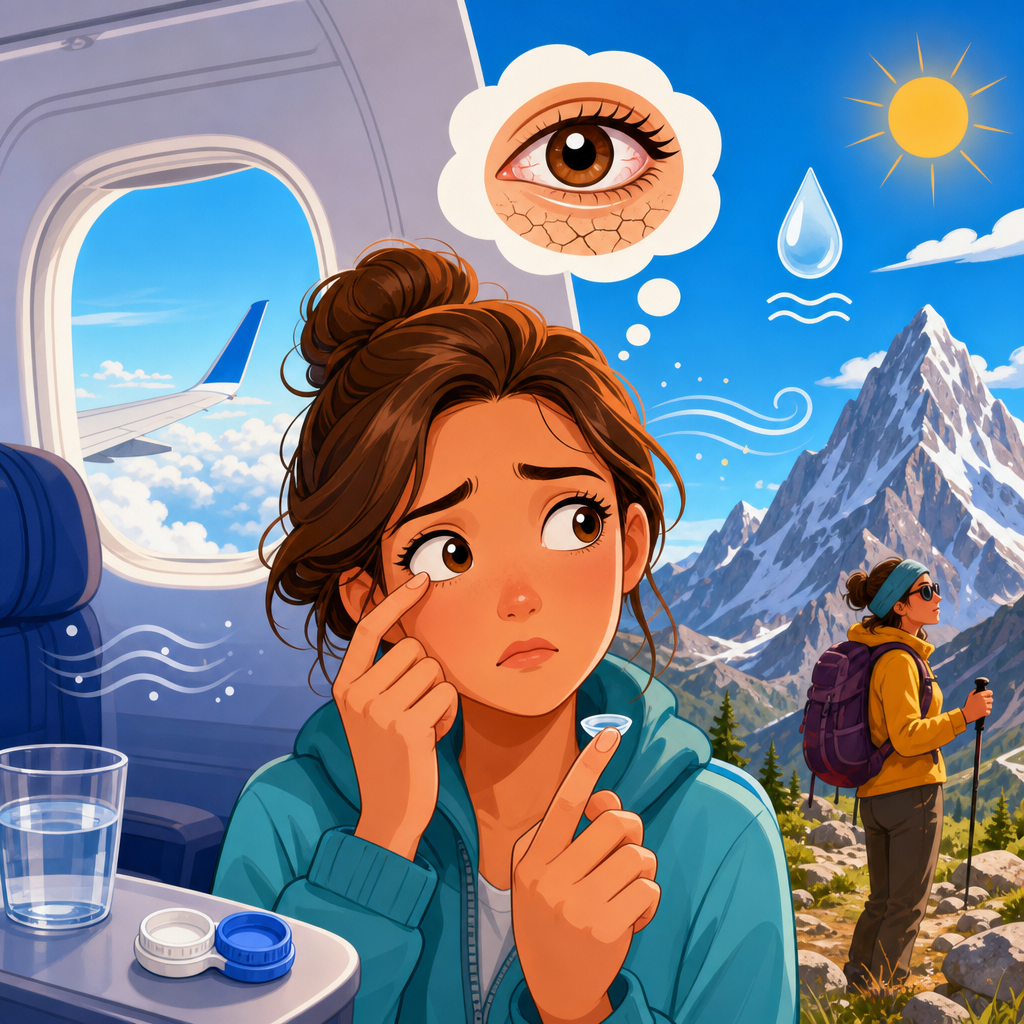
Can altitude make contact lenses dry out faster on flights and mountain days? Yes. In my experience fitting lenses for frequent flyers, skiers, hikers, and people who split time between sea level and high elevations, altitude often magnifies dryness because the environment changes faster than the eye can compensate. The lenses are not simply “drying out” in isolation. Instead, lower cabin humidity, stronger airflow, increased tear evaporation, longer blink gaps during screen use, and sometimes reduced oxygen delivery all work together to make lenses feel dry, filmy, or uncomfortable sooner than they do at home.
For this comfort troubleshooting hub, altitude means either the pressurized environment of commercial flights or the naturally thinner, drier air found in mountain towns, ski resorts, alpine trails, and high desert regions. Contact lens dryness refers to symptoms such as scratchiness, burning, fluctuating vision, lens awareness, end-of-day fatigue, and the feeling that a lens is stuck on the eye. These symptoms can overlap with evaporative dry eye, meibomian gland dysfunction, allergy, dehydration, or a poor lens-care routine, which is why troubleshooting matters more than assuming altitude alone is the cause.
This topic matters because contact lenses depend on a stable tear film. The tear film has three practical layers: an oily outer layer that slows evaporation, a watery middle layer that hydrates the surface, and a mucus-rich inner component that helps tears spread evenly. When altitude, cabin air, or wind disrupts that system, comfort declines quickly. For many wearers, the result is not dangerous, but it can reduce visual quality, increase eye rubbing, and raise the chance of irritation during travel or outdoor activity.
Understanding what is happening lets you fix the right problem. Some people need a different lens material. Others need preservative-free lubricating drops, better blink habits, wraparound eyewear, or shorter wear time on travel days. A useful comfort troubleshooting approach starts with the setting, the symptoms, the timing, and the lens type. Once those pieces are clear, the right adjustments are usually straightforward and effective.
Why flights and mountain air make contacts feel worse
Commercial aircraft cabins are pressurized, but they are still unusually dry. Cabin humidity commonly falls far below what most indoor environments maintain, and that dry air accelerates tear evaporation. I see this pattern often in patients who say their lenses are fine at the gate, then become gritty one to two hours into the flight. The trigger is rarely altitude alone. It is altitude plus dry recirculated air, overhead vents, dehydration from caffeine or alcohol, and prolonged reading or scrolling without full blinks.
Mountain environments create a different version of the same issue. Outdoor air at elevation is often dry, windy, and cold, especially in ski areas and exposed trails. Cold temperatures do not protect the eyes from dryness; they often make people blink less and increase airflow across the eye. Ultraviolet exposure is also stronger at altitude, and snow glare can intensify squinting and surface irritation. When a soft contact lens sits on top of a tear film that is already evaporating too quickly, the lens can dehydrate on the eye and become more noticeable.
High altitude may also worsen symptoms indirectly. People tend to drink less water than they need while traveling, wake earlier, sleep poorly before flights, and spend more time in climate-controlled rooms with forced-air heating. All of those factors destabilize tears. If you already have mild dry eye, meibomian gland dysfunction, rosacea, seasonal allergy, or a history of eye surgery, altitude can expose that baseline problem faster than everyday life does.
The practical takeaway is simple: flights and mountain days are stress tests for contact lens comfort. If your routine is only barely working at home, it usually fails under these conditions.
How to tell whether altitude is the main problem
The easiest way to identify altitude-related contact lens dryness is to look at timing and pattern. If your eyes feel comfortable at home but become dry only on planes, in mountain towns, or on windy hikes, the environment is likely the major trigger. If symptoms begin before travel, persist for weeks, or occur first thing in the morning, an underlying dry eye problem is more likely. In clinic, I ask when discomfort starts, whether vision clears after blinking, and whether one eye is consistently worse. Those details point to different causes.
Fluctuating vision that sharpens right after a blink usually suggests tear-film instability. Burning and reflex tearing can still be dryness; paradoxically, dry eyes often water because irritation triggers poor-quality tears. Itching leans more toward allergy. A lens that moves poorly or feels glued on near the end of the day may indicate dehydration of the lens surface or reduced tear volume. Redness concentrated where the lens edge sits can point to fit issues or excessive wear time.
Daily disposable lenses often outperform monthly lenses in dry environments because a fresh lens surface each day accumulates fewer deposits. Silicone hydrogel lenses generally improve oxygen transmission, but oxygen alone does not guarantee comfort. Some people do better in lenses with surface treatments designed to retain water or reduce friction. Others need lower wearing time, not a “breathable” lens. A good troubleshooting process compares the setting, symptoms, and lens behavior rather than relying on marketing claims.
| Situation | Most likely comfort trigger | Typical signs | Most useful fix |
|---|---|---|---|
| Long flight with overhead vent on | Rapid tear evaporation | Grittiness, blurry vision between blinks | Turn vent away, use preservative-free drops, blink fully |
| Ski day or windy hike | Cold air, wind, UV, low humidity | Lens awareness, watering, squinting | Wraparound eyewear or goggles, shorten wear time |
| Dry hotel room overnight | Baseline dry eye worsened by forced-air heat | Morning dryness, lens discomfort early | Humidify room, treat eyelids, delay lens insertion |
| Symptoms everywhere, not just altitude | Underlying dry eye or lens mismatch | Daily discomfort, end-of-day fatigue | Comprehensive eye exam and lens refit |
Comfort troubleshooting before you board or head uphill
The best fixes happen before symptoms start. If you know you are sensitive on flights, switch to glasses for travel segments when possible. Many experienced lens wearers do this without giving up contacts entirely. If you prefer lenses, start with a fresh pair of daily disposables and carry backup glasses in your personal item, not the overhead bin. That one habit prevents a minor comfort issue from turning into a miserable travel day.
Hydration helps, but it is not a complete solution. Drink water steadily before and during travel, and go easy on alcohol, which can worsen dehydration and fragment sleep. Avoid using redness-relief drops; they do not treat dryness and can create rebound redness. Instead, pack preservative-free lubricating drops labeled for contact lenses. Single-use vials are the simplest option because they avoid preservative exposure and travel well.
Eyelid care matters more than most people realize. The oil from the meibomian glands slows evaporation, so clogged glands can make altitude symptoms much worse. If you routinely wake with crusting, have fluctuating vision at a computer, or notice worse symptoms in heated rooms, warm compresses and lid hygiene may improve travel comfort more than changing lenses alone. I have seen frequent flyers gain several comfortable hours just by treating underlying meibomian gland dysfunction for a few weeks before a trip.
Finally, do not extend wear time on purpose because a day feels busy. Insert lenses later if the hardest part of the day is the flight or the outdoor activity. Saving four comfortable hours is often better than using up those hours during breakfast, security lines, and the drive to the trailhead.
What to do during the flight or on the mountain
Once symptoms start, the goal is to reduce evaporation and friction quickly. On a plane, redirect the overhead vent away from your face. Then blink deliberately: full, slow blinks spread the tear film and re-wet the lens surface better than rapid partial blinks. If you are reading or using a screen, pause every 20 minutes for several complete blinks. That simple reset works because screen concentration increases incomplete blinking, a major but overlooked cause of in-flight dryness.
Use lubricating drops before your lenses feel bad, not only after they become uncomfortable. Preventive dosing works better than chasing irritation once the surface is already stressed. For mountain days, wear sunglasses with side coverage or ski goggles. This is one of the most effective interventions because it blocks direct airflow over the eyes. People often assume brightness is the only issue outdoors, but wind exposure is frequently the bigger reason lenses become intolerable.
If a lens becomes persistently filmy, painful, or hard to tolerate, remove it. Do not keep pushing through because you are far from home or want to finish the day. Replace it with a fresh lens if you have one and your eye feels normal after removal, or switch to glasses. Continuing to wear a compromised lens increases friction on the cornea and can turn simple dryness into significant irritation. If there is light sensitivity, marked redness, discharge, or pain that does not resolve promptly after removal, seek urgent eye care.
For many travelers, the most realistic plan is hybrid wear: contacts for part of the day, glasses for the driest segment, then contacts again only if needed. Comfort troubleshooting is not about proving you can tolerate lenses under every condition. It is about using them strategically so vision stays clear and the eye surface stays healthy.
When a different lens, care system, or exam is the right answer
If altitude repeatedly exposes the same discomfort, the long-term fix may be a better lens choice. Daily disposables are often the first upgrade because they reduce deposit buildup and eliminate solution interactions. Among reusable lenses, some wearers benefit from hydrogen peroxide-based care systems, which can leave fewer residual chemicals on the lens than multipurpose solutions when used correctly. Material and fit also matter. A lens with a lower friction surface or a more stable edge profile can feel dramatically better even when the prescription is unchanged.
There are limits to self-troubleshooting. If you need drops many times a day, cannot comfortably wear lenses for normal activities, or notice recurring redness, get an eye exam. A clinician should assess tear breakup time, corneal staining, meibomian gland function, lid inflammation, allergy, and lens fit. In some cases, the answer is not more moisture but treating blepharitis, changing medications that worsen dryness, addressing lagophthalmos during sleep, or limiting wear during flare-ups. That is especially true for this comfort troubleshooting hub: one symptom can have several distinct causes, and the right solution depends on which mechanism is active.
The main benefit of understanding altitude-related dryness is control. Flights and mountain days do make contact lenses dry out faster for many people, but the problem is manageable with the right combination of lens type, tear support, environmental protection, and realistic wear habits. Start with the basics: a fresh lens, preservative-free drops, no direct airflow, better blinking, and backup glasses. If that still is not enough, treat the issue as a fitting or dry-eye problem rather than a personal tolerance failure. Small adjustments usually make the biggest difference. Review your routine before your next trip, and if comfort remains inconsistent, schedule an eye exam and build a plan that fits the way you actually live and travel.
Frequently Asked Questions
Can altitude really make contact lenses feel drier faster on flights and mountain days?
Yes, absolutely. In real-world wear, altitude often makes contact lenses feel dry faster, but not because the lenses are somehow failing on their own. The bigger issue is that the environment changes in several ways at once, and your eyes have to keep up. On flights, cabin air is extremely low in humidity, and that dry air pulls moisture from the tear film more quickly. Add direct airflow from overhead vents, long periods of reading or screen use, and less frequent blinking, and the front surface of the lens can become unstable fast. In the mountains, you may not have the same cabin conditions, but you still face factors that increase evaporation, including wind, sun exposure, cold air, and dry high-elevation climates.
What many lens wearers notice is a progression: the lenses first feel “noticeable,” then slightly sticky or filmy, and later they may start to shift less smoothly with each blink. That sensation is usually tied to tear film disruption rather than the lens literally drying into a hard piece of plastic. If your tears evaporate faster, the lens surface can become less comfortable, your vision may fluctuate, and your eyes may respond with irritation or reflex tearing. So yes, altitude-related environments can make lenses dry out faster in a practical sense, even though the root cause is usually increased tear evaporation and reduced ocular surface stability.
Why do contact lenses often feel worse on airplanes than they do at ground level?
Air travel creates one of the most contact-lens-unfriendly environments people routinely encounter. The biggest factor is very low cabin humidity. Commercial aircraft cabins are much drier than most indoor environments, which accelerates tear evaporation from the eye and from the surface of the contact lens. If your tear film thins out too quickly, the lens can lose that smooth, wettable feeling that keeps it comfortable. This is why lenses that feel perfectly fine during a normal workday may suddenly become irritating halfway through a flight.
There are usually several secondary factors too. People blink less while watching in-flight entertainment, working on a laptop, or scrolling on a phone. Reduced blinking means the tear film is not being refreshed often enough. Overhead vents can blow dry air directly toward the eyes, making the problem more obvious. Some travelers also start a flight mildly dehydrated after early wake-ups, coffee, alcohol, or inadequate water intake, which can further reduce comfort. If you wear lenses for the entire travel day, including airport time, the cumulative effect gets even stronger.
That is why airplane dryness tends to feel more intense than ordinary day-to-day dryness. The cabin environment lowers the margin for error. If your lenses are already slightly dry by nature, if you have meibomian gland dysfunction, allergies, or borderline dry eye, flying can magnify symptoms quickly. For many people, the discomfort is not a sign they can never wear contacts on planes again, but it is a sign that they may need a better lens material, lubricating drops approved for contacts, shorter wear time, or glasses for part of the trip.
Are mountain days, skiing, and hiking just as drying as flights for contact lenses?
They can be, and for some people they are even worse. Mountain environments challenge contact lens comfort differently than airplanes do. At altitude, the air is often drier, and wind exposure is a major issue, especially while skiing, snowboarding, hiking ridgelines, or riding lifts. Cold air can make your eyes feel watery, but that does not always mean they are well lubricated. In many cases, the tears are less stable and evaporate quickly once exposed to wind and sun. Contact lenses may then start to feel dry, gritty, or harder to blink over smoothly.
Sun exposure and glare also matter more than many people realize. Bright light can make you squint, and squinting changes the way the eyelids interact with the lens surface. Add dust, trail debris, sunscreen migration, or smoke from campfires or wildfire conditions, and the ocular surface becomes even more stressed. Goggles and wraparound sunglasses can help reduce wind exposure, but without that protection, lens comfort can drop quickly on long outdoor days.
Skiers and hikers also tend to wear lenses for extended hours, often starting early in the morning and keeping them in through travel, activity, meals, and evening recovery. That long wear time compounds the effect of high-altitude dryness. So while airplane dryness is more predictable and immediate, mountain dryness can be just as significant because it combines low humidity, wind, UV exposure, prolonged wear, and inconsistent blinking. If contacts routinely become uncomfortable outdoors at elevation, that is a practical sign that your eyes may need a different lens strategy for those conditions.
What can I do to keep my contact lenses more comfortable when flying or spending time at high elevation?
The most effective approach is to reduce evaporation and lower the total stress on the eye. Start with hydration and realistic wear time. Drink water regularly, but also remember that hydration alone will not fully overcome environmental dryness. Use preservative-free lubricating drops that are labeled safe for contact lenses before discomfort starts, not just after your eyes feel irritated. On flights, point the air vent away from your face, blink fully and often during screen use, and consider wearing glasses for part or all of the trip, especially on longer flights. If you are planning to sleep, it is usually safer and more comfortable to remove lenses first unless your eye doctor specifically prescribed lenses approved for overnight wear and told you they are appropriate for you.
For mountain days, physical protection makes a big difference. Wear wraparound sunglasses, well-fitting ski goggles, or other eyewear that shields your eyes from direct wind and cold air. Rewetting drops can help during the day, but it is also smart to limit unnecessary lens wear before and after the main activity. If you know you will spend hours outside in dry, windy conditions, daily disposable lenses are often a good choice because you start with a fresh lens each day and avoid buildup from prior wear. Some patients also do better in newer silicone hydrogel daily lenses or in materials designed for better surface wettability, though the best option varies from person to person.
If dryness is frequent, do not focus only on the lens. The eyelids and tear film matter just as much. Treating blepharitis, meibomian gland dysfunction, or allergy can significantly improve lens comfort at altitude. A contact lens fitting that works fine at sea level in mild indoor conditions may not be the best setup for travel or mountain sports. An eye care professional can help match the lens type, replacement schedule, and drop routine to the way you actually live.
When is altitude-related contact lens dryness a sign that I should stop wearing the lenses and get my eyes checked?
Mild dryness that improves with blinking, lubricating drops, or a short break is common. But if your lenses become painful, your vision stays blurry after blinking, your eyes turn noticeably red, or you feel a persistent foreign-body sensation, it is smart to remove the lenses as soon as possible. Those symptoms can mean more than ordinary dryness. A lens that has dried excessively on the eye can start to adhere more tightly and become harder to tolerate, and environmental stress can also make you more aware of a poorly fitting lens, a damaged lens, corneal surface irritation, or an early inflammatory problem.
You should be especially cautious if one eye is much worse than the other, if light sensitivity develops, if there is discharge, or if discomfort continues after the lens is removed. Those are not symptoms to ignore just because you are traveling or at elevation. Sleeping in lenses during a flight, wearing them too long on a ski trip, or pushing through discomfort on a windy hike can increase the chance of complications. If removal is difficult, use approved rewetting drops, be patient, and avoid forcing the lens off a very dry eye. Once the lens is out, if symptoms do not settle quickly, seek medical advice.
As a general rule, inconvenience is normal, pain is not. If altitude or flight conditions repeatedly make your lenses intolerable, that does not mean you have to give up contacts forever, but it does mean your current setup is probably not ideal. A professional evaluation can determine whether the problem is lens material, replacement schedule, fit, tear film quality, lid disease, allergy, or another eye surface issue. That is the best way to make contact lens wear safer and more comfortable in dry, high-altitude situations.