Meringue at altitude behaves differently because lower air pressure changes how water evaporates, how sugar dissolves, and how egg-white foams set. If you have ever pulled a pie from the oven only to find a puddle under the topping, beads of syrup on the surface, or a dramatic drop in height as it cools, you have seen the classic altitude problems of weeping and shrinking. In high-elevation baking, those failures are not random. They come from predictable shifts in boiling point, moisture loss, protein coagulation, and oven performance.
For this hub on pies, pastries, and meringues, it helps to define the terms clearly. Weeping is the release of liquid between the meringue and the filling or on the surface after baking. Shrinking is when the meringue pulls away from the crust edge or collapses in volume after cooling. Beading refers to amber or clear droplets that form on the exterior, usually from undissolved sugar or overcoagulated foam. At sea level, a solid formula and careful technique often hide small errors. At altitude, those same errors become obvious, especially above 3,500 feet and increasingly above 5,000 feet.
I have tested lemon meringue pies, baked Alaska, tart toppings, and decorative Swiss meringue finishes in mountain kitchens where water boils far below 212 degrees Fahrenheit, ovens cycle hard, and dry air accelerates moisture loss. The pattern is consistent: stable altitude meringue depends on matching the style of meringue to the dessert, controlling sugar dissolution, anchoring the foam to hot filling, and baking just enough to set structure without squeezing out water. Once you understand those levers, you can make taller, glossier toppings that slice cleanly and hold overnight better than many sea-level versions.
This article serves as the central guide to pies, pastries, and meringues within altitude baking. It explains why meringues fail, which styles work best, how pie fillings and crusts affect the topping, and what adjustments produce reliable results. Whether you are making a mile-high lemon pie, a fruit tart with torched Italian meringue, pavlova shells, cream pies, or freezer-friendly pastry projects, the same principles apply: build structure deliberately, manage moisture aggressively, and choose formulas that suit your elevation and climate.
Why altitude makes meringue weep and shrink
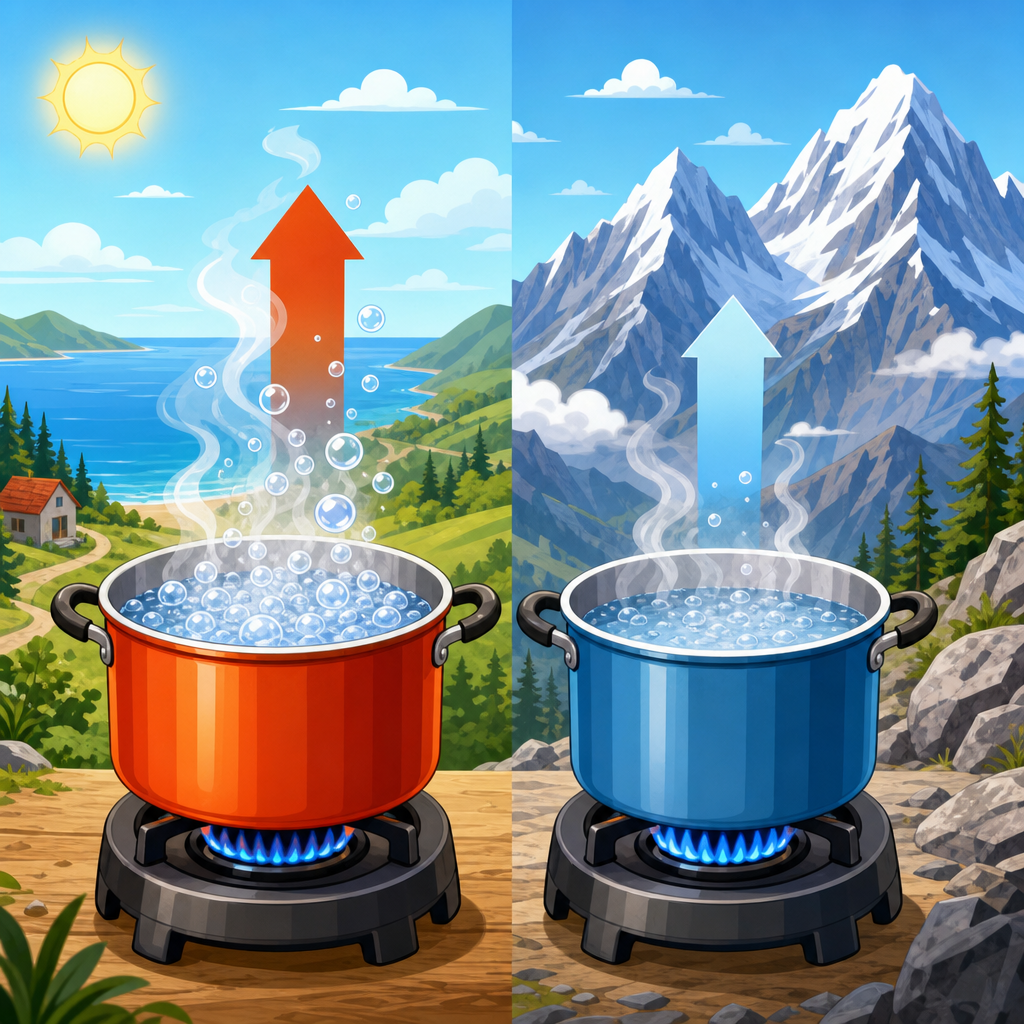
The science starts with pressure. As elevation rises, water boils at a lower temperature, so moisture escapes faster from fillings, foams, and crusts. Egg whites are mostly water plus proteins such as ovalbumin. When whipped, those proteins stretch around air bubbles to form a foam. Sugar strengthens that foam, but only if it dissolves properly. In a dry, high-altitude kitchen, whites can foam quickly yet set unevenly. In the oven, the exterior may firm before the interior has stabilized, which leaves weak cells that collapse on cooling.
Weeping usually has three causes. First, undercooked meringue leaves free water trapped in the foam, and that water drains later. Second, overcooked meringue tightens the protein network too much, forcing liquid out in a process similar to syneresis in custards. Third, the meringue may sit on a cool filling, preventing the underside from cooking enough to bond and seal. At altitude, all three become more likely because heat transfer is less forgiving and moisture migrates faster. A beautiful topping can still fail if the filling and foam are out of sync.
Shrinking follows related mechanics. Meringue should be spread to touch the crust all the way around, creating an anchor. If it floats only on the filling, it contracts as it cools and pulls inward. Altitude exaggerates that contraction because rapid evaporation leaves the foam drier and more fragile. Excess whipping also matters. Stiff peaks sound desirable, but overbeaten whites have larger, drier bubbles that expand too much in the oven and then deflate. The best high-altitude meringues usually stop at glossy medium-stiff peaks, then finish setting with heat rather than brute-force whipping.
Temperature and sugar handling are equally important. Cold eggs separate more cleanly, but room-temperature whites whip with greater volume. Any trace of fat from yolk, butter, or greasy bowls weakens foam formation. Fine sugar dissolves faster than coarse granulated sugar, reducing grittiness and beading. Acid ingredients such as cream of tartar, lemon juice, or a small amount of vinegar lower pH and help proteins unfold in a controlled way. Cornstarch, often added to pie meringue, binds water and improves sliceability, though too much can create a pasty bite.
Choosing the right meringue for pies, pastries, and tarts
Not all meringues are equal at elevation. French meringue, made by whipping raw whites with sugar, is the simplest and the least stable. It works for cookies, pavlova, dacquoise, and some tart shells, but it is the most prone to weeping on pies because the sugar may not dissolve fully before baking. Swiss meringue, made by heating whites and sugar together over a water bath to about 160 degrees Fahrenheit before whipping, offers better sugar dissolution and a finer crumb. Italian meringue, made by streaming hot sugar syrup into whipping whites, produces the greatest stability and is my preferred choice for many altitude pie toppings.
For lemon meringue pie and similar custard pies, there is a practical hierarchy. If you want the easiest route with the best chance of a clean slice next day, use an Italian meringue or a carefully made Swiss meringue. If you prefer a traditional baked cap, a cornstarch-stabilized French meringue can work well, but only when spread over piping-hot filling and baked briefly. For fruit tarts finished with a torch, Swiss and Italian both hold shape better during service. For baked Alaska, Italian meringue insulates ice cream more reliably because its foam is denser and more heat resistant.
The pastry context matters too. A pie with a fully baked crust and a wet citrus filling needs a topping that resists moisture migration. A tart with curd and shortcrust can tolerate a lighter finish because the serving window is often shorter. A pavlova is intentionally crisp outside and marshmallow-soft inside, so some settling is normal. Cream pies topped with meringue instead of whipped cream need careful refrigeration management, since cold storage encourages moisture imbalance. I generally reserve French meringue for dry applications and choose Swiss or Italian whenever a topping must sit over a moist filling for hours.
| Meringue style | How it is made | Best altitude uses | Main risk | Practical note |
|---|---|---|---|---|
| French | Raw whites whipped with sugar | Cookies, pavlova, quick baked pie topping | Weeping, beading, collapse | Use superfine sugar and bake over hot filling |
| Swiss | Whites and sugar heated, then whipped | Tarts, pie topping, torch-finished desserts | Overheating during prep | Excellent sugar dissolution and smooth texture |
| Italian | Hot syrup streamed into whipped whites | Lemon pie, baked Alaska, display pastries | Incorrect syrup temperature | Most stable and least prone to weeping |
If you are building a subtopic library under pies, pastries, and meringues, these distinctions help organize recipes logically. One article can focus on altitude lemon meringue pie, another on pavlova and roulades, another on torching techniques for tart finishes, and another on aquafaba alternatives. The hub principle stays the same: pick the meringue method based on holding time, moisture below the topping, serving temperature, and whether the dessert will be baked, torched, or simply dried in the oven.
Altitude technique that prevents weeping, beading, and pullback
The most effective anti-weeping step is to put meringue on hot filling. The filling should be fully cooked and visibly steaming when the topping goes on. That heat starts cooking the underside immediately, creating adhesion and reducing the watery layer that often forms between lemon filling and meringue. Spread from edge to center, not the reverse, and make sure the topping touches the crust all the way around. This edge seal is mechanical insurance against shrinkage. If the crust lip is exposed anywhere, the meringue can pull away as it cools.
Use clean equipment, preferably stainless steel or glass. Plastic bowls hold grease, which inhibits foam formation. Separate eggs while cold, then bring whites to room temperature for about 20 to 30 minutes. Add acid early, usually 1/8 to 1/4 teaspoon cream of tartar per white in traditional pie formulas. Add sugar gradually only after the whites are foamy; dumping it in too soon slows volume, while adding it too late creates unstable large bubbles. For altitude pie meringue, I often use superfine sugar or pulse granulated sugar briefly in a food processor to speed dissolution.
Control whip level carefully. Stop when peaks are glossy and mostly hold their shape, with tips that may curl slightly. If the foam looks dry, clumpy, or dull, it is overbeaten and likely to leak later. Cornstarch can help. A common approach is to whisk a small amount, often 1 teaspoon to 1 tablespoon depending on batch size, with sugar before adding it. Commercial bakers sometimes rely on powdered sugar blends or starches for similar reasons, but home bakers should keep the addition modest to avoid a chalky texture. Stability should come mainly from method, not thickener.
Baking temperature is where altitude judgment matters most. A very hot oven browns fast but may leave the interior underdone. A low oven dries gently but can increase moisture migration if the pie sits too long. For many altitude pies, a moderate oven around 325 to 350 degrees Fahrenheit works better than aggressive browning at 400. Bake just until the meringue is set and lightly colored, then cool gradually away from drafts. Sudden temperature changes contribute to contraction and condensation. Refrigerate only after the pie has cooled enough that steam is no longer trapped under the topping.
How fillings, crusts, and pastry styles change the result
Meringue never performs in isolation. The filling underneath determines whether moisture stays put or migrates into the foam. Lemon, lime, and other citrus fillings are acidic and usually starch-thickened, often with cornstarch. If that starch is undercooked, the filling may loosen after cooling and wet the meringue base. If overthinned with juice, it can boil up and destabilize the topping. Properly cooked curd-style fillings should reach full thickness on the stove before the meringue is added. At altitude, that generally means watching texture more than time, because boiling behavior changes before your eyes.
Chocolate cream, banana cream, coconut cream, and butterscotch pies present a different challenge. They are often chilled for service, and cold storage is hard on meringue. Condensation forms when temperature swings occur between kitchen, refrigerator, and table. If you must refrigerate, Italian meringue tolerates the cycle best, though even that is not immune. In professional pastry kitchens, I prefer to top chilled pies close to service or use stabilized whipped cream when holding conditions are uncertain. Meringue is a better choice for same-day presentation than for long refrigerated display.
Crust condition matters more than many bakers realize. A soggy crust releases steam and weakens the edge seal. Blind-baked shells should be thoroughly baked, especially on fruit and custard pies. Brushing hot crust with a thin layer of egg wash or melted white chocolate can form a moisture barrier in some tart applications. For flaky double-crust pies, meringue is rare, but pastry techniques still matter across this subtopic: docking tart shells, using pie weights, laminating rough puff, and drying baked shells fully all support crisp structure under moist fillings and toppings.
This is why pies, pastries, and meringues belong together as one altitude subject. A pavlova shell behaves like a pastry base made from foam. A lemon tart with Swiss meringue depends on curd consistency and shell dryness. Mille-feuille and cream horns show the opposite lesson: when crisp pastry is the star, high-moisture toppings must be added at the last practical moment. Across the category, altitude success comes from sequencing. Bake shells until dry, cook fillings until stable, top while temperatures are appropriate, and serve within the texture window each dessert can realistically hold.
Troubleshooting common failures and building a reliable altitude workflow
If your meringue weeps, ask four questions in order. Was the sugar fully dissolved? Was the topping spread over hot filling? Was it underbaked or overbaked? Was it refrigerated too soon? Those checkpoints solve most cases. Rub a little foam between your fingers before baking; if it feels gritty, keep whipping briefly or switch to finer sugar next time. If liquid forms only after refrigeration, condensation may be the culprit rather than formula failure. Cool the pie gradually, then chill loosely until fully cold to reduce trapped moisture.
If the meringue shrinks, look at anchoring and whip level. Pullback from the crust almost always means the topping did not touch the edge firmly, or the foam dried too much in the oven. If the center collapses, the foam was probably understructured or overexpanded from overbeating. Beading points toward sugar problems or excessive oven time. A rubbery layer at the bottom usually means the underside did not get enough heat from the filling. In side-by-side tests, the biggest improvement I see at 5,000 to 7,000 feet comes from using hot filling plus Swiss or Italian method rather than traditional raw-egg French meringue.
A dependable workflow helps more than isolated tricks. Measure by weight when possible. Use fresh eggs, because older whites can whip fast but create less resilient foam. Keep notes on elevation, room humidity, oven thermometer readings, and exact bake time. Convection can help dry pavlovas and meringue cookies, but for pie toppings it may brown too fast unless reduced by about 25 degrees Fahrenheit. An instant-read thermometer and a small digital scale are more useful here than specialty gadgets. Consistency in process is what turns altitude baking from guesswork into repeatable craft.
The main takeaway is simple: to stop meringue at altitude from weeping and shrinking, choose a stable method, dissolve sugar thoroughly, spread over hot filling, seal to the crust, and bake only until set. From lemon meringue pie to torched tart tops, every successful result comes from managing moisture and structure together. Use this hub as your starting point for the broader world of altitude pies, pastries, and meringues, then apply these principles recipe by recipe. If your desserts have been unpredictable in mountain kitchens, refine the method, keep notes, and bake the next one with confidence.
Frequently Asked Questions
Why does meringue weep more at high altitude?
Meringue tends to weep more at high altitude because lower air pressure changes how moisture behaves throughout mixing, baking, and cooling. At elevation, water evaporates more readily and the boiling point is lower, so the balance between dissolved sugar, trapped moisture, and set egg-white proteins becomes harder to control. If the sugar is not fully dissolved before baking, it can later pull moisture out of the foam and create beads of syrup on the surface. If the meringue is underbaked, the structure may look finished on the outside while still holding excess moisture inside, which eventually leaks out as the topping cools. If it is overbaked, the foam can tighten too much, squeeze out liquid, and separate from the filling.
Weeping also happens when the meringue and filling are out of sync. A meringue spread onto a cold filling is more likely to slide, shrink, and release moisture because the underside does not begin setting quickly. At altitude, that mismatch becomes even more noticeable because moisture migration is more aggressive. The most reliable prevention steps are to dissolve the sugar thoroughly, whip to glossy stiff peaks rather than dry ones, spread the meringue over a hot filling, seal it all the way to the crust, and bake just until the structure is set. Those steps help the foam hold moisture in suspension instead of releasing it later.
What causes meringue to shrink and pull away from the crust after baking?
Shrinking happens when the egg-white foam contracts as it cools, and at high altitude that contraction can be stronger because the foam expands and dries differently in the oven. Meringue is a delicate network of proteins and sugar holding water and air. If that network is whipped too stiff before baking, it becomes less flexible and more likely to contract dramatically as heat drives out moisture. If it is baked too hot or too long, the outer layer sets fast, the interior loses water, and the whole topping tightens as it cools. The result is a visible gap between the meringue and the crust, along with a lower, denser appearance than you expected.
Technique matters just as much as formula. If you do not spread the meringue so it touches the crust all the way around, it has nothing to anchor to and can pull inward as it cools. If the filling is not hot when the topping goes on, the underside stays soft too long and may detach before it has a chance to set. To reduce shrinkage, beat the whites only to glossy stiff peaks, not dry clumps; add sugar gradually so the foam stays smooth; spread the meringue onto hot filling immediately; and make sure it is sealed to the crust edge everywhere. At altitude, slightly lowering oven temperature or shortening bake time can also help prevent the foam from overdrying and collapsing inward.
Should I change the sugar, baking temperature, or mixing method for meringue at altitude?
Yes, all three may need adjustment because altitude affects evaporation, foam stability, and how quickly the meringue sets. Sugar is especially important. It stabilizes egg whites, but only when it is properly dissolved. At altitude, undissolved sugar is a major cause of both beading and weeping, so superfine sugar is often a smart choice because it dissolves faster and more completely. Adding the sugar slowly after the whites reach soft peaks helps protect volume while still building a stable, glossy foam. Rushing the sugar in too early can reduce lift; adding it too late or too fast can leave a gritty texture that later attracts moisture.
Temperature matters because meringue can brown before it is fully set, especially in dry, high-elevation conditions. A slightly lower oven temperature often gives the foam more time to dry and set evenly without forcing out excess liquid. The goal is not aggressive browning but controlled setting. Mixing method also matters more than many bakers realize. Start with clean equipment, use room-temperature egg whites for better volume, and stop whipping when the peaks are stiff and glossy. If the foam looks curdled, dull, or chunky, it has likely gone too far and is more likely to shrink or leak. In altitude baking, a stable meringue is usually the result of moderate whipping, fully dissolved sugar, and gentler baking rather than maximum volume at all costs.
Why does spreading meringue over a hot filling help prevent weeping?
Spreading meringue over a hot filling is one of the most effective ways to reduce weeping because the heat starts cooking the underside of the foam immediately. That early setting creates a more stable bond between the filling and the meringue, which reduces the chance of liquid collecting at the interface. If the filling is cool, the bottom of the meringue remains loose and vulnerable while the top begins baking first. That uneven setting encourages separation, slipping, and moisture release, which can show up as a watery layer under the topping or droplets on top after cooling.
This matters even more at altitude because water behavior is less forgiving. Moisture moves more easily, fillings can lose water differently, and the meringue structure can dry out before the lower layers have a chance to set. A hot filling gives the topping a head start where it needs it most. For best results, spoon the meringue onto the filling as soon as the filling is thick, hot, and in the crust. Then spread it gently to the edges, making sure it touches the crust everywhere to create a seal. That combination of heat underneath and contact at the edges helps the foam bake as one continuous layer instead of as a fragile cap sitting on top of steam and liquid.
What is the best way to cool a meringue pie at high altitude so it does not collapse or bead?
Cooling is a critical part of meringue success, especially at altitude, because the topping is still stabilizing after it leaves the oven. A sudden temperature change can cause the foam to contract quickly, which increases the risk of shrinking, cracking, and moisture release. The best approach is gradual cooling in a draft-free spot. Let the pie cool undisturbed at room temperature rather than moving it straight to a cold refrigerator. This allows the protein network and sugar structure to settle more gently, reducing the chance that syrup beads will form on the surface or that the topping will pull away from the crust.
Once the pie has cooled substantially, refrigeration may be necessary depending on the filling, but it should not be the first step unless food safety timing requires it. Even then, avoid covering the pie tightly while it is still warm, because trapped steam encourages condensation and surface beading. At altitude, where moisture shifts are amplified, that extra trapped humidity can undo otherwise good technique. If you need the cleanest slices, allow the pie to cool fully before cutting, and use a dry knife wiped between cuts. Good cooling will not fix an underbaked or poorly mixed meringue, but it will protect a well-made one from avoidable shrinking, puddling, and sticky beads on the surface.