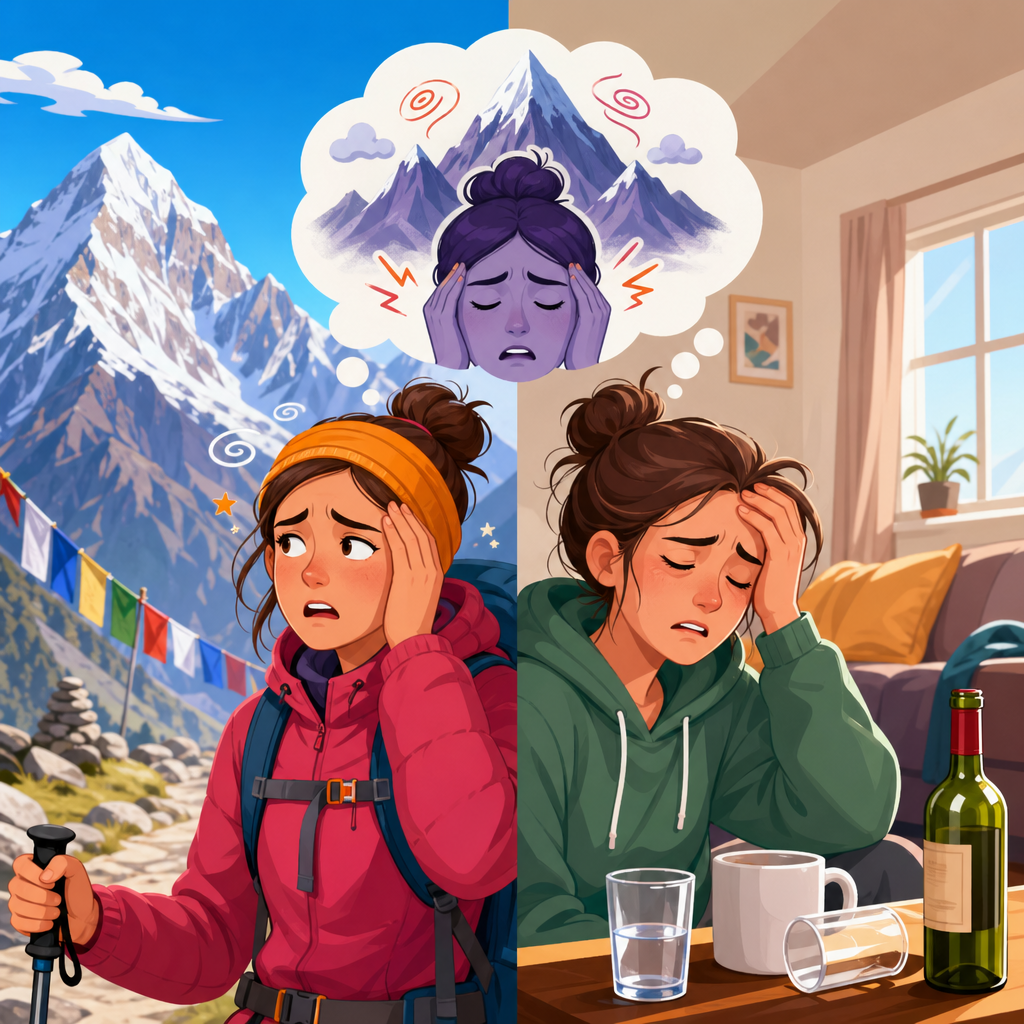
Altitude illness symptoms can look like a hangover because the earliest form of altitude illness, acute mountain sickness, often causes the same cluster of complaints people recognize after a night of drinking: headache, nausea, fatigue, dizziness, poor sleep, and a heavy, foggy feeling that makes ordinary tasks seem harder than they should. In mountain towns, trekking routes, ski resorts, and high trailheads, that overlap matters. I have seen travelers blame a headache on celebratory drinks, dehydration, jet lag, or a bad night’s sleep, only to realize later that the real issue was rapid ascent. When that mistake delays treatment, a mild problem can become a dangerous one.
Acute mountain sickness, usually shortened to AMS, is the body’s response to lower oxygen pressure at elevation. It commonly begins within six to twelve hours after ascent above roughly 2,500 meters, or about 8,200 feet, although susceptibility varies widely. A hangover, by contrast, is a post-alcohol syndrome driven by dehydration, inflammation, sleep disruption, acetaldehyde exposure, and shifts in blood sugar and hormones. The two conditions are not the same, but they can feel strikingly similar at first, especially when someone has both risk factors: a fast climb to altitude and alcohol intake during the first day or night.
This hub page explains why the symptoms overlap, how to tell one from the other, what to do when AMS is mild, and when recovery requires immediate descent and medical help. It also covers practical management: rest, hydration without overdoing fluids, medication options such as acetazolamide, warning signs of high-altitude cerebral edema and high-altitude pulmonary edema, and the acclimatization habits that reduce recurrence. If you want clear guidance on AMS management and recovery, start with one rule: at altitude, treat an unexplained headache with nausea, fatigue, or dizziness as altitude illness until proven otherwise.
Why AMS feels like a hangover in the first place
The resemblance starts with shared symptoms, but the physiology is different. At altitude, the key problem is hypobaric hypoxia: the air still contains about 21 percent oxygen, yet lower barometric pressure means each breath delivers less usable oxygen to the lungs. The body responds by breathing faster, increasing heart rate, shifting fluid balance, and changing blood flow to the brain. Those changes can produce headache, appetite loss, nausea, weakness, and poor sleep. A hangover also causes headache, nausea, fatigue, thirst, and mental sluggishness, but mainly through alcohol’s direct effects on blood vessels, inflammatory pathways, sleep architecture, gastric irritation, and dehydration.
In real life, the overlap becomes most confusing on the first night at elevation. People arrive in Denver, Cusco, La Paz, Lhasa, or a mountain ski village, have drinks, sleep badly, wake with a pounding head and no appetite, and assume alcohol is solely to blame. The sleep disturbance is a major clue. New arrivals to altitude often develop fragmented sleep and periodic breathing, where breathing waxes and wanes and brief pauses wake them repeatedly. That leaves them exhausted and foggy by morning, much like drinking does. The difference is that a hangover generally improves steadily through the day, while untreated AMS may persist, worsen with exertion, or intensify after going higher.
Another reason AMS feels familiar is that the brain is central to both experiences. Headache is the hallmark symptom of AMS because hypoxia alters cerebral blood flow and contributes to mild swelling-related discomfort. Nausea and loss of appetite follow because the autonomic nervous system is under stress. Many people describe the overall sensation as pressure, malaise, and a reluctance to move. That language mirrors hangover complaints so closely that casual self-diagnosis is unreliable. In mountain medicine, context matters more than symptom labels. Recent ascent changes the meaning of a headache.
How to tell altitude illness from a hangover
The best distinction is timing plus exposure history. If symptoms begin after a rapid gain in sleeping altitude, especially above 8,000 feet, AMS moves to the top of the list. The standard clinical approach uses headache after ascent plus at least one additional symptom such as gastrointestinal upset, fatigue or weakness, dizziness or lightheadedness, or sleep disturbance. Alcohol can complicate the picture, but it does not cancel altitude risk. In fact, alcohol may worsen dehydration and impair judgment, making it easier to miss early warning signs.
A practical rule I teach travelers is simple. Ask four questions. Did you ascend recently? Are you sleeping higher than usual? Do you have headache plus nausea, dizziness, unusual fatigue, or poor sleep? Do symptoms worsen with activity or further ascent? If the answer to most of those questions is yes, act as though it is AMS. Do not rely on a pulse oximeter alone. Oxygen saturation can support the picture, but readings vary by device, temperature, skin perfusion, and individual adaptation. A normal-looking number does not rule out illness, and a low number without symptoms does not prove it.
Severity also helps separate the two. A mild hangover rarely causes shortness of breath at rest, confusion, loss of coordination, chest tightness, or a wet cough. Those features point away from an ordinary hangover and toward serious altitude complications. Trouble walking a straight line, unusual behavior, persistent vomiting, severe lethargy, and breathlessness when lying down are never symptoms to dismiss. On expeditions and guided treks, I have seen teams lose time because someone insisted they were merely dehydrated. Once ataxia or respiratory symptoms appear, descent is treatment, not a suggestion.
Recognizing the spectrum: mild AMS, worsening AMS, and emergencies
AMS exists on a spectrum. Mild AMS usually includes headache, reduced appetite, nausea, dizziness, tiredness, and poor sleep, but the person can still think clearly and walk normally. Worsening AMS means symptoms are intensifying, interfering with function, or not improving after rest. Severe altitude illness includes two emergencies that every traveler should know by name: high-altitude cerebral edema, called HACE, and high-altitude pulmonary edema, called HAPE. HACE is brain swelling from altitude-related hypoxia. HAPE is fluid accumulation in the lungs. Either can be fatal.
HACE often starts as worsening AMS, then progresses to marked fatigue, confusion, irritability, poor judgment, and ataxia, meaning impaired balance or coordination. If someone cannot perform heel-to-toe walking, seems mentally altered, or is unusually hard to rouse, think HACE until proven otherwise. HAPE presents differently. The earliest clue is often declining exercise tolerance: the person falls behind, breathes harder than expected, or needs frequent rest. Later, symptoms include breathlessness at rest, persistent cough, chest congestion, fast heart rate, and crackling sounds in the lungs. Pink frothy sputum is a late sign.
| Condition | Typical symptoms | What to do |
|---|---|---|
| Mild AMS | Headache, nausea, fatigue, dizziness, poor sleep | Stop ascent, rest, hydrate normally, consider acetazolamide, monitor closely |
| Worsening AMS | Persistent headache, repeated vomiting, severe weakness, symptoms limiting activity | Do not ascend, descend if not improving, use oxygen if available, seek medical evaluation |
| HACE | Confusion, ataxia, altered behavior, severe lethargy | Immediate descent, oxygen, dexamethasone, urgent rescue or hospital care |
| HAPE | Shortness of breath at rest, cough, chest tightness, reduced performance | Immediate descent, oxygen, urgent medical care; nifedipine in select cases |
This spectrum matters because recovery depends on where the person falls. Mild AMS often resolves with time and no further ascent. HACE and HAPE do not. The mountain medicine principle is absolute: never ascend with symptoms of AMS, and descend immediately for signs of HACE or HAPE. That principle is endorsed in guidance from the Wilderness Medical Society and reflected in expedition medicine protocols worldwide.
AMS management: what to do in the first 24 hours
The first treatment for AMS is stopping ascent. That single decision prevents many mild cases from becoming severe. If symptoms are mild, rest at the same altitude, avoid strenuous exercise, and reassess over several hours. Hydrate to thirst rather than force large volumes. Overhydration can dilute sodium and create additional problems, while modest dehydration can worsen headache and fatigue. Eat light, carbohydrate-rich meals if tolerated, because carbohydrates require less oxygen per calorie to metabolize than fats and may feel easier when appetite is low.
For headache, acetaminophen or ibuprofen can help. Ibuprofen has some evidence for prevention and treatment of altitude headache, though it is not a substitute for acclimatization. For nausea, antiemetics may be appropriate if prescribed or available through a clinician’s plan. The most useful medication for uncomplicated AMS is acetazolamide. It works by causing a mild metabolic acidosis that stimulates ventilation, helping the body acclimatize faster. The common adult preventive dose is 125 milligrams twice daily; treatment dosing is often 250 milligrams twice daily, though individual recommendations vary and medical guidance matters, especially with kidney disease or sulfonamide concerns.
When acetazolamide is started after symptoms begin, it can shorten recovery, but it does not replace descent when symptoms are worsening. Dexamethasone is different. It reduces brain swelling-related symptoms and can be lifesaving for moderate to severe AMS or HACE, but it does not improve acclimatization the way acetazolamide does. In the field, dexamethasone is a bridge to descent, not permission to keep climbing. Supplemental oxygen, if available, is highly effective for symptom relief and stabilization. Portable hyperbaric chambers can also buy time on remote expeditions, but they are temporary rescue tools, not definitive treatment.
Recovery timelines and when it is safe to go higher again
Most mild AMS improves within twenty-four to forty-eight hours at the same altitude, especially with rest, fluids, sleep, and acetazolamide when appropriate. Some people feel better after one night; others need two or three. The deciding factor is not the calendar but complete symptom resolution during rest and light activity. If headache persists, appetite is poor, or dizziness returns with walking, the body is not ready for more altitude. I advise travelers to be conservative here because relapse is common when people ascend as soon as they feel slightly improved.
After recovery from mild AMS, ascending gradually is reasonable. A practical benchmark used in trekking and mountaineering is to increase sleeping altitude by no more than about 300 to 500 meters per day once above 3,000 meters, with an extra rest day every three to four days or after major gains. Day hikes higher followed by sleeping lower often help acclimatization. However, after severe AMS, HACE, or HAPE, the threshold for re-ascent should be much higher. Those conditions warrant formal medical evaluation before returning to altitude, and some travelers should avoid further ascent entirely during that trip.
Watch for delayed fatigue as well. Even after symptoms fade, sleep quality may remain poor for another night or two. Hydration, appetite, and exercise tolerance may lag behind. That is normal, but it should trend in the right direction. If symptoms recur at the same altitude without an obvious trigger, reconsider the diagnosis. Viral illness, carbon monoxide exposure from heaters, migraine, dehydration, pneumonia, and low blood sugar can overlap with AMS. Good recovery decisions depend on staying open to those alternatives while still respecting altitude risk.
Prevention and relapse reduction after an AMS episode
The best management strategy is preventing the next episode. Gradual ascent remains the most effective measure. If the itinerary is fixed, pre-acclimatization can help. Time spent at moderate elevation before a higher trip, staged ascents, or intermittent hypoxic training may reduce risk, though real altitude exposure works better than gadgets marketed without solid evidence. For people with a known history of AMS, prophylactic acetazolamide before ascent is often worthwhile. The dose is low, the evidence base is strong, and in my experience it is one of the most practical tools for travelers who cannot add acclimatization days.
Behavior also matters. Limit alcohol during the first forty-eight hours at a new altitude because it worsens sleep quality and clouds symptom recognition. Avoid sedative-hypnotic drugs unless specifically advised by a clinician familiar with altitude issues; some medications suppress breathing and complicate adaptation. Pace the first day conservatively. Many travelers feel strong on arrival, overexert, skip meals, and then blame the headache on dehydration alone. A better approach is light movement, regular snacks, sun protection, and an early night. Sun exposure, dry air, and hard exercise all intensify the misery of mild AMS.
Finally, plan for decision-making before symptoms appear. Know your sleeping altitudes, identify descent options, carry the right medications, and tell companions what warning signs require action. Mountain illness becomes dangerous when pride, sunk costs, or group pressure override simple rules. The recovery benefit of a solid plan is enormous because hesitation disappears. If you are building out a broader acclimatization strategy, pair this guidance with route-specific ascent planning, preventive medication protocols, and emergency response checklists for HACE and HAPE.
Altitude illness can mimic a hangover, but the consequences of getting that distinction wrong are far more serious than losing a lazy morning. The overlap exists because both conditions cause headache, nausea, fatigue, dizziness, and mental fog, yet AMS is driven by low oxygen pressure after ascent and can progress if ignored. The clearest signal is context: recent gain in sleeping altitude plus headache and at least one other symptom should be treated as altitude illness until it resolves or another cause is confirmed.
For AMS management and recovery, the essentials are straightforward. Stop ascending. Rest at the same altitude if symptoms are mild. Use normal hydration, light food, simple pain relief, and acetazolamide when appropriate. Monitor closely for worsening symptoms, especially repeated vomiting, severe weakness, poor coordination, confusion, or shortness of breath. Those red flags suggest severe altitude illness and demand immediate descent, oxygen if available, and urgent medical care. Never climb higher with active AMS, and never delay descent for suspected HACE or HAPE.
The practical benefit of understanding this topic is confidence. You can recognize the difference between an inconvenient morning and a mountain medical problem, recover more safely, and make better decisions for the rest of the trip. Review your itinerary, build in acclimatization days, and carry a clear AMS action plan before your next high-altitude journey.
Frequently Asked Questions
Why can altitude illness feel so much like a hangover?
Altitude illness can resemble a hangover because the earliest and most common form, acute mountain sickness, often produces the same symptom pattern many people already recognize: headache, nausea, dizziness, fatigue, poor sleep, loss of appetite, and a generally foggy, heavy feeling. At higher elevations, the air contains less available oxygen, and your body has to work harder to maintain normal function. That physiologic stress can leave you feeling wiped out, mentally dull, and physically uncomfortable in ways that are easy to misread, especially after travel, celebration, dehydration, or alcohol use. In practical terms, someone who arrives in a mountain town, has a drink, sleeps poorly, and wakes up with a pounding head may assume it is simply a hangover when the real issue is that their body is struggling to adjust to altitude. That overlap is exactly why early altitude illness is often missed in ski destinations, trekking hubs, and high-elevation vacation spots.
How can you tell the difference between a hangover and acute mountain sickness?
The key is context, timing, and what happens after you rest and hydrate. A hangover usually follows a clear history of drinking and often improves steadily over the course of the day. Acute mountain sickness, by contrast, tends to develop within several hours to about a day after ascending to a higher elevation, especially if you came up quickly from near sea level. The hallmark symptom is headache, but it is usually accompanied by other features such as nausea, unusual fatigue, dizziness, reduced appetite, poor sleep, or a sense that simple activity feels unexpectedly difficult. Another clue is that symptoms may seem out of proportion to the amount of alcohol consumed, or they may appear even when no alcohol was involved at all. If you are at elevation and your “hangover” does not make sense, lingers, or worsens with exertion, altitude should move higher on the list of possible causes. In mountain settings, it is safer to assume altitude may be contributing until proven otherwise.
Does alcohol make altitude illness more likely or harder to recognize?
Yes, alcohol can make the situation more confusing and potentially worse. Alcohol does not directly cause altitude illness, but it can amplify several of the same problems, including dehydration, poor-quality sleep, lightheadedness, and impaired judgment. That matters because judgment is exactly what people need to assess whether a headache is harmless or an early warning sign. Alcohol can also make it easier to dismiss symptoms that deserve attention. Someone may think, “I just overdid it last night,” when in reality they are developing acute mountain sickness after a rapid ascent. In addition, alcohol-related sleep disruption can make the normal sleep difficulty that often occurs at altitude feel even worse the next day. The result is a blurry picture in which the true cause of symptoms is harder to identify. For travelers arriving at altitude, especially on the first day, keeping alcohol intake modest or avoiding it altogether can make it much easier to recognize what your body is telling you.
What should you do if you think your hangover might actually be altitude illness?
Take it seriously and respond as though altitude could be the cause. The first steps are to stop ascending, reduce physical exertion, rest, and hydrate normally. Avoid assuming that “pushing through” is harmless. If symptoms are mild, many people improve with time, food, fluids, and a slower pace while their body acclimatizes. Over-the-counter pain relief may help a headache, but symptom relief should not be mistaken for full recovery if the underlying problem is still altitude stress. It is also wise to avoid more alcohol and to monitor how you feel over the next several hours. If symptoms are getting worse instead of better, if walking feels increasingly difficult, or if you begin to feel significantly more short of breath than expected, that is not something to dismiss. Descending to a lower elevation is the most important step when symptoms are persistent, moderate, or worsening. In mountain environments, early caution is far safer than waiting too long and hoping it passes.
When is it no longer just a “bad hangover” and time to get medical help?
You should seek urgent medical attention if symptoms are severe, worsening, or accompanied by warning signs that suggest more serious altitude illness. These include shortness of breath at rest, chest tightness, worsening cough, confusion, unusual behavior, severe weakness, inability to walk normally, loss of coordination, extreme drowsiness, or repeated vomiting. Those features raise concern for dangerous high-altitude complications that go well beyond routine acute mountain sickness. Even without those red flags, medical evaluation is appropriate if a headache is intense and persistent, if symptoms do not improve with rest and no further ascent, or if the overall picture simply does not fit a typical hangover. In mountain towns and resort areas, clinicians see this overlap often, and it is always reasonable to ask whether altitude is part of the problem. When in doubt, err on the side of caution. A “hangover” should not progressively worsen after arrival at altitude, and symptoms that do are a signal to reassess quickly.