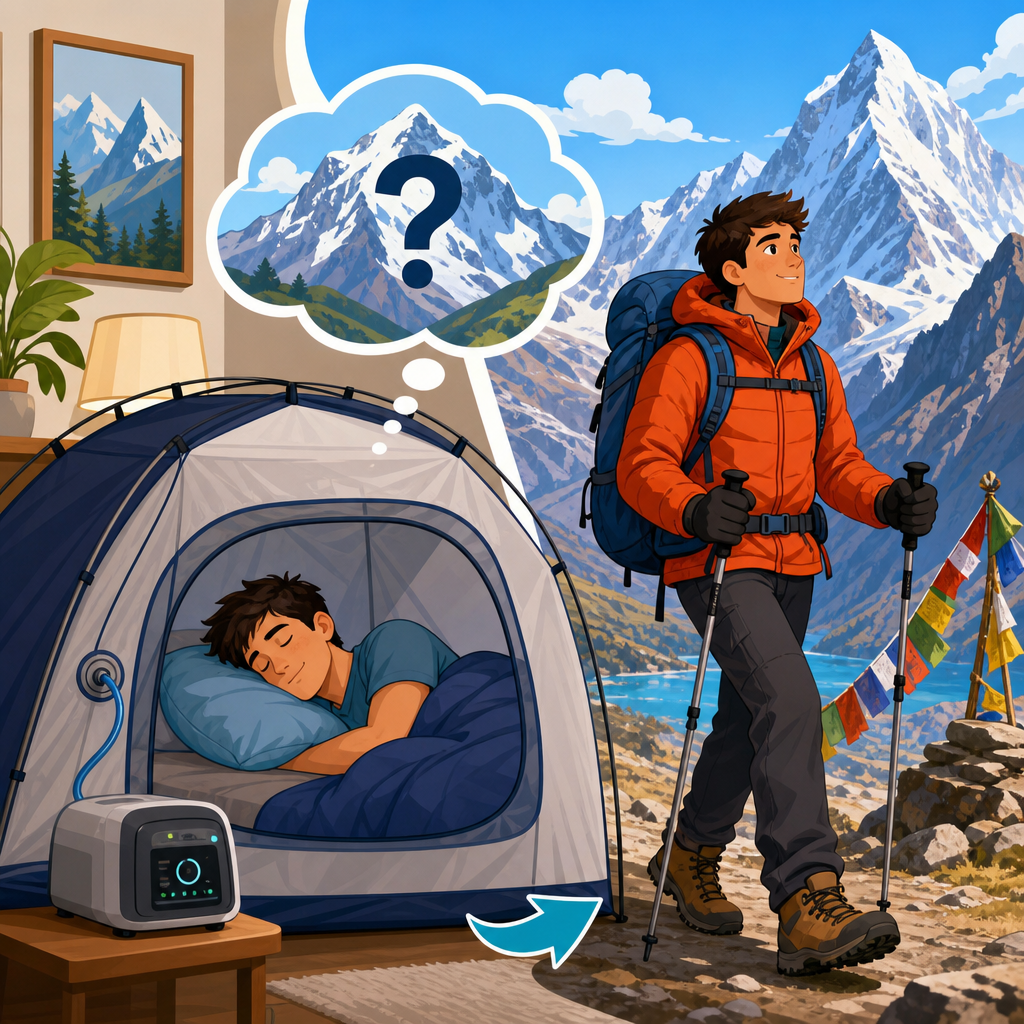
Hypoxic tents can help some travelers prepare for high-altitude travel, but they do not guarantee protection from altitude illness, and their value depends on how they are used, how much time is available before departure, and whether travelers understand what pre-acclimation can and cannot do. In altitude medicine, a hypoxic tent is a sleep or rest enclosure connected to a generator that lowers the oxygen concentration of the air, simulating conditions found at higher elevation while barometric pressure remains the same. This is called normobaric hypoxia, and it differs from actual mountain environments, where lower pressure changes gas exchange, humidity, and breathing patterns in ways a tent cannot fully copy.
For travelers planning treks, ski trips, climbing expeditions, or work assignments above roughly 2,500 meters, the central question is practical: will sleeping in a hypoxic tent make arrival safer and more comfortable? In my experience working with high-altitude preparation plans, the short answer is yes for some people, especially when the itinerary forces a rapid ascent and there is no time for gradual acclimatization on site. Used consistently, hypoxic exposure can stimulate ventilatory adaptation and increase erythropoietin, which may support red blood cell production over time. Travelers often report less headache, less breathlessness on the first days at altitude, and better sleep than they had on previous trips without preparation.
That said, many consumers hear “simulated altitude” and assume it works like a shortcut to full acclimatization. It does not. A tent cannot replace a sensible ascent profile, rest days, hydration, conservative pacing, and a medication plan when indicated. It also does not build mountain judgment. Someone can spend three weeks sleeping in a tent and still get acute mountain sickness after flying into La Paz or driving quickly to a high trailhead in Colorado. The body’s response varies widely, and susceptibility to altitude illness remains partly individual and partly itinerary driven.
This page serves as a hub for pre-acclimation and training within altitude illness and acclimatization planning. It explains how hypoxic tents work, who benefits most, what protocols are commonly used, what the evidence shows, how tents compare with exercise-based altitude training and staged ascent, and where the limitations are. If you are choosing among pre-acclimation methods, deciding whether to invest in a hypoxic system, or planning a trip where rapid altitude gain is unavoidable, understanding these tradeoffs will help you make a safer decision.
How hypoxic tents work and what adaptation they actually produce
Hypoxic tents reduce the fraction of inspired oxygen, usually by running room air through a generator that strips some oxygen and feeds the modified air into a sealed sleep canopy or small room. At sea level, normal air contains about 20.9 percent oxygen. A generator may lower that to levels that approximate sleeping around 2,000 to 3,500 meters, depending on the setting. The goal is repeated exposure to lower oxygen while resting or sleeping, often for eight to twelve hours per night over several weeks.
The body responds to repeated hypoxia in several ways. Breathing increases, especially during sleep, to improve oxygen uptake. Over days, the kidneys help adjust acid-base balance as ventilation rises. Erythropoietin can increase, signaling the bone marrow to produce more red blood cells, though the time needed for meaningful hematological change is longer than many users expect. There may also be cellular changes that improve oxygen delivery and use. These adaptations can make the first days at altitude feel easier, but they are not identical to what happens during a real ascent in a mountain environment.
The distinction between sleeping in simulated altitude and living on a mountain matters. In a real high-altitude setting, lower barometric pressure affects the partial pressure of oxygen throughout the respiratory system. Cold, dry air, increased sun exposure, disrupted sleep, exertion, and dehydration all add stress. A tent addresses only one variable. That is why travelers should think of it as a partial pre-acclimation tool, not a complete altitude solution.
What the research says about effectiveness for high-altitude travel
Research on hypoxic tents is mixed but broadly supports a limited, useful benefit when protocols are long enough and exposure is consistent. Studies on pre-acclimation have shown that repeated hypoxic exposure can reduce symptoms of acute mountain sickness in some participants during subsequent altitude exposure. The strongest effects tend to appear when exposure is repeated daily across one to three weeks rather than used sporadically. In practical terms, sleeping in a tent for two nights before a trip is rarely enough to matter; using it nightly for several weeks may be.
Evidence is stronger for improved tolerance to moderate altitude than for prevention of severe altitude illness. That distinction is essential. A traveler may arrive at 3,000 meters feeling better prepared, yet still be at risk if the itinerary continues rapidly above 4,000 meters without proper acclimatization. Clinical guidelines from wilderness and mountain medicine sources continue to emphasize gradual ascent as the primary preventive strategy. Pre-acclimation can supplement that strategy, especially when gradual ascent is impossible, but it does not replace it.
I have seen the most reliable results in travelers who match the protocol to the actual trip. For example, someone flying from sea level to Cusco and then starting a trek benefits more from nightly hypoxic sleep for two to three weeks than someone planning a flexible itinerary with several acclimatization days built in. Conversely, a person expecting the tent to fully prevent symptoms during an aggressive summit schedule is often disappointed. The best outcomes happen when pre-acclimation is combined with conservative planning and realistic expectations.
Who benefits most, and who may not need a hypoxic tent
Hypoxic tents are most useful for travelers facing rapid ascent without enough time to acclimatize naturally. Common examples include business travelers sent directly to high cities, trekkers with fixed vacation windows, climbers entering expeditions at significant starting altitude, military personnel, rescue workers, and skiers sleeping high on day one. They can also help people with a history of mild to moderate acute mountain sickness who want to reduce the discomfort of early altitude exposure.
They are less necessary for travelers who can follow a slow ascent profile. If you can sleep one or two nights at intermediate elevation, limit increases in sleeping altitude, and insert rest days every few days above about 3,000 meters, that natural acclimatization often provides more complete preparation than home simulation alone. Budget matters too. Renting or buying a hypoxic system can be expensive, and compliance can be difficult because sleep quality may initially worsen.
Some people should approach hypoxic training carefully or seek specialist advice first. That includes travelers with significant cardiopulmonary disease, untreated sleep apnea, poorly controlled asthma, pregnancy-related concerns, or prior severe altitude illness such as high-altitude pulmonary edema or high-altitude cerebral edema. A tent is not a safe self-treatment strategy for those histories. For higher-risk travelers, pre-trip evaluation, ascent planning, and medication decisions are more important than consumer equipment.
How to use a hypoxic tent before a trip
The practical protocol matters more than marketing claims. Most effective programs start one to three weeks before travel, with at least seven nights of exposure and ideally closer to fourteen or more. Users usually begin at a modest simulated altitude and increase gradually to improve tolerance and sleep quality. Jumping straight to an aggressive setting often causes fragmented sleep, dry mouth, headache, and poor adherence, which defeats the purpose.
For most travelers, the aim is not to simulate the exact altitude of the destination. It is to create enough repeated hypoxic stress to trigger adaptation without ruining sleep. I generally recommend thinking in terms of consistency, progression, and recovery. If a traveler cannot sleep adequately in the tent, daytime function suffers and training quality drops. Better to tolerate a slightly lower setting consistently than chase an extreme setting for a few miserable nights.
| Traveler type | Typical pre-acclimation approach | Main goal | Limitation |
|---|---|---|---|
| Short-vacation trekker | 10 to 21 nights of hypoxic sleep before departure | Reduce first-days symptoms after rapid arrival | Does not replace rest days on trek |
| Business traveler to a high city | Nightly tent use plus first-day reduced exertion | Improve work capacity and sleep on arrival | Benefit may be modest if trip is very short |
| Climber with fixed expedition start | Two to three weeks of hypoxic sleep, often combined with fitness training | Arrive with partial adaptation before moving higher | Still needs staged ascent above base level |
| Flexible leisure traveler | Usually no tent if gradual ascent is possible | Rely on natural acclimatization | Requires more itinerary time |
Travelers often ask whether daytime workouts in low-oxygen conditions are better than sleeping in a tent. For altitude travel, sleeping exposure usually offers more total hypoxic time, which is why it is commonly used for pre-acclimation. Exercise in hypoxia can add stress and may improve fitness-specific adaptations, but short sessions alone are generally less relevant to preventing mountain symptoms than repeated overnight exposure. The best plan depends on the trip, the traveler’s baseline fitness, and the amount of time available.
Alternatives and complementary strategies in pre-acclimation and training
Hypoxic tents sit within a wider pre-acclimation toolkit. The gold standard remains staged ascent: sleeping low, climbing gradually, and giving the body time to adapt in the real environment. When that is possible, it usually outperforms any at-home simulation. Another option is intermittent hypoxic exposure through masks or rooms, where users sit quietly or exercise while breathing lower-oxygen air for set periods. This can be easier logistically than a tent, but total exposure time is often lower, and results may be less consistent for travel preparation.
Fitness training is complementary, not interchangeable. Aerobic conditioning improves movement economy, recovery, and fatigue resistance, which helps at altitude, but a very fit athlete can still develop acute mountain sickness. That is a common misunderstanding. Strong lungs and legs are useful; they are not immunity. Pre-trip training should therefore include endurance work, pack-carry specificity if relevant, sleep optimization, and honest pacing plans, alongside any hypoxic protocol.
Medication is another important adjunct. Acetazolamide has strong evidence for preventing acute mountain sickness in appropriate travelers, especially when rapid ascent is unavoidable. It works through a different mechanism than a hypoxic tent by promoting ventilation and accelerating acclimatization. In practice, many high-risk itineraries benefit from both nonpharmacologic preparation and a medication plan discussed with a clinician. Dexamethasone, nifedipine, and other drugs have specific roles, but they are not casual substitutes for ascent management.
Limitations, risks, and how to judge whether the investment is worth it
The biggest limitation of hypoxic tents is that they produce incomplete acclimatization. They may improve comfort and lower symptom burden, but they do not eliminate risk, particularly on fast ascents to very high altitude. Users should also expect practical downsides: cost, setup complexity, machine noise, condensation, heat, and sleep disruption. I have had clients stop using a tent because the protocol was theoretically sound but operationally miserable. If the system reduces sleep for two weeks before departure, overall readiness may worsen.
There are also quality differences among systems. Oxygen concentration must be controlled accurately, airflow must be adequate, and the setup must match the sleeping space. Cheap or poorly maintained equipment can perform inconsistently. Pulse oximeters are sometimes used to monitor response, but travelers should not overinterpret a single oxygen saturation number. Symptoms, sleep quality, resting heart rate trends, and adherence tell a fuller story than nightly obsession with one reading.
So are hypoxic tents worth it for high-altitude travel? They are worth considering when the itinerary is fixed, ascent is rapid, and the consequences of poor acclimatization are meaningful, such as losing expensive trekking days or compromising work performance on arrival. They are less compelling when a traveler can simply ascend slowly. The smartest approach is to treat a tent as one layer in a broader altitude strategy: gradual ascent where possible, pre-acclimation when useful, fitness and logistics dialed in, medications when indicated, and a clear plan to descend if symptoms escalate.
Hypoxic tents work, but only in the narrow, realistic sense that matters in altitude medicine: they can provide partial pre-acclimation that improves how some travelers feel and function during the first days at altitude. They do not make someone fully acclimatized at home, and they do not erase the basic rules of safe ascent. That balanced view is the most important takeaway for anyone researching pre-acclimation and training.
As the hub for this subtopic, the key principle is simple. Build altitude preparation in layers. Start with itinerary design, because sleeping altitude and rate of ascent drive risk more than any gadget. Add fitness that matches the demands of the trip. Consider hypoxic tents or other simulated-altitude methods when time is short and the destination is high. Use medications strategically when the itinerary or medical history supports them. Then monitor symptoms honestly once the trip begins, because good preparation still requires good decisions on the mountain.
If you are planning high-altitude travel, use this page as your starting point for pre-acclimation and training choices, then map those choices against your route, timeline, and personal risk factors. A well-designed plan can make altitude more manageable, more comfortable, and significantly safer.
Frequently Asked Questions
Do hypoxic tents actually work for high-altitude travel?
Hypoxic tents can work as a form of pre-acclimation for some travelers, but the honest answer is that their effectiveness is limited, variable, and highly dependent on how they are used. A hypoxic tent lowers the oxygen concentration in the air while keeping normal barometric pressure, which creates a “simulated altitude” environment. Sleeping or resting in that environment may trigger some of the body’s early acclimatization responses, such as changes in breathing patterns and, over time, adjustments that can improve tolerance to altitude exposure. For travelers heading to destinations at moderate or high elevation, that can be helpful.
That said, hypoxic tents are not a magic shield against acute mountain sickness, high-altitude cerebral edema, or high-altitude pulmonary edema. Real-world protection depends on factors such as how many hours per day the tent is used, how many days or weeks of preparation are available before departure, how high the intended travel altitude will be, how quickly the traveler plans to ascend after arrival, and how susceptible that individual is to altitude illness in the first place. Someone with a gradual itinerary and several weeks to train with a tent may benefit more than someone trying to “cram” two or three nights of use before flying to a very high destination.
In practical terms, hypoxic tents are best viewed as one tool in a broader altitude strategy, not a replacement for common-sense acclimatization. They may reduce symptoms for some people or improve readiness, but they do not eliminate the need to ascend gradually, stay alert to warning signs, and have a backup plan if symptoms develop. For many travelers, especially those going to very high elevations or ascending rapidly, medical advice, itinerary planning, and sometimes preventive medication remain more important than the tent itself.
Can sleeping in a hypoxic tent prevent altitude sickness?
No, sleeping in a hypoxic tent cannot reliably prevent altitude sickness. It may lower risk in some cases, but it does not guarantee protection. This distinction matters because many travelers overestimate what pre-acclimation can do. Altitude illness is influenced by multiple factors, including the sleeping elevation at the destination, the rate of ascent, prior altitude history, exertion level, hydration habits, and individual susceptibility. Even a traveler who has used a tent correctly can still develop symptoms after arriving at altitude.
The main reason is that simulated hypoxia is not identical to the full experience of being at altitude. The body may begin adapting to lower oxygen levels, but actual mountain travel adds other stressors: exertion, cold, dehydration, poor sleep, appetite changes, and often a continued climb to even higher elevations. In other words, a tent may help start the process, but it does not fully reproduce what happens on the mountain or at a high-altitude destination.
Travelers should also understand that altitude sickness can worsen quickly if ignored. A false sense of security is one of the biggest risks of relying too heavily on a hypoxic tent. If headache, nausea, unusual fatigue, dizziness, poor coordination, shortness of breath at rest, or worsening symptoms occur after ascent, those signs should be taken seriously regardless of tent use. The safest approach is to treat the tent as a possible supplement to prevention, while still following proven altitude precautions such as gradual ascent, rest days when appropriate, avoiding overexertion early on, and descending if serious symptoms appear.
How long do you need to use a hypoxic tent before a high-altitude trip?
There is no single timeline that works for everyone, but in general, meaningful pre-acclimation usually requires more than just a few nights. Most experts who consider hypoxic tents useful view them as a structured, repeated exposure tool rather than a last-minute fix. The body needs enough time and enough cumulative exposure to lower-oxygen air to develop measurable adaptation. In practice, that often means using the tent consistently over days to weeks, usually for many hours at a time, most often during sleep.
Short, inconsistent exposure is much less likely to provide real benefit. Someone who spends only a couple of nights in a tent before departure should not expect a major protective effect. By contrast, a traveler who has two to four weeks of regular nightly exposure may have a better chance of gaining some pre-acclimation, especially for moderate high-altitude trips. Even then, the result is not all-or-nothing. Some people notice reduced symptoms or improved comfort; others do not gain enough benefit to change their risk meaningfully.
The timeline also depends on the goal. Preparing for a destination at 2,500 to 3,500 meters is different from preparing for much higher sleeping elevations or rapid ascent above that range. The higher and faster the planned ascent, the less reasonable it is to expect a tent alone to compensate. Because protocols vary, travelers considering a hypoxic tent should ideally use a medically informed plan rather than guessing at settings and duration. The most important takeaway is simple: more structured preparation is generally better than brief exposure, but even good preparation does not replace careful ascent once the trip begins.
Are hypoxic tents better than altitude medication for travel preparation?
Not necessarily. Hypoxic tents and altitude medications serve different purposes, and one is not automatically better than the other. A tent is a pre-trip conditioning tool that aims to stimulate some acclimatization before travel. Medications such as acetazolamide are used to support acclimatization and reduce the risk of acute mountain sickness during actual ascent. For some travelers, especially those with a known history of altitude problems or a rapid itinerary, medication may be more practical, more evidence-based, and easier to use correctly than a home hypoxic setup.
Hypoxic tents require equipment, cost, space, time, consistency, and tolerance for sleeping in an enclosed altered-air environment. They can be inconvenient, and they demand advance planning. Medications, by contrast, are typically taken on a schedule around ascent and may be more realistic for travelers who do not have weeks available for pre-acclimation. However, medication is not a substitute for sensible ascent either, and it should be used based on a clinician’s guidance, especially for people with medical conditions, medication interactions, or prior severe altitude illness.
For some travelers, the best plan may involve both approaches: a conservative itinerary, possible pre-acclimation with a hypoxic tent when time allows, and preventive medication when risk is high. For others, the tent adds complexity without much extra value. The right choice depends on destination altitude, rate of ascent, previous altitude experience, health history, and available preparation time. If there is any concern about risk, especially for very high destinations or remote travel, a travel medicine or altitude medicine consultation is more useful than relying on gear marketing claims.
Who is most likely to benefit from a hypoxic tent, and who should be cautious?
The travelers most likely to benefit are those who have enough lead time before departure, plan to use the tent consistently, and are heading to a destination where even partial pre-acclimation could make the first few days easier. This might include trekkers, climbers, skiers, or travelers flying from sea level to a moderately high location with limited time to adapt after arrival. People who are disciplined about following a protocol and who understand that the goal is risk reduction rather than guaranteed protection may be the best candidates.
On the other hand, travelers who should be cautious include those who assume a hypoxic tent will let them ignore gradual ascent, those trying to prepare at the last minute, and those with significant underlying medical conditions that could be affected by hypoxia or altered sleep quality. Some people find hypoxic tents uncomfortable, noisy, claustrophobic, or disruptive to rest, which can undermine their value. If the tent causes poor sleep night after night, any theoretical acclimatization benefit may be offset by fatigue and reduced recovery. People with heart disease, lung disease, sleep-related breathing disorders, or other chronic conditions should not start hypoxic exposure without medical input.
It is also important to be cautious psychologically. Travelers sometimes treat expensive equipment as proof of safety, but altitude illness does not care how much preparation cost. A hypoxic tent can be helpful in the right context, but it is not an all-access pass to high elevation. The safest mindset is to use it, if at all, as one part of a larger plan that includes realistic expectations, symptom awareness, itinerary flexibility, and a willingness to slow down or descend if the body is not adapting well.