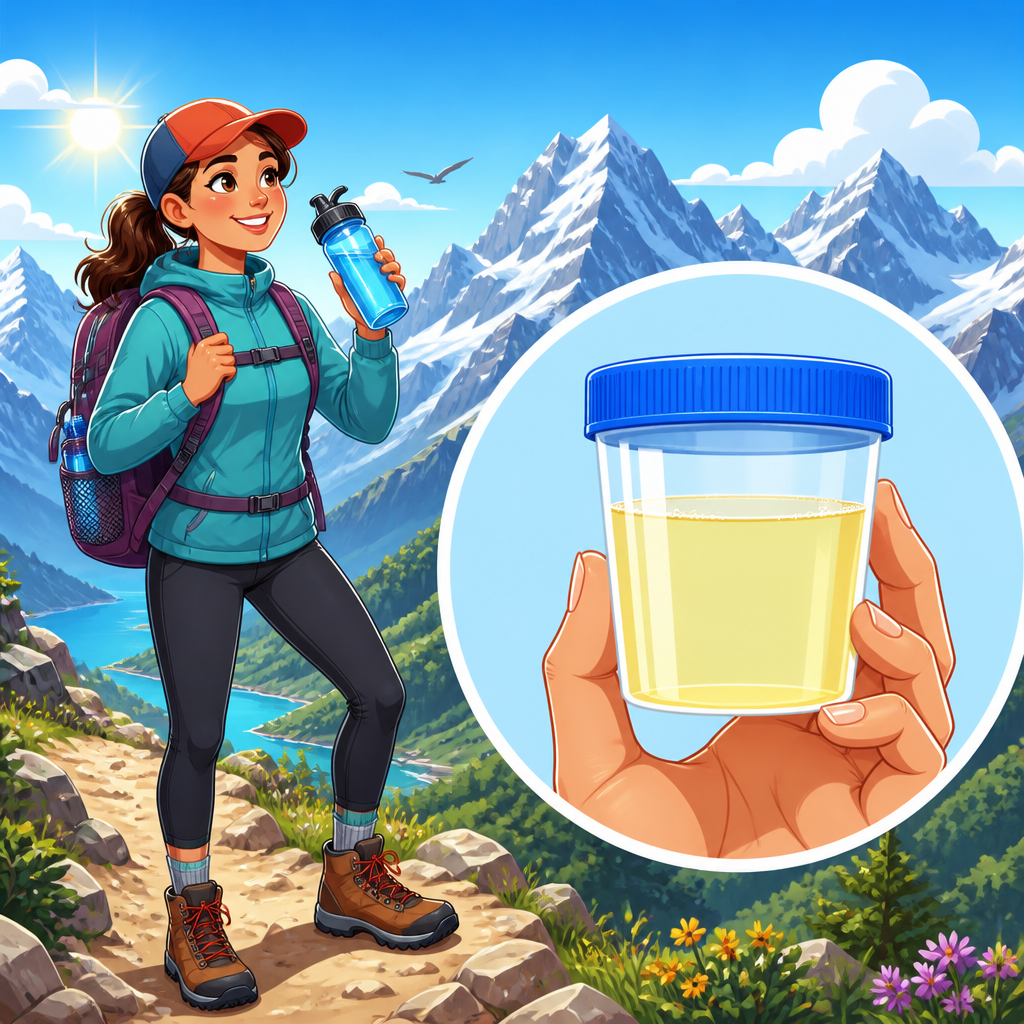
Urine color is one of the simplest field checks for hydration at altitude, but the right target is not crystal clear. If you are hydrated in the mountains, your urine should usually be pale straw to light yellow, not completely colorless and not dark amber. That practical rule matters because altitude changes breathing, fluid loss, appetite, sleep, and kidney function, so the usual hydration advice people use at sea level often becomes unreliable once they start climbing, skiing, trekking, or sleeping high.
In mountain medicine and endurance coaching, hydration means maintaining enough body water to support circulation, temperature control, digestion, cognition, and physical performance without overdrinking. Electrolytes are minerals that carry electrical charge, mainly sodium, potassium, chloride, magnesium, and calcium. They help regulate nerve signaling, muscle contraction, fluid balance, and acid-base status. Urine color reflects how concentrated or diluted urine is, largely through the action of the kidneys and the hormone vasopressin. At altitude, those systems shift quickly. Cold air is dry, breathing rate rises, water loss from respiration increases, and many people urinate more during the first days because of altitude diuresis.
I have seen the same mistake repeatedly on high routes and ski traverses: people chase perfectly clear urine because they fear dehydration, then end up drinking far beyond thirst, diluting sodium, waking all night to urinate, and performing worse the next day. On the other side, some climbers ignore darkening urine because they expect it at altitude, and they miss early dehydration that contributes to headache, fatigue, constipation, and poor recovery. A better standard is this: hydrated urine at altitude is generally light yellow, with context from thirst, frequency, body weight change, and symptoms. This article serves as the hub for hydration and electrolytes in the broader sleep, hydration, and nutrition topic, so it explains not just the color target but how to interpret it accurately in real mountain conditions.
Why altitude changes hydration and urine color
Altitude increases fluid loss through several mechanisms at once. The first is respiratory water loss. As elevation rises, air pressure falls and the air is often colder and drier. You breathe faster to maintain oxygen delivery, and every exhalation carries moisture away. Even at rest, that can add meaningful water loss over a day. During uphill movement, skiing, or climbing with a heavy pack, the effect compounds because ventilation climbs sharply. People notice dry lips and throat first, but the larger issue is invisible: a steady increase in insensible loss.
The second factor is altitude diuresis. In the first one to three days after ascent, the body often increases urine production as part of acclimatization. This process is linked to changes in blood gases and acid-base balance. Hyperventilation lowers carbon dioxide, creating a respiratory alkalosis. The kidneys compensate by excreting bicarbonate, and water follows. That means you may urinate more even if you are not overdrinking. Light urine in that setting can be normal, but repeated large volumes of completely clear urine every hour may still indicate intake beyond need.
Cold weather adds another twist. Peripheral blood vessels constrict to preserve core temperature, which shifts blood centrally and can trigger cold-induced diuresis. Many winter athletes underestimate sweat loss because sweat evaporates quickly under layers or into dry air, yet they still lose fluid while also peeing more. This combination is why hydration planning for alpine climbing or backcountry skiing is harder than for a warm road run at sea level.
Appetite and thirst also become less reliable. Some people feel less thirsty at altitude, especially when busy, cold, or mildly nauseated. Others drink constantly because they have heard the rule to “stay ahead” of dehydration. Neither extreme is ideal. Urine color helps, but only when read as one signal among several.
What color urine should be if you are hydrated at altitude
The best target is pale straw to light yellow. In practical terms, think of diluted lemonade, not water and not apple juice. That shade usually indicates adequate hydration without excessive dilution. Morning urine may be slightly darker because it has concentrated overnight, especially if the room is dry, you are sleeping high, or you woke multiple times. That alone is not a problem. What matters more is the trend over the day. If urine returns to light yellow after breakfast and steady fluid intake, hydration is probably on track.
Completely clear urine is not the goal. It can happen occasionally after a large drink, but if it is consistently clear and frequent, you are probably drinking more than necessary. That can dilute blood sodium, especially during prolonged exercise when sodium losses from sweat continue. Exercise-associated hyponatremia is uncommon on casual day hikes but well documented in endurance events, military training, and long mountain efforts. The risk rises when people drink on a rigid schedule despite low thirst, consume mostly plain water, and ignore bloating or weight gain.
Darker yellow or amber urine usually means urine is concentrated. At altitude, that often points to dehydration, especially when paired with strong thirst, dry mouth, headache, low urine volume, rising heart rate, constipation, or unusual fatigue. Yet color has limits. B vitamins can make urine bright yellow. Some foods, medications, and supplements alter color. Blood in urine, cola-colored urine, orange urine with jaundice, or pink urine after heavy exertion need medical attention because they may reflect causes unrelated to simple hydration.
| Urine appearance | Likely meaning at altitude | Best response |
|---|---|---|
| Clear and frequent | Often overhydration or very high recent fluid intake | Slow intake, include sodium with meals, reassess thirst and symptoms |
| Pale straw to light yellow | Typical target for adequate hydration | Maintain current drinking pattern and regular eating |
| Medium yellow | Mild concentration, may be acceptable if first morning sample | Drink steadily, check thirst, urine frequency, and exertion level |
| Dark yellow to amber | Usually dehydration or underdrinking | Increase fluids and electrolytes, rest briefly, monitor symptoms |
| Red, brown, or cola colored | Not a normal hydration signal | Seek medical evaluation promptly |
How to judge hydration accurately beyond color alone
Urine color works best when combined with other field markers. The most useful is thirst. Thirst is not perfect at altitude, but it still carries important information. If urine is light yellow and thirst is low to normal, you are likely doing well. If urine is clear but you feel bloated and are forcing fluids, you may be overdoing it. If urine is dark and you are thirsty, hydration needs are obvious. Urine frequency matters too. Needing to urinate every hour with large clear volumes usually means intake is high. Going many hours with small dark volumes suggests the opposite.
Body weight change is powerful when measured correctly. For multiday climbs, hut trips, or stage races, morning weight under similar conditions can show trends. A sudden drop of more than about 1 to 2 percent from baseline may indicate fluid deficit, especially if performance and recovery are falling. A gain during prolonged exercise can be more concerning because it may signal overdrinking relative to sweat and respiratory losses. Weight must be interpreted with food intake, glycogen shifts, bowel changes, and clothing differences, so it is not a standalone diagnostic tool, but it is more objective than color.
Performance signs matter in the field. Dehydration often shows up as rising perceived effort, dizziness when standing, irritability, reduced concentration, and a mismatch between workload and pace. Overhydration can present with nausea, puffiness in fingers, headache, confusion, and unexpected weight gain. Because some of those overlap with acute mountain sickness, context is essential. A climber with headache, nausea, and dark urine likely needs fluid and rest; a runner with headache, nausea, clear urine, and swollen hands may need to stop drinking and address sodium and medical risk.
Hydration and electrolytes at altitude: what actually works
Most active adults at altitude do best by drinking to thirst plus structure, not by following aggressive fixed quotas. Start with regular access to fluids, then adjust to exertion, temperature, sun, clothing, and acclimatization stage. On easier days at moderate altitude, plain water and normal meals may be enough. On longer efforts, especially above tree line, in dry winter conditions, or during sustained climbing, add electrolytes through food, drink mixes, broth, or salty snacks. Sodium is the key electrolyte for maintaining extracellular fluid balance and supporting absorption of water and glucose in the gut.
In practice, I prefer simple systems that people will actually follow. For a trekking day, carry one bottle of plain water and one bottle with an electrolyte mix, then refill based on thirst and route demands. During high-output efforts, combine fluids with carbohydrates because carbohydrate availability affects performance and because sodium-glucose cotransport in the intestine improves absorption. This is why oral rehydration solutions and many sports drinks pair sodium with sugar. You do not need a heavily marketed product. A well-formulated mix with sodium in a meaningful amount works, and ordinary food still matters.
Potassium, magnesium, and calcium are important physiologically, but sodium is the main electrolyte lost in sweat and the one most relevant to hydration strategy during mountain activity. That said, not everyone loses sodium at the same rate. Heavy sweaters, salty sweaters, and athletes with high training loads may need more sodium than smaller, slower movers on cool days. There is no single mountain formula that fits everyone. The better approach is to test your plan in training, note urine trends, and watch how you feel overnight and the next morning.
Common mistakes hikers, skiers, and climbers make
The first mistake is chasing clear urine all day. That habit often starts with good intentions and bad information. People hear “hydrate more at altitude” and translate it into constant drinking. The result can be sleep disruption from repeated nighttime urination, reduced appetite, diluted sodium, and unnecessary pack weight from carrying excess water. Clear urine once after a refill stop is not alarming. Persistent clear urine is feedback to ease off.
The second mistake is using coffee or tea as proof of dehydration. Caffeine has a mild diuretic effect in some settings, but regular users usually tolerate it well, and moderate intake does not automatically dehydrate you. A morning coffee at a hut is not a hydration failure. What matters is total fluid balance, workload, and urine trend over several hours.
The third mistake is forgetting that food contributes both water and electrolytes. Soups, fruit, cooked grains, yogurt, and salted meals can improve hydration status significantly. Many altitude travelers eat too little because appetite falls. When calorie intake drops, recovery suffers, and hydration often becomes harder because people replace food with water alone. That is one reason this topic belongs inside a larger sleep, hydration, and nutrition hub: these systems interact continuously.
The fourth mistake is ignoring medications and health conditions. Acetazolamide, commonly used for altitude illness prevention, can increase urination and change how people perceive hydration. Diuretics, certain blood pressure medicines, gastrointestinal illness, diabetes, and kidney disease all complicate interpretation of urine color. In those cases, individualized medical guidance matters more than any generic color chart.
Building a practical altitude hydration plan
A sound plan starts before you gain elevation. Begin normally hydrated, which means steady fluid intake with meals during the prior day, not deliberate hyperhydration. On ascent day, drink according to thirst, aiming for urine that trends light yellow by midday. Include sodium-containing foods early rather than waiting until cramps or exhaustion appear. During movement, sip regularly instead of taking huge boluses at long intervals. Large rapid intakes increase bathroom stops and can make the stomach slosh.
For overnight trips, think in daily routines. Check first morning urine, then reassess after breakfast and the first liter of fluid. Notice whether you are eating enough carbohydrate and salt to support water absorption and energy needs. In cold camps, warm drinks can help people meet fluid needs simply because they are more appealing. In very high, dry camps, expect some increase in nighttime urination, but do not force fluids before bed unless you are clearly behind.
After exertion, rehydration should replace both water and sodium. If urine is dark after a hard summit push, drink steadily over the next several hours, eat a salty meal, and monitor return toward light yellow. If you have puffiness, nausea, and repeatedly clear urine, reduce fluid intake temporarily and seek assessment if symptoms progress. The goal is balance, not maximal intake. Use urine color as a dashboard light, not the whole instrument panel.
At altitude, hydrated urine should usually be pale straw to light yellow. That answer is simple, but using it well requires context. Altitude increases respiratory water loss, often triggers diuresis during acclimatization, and can blunt appetite or distort thirst. Because of those changes, completely clear urine is not a badge of success, and dark amber urine should not be dismissed as inevitable. The most reliable interpretation combines color with thirst, urine frequency, body weight trend, symptoms, food intake, and effort level.
The practical takeaway for hydration and electrolytes is equally clear. Drink regularly but not compulsively. Use sodium-containing foods or fluids during longer or harder mountain days. Respect that acclimatization, cold exposure, medications, and individual sweat rates change the picture. If you build a routine around light yellow urine, normal thirst, stable performance, and adequate eating, you will make better decisions for recovery, sleep quality, and next-day output.
This page is the hub for hydration and electrolytes within sleep, hydration, and nutrition, so use it as your baseline standard. Apply the pale-yellow target on your next hike, ski tour, climb, or high camp, and then refine your plan with the related articles in this topic cluster.
Frequently Asked Questions
What color should your urine be at altitude if you are properly hydrated?
If you are well hydrated at altitude, your urine should usually be pale straw to light yellow. That is the most practical target for most hikers, climbers, skiers, trekkers, and travelers spending time in the mountains. It should not typically be completely clear all day, and it should not drift into dark yellow, amber, or tea-colored urine. Pale straw to light yellow suggests you are replacing fluids reasonably well without overdoing it. At altitude, the body loses water faster because of increased breathing, drier air, and changes in kidney function, so urine color becomes a useful quick check. Still, it is best used as a trend rather than a single reading. A light yellow color over the course of the day is usually more reassuring than one isolated clear or darker bathroom trip.
Why is completely clear urine not necessarily the goal in the mountains?
Many people assume perfectly clear urine means perfect hydration, but at altitude that can be misleading. Completely colorless urine may simply mean you drank a lot in a short period, especially if you were worried about dehydration and pushed fluids aggressively. In some cases, overdrinking can dilute your urine without improving how well your body is actually managing exertion, altitude, sodium balance, and energy needs. The better target is usually urine that stays consistently pale straw to light yellow. That suggests a more balanced intake. In the mountains, drinking beyond thirst just to force clear urine can backfire, particularly during long efforts or cold-weather outings when people may not notice how much they are consuming. Clear urine once in a while is not automatically a problem, but chasing crystal-clear urine as the standard is usually not the best hydration strategy at altitude.
Why does altitude change urine color and hydration needs compared with sea level?
Altitude changes several body systems at once, which is why ordinary sea-level hydration habits often stop working as well. You breathe faster and deeper in thinner air, which increases water loss through respiration. Mountain air is also often cold and dry, so every breath can carry away more moisture than people expect. On top of that, altitude can alter kidney function and trigger altitude diuresis, meaning the body may produce more urine as it adjusts. Many people also eat less, sleep poorly, and feel mild nausea or reduced appetite, which lowers both fluid and electrolyte intake. Add physical exertion from climbing, skiing, trekking, or long approaches, and the dehydration risk rises further. Because all of these factors are happening together, urine color becomes a useful field clue, but it should be interpreted in context. Aiming for pale straw to light yellow is more realistic and more useful than applying a rigid sea-level rule.
Can urine color alone tell you whether you are hydrated at high elevation?
No, urine color is helpful, but it should not be the only sign you rely on. At altitude, urine color works best as one piece of the hydration picture. You should also pay attention to how often you are urinating, whether your mouth feels persistently dry, whether you have an unusual headache, whether your energy drops suddenly, and whether your urine output becomes very low. Medications, vitamins, supplements, and foods can also change urine color. For example, B vitamins can make urine look unusually bright yellow even if hydration is adequate. First-morning urine is often darker too, because urine naturally concentrates overnight. That does not automatically mean you are dehydrated. Look for the overall pattern across the day instead. If your urine remains dark yellow or amber, especially with thirst, fatigue, dizziness, or reduced urination, that is a stronger sign you may need more fluid and possibly electrolytes.
What should you do if your urine gets dark yellow or amber while hiking, climbing, or trekking at altitude?
If your urine becomes dark yellow or amber at altitude, treat that as a sign to reassess early rather than ignore it. Start by slowing down if conditions allow and increasing fluid intake steadily instead of chugging a huge amount at once. If you have been sweating, breathing hard, or going for hours with little food, include electrolytes and calories as well, because hydration is not just about water. Dark urine can reflect a mismatch between fluid losses and what you are replacing. Check for related signs such as headache, dry mouth, weakness, irritability, reduced urination, or lightheadedness. If you are also experiencing altitude illness symptoms like worsening headache, nausea, vomiting, poor coordination, or unusual shortness of breath, do not assume the problem is simple dehydration. In that case, stop, monitor closely, and consider descent or medical evaluation depending on severity. For most people, the best everyday goal is prevention: drink regularly, eat enough, and try to keep urine in the pale straw to light yellow range rather than waiting for it to turn dark.