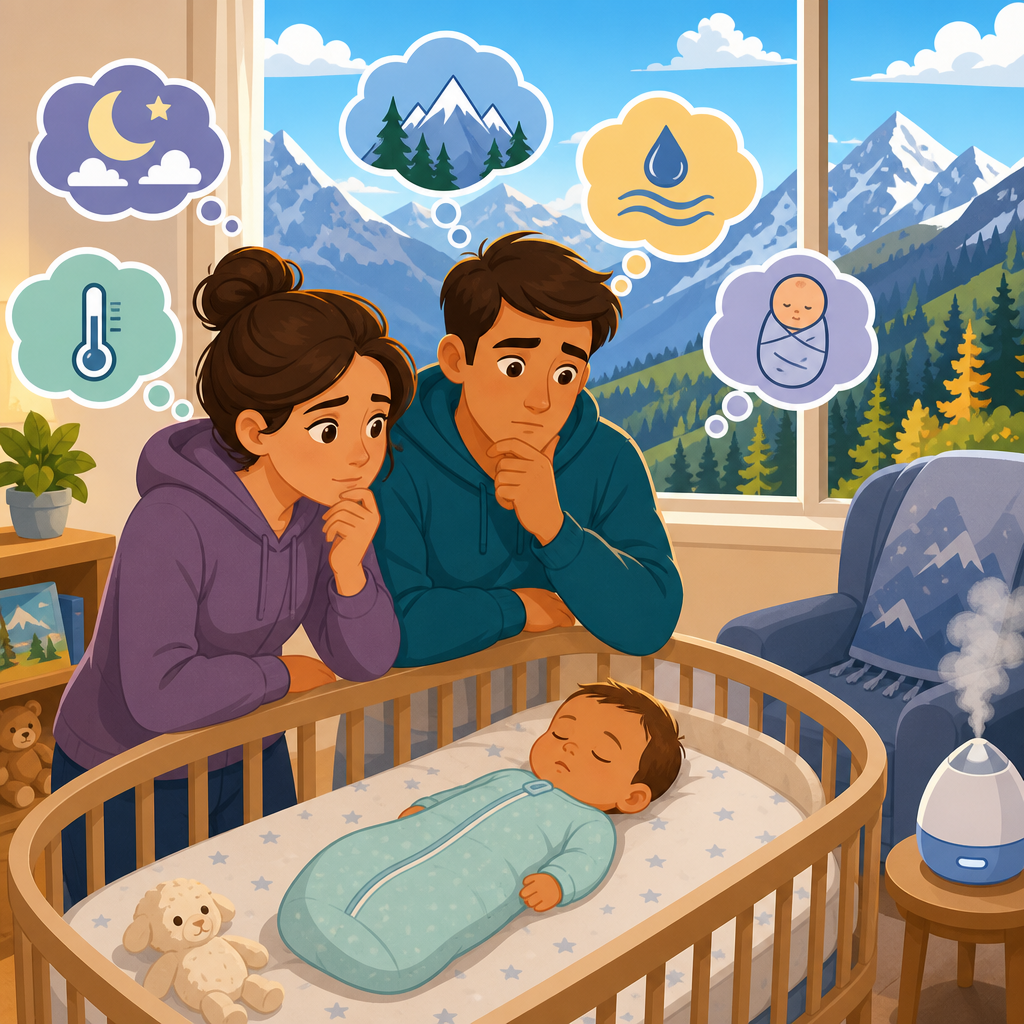
Moving to a higher elevation changes more than the view. For families with a newborn, altitude immediately raises practical concerns about safe sleep, feeding, breathing, temperature, and recovery after birth. I have worked with postpartum families relocating from coastal cities to mountain towns, and the same questions come up every time: Will my baby get enough oxygen, does swaddling change at altitude, can a cold room become dangerous faster, and when should we call the pediatrician? Safe sleep at altitude means following the same core principles recommended by the American Academy of Pediatrics while understanding how thinner air, drier conditions, colder nights, and travel-related disruption can affect infant behavior and parental decision-making. This article is the hub for infants and postpartum issues after moving to altitude, connecting sleep safety with maternal healing, feeding, environmental setup, and warning signs that need medical care.
Altitude usually refers to elevations above 5,000 feet, where air pressure drops enough to reduce the amount of oxygen available with each breath. Many healthy adults adjust within days or weeks. Newborns are different because their sleep cycles are immature, their airway anatomy is smaller, and they cannot regulate temperature as efficiently. Parents are often also recovering physically and emotionally from birth, which makes it harder to sort normal newborn adjustment from a true problem. That is why safe sleep guidance must stay simple and strict: place baby on the back for every sleep, use a firm flat sleep surface, keep soft items out of the crib or bassinet, avoid overheating, and room-share without bed-sharing when possible. At altitude, those rules matter even more because any added breathing challenge, thermal stress, or accidental obstruction can become less forgiving.
What changes for a newborn after moving to altitude
The biggest physiologic change is lower oxygen pressure. Even though oxygen still makes up about 21 percent of air, each breath delivers less usable oxygen at higher elevations. Healthy full-term infants generally adapt, but they may feed more slowly, sleep in shorter stretches, or seem fussier during the first days. Premature infants, babies with heart or lung conditions, and newborns who had respiratory issues after birth need more cautious monitoring because they have less reserve. I tell parents to think of altitude as an added layer, not a separate set of rules. The sleep environment must remove every avoidable risk so the baby is not dealing with thinner air plus unsafe bedding, a slumped position, or excess heat.
Dryness is the second major change. Indoor humidity often drops sharply in mountain climates, especially during winter heating season. Dry air can lead to nasal congestion, noisy breathing, and more frequent waking. Congestion alone does not mean a baby is in danger, but it can push tired parents toward risky choices like inclined sleepers, wedges, or letting a baby nap in a swing because the position seems to help. Those products are not safe for routine sleep. The Consumer Product Safety Commission has recalled multiple inclined sleepers after infant deaths, and current guidance is clear that infants should sleep on a flat surface. If nasal dryness is the issue, the safer response is saline drops, a cool-mist humidifier used correctly, and discussing persistent symptoms with the pediatrician.
Core safe sleep rules that do not change with elevation
Parents often ask whether altitude creates exceptions. It does not. The safest setup remains a bassinet, crib, or play yard that meets current safety standards, with a firm mattress and fitted sheet only. No pillows, loose blankets, stuffed animals, sleep positioners, loungers, or bumpers belong in the sleep space. Back sleeping is recommended for every sleep, including naps, and side sleeping is not a stable compromise. If a baby rolls independently, parents do not need to reposition all night, but the sleep space should still be clear enough that rolling does not introduce new hazards. These recommendations reduce the risk of sleep-related infant death, including suffocation and sudden unexpected infant death.
At altitude, families may be tempted to add layers, incline the mattress, or use home oxygen data from consumer wearables to improvise. That usually creates more risk than benefit. A pulse-oximeter sold for home wellness use is not a substitute for clinical evaluation, and poor fit can produce misleading readings. Likewise, elevating the head of the mattress does not improve safe breathing and can cause a baby to slide into a position that compromises the airway. In my experience, the safest homes are the ones that resist gadget overload and keep the sleep setup boring. Boring is good. A flat, empty, approved sleep surface is still the standard, whether you live at sea level or in a ski town.
Questions parents ask most often after arriving
The practical questions usually cluster around breathing, warmth, feeding, and supervision. Parents want quick answers, so the table below summarizes what changes, what does not, and what action makes sense.
| Question | Short answer | Best action |
|---|---|---|
| Does my baby need a different sleep position at altitude? | No. Back sleeping remains safest. | Place baby on the back on a firm, flat surface for every sleep. |
| Should I use extra blankets because mountain nights are cold? | No. Loose blankets increase suffocation risk. | Use footed pajamas or a wearable sleep sack matched to room temperature. |
| Is noisy breathing normal in dry air? | Often yes, if feeding and color are normal. | Try saline and a cool-mist humidifier; seek care for retractions, pauses, or blue color. |
| Can my baby nap in the car seat after a long drive uphill? | Not outside the car once travel stops. | Move the baby to a crib, bassinet, or play yard as soon as practical. |
| Do I need oxygen monitoring at home? | Not for healthy infants unless prescribed. | Follow your pediatrician’s plan if your baby has prematurity or cardiopulmonary conditions. |
One repeated misconception is that a baby who seems sleepier at altitude should be left alone longer to “adjust.” Newborns should still wake for regular feeding according to their clinician’s guidance, especially in the early weeks when weight gain and hydration matter. Excessive sleepiness, weak sucking, fewer wet diapers, or unusual limpness are not adjustment milestones. They are reasons to check in promptly. Another common issue is parents interpreting periodic breathing as a sign of altitude sickness. Newborns can have brief pauses followed by a few quicker breaths, and that can be normal. What is not normal is persistent labored breathing, color change, grunting, flaring nostrils, or chest retractions.
How to dress a baby safely in colder, drier mountain climates
Overheating is a sleep risk, and it can happen in cold places because families layer too much, run space heaters near the bassinet, or use heavy swaddles plus fleece pajamas. A simple rule works well: dress the baby in no more than one light layer more than a comfortable adult would wear in the same room. Many families do well with a cotton sleeper and a wearable blanket. Swaddling can calm some young infants, but it must be snug around the chest, loose around the hips, and stopped once the baby shows signs of rolling. Weighted swaddles and weighted sleep sacks are not recommended. If the back of the neck feels sweaty or the chest feels hot, remove a layer.
Room temperature matters, but there is no magic number that guarantees safety. A range around 68 to 72 degrees Fahrenheit is commonly used because it is comfortable for many households, not because every infant needs the exact same setting. In mountain homes, temperature can swing overnight, particularly in older houses with radiant heat, wood stoves, or cold exterior walls. Place the bassinet away from vents, fireplaces, drafty windows, and direct sun. If you use a space heater, keep it far from the sleep area and never leave it as the only safety strategy. Carbon monoxide alarms and smoke alarms are essential in any home, and especially important where heating systems work harder for longer seasons.
Feeding, hydration, and postpartum recovery at altitude
Safe sleep cannot be separated from feeding and parental recovery. At altitude, adults often become dehydrated faster, and breastfeeding mothers can notice thirst, dry lips, headaches, or a temporary dip in comfort and supply if they are not drinking enough. Newborn feeding may also feel different during the first several days after relocation because babies tire more easily when sucking and swallowing in thinner air. That does not automatically mean supplementation is required, but it does mean output and weight checks matter. Wet diapers, stool transition, latch quality, and post-feed satisfaction are better indicators than guessing from a sleepy afternoon.
Postpartum parents are also adjusting physically. Cesarean recovery, blood loss, pelvic floor pain, and sleep deprivation can all be amplified by a move. When families are exhausted, bed-sharing risk rises, especially during overnight feeds on couches or recliners. I advise creating a specific night-feeding station with water, burp cloths, nipple cream, and phone charger so the parent does not improvise in a soft chair and drift off. Feed the baby, return the baby to the bassinet, and if you feel too sleepy to stay awake, ask another adult to take over the handoff. This is one of the most practical injury-prevention steps a household can make.
Travel, naps, and altitude transitions
Many families reach altitude by car, and long travel days disrupt routines. Car seats are designed for transportation safety, not routine sleep outside the vehicle. Once the trip ends, the baby should be moved to a flat sleep space as soon as practical. This matters because the semi-upright angle can let a young infant’s head fall forward, narrowing the airway. The risk is greater in babies born early or those with low muscle tone, but the rule applies broadly. If you stop for a break, take the baby out, feed, burp, and reset rather than letting an extended nap continue in a parked car seat.
If you are splitting time between elevations, expect temporary changes in sleep length and feeding rhythm each time you go up. Keep one sleep routine consistent: same sleep sack, same short wind-down, same back-to-sleep practice. Portable cribs and play yards are useful if they meet safety standards and the mattress is the one that came with the unit. Do not add aftermarket padding to make travel sleep “more comfortable.” Infants do not need plush sleep surfaces, and adding them increases entrapment risk. Consistency is what helps a baby settle, not softness.
When altitude may require medical advice sooner
Most healthy full-term babies adjust without major problems, but some situations deserve early guidance. Call your pediatrician if your newborn is under one month and seems unusually hard to wake for feeds, has fewer wet diapers, is breathing fast at rest, or looks persistently pale or blue around the lips. Seek urgent care for chest retractions, grunting, long pauses in breathing, fever in a young infant, or any episode where the baby appears floppy or unresponsive. Babies born prematurely, with a history of NICU respiratory support, congenital heart disease, chronic lung disease, or airway anomalies should have an individualized plan before or soon after relocation.
Parents recovering postpartum need attention too. Severe headache, heavy bleeding, chest pain, shortness of breath, calf swelling, or rapidly worsening anxiety are not problems to dismiss as altitude adjustment. In practice, the safest infant homes are the ones caring for the adult as deliberately as the baby. If you have moved recently, establish care quickly with a pediatrician, an obstetric or midwifery clinician, and if needed a lactation consultant. Then audit your sleep setup tonight: flat surface, empty crib, baby on back, comfortable room, and no shortcuts made from fatigue. That simple checklist protects sleep at altitude and supports a safer start for the entire family.
Frequently Asked Questions
Does high altitude make sleep less safe for a newborn?
High altitude does not automatically make sleep unsafe for a healthy newborn, but it can add a layer of adjustment that parents should take seriously. At higher elevations, the air contains less available oxygen, so it is normal for both adults and babies to breathe a little faster while their bodies adapt. That said, the basics of safe sleep do not change with altitude. Your baby should still sleep on a flat, firm mattress, on their back, in a safety-approved bassinet, crib, or play yard, with no loose blankets, pillows, bumpers, sleep positioners, or stuffed animals.
What changes is how closely parents may need to watch for signs that a baby is not adjusting well. Mild periodic breathing, brief pauses followed by faster breaths, and slightly quicker breathing can be normal in newborns, especially during sleep. However, persistent labored breathing, nostril flaring, grunting, pulling in at the ribs, bluish lips, poor feeding, unusual sleepiness, or difficulty waking are not normal and should prompt immediate medical guidance. If your baby was born early, has a heart or lung condition, had a NICU stay, or has had any oxygen-related concerns since birth, talk with your pediatrician before or soon after the move. In most cases, healthy full-term babies can sleep safely at altitude as long as parents follow standard safe sleep practices and stay alert to symptoms that suggest the baby needs medical evaluation.
Will my baby get enough oxygen while sleeping after we move to altitude?
This is one of the most common and understandable worries. In healthy full-term newborns, the body usually adapts to altitude over time, and babies continue to get enough oxygen without needing special equipment. Parents may notice that sleep looks a little different in the first days or weeks after the move. Some babies breathe a bit faster, pause briefly, or seem sleepier while adjusting. These changes can be within the range of normal, but they should never be assumed to be harmless if they are accompanied by poor color, weak feeding, limpness, or signs of respiratory distress.
It is important not to rely on guesswork or consumer gadgets alone. Home oxygen monitors, sock monitors, and camera-based systems can create reassurance when everything is fine, but they can also increase anxiety or miss clinically important details. They are not a substitute for medical assessment. Instead, focus on your baby’s overall condition: Are they waking to feed, feeding effectively, having expected wet diapers, maintaining normal color, and breathing without visible struggle? Those are far more useful signs than simply watching a number on a screen.
If your family has moved to a significantly higher elevation and your newborn seems to have persistent fast breathing, feeds poorly, tires easily at the breast or bottle, sweats during feeds, or seems unusually difficult to wake, call your pediatrician. If there is blue or gray coloring around the lips, significant chest retractions, or any episode where your baby appears to stop breathing and does not quickly recover, seek emergency care right away. For babies with prematurity, low birth weight, congenital heart disease, chronic lung disease, or recent respiratory illness, parents should ask whether altitude changes require a more individualized monitoring plan.
Do safe sleep clothing, swaddling, and room temperature rules change at higher elevation?
The safe sleep rules stay the same, but altitude often changes the home environment in ways that affect how you dress your baby for sleep. Mountain climates are often colder, drier, and more variable from day to night than coastal climates. Because of that, parents can accidentally over-bundle a baby out of concern for the cold. Overheating remains a risk factor for unsafe sleep no matter where you live, so the goal is warmth without excess layers.
If you swaddle, make sure the swaddle is snug across the chest but loose around the hips, and stop swaddling as soon as your baby shows signs of rolling. Do not place a swaddled baby on their side or stomach. At altitude, swaddling itself does not reduce oxygen in a healthy baby, but heavy wrapping plus indoor heat can cause overheating faster than parents realize. A good general approach is to dress your baby in one more light layer than you are comfortably wearing in the same room, then use a sleep sack instead of loose blankets whenever possible. Touch your baby’s chest or back, not hands and feet, to judge warmth. Cool hands are common and do not necessarily mean the baby is cold.
Most experts recommend keeping the sleep space comfortably cool rather than warm. A room in the range commonly recommended for infant sleep is still appropriate, and the exact number matters less than avoiding overheating and drafts. Because mountain air is often very dry, babies may also have dry skin or mild nasal stuffiness. A cool-mist humidifier can help in some homes if it is cleaned properly, but it should never be placed in or right next to the sleep space. The safest sleep setup remains simple: baby on their back, in a bare crib or bassinet, dressed appropriately for the room, without hats indoors during sleep, and without extra blankets tucked around them.
Can a colder room or dry mountain air become dangerous faster for a sleeping baby?
A cold room can be uncomfortable, and a very cold room can contribute to stress for a newborn, but the bigger sleep safety mistake is often overcorrecting with too many layers, thick blankets, or unsafe warming products. Electric blankets, heating pads, weighted sleep products, and extra bedding should not be used in a baby’s sleep area. Newborns cannot regulate body temperature as efficiently as older children, so the answer is not to pile on bedding. The answer is to create a stable room temperature and dress the baby safely for it.
Dry air at altitude can also worry parents because babies may sound congested, especially overnight. In many cases, this is due to dry nasal passages rather than a dangerous problem. Since newborns are obligate nose breathers much of the time, even mild congestion can make feeding and sleep seem harder. You can help by using saline drops if your pediatrician recommends them, suctioning gently only when needed, and keeping the air comfortably humidified if your home is very dry. However, dryness alone should not cause severe work of breathing. If your baby seems to struggle to breathe, that should never be dismissed as “just the altitude” or “just dry air.”
Watch for the difference between normal adjustment and signs of illness or distress. Occasional stuffy sounds, brief fussiness, and waking more often can happen after a move. But breathing that looks hard, rapid, persistent, or noisy in a concerning way needs medical attention. If your baby feels unusually cold or hot despite reasonable clothing, is feeding poorly, has a rectal fever, or is difficult to wake, contact your pediatrician promptly. The safest approach is to think in terms of environment, not accessories: stable room temperature, breathable sleepwear, bare sleep surface, and close attention to your baby’s behavior and breathing.
When should we call the pediatrician about sleep, breathing, or feeding after moving to altitude?
You should call sooner rather than later if your intuition says something is off. Parents often worry about overreacting after a move, but altitude can make normal newborn questions feel more urgent, and it is appropriate to ask for guidance. Contact your pediatrician if your baby has ongoing fast breathing, poor feeding, fewer wet diapers than expected, repeated vomiting, trouble staying awake for feeds, increased jaundice, or a noticeable change in color or tone. Also call if your baby seems much sleepier than usual, is not waking reliably to eat, or has a cry that sounds weak or different.
There are also clear red-flag symptoms that need urgent evaluation. Seek immediate medical care if your baby has blue, gray, or pale coloring; grunting; nostril flaring; pulling in at the ribs or base of the throat with breaths; long pauses in breathing; limpness; fever in a newborn; or any episode that scares you because your baby does not look right. Altitude should never be used to explain away serious symptoms. A healthy baby may need a short adjustment period, but they should still feed, wake, breathe comfortably, and maintain normal color.
It is also wise to be proactive if your baby has any medical complexity. Before or soon after relocating, ask your pediatrician how the new elevation might affect follow-up care, feeding expectations, weight checks, and sleep observations. Families with premature infants or babies with known cardiac, pulmonary, or airway issues may need more specific instructions. In practice, the best plan is simple: keep safe sleep rules exactly the same, expect some environmental adjustment, and reach out early if breathing, feeding, or alertness seem different from your baby’s usual pattern.