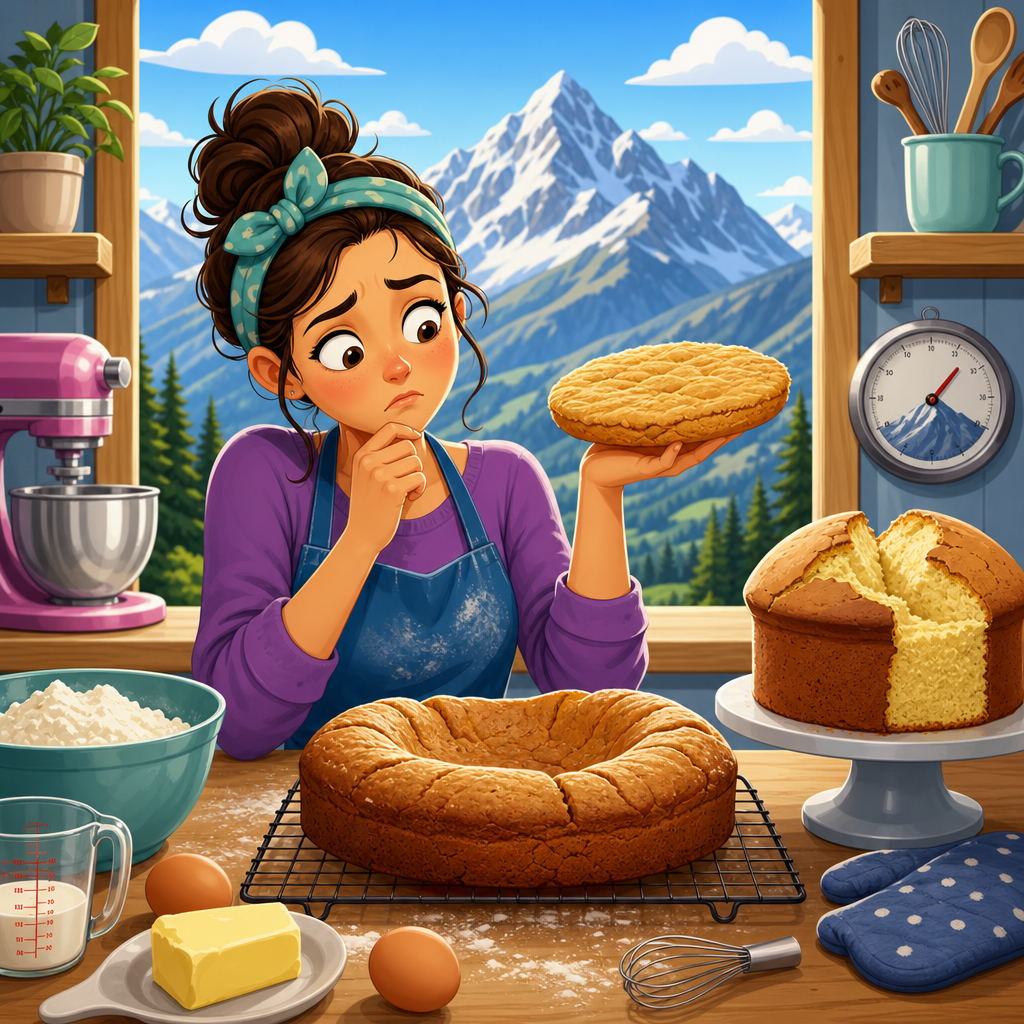
Cheesecake at altitude demands more than a standard recipe adjustment, because reduced air pressure changes how eggs set, how moisture evaporates, and how quickly the outer ring bakes before the center stabilizes. In practical terms, that means two failures show up again and again in mountain kitchens: deep surface cracks and a center that looks done at the edges but stays loose in the middle. When I started testing cheesecakes above 5,000 feet, I learned that neither problem comes from one mistake. They come from a chain reaction involving batter structure, pan setup, oven management, and cooling. This hub for Cakes & Cupcakes in the broader Cooking & Baking at Altitude series explains the core principles, then shows how they apply to cheesecake specifically. You will learn what altitude does to custard-style cakes, how to change ingredient ratios, when to use a water bath, how to judge doneness accurately, and where related cake techniques fit into your overall baking strategy. Master these fundamentals, and your cheesecake will bake level, creamy, and intact instead of dry at the rim and raw at the center.
Why altitude changes cheesecake more than many other cakes
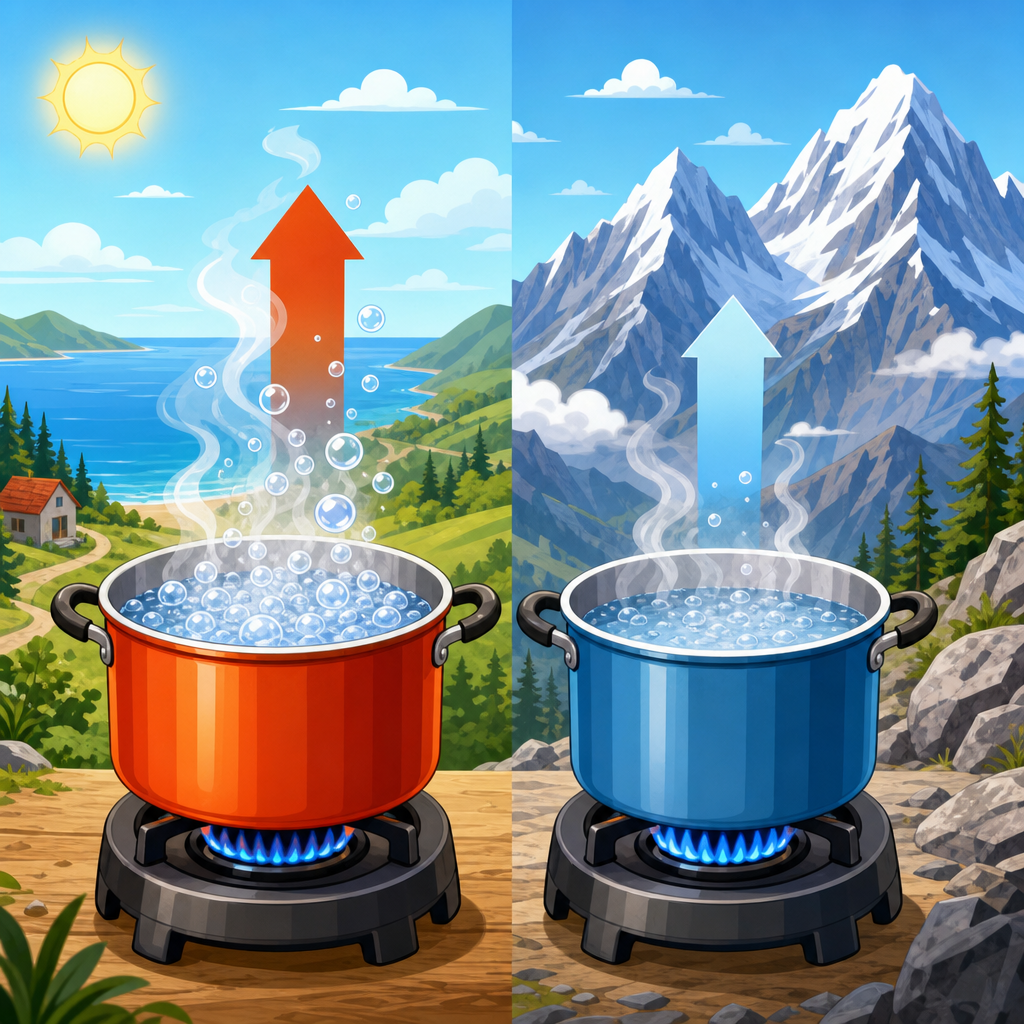
Cheesecake behaves differently from foam cakes, butter cakes, and cupcakes because it is fundamentally a custard supported by dairy proteins and egg coagulation rather than by flour and strong gluten structure. At higher elevations, water boils at lower temperatures, so evaporation starts earlier and proceeds faster. That has two direct effects. First, the surface of the cheesecake can dry out before the center finishes setting. Second, steam movement inside the batter becomes more aggressive, which encourages puffing during baking and collapse during cooling. That rise-and-fall cycle is one of the main causes of cracking.
Leavening is usually not the central issue in cheesecake, yet altitude still matters because eggs trap and expand air during mixing. Overbeaten batter contains more bubbles, and those bubbles expand more readily when atmospheric pressure is lower. In a layer cake, you might see tunneling or a coarse crumb. In cheesecake, you see doming, splitting, and a sunken middle. This is why high-altitude cheesecake technique starts before the pan goes into the oven. Mixing gently, controlling batter temperature, and avoiding excess aeration are not optional details. They are structural safeguards.
The other reason cheesecake is tricky at altitude is that visual cues can mislead you. A baker used to sea-level recipes may wait for a fully firm top and accidentally overbake the cake. The edges become tight and dry, then contract while the center is still finishing carryover cooking. That stress line often opens into a crack. A properly baked cheesecake should still wobble slightly in the center. At altitude, that narrow window between underbaked and overbaked can feel even narrower, so process discipline matters.
The batter formula that prevents cracks and weak centers
The most reliable high-altitude cheesecake starts with balanced ingredients. Full-fat cream cheese is essential because lower-fat versions contain more water and stabilizers, which can produce a thinner batter and a grainier set. Use block cream cheese, not spreadable tubs. Granulated sugar does more than sweeten; it delays protein coagulation slightly and helps create a smoother texture. Too little sugar can make the filling set harshly. Too much can weaken structure and prolong baking. In most standard nine-inch cheesecakes, keeping sugar close to the tested formula matters more at altitude than improvising.
Egg quantity deserves special attention. Eggs provide the protein network that turns liquid batter into sliceable custard, but extra eggs also increase puffing and can make the cake rise too much before sinking. If a sea-level formula already uses many eggs relative to the amount of cream cheese, I often reduce by one yolk or one whole egg when baking around 6,000 to 7,500 feet, especially in tall New York-style cheesecakes. Sour cream or heavy cream can help maintain tenderness without encouraging the same degree of puffing. A tablespoon or two of flour or cornstarch can also improve insurance against a loose center, though too much will push texture away from silky custard and toward dense cake.
Temperature control is equally important. Cream cheese, eggs, and dairy should be at room temperature so the batter mixes smoothly with minimal beating. Lumps tempt bakers to keep mixing, and extended mixing traps excess air. I beat cream cheese and sugar until smooth, then add eggs one at a time on low speed, scraping often. Once the eggs are incorporated, I stop. If flavorings such as vanilla, citrus zest, or melted chocolate are going in, they should be folded in just until uniform. Smooth batter is the goal; fluffy batter is a warning sign.
Pan choice, crust setup, and the role of the water bath
Springform pans remain standard for cheesecake, but at altitude the pan setup affects heat transfer more than many bakers realize. A dark pan absorbs more heat and can overcook the outer inch before the center is ready. A lighter-colored springform pan gives you a more forgiving bake. If you use a graham cracker crust, prebake it briefly so it stays crisp, but avoid overbrowning. An overbaked crust conducts extra heat upward into the filling and contributes to that dry ring around the edge.
The water bath is still the best tool for preventing cracks because it moderates oven heat and keeps the baking environment humid. At altitude, this matters even more because evaporation is accelerated. A water bath slows the temperature climb at the sides of the cheesecake, helping the center and perimeter set more evenly. If wrapping the springform pan in foil feels risky, place the cheesecake pan inside a slightly larger cake pan, then set that into the roasting pan filled with hot water. This indirect water-bath method avoids leaks while preserving the humidity benefit.
Water depth matters. You do not need to float the cheesecake. Usually one to two inches of hot water in the roasting pan is enough. Start with hot tap water or near-simmering water so the oven does not spend the first phase reheating a cold bath. Put the roasting pan on the oven rack before pouring if carrying it full would be unsafe. A stable setup reduces sloshing, uneven baking, and accidental cooling from repeated door opening.
| Issue | Most likely cause at altitude | Best fix |
|---|---|---|
| Surface crack | Overmixed batter, overbaking, rapid cooling | Mix on low, bake to slight center wobble, cool gradually |
| Underbaked center | Oven too cool, cake too deep, premature removal | Verify with thermometer, use proper pan size, bake to 150°F to 155°F center |
| Dry outer ring | Direct heat and no humidity buffer | Use water bath and light-colored pan |
| Soggy crust | Water leakage into springform | Use pan-in-pan water bath or heavy foil wrap |
Oven temperature, baking time, and accurate doneness cues
Many high-altitude bakers assume they should automatically raise oven temperature for every baked good. That can help with some cakes and cupcakes, where a faster set keeps overexpanding bubbles from collapsing. Cheesecake is different. A moderate oven, often around 300 to 325 degrees Fahrenheit, usually gives the best texture because it allows gradual coagulation. If your usual sea-level recipe calls for 350 degrees Fahrenheit, dropping slightly can produce a creamier texture and fewer cracks at altitude. The exact target depends on pan depth, batter volume, and your oven’s calibration.
Calibration is not optional. I have seen home ovens run 20 to 35 degrees off, which is enough to turn a careful formula into a guessing game. Use an oven thermometer, and if you bake often, map hot spots by checking browning patterns on sheet pans and simple sponge layers. Cheesecake hates hot spots. Rotate only if necessary and only late in baking, because early movement can disturb an unset custard.
The best doneness cue combines visual movement and internal temperature. The outer two to three inches should look set, matte rather than wet, and slightly puffed. The center should still jiggle as one cohesive mass when the pan is nudged; it should not slosh like liquid. For precise results, use an instant-read thermometer inserted about an inch from the center. Most cheesecakes are done when the center reaches roughly 150 to 155 degrees Fahrenheit. Some bakers pull closer to 145 for very creamy styles, but at altitude that can leave too much residual looseness unless the formula is specifically built for it. Above 160, the risk of overbaking increases quickly.
If your cheesecake repeatedly bakes unevenly, consider reducing the batter depth rather than simply extending time. A very deep cheesecake may keep the center underdone while the edge toughens. Dividing batter between a main cheesecake and a few ramekins for test portions can help you learn how your oven behaves without sacrificing the whole cake.
Cooling strategy: the hidden step that saves the top
Cracks often appear after the cheesecake leaves the oven, not during baking. That is because the structure is still settling as steam escapes and proteins finish tightening. A sharp temperature drop makes the cake contract too quickly, and the top splits to relieve stress. The fix is simple but frequently skipped: cool gradually. When the cheesecake reaches doneness, turn off the oven, prop the door open slightly, and let it rest inside for about 30 to 60 minutes depending on size. This staged cooling reduces the shock that causes dramatic sinking.
After the oven rest, move the cheesecake to a rack and run a thin knife around the edge only if the cake seems attached to the pan. This can help prevent side adhesion from tearing the top as the cake contracts. Do not unmold yet. Let it cool toward room temperature, then refrigerate for at least six hours, ideally overnight. Chilling completes the set, improves slicing, and lets moisture redistribute through the filling.
If a small crack still forms, that does not always mean the texture is wrong. Some of the best-tasting cheesecakes I have baked at altitude developed hairline cracks because of tiny oven fluctuations or a slightly overfull pan. In a professional setting, a sour cream topping, fruit glaze, lemon curd, or chocolate ganache can cover cosmetic flaws. The better goal is a fully baked, creamy interior. Appearance matters, but texture tells you whether your process is truly working.
How cheesecake fits into Cakes & Cupcakes at altitude
This hub covers the broader Cakes & Cupcakes category because the same altitude principles appear across multiple desserts, even when the formulas differ. Cupcakes usually need slightly more flour, slightly less sugar, and careful leavening control so they rise evenly without collapse. Butter cakes often benefit from a small liquid increase and a modest temperature adjustment. Sponge cakes rely heavily on egg foam stability, so overwhipping becomes more damaging as elevation increases. Cheesecake sits apart because it is a custard cake, but the governing lesson is shared: at altitude, expansion happens faster and moisture leaves sooner, so structure must set in a controlled way.
That is why bakers who succeed with high-altitude cupcakes often adapt quickly to cheesecake. They already understand oven calibration, pan color, ingredient temperature, and the danger of overmixing. Likewise, lessons from cheesecake improve other cakes. Learning to read carryover cooking, to trust internal temperature, and to cool gradually can sharpen your handling of flourless chocolate cakes, Basque-style cheesecakes, ricotta cakes, and even dense pound cakes.
As you build out your altitude baking knowledge, connect this page with the rest of your cake workflow: choosing the right pan size, adjusting mixing for different batters, managing frostings in dry climates, and storing cakes so they do not stale quickly. Cheesecake may be the most unforgiving item in the category, but it teaches the clearest lessons. Control heat, limit excess air, support even moisture, and respect the cooling phase. Those four habits improve nearly every cake you bake in the mountains.
Cheesecake at altitude stops being frustrating when you treat it as a controlled custard rather than a forgiving cake. The main causes of cracks and underbaked centers are consistent: too much air in the batter, excessive heat at the edges, inaccurate doneness judgment, and cooling the cake too fast. The practical fixes are equally consistent. Use full-fat block cream cheese, mix gently with room-temperature ingredients, bake in a light pan with a water bath, verify your oven temperature, and pull the cake when the center still wobbles slightly or reads about 150 to 155 degrees Fahrenheit. Then cool it slowly and chill it fully before slicing.
As the Cakes & Cupcakes hub within Cooking & Baking at Altitude, this article gives you the framework for cheesecake and the wider category. The details change across cupcakes, layer cakes, sponge cakes, and custard-based cakes, but the principle does not: altitude magnifies every weakness in technique. When you strengthen structure, manage moisture, and moderate heat, results become predictable. Use this page as your starting point, then apply the same disciplined approach to every cake you bake at elevation. Bake one tested cheesecake this week, take notes on temperature and timing, and your next version will be better.
Frequently Asked Questions
Why does cheesecake crack more easily at high altitude?
Cheesecake cracks more often at altitude because the batter and the baking environment behave differently once air pressure drops. At higher elevations, moisture evaporates faster, so the surface of the cheesecake can dry out before the center has fully set. At the same time, eggs coagulate differently, and the outer ring of the cake often cooks faster than the middle. That creates a classic altitude problem: the edges become firm, rise slightly, and begin to pull away while the center is still soft and expanding. As the cheesecake cools, those unevenly baked areas contract at different rates, and a crack opens across the top.
In most mountain kitchens, cracks are not caused by one single mistake. They usually come from a combination of factors: too much oven heat, overbeating air into the batter, baking too long, skipping humidity control, or cooling the cake too quickly. That is why simply lowering the bake time or guessing at doneness rarely solves the issue. A smoother result usually comes from several coordinated adjustments, such as baking at a slightly lower temperature, using a water bath or another moisture-supporting setup, mixing just until smooth rather than whipping the batter, and pulling the cheesecake when the center still has a controlled wobble. Slow cooling matters too. Letting the cake rest in the turned-off oven with the door cracked can reduce the temperature shock that often turns minor surface stress into visible cracks.
How can I prevent an underbaked center when the edges already look done?
This is one of the most common altitude cheesecake frustrations. The edges can appear set, lightly puffed, and even close to browned while the center still looks loose or almost fluid. That happens because reduced air pressure affects how heat moves through the cheesecake and how the custard structure develops. The outside of the cake is exposed directly to the oven’s heat, so it firms first. Meanwhile, the dense center takes longer to stabilize, especially at altitude where evaporation and expansion are happening more aggressively. If you simply leave the cake in the oven until the middle looks fully firm, the outer ring often overbakes, dries out, and becomes much more likely to crack.
The better approach is to manage the bake so the center has time to set gently. Start by avoiding an overly hot oven; moderate heat is more reliable than trying to rush the bake. A water bath can help by buffering the cheesecake from harsh direct heat and slowing how quickly the edges cook. Ingredient temperature matters as well. Room-temperature cream cheese, eggs, and dairy combine into a smoother batter that bakes more evenly than a cold, lumpy mixture. You should also pay close attention to doneness cues. A properly baked cheesecake should not look liquid in the middle, but it should still jiggle slightly in a 2- to 3-inch circle at the center when nudged. Residual heat continues to cook the middle during cooling. If you wait until the center is fully firm in the oven, you often overshoot and end up with dry edges and a cracked top.
Should I use a water bath for cheesecake at altitude, and does it really help?
Yes, in most cases a water bath is especially useful at altitude because it helps solve both of the major mountain-baking problems at once: cracking and underbaked centers. Cheesecake is essentially a delicate custard, and custards bake best with gentle, even heat. At altitude, the oven environment is usually less forgiving because moisture escapes faster and the outer portions of the cheesecake can heat too aggressively before the middle has properly set. A water bath acts as a temperature regulator. It softens the intensity of the oven heat around the pan and adds humidity, which helps keep the surface from drying out too quickly.
That said, a water bath only helps if it is set up properly. The springform pan must be wrapped well to prevent leaks, since water seeping into the crust creates a separate texture problem. Some bakers prefer placing the cheesecake pan inside a larger cake pan and then setting that pan into the hot water, which adds another layer of protection. If you do not want to immerse the pan directly, even placing a separate pan of hot water on a lower rack can improve oven humidity, though it will not be as effective as a true water bath. For altitude baking, the water bath is less about tradition and more about control. It gives the center more time to set before the edges become overdone, and that alone can make a dramatic difference in the final texture and appearance.
What recipe adjustments help cheesecake bake better above 5,000 feet?
Cheesecake at altitude usually benefits from small, strategic changes rather than one dramatic rewrite. Because eggs set differently, moisture evaporates faster, and the batter can lose balance more quickly, the goal is to create a formula that bakes slowly and evenly. Many high-altitude bakers find that a slightly lower oven temperature helps prevent the outer portion from setting too fast. In some cases, a modest reduction in sugar can help as well, since sugar affects structure and moisture retention. Too much sugar can delay setting and make it harder for the center to stabilize before the edges overbake.
You may also need to think carefully about the egg ratio and added liquids. Eggs are essential for structure, but too many can make cheesecake puff and then fall more dramatically, which contributes to cracking. On the other hand, too much liquid from cream, sour cream, or purée-style flavorings can leave the center overly soft. At altitude, balance matters more than excess. It is also wise to avoid overmixing once the eggs are added, because extra air in the batter can expand during baking and then collapse during cooling. If you are adapting a sea-level recipe, the most reliable path is usually to keep the ingredient list close to the original while making process changes first: lower the baking temperature slightly, use a water bath, mix gently, and extend the bake just enough for the center to reach that controlled wobble stage. In other words, technique often fixes altitude cheesecake more effectively than aggressive ingredient changes.
How should I cool cheesecake at altitude to avoid cracks and texture problems?
Cooling is one of the most overlooked parts of cheesecake baking, especially at altitude where rapid moisture loss and sudden temperature changes can quickly turn a well-baked cake into a cracked one. Once the cheesecake comes out of the oven, the structure is not fully finished setting. The residual heat inside the custard continues to do important work. If you move the cake too quickly from a hot oven to a cool kitchen or refrigerator, the surface and edges contract faster than the still-warm center. That difference in movement puts stress on the top, and cracks can form even if the bake itself was nearly perfect.
A slower transition is much safer. Many bakers get better results by turning off the oven, cracking the door, and leaving the cheesecake inside for a short rest so the temperature falls gradually. After that, it can finish cooling at room temperature before going into the refrigerator. Running a thin knife around the edge of the pan after baking can also help if the cake is likely to stick and pull as it cools, though this should be done carefully. The cheesecake should then chill long enough for the center to fully firm, usually several hours or overnight. At altitude, patience during cooling is not optional; it is part of the baking process. A cheesecake that looks slightly soft when it comes out of the oven often becomes perfectly sliceable after a gradual cool-down and full chill, while a cake that is rushed through cooling is far more likely to crack, sink, or develop an uneven texture.