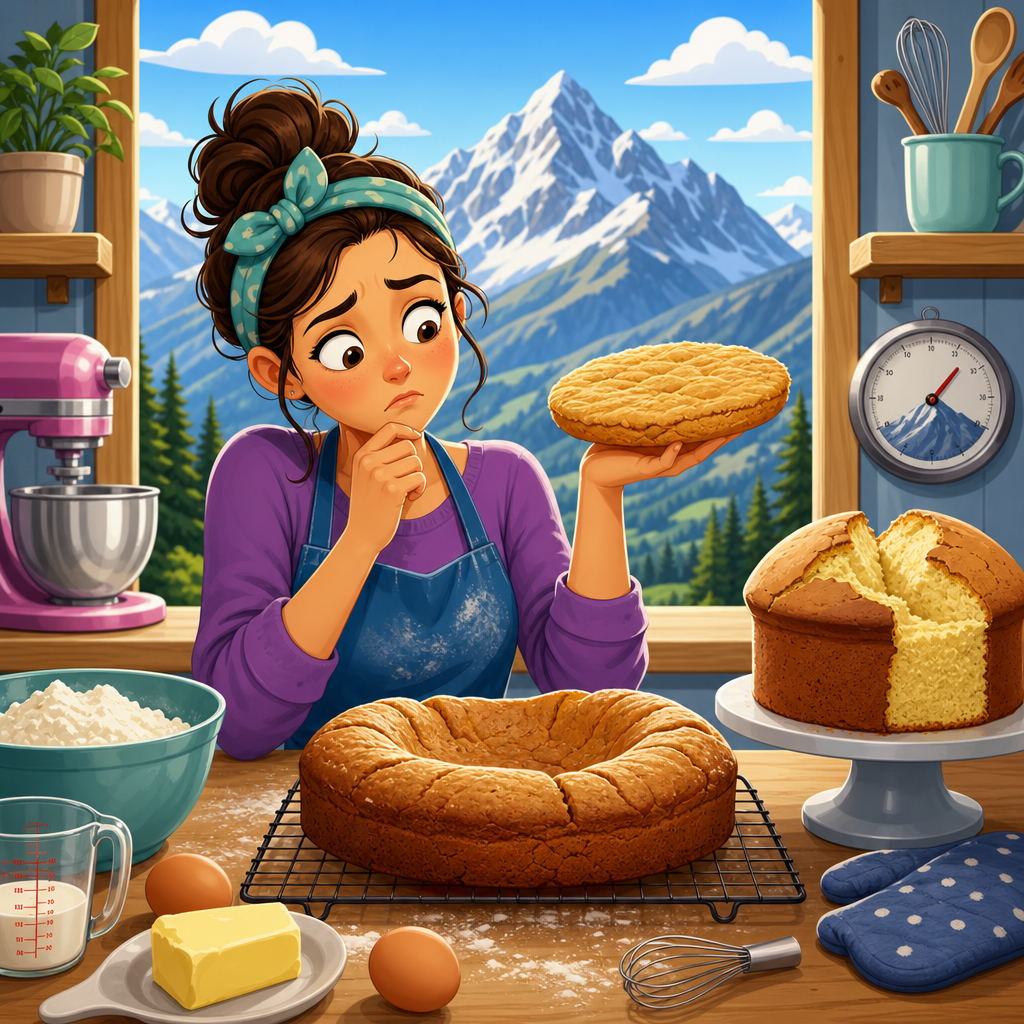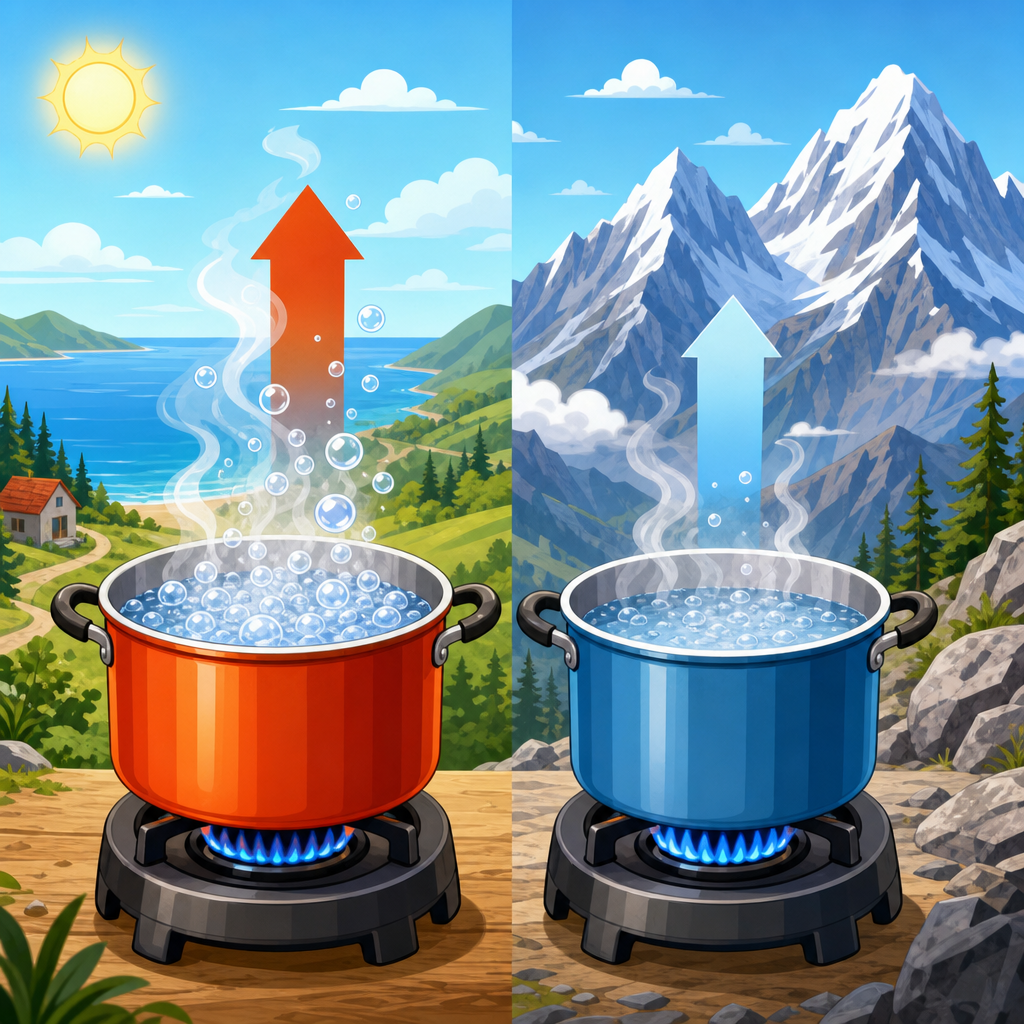
Layer cakes dry out faster at altitude because lower air pressure changes how moisture evaporates, how batters set, and how long bakers can safely leave cakes in the oven without overbaking. In practical terms, a cake that stays soft and plush at sea level can turn crumbly, domed, and thirsty at 5,000 feet if the formula and method are not adjusted. For home bakers working in mountain regions, this matters for birthdays, weddings, holiday desserts, and any bake where texture is the whole point. A dry layer cake is harder to level, harder to frost, and far less forgiving during storage and transport.
When I began adapting cake formulas for higher elevations, I learned quickly that “just bake it a little less” is not enough. Altitude baking is a system. Water boils at lower temperatures as elevation rises, so liquid turns to vapor more readily. Leavening expands faster, which can make cake layers rise too quickly before the structure is ready to support them. Sugar concentration, protein coagulation, starch gelatinization, and pan geometry all interact. Keeping layer cakes from drying out at altitude means managing moisture from mixing through cooling, filling, frosting, and storage.
It also helps to define the core terms. “Altitude” usually starts affecting baking noticeably around 3,000 feet, with stronger effects above 5,000 and 7,500 feet. “Layer cake” refers to cakes baked in separate round or square pans and stacked with filling and frosting. “Drying out” can mean several different failures: a coarse crumb, low perceived moisture despite adequate water content, overbrowned edges, a tough bite from excess flour, or staling after only a day. The fixes depend on which kind of dryness you are actually seeing.
As a hub for cakes and cupcakes within altitude baking, this guide covers the big picture: ingredient adjustments, mixing choices, pan setup, baking cues, cooling, and storage. It also points naturally toward related issues bakers often troubleshoot next, including sunken centers, gummy streaks, tunneling, overflowing cupcakes, and frostings that crust too fast in dry climates. If you want consistently tender birthday cakes, wedding-style layers, snack cakes, and cupcakes at elevation, the principles here are the foundation.
Why layer cakes dry out at altitude
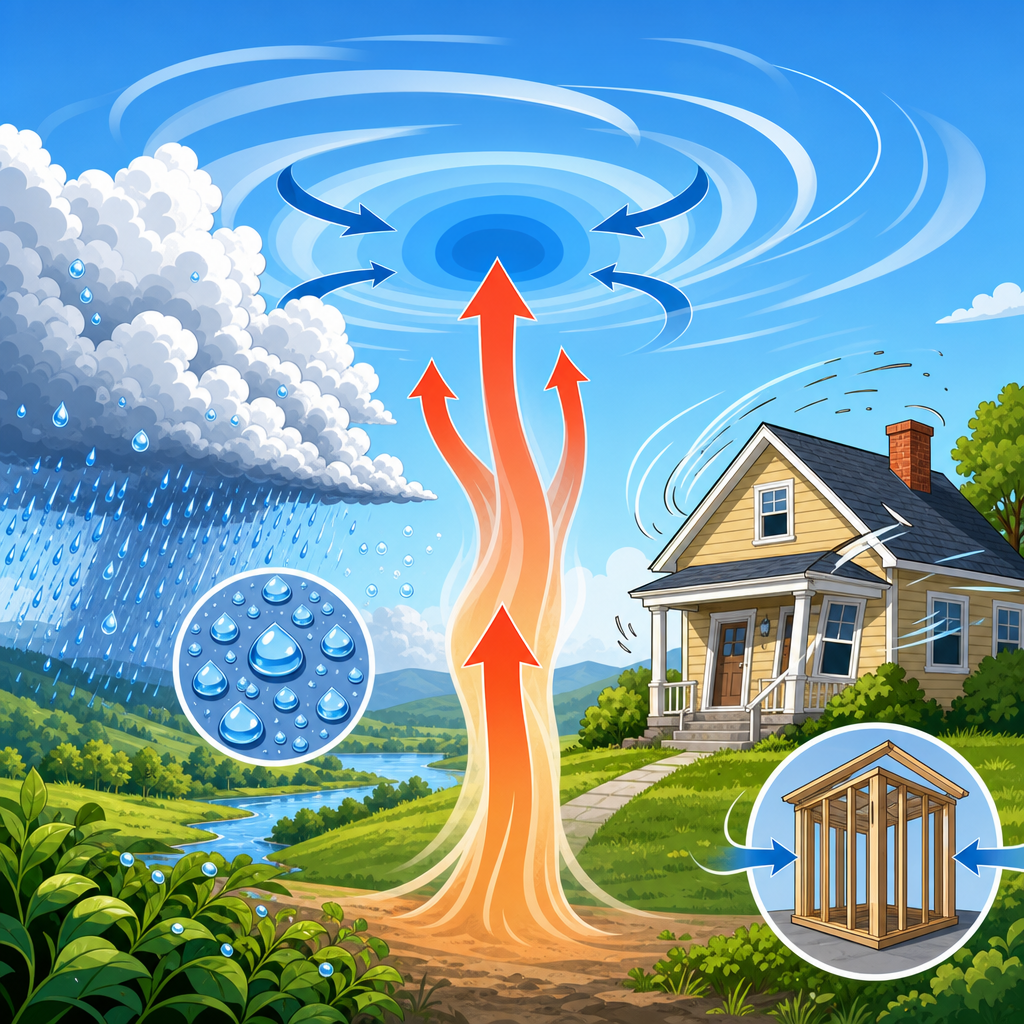
The main reason cakes dry out at altitude is accelerated moisture loss. Lower atmospheric pressure encourages faster evaporation both in the oven and after baking. At the same time, cake batter can overexpand before its crumb has stabilized, which creates a larger, more open structure. Open crumb feels drier because moisture escapes more easily and each bite has less fine, velvety density. Bakers often respond by adding more flour to “strengthen” the cake, but too much flour usually makes the problem worse.
Leavening is another major factor. Baking powder and baking soda release gas that expands more aggressively as altitude increases. If the cake rises too fast, the structure stretches thin, then moisture escapes quickly through fissures and enlarged air cells. Oven temperature also plays a role. Many altitude recipes benefit from a modest increase in heat, often 15 to 25 degrees Fahrenheit, because a slightly hotter oven helps the structure set sooner. But if that higher heat is paired with unchanged bake times, the cake can still end up dry.
Ingredient balance matters as much as oven physics. Sugar is hygroscopic, meaning it attracts and retains water. Fat tenderizes and improves perceived moisture. Eggs add structure, but too many whites can make layers firmer and less moist. Flour absorbs liquid, and high-protein flour absorbs more. Cocoa powder is especially thirsty, which is why chocolate cakes often need more liquid support than vanilla cakes at the same elevation. Once you know which lever affects which result, dryness becomes easier to prevent.
The ingredient adjustments that protect moisture
At altitude, the most reliable anti-dryness strategy is a controlled formula adjustment rather than a guess. In my testing, the usual starting points for layer cakes above 5,000 feet are slightly less leavening, a little more liquid, and sometimes a small reduction in sugar only if the cake is collapsing or becoming gummy. The exact amount depends on the original recipe, but reducing baking powder by about 1/8 to 1/4 teaspoon per teaspoon is a common range. For liquid, adding 1 to 4 tablespoons per cake layer formula can make a visible difference.
Flour choice is often overlooked. Bleached cake flour, with its lower protein level, generally produces a finer and moister crumb than all-purpose flour in classic butter cakes. If the recipe already uses cake flour, swapping to all-purpose at altitude usually moves in the wrong direction. For chocolate cakes, Dutch-process and natural cocoa absorb differently depending on the formula; neither is automatically more moist, but both often need strong liquid support. Hot coffee, buttermilk, sour cream, and yogurt all help because they contribute water while improving tenderness and flavor.
Fat selection influences keeping quality. Oil-based cakes usually stay moist longer than butter-only cakes because oil remains liquid at room temperature. That is why many reliable high-altitude chocolate layer cakes use neutral oil. Butter cakes can still succeed beautifully, but they benefit from careful creaming, precise bake times, and protective frostings or syrups. Adding an extra yolk is another useful tactic in some recipes. Yolks provide emulsifiers and fat, which support a softer crumb without making the batter loose.
| Adjustment area | Common high-altitude move | Why it helps prevent dryness |
|---|---|---|
| Leavening | Reduce slightly | Limits overexpansion and coarse crumb that loses moisture fast |
| Liquid | Increase modestly | Offsets faster evaporation during baking |
| Flour | Use cake flour when appropriate | Creates a finer, softer crumb with less toughness |
| Fat | Use oil or add a yolk in some formulas | Improves tenderness and perceived moisture |
| Sugar | Adjust only if structure issues appear | Too much reduction can make cakes less moist and less tender |
One caution: not every dry cake needs more sugar or more fat. If the real issue is overbaking, no ingredient change will fully compensate. Likewise, if the recipe is designed for dense celebration layers, adding too much liquid can make the crumb weak or sticky. Good altitude baking is measured, not dramatic.
Mixing methods for cakes and cupcakes at elevation
How you mix the batter has a direct effect on moisture retention. Traditional creaming traps air in butter and sugar, which is useful, but too much incorporated air can become a liability at altitude because those bubbles expand rapidly in the oven. I cream only until the mixture is lightened and smoother, not until it becomes excessively fluffy. Once flour goes in, mixing should be minimal. Overmixed batter develops more gluten, which tightens crumb and increases the impression of dryness.
Reverse-creaming and high-ratio methods can be especially helpful for some butter layer cakes because they coat flour with fat earlier, limiting gluten development and producing a tight, velvety crumb. Professional bakers use these methods for stable celebration cakes that need clean slicing. For cupcakes, restrained mixing matters even more. Small formats bake quickly, so a batter that is overaerated can peak, split, and dry around the edges before the centers are done.
Temperature control is part of mixing, too. Room-temperature ingredients emulsify more evenly, reducing the risk of curdled batter. A broken emulsion can lead to uneven rise and dry patches. If you bake frequently at altitude, keep notes on batter consistency. At 7,000 feet, a vanilla butter batter that looks perfect at sea level may need to be slightly looser to finish with the same tenderness. That kind of observation is how reliable cupcake and layer cake formulas are built over time.
Pan prep, portioning, and oven setup
Dry cakes often begin with preventable setup problems. Start by choosing the right pan depth and filling level. Standard 8-inch and 9-inch round pans should usually be filled no more than halfway to two-thirds full, depending on the formula. Overfilled pans encourage rapid rise and collapse; underfilled pans produce thin layers that overbake quickly. For cupcakes, using a scoop to portion batter evenly is one of the easiest ways to avoid dry outliers in the same batch.
Pan color matters. Dark metal pans absorb more heat and brown edges faster, which can be useful for some crusty baked goods but is often a drawback for tender cakes. Light-colored aluminum pans are more forgiving and widely preferred by pastry professionals. Cake strips or damp pan wraps can help layers bake flatter and more evenly, reducing hard edges. They are not mandatory, but they can be valuable when your oven runs hot or your kitchen air is exceptionally dry.
Rack placement should usually be in the center of the oven for even airflow. Always preheat fully; an underheated oven allows excess spread and prolonged evaporation before structure sets. On the other hand, avoid opening the oven too early. A quick heat loss during the expansion phase can lead to a weak center and longer total bake time, both of which promote dryness. An inexpensive oven thermometer is one of the best tools a serious altitude baker can buy, because many home ovens are off by 15 to 25 degrees.
How to bake until done without overbaking
The single most common cause of dry layer cakes at altitude is overbaking. Visual cues alone are not enough, especially when higher oven temperatures are in play. A cake is usually done when the center springs back lightly, the edges are just beginning to pull from the pan, and an instant-read thermometer in the center reads roughly 200 to 205 degrees Fahrenheit for many butter and oil cakes. Some formulas finish a bit lower, so use recipe context, but temperature is far more reliable than waiting for a deeply golden top.
Timing should be treated as a range, not a promise. Start checking several minutes early, particularly for cupcakes. Small cakes can move from tender to dry surprisingly fast at elevation. If a tester comes out with a few moist crumbs, that is often the sweet spot. Completely clean can mean too dry, especially for chocolate cakes. Convection can also intensify moisture loss; if you use a convection setting, reduce the oven temperature and monitor carefully.
For celebration cakes that will be filled and frosted, slight underbaking within safe limits is often better than pushing for a firm, dry crumb. Residual heat continues to set the cake during the first minutes out of the oven. This is one reason professional bakeries pull cakes decisively rather than waiting until every sign of moisture has disappeared.
Cooling, filling, frosting, and storage
What happens after baking is just as important as what happens in the oven. Let layers cool in their pans briefly, usually 10 to 15 minutes, then turn them out onto racks. Leaving cakes in hot pans too long traps steam unevenly and can toughen the sides, but exposing them to air for hours dries them out. Once layers are fully cool or just barely warm, wrap them tightly in plastic. That wrap captures migrating moisture and keeps the crumb supple.
Simple syrup is a legitimate tool, not a shortcut. A light brush of syrup can rescue slightly dry layers and extend shelf life, especially for butter cakes, genoise-style layers, and chocolate cakes destined for refrigeration. Fillings matter too. American buttercream protects the exterior well, but whipped ganache, ermine, cream cheese frosting, fruit compotes, pastry cream, and mousseline-style fillings all add moisture in different ways. The tradeoff is storage stability. Highly perishable fillings require refrigeration, and refrigeration can firm cake crumb unless the cake is served at room temperature.
For cupcakes, frost as soon as they are completely cool if you plan to serve them within a day. Unfrosted cupcakes stale faster because of their high surface-area-to-volume ratio. Store finished cakes in a covered carrier or airtight container, away from sun and heating vents. If you refrigerate, return the cake to room temperature before serving so fat softens and moisture is perceived correctly. Freezing wrapped layers is often better than refrigerating them for multiple days.
Common cake and cupcake mistakes in mountain kitchens
The most frequent mistakes I see are baking too long, following sea-level leavening exactly, using too much flour from packed measuring cups, and assuming every dryness problem is solved by extra liquid. Another major issue is scaling recipes designed for 9-inch pans into thinner 8-inch layers or jumbo cupcakes without adjusting bake time. Thin layers dry out rapidly. So do cupcakes baked in dark pans or convection-only countertop ovens without temperature reduction.
Humidity and climate add another layer. Many high-altitude regions are also arid, so cakes stale faster on the counter even when the bake itself went well. That is why mountain bakers often need a stronger storage routine than bakers near sea level. A final point for this hub: cakes and cupcakes are not identical categories. Cupcakes usually need shorter bake times, closer portion control, and more aggressive early checking. Layer cakes need stronger attention to pan depth, level baking, and moisture-preserving assembly. Master those differences, and your entire cakes and cupcakes repertoire improves.
Keeping layer cakes from drying out at altitude comes down to controlling evaporation, structure, and storage at every stage. Use slightly less leavening when needed, add modest liquid support, choose the right flour and fat for the style of cake, and mix with restraint so the crumb stays fine instead of coarse. Bake in light-colored pans, verify your oven temperature, and start checking early. Pull cakes when they are just done, not when they look fully dry. Then protect that moisture by wrapping layers promptly, using fillings and frostings strategically, and storing finished cakes in covered conditions.
These principles apply across the entire cakes and cupcakes category, from yellow birthday cakes and devil’s food layers to vanilla cupcakes, sheet cakes, and wedding-style tiers. Once you understand why altitude changes the bake, troubleshooting becomes much more precise. You can tell whether a cake needs less leavening, more liquid, less time in the oven, or better post-bake handling instead of changing everything at once. That saves ingredients, reduces frustration, and leads to consistently tender results.
If you bake regularly above 3,000 feet, treat this page as your starting point for every cake project in your kitchen. Use it to evaluate your current recipes, compare methods, and build a repeatable system for moist layer cakes and cupcakes that hold up beautifully from oven to serving table. Then apply the same approach to your next bake and keep notes, because the fastest route to better altitude cakes is deliberate testing.
Frequently Asked Questions
Why do layer cakes dry out faster at high altitude?
Layer cakes tend to dry out faster at altitude because lower air pressure changes how moisture behaves during baking. Water evaporates more quickly, so the batter can lose moisture before the structure of the cake has fully set. At the same time, gases in the batter expand more readily, which can cause cakes to rise too fast, dome excessively, and then set with a coarser, more fragile crumb. That combination often produces a cake that looks done on the outside while the interior has already lost too much moisture. In mountain climates, the air itself is often drier as well, which can further pull moisture from both the batter and the finished cake. The result is a layer cake that may seem light at first but quickly turns crumbly, less tender, and more prone to drying out during cooling, frosting, and storage.
What recipe changes help keep a layer cake moist at altitude?
The most effective recipe adjustments usually involve increasing moisture, slightly strengthening structure, and reducing the tendency of the cake to overexpand. Many bakers at altitude have better results by adding a bit more liquid, such as milk, buttermilk, sour cream, or oil, depending on the formula. A modest increase in fat can help protect tenderness, while an extra egg or egg white can improve structure so the cake sets more evenly instead of rising too fast and then drying out. It is also common to reduce sugar slightly, because sugar can weaken structure and promote collapse when batter expansion becomes exaggerated at higher elevations. Likewise, reducing leavening a little can prevent the cake from rising too aggressively and ending up with a dry, open crumb. Some bakers also increase the oven temperature slightly so the cake sets sooner, which helps preserve moisture and stabilize the layers before they overinflate. The exact adjustment depends on the recipe and the elevation, but the general goal is always the same: keep enough moisture in the batter while helping the cake bake into a finer, more stable crumb.
How can I tell when a layer cake is done at altitude without overbaking it?
At altitude, timing matters more than ever because a cake can go from perfectly tender to dry in just a few extra minutes. Instead of relying only on the bake time listed in the recipe, start checking early. Look for a cake that has lost its wet sheen on top, springs back lightly when touched in the center, and is just beginning to pull from the sides of the pan. A toothpick inserted into the middle should come out with a few moist crumbs rather than completely clean if your goal is a soft, moist layer cake. An instant-read thermometer can also be helpful; many cakes are done when the center is around 200 to 205 degrees Fahrenheit, though the ideal endpoint can vary slightly by formula. Be cautious about waiting for deep browning or a very firm top, because those signs often mean the cake has already baked too long in a high-altitude kitchen. Pulling the layers as soon as they are properly set is one of the most important steps in preventing dryness.
Does the mixing method affect whether a cake stays moist at high altitude?
Yes, the mixing method makes a real difference because too much air incorporated into the batter can create problems in low-pressure environments. At altitude, batters often expand more easily in the oven, so a cake that is heavily whipped or overcreamed may rise too fast, develop a coarse crumb, and lose moisture as it bakes. Creaming butter and sugar until just light rather than extremely fluffy can help. The same goes for beating eggs only as much as the recipe requires and avoiding overmixing once the flour is added. Overmixing can toughen the cake and encourage a drier texture, especially if the batter already faces rapid evaporation in the oven. Many bakers at altitude prefer methods that create a fine, stable crumb, such as careful creaming, alternating dry and liquid ingredients properly, and stopping mixing as soon as everything is incorporated. A well-mixed batter should be smooth and aerated, but not so full of excess air that it becomes unstable and bakes up dry.
What should I do after baking to keep layer cakes from drying out before serving?
Post-bake handling is just as important as recipe adjustment. Once the cakes come out of the oven, let them cool in the pans for a short period so they can set without continuing to steam excessively, then turn them out to cool completely. Do not leave them exposed on the counter for hours, especially in a dry mountain climate. As soon as the layers are fully cool or even slightly warm, wrapping them well in plastic wrap helps trap moisture inside. Many bakers find that wrapping and resting the layers for several hours or overnight improves texture because the moisture redistributes through the crumb. If the cake will not be frosted the same day, keep the wrapped layers airtight at room temperature for short storage or freeze them for longer storage. Using a filling or frosting with good moisture retention, such as buttercream, ganache, cream cheese frosting, or fruit fillings applied with a dam, also helps protect the cake from drying out. For especially delicate layers, brushing on a light simple syrup can add insurance, but it should be done carefully so the cake stays moist rather than soggy. In high-altitude baking, protecting the cake after it leaves the oven is often the step that preserves all the work you put into getting the bake itself right.