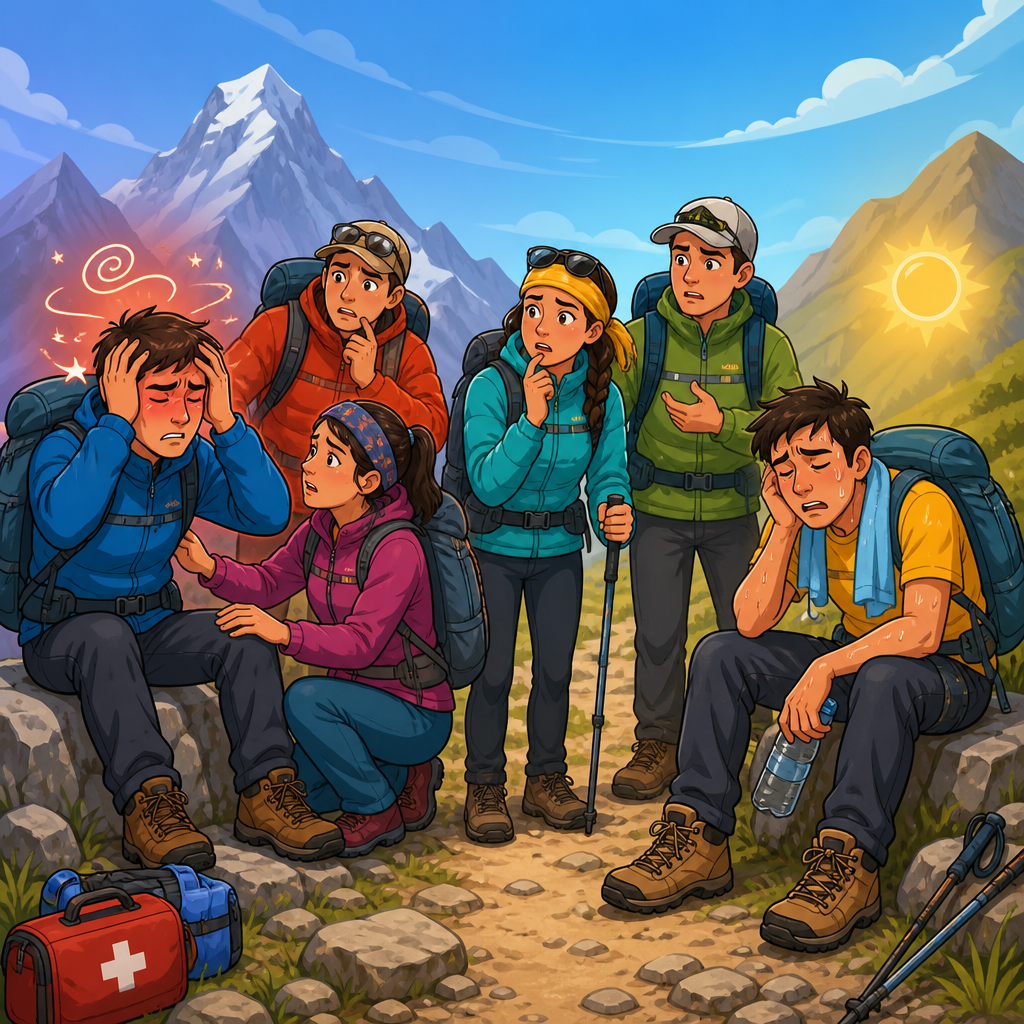
High-altitude trekking groups often confuse ordinary exhaustion with a dangerous medical emergency, and that mistake can turn a manageable day on the trail into a fatal descent. HACE, or high-altitude cerebral edema, is the most severe form of altitude illness affecting the brain. It develops when low oxygen at altitude triggers fluid leakage and swelling within brain tissue, leading to impaired coordination, altered thinking, and eventually coma. Exhaustion, by contrast, is a state of physical depletion caused by exertion, poor sleep, under-fueling, dehydration, or accumulated stress. Both can produce fatigue, slow pace, and poor judgment, which is why the distinction matters so much for leaders, guides, and trekking partners.
In mountain medicine work, I have seen groups rationalize early neurological symptoms as simple tiredness because the person was strong, motivated, or embarrassed to hold others back. That pattern is common on popular routes such as Kilimanjaro, the Everest Base Camp trek, and the Inca Trail extensions into higher passes. The problem is not that trekkers ignore obvious collapse; it is that the earliest warning signs are subtle enough to explain away. A person who cannot walk heel-to-toe, fumbles a zipper repeatedly, laughs inappropriately, or stops making ordinary decisions may still insist they only need rest. If the group accepts that explanation, precious hours are lost.
This article serves as a practical hub for understanding HACE in the wider context of altitude illness and acclimatization. It explains what HACE is, how it differs from normal exhaustion, which warning signs demand immediate action, how groups should assess a struggling trekker, what field treatment looks like, and how prevention reduces risk. The central rule is simple: when neurological symptoms appear at altitude, assume HACE until proven otherwise. Descent is the treatment that saves lives, and delay is the mistake trekking groups must not make.
What HACE Is and Why It Is So Dangerous
HACE is a life-threatening altitude illness marked by brain swelling caused by hypoxia, the reduced oxygen availability that comes with increasing elevation. It usually occurs after acute mountain sickness, though it can occasionally appear rapidly and seem out of proportion to earlier symptoms. The Wilderness Medical Society and standard expedition medicine guidance treat HACE as a medical emergency requiring immediate descent. It often develops above about 3,500 to 4,000 meters, but there is no guaranteed safe threshold. A fast ascent, prior altitude illness, heavy exertion, and inadequate acclimatization all increase risk.
The hallmark signs are ataxia and altered mental status. Ataxia means loss of coordination that is out of proportion to fatigue: staggering, inability to walk in a straight line, trouble balancing while standing, or unusual clumsiness with simple tasks. Altered mental status can include confusion, slowed responses, irritability, apathy, poor short-term memory, disorientation, or bizarre behavior. As swelling worsens, the person may become drowsy, collapse, or lose consciousness. HACE can coexist with high-altitude pulmonary edema, or HAPE, which adds breathlessness at rest, cough, crackles, and low oxygen saturation, making the situation even more dangerous.
What makes HACE especially deceptive is that trekkers expect to feel bad at altitude. They anticipate headaches, low energy, poor sleep, and reduced appetite. That expectation creates a dangerous normalization of symptoms. A team may describe the affected person as “just wrecked,” “bonking,” or “having an off day,” when the real issue is neurological decline. Unlike uncomplicated fatigue, HACE tends to progress rather than improve with a short break. A lunch stop may briefly mask the severity, but the person remains unsteady, mentally dulled, and unable to function normally once movement resumes.
How Exhaustion Differs From HACE in the Field
Exhaustion is common on treks and, by itself, does not mean brain swelling. It usually follows a clear cause: a long summit push, inadequate calories, a poor night in camp, heat stress, dehydration, or several hard days without recovery. The exhausted trekker is tired but generally coherent. They know where they are, can answer questions normally, can usually walk steadily once packs are adjusted or pace is reduced, and often improve with food, fluids, warmth, rest, or sleep. Their personality remains recognizable even if they are quiet or irritable.
HACE changes the quality of symptoms. Coordination fails in ways that ordinary fatigue does not explain. Mental processing slows beyond simple discouragement. The person may deny obvious deficits, which is itself a red flag. One field test I rely on is whether the trekker can perform purposeful tasks without repeated errors: clipping a buckle, putting on gloves correctly, following a three-step instruction, or walking a straight line heel-to-toe. Another is whether their companions say, “This is not how they normally act.” That sentence often appears before dramatic deterioration.
Leaders should also pay attention to pattern and timing. Exhaustion often improves after a substantial snack, thirty to sixty minutes of rest, or a reduced pace. HACE persists or worsens despite those measures. A trekker who starts the day slow but becomes more confused as altitude increases is not merely tired. Equally, severe headache with vomiting, worsening ataxia, or unusual somnolence after a recent gain in sleeping elevation should push HACE to the top of the differential diagnosis. In mountain medicine, it is safer to overcall HACE than to miss it.
| Feature | Exhaustion | HACE |
|---|---|---|
| Main cause | Exertion, poor recovery, under-fueling, dehydration | Altitude-related brain swelling from hypoxia |
| Mental status | Tired but oriented and coherent | Confused, apathetic, disoriented, slowed, bizarre behavior |
| Coordination | Usually intact, maybe generally weak | Ataxia, staggering, repeated loss of balance |
| Response to rest | Often improves with food, fluids, sleep, slower pace | Little improvement; often continues to worsen |
| Risk level | Usually manageable in camp or on trail | Medical emergency requiring immediate descent |
| Group action | Monitor, reduce load, reassess | Stop ascent, descend, give oxygen and dexamethasone if available |
Warning Signs a Trekking Group Must Not Ignore
The single most important warning sign is ataxia. If a trekker cannot walk normally, keep crossing their feet, drifts off the path, or needs unusual support on simple terrain, the group should stop treating the problem as routine fatigue. Ataxia is not just “wobbly because we are all tired.” It is the classic field sign of HACE. On many expeditions, a basic tandem gait test—walking heel-to-toe for several steps—has identified trouble before the person fully recognized it themselves.
The second critical warning sign is altered mental status. This can be dramatic, such as disorientation to place or time, but it is often subtle at first. The trekker may answer slowly, forget instructions immediately, become abnormally withdrawn, or act inappropriately cheerful despite obvious distress. They may stop eating without explanation or seem unable to make simple choices. Partners often notice that conversation becomes oddly flat or repetitive. Those behavioral changes matter because HACE is a neurological condition, not just a performance problem.
Other red flags include severe or worsening headache, repeated vomiting, unusual drowsiness, blurred vision, and a rapid decline after gaining altitude. If symptoms worsen overnight at a higher camp, concern should rise immediately. A person who cannot manage routine camp tasks, such as organizing gear or entering a tent, deserves urgent assessment. If HAPE symptoms are also present—breathlessness at rest, chest tightness, persistent cough, crackling sounds, blue lips, or markedly low pulse oximeter readings—the danger increases. HACE and HAPE together can deteriorate quickly, especially in cold, remote, high camps where evacuation is delayed.
How Groups Should Assess a Struggling Trekker
Assessment begins with stopping movement and removing social pressure. Many trekkers hide symptoms because they fear delaying the group or losing a summit chance. Ask direct questions in simple language: Where are we? What day is it? How high did we sleep last night? What did you eat today? Then watch function, not just words. Can they stand unaided, walk heel-to-toe, zip a jacket, follow a sequence, and speak clearly? Observation is often more reliable than self-report because HACE impairs insight.
Use a structured approach rather than debate. Check for recent ascent profile, previous altitude symptoms, hydration, calorie intake, recent medications, and coexisting illness. Note headache severity, vomiting, cough, breathlessness, and urine output. If you have a pulse oximeter, use it, but never let a reassuring number override obvious neurological signs. Oxygen saturation varies widely with altitude and device quality. A trekker with HACE can still produce readings that tempt an inexperienced group to delay descent. Clinical signs remain more important than gadgets.
In guided settings, document findings and repeat them after a short rest. If coordination or cognition is clearly abnormal, there is no need to wait for perfect certainty. I advise teams to use a low threshold: altered mental status plus altitude exposure equals presumed HACE until proven otherwise at lower elevation or by medical evaluation. Assign one person to stay with the patient, one to organize descent logistics, and one to communicate with local support, porter teams, or rescue contacts. Confusion in the group often mirrors confusion in the patient, so predefined roles matter.
Immediate Treatment and Descent Priorities
The definitive treatment for HACE is descent. Every other intervention is supportive or a bridge while descent begins. The patient should stop ascending immediately and go down with assistance, ideally at least 500 to 1,000 meters, or until symptoms clearly improve. If they cannot walk safely, the group must use available evacuation methods, whether that means a horse, litter, porter carry, vehicle access from a roadhead, or formal rescue. Waiting in camp to “see how they feel after dinner” is a classic and dangerous error.
Supplemental oxygen is highly effective when available because it directly addresses hypoxia. Portable oxygen systems are standard on many commercial high-altitude treks, and they can stabilize a patient during descent. Dexamethasone is the key medication for suspected HACE and is recommended in expedition protocols because it reduces cerebral swelling. It is not a substitute for descent, but it can buy time. Portable hyperbaric chambers, such as the Gamow bag, can also help in remote settings by simulating descent pressure; however, they require trained operators and continuous planning for what happens next.
Supportive care still matters. Keep the patient warm, protect the airway if consciousness declines, reduce pack weight to zero, and prevent wandering or falls. Give fluids if the person can drink safely, but avoid forcing excessive water, which will not treat HACE and may worsen nausea. If severe headache or vomiting is present, symptom relief can help cooperation during descent, but these measures do not change the diagnosis. The message the group must absorb is clear: improvement from dexamethasone or oxygen does not authorize continued ascent. Once HACE is suspected, the mountain objective is over.
Prevention, Acclimatization, and Group Decision-Making
The best way to manage HACE is to prevent it through conservative acclimatization and disciplined group decisions. Standard altitude guidance supports gradual ascent, limiting sleeping elevation gain once above moderate altitude and building rest or acclimatization days into the itinerary. The common principle “climb high, sleep low” remains useful, but only when applied within a realistic plan. On trips I have supervised, the strongest predictor of trouble was not fitness but schedule pressure: fixed summit dates, nonrefundable logistics, and teams unwilling to stop when symptoms first appeared.
Medication can reduce risk in selected trekkers. Acetazolamide is widely used to support acclimatization and can lower the likelihood of acute mountain sickness when taken appropriately, especially on fast ascents or by people with prior history. It does not make unsafe itineraries safe, and it does not prevent every case of severe altitude illness. Dexamethasone can prevent symptoms in specific high-risk situations, but because it can mask progression while a person continues ascending, it should be used with clear medical guidance rather than as a casual backup.
Groups should establish decision rules before the trek starts. Anyone with worsening neurological symptoms does not continue upward. Anyone with suspected HACE descends with support, even if they object. Daily check-ins should cover headache, nausea, appetite, sleep, energy, balance, and mood. Leaders should normalize reporting symptoms early, because silence is one of altitude medicine’s biggest hazards. If your itinerary includes side trips, high passes, or summit pushes, review turn-around criteria in advance. Clear rules reduce summit fever, social friction, and the dangerous temptation to reinterpret HACE as simple exhaustion.
HACE versus exhaustion is not a subtle academic distinction; it is one of the most important life-or-death judgments a trekking group will make at altitude. Exhaustion is common, unpleasant, and usually reversible with rest, food, hydration, warmth, and smarter pacing. HACE is a neurological emergency caused by altitude-related brain swelling, and it demands immediate descent. The warning signs groups must not ignore are ataxia, altered mental status, worsening headache, repeated vomiting, unusual drowsiness, and rapid decline after ascent.
The safest field rule is also the simplest: if a trekker is acting strangely or walking abnormally at altitude, assume HACE until proven otherwise. Do not let fitness, determination, itinerary pressure, or a temporary improvement with rest cloud that judgment. Assess function, not bravado. Use oxygen, dexamethasone, and hyperbaric support when available, but never as substitutes for going lower. Build prevention into the plan through gradual acclimatization, realistic schedules, and explicit group protocols.
If you lead, organize, or join high-altitude treks, treat this topic as essential knowledge rather than optional reading. Review your acclimatization plan, discuss emergency roles before departure, and make sure everyone in the group can recognize the difference between ordinary exhaustion and the first signs of HACE. That preparation is what turns a strong team into a safe one.
Frequently Asked Questions
How can a trekking group tell the difference between ordinary exhaustion and HACE on the trail?
The most important distinction is this: ordinary exhaustion usually improves with rest, food, fluids, and a slower pace, while HACE tends to worsen and affects how a person walks, thinks, speaks, and behaves. A tired trekker may complain of heavy legs, breathlessness on climbs, poor energy, or a desire to stop for the day, but they generally remain mentally clear and coordinated. Someone developing high-altitude cerebral edema, by contrast, may stumble on flat ground, sway when standing, struggle with simple tasks, speak unusually slowly or incoherently, seem confused about where they are, or act oddly in ways that are out of character.
One of the clearest red flags is ataxia, which means loss of coordination. If a person cannot walk heel-to-toe in a straight line, keeps falling sideways, or looks drunk despite having had no alcohol, the group must treat that as a medical emergency. Another major clue is altered mental status. If the trekker cannot answer basic questions, seems drowsy and difficult to wake, forgets obvious details, or insists they are fine despite obvious impairment, that points strongly toward HACE rather than simple fatigue. Exhaustion can look dramatic, especially after a long day, but it does not usually cause marked confusion or progressive neurological problems. When in doubt at altitude, the safer assumption is to treat unexplained coordination problems or confusion as HACE until proven otherwise.
What warning signs should no trekking group ever ignore if they suspect HACE?
The warning signs that must never be brushed aside are poor coordination, confusion, unusual behavior, severe weakness combined with clumsiness, and any decline in alertness. HACE is the severe end of altitude illness and can progress quickly, so subtle early symptoms matter. A trekker who cannot keep balance, fumbles with gear, misses obvious steps, walks with a wide stance, or needs support to move may already be in danger. Just as concerning is any change in personality or thinking: irritability, poor judgment, apathy, delayed responses, disorientation, or statements that make little sense.
Groups should also take seriously a severe headache that does not improve, especially when paired with nausea, vomiting, worsening fatigue, and signs of acute mountain sickness. A person who wants to lie down and stop engaging, cannot follow instructions, or keeps making unsafe choices may be slipping into a dangerous stage of brain swelling. Late signs include extreme drowsiness, inability to walk, and reduced consciousness. At that point, the situation is life-threatening. A group must not wait for all symptoms to appear. If there is worsening neurological function at altitude, especially after recent ascent, the correct response is immediate descent and emergency treatment measures if available.
If someone seems extremely tired but is still talking normally, can it still be HACE?
Yes, it can, which is why groups need to look beyond whether the person is still able to hold a conversation. Early HACE does not always begin with dramatic confusion or collapse. A trekker may still speak in complete sentences yet show subtle but meaningful changes such as slowed thinking, poor concentration, unusual quietness, mild disorientation, or impaired balance. Many groups make the mistake of labeling this as simple overexertion because the person is still awake, cooperative, and able to answer some questions. That is a dangerous assumption.
The key is to assess function, not just appearance. Ask the person to walk a straight line, perform simple mental tasks, explain where they are and what day it is, or follow a sequence of instructions. If they struggle with coordination or cognition out of proportion to normal tiredness, concern for HACE should rise quickly. Exhaustion can make someone quiet, slow, and miserable, but it should not make them neurologically abnormal. If a person’s fatigue is accompanied by headache, recent altitude gain, nausea, unsteadiness, or subtle mental changes, the group should stop thinking in terms of “just tired” and start thinking in terms of altitude emergency.
What should a trekking group do immediately if they think a member has HACE rather than exhaustion?
The first priority is immediate descent. HACE is not a condition to monitor overnight in hopes that the person feels better in the morning. If brain swelling is suspected, the affected trekker must go down as soon as possible, ideally with assistance and without delay. The person should not continue ascending under any circumstances. They should not be left alone, and the group should assign capable members to support movement, monitor symptoms, and coordinate evacuation. Even a descent of a few hundred meters can help, but the goal is definitive descent to a lower altitude and professional medical care as quickly as logistics allow.
If supplemental oxygen is available, give it. If dexamethasone is part of the expedition medical kit and someone trained to use it is present, it can be a critical treatment while descent is underway, but it is never a substitute for going down. A portable hyperbaric bag may also be used in remote settings if descent is delayed, though again it is a temporizing measure, not a cure. Keep the person warm, minimize exertion, and monitor airway, breathing, and consciousness. Do not let social pressure, summit goals, itinerary concerns, or the person’s insistence that they are fine override what the symptoms are showing. In suspected HACE, fast action saves lives.
Can HACE develop even if a trekker initially seemed to be dealing with normal exhaustion or mild altitude sickness?
Absolutely. HACE often develops on a spectrum rather than appearing out of nowhere, and that is what makes it so easy for groups to miss. A trekker may begin the day with what looks like ordinary fatigue or mild acute mountain sickness: headache, low appetite, poor sleep, or slower movement. If the group keeps ascending, pushes a hard pace, ignores hydration and recovery, or dismisses worsening symptoms, the situation can evolve into severe altitude illness. What began as “just tired” can become something far more dangerous over the course of hours.
This is why trend matters more than labels. Exhaustion should stabilize or improve with rest and support, while altitude-related brain symptoms typically progress if the person remains high. A headache that becomes more severe, a walker who becomes steadily less coordinated, or a teammate who grows more confused as the day goes on should trigger immediate concern. Previous experience at altitude does not guarantee protection, and a strong, fit trekker can still develop HACE. The safest trekking groups are the ones that keep reassessing, recognize deterioration early, and treat neurological warning signs as an emergency rather than a morale problem or a lack of toughness.