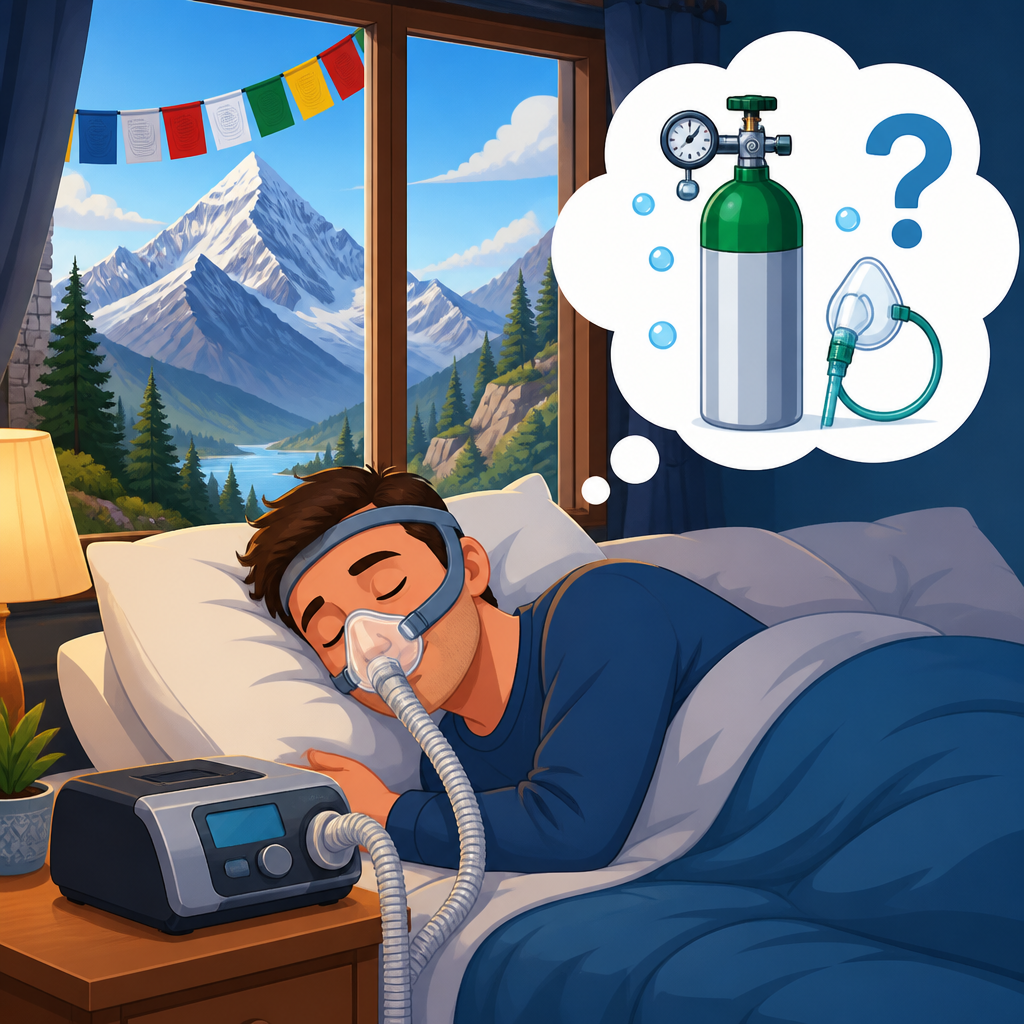
Do you need oxygen with CPAP at high altitude? Sometimes, but not automatically. The right answer depends on altitude, the type and severity of sleep apnea, underlying lung or heart disease, and how your oxygen saturation behaves during sleep. CPAP, or continuous positive airway pressure, keeps the upper airway open so obstructive apneas do not repeatedly collapse breathing. Supplemental oxygen raises the amount of oxygen available to the lungs and bloodstream, but it does not treat airway obstruction itself. At higher elevations, thinner air lowers inspired oxygen pressure, which can worsen overnight desaturation and change breathing patterns even in people who use CPAP successfully at sea level.
This matters because altitude affects both healthy sleepers and people with breathing disorders. Once you travel or live above roughly 5,000 feet, oxygen pressure drops enough that some people notice fragmented sleep, periodic breathing, morning headaches, and lower pulse oximeter readings. In my work with PAP users, the most common misconception is that CPAP and oxygen are interchangeable. They are not. CPAP addresses obstructive events; oxygen addresses low blood oxygen. Some patients need one, some need both, and some need a different PAP mode entirely, such as auto-adjusting PAP, bilevel PAP, or adaptive servo-ventilation, depending on the pattern seen on sleep testing and device data.
As a hub topic, sleep apnea and breathing disorders include obstructive sleep apnea, central sleep apnea, obesity hypoventilation syndrome, chronic obstructive pulmonary disease overlap, altitude-related periodic breathing, and nocturnal hypoxemia from cardiopulmonary disease. The key questions are practical: Will your current CPAP still work at altitude? When is oxygen added? What symptoms suggest you need reassessment? How do travel, home elevation, and comorbid conditions change the plan? A clear answer starts with understanding what altitude does to sleep physiology and what CPAP can and cannot correct.
How high altitude changes breathing during sleep
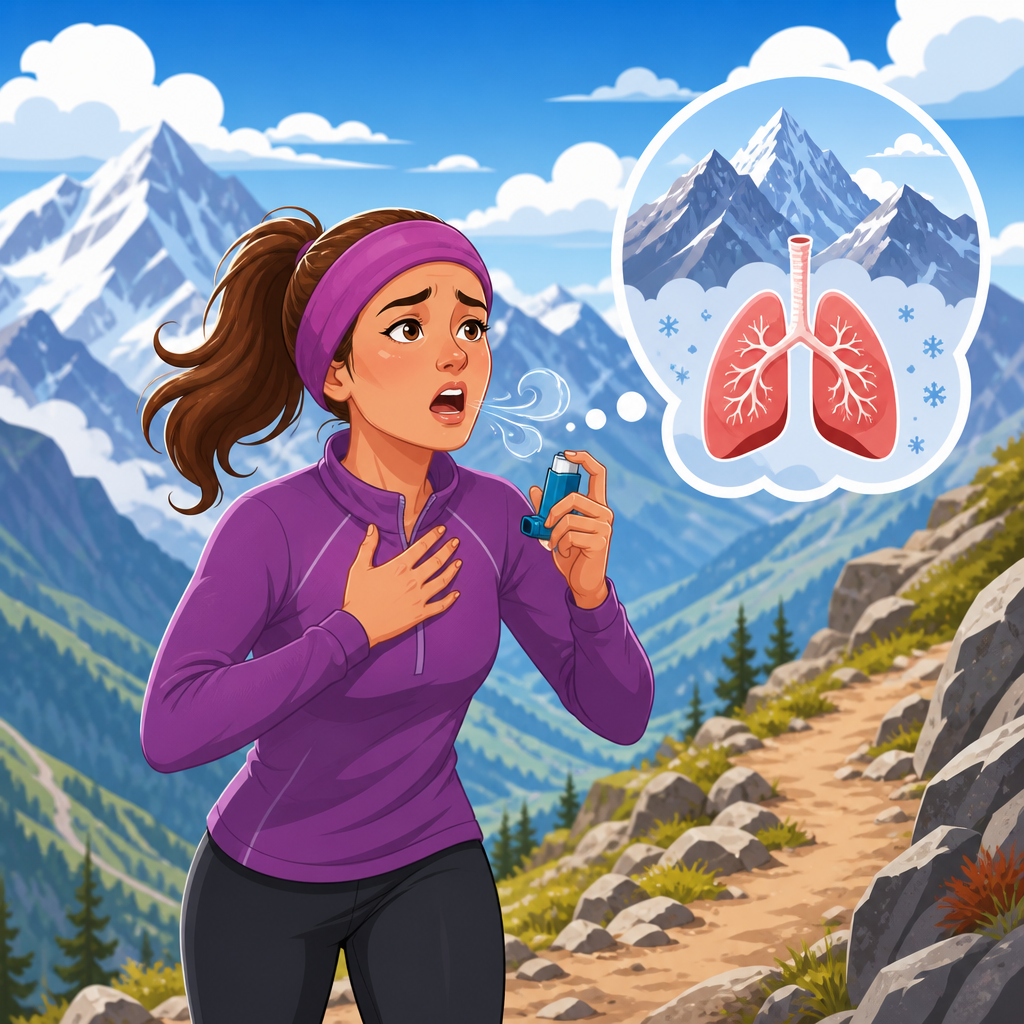
High altitude reduces barometric pressure, which lowers the partial pressure of inspired oxygen. Even though the air still contains about 21 percent oxygen, each breath delivers less driving pressure for oxygen to move into the blood. During wakefulness, the body compensates by breathing faster and deeper. During sleep, especially in lighter stages, breathing control becomes less stable. That instability can trigger periodic breathing: cycles of overbreathing followed by reduced effort or pauses. This pattern is one reason some people develop central apneas at altitude even if they usually have obstructive sleep apnea at lower elevations.
The effect is strongest when people ascend quickly. A traveler sleeping at 8,000 feet may have lower oxygen saturation, more arousals, and more central events on the first nights than after partial acclimatization. People with chronic lung disease, pulmonary hypertension, heart failure, neuromuscular weakness, or obesity hypoventilation have less reserve and can desaturate more severely. Alcohol, sedatives, and opioid medications make this worse by suppressing ventilatory drive or increasing upper-airway collapse. In practical terms, altitude can increase the need for closer monitoring even if your CPAP settings were stable for years at sea level.
Symptoms that suggest altitude is affecting sleep include frequent awakenings, new air hunger, vivid awareness of breathing pauses, morning headache, daytime fatigue despite CPAP use, and lower overnight oximetry values. A spot pulse oximeter before bed is not enough; what matters is the pattern through the night. Clinicians often look for sustained saturation below individualized targets, clusters of desaturation, and whether events are obstructive or central on PAP downloads or repeat sleep testing.
What CPAP does, and what it does not do
CPAP splints the upper airway open with a constant pressure. For obstructive sleep apnea, that prevents repetitive collapse of the soft palate, tongue base, or pharyngeal walls. When the pressure is appropriate and the mask fit is good, CPAP lowers the apnea-hypopnea index, reduces snoring, improves sleep continuity, and often normalizes oxygen levels if desaturation was caused mainly by obstruction. Modern devices are generally altitude compensated within specified ranges, commonly up to around 8,500 feet, though you should always verify the manufacturer’s limits for your exact machine.
CPAP does not directly increase the oxygen content of the air. If a person’s oxygen level falls because of low ambient oxygen, impaired gas exchange, hypoventilation, or central apneas, CPAP alone may not be sufficient. This is especially important in chronic obstructive pulmonary disease overlap syndrome, interstitial lung disease, advanced heart failure, or obesity hypoventilation. In those conditions, keeping the airway open solves only one part of the problem. I have seen patients with excellent mask seal and low residual obstructive AHI still record prolonged time below 88 percent saturation overnight at mountain elevations.
Another limitation is treatment-emergent or altitude-triggered central sleep apnea. A patient may increase pressure trying to “fix” events, yet higher pressures do not treat central pauses and can sometimes worsen comfort or leak. The correct response is to identify the event type, not to guess. Device downloads, overnight oximetry, and, when needed, formal titration studies guide the next step far better than adjusting settings without data.
When supplemental oxygen may be needed with CPAP
Supplemental oxygen may be added to CPAP when oxygen saturation remains too low despite effective control of obstructive events. The strongest reasons are documented nocturnal hypoxemia, significant cardiopulmonary disease, or altitude-related desaturation that does not resolve with acclimatization and proper PAP therapy. Common clinical thresholds include sustained saturation at or below 88 percent, but the exact target depends on diagnosis, pregnancy status, and physician guidance. The decision should rest on measured overnight data, not symptoms alone.
Typical scenarios include a person with obstructive sleep apnea and COPD who uses CPAP well at home near sea level but spends weeks at 7,500 feet and develops overnight desaturation; a patient with obesity hypoventilation whose carbon dioxide retention requires bilevel support and oxygen only after ventilation is optimized; or someone with heart failure who develops central events and intermittent hypoxemia at altitude, requiring reassessment of the PAP mode before oxygen is prescribed. In each example, oxygen treats low saturation, but the underlying breathing disorder still needs separate management.
| Situation | What often helps | Why |
|---|---|---|
| Obstructive events only, saturation normal on CPAP | Keep current CPAP | Airway support is sufficient |
| Obstructive events controlled, saturation low at altitude | Add overnight oxygen after evaluation | Low ambient oxygen is the remaining problem |
| New central apneas at altitude | Reassess PAP mode and consider acclimatization | Oxygen alone may not stabilize breathing control |
| Hypoventilation or COPD overlap | Optimize bilevel settings, then assess oxygen need | Ventilation and oxygenation are separate issues |
There are limitations. Oxygen can improve saturation while masking unresolved hypoventilation in susceptible patients, especially if carbon dioxide is not monitored. That is why clinicians distinguish oxygenation from ventilation. If you retain carbon dioxide, simply turning up oxygen can be unsafe without medical supervision.
How sleep apnea subtypes and related breathing disorders change the answer
Obstructive sleep apnea is the most familiar condition, but it is only one part of the sleep-disordered breathing landscape. Central sleep apnea involves reduced or absent respiratory effort; complex or treatment-emergent sleep apnea combines obstructive events with persistent central events after PAP starts; obesity hypoventilation syndrome causes underbreathing with elevated carbon dioxide; overlap syndrome combines COPD and obstructive sleep apnea; and nocturnal hypoxemia can occur in interstitial lung disease, pulmonary vascular disease, and neuromuscular disorders even without classic apneas. Altitude can aggravate every one of these in different ways.
For pure obstructive sleep apnea, the main issue is whether CPAP maintains airway patency and keeps saturation acceptable. For central sleep apnea, altitude can be a direct trigger because lower oxygen intensifies instability in ventilatory control. In obesity hypoventilation, the body may need ventilatory assistance from bilevel PAP rather than standard CPAP, because pressure support helps move more air with each breath. In COPD overlap, oxygen may be needed more often, but pressure must still be set carefully to avoid poor comfort, air trapping concerns, or persistent residual events.
This is why a hub approach matters. Evaluating sleep apnea and breathing disorders as one category prevents the common mistake of treating every low overnight oxygen level as if it were simple obstructive sleep apnea. The right therapy follows the mechanism: airway collapse, unstable ventilatory drive, impaired gas exchange, or hypoventilation.
Testing, monitoring, and travel planning at elevation
If you are moving to altitude, taking a ski trip, or sleeping in mountain towns regularly, the safest strategy is planned reassessment. Start with your diagnosis, current PAP settings, machine model, and any history of oxygen use. Check whether your device has automatic altitude compensation and the approved elevation range. Review PAP download data for residual AHI, leak, pressure trends, and usage. Then consider overnight oximetry at the target elevation, because that single test often reveals whether oxygen levels stay acceptable on your usual setup.
For more complex cases, clinicians may order a repeat titration study, home sleep apnea testing with oximetry, arterial blood gas, serum bicarbonate, pulmonary function tests, or evaluation for cardiopulmonary disease. People with COPD, pulmonary hypertension, heart failure, obesity hypoventilation, prior severe desaturation, or unexplained daytime sleepiness deserve a lower threshold for formal reassessment. Acetazolamide is sometimes used to reduce altitude-related periodic breathing, but that decision belongs with a clinician who understands your full respiratory history and kidney status.
Travel planning should also cover logistics. Bring the power supply, extension tubing if prescribed for oxygen bleed-in, extra filters, and a copy of the prescription. If flying, check airline and lodging policies early. Portable oxygen concentrators are not substitutes for CPAP, and not all are approved for nocturnal use. Finally, avoid self-adjusting oxygen flow or PAP pressure without guidance unless you have a written plan from your clinician.
Practical takeaways for patients and caregivers
Most CPAP users do not automatically need oxygen at high altitude. Many do well with the same therapy, especially if their sleep apnea is primarily obstructive and they have no major lung or heart disease. The people most likely to need extra support are those with documented nocturnal desaturation, central sleep apnea, COPD overlap, obesity hypoventilation, pulmonary vascular disease, or significant symptoms after ascent. The clearest signs you need evaluation are new morning headaches, worsening fatigue, lower overnight oximetry, or PAP data showing persistent events despite good adherence.
The simplest rule is this: CPAP treats obstruction; oxygen treats low saturation; bilevel or other advanced modes treat specific ventilation problems. Those therapies can be combined, but they are not interchangeable. If you already use oxygen, your altitude plan should be reviewed before travel. If you have never used oxygen, do not assume you need it just because you will sleep in the mountains. Measure first, then treat based on the actual problem.
For patients and caregivers, that approach reduces risk and confusion. It also improves long-term management across the broader category of sleep apnea and breathing disorders. Keep your diagnosis list updated, save download reports, ask whether overnight oximetry is appropriate at your destination elevation, and seek reassessment if symptoms change. With the right data, most people can sleep safely at altitude using the therapy that matches their physiology rather than guessing from symptoms alone.
Frequently Asked Questions
Do you automatically need supplemental oxygen with CPAP at high altitude?
No. Using CPAP at high altitude does not automatically mean you need supplemental oxygen. CPAP is designed to prevent the upper airway from collapsing during sleep, which is the main problem in obstructive sleep apnea. Oxygen does something different: it increases the amount of oxygen available for your lungs to absorb into the bloodstream. Because these are two separate issues, the need for oxygen depends on more than whether you use CPAP. It depends on the elevation, how severe your sleep apnea is, whether you have low oxygen levels during sleep despite CPAP, and whether you also have lung disease, heart disease, or other conditions that affect breathing.
At higher elevations, the air contains less available oxygen, so even healthy people may notice lower oxygen saturation, lighter sleep, or more awakenings. Some CPAP users tolerate this well, while others develop significant overnight desaturation. If your oxygen levels remain acceptable and your CPAP is effectively controlling obstructive events, extra oxygen may not be necessary. On the other hand, if your oxygen saturation drops during sleep even when your airway is being kept open, your clinician may consider supplemental oxygen or may want to reassess your treatment settings and diagnosis first.
The key point is that oxygen should not be added casually or as a one-size-fits-all solution. The safest approach is to base the decision on data, such as overnight oximetry, CPAP download reports, and sometimes a sleep study performed at altitude or under similar conditions. That helps determine whether the main problem is persistent airway obstruction, altitude-related oxygen loss, central breathing instability, or a combination of factors.
How does high altitude affect sleep apnea and CPAP therapy?
High altitude can affect both your breathing pattern and your sleep quality. As elevation increases, the lower oxygen pressure in the air can lead to lower blood oxygen levels during sleep. In some people, this can make sleep apnea symptoms feel worse or reveal breathing instability that was less noticeable at lower elevations. You may experience more fragmented sleep, morning headaches, shortness of breath, or a sense that your usual CPAP therapy is not working as smoothly as it does at home.
For people with obstructive sleep apnea, CPAP still serves its primary role by holding the airway open and reducing obstructive apneas and hypopneas. However, altitude can also trigger or worsen central apneas in some individuals. Central apneas are pauses in breathing caused by changes in the brain’s control of breathing rather than by a blocked airway. In that situation, standard CPAP may not fully address all events, even if it is doing a good job treating obstruction. This is one reason altitude can complicate sleep apnea management.
Another important issue is pressure delivery and machine performance. Most modern CPAP machines can compensate for a range of elevations, but they still have altitude limits and may perform differently if those limits are exceeded. Mask leaks, dryness, and discomfort may also become more noticeable in colder, drier mountain air. If you are traveling or living at altitude, it is smart to confirm your machine’s rated altitude range, use humidification if appropriate, and monitor your symptoms. If you notice persistent fatigue, drops in oxygen saturation, or CPAP data showing worsening events, talk with your sleep specialist rather than assuming more oxygen is the only answer.
What signs suggest you might need oxygen in addition to CPAP at high altitude?
The most important sign is documented low oxygen saturation during sleep despite appropriate CPAP use. This is usually identified through overnight pulse oximetry, a sleep study, or a review of CPAP and oxygen data by your clinician. Symptoms alone can raise concern, but they are not enough to decide on oxygen therapy. A person may feel tired or short of breath for many reasons at altitude, including poor acclimatization, mask leaks, central apneas, pressure problems, or unrelated medical issues.
That said, symptoms that should prompt attention include waking up gasping, unusually severe morning headaches, persistent insomnia, confusion, marked daytime sleepiness, palpitations, or shortness of breath that seems out of proportion to your usual experience. If you have known COPD, interstitial lung disease, pulmonary hypertension, heart failure, obesity hypoventilation, or another cardiopulmonary condition, the threshold for checking your nighttime oxygen is lower because those conditions can make altitude-related desaturation more likely and more concerning.
It is also possible for CPAP users to have acceptable control of apnea events but still have low oxygen levels because of underlying lung or heart disease, or because altitude itself is lowering the oxygen available between breaths. In that case, oxygen may be added as a separate treatment goal. Conversely, if oxygen levels are low because obstructive events are still happening due to inadequate CPAP pressure, equipment problems, or poor adherence, the first step is often to optimize CPAP rather than simply add oxygen. That distinction matters because oxygen can improve saturation numbers without correcting untreated airway collapse.
Can supplemental oxygen replace CPAP if you are sleeping at high altitude?
No. Supplemental oxygen should not be viewed as a replacement for CPAP when obstructive sleep apnea is the problem. CPAP treats the mechanical collapse of the upper airway by applying continuous pressure to keep the airway open. Oxygen does not splint the airway open, prevent obstruction, or stop the repeated breathing interruptions that define obstructive sleep apnea. It may raise oxygen levels in the blood, but the airway can still collapse over and over if CPAP is not being used.
This distinction is very important because untreated obstructive events can still lead to sleep fragmentation, surges in blood pressure, stress on the heart, and poor sleep quality even if oxygen saturation appears somewhat improved. In other words, oxygen can mask one consequence of sleep apnea without correcting the root cause. That is why clinicians generally do not recommend swapping CPAP for oxygen in people with obstructive sleep apnea unless there is a very specific, medically supervised reason to do so.
There are some complex cases in which both therapies may be used together, especially when a patient has obstructive sleep apnea plus chronic lung disease or persistent hypoxemia at altitude. But even then, oxygen is considered an add-on, not a substitute. If you are struggling with CPAP while traveling or staying at elevation, the safer path is to troubleshoot the therapy, check machine settings and fit, and speak with your doctor about whether monitoring or additional treatment is needed.
How can you find out whether your CPAP settings and oxygen levels are appropriate at high altitude?
The best way is through objective monitoring and medical guidance. Start by making sure your CPAP machine is functioning properly at the elevation where you are sleeping and that it is approved for that altitude range. Review your device data if available, including usage hours, leak rate, and residual apnea-hypopnea index. If you have access to a home pulse oximeter, it may give a rough sense of overnight oxygen trends, but treatment decisions should ideally be based on more reliable overnight oximetry or formal sleep testing interpreted by a clinician.
Your doctor may recommend overnight pulse oximetry while you use CPAP at altitude, especially if you have symptoms or underlying lung or heart disease. In some cases, a repeat sleep study or titration study is useful to determine whether pressure adjustments, a different PAP mode, acclimatization time, or supplemental oxygen is most appropriate. This is particularly important if central apneas appear or worsen at altitude, because the treatment approach may differ from standard obstructive sleep apnea management.
Before a trip or move to a higher elevation, it is wise to discuss your plans with your sleep specialist if you have moderate to severe sleep apnea, significant daytime symptoms, previous oxygen issues, or major cardiopulmonary disease. A proactive plan may include checking your equipment, confirming altitude compensation, arranging monitoring, and reviewing what symptoms would warrant urgent care. That approach is far better than guessing, because the right answer to oxygen with CPAP at high altitude is highly individual and should be guided by how your body responds during sleep.