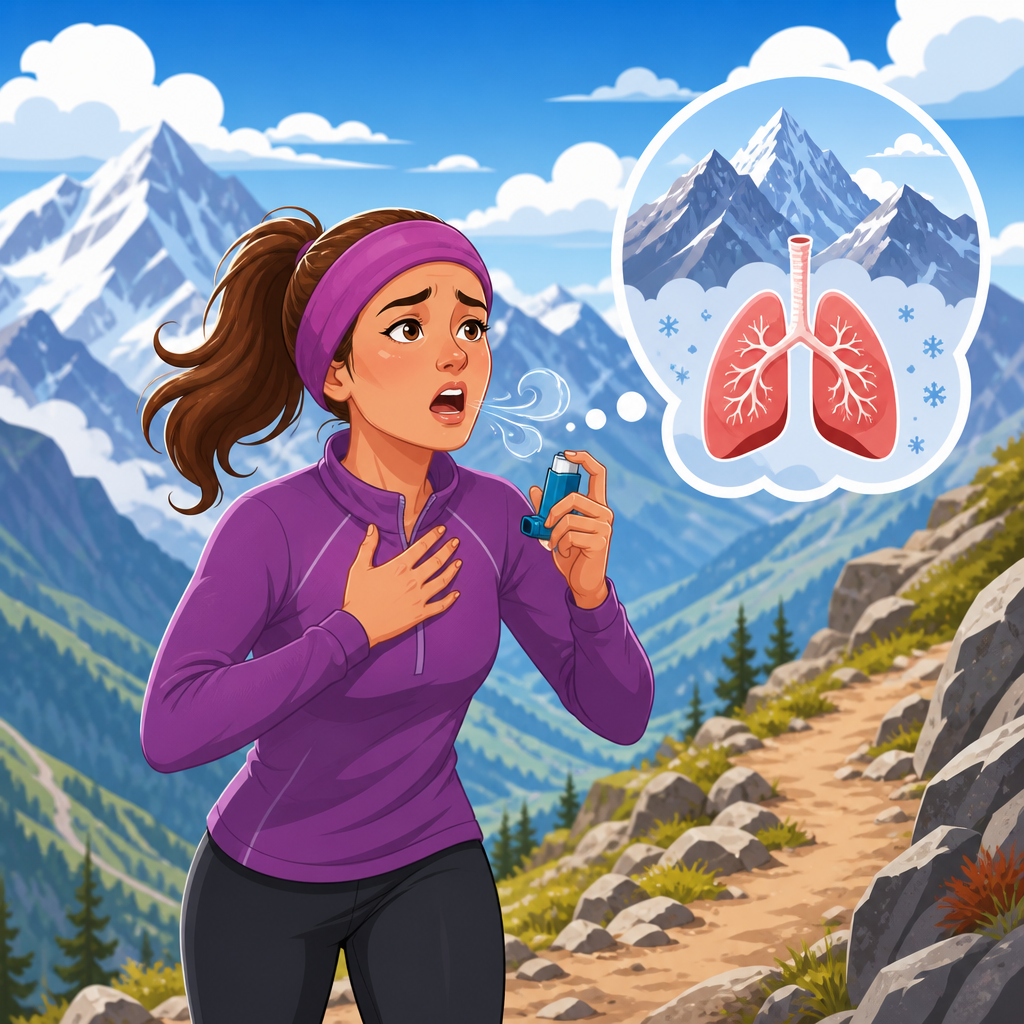
Travel to altitude with coronary artery disease is possible for many people, but it is not automatically safe, and the right answer depends on how well the condition is controlled, how high you plan to go, how fast you ascend, and what symptoms you have at sea level. Coronary artery disease, often shortened to CAD, means the arteries supplying the heart muscle have narrowed because of atherosclerotic plaque. Altitude usually refers to elevations above 1,500 meters or about 5,000 feet, where the air contains the same percentage of oxygen but lower barometric pressure, reducing the amount of oxygen available with each breath. That lower oxygen level triggers a predictable stress response: heart rate rises, blood pressure can increase, breathing becomes faster, and the heart works harder to deliver oxygen. For a healthy person, these changes are often manageable. For someone with angina, prior heart attack, coronary stents, bypass surgery, uncontrolled hypertension, arrhythmias, or heart failure, they can expose limits that are easy to miss at home.
I have advised travelers with stable angina, post-stent patients returning to ski trips, and retirees planning high mountain rail journeys, and the recurring lesson is that altitude is not one single risk. A short commercial flight, a hotel stay in Denver, a trek to Cusco, and sleeping above 3,500 meters are very different exposures. The main concern is oxygen supply versus oxygen demand. If narrowed coronary arteries cannot increase blood flow enough when altitude raises cardiac workload, chest pain, shortness of breath, or even acute coronary events can occur. That is why this heart and blood pressure hub matters: decisions about altitude should be tied to exercise tolerance, medication planning, blood pressure control, and the details of the itinerary, not a generic yes or no. People with stable disease often travel safely with preparation, while those with recent symptoms or poorly controlled cardiovascular disease should delay travel until reassessed.
How altitude affects the heart and blood pressure
Altitude changes cardiovascular physiology within minutes. The drop in inspired oxygen stimulates the sympathetic nervous system, increasing pulse and constricting blood vessels. During the first days at altitude, systolic blood pressure often rises, especially during exertion and sleep. Pulmonary artery pressure also increases. In people with coronary artery disease, this matters because myocardial oxygen demand goes up at the same time arterial oxygen content goes down. Even routine activity such as climbing stairs with luggage can feel like a stress test.
The effect becomes more pronounced with higher elevation and faster ascent. Many patients assume the airplane cabin is the main issue, and cabin pressure does matter because commercial aircraft are commonly pressurized to the equivalent of roughly 6,000 to 8,000 feet. However, the larger risk usually comes after arrival, when travelers walk farther than expected, carry bags, sleep poorly, drink less water, and push through fatigue. Cold temperatures add another burden by causing vasoconstriction and increasing afterload. At ski resorts, I worry as much about the first morning walk uphill in boots as the flight itself.
Blood pressure deserves special attention. Some people with treated hypertension remain well controlled at altitude, but others see meaningful increases, especially if they use nonsteroidal anti-inflammatory drugs, decongestants, excessive alcohol, or have untreated sleep apnea. The combination of CAD and high blood pressure can amplify strain on the heart. For that reason, home blood pressure logs before travel are useful, and travelers should bring enough medication, keep doses on schedule, and avoid making unsupervised changes just because readings vary for a day or two.
Who can usually travel, and who should postpone altitude exposure
A practical way to answer whether you can travel to altitude with coronary artery disease is to classify the disease as stable or unstable. People with stable CAD usually have no chest pain at rest, no recent worsening pattern, and an exercise capacity that matches the demands of the trip. Many can tolerate moderate altitude if they ascend gradually and remain within limits discussed with their clinician. Patients who have had successful revascularization, whether by stent or coronary artery bypass grafting, are not automatically restricted forever. What matters is current function, residual ischemia, medication adherence, and whether there are associated problems such as left ventricular dysfunction or significant arrhythmia.
Travel should generally be postponed if there has been a recent myocardial infarction, unstable angina, decompensated heart failure, uncontrolled arrhythmia, severe symptomatic valvular disease, or markedly uncontrolled blood pressure. A recent change in chest pain pattern is a red flag even if prior tests were reassuring. If walking on level ground causes symptoms at home, altitude is not the place to “see how it goes.” International guidance from cardiology and wilderness medicine groups is broadly consistent on this point: unstable cardiovascular disease and rapid ascent do not mix safely.
| Situation | Typical altitude travel advice | Why |
|---|---|---|
| Stable CAD, good exercise tolerance, no recent symptoms | Often reasonable with gradual ascent and clinician review | Heart can usually meet higher demand if reserve is adequate |
| Recent stent or bypass, now symptom-free | Possible after recovery and medical clearance | Risk depends on healing, residual ischemia, and medications |
| Recent heart attack or unstable angina | Postpone altitude travel | Oxygen mismatch and exertion may provoke recurrent ischemia |
| Uncontrolled hypertension | Delay until blood pressure is consistently controlled | Altitude commonly raises pressure further |
| Heart failure, serious arrhythmia, low exercise capacity | Needs individualized specialist assessment | Lower oxygen and sympathetic activation increase risk |
Pre-trip assessment: what to discuss with your clinician
The best pre-trip visit is specific. Bring your exact itinerary, including destination altitude, sleeping altitude, transport method, planned activity level, and access to medical care. A hotel at 1,800 meters is not the same as sleeping at 3,400 meters and hiking to 4,200. I ask patients whether they can climb two flights of stairs or walk briskly without chest pain, unusual breathlessness, or marked fatigue. Functional capacity often predicts altitude tolerance better than the existence of a diagnosis alone.
Testing is not required for everyone, but it can be useful when the trip will be demanding or symptoms are uncertain. Depending on the history, clinicians may consider an exercise stress test, ambulatory rhythm monitoring, echocardiography, or medication review. This is especially important if there is diabetes, chronic lung disease, sleep apnea, kidney disease, or prior stroke, because these conditions change the safety picture. For some travelers, formal cardiac rehabilitation metrics provide a realistic benchmark for exertion planning.
Medication review is critical. Continue antiplatelet therapy, statins, beta blockers, ACE inhibitors, and other prescribed drugs unless your clinician says otherwise. Nitrates should be carried accessibly, not packed away. If you use phosphodiesterase-5 inhibitors for erectile dysfunction, discuss timing because combining them with nitrates can cause dangerous hypotension. Ask whether acetazolamide, often used for altitude illness prevention, is appropriate with your kidney function and medication profile. Also review travel insurance and evacuation options if you will be remote.
Managing medications, pacing, and warning signs at altitude
Once you arrive, the safest strategy is conservative pacing. Spend the first twenty-four to forty-eight hours doing less than you think you can do. Walk slowly, avoid carrying heavy bags uphill, stay warm, and keep hydrated without overdoing alcohol. Altitude diuresis, dry air, and disrupted sleep can leave people depleted, which increases heart strain. Even fit travelers can overestimate themselves on day one because scenery and adrenaline mask symptoms.
Medication timing matters because travel days disrupt routines. Keep essential cardiovascular drugs, nitroglycerin, a medication list, and a brief medical summary in your carry-on. Time zone changes may require a plan for once-daily blood pressure medicines or anticoagulants. For people with CAD and hypertension, skipping a beta blocker or taking decongestants for a cold can be enough to trigger symptoms. Pulse oximeters are popular, but they should be treated as context, not diagnosis. A mildly lower oxygen saturation at altitude is expected; worsening chest pain, severe breathlessness, faintness, or palpitations are more important than one isolated number.
Know the red flags that require immediate descent or medical care. These include chest pressure that does not resolve promptly with rest or prescribed nitroglycerin, breathlessness out of proportion to effort, new confusion, fainting, marked palpitations, or signs of stroke. Altitude illness can overlap with cardiac symptoms, and both deserve caution. If a patient tells me they are planning a high destination with no nearby clinic, I advise a lower threshold for changing plans. Summit goals are optional; ischemia is not.
Special situations: flights, ski resorts, trekking, and combined conditions
Commercial flying is often tolerated by people with stable coronary artery disease, but airport stress can be the harder part: long walks, rushing, carrying luggage, poor sleep, and missed medications. Request wheelchair assistance if distances are significant. During the flight, move your legs, stay hydrated, and avoid excess alcohol. If you have had a recent acute coronary syndrome or procedure, follow the treating cardiologist’s timing advice rather than generic travel rules.
Ski resorts create a classic risk stack: altitude, cold, early exertion, and sometimes heavy meals and alcohol. A traveler who is comfortable walking on flat ground at home may struggle with uphill paths at 2,500 meters in freezing weather. The safest approach is to arrive, rest, and start with light activity. Trekkers face additional issues such as prolonged ascent, dehydration, diarrhea, and limited rescue access. In these itineraries, “stable at home” is not enough; reserve capacity and self-monitoring skills matter.
Combined conditions raise the stakes. CAD often coexists with hypertension, atrial fibrillation, heart failure with preserved ejection fraction, chronic obstructive pulmonary disease, or obstructive sleep apnea. Sleep apnea is especially relevant because altitude can worsen nighttime oxygen dips and disturb breathing patterns. Patients using CPAP should verify power supply and altitude compatibility. People taking blood thinners need a clear bleeding plan for remote trips. Those with implanted devices should carry identification and know the settings, but most pacemakers and stents themselves are not the limiting factor; physiology is.
How this heart and blood pressure hub helps you plan safer travel
This page serves as a practical hub for heart and blood pressure questions within respiratory, cardio, and chronic conditions travel planning. If you are asking whether you can travel to altitude with coronary artery disease, you are usually also asking several connected questions: Is my blood pressure controlled enough? Can I fly after a stent or heart attack? What chest symptoms are dangerous? How should I pace activity in cold weather? Those topics belong together because travelers rarely have one isolated issue.
The core message is straightforward. Stable, well-managed coronary artery disease does not automatically prevent altitude travel, but recent symptoms, poor exercise tolerance, uncontrolled blood pressure, or associated heart and lung disease should prompt reassessment before the trip. The safest travelers are the ones who plan early, match itinerary to current fitness, carry the right medications, and respect the first days at elevation. If you are considering mountain travel, high-altitude cities, or a flight soon after a cardiac event, use this hub to review the related heart and blood pressure guidance and book a pre-travel discussion with your clinician. That one step turns uncertainty into a safer, more realistic plan.
Frequently Asked Questions
Can you travel to altitude if you have coronary artery disease?
Yes, many people with coronary artery disease can travel to altitude, but it is not automatically safe for everyone. The key issue is whether your heart condition is stable and how much strain altitude is likely to place on your cardiovascular system. At higher elevations, there is less oxygen available in the air. In response, your body increases heart rate and blood pressure, and the heart may need to work harder to deliver enough oxygen to the tissues. For someone with narrowed coronary arteries, that extra demand can increase the risk of chest pain, shortness of breath, abnormal heart rhythms, or reduced exercise tolerance.
Whether altitude travel is appropriate depends on several factors, including how well your coronary artery disease is controlled, whether you have symptoms at rest or with exertion at sea level, how active you plan to be during the trip, how high you intend to go, and how quickly you will ascend. A person with stable CAD, good exercise tolerance, no recent angina, and no recent cardiac events may be able to tolerate moderate altitude far better than someone with poorly controlled symptoms or recent heart problems. The safest approach is to discuss your plans with your cardiologist before travel, especially if you are going above about 1,500 meters, around 5,000 feet, or if your trip involves hiking, skiing, or rapid ascent.
Why can altitude be a problem for people with coronary artery disease?
Altitude can be challenging because lower oxygen levels force the cardiovascular system to compensate. Even at rest, the body may respond to altitude by increasing heart rate and activating stress hormones. Blood pressure can rise, breathing becomes faster, and sleep may be less restful. During physical activity, these effects become more noticeable. For someone without heart disease, the body often adapts over time. For someone with CAD, however, the narrowed coronary arteries may limit the heart’s ability to get enough oxygen-rich blood when demand increases.
This mismatch between oxygen supply and oxygen demand is the main concern. It can trigger angina, worsen fatigue, reduce stamina, and in some cases contribute to more serious complications. Cold weather, dehydration, overexertion, and poor sleep can make this even worse, especially during mountain travel. Another issue is that altitude symptoms such as breathlessness, lightheadedness, or chest discomfort can be mistaken for normal altitude adjustment when they may actually reflect cardiac strain. That is why people with coronary artery disease need to be more cautious than average travelers and should treat any concerning symptoms seriously rather than assuming they are harmless effects of elevation.
How do you know if your coronary artery disease is stable enough for altitude travel?
In general, coronary artery disease is considered more stable when symptoms are predictable, well controlled, and unchanged over time, and when there has not been a recent major cardiac event. If you can walk or exercise at sea level without chest pain, significant shortness of breath, dizziness, or unusual fatigue, that is generally more reassuring than if you have symptoms with minimal activity. Stability also means no recent heart attack, no recent unstable angina, no recent hospitalization for heart-related problems, and no major medication changes because of worsening symptoms.
A pre-travel medical review is especially important if you have had a recent stent placement, bypass surgery, heart attack, or worsening angina. Your doctor may want to review your exercise capacity, blood pressure control, oxygen needs, medication list, and overall risk profile before giving clearance. In some cases, further testing such as a stress test may be recommended, particularly if your planned trip involves strenuous activity or substantial altitude. The decision is individualized. Being “okay at home” does not always mean you are automatically ready for altitude, especially if your itinerary includes rapid ascent, remote locations, or exertion in cold conditions.
What precautions should you take before and during a trip to high altitude with CAD?
The best precaution is planning ahead. Talk with your cardiologist or healthcare professional before the trip and explain exactly where you are going, the maximum elevation, how quickly you will ascend, and what activities you expect to do. Make sure your condition is stable and ask whether any medications need adjustment. Bring an adequate supply of all heart medications, keep them in your carry-on if flying, and carry a current medication list. If you use nitroglycerin for angina, make sure it is not expired and that you know when and how to use it.
During the trip, ascend gradually when possible, avoid heavy exertion on the first day or two at altitude, stay well hydrated, and limit alcohol if it worsens dehydration or disrupts sleep. Try to pace activity conservatively and recognize that your normal sea-level exercise tolerance may not apply at elevation. Cold exposure can increase cardiovascular stress, so dress appropriately and avoid sudden intense effort in freezing weather. It is also wise to travel with companions who know your condition and understand what to do in an emergency. If symptoms develop, especially chest pressure, unusual shortness of breath, faintness, or palpitations, stop activity immediately and seek medical attention. In some situations, descending to a lower elevation may be necessary.
What symptoms at altitude mean someone with coronary artery disease should get medical help right away?
Any chest pain, chest pressure, chest tightness, or discomfort that feels like your usual angina or is new and unexplained should be taken seriously. The same is true for shortness of breath that seems out of proportion to the altitude or activity level, especially if it comes on suddenly, occurs at rest, or gets progressively worse. Other warning signs include pain that spreads to the arm, jaw, back, or shoulder; unusual sweating; nausea; fainting; severe weakness; rapid or irregular heartbeat; or a marked drop in exercise tolerance compared with what you would expect.
It can sometimes be hard to tell whether symptoms are due to normal altitude adjustment, altitude illness, or heart-related strain. That uncertainty is exactly why prompt evaluation matters. If chest symptoms do not improve quickly with rest, if prescribed nitroglycerin is not helping as expected, or if you feel generally unwell in a way that seems different from ordinary exertion, do not push through it. Seek urgent medical care and consider descending if advised. With coronary artery disease, it is always better to be cautious than to dismiss potentially serious symptoms while away from immediate medical support.