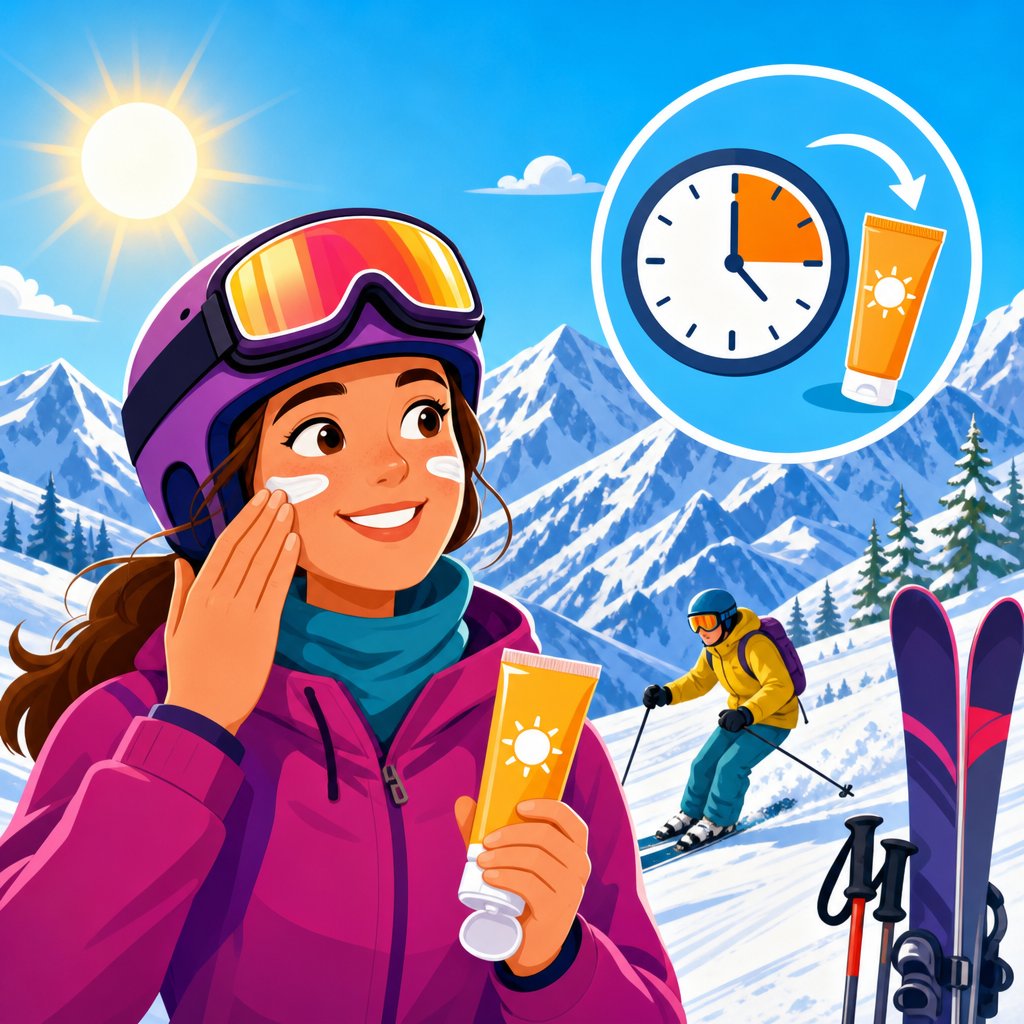
Skiers need to reapply sunscreen every two hours, and sooner after sweating, wiping the face, or spending time at high altitude under intense reflected light. That simple rule matters because skiing combines several factors that amplify ultraviolet exposure: thinner atmosphere, long hours outdoors, reflection from snow, cold air that hides the feeling of sunburn, and wind that can damage the skin barrier. In practice, I tell clients and colleagues to treat a ski day more like a beach day with added altitude than a normal winter outing. If you apply once in the lodge at 8 a.m. and do not touch up again until après-ski, you are almost certainly underprotected.
To answer the question well, it helps to define a few terms. Sunscreen is a topical product that reduces the amount of ultraviolet radiation reaching living skin cells. SPF measures protection mainly against UVB, the wavelength range most closely linked to sunburn. Broad-spectrum means the formula also protects against UVA, which penetrates more deeply and contributes to photoaging, pigmentation, and skin cancer risk. Water-resistant means the product keeps its labeled protection for either 40 or 80 minutes during sweating or water exposure, but it does not mean all-day protection. For skiers, broad-spectrum SPF 30 is the floor, while SPF 50 is often the more sensible choice on bluebird days, glacier terrain, or high-elevation resorts.
This topic matters far beyond a red nose after one weekend trip. Cumulative ultraviolet exposure increases the risk of actinic damage, melasma flares, uneven pigmentation, cataracts, pterygium, and several forms of skin cancer, including basal cell carcinoma, squamous cell carcinoma, and melanoma. Snow can reflect a very large share of incoming UV radiation, often cited as up to 80 percent under favorable conditions, which means light is hitting the face from above and below. UV intensity also rises with altitude, commonly estimated at roughly 10 to 12 percent for every 1,000 meters gained, although the exact increase varies with atmospheric conditions. That is why people burn on a chairlift in February even when the air temperature is below freezing.
As the hub page for Sun Protection & UV within Daily Life, Skin, Eyes & Home Comfort, this article covers the full decision framework: how often to reapply sunscreen while skiing, what SPF and formula types work best, how to protect lips and eyes, how weather changes risk, what common mistakes cause failures, and how to build a simple routine that holds up on the mountain. If you want one direct answer before the deeper guidance, use this: apply a generous layer 15 minutes before going outside, reapply every two hours, and reapply immediately after heavy sweating, face wiping, lunch breaks that rub product off, or any time your skin feels exposed after wind, snow, or friction from a buff or helmet strap.
Why skiing increases UV exposure
Skiing creates a uniquely harsh ultraviolet environment. First, altitude reduces the amount of atmosphere available to absorb and scatter UV. Second, snow is highly reflective, so exposed areas such as the nose, cheeks, chin, ears, and lower eyelids receive direct and reflected radiation. Third, cold temperatures can suppress the normal cues people use to judge sun intensity. Many skiers think, “I do not feel hot, so the sun cannot be strong,” but UV damage is not tied to air temperature. I have seen some of the worst winter burns after sunny days in dry alpine air with a light wind and no sensation of heat at all.
Cloud cover does not reliably solve the problem. Thin or broken cloud may reduce visible brightness more than ultraviolet transmission, and people often lower their guard when the sky looks gray. Terrain and schedule also matter. A skier spending hours on exposed ridgelines, high-speed lifts, and open bowls will receive more cumulative UV than someone doing short tree runs and frequent indoor breaks. Midday exposure, usually from late morning through early afternoon, is still the highest risk period in winter, especially when the UV index reaches 3 or above. At many mountain destinations, that threshold is crossed more often than visitors expect.
How often should you reapply sunscreen while skiing?
The best standard recommendation is every two hours. That interval aligns with dermatology guidance because sunscreen films degrade with UV exposure, shift with facial movement, and wear away through friction, sweat, and incidental contact. On a ski day, those losses happen faster than most people assume. Goggles press along the cheeks and brow, neck gaiters rub the jawline, gloves wipe the nose, and helmets or hats expose the forehead edge when adjusted. Even if a formula says water-resistant for 80 minutes, that label applies under testing conditions and does not guarantee full protection for an entire morning of lifts, wind, and repeated face contact.
There are several situations where two hours is too long. Reapply after heavy sweating, after toweling or wiping your face, after eating if you have rubbed around the mouth, after taking off and replacing goggles repeatedly, and after any fall or weather event that leaves snow and moisture on exposed skin. If you are out from first chair to lunch, a practical schedule is one full application before going out, one reapplication around 10:30 or 11:00 a.m., and another after lunch before heading back to the lifts. If the day runs long into sunny spring conditions, a fourth pass in midafternoon is reasonable and often necessary.
For most adults, the forgotten detail is quantity. Underapplication is the biggest reason sunscreen “does not work.” The face and neck usually need about a quarter teaspoon combined, sometimes a little more if the ears, scalp part, and underside of the chin are exposed. For full-body use, the classic lab amount is about one ounce, roughly a shot glass, though actual needs vary by body size and clothing coverage. Skiers often rely on tiny amounts dabbed across the nose and cheeks. That approach leaves thin spots, and thin spots burn first.
Choosing the right sunscreen for a ski day
For skiing, choose a broad-spectrum sunscreen with SPF 30 at minimum, though SPF 50 is the better default for fair skin, high altitude, spring snow, glacier skiing, or any day with prolonged exposure. In my experience, formula elegance matters because people reapply products they do not hate. Creams and lotions usually give the most reliable coverage on dry, wind-exposed winter skin. Sticks work well for the nose, ears, and around the eyes because they are portable and less likely to run, but they require multiple passes to deliver a sufficient film. Sprays are convenient yet harder to apply evenly on windy slopes and are easy to underuse.
Mineral filters such as zinc oxide and titanium dioxide are often preferred by people with sensitive skin, rosacea, post-procedure skin, or stinging around the eyes. Chemical filters can feel lighter and more transparent, and many modern formulas are excellent, but some skiers find they migrate with sweat and irritate the eye area. Water resistance matters on the mountain because even in cold weather you sweat under insulated layers. Look for 80-minute water resistance when possible. Lip protection is nonnegotiable; use a broad-spectrum lip balm with at least SPF 30 and reapply even more often than facial sunscreen because eating, drinking, licking, and wind remove it quickly.
| Product type | Best use while skiing | Main advantage | Main limitation |
|---|---|---|---|
| Cream or lotion | Full face, neck, ears before first run | Most even, dependable coverage on dry skin | Can feel heavy if overapplied under goggles |
| Stick | Nose, cheekbones, lips, eye area touch-ups | Portable, precise, less messy on lifts | Needs repeated swipes for full protection |
| Spray | Body areas during lodge breaks | Fast for larger exposed areas | Wind reduces accuracy; easy to underapply |
| Lip balm SPF 30+ | Lips and vermilion border all day | Targets a frequent burn site | Wears off quickly with food and drinks |
How to apply sunscreen correctly before and during skiing
Application technique changes outcomes. Start with dry skin and apply sunscreen 15 minutes before going outdoors so the film can settle. Cover the forehead to the hairline, temples, ears, back of the ears, nose including the sides, cheeks, upper lip, chin, jawline, and neck. If you have a beard, work product into exposed skin around the cheeks, nose, and neck because facial hair does not block all UV. Pay attention to the lower eyelids and crow’s-feet area, where reflected light from snow is intense. Many skiers miss the ear rims and the strip between the goggle line and helmet edge; both are classic burn zones.
For reapplication, make it friction-efficient. Carry a stick or small tube in an inner jacket pocket so the product stays spreadable. Reapply in the lodge, on a sunny deck, or even in the lift line if you can do it with clean hands. Pat rather than aggressively rub if your skin is wind-chapped. If you wear makeup or tinted moisturizer, a sunscreen stick over high-exposure areas is often more realistic than a full cosmetic reset midday. Still, if your morning layer was thin, no touch-up format fully compensates. The strongest strategy is one generous base layer followed by timely top-ups.
Beyond sunscreen: complete mountain sun protection
Sunscreen is only one layer of defense. UV-blocking goggles or sunglasses are essential because snow glare can contribute to photokeratitis, a painful sunburn of the cornea sometimes called snow blindness. Choose lenses labeled 100 percent UVA and UVB protection. Wraparound sunglasses help off the slopes, while properly fitted goggles protect during descents and on lifts. A helmet with a brim or a cap under a helmet can shade the upper face slightly, though neither replaces sunscreen. Neck gaiters, face masks, and balaclavas reduce exposure but can also rub product away, which is another reason reapplication matters.
Clothing ratings can help. Garments with UPF labeling indicate tested ultraviolet protection, and dense weaves in dark or bright colors generally shield better than thin, stretched, or wet fabrics. For people with a history of skin cancer, melasma, photosensitive conditions, or medications that increase sun sensitivity, these non-topical layers are especially important. Common culprits include doxycycline, isotretinoin, some thiazide diuretics, and certain anti-inflammatory drugs. Children also need special attention because they burn quickly and depend on adults for consistent reapplication. The routine should include sunscreen, lip balm, goggles, helmet, and shade breaks whenever practical.
Common mistakes, seasonal differences, and when to be extra careful
The most common mistakes are applying too little, skipping reapplication, forgetting the lips and ears, relying on makeup SPF alone, and assuming cloudy or cold days are safe. Another frequent error is using last year’s half-open bottle without checking the expiration date. Sunscreens can lose stability over time, especially if they were stored in a hot car or repeatedly frozen and thawed. Spring skiing deserves extra caution because longer days, stronger sun angles, and slushy reflective snow raise exposure. Glacier skiing, high-alpine touring, and resorts in very sunny climates also demand stricter habits than a short lesson on a local hill.
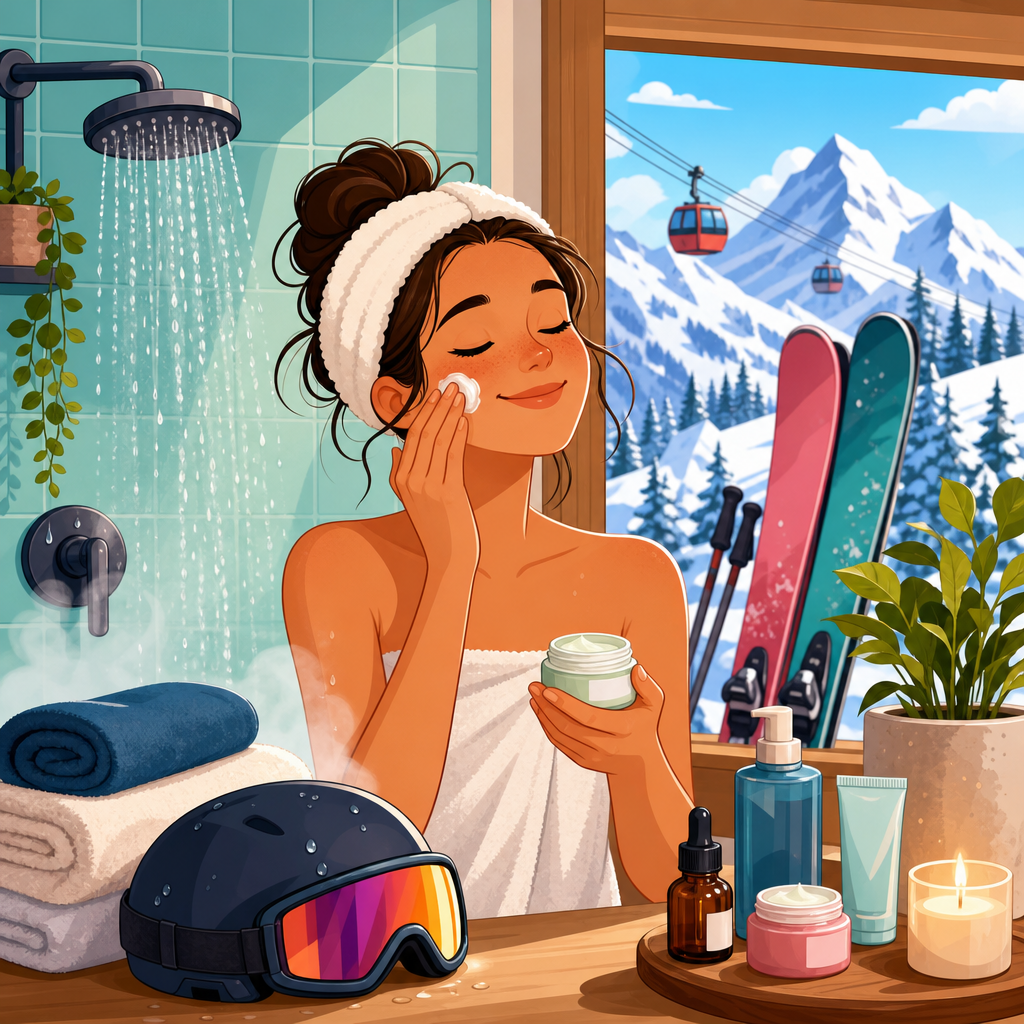
Be extra careful if you have very fair skin, a personal or family history of skin cancer, melasma, recent cosmetic procedures, acne treatments that disrupt the barrier, or medical conditions worsened by UV. Watch for early signs that protection is failing: unusual warmth on the cheeks, tightness, stinging, visible redness at the goggle edge, or chapped lips despite balm. If you do get burned, get out of the sun, cool the skin, moisturize, hydrate, and monitor for blistering or severe eye pain. Going forward, build a ski-day kit that lives with your gear so sun protection becomes automatic rather than aspirational.
The core answer is straightforward: reapply sunscreen every two hours while skiing, and reapply sooner whenever sweat, wiping, friction, meals, or weather remove the protective film. That rule works because skiing exposes skin to a combination of altitude, snow reflection, wind, and long outdoor sessions that quietly intensify ultraviolet damage. The right product helps, but timing and quantity matter just as much. A generous broad-spectrum SPF 30 or, better, SPF 50 base layer, followed by reliable touch-ups, protects far better than a premium formula used once and forgotten. For lips, eyes, ears, and the goggle line, small neglected areas often become the most painful lesson of the day.
As the hub for Sun Protection & UV within Daily Life, Skin, Eyes & Home Comfort, this page should guide every related decision you make outdoors: how to choose sunscreen, when to reapply it, how to protect your eyes from snow glare, why lip balm with SPF belongs in every jacket pocket, and which winter conditions call for extra caution. Good mountain sun protection is not complicated, but it does require discipline. Apply before you leave the lodge, keep a reapplication product on you, protect your eyes and lips, and treat winter sun with the same respect you give summer exposure. Make that routine part of every ski day, and your skin will benefit for years.
Frequently Asked Questions
How often should you reapply sunscreen while skiing?
You should reapply sunscreen every two hours while skiing, even on cold, cloudy, or windy days. That is the baseline rule because ultraviolet exposure in the mountains adds up quickly. Higher altitude means a thinner atmosphere filtering less UV radiation, and snow reflects a large amount of that radiation back onto your skin. As a result, your face, lips, ears, and neck can receive more sun exposure than many people expect. Skiers also tend to spend long stretches outdoors without noticing early signs of sun damage because cold air masks the heat and sting people often associate with sunburn. If you are on the slopes from morning through midafternoon, plan sunscreen reapplication just like any other essential part of your routine, similar to a water break or checking your gear. In real-world terms, a ski day should be treated more like a beach day than a quick winter errand.
Do you need to reapply sunscreen sooner than every two hours when skiing?
Yes. Every two hours is the standard guideline, but skiing often creates situations where you should reapply sooner. If you sweat under your helmet, buff, goggles, or jacket layers, some sunscreen can break down or shift on the skin. If you wipe your nose, mouth, or cheeks with a glove, sleeve, tissue, or neck gaiter, you may physically remove protection from the exact areas that are most exposed. Reapplication should also happen sooner if you are skiing at high altitude under especially intense sunlight or spending extended time in bright reflected conditions, such as on clear days after fresh snowfall. The practical rule is simple: if moisture, friction, or heavy UV exposure has interfered with your sunscreen, do not wait for the full two-hour mark. Put more on. This matters most on the nose, cheekbones, lower face, forehead, ears, and neck, which are common hot spots for winter sunburn.
Why is sunscreen so important for skiing if it does not feel sunny or hot?
Sunscreen is especially important while skiing because several factors increase UV exposure even when the weather feels cold. First, altitude plays a major role. As you go higher up the mountain, there is less atmosphere above you to block ultraviolet radiation. Second, snow reflects UV light, effectively increasing the amount of radiation reaching your skin from below as well as above. Third, ski days often involve hours outdoors, which means cumulative exposure becomes significant even if you are not lying in direct summer heat. Finally, cold air can hide the sensation of burning, and wind can dry and irritate the skin, weakening the skin barrier and making sun-damaged skin feel worse afterward. Many people underestimate mountain sun because they do not feel sweaty or overheated, but UV damage does not depend on temperature. You can absolutely burn on a freezing day, and it often happens faster than expected on exposed areas of the face and lips.
What type of sunscreen works best for a day on the slopes?
For skiing, choose a broad-spectrum sunscreen that protects against both UVA and UVB rays, and use one with an SPF of at least 30. Many people do well with SPF 50 for mountain conditions because of the combination of altitude, long exposure, and snow reflection. A water-resistant formula is usually the best choice since sweating and face moisture can reduce staying power. Creams, lotions, sticks, and balms can all work, but the best sunscreen is the one you will apply generously and reapply consistently. Stick formulas are especially helpful for the nose, cheeks, ears, and around the lips during quick reapplications on the mountain. Do not forget lip protection either; an SPF lip balm is essential because lips burn easily in ski conditions. If your skin is sensitive or already dry from wind and cold, look for a formula that is moisturizing and comfortable enough to wear under goggles, helmets, and neck coverings without stinging or making you want to wipe it off.
What is the best way to apply and reapply sunscreen while skiing without disrupting your day?
The best approach is to apply sunscreen before you head outside and then build reapplication into your ski schedule. Put it on generously 15 to 30 minutes before sun exposure so it has time to settle evenly on the skin. Cover the areas skiers commonly miss, including the hairline, temples, ears, under the chin, neck, and the strip of skin exposed beneath goggles or a helmet. During the day, reapply every two hours and sooner if you have been sweating, wiping your face, or riding in intense high-altitude glare. Many skiers find it easiest to reapply during lift breaks, lunch, or when adjusting layers. Keeping a small sunscreen stick and SPF lip balm in a jacket pocket makes this much more realistic. If you wear goggles, focus on exposed zones such as the nose, cheekbones, forehead edge, and lower face. A good habit is to check your skin whenever you hydrate: if your face has been rubbed, damp, or wind-chapped, it is probably time for another layer. Consistency is what protects you, not just the morning application.