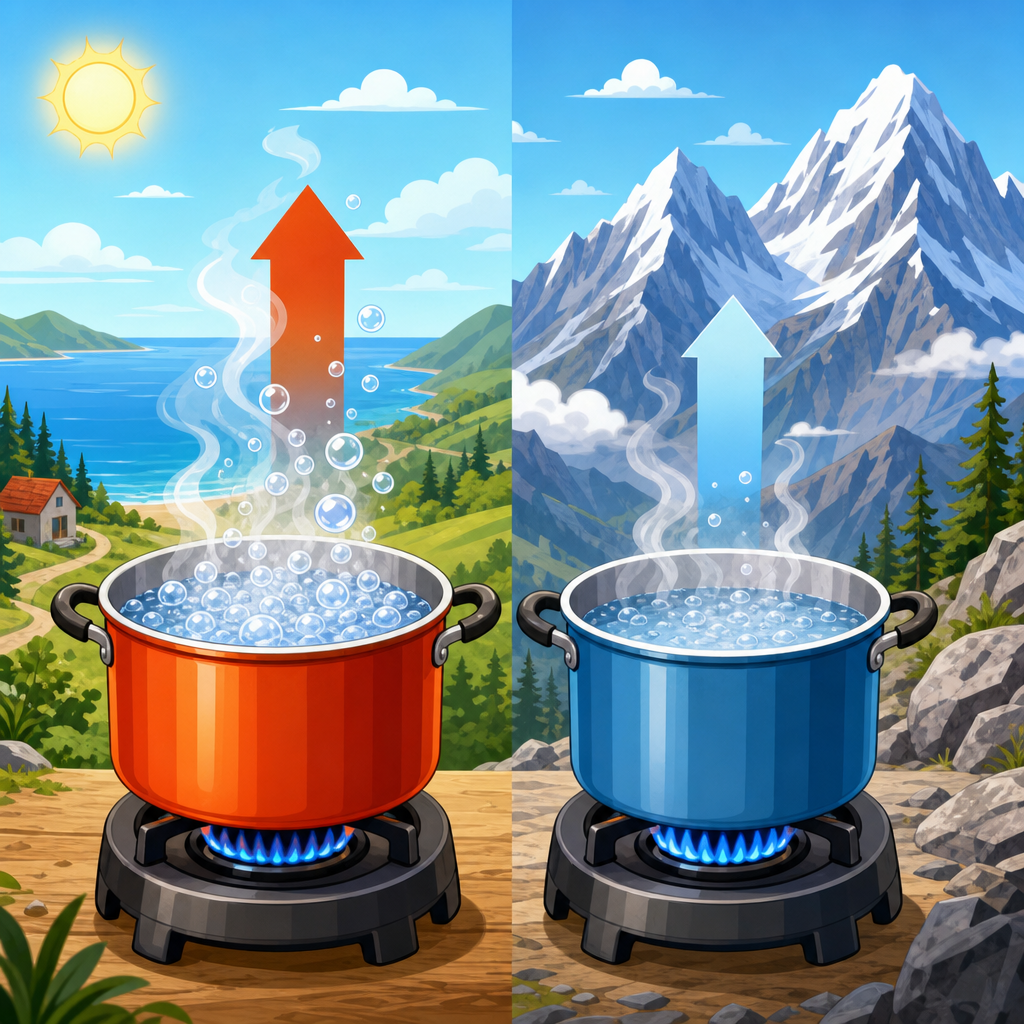
When you should increase oven temperature at altitude depends on what you are baking, how high you are above sea level, and whether the recipe relies on structure setting quickly. In altitude cooking, lower air pressure changes how heat, moisture, and leavening behave, so a standard recipe that works at sea level can overexpand, dry out, or collapse in a mountain kitchen. I have tested this across home ovens in the 3,500- to 8,000-foot range, and the same pattern appears repeatedly: cakes, muffins, quick breads, and many cookies usually benefit from a moderate temperature increase, while custards, cheesecakes, and delicate items often do not. As a practical definition, high altitude baking usually begins around 3,000 feet, with more noticeable adjustments above 5,000 feet. The reason temperature matters is straightforward. Water boils at a lower temperature as elevation rises, so moisture evaporates faster. Gas bubbles from baking powder, baking soda, yeast, and trapped air expand more readily in lower pressure. If the batter or dough does not set soon enough, the product can rise too fast and then sink. Increasing oven temperature by about 15 to 25 degrees Fahrenheit often helps the structure set earlier, preserving volume and crumb. This article explains when that strategy works, when it backfires, and how it fits into the broader fundamentals of baking at altitude.
Why altitude changes baking results
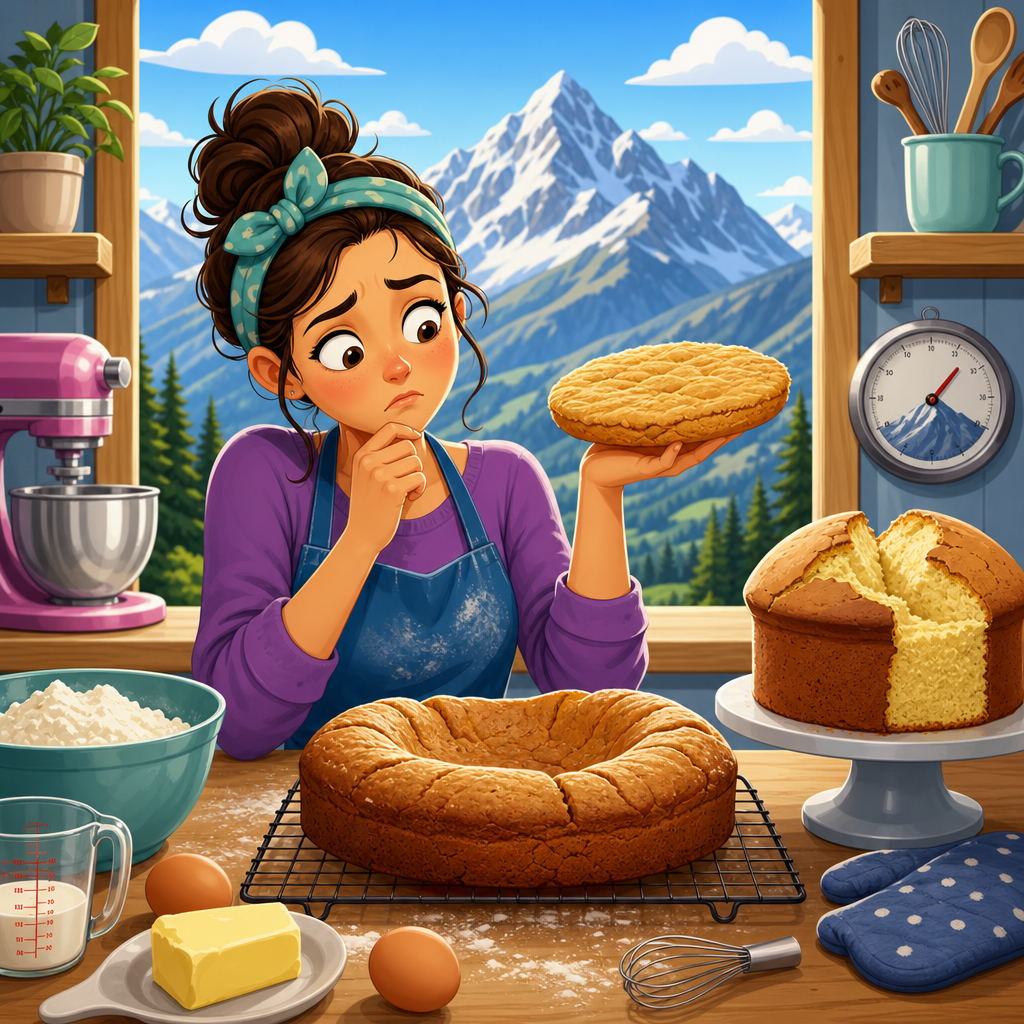
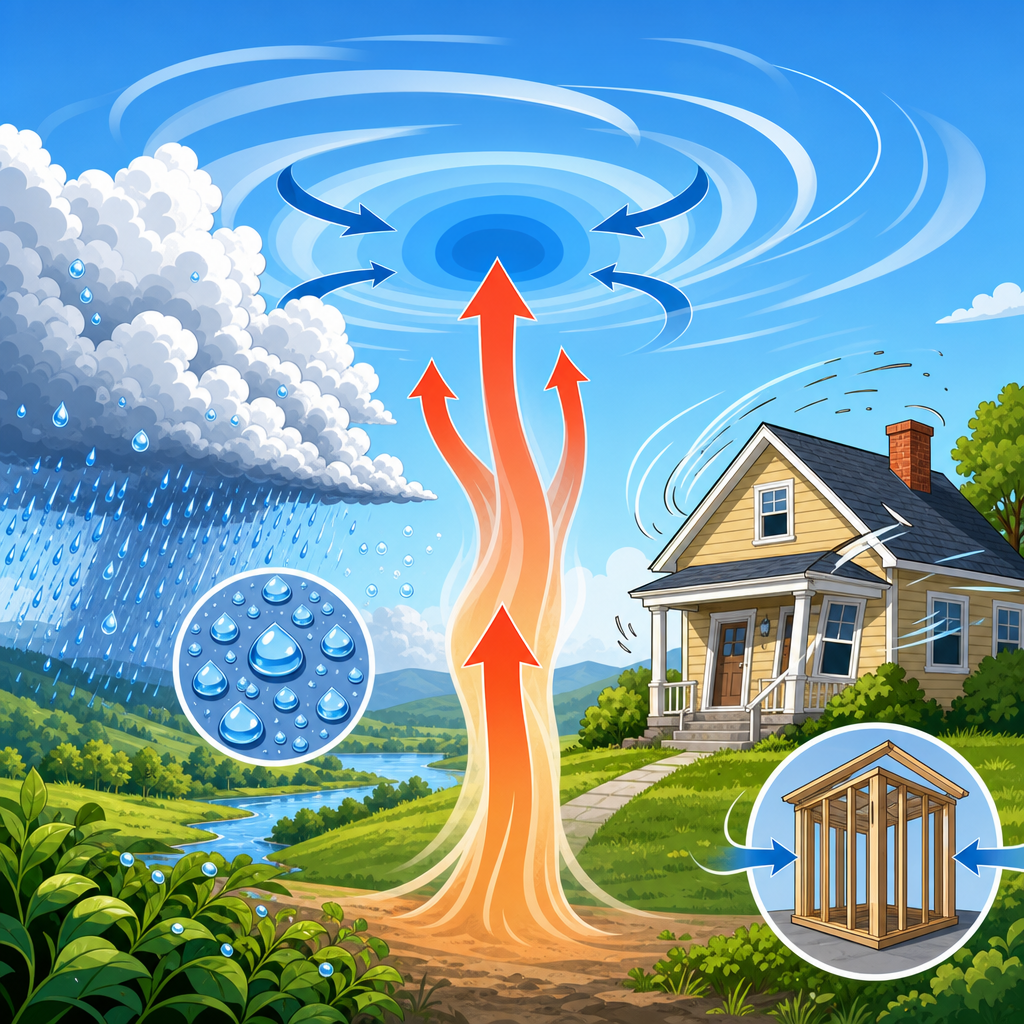
The core physics of altitude baking come down to pressure, evaporation, and expansion. At higher elevations, atmospheric pressure drops. That lower pressure allows liquids to evaporate sooner and gases to enlarge more easily. In baking, those changes affect nearly every stage of the process: creaming traps air differently, leaveners act faster, protein coagulation and starch gelatinization may lag behind expansion, and finished products lose moisture sooner in the oven. This is why a cake that looks perfect at 15 minutes can crater by 25, or why muffins can peak dramatically and then pull away from the liners.
For most bakers, the first noticeable symptom is over-rising. Chemical leaveners become more forceful relative to structure, especially in formulas already rich in sugar or liquid. Sugar weakens structure and delays setting, while excess liquid evaporates rapidly in a dry, hot mountain environment. An oven temperature increase is one of the fastest corrective tools because it moves the recipe toward earlier starch setting and protein coagulation. That said, temperature is never the only lever. Successful altitude baking often combines a slightly hotter oven with reduced leavening, a bit more flour, extra liquid, or adjusted mixing time.
A useful rule is this: increase oven temperature when the item needs help setting before it overexpands. If the problem is slow structure formation, the hotter oven helps. If the problem is already overbrowning, curdling, or cracking from aggressive heat, raising temperature makes things worse. Understanding that distinction is the foundation for every altitude adjustment that follows.
When increasing oven temperature is the right move
You should increase oven temperature at altitude for baked goods that depend on a stable batter or dough setting quickly after expansion begins. In practice, that includes layer cakes, cupcakes, muffins, quick breads, scones, biscuits, many bar cookies, and some drop cookies. At 3,000 to 5,000 feet, a 15-degree Fahrenheit increase is often enough. Above 5,000 feet, 20 to 25 degrees is common, especially for formulas with moderate to high sugar content. The goal is not faster browning for its own sake. The goal is structural timing.
Take a classic butter cake. At sea level, it may bake at 350 degrees Fahrenheit for 28 to 32 minutes. At 5,500 feet, the same cake can rise aggressively before the crumb has enough strength to hold the bubbles. A small increase to 365 or 375 degrees helps the outer and middle crumb set before the air cells become too large and fragile. The same principle works for muffins. A slightly hotter oven gives better domes and reduces coarse tunnels, assuming you also avoid overmixing and do not overload the batter with leavener.
Quick breads also benefit because they are vulnerable to a gummy center and overdeveloped top. In banana bread or zucchini bread, altitude often exaggerates both moisture loss and uneven expansion. Raising temperature modestly helps the loaf set through the center, though large loaves may also need a metal rather than glass pan to avoid overbrowning at the edges. Scones and biscuits respond well to a hotter oven because they rely on steam and chemical lift followed by rapid structure setting. In high-altitude kitchens, I consistently get better lift and cleaner layers with a modest temperature increase and very cold fat.
Cookies require more nuance. Thick drop cookies, oatmeal cookies, and bar cookies frequently improve with slightly higher heat because the dough spreads less before setting. Thin, high-butter cookies may already brown too quickly, so they need testing. If your cookies puddle before they set, temperature is a strong candidate for adjustment. If their edges burn while centers remain underdone, ingredient changes matter more than more heat.
When you should not raise the oven temperature
Not every product benefits from more heat. You generally should not increase oven temperature at altitude for custards, cheesecakes, flans, pumpkin pie filling, bread pudding, meringues, soufflés that already rise aggressively, or any bake designed around gentle, even coagulation. These products depend less on rapid structural setting and more on controlled moisture retention. A hotter oven in these cases tends to toughen proteins, promote cracking, and create curdled textures.
Cheesecake is the clearest example. At altitude, the filling still faces faster moisture loss, but increasing oven temperature usually causes the edges to set too quickly while the center lags. That contrast leads to fissures and a dry outer ring. A water bath, lower rack position, and accurate pull temperature are more useful than extra heat. Custard pies behave similarly. Their issue is not overexpansion but delicate protein setting. More heat turns smooth filling grainy.
Yeast breads sit in the middle. Lean hearth loaves often benefit from strong initial heat because oven spring and crust formation are part of the design, but pan breads, enriched doughs, and cinnamon rolls may simply brown too fast at altitude. Here the right answer may be shorter proofing, slightly more hydration, and careful dough temperature rather than an oven increase. For laminated pastries, oven temperature is dictated by butter melting and steam layering; altitude changes handling, but the target heat is usually close to the original formula.
If a recipe already bakes at a high temperature, such as pizza or choux pastry, you should be cautious. Choux at altitude often needs recipe adjustments before temperature changes because steam generation and shell drying are already intense. The right question is not “Should I always raise the oven?” but “Does this bake need faster setting, or gentler control?”
How much to increase temperature, and what to adjust with it
For most home bakers, the reliable starting point is small and deliberate. Increase oven temperature by 15 to 25 degrees Fahrenheit for cakes, muffins, quick breads, biscuits, scones, and many cookies once you are above 3,000 feet. Near 3,500 feet, 15 degrees is usually sufficient. Around 5,000 to 7,000 feet, 20 degrees is common. Above 7,000 feet, 25 degrees may help, but formula changes become more important than temperature alone.
A hotter oven typically shortens baking time, so begin checking several minutes early. More importantly, pair temperature changes with one or two structural adjustments. Reduce baking powder or baking soda slightly if the item rises too fast and falls. Add 1 to 2 tablespoons of extra liquid per cup used in drier formulas. Increase flour modestly if the batter seems loose at altitude. In many cakes, trimming sugar by 1 to 2 tablespoons per cup also improves stability because sugar delays starch gelatinization and weakens crumb.
| Baked good | Typical altitude issue | Temperature change | Common companion adjustment |
|---|---|---|---|
| Layer cake | Rises then sinks | +15 to 25°F | Reduce leavener slightly; add a little liquid |
| Muffins | Peaks, tunnels, dry crumb | +15 to 25°F | Lower leavener; avoid overmixing |
| Quick bread | Gummy center, overbrowned top | +15 to 20°F | Add liquid; use metal pan if needed |
| Drop cookies | Excess spreading | +10 to 20°F | Chill dough; increase flour slightly |
| Cheesecake | Cracking, dry edges | No increase | Bake gently; use water bath |
| Custard pie | Curdled filling | No increase | Lower, even heat; shield crust |
Use an oven thermometer, not just the control dial. Many household ovens run 15 to 30 degrees off target, and altitude troubleshooting falls apart if the actual heat is unknown. Also pay attention to pan size and color. Dark pans absorb more heat and can mimic a temperature increase, while glass pans retain heat and may require more caution with sweet batters. Convection can help with even baking, but it effectively increases heat transfer, so reduce the set temperature slightly if your oven fan runs aggressively.
Baking fundamentals that matter more than temperature alone
Good altitude baking begins before the pan goes into the oven. Ingredient ratios, mixing method, pan selection, and doneness testing all influence whether a temperature increase will help or hurt. In my own testing, bakers often blame the oven first when the bigger issue is unbalanced leavening or overmixed batter. Lower pressure makes every weakness in the formula more visible.
Leavening is the first checkpoint. If your cake collapses, the recipe may simply contain too much baking powder or soda for your elevation. Many standard guidelines suggest reducing baking powder by about one-eighth teaspoon per teaspoon once you are well above 3,000 feet, then adjusting from there. Baking soda changes should be smaller and more careful because it affects browning and acidity as well as lift. Sugar is the second checkpoint. High-sugar batters are notoriously fragile at altitude because sugar tenderizes structure and slows setting. Slight reductions can produce a finer crumb and flatter, stronger top.
Liquid is the third checkpoint because high-altitude air is dry and evaporation is faster. Extra milk, water, egg white, or sour cream may be needed depending on the formula. Flour comes next. Adding a tablespoon or two can strengthen a batter that seems too fluid. Eggs also matter; an extra white can improve structure in some cakes, while too much whole egg can make others rubbery. These are small but meaningful changes.
Mixing technique is frequently overlooked. Overcreaming butter and sugar can incorporate excess air, which expands dramatically at altitude and contributes to collapse. Overbeating muffin or quick bread batter can produce tunnels and peaked tops. Pan preparation matters too. Overgreased cake pans can cause batter to climb and then fall. Finally, doneness cues must be more precise than “looks golden.” Use internal temperature where helpful: quick breads are often done around 200 to 205 degrees Fahrenheit, many butter cakes around 205 to 210, though formula and pan size affect the exact reading. A digital probe thermometer is one of the most useful altitude tools in a serious home bakery.
How to test and build your own altitude baking baseline
The fastest way to master baking at altitude is to create a repeatable testing system for your kitchen. Start by recording your exact elevation, oven behavior, and pan materials. A baker at 3,200 feet using a calibrated electric oven and aluminum pans will need different adjustments than a baker at 7,100 feet with a gas range and dark nonstick pans. “Altitude” is not a single condition; it is a range of related effects.
Choose one dependable base recipe for each category: a vanilla layer cake, a blueberry muffin, a banana bread, a chocolate chip cookie, and a basic sandwich loaf. Bake each recipe once as written so you can identify the failure pattern. Then make one change at a time. If the cake sinks, raise the oven by 15 degrees first. If it still sinks, reduce leavening on the next round. If it turns dry, add liquid before making more changes. Single-variable testing is slower, but it gives you usable information instead of confusion.
Keep notes on rise height, spread, color, internal temperature, and cooling behavior. Did the cake dome sharply and crack, or rise beautifully then collapse after removal? Did the muffins tunnel? Did cookies spread before edges set? These clues point to specific corrections. Over time, you will develop a baseline chart for your house, your oven, and your favorite formulas. That is far more valuable than generic advice alone.
As this Baking Fundamentals hub expands, use it as the anchor for deeper topics within Cooking & Baking at Altitude. The next practical steps are recipe-specific guides for cakes, cookies, yeast breads, pie crusts, and custards, because each category responds differently to pressure, hydration, and heat. If you bake regularly above 3,000 feet, start by adjusting oven temperature only when structure needs to set faster, then support that change with measured tweaks to leavening, liquid, flour, and bake time. That approach produces better texture, fewer collapses, and much more confidence. Save your results, refine them batch by batch, and build a mountain-proof baking playbook for your kitchen.
Frequently Asked Questions
When should you increase oven temperature at altitude?
You should usually increase oven temperature at altitude when you are baking foods that need their structure to set quickly before they overexpand. This is most common with cakes, muffins, quick breads, cupcakes, popovers, cream puffs, and some cookies. At higher elevations, lower air pressure allows gases in batter and dough to expand more easily, and it also speeds moisture evaporation. That means a recipe can rise too fast, then sink, dry out, or become coarse before the starches and proteins have fully set. A modest temperature increase helps the outside and internal crumb firm up sooner, which often improves height, texture, and stability.
In practical terms, many bakers start by increasing the oven temperature by about 15 to 25 degrees Fahrenheit, especially once they are above roughly 3,500 feet. The higher you go, the more likely that adjustment becomes useful, although not every recipe needs it. A delicate butter cake may benefit from a slightly hotter oven, while a sturdy yeast loaf may not need much change at all. The best indicator is how the finished baked good behaves: if it domes and then falls, bakes up dry before the center is done, tunnels excessively, or spreads too much, altitude-related temperature adjustment may help. The goal is not simply “hotter is better,” but “hot enough to set structure at the right time.”
Do all baked goods need a higher oven temperature in mountain kitchens?
No, not all baked goods need a higher oven temperature, and that is one of the most important distinctions to understand in altitude baking. The need to raise temperature depends on the type of product, the amount of sugar, fat, liquid, and leavening in the formula, and how delicate the final structure is. Recipes that depend on a careful balance of expansion and setting are the most likely to benefit. Cakes and muffins are classic examples because they can rise too quickly at altitude and then collapse if the batter has not set in time. In those cases, a small increase in oven temperature often improves results.
Other foods are less sensitive. Yeast breads, for example, usually require adjustments more in proofing, flour, and hydration than in oven temperature alone. Dense cookies may spread differently at altitude, but changing flour, sugar, or fat sometimes matters more than turning up the oven. Custards, cheesecakes, and items meant to bake gently may actually suffer from too much heat, leading to curdling, cracking, or overbrowning before the center is ready. That is why altitude baking works best when you think recipe by recipe rather than applying one universal rule. Increase temperature when you need faster structure setting, but avoid it when gentle, even baking is more important than rapid stabilization.
How much should you increase oven temperature at high altitude?
A good starting point is usually an increase of 15 to 25 degrees Fahrenheit over the standard recipe temperature. In many home kitchens between about 3,500 and 8,000 feet, that range is enough to make a meaningful difference without overbaking the exterior. If you are closer to the lower end of that range, a 15-degree increase may be all you need. At the higher end, especially for fragile batters, 25 degrees may be more appropriate. The reason for this moderate adjustment is that you are trying to improve timing and structure, not dramatically speed up baking.
It is also important to understand that increasing oven temperature often works best alongside other altitude changes. If you simply raise the heat without considering bake time, sugar, liquid, or leavening, you may trade one problem for another. A hotter oven can mean a shorter bake, so you should begin checking for doneness earlier. In some recipes, especially cakes and quick breads, bakers also reduce baking powder or baking soda slightly and increase liquid a bit to offset faster evaporation. Think of temperature as one tool in a larger altitude strategy. Start small, keep notes, and adjust based on texture, rise, browning, and how well the center sets.
Why does increasing oven temperature help cakes, muffins, and quick breads at altitude?
It helps because these batters are especially vulnerable to the timing problems created by lower air pressure. At altitude, leavening gases expand more readily, so batter can puff up faster and higher than it would at sea level. At the same time, moisture evaporates more quickly, and that can weaken the batter before it has built enough internal support. If the structure does not set soon enough, the baked good may rise beautifully in the oven and then collapse as it cools. A slightly higher oven temperature helps starches gelatinize and proteins coagulate earlier in the process, giving the batter a stronger framework before overexpansion causes damage.
This is why temperature increases are often recommended for cakes, muffins, cupcakes, and quick breads but less consistently for heavier or more elastic doughs. In these tender products, a small shift in timing makes a big difference. The hotter oven encourages a faster set, which can reduce sunken centers, excessive tunneling, gummy streaks, and weak, crumbly texture. That said, the increase must be controlled. Too much extra heat can create a crust too early, leading to peaked tops, tough edges, or an underbaked center. The most successful altitude bakers use temperature adjustment as a balancing tool: enough to support the rise, not so much that the outside outruns the inside.
What signs tell you that your recipe needs a temperature adjustment at altitude?
Several repeating symptoms suggest your oven temperature may be too low for your elevation. One of the clearest signs is a baked good that rises dramatically and then falls, especially in the center. That usually means expansion happened faster than structure setting. Another clue is a coarse or tunnel-filled crumb in cakes and muffins, which often points to overactive leavening and delayed stabilization. If cookies spread too much before they set, or if quick breads brown normally on the outside while still seeming fragile, wet, or unstable inside, a modest temperature increase may help bring the bake into balance.
You should also watch for dryness combined with poor structure, which is very common at altitude. Because moisture escapes more quickly, a batter can lose water before it has baked firmly enough, resulting in a product that is both dry and prone to sinking or crumbling. That combination often surprises bakers because it feels contradictory, but it is a classic high-altitude pattern. If you consistently see these issues, test the recipe again with a 15- to 25-degree Fahrenheit increase and begin checking for doneness earlier. Keep the rest of the formula as consistent as possible so you can judge the effect clearly. Over time, your own results at your specific elevation and oven will tell you more than any generic chart, and that is how the most reliable altitude adjustments are made.