Fruit pies behave differently above roughly 3,000 feet, and the thickener you choose often determines whether the filling slices cleanly or floods the plate. In high-altitude baking, lower air pressure changes boiling point, evaporation rate, and moisture loss, which means pie fillings can look set in the oven yet loosen dramatically as they cool. A thickener is any ingredient that binds fruit juices into a stable gel or sauce, usually through starch gelatinization or, less commonly, protein coagulation. For bakers working on pies, pastries, and meringues in mountain climates, understanding thickener performance is not a minor detail. It is the hinge between a blueberry pie that stands tall, an apple slab pie that leaks under the crust, and a lemon meringue that weeps after an hour on the counter.
I have tested fruit pies in kitchens from sea level to above 7,000 feet, and the pattern is consistent: familiar formulas cannot simply be copied upward. Cherries release more juice than expected, peach fillings bubble later, and cornstarch can give a glossy set that initially looks perfect but breaks down if the pie is undercooked or reheated poorly. Tapioca may solve one problem while creating another if the granules do not hydrate fully. Flour, often dismissed as old-fashioned, still has a place in certain double-crust pies because it tolerates long bakes and modest overcooking. At altitude, these tradeoffs become sharper, not softer.
This hub page covers the best thickener choices for fruit pies at altitude while also serving as a guide to the broader pies, pastries, and meringues category. You will find direct answers to common questions, practical comparisons, and the reasoning behind each recommendation. The goal is simple: help you match thickener, fruit, crust style, and elevation so your filling sets reliably, your pastry stays crisp, and your meringues and custard-based pies perform with fewer surprises. If you bake regularly in dry, elevated climates, mastering thickeners is one of the fastest ways to improve consistency across the entire dessert category.
How altitude changes fruit pie filling behavior
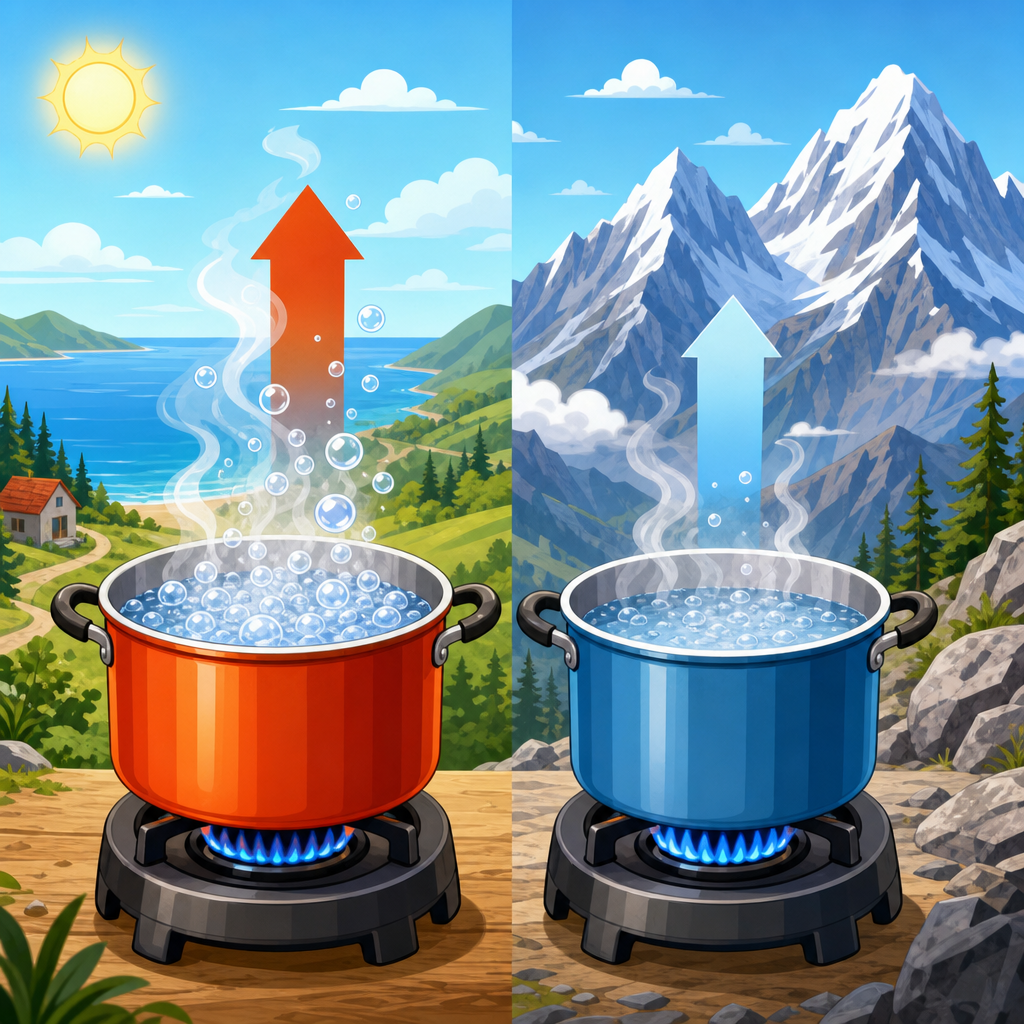
At altitude, water boils at a lower temperature, so fruit fillings can reach a vigorous bubble before starches have fully activated in the way bakers expect at sea level. Exact temperatures vary by elevation, but the practical result is the same: visual cues become less trustworthy. A filling may appear thick around the edges while the center still lacks full starch gelatinization. Meanwhile, drier air and stronger evaporation can concentrate sugars and acids quickly, especially in open-faced pies and lattice tops. That concentration changes both flavor and texture, sometimes making a filling seem tighter in the oven and looser once cut.
Different fruits amplify these effects. Apples contain pectin and release juice gradually, giving you more control. Blueberries and cherries can suddenly dump liquid once cell walls rupture. Peaches vary by ripeness and can swing from tidy slices to a near-compote texture. Frozen fruit adds another variable because ice crystals rupture structure before baking even begins. In my tests at 5,280 feet, the same peach pie formula needed nearly 15 percent more thickener than it did near sea level when using very ripe fruit, but the increase was unnecessary with firmer, just-ripe peaches. Altitude matters, yet fruit condition matters just as much.
Crust design also affects thickener choice. A fully enclosed double-crust pie traps steam, so the filling cooks in a humid chamber and may need less thickener than a lattice pie with the same fruit. Galettes and slab pies lose moisture faster because they expose more surface area. Hand pies demand tighter fillings because any excess free liquid leaks, softens seams, and prevents proper lamination in rough puff or classic puff pastry. These are the kinds of structural realities that connect fruit pies to the larger pies, pastries, and meringues category: every component influences the next.
The best thickeners for fruit pies at altitude
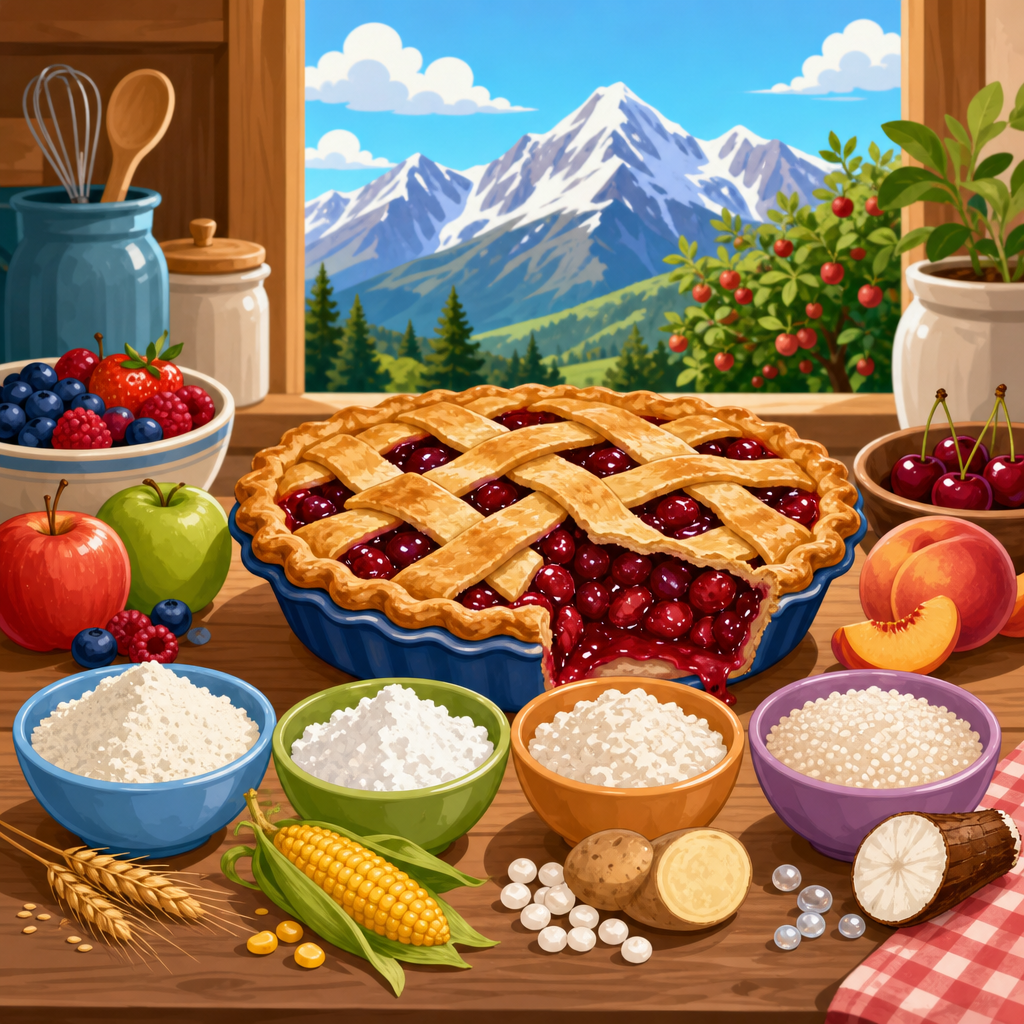
The strongest all-around choices for fruit pies at altitude are modified tapioca starch, instant tapioca, cornstarch, and flour, with arrowroot and ClearJel used more selectively. If you want the shortest answer, use tapioca for juicy berry pies, flour for long-baked apple or mixed-fruit double-crust pies, and cornstarch for fillings where a glossy, clean slice matters and you can ensure a full boil. Modified food starches sold for pie filling are especially dependable because they tolerate acidity, freezing, and reheating better than many pantry starches.
| Thickener | Best uses at altitude | Main strengths | Main limitations |
|---|---|---|---|
| Instant tapioca | Blueberry, cherry, peach, mixed berry pies | Stable set, handles juice well, less likely to break | Can leave beads if not ground or rested |
| Cornstarch | Glossy fillings, peach, blueberry, strawberry-rhubarb | Clear appearance, smooth texture, strong thickening power | Needs full boil; can thin if undercooked or overacidified |
| Flour | Apple pies, slab pies, rustic double-crust pies | Reliable in long bakes, forgiving, familiar flavor profile | Cloudier filling, weaker thickening, can taste starchy if rushed |
| Arrowroot | Delicate berry fillings, freezer-friendly pies | Clear gel, good shine, less harsh than cornstarch | Can become slippery; less ideal with dairy or prolonged high heat |
| ClearJel | Make-ahead fillings, commercial-style consistency | Excellent stability, freeze-thaw performance, precise results | Harder to source; must use the correct type and method |
Instant tapioca earns the top spot for many high-altitude fruit pies because it absorbs liquid steadily and remains stable during cooling. It is particularly effective with cherries, blueberries, and peaches, where juice release can be dramatic. Grind the pearls in a spice grinder if you want a smoother texture, then let the fruit and sugar rest fifteen to thirty minutes before filling the crust. That hydration window matters. Without it, tapioca can leave visible gelled bits while the center remains loose.
Cornstarch is powerful and clean-tasting, but it is less forgiving. In acidic fillings such as sour cherry or rhubarb-heavy combinations, it works best when the filling reaches a true, sustained bubble before baking is finished. Many runny pie complaints come from pulling the pie once only the edges bubble. At altitude, wait for active bubbling near the center vents or through the lattice. If the center never fully cooks, cornstarch may thin as the pie cools.
Flour is weaker by weight, yet that is not always a disadvantage. In apple pies and deep-dish mixed-fruit pies that bake for a long time, flour creates a softer, more traditional set and tolerates extended oven time without the same fragility some starches show. I still use flour in mountain apple pies with high-sugar streusel tops because it gives me a wider margin before overthickening. Arrowroot can be excellent in glossy berry pies, but I reserve it for situations where I want clarity and am not planning a very long hold on a steam table or repeated reheating.
Matching thickener to specific fruits and pie styles
Apple pie is the easiest place to start. Apples already contain pectin, and their structure holds during baking, so they do not need the strongest thickener. At altitude, flour or a blend of flour and tapioca works especially well for double-crust apple pie, Dutch apple pie, and apple slab pie. For very juicy varieties such as Honeycrisp or frozen sliced apples, adding a small amount of tapioca to flour improves stability. For hand pies, where leakage is the enemy, pre-cooking the apple filling with starch before assembly gives better control than tossing raw apples with dry thickener.
Berry pies generally demand stronger thickening because berries collapse quickly and release significant liquid. Blueberry pie responds well to instant tapioca, ClearJel, or cornstarch. Blackberry and mixed berry pies benefit from tapioca because seeds and pulp already add texture, so the slight body from tapioca is less noticeable. Strawberry fillings are trickier because fresh strawberries can turn jammy before the crust bakes through. For strawberry-rhubarb pie at altitude, I prefer cornstarch or ClearJel, often with a short maceration and partial draining step, because rhubarb contributes both moisture and acidity.
Stone fruits require judgment based on ripeness. Peaches, nectarines, plums, and cherries can range from tidy to flood-prone. Sweet cherry pie usually sets best with tapioca or a tapioca-cornstarch blend. Sour cherry pie is more acidic, so ClearJel or carefully cooked tapioca has an edge in reliability. Peach pie often benefits from pre-roasting or pre-draining the fruit, especially above 5,000 feet. That simple extra step reduces the amount of starch needed, which protects flavor. Too much thickener can mute fruit character and create a paste-like bite, a common mistake in altitude baking.
Pie style changes the target texture. Lattice pies can handle a slightly tighter filling because evaporation continues during baking. Crumb-topped pies need enough body to prevent syrup from soaking the topping from below. Galettes should use less total filling and a stronger set because the open shape encourages spread. Turnovers, pop tarts, and danishes need pre-thickened fillings with minimal free water or the pastry layers will steam instead of lift. In other words, the best thickener for fruit pies at altitude is never chosen in isolation; it must fit the fruit, the crust, and the format.
Techniques that improve thickener performance in mountain baking
Ingredient choice matters, but method matters just as much. The first technique is pre-treatment of fruit. Macerating fruit with sugar for twenty to sixty minutes reveals how much juice it will release. You can then either keep that juice and increase thickener slightly, or reduce the juice on the stove and return it to the fruit. This is one of the most reliable ways to improve peach, plum, and mixed berry pies at altitude. The second technique is pre-cooking. A cooked filling lets you see the final thickness before the pie enters the oven, reducing guesswork dramatically.
Pay attention to sugar level because sugar delays starch gelatinization. A very sweet pie needs more cooking, not just more starch. Acid matters too. Lemon juice brightens flavor, but too much can weaken some starch systems and exaggerate looseness. Oven management is another factor. Fruit pies at altitude often need a longer bake at a slightly moderated temperature to ensure center bubbling without overbrowning the crust. Using a metal pie pan rather than thick ceramic speeds bottom heat transfer and helps the filling reach a full boil sooner.
Cooling is not optional. Most starch-thickened pies continue setting for at least three to four hours, and some are better after six. Cutting early creates the illusion of failure even when the formula is sound. For pastry work beyond fruit pies, the same principle holds. Custard tarts need full carryover cooling before unmolding. Cream pie fillings need proper starch activation before refrigeration. Lemon meringue pie needs a hot filling under the meringue to reduce weeping and improve adhesion. Across pies, pastries, and meringues, stable structure comes from full cooking followed by patient cooling.
How this hub connects pies, pastries, and meringues at altitude
Fruit pie thickeners are the entry point, but this subtopic is broader. In high-altitude pie work, crust tenderness, steam generation, filling stability, and topping behavior all interact. A well-thickened filling protects the bottom crust from sogginess. Proper lamination in puff pastry depends on controlling moisture migration from fillings. Meringue success depends on sugar concentration, protein structure, and timing, many of the same balancing acts bakers use when managing starches. The shared lesson is that altitude magnifies every weak spot in a formula.
As you build skill in this category, think in modules. First master fruit filling consistency with tapioca, cornstarch, flour, or ClearJel. Next refine crust choices for deep-dish pies, galettes, hand pies, and slab pies. Then move to custard and chiffon pies, where thickening shifts from starch-heavy systems to egg and starch combinations. Finally tackle meringues, where Swiss and Italian methods often outperform French meringue at elevation because dissolved sugar and controlled heat produce a tighter, glossier foam. Each article in a strong altitude-baking library should connect back to this framework.
The practical takeaway is straightforward. If your fruit pies run at altitude, do not immediately blame the recipe as a whole. Start by checking the thickener type, the fruit’s water content, whether the center truly boiled, and whether the pie cooled long enough. Those four variables solve most failures. From there, expand the same disciplined approach to pastries and meringues. Keep notes by fruit variety, elevation, pan type, and bake time. That record will teach you faster than any generic chart. Choose one pie to test this week, adjust the thickener deliberately, and build your own reliable mountain formula.
Frequently Asked Questions
What is the best thickener for fruit pies at altitude?
There is no single best thickener for every fruit pie at altitude, but for many bakers, quick-cooking tapioca, tapioca starch, or a well-balanced cornstarch blend tend to give the most reliable results. At higher elevations, fruit fillings often behave unpredictably because lower air pressure changes how quickly liquid evaporates and how soon a filling appears to thicken. A pie can look set in the oven, then relax into a runny filling as it cools. That is why the ideal thickener is one that can absorb and hold fruit juices consistently without becoming gummy, cloudy, or chalky.
Tapioca is a strong choice for juicy pies such as peach, blueberry, blackberry, and mixed berry because it creates a clear, glossy filling and tolerates the shifting moisture balance of altitude better than some starches. Cornstarch can also work very well, especially when you want a smooth filling without visible thickener granules, but it needs enough heat to fully gelatinize and can sometimes break down if the filling is especially acidic or if the pie is underbaked. Flour is the most traditional option, but it generally provides a duller appearance and less thickening power per tablespoon, which can make it harder to control very juicy fruit at elevation.
In practice, the best choice depends on the fruit, how ripe and juicy it is, and the texture you want. Apples and firm stone fruits can often do well with flour or cornstarch, while very wet berries frequently benefit from tapioca. If you want the safest all-around approach for altitude, many bakers find tapioca-based thickeners to be the most forgiving because they produce a stable filling that slices neatly after cooling.
Why do fruit pie fillings become runny more often at high altitude?
Fruit pie fillings become runnier at high altitude because the baking environment changes the way moisture moves and the way starches set. Above about 3,000 feet, water boils at a lower temperature, which means the fruit starts releasing steam and juice sooner, but the filling may not stay at a vigorous enough temperature long enough to fully activate the thickener. At the same time, rapid evaporation at the surface can mislead bakers into thinking the filling is concentrated and stable when the center is still too loose.
Another issue is that fruit itself varies widely in water content. Berries, peaches, cherries, and frozen fruit can release a surprising amount of liquid as they heat. At altitude, that liquid can flood the starch before it has had time to gel properly. Then, once the pie comes out of the oven and begins to cool, the filling redistributes and may thin out instead of setting firmly. This is especially common when the thickener amount is too low, the fruit was extra ripe, or the pie was removed before the juices in the middle were actively bubbling.
Cooling also matters more than many people realize. A filling that has technically thickened in the oven still needs time to finish setting as the starch network stabilizes. If the pie is cut too soon, even a well-formulated filling may spill out. At altitude, success usually comes from combining the right thickener with a slightly longer bake, a clear visual cue that the center is bubbling, and a full cooling period before slicing.
Is tapioca better than cornstarch or flour for high-altitude fruit pies?
In many cases, yes, tapioca is better for high-altitude fruit pies, particularly when you are working with very juicy fruit. Tapioca has a reputation for producing a clear, glossy filling with a pleasantly cohesive texture, and it is often more stable in pies that need strong thickening without turning pasty. This makes it especially useful for berry pies and other fillings that release lots of juice during baking. At altitude, where fillings can seem set and then loosen later, tapioca often gives bakers a wider margin for error.
Cornstarch is still an excellent option, but it is slightly less forgiving. It thickens efficiently and creates a smooth texture, yet it depends on proper heat exposure to reach full thickening power. If the pie is underbaked, or if the filling never truly bubbles in the center, cornstarch can leave you with a filling that looks fine at first but softens too much after cooling. It can also be a bit less stable in highly acidic fruit mixtures, depending on the recipe and bake time.
Flour is the least powerful of the three and usually the least ideal for very juicy fillings at elevation. It can work in apple pie or other lower-moisture fillings, but it typically requires more volume, can mute the fruit flavor slightly, and may create a cloudy or heavy-looking filling. That said, some bakers prefer flour for traditional texture and flavor in apple or pear pies. The smartest approach is to match the thickener to the fruit: tapioca for wet, loose fruits; cornstarch for smooth, polished fillings when carefully baked; and flour for firmer fruits where a rustic texture is acceptable.
How should I adjust thickener amounts for fruit pies baked above 3,000 feet?
At altitude, it is often wise to increase thickener slightly, but not dramatically. A common starting point is to raise the thickener by about 1 to 2 teaspoons per pie compared with a sea-level recipe, then adjust based on the fruit. Very ripe peaches, cherries, blackberries, and blueberries may need more support than apples or rhubarb. Frozen fruit usually needs even more attention because thawing can release additional liquid, especially if the fruit is not drained well before mixing.
The key is to avoid overcorrecting. Too little thickener gives you a soupy pie, but too much creates a gluey, overly stiff filling that masks the fruit and can become rubbery after chilling. High-altitude pie baking rewards small, measured adjustments rather than large jumps. If you bake the same pie often, keep notes on the fruit condition, thickener type, amount used, and final texture after cooling. That simple habit is one of the fastest ways to dial in a dependable formula for your kitchen and elevation.
Also consider the full recipe, not just the starch. Sugar draws moisture from fruit, lemon juice can affect the filling’s balance, and venting or lattice tops influence evaporation. Some bakers also pre-macerate fruit, then drain or reduce part of the juice before assembling the pie. That can lower the burden on the thickener and create a more concentrated fruit flavor. In other words, increasing starch slightly helps, but the best results usually come from treating thickener adjustment as one part of an overall moisture-control strategy.
What baking techniques help thicken fruit pie filling properly at altitude?
The most important technique is to bake until the filling is visibly bubbling in the center, not just around the edges. This matters because starches need sufficient heat to gelatinize fully and bind the fruit juices. At altitude, edge bubbling can happen early while the middle is still lagging behind, so relying on crust color alone is risky. If the crust is browning too fast before the filling is ready, tent the pie loosely with foil and continue baking until the center shows slow, thick bubbles through the vents or lattice.
Another effective technique is to let the mixed fruit sit briefly before baking so you can evaluate how much juice it releases. If the bowl fills with liquid quickly, you know the pie may need a bit more thickener or some pre-cooking. For especially wet fruits, pre-cooking part of the filling on the stovetop can be an excellent altitude strategy. This gives the starch a head start, reduces excess water, and helps you see the consistency before the pie goes into the oven. It is particularly useful for berries, cherries, and frozen fruit.
Finally, give the pie enough cooling time. This step is not optional if you want clean slices. Most fruit pies need several hours to set fully, and at altitude, patience is even more important because the filling may continue to stabilize well after it leaves the oven. If you cut too soon, you may assume the thickener failed when the real issue was simply incomplete setting. A properly chosen thickener, a fully baked center, and a complete cooling period are the combination that turns a messy high-altitude pie into one that slices beautifully.