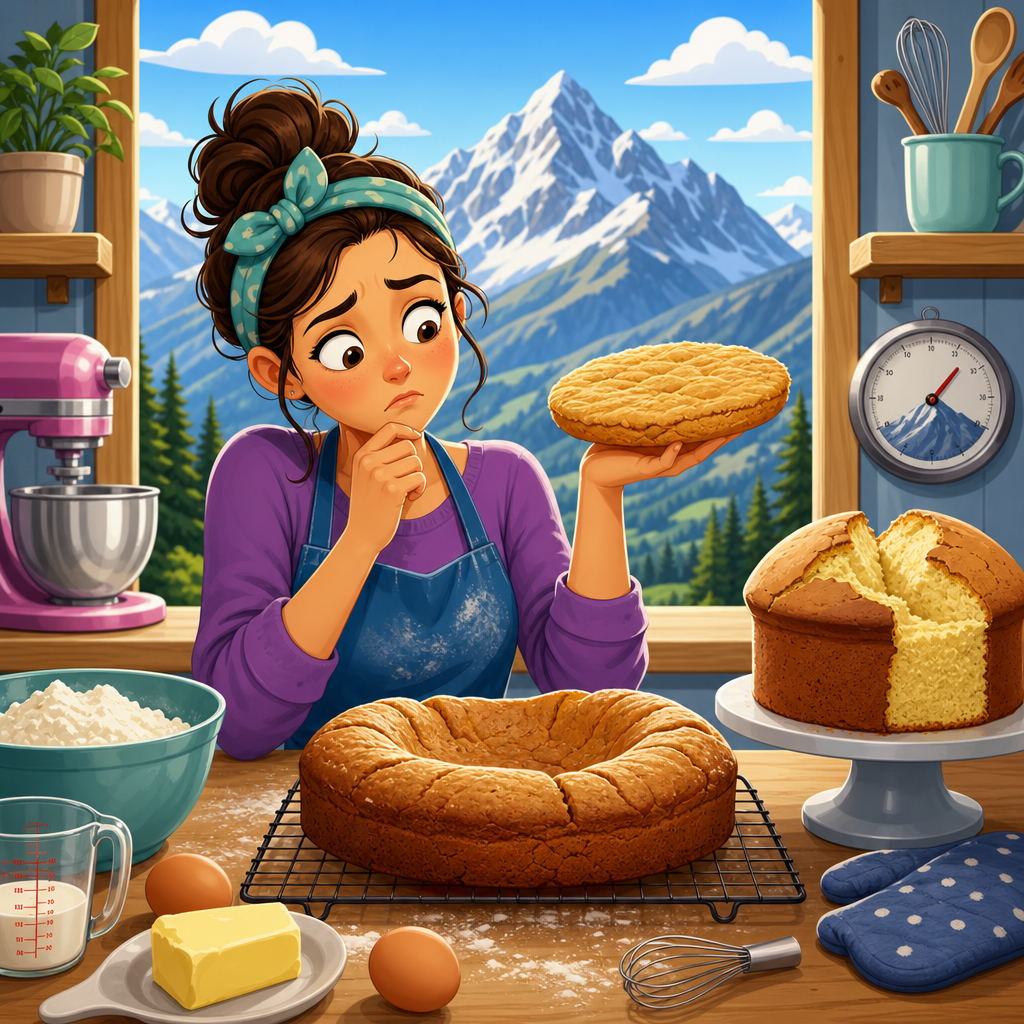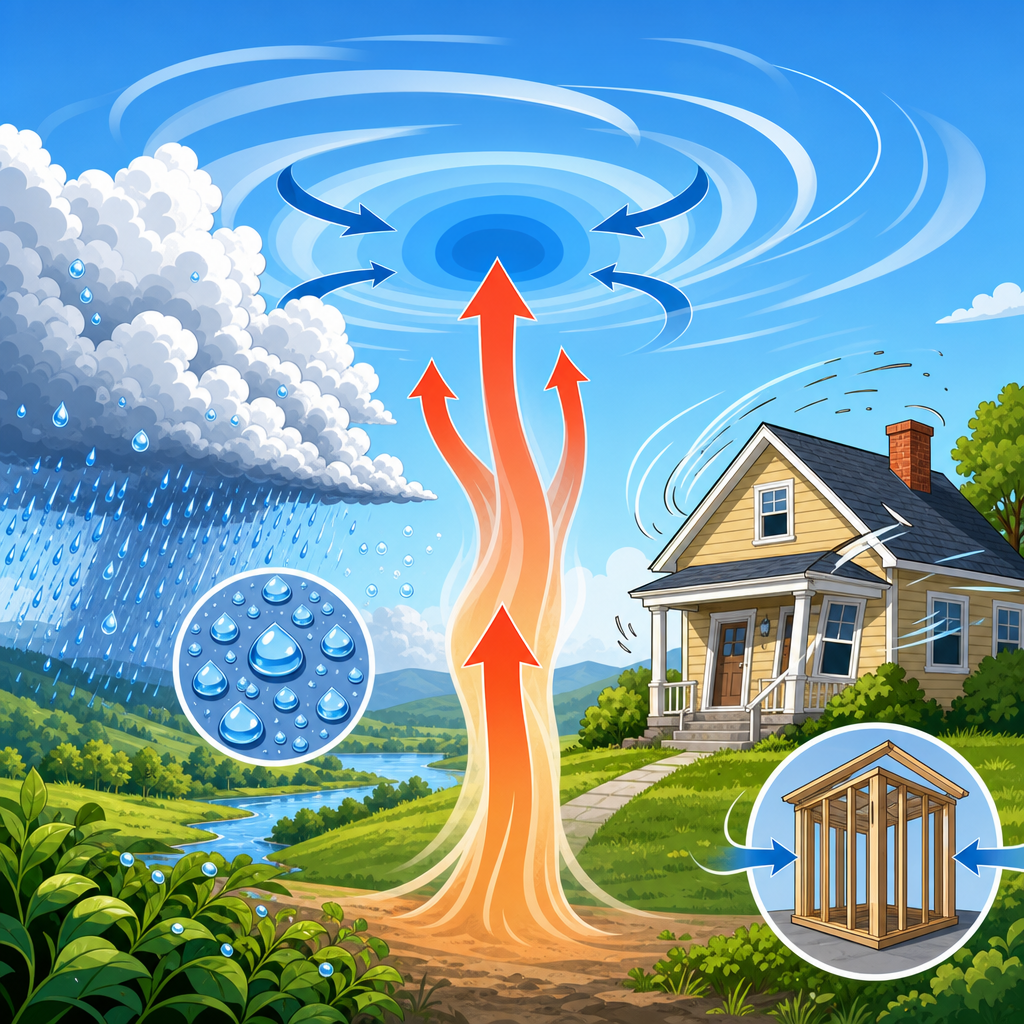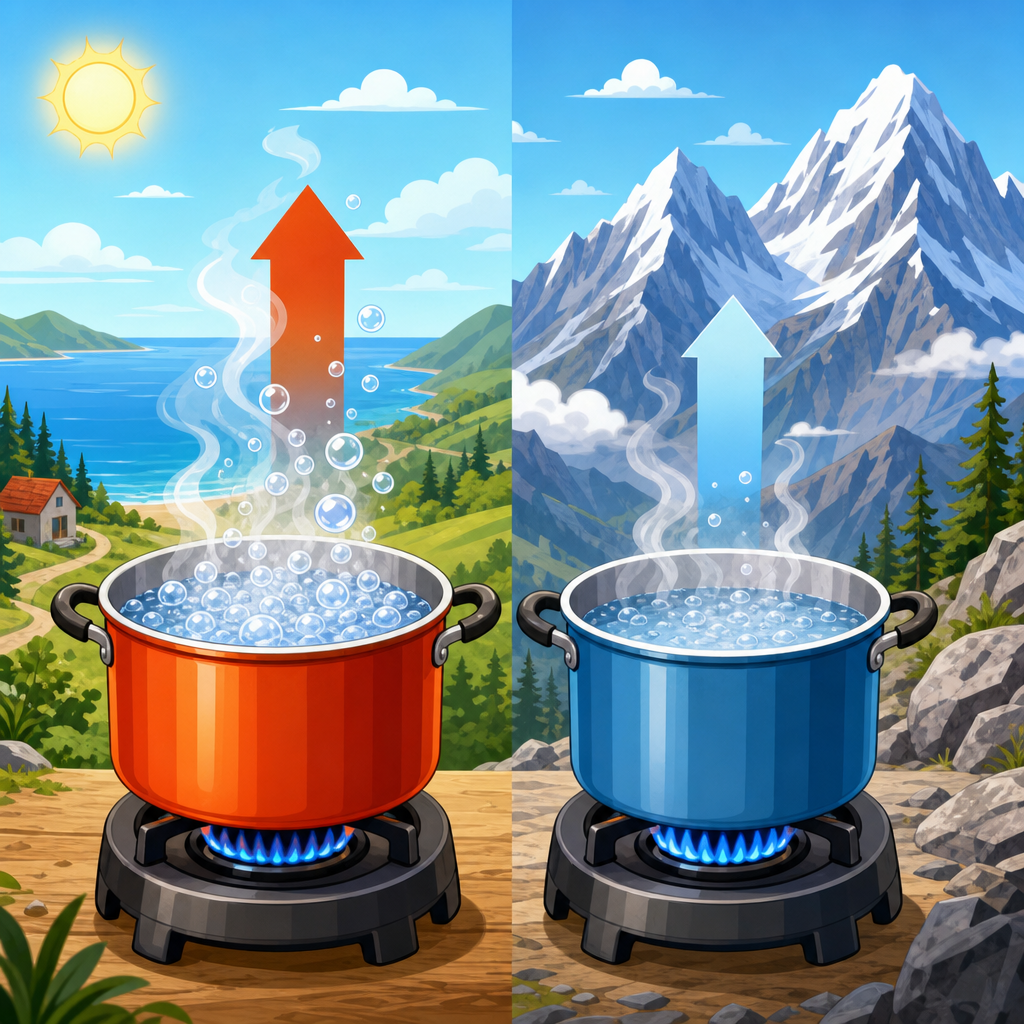
Best tools for reliable high altitude baking at home start with understanding why altitude changes recipes so dramatically. Above roughly 3,000 feet, lower air pressure causes gases in batter and dough to expand faster, liquids to evaporate sooner, and sugar concentrations to rise more quickly during baking. Those shifts affect cakes, cookies, breads, pie crusts, pastries, and quick breads in different ways, but the pattern is consistent: structure sets later while expansion happens earlier. I have tested recipes in mountain kitchens where a cake rose beautifully in ten minutes, then collapsed before the center finished setting. Reliable results came only after pairing recipe adjustments with the right tools. In high altitude baking, a tool is not just a convenience; it is a control point.
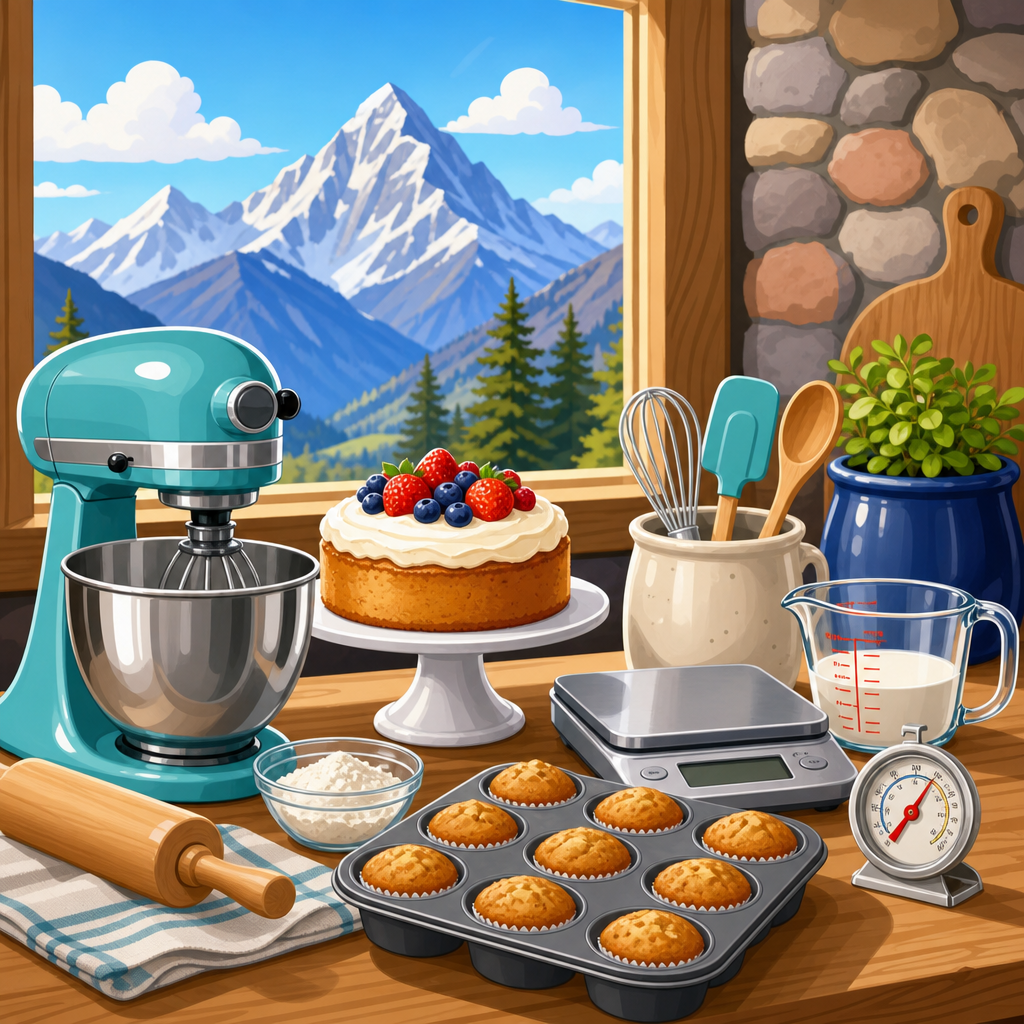
For home bakers, baking fundamentals at altitude mean managing temperature, moisture, mixing, and measurement with more precision than sea-level recipes usually require. A few extra grams of flour, a slightly hotter oven, or inaccurate pan size can mean the difference between a domed muffin and one that tunnels, dries out, or sinks. Reliable tools reduce those variables. The best setup does not have to be expensive, but it should be deliberate: an accurate digital scale, a dependable oven thermometer, sturdy metal pans, and a mixer that gives repeatable aeration matter more than novelty gadgets. This hub article explains which tools are worth buying, how each one supports core baking fundamentals, and where tradeoffs exist. If you bake cookies in Denver, sourdough in Santa Fe, or birthday cakes in Salt Lake City, these are the tools that help recipes behave predictably and make future adjustments easier, faster, and far less frustrating.
Why precision tools matter more at altitude
At sea level, many recipes succeed despite minor inaccuracy because the margin for error is wider. At altitude, that margin shrinks. Lower atmospheric pressure makes leavening agents such as baking powder, baking soda, whipped egg foam, and yeast act more aggressively. Meanwhile, faster evaporation can dry batters and doughs before starch gelatinization and protein coagulation fully stabilize the crumb. That is why a brownie can overrise, crack, and end up dry at the edges while still underbaked in the center. Precision tools help you control those competing reactions instead of guessing.
The single most important baking principle I teach mountain bakers is repeatability. If your measuring method changes every time, you cannot evaluate whether reducing baking powder by one eighth teaspoon or increasing liquid by two tablespoons actually improved the result. A reliable tool setup creates a baseline. Once that baseline exists, recipe adaptation becomes a process rather than a string of random fixes. Professional bakers depend on this principle through baker’s percentages, calibrated thermometers, standardized pan materials, and timed mixing. Home bakers benefit from the same discipline, especially at 5,000 feet and above where small inconsistencies become large failures.
Digital scale, thermometers, and timers: the core control tools
If you buy only one tool for high altitude baking, buy a digital kitchen scale that measures in grams. Weight-based measurement removes variation caused by scooping flour differently, packing brown sugar too tightly, or using mismatched measuring cups. In my own test bakes, the same cup of flour has varied by more than 20 grams depending on whether it was scooped or spooned into the cup. At altitude, that difference is enough to turn a tender cake dense or a cookie spread-resistant. Look for a scale with 1-gram precision, a tare function, and a capacity of at least 5 kilograms. Escali and OXO make dependable home models.
The next essential tool is an oven thermometer, and serious bakers should keep two. Many home ovens run 15 to 25 degrees Fahrenheit above or below the set point, and uneven cycling is common. Since high altitude recipes often need slightly higher oven temperatures to set structure sooner, inaccurate heat undermines the whole adjustment strategy. A simple hanging thermometer can reveal whether your 375-degree oven is really averaging 350. An infrared thermometer is useful for quick checks on baking steel, sheet pans, and stone surfaces, but it does not replace an in-oven thermometer that measures ambient air during the bake.
Instant-read thermometers also help with doneness. Yeast breads generally finish around 190 to 210 degrees Fahrenheit depending on style, enriched doughs toward the lower end and lean hearth breads toward the higher end. Quick breads and some cakes can be checked similarly, though crumb feel still matters. A digital timer is basic but critical. Because evaporation accelerates at altitude, a two-minute overbake is more punishing than many bakers expect. Use independent timers instead of relying only on a phone, especially when managing staggered trays or rotating pans midway through baking.
Mixers, bowls, and measuring tools that improve consistency
Mixing tools affect high altitude baking more than most beginners realize because overaeration exaggerates already-strong expansion. A stand mixer is valuable for bread dough, butter cakes, meringues, and frostings, but it should be used thoughtfully. Planetary mixers from KitchenAid are standard in home kitchens because they deliver repeatable creaming and kneading. For altitude baking, consistency matters more than maximum speed. I often cream butter and sugar for less time than a sea-level recipe suggests, specifically to avoid trapping excess air that can lead to collapse. A hand mixer works well for smaller batches and gives slightly more restraint for delicate batters.
Mixing bowls should be stainless steel or glass, with at least one wide bowl for folding and one deep bowl for whipping. Stainless steel is ideal for egg whites because it stays grease-free more easily than plastic. Silicone spatulas, sturdy whisks, and dough scrapers are small purchases that make a large difference in execution. Use a portion scoop for muffins and cookies when you want even bake times and matched volume. Uneven portions are more noticeable at altitude because smaller pieces dry faster while larger ones may still be underdone.
| Tool | Why it matters at altitude | Best use | What to look for |
|---|---|---|---|
| Digital scale | Controls flour, sugar, and liquid variation | All baking fundamentals | Gram mode, tare, stable platform |
| Oven thermometer | Verifies actual heat for structure setting | Cakes, cookies, breads | Easy-read dial or digital probe |
| Instant-read thermometer | Confirms doneness without guessing | Yeast bread, quick breads | Fast response, thin probe |
| Stand or hand mixer | Standardizes aeration and gluten development | Creaming, whipping, kneading | Variable speeds, reliable motor |
| Portion scoop | Keeps pieces uniform for even baking | Cookies, muffins, scones | Comfortable handle, consistent release |
Measuring spoons and cups still have a place for ingredients used in small quantities, especially salt, spices, yeast, and chemical leaveners. Choose metal nested sets with engraved markings rather than printed labels that wear off. For liquids, use clear graduated cups with level markings at eye height. Pyrex and Anchor Hocking are widely available and reliable. In a high altitude kitchen, the goal is not owning more gadgets; it is removing avoidable variation from every stage of mixing and scaling.
Pans, sheets, and liners that support even baking
Pan material is one of the most overlooked factors in baking reliability. For most high altitude baking, light-colored aluminum pans are the best choice because they conduct heat efficiently without overbrowning as quickly as dark nonstick finishes. Cakes set more evenly, cookies bake with better bottom color control, and quick breads are less likely to scorch before the center catches up. Brands such as Nordic Ware, USA Pan, and Fat Daddio’s have earned strong reputations because their dimensions are consistent and their metal gauge resists warping. Consistent geometry matters when you are adapting time and temperature.
Choose the exact pan size specified in a recipe whenever possible. Substituting an 8-inch square pan for a 9-inch square pan changes batter depth significantly, which affects how quickly structure forms relative to expansion. At altitude, depth errors can magnify collapse or dryness. For layer cakes, straight-sided anodized aluminum pans create cleaner rise and more predictable bake times than heavily insulated or decorative pans. For cookies, heavy half-sheet pans distribute heat better than thin supermarket trays. Pair them with parchment paper or high-quality silicone mats, but note that silicone can slightly reduce spread and browning, which may or may not help depending on the formula.
Cooling racks are another essential tool, not an accessory. Because moisture loss continues after baking, leaving products in a hot pan too long can dry edges and toughen crusts. Wire racks allow airflow and stop carryover heat. For breads and pies, a bench scraper and rolling pin also belong in the fundamentals category. A straight rolling pin offers excellent control for pie dough at altitude because reduced humidity in many mountain climates can dry pastry quickly, making brisk, efficient handling an advantage.
Ingredient storage and prep tools for moisture and structure control
Altitude problems are not caused by tools alone, but storage tools strongly influence ingredient performance. Flour kept in a loosely closed paper bag in a dry mountain climate loses condition faster than many bakers realize. Airtight containers help maintain consistency and reduce absorption swings from one bake to the next. Clear cambro-style containers are practical because they stack, seal well, and let you see inventory immediately. Brown sugar should be stored in a tightly sealed container to slow hardening, while yeast belongs in the refrigerator or freezer after opening to preserve activity.
A flour sifter is optional for many modern recipes, but a fine-mesh sieve remains useful for cocoa powder, confectioners’ sugar, almond flour, and leaveners that tend to clump. A bench scale with finer precision can be worthwhile if you often make laminated doughs, macarons, or recipes with very small yeast percentages. A dough proofing box is helpful for bread bakers in cold mountain homes where winter indoor temperatures slow fermentation, but it is not mandatory. You can improvise a stable environment with a turned-off oven and a bowl of warm water, though dedicated proofers from Brod & Taylor offer better control.
Humidity matters too. Many high-altitude regions are also arid, and that dryness affects flour hydration, crust formation, and storage life. An inexpensive hygrometer and room thermometer can tell you whether your baking space is cool and dry enough to require covered rests, slightly higher hydration, or faster transfer to the oven. This is especially useful for artisan bread, choux pastry, and pie dough. In my own kitchen tests, simply covering shaped rolls more tightly during proofing prevented skin formation that otherwise limited oven spring and caused tearing.
Specialized tools for bread, cakes, and pastry success
Not every baker needs specialty equipment, but some tools earn their place quickly if you bake often. For bread, a Dutch oven creates a humid microclimate that supports oven spring and crust development, especially for lean doughs. At altitude, where surface drying can happen fast, that steam retention is especially useful. A baking steel can improve bottom heat and consistency for hearth loaves, flatbreads, and pizza, though it requires learning how your oven behaves because stronger conductive heat can overbrown products if you do not adjust rack position or bake time.
For cakes, a cake tester, rotating turntable, and serrated knife are practical rather than luxurious. Uniform trimming and accurate doneness checks reduce waste, which matters when altitude-adjusted cakes are less forgiving. Cake strips can help moderate edge heating on layer cakes, but they are not always necessary if you are using light aluminum pans and an accurate oven. For pastry, a digital thermometer is indispensable for caramel, meringue-based buttercreams, custards, and laminated dough butter temperature. Sugar work is particularly sensitive at altitude because boiling points shift slightly with elevation, making visual and temperature cues more reliable than default timing alone.
One caution: specialized tools do not replace technique. A banneton will not fix overproofed dough, and a decorative tart pan will not compensate for warm, overhandled pastry. Buy advanced tools only after the basics are locked in. For most home bakers, the best return comes from mastering weight-based measurement, true oven temperature, proper pan selection, and controlled mixing before investing in niche gear.
Building a dependable home setup without overspending
The smartest way to build a high altitude baking toolkit is in tiers. First, buy the nonnegotiables: digital scale, oven thermometer, instant-read thermometer, sturdy measuring spoons, metal mixing bowls, spatula, whisk, cooling rack, and quality aluminum pans. That kit handles nearly every baking fundamental. Second, add tools based on what you bake most. Bread bakers benefit from a Dutch oven, bench scraper, lame, and proofing setup. Cake bakers benefit from matching layer pans, a mixer, offset spatula, and turntable. Cookie and bar bakers may prioritize sheet pans, parchment, portion scoops, and a rack system for cooling multiple trays.
Price does not always equal reliability. Some inexpensive thermometers are inaccurate out of the box, while many midrange scales perform beautifully for years. Read calibration reviews, not just star ratings. Replacement availability matters too. Sheet pans warp over time, silicone spatulas wear, and mixer attachments break. Buying from established manufacturers usually makes maintenance easier. If budget is tight, upgrade in this order: scale first, thermometer second, pans third, mixer fourth. That sequence improves results faster than buying decorative bakeware or single-use gadgets.
The main benefit of the best tools for reliable high altitude baking at home is confidence built on evidence. When ingredients are weighed, ovens are verified, pans are consistent, and mixing is controlled, recipe adjustments become understandable. You can tell whether a cake needed less leavener, whether a loaf was underproofed, or whether cookies spread because butter was too warm rather than because altitude ruined the batch. That clarity is what turns baking fundamentals into repeatable skill. Use this hub as your starting point, then build your setup around the products you bake most often. Start with precision, keep notes, and let every bake teach you something you can measure next time.
Frequently Asked Questions
What tools make the biggest difference for reliable high altitude baking at home?
The most important tools are the ones that improve precision, consistency, and control. At high altitude, recipes can fail faster because batter expands sooner, moisture evaporates more quickly, and structure often sets too late. That means even small measurement or temperature errors matter more than they do at sea level. A digital kitchen scale is usually the first upgrade to make because weighing flour, sugar, and liquids is far more accurate than relying on cups and spoons. Too much flour can dry out already moisture-challenged baked goods, while too little can weaken structure in cakes and quick breads that are rising aggressively.
An oven thermometer is another essential tool because many home ovens run hotter or cooler than their settings suggest. At altitude, where timing and structure development are already under pressure, an oven that is off by 15 to 25 degrees can lead to collapsed cakes, overbrowned cookies, or dry muffins. A stand mixer or hand mixer with consistent power also helps, especially for recipes where creaming, whipping, or gluten development needs to be carefully managed. In addition, sturdy light-colored metal pans often outperform thin dark pans because they bake more evenly and reduce the risk of overbrowning before the interior is fully set.
Other highly useful tools include an instant-read thermometer for checking doneness in enriched breads and cakes, silicone spatulas for folding delicate batters without deflating them, and cooling racks that allow steam to escape properly after baking. If you regularly bake bread, a proofing container with measurements and a Dutch oven or baking steel can improve repeatability. In short, the best high altitude baking tools are not necessarily flashy gadgets. They are dependable tools that help you measure accurately, monitor heat closely, and create consistent results batch after batch.
Why is a digital kitchen scale so important for baking at high altitude?
A digital kitchen scale matters more at high altitude because ingredient ratios need to be controlled with much greater accuracy. When air pressure is lower, baked goods rise faster and lose moisture more quickly, so the balance between flour, sugar, fat, liquid, and leavening becomes especially sensitive. Measuring by volume can introduce major variation. A cup of flour can differ significantly depending on how it was scooped, packed, or aerated, and that inconsistency can be the difference between a cake that holds its structure and one that sinks in the center.
Using a scale lets you reproduce recipes exactly, which is crucial when you are adjusting for altitude. If you change one variable, such as reducing baking powder or increasing liquid, you want every other variable to stay as consistent as possible. That is very hard to do with cup measurements alone. Weighing ingredients also makes it easier to compare your results over time. If a batch of muffins came out dry, you can review the exact gram amounts and make a meaningful adjustment next time rather than guessing whether the flour was loosely or heavily measured.
A scale is especially valuable for flour, sugar, chocolate, nuts, and even dough portions. It improves cookie uniformity, helps divide cake layers evenly, and supports more consistent bread fermentation and shaping. For bakers at altitude, that repeatability is a major advantage. Reliable high altitude baking often comes down to small, thoughtful corrections, and a digital scale gives you the level of control needed to make those corrections confidently.
Do I really need an oven thermometer if my oven already shows the temperature?
Yes, an oven thermometer is one of the smartest tools you can buy for high altitude baking. Many home ovens are not perfectly calibrated, and some cycle above and below the set temperature more dramatically than most bakers realize. At sea level, a slightly inaccurate oven can still be frustrating. At high altitude, it can be the hidden reason recipes repeatedly turn out dry, sunken, coarse, or overbrowned. Because batters expand early and moisture leaves quickly, correct oven temperature plays a direct role in how fast structure sets and how much liquid is retained.
For example, if your oven runs cooler than the dial indicates, cakes and quick breads may rise rapidly before their crumb has enough strength to support itself, increasing the risk of collapse. If your oven runs too hot, the outside of cookies, muffins, and pastries may set and brown too quickly while the center remains underdone or the overall texture becomes dry. An oven thermometer helps you verify the actual baking environment so you can make informed adjustments rather than blaming the recipe alone.
It is also useful to place the thermometer in different spots in the oven to identify hot zones or uneven heating. Once you know how your oven behaves, you can rotate pans more effectively, adjust rack placement, and compensate for calibration issues. In high altitude baking, where a difference of just a few minutes or a small temperature variation can change the final texture, an oven thermometer turns guesswork into useful data. That makes it one of the most practical and cost-effective tools for home bakers who want dependable results.
Which bakeware works best for cakes, cookies, breads, and pastries at high altitude?
The best bakeware for high altitude baking is generally sturdy, light-colored, and made from materials that promote even heat distribution. Heavy-gauge aluminum pans are a favorite for cakes, cookies, and bars because they heat efficiently without creating the excessive edge browning that is common with darker pans. At altitude, where moisture evaporates sooner and sugar concentrates faster, dark pans can push baked goods toward overbrowning before the inside has fully set. Light metal bakeware gives you a larger margin of control, which is especially helpful when you are already managing recipe adjustments.
For cakes, straight-sided round or square metal pans with good heat conduction help create a more even crumb and more stable rise. For cookies, a sturdy rimmed baking sheet reduces warping and promotes better spread control. For quick breads and loaf cakes, a quality metal loaf pan often produces more reliable structure than glass, which tends to heat more slowly and can change baking timing. For pie crusts and pastries, metal pie plates and sheet pans usually encourage crisper bottoms, which is valuable when steam behavior and evaporation rates are different at higher elevations.
Bread bakers may benefit from specialty tools such as a Dutch oven for hearth-style loaves, a baking steel or stone for stronger oven spring, and proofing baskets that help shaped dough hold form. Muffin pans with consistent cup size and construction also matter because uneven wells can lead to uneven baking. While there is no single pan that solves every high altitude challenge, well-made bakeware improves heat consistency and predictability across nearly every category. In practice, that means fewer surprises and better texture, color, and structure in your finished baked goods.
Are there any specialty tools that help with testing, troubleshooting, and improving recipes at altitude?
Yes, and these tools become more useful the more often you bake. An instant-read thermometer is one of the best troubleshooting tools because it helps confirm doneness without depending only on time or surface color. At altitude, baked goods can brown deceptively fast, so temperature can reveal whether a loaf bread is fully baked in the center or whether a custard-based filling has actually set. A notebook or digital baking log is another underrated tool. Recording altitude, recipe changes, pan size, ingredient weights, oven temperature, and final results helps you identify patterns and refine recipes with much more confidence.
For yeast baking, a clear proofing container with volume markings helps you judge fermentation more accurately than time alone. Dough can behave differently at altitude, and visual cues are often more trustworthy than the clock. A bench scraper, dough whisk, and lame or sharp blade can also improve handling and consistency if you bake breads regularly. For delicate cakes and pastries, an offset spatula, fine-mesh sieve, and quality cooling rack support better finishing and texture by helping with even spreading, aeration, and post-bake cooling.
If you frequently adapt recipes, measuring spoons that are precise, a liquid measuring cup with easy-to-read markings, and even a small hygrometer or kitchen thermometer can help you understand your environment more clearly. While specialty tools do not replace sound technique, they make diagnosis easier when something goes wrong. High altitude baking rewards observation and repeatability, and the right tools support both. When you can measure accurately, verify doneness, and track adjustments over time, you move from trial-and-error baking to a much more reliable and confident process.