Grand Canyon North Rim feels different the moment you step out of the car: cooler air, higher elevation, thicker forest, and a quieter rhythm than the South Rim. If you are planning a first visit, knowing what to expect physically when you arrive in Grand Canyon North Rim helps you prepare for altitude, weather shifts, walking conditions, services, and the layout of one of the most distinctive national park destinations in the United States. The North Rim sits at roughly 8,000 to 8,800 feet above sea level, far higher than many visitors realize, and that elevation affects breathing, hydration, energy, sleep, and even appetite. It also shapes the landscape around you. Instead of open desert right at the rim, you arrive through ponderosa pine, spruce, fir, and aspen forest before the canyon suddenly opens into vast red and cream layers.
As a national park guide hub, this article explains the physical experience of arrival in plain terms. “Physically” means what your body notices, what the terrain demands, what the climate feels like, and how the developed area functions when you first get there. In my own North Rim trips, the biggest surprise for first-timers has never been the view itself, although it is extraordinary. It is the combination of altitude, thin dry air, bright sun, cool shade, and immediate vertical exposure. The North Rim is not just a scenic stop; it is an environment that asks you to slow down for the first few hours.
Why does this matter? Because the North Rim has a shorter season, fewer services, less cellular coverage, and more physical variability than many park visitors expect. The lodge area, viewpoints, trails, campground, and visitor facilities are manageable for most travelers, but they feel easier when you understand the terrain in advance. This guide also serves as a central starting point for broader national park planning: arrival logistics, accessibility, weather timing, scenic viewpoints, ranger services, and the difference between developed rim areas and backcountry access. If you want to visit safely and comfortably, begin with what your body and senses will encounter the minute you arrive.
The first sensory impression: forest, altitude, and sudden scale
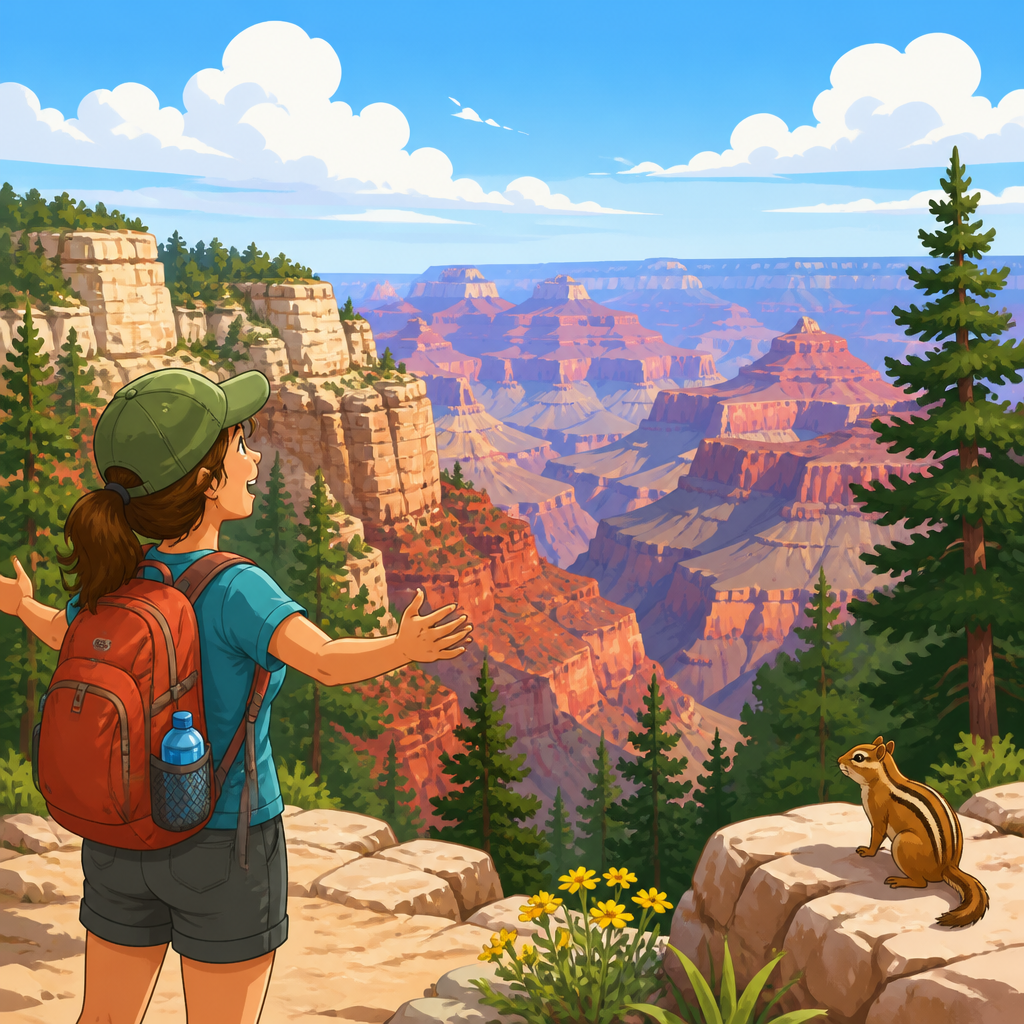
The approach to Grand Canyon North Rim is gradual until it is abrupt. For miles, you drive through the Kaibab Plateau, a high-elevation forested landscape that feels more like a mountain park than a canyon park. Then, near the developed rim area, the terrain opens and the canyon appears with almost no transition. Physically, that creates a jolt. Your eyes adjust from enclosed green forest to an immense view that stretches across side canyons, cliffs, buttes, and distant desert formations. Many visitors feel slightly disoriented at first because depth perception changes in such a large landscape.
The air also feels different right away. At around 8,000 feet, oxygen pressure is lower than at sea level. Healthy travelers may notice they breathe a little faster when carrying bags, climbing lodge stairs, or walking to Bright Angel Point. If you arrived from Las Vegas, Phoenix, or lower-elevation Utah on the same day, the contrast is more noticeable. Common early reactions include mild shortness of breath, lightheadedness, dry mouth, and faster fatigue during simple activity. These are usually manageable with hydration, slower movement, and a lighter first itinerary.
Temperature surprises many people too. Even in summer, the North Rim often feels cool in the morning and evening. Shade under the pines can be genuinely chilly, while direct sun near the rim can feel intense because ultraviolet exposure increases with elevation. The body registers both conditions in a single short walk. That is why layered clothing works better than one heavy jacket or one light shirt. A quick rim walk can move you from wind, to sun, to cold stone shade within minutes.
How the elevation affects your body on day one
Altitude is the defining physical factor at Grand Canyon North Rim. The National Park Service identifies the North Rim as a high-elevation environment, and visitors commonly underestimate what that means. At this elevation, your body loses water faster through respiration, the air feels dry, and exertion becomes less efficient. You do not need to be hiking deep into the canyon to feel it. Walking from the parking area to the lodge, carrying coolers at the campground, or climbing a short incline can leave you more winded than expected.
In practical terms, the best first-day strategy is conservative. Drink water before you feel thirsty. Avoid making your first activity a strenuous descent such as North Kaibab Trail miles below the rim. Eat something with carbohydrates and salt, especially if you have driven for hours. If you are prone to headaches at elevation, avoid excess alcohol immediately on arrival. The historic Grand Canyon Lodge dining room and deli make food accessible, but it is wise to carry snacks because hunger can feel delayed while dehydration is already starting.
Visitors with asthma, heart conditions, sleep apnea, or recent illness should be especially realistic about pace. I have watched capable hikers become unexpectedly tired simply from unloading gear and walking to viewpoints too quickly. The North Rim rewards patience. If you treat the first several hours as acclimatization time, most people feel better and can enjoy more the next day. If you push hard on arrival, the physical strain can overshadow the experience.
What the developed area feels like underfoot
The North Rim village area is compact compared with many large park hubs, but it is not flat. Paths connect parking areas, the visitor contact points, the lodge complex, cabins, campground zones, and viewpoints through gentle to moderate grades. Surfaces vary between pavement, stone, packed dirt, and trail sections with roots or uneven edges. Good walking shoes are more important here than many travelers assume. You are rarely mountaineering in the developed area, but sandals with poor grip can feel unstable near dust, gravel, or sloped overlooks.
Bright Angel Point Trail is a perfect example of the North Rim’s physical character. It is short, but it includes elevation change, narrow segments, drop-offs, and exposure that can feel dramatic if you are not used to heights. The path is maintained, but this is not a casual urban sidewalk. Railings exist in some stretches, yet the environment still demands attention. Families with children should hold hands near overlooks, and anyone with balance concerns should move slowly and choose viewpoints carefully.
The lodge itself contributes to the physical experience. Grand Canyon Lodge, originally designed in a rustic style associated with Park Service architecture, uses stone, timber, and placement near the rim to create a powerful sense of arrival. Walking onto the rear terrace or through the sun room is not just visual; you feel cooler wind, stronger sun, and the openness of the canyon immediately. Cabins and services are spread enough that short repeated walks add up over a day, especially at altitude.
Weather and seasonal conditions you should expect
The North Rim is open seasonally, typically from mid-May to mid-October for most visitor services, because winter weather closes Highway 67 and limits access. That seasonality is not just an administrative detail. It tells you what physical conditions dominate the area. Even during peak summer, nights can be cold enough for jackets, and afternoon thunderstorms are common during the Southwest monsoon pattern, usually from July into early September. Those storms can bring lightning, hail, sudden temperature drops, and slick surfaces around overlooks.
Morning conditions are often the most comfortable for walking. Midday sun at 8,000 feet feels stronger than the air temperature suggests, so visitors can become dehydrated without noticing. In shoulder season, especially late May and late September, frost and near-freezing mornings are possible. Wind is another factor. On exposed rim points, a mild forecast can still feel biting. If you arrive after rain, the smell of wet pine and earth is memorable, but muddy shoulders, puddles, and reduced traction appear quickly.
Smoke from regional wildfires can affect visibility in some years. The canyon may look hazier than photographs suggest, and sensitive visitors may notice throat or eye irritation. This is a normal planning consideration across many western national parks. Check current conditions before arrival and pack layers, sun protection, and extra water regardless of forecast. The North Rim’s weather changes faster than travelers expect because elevation, topography, and storms interact constantly.
Arrival logistics, parking, services, and movement between key points
Most visitors arrive by private vehicle, and that shapes the physical flow of the day. Parking areas are generally straightforward, but spaces near major viewpoints and lodge facilities can fill during busy periods. Unlike heavily shuttle-dependent park zones, the North Rim feels more self-directed. You park, orient yourself, and move primarily on foot between core features. That means your actual physical effort begins as soon as you stop driving.
The first places many people use are the lodge area, visitor facilities, restrooms, general store, campground, and trailheads. Distances are not huge, yet they are large enough that disorganized packing becomes inconvenient. Keep water, hats, medications, and layers accessible instead of buried in luggage. Cell service is limited or inconsistent, so do not expect smooth app-based navigation once inside the developed area. Printed maps, screenshots, or the official park map remain useful. This is a good hub principle for national park guides generally: arrive with key information already downloaded.
The table below summarizes what most visitors physically notice at the main arrival-stage locations.
| Area | What it feels like physically | Best first move |
|---|---|---|
| Parking areas | Cool or sunny exposure, immediate altitude effect when unloading gear | Pause, drink water, organize essentials |
| Grand Canyon Lodge | Short walks, stairs, wind near rim, dramatic open views | Take a slow orientation walk before longer activities |
| Bright Angel Point area | Uneven trail, drop-offs, elevation change, strong sun | Wear stable shoes and move carefully |
| Campground | Forest shade, dry air, repeated trips carrying supplies | Set up gradually and hydrate early |
| North Kaibab Trailhead | Steep descent begins quickly, major exertion at altitude | Avoid aggressive hiking without acclimatization |
Accessibility, comfort, and realistic expectations for different travelers
Grand Canyon North Rim is inspiring, but comfort levels vary by age, mobility, and confidence with exposure. Some viewpoints and lodge-adjacent areas are more accessible than trail-based overlooks, though accessibility can change with maintenance conditions and seasonal operations. Travelers using mobility devices should review current National Park Service accessibility details before arrival rather than relying on old blog posts. In national park guides, this is a crucial distinction: accessibility information must be current because surfaces, construction, and route conditions change.
For older adults, the biggest issues are usually not distance alone but altitude and repeated small grades. Children often do well in the cool forested environment, yet rim edges demand close supervision because visual distractions are constant and barriers are not universal. Visitors who are uneasy with heights may still enjoy the North Rim if they choose lodge viewpoints and broader overlooks rather than narrow rim trails. There is no need to force every signature viewpoint.
If you are camping, expect ordinary tasks to feel slightly harder than at lower elevation. Carrying water jugs, setting tents, and cooking after a long drive can be tiring. If you are staying in a cabin or the lodge, remember that even simple walks between your room, meals, and viewpoints happen in thin, dry air. The core benefit of realistic expectations is simple: when you plan for slower movement, the North Rim feels comfortable rather than demanding.
How this North Rim guide fits broader national park trip planning
As a hub for national park guides, the North Rim teaches several planning principles that apply widely across destination research. First, arrival conditions matter as much as marquee sights. Second, elevation and climate can change the difficulty of simple activities. Third, developed areas inside parks are still natural environments with uneven surfaces, wildlife, and rapidly changing weather. These are not minor details; they determine whether a day feels manageable.
For trip planning, pair this arrival guide with deeper resources on North Rim viewpoints, lodging, campground reservations, the North Kaibab Trail, day hikes, and seasonal road access. Also compare the North Rim with the South Rim if you are deciding between them. The North Rim is quieter, cooler, and more remote, but services are fewer and the operating season is shorter. That tradeoff is central to destination choice.
If you remember only a few things, remember these: expect altitude immediately, drink more water than usual, wear stable shoes, carry layers, and do less on your first few hours than you think you can. Grand Canyon North Rim rewards visitors who arrive prepared, move deliberately, and let the environment set the pace. Use this guide as your starting point, then build the rest of your national park itinerary around current conditions, realistic energy levels, and the kind of experience you want most.
Frequently Asked Questions
What physical changes do most people notice immediately when they arrive at Grand Canyon North Rim?
Most visitors notice the elevation first, even before they consciously think about it. The North Rim sits roughly between 8,000 and 8,800 feet above sea level, so the air feels cooler, thinner, and drier than many people expect, especially if they are arriving from lower elevations. You may step out of the car and feel a mild shortness of breath, a faster heartbeat while walking uphill, or a sense that ordinary movement takes a little more effort. This does not happen to everyone, but it is common enough that first-time visitors should expect to slow down and let their body adjust.
You will also notice the environment feels different from the South Rim. The North Rim is more heavily forested, so instead of open heat and bright exposure everywhere, you arrive in a landscape of tall trees, shade, and cooler mountain air. Even in summer, mornings and evenings can feel surprisingly crisp. The dryness is another immediate physical factor. Your lips, throat, and skin may feel drier quickly, and you may not realize how much moisture you are losing simply from breathing and walking at altitude. Many people also notice the quieter atmosphere. The North Rim typically feels less crowded and less paved-over, which changes your physical rhythm too. You may naturally move more slowly, walk more deliberately, and experience the area as a high-elevation mountain setting rather than just a canyon overlook.
How does the high elevation at Grand Canyon North Rim affect your body during the first few hours?
During the first few hours, the main physical effect is that your body has less oxygen available than it does at lower elevations. At 8,000 feet and above, even healthy visitors can feel winded faster than expected. Walking from the parking area to a viewpoint, climbing a short incline, carrying luggage, or going up stairs may leave you breathing harder than usual. Some people experience a light headache, mild dizziness, fatigue, or a slight sense of heaviness in the legs. These symptoms are often minor, but they are real and worth respecting.
The best response is not to push through aggressively. Drink water steadily, eat lightly but regularly, and give yourself time before attempting any strenuous hike. If you arrive and immediately set out on a steep trail, you are far more likely to feel the elevation. Visitors who pace themselves usually adjust better. It is also smart to limit alcohol during your first several hours because dehydration and altitude can combine to make you feel worse. If you have heart, lung, or circulation conditions, the altitude may affect you more noticeably, so it is wise to move conservatively and follow any guidance from your doctor before the trip.
For most people, the physical adjustment is manageable rather than dramatic. Think of it as a mountain arrival, not just a roadside stop. Your body may ask for slower walking, more water, and more rest than you expected. That is normal at the North Rim.
What kind of weather and temperature conditions should you physically prepare for when arriving at the North Rim?
The North Rim often surprises visitors because it is cooler than the canyon image many people carry in their minds. Since the rim is high in elevation and surrounded by forest, temperatures can shift quickly through the day. A summer afternoon may feel pleasant or warm in the sun, but early morning, evening, and shaded areas can feel chilly. In shoulder seasons, cold air can become a much bigger factor, and sudden weather changes are always possible. Wind also makes a difference. Standing at overlooks can feel significantly cooler than the temperature reading suggests.
Physically, this means you should expect your comfort level to change hour by hour. You might arrive in short sleeves and soon want a light jacket, especially if clouds move in or the sun drops behind the trees. Layering is the best approach because it lets you respond to these shifts without becoming too cold or overheated. The air is also dry, so even when the temperature feels mild, your body may still lose moisture quickly. People often underestimate dehydration when the weather is not especially hot.
It is also worth remembering that conditions on the rim and conditions below the rim are not the same. If you plan to walk even partway down a trail, temperatures can rise as you descend. You may start in cool forest air and quickly move into warmer, more exposed canyon terrain. Preparing physically for the North Rim means being ready for both cool mountain conditions and the possibility of much warmer hiking conditions below the rim.
What should first-time visitors expect from the walking conditions, terrain, and physical effort around the main viewpoints and facilities?
Many of the main North Rim viewpoints and developed areas are accessible without long hikes, but that does not mean they feel effortless for everyone. The terrain around lodges, visitor areas, parking lots, and overlooks can include inclines, uneven pavement, stone paths, dirt sections, steps, and walking distances that feel longer at altitude than they would at home. A short uphill walk can seem surprisingly demanding if you have just arrived, are carrying gear, or are not used to elevation.
The footing can vary as well. Some areas are smooth and easy to navigate, while others may have rough edges, gravel, roots, or natural surfaces that require more attention. Good walking shoes are strongly recommended, even if you do not plan on a major hike. Sandals, slick soles, or unsupportive footwear can make simple movement more tiring and less secure. Sun exposure can also matter in open viewpoint areas, while shaded forest sections may feel cooler and more comfortable physically.
If you plan to hike, remember that every canyon hike includes the physical reality that going down is optional but coming back up is mandatory. New visitors sometimes feel energized by the descent and do not realize how much harder the return climb will be in dry air and at elevation. Even a modest walk can become strenuous if you start too fast, carry too little water, or ignore early signs of fatigue. A good first-day strategy is to explore the rim at an easy pace, stop often, and treat the terrain with mountain-level respect rather than assuming everything close to the lodge is physically easy.
Are services, layout, and remoteness factors something you feel physically when you arrive at Grand Canyon North Rim?
Yes, absolutely. One of the most noticeable physical aspects of arriving at the North Rim is the sense of remoteness. This is not a large, densely developed park hub with constant nearby services in every direction. The layout is more limited, more spread out, and quieter, which can influence how you move through the day. You may need to walk between parking, viewpoints, lodging, food service, and rest areas with more intention than you would in a more urban-style destination. That means planning ahead for water, snacks, bathroom stops, and energy level matters more than some first-time visitors expect.
Because services are more limited, arriving tired, thirsty, underfed, or unprepared can feel more significant here. If you are the type of traveler who usually improvises, the North Rim rewards a little more structure. Keep water with you, know where key facilities are, and do not assume everything will be close at hand at all times. Cell service may be limited in some areas, which also changes how confidently and efficiently people move around. You may physically feel the difference simply because there are fewer quick conveniences to lean on.
The quieter setting is part of the appeal, but it also means your body awareness matters more. If you need rest, take it. If you feel the altitude, slow down. If weather is changing, add layers before you get chilled. The North Rim is beautiful precisely because it feels less built-up and more natural, and that same quality means visitors should arrive ready to manage their own comfort, pace, and hydration more carefully.