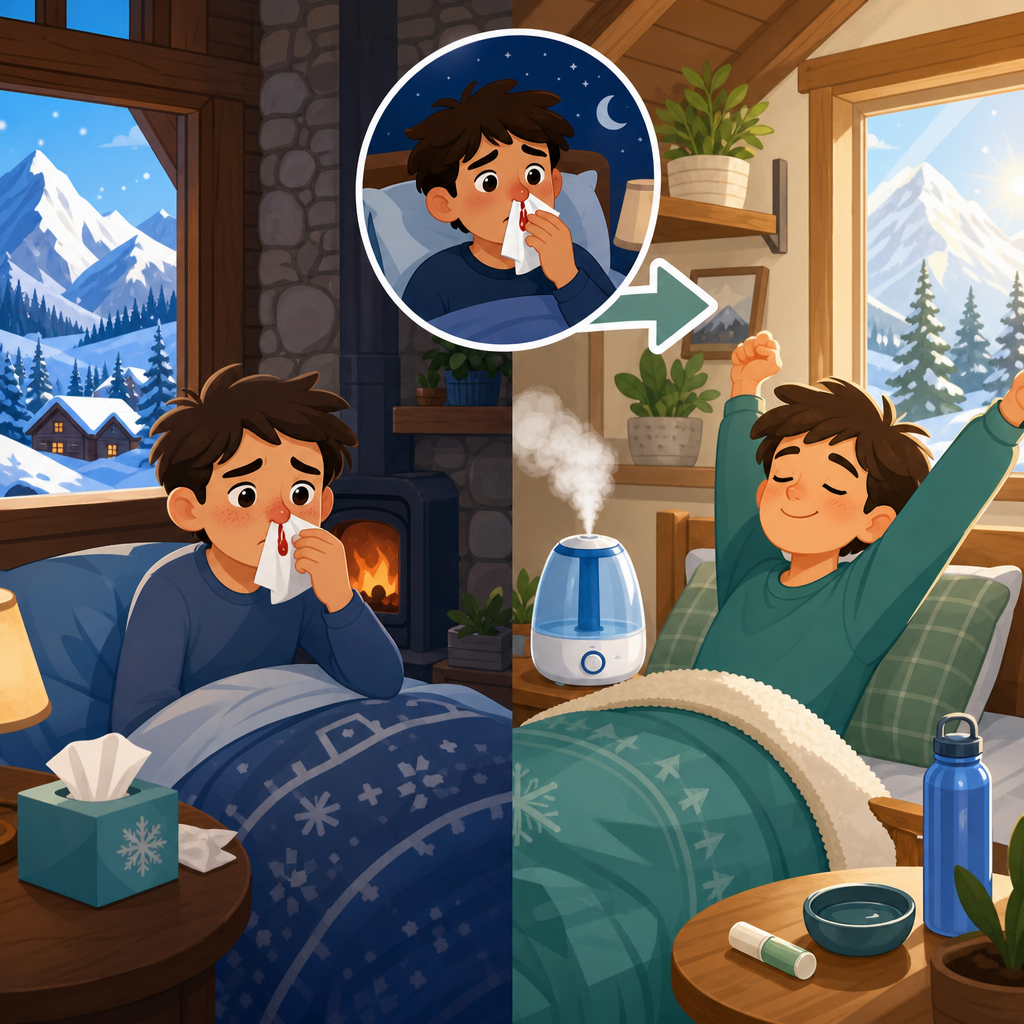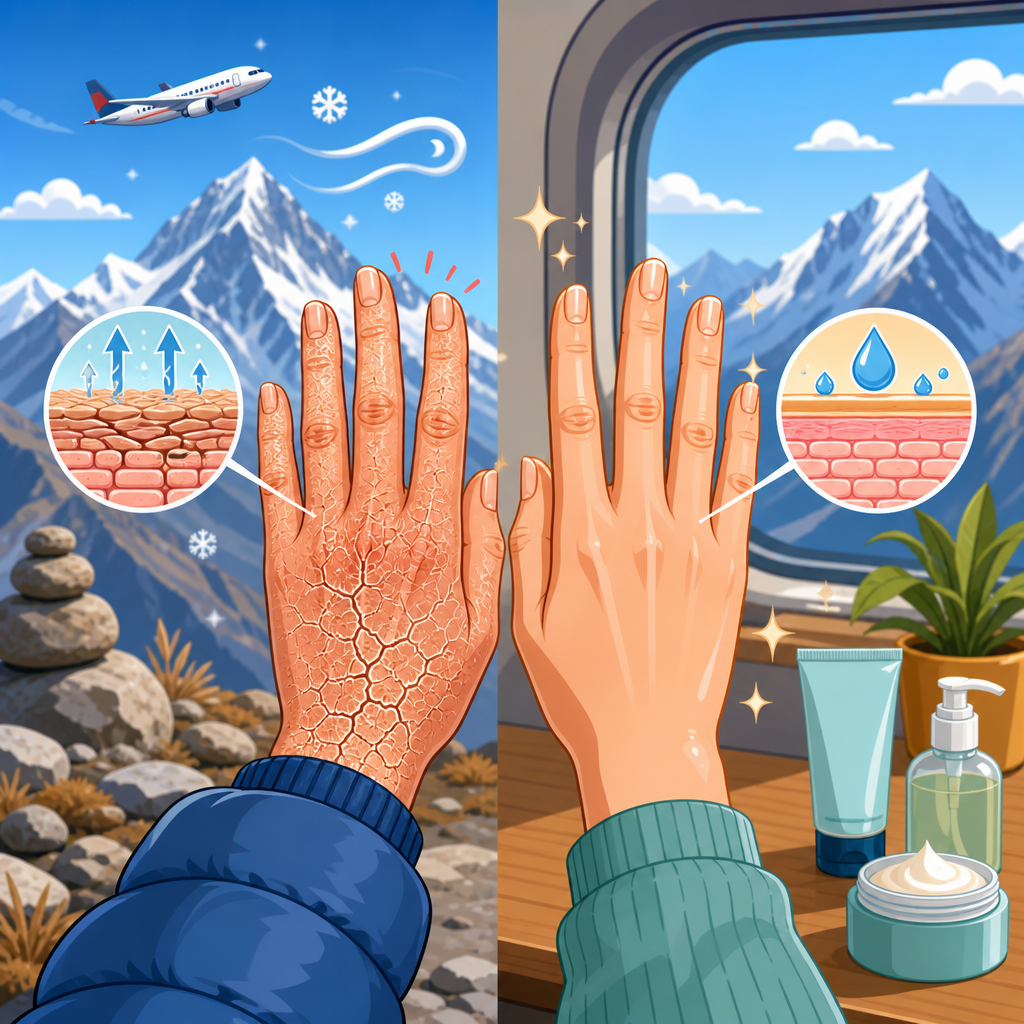
Dry, cracked hands often get worse the moment you spend time at elevation, and the reason is not just “cold weather.” Altitude changes how quickly water leaves your skin, how often you wash, how much sun and wind exposure you get, and how well your skin barrier can repair itself under stress. In practical terms, many people notice that a hand cream that seems adequate at sea level suddenly stops working in mountain towns, ski resorts, high desert cities, or on long flights into elevated regions. If your knuckles split, fingertips peel, or the skin around your nails becomes rough and painful, altitude is usually amplifying problems that already existed, not creating them from nothing.
To understand why your hands crack faster at altitude, it helps to define a few key terms. The skin barrier is the outermost layer of skin, often described as a brick-and-mortar structure made of skin cells, lipids, and natural moisturizing factors. Transepidermal water loss is the process by which water passively escapes from skin into the environment. Irritant contact dermatitis is inflammation caused by repeated exposure to soaps, sanitizers, detergents, wind, or friction rather than an allergy. Fissures are actual splits in the skin, often forming when dehydrated, inflamed skin is repeatedly bent over joints such as the knuckles. These terms matter because cracked hands are usually a barrier problem first, then an inflammation problem, and finally a wound-care problem if splits develop.
This topic matters beyond comfort. Cracked hands can interfere with work, sleep, exercise, childcare, cooking, and routine cleaning. In clinics, I have seen people blame “sensitive skin” when the real driver was a combination of dry air, frequent washing, and underpowered moisturizers. At altitude, those small exposures add up quickly. The skin on your hands is already vulnerable because it has fewer oil glands than the face and is washed more often than almost any other body area. Add low humidity, stronger ultraviolet radiation, cold wind, and indoor heating, and your hands lose water faster than your skin can replace it. The good news is that effective relief is usually straightforward once you match the treatment to the cause and use products with the right ingredients in the right order.
Why altitude dries hands so aggressively
Altitude itself does not directly “suck moisture” out of your skin, but the conditions that come with it do. Air at elevation is often colder and holds less water vapor, so relative humidity tends to drop, especially in mountain and high desert climates. Low humidity increases transepidermal water loss, meaning water moves out of the outer skin layer more readily. That leaves skin less flexible and more likely to crack when you grip, type, wash dishes, handle paper, or expose your hands to repeated temperature changes. Indoor heating compounds the problem because heated winter air is usually extremely dry.
There is also a behavior component. People at altitude often wash their hands more because of travel, outdoor activity, public restrooms, sunscreen removal, and exposure to dust or sweat. Skiers and hikers may repeatedly remove gloves, sanitize hands, adjust gear, and reapply sunscreen. Every wash strips lipids from the barrier. If you then step outside into wind and cold, microdamage becomes visible quickly. This is why cracking often seems sudden: the barrier has been weakening for days before the skin finally splits.
Ultraviolet exposure rises with elevation as well, and that matters for hands. UV radiation can worsen inflammation and oxidative stress in already dry skin. Hands are often forgotten when people apply sunscreen, yet they are exposed constantly while driving, walking, and handling gear. In high-altitude climates, the combination of UV, windburn, and low humidity creates a perfect setup for rough cuticles, fingertip peeling, and painful fissures on the backs of the hands.
The main triggers that turn dryness into cracking
Most cracked hands come from several triggers acting together rather than one cause alone. The biggest trigger is overwashing with strong cleansers. Many liquid hand soaps rely on surfactants that clean well but remove too much oil, especially if they contain strong fragrance or antibacterial additives that are not necessary for daily household use. Alcohol-based sanitizer can be less damaging than repeated soap-and-water washing when your hands are not visibly dirty, but frequent use still stings and dries compromised skin.
Another common trigger is wet work, a term used in occupational dermatology for activities that keep hands wet or require frequent washing. Hairdressers, nurses, cleaners, cooks, parents of young children, mechanics, and hospitality workers often have chronic hand dermatitis because their skin cycles between wetting and drying many times a day. At altitude, that same workload causes more damage faster. Friction matters too. Paper handling, climbing grips, wool gloves, chalk, hand tools, and even steering wheels can abrade already dry skin.
Weather protection can backfire if chosen poorly. Some gloves trap sweat, which overhydrates and weakens the surface layer, then leaves skin drier after evaporation. Others contain irritating linings or are so occlusive that people avoid wearing them consistently. Rings can trap soap residue and water, causing localized dermatitis. Nail products, fragrances, and preservatives can contribute as well, especially around the cuticle where the skin is thin and frequently disrupted.
| Trigger | Why it gets worse at altitude | What helps |
|---|---|---|
| Frequent handwashing | Low humidity speeds water loss after each wash | Use lukewarm water, mild cleanser, moisturize within one minute |
| Cold wind | Wind increases irritation and physical chapping | Wear protective gloves and apply ointment before going outside |
| Indoor heating | Heated air is especially dry in winter mountain climates | Use a room humidifier and heavier night treatment |
| Sun exposure | UV intensity rises with elevation and damages vulnerable skin | Apply broad-spectrum SPF 30+ to backs of hands daily |
| Wet work and sanitizers | Repeated wet-dry cycles weaken the barrier faster | Substitute barrier cream, cotton liners, and fragrance-free products |
What an effective hand-care routine looks like
The best routine for skin care and dryness at altitude is simple, frequent, and protective. Start with a gentle cleanser. Look for fragrance-free hand soaps with milder surfactants and added humectants. Avoid very hot water because it increases lipid removal and makes inflammation worse. After every wash, pat your hands mostly dry rather than rubbing aggressively, then apply moisturizer immediately. This timing matters because moisturizers work best when they trap residual water in the outer skin layer.
Not all hand creams are equal. Lotions are usually the lightest and least protective because they contain more water. Creams are thicker and better for daytime. Ointments are greasier but usually best for severe cracking because petrolatum-based formulas are highly effective at reducing water loss. In real use, the best product is the one you will apply often, but at altitude many people need two products: a lighter cream they can tolerate during the day and a richer ointment at night. If the skin is actively splitting, ointment usually outperforms cream.
Ingredients matter. Glycerin, hyaluronic acid, and urea attract water; ceramides help restore barrier lipids; dimethicone forms a protective film; petrolatum strongly reduces water loss. For rough, thickened skin, urea around 5 to 10 percent can soften scale while improving hydration, though higher strengths may sting fissures. Lactic acid can help with flaking but may burn on inflamed skin. Fragrance-free formulas are safer when the barrier is compromised. This is one reason products from lines such as CeraVe, Vanicream, La Roche-Posay Lipikar, Eucerin Advanced Repair, and plain petrolatum ointment are frequent recommendations in dermatology practice.
Best treatments for cracked knuckles, fingertips, and cuticles
Different hand problems respond to slightly different tactics. Cracked knuckles need occlusion and reduced movement stress. A thick ointment applied after each wash and before bed helps, and hydrocolloid bandages or liquid bandage can protect deeper fissures while they close. Fingertip cracking often reflects cumulative detergent exposure, paper handling, and low humidity. In those cases, short contact with irritants matters more than long outdoor exposure, so the solution is meticulous reapplication of barrier cream and strategic glove use during chores.
Cuticle damage needs restraint as much as treatment. Do not cut damaged cuticles or pick peeling skin. The cuticle seals the space around the nail, and once it is disrupted, water, irritants, and microbes enter more easily. A simple nail and cuticle oil can reduce brittleness, but if the surrounding skin is already inflamed, an ointment or thick cream generally works better than oil alone. If redness, swelling, or tenderness develops around the nail fold, think about early paronychia and reduce water exposure while monitoring for infection.
When inflammation is obvious, with redness, itch, and burning, plain moisturizer may not be enough. Short courses of over-the-counter 1 percent hydrocortisone can calm mild dermatitis on the backs of the hands, though it is usually too weak for severe flares and should not be used indefinitely. If the palms are affected, stronger prescription treatment is often needed because palmar skin is thick. Persistent hand eczema can also reflect allergic contact dermatitis to preservatives, rubber accelerators in gloves, fragrances, or acrylates from nail products, which is why stubborn cases deserve formal evaluation and patch testing.
How to protect hands at home, at work, and outdoors
Protection is often more important than treatment. At home, wear gloves for dishwashing, bathroom cleaning, and any task involving detergent or prolonged water contact. Nitrile gloves are a good default for many people because they are durable and less allergenic than latex, but they can trap sweat. If your hands get clammy, use thin cotton glove liners and change them when damp. For food prep, avoid getting citrus juice, onion, garlic, and spice mixtures on fissured skin because they can sting intensely and prolong irritation.
At work, prevention must fit the task. Healthcare workers often do best with an alcohol-based hand rub that contains emollients when hands are not visibly soiled, followed by scheduled moisturizing breaks and fragrance-free cream stored at every sink. Cleaners and mechanics need task-specific gloves that resist chemicals while still allowing dexterity. Office workers in dry, heated environments should not assume they are exempt; repeated paper handling, frequent restroom washing, and low indoor humidity can be enough to trigger fingertip splits.
Outdoors, think in layers. Before going out, apply a cream or ointment, then wear insulated gloves or mittens that block wind. Reapply after removing gloves, especially after skiing, snow shoveling, running, or hiking. Use sunscreen on the backs of the hands year-round. Broad-spectrum SPF 30 or higher is a sensible baseline, and water-resistant formulas are useful if you are sweating or handling snow. In very dry bedrooms, a humidifier can help reduce overnight moisture loss, though it should be cleaned properly to avoid mold and mineral buildup.
When cracked hands suggest eczema, infection, or another condition
Not every case of hand cracking is simple dryness. If the rash is intensely itchy, symmetrical, recurrent, or associated with a personal history of asthma, hay fever, or childhood eczema, atopic dermatitis may be part of the picture. If the rash is sharply limited to ring areas, glove contact points, or specific products, allergic contact dermatitis becomes more likely. Psoriasis can affect the hands too, often causing thick scale and painful fissures, sometimes with nail pitting. Fungal infection is less common on the hands than the feet but should be considered when one hand and both feet are involved.
Watch for signs of infection. Increasing pain, warmth, swelling, pus, honey-colored crust, or red streaking deserve prompt medical attention. Deep fissures can become portals for bacteria, especially in cold weather when people delay treatment. If over-the-counter care fails after two to three weeks, or the problem is interfering with sleep or work, see a clinician. Dermatologists may prescribe stronger topical steroids, nonsteroidal anti-inflammatory creams, or barrier-repair regimens and can perform patch testing when allergy is suspected.
The main benefit of understanding altitude-related hand cracking is that you can prevent most of it before painful splits form. Low humidity, wind, indoor heating, ultraviolet exposure, frequent washing, and wet work all push water out of the skin faster than the barrier can recover. The solution is not a single miracle cream. It is a system: wash gently, moisturize immediately, use thicker products when conditions are harsh, protect hands during chores and outdoor activity, and treat inflammation early.
As the hub for skin care and dryness within daily life, skin, eyes, and home comfort, this topic connects to broader issues like facial dryness, chapped lips, indoor humidity, eye irritation, and winter home routines. Start with your hands because they usually show barrier stress first. Switch to a fragrance-free cleanser, keep a cream by every sink, use an ointment at night, and wear gloves for wet work this week. If cracking persists or looks inflamed, get it assessed before a simple dryness problem becomes chronic hand dermatitis.
Frequently Asked Questions
Why do my hands crack faster at altitude even if the temperature does not seem that cold?
Altitude tends to make skin lose water more quickly, so your hands can become dry and fissured even when the air does not feel brutally cold. In many elevated places, the air is less humid, which increases transepidermal water loss, meaning moisture escapes from the outer layer of your skin faster than your barrier can replace it. That alone can make hands feel tight, rough, or papery within a day or two. On top of that, altitude often comes with more wind exposure, stronger sun, and larger swings between outdoor and indoor conditions. Those shifts matter because skin does best in a relatively stable environment, and frequent changes can disrupt the barrier that keeps moisture in and irritants out.
There is also a practical lifestyle piece. People at elevation often wash their hands more often, use more sanitizer while traveling, spend more time outdoors, and move between dry heated rooms and harsh outdoor air repeatedly. If you are skiing, hiking, driving in mountain air, or flying into a high-elevation destination, your skin is getting hit from several directions at once. That is why hands that are perfectly manageable at sea level can suddenly crack at the knuckles, fingertips, or around the nails in mountain towns, ski resorts, high desert climates, and during air travel.
Why does my usual hand cream stop working when I travel to the mountains or a high desert city?
A hand cream that works at sea level may simply not be strong enough for the demands altitude places on your skin barrier. Many lighter lotions are designed mainly to add water and a small amount of softness, but in very dry environments that water can evaporate quickly unless it is sealed in with richer barrier-supporting ingredients. At elevation, the skin often needs more than hydration alone. It needs a formula that helps repair the barrier, reduces water loss, and protects against repeated washing, wind, and friction from gloves or outdoor gear.
Look for creams or ointments with ingredients such as petrolatum, dimethicone, ceramides, glycerin, shea butter, or colloidal oatmeal. These tend to perform better than thin lotions because they both hydrate and create a more durable protective layer. It also helps to change how you apply your product. Instead of using cream only when your hands already feel dry, apply it after every hand wash, before going outside, after removing gloves, and again at bedtime. Many people do best using a cream during the day and a thicker ointment overnight. If your current product relieves dryness for only a few minutes and then your skin feels tight again, that is usually a sign you need a heavier, more protective formula rather than simply more frequent use of the same light lotion.
What ingredients and routines help the most for cracked hands at altitude?
The most effective approach is usually a combination of gentle cleansing, frequent barrier repair, and strategic protection. Start with a mild, fragrance-free hand cleanser instead of harsh soaps or heavily scented washes, which can strip oils from already vulnerable skin. After washing, pat your hands dry rather than rubbing aggressively, and apply hand cream while the skin is still slightly damp. That timing helps trap water in the outer layer of skin. If your hands are badly cracked, switch from a standard cream to a thicker balm or ointment, especially on fingertips, knuckles, and cuticles where fissures often begin.
Ingredient-wise, humectants such as glycerin and urea help draw water into the skin, while ceramides support barrier repair. Occlusive ingredients like petrolatum and dimethicone help reduce moisture loss, which is especially important in dry mountain and high desert air. Colloidal oatmeal can help calm irritation, and some people find lanolin or shea butter helpful as well, provided they tolerate them. A practical routine is to keep one cream by every sink, one in your bag or pocket, and one by your bed. Use gloves for dishwashing and cleaning, wear protective gloves outdoors in wind and cold, and consider applying a thick layer of ointment at night with cotton gloves over it. That overnight “seal” can dramatically improve rough, splitting skin by morning.
Can sun, wind, flying, and frequent handwashing really make altitude-related hand cracking worse?
Yes, and for many people these factors are a big part of the problem. Sun exposure is more intense at elevation, and while most people think about sunscreen for the face, the hands are often left unprotected. Ultraviolet exposure can contribute to inflammation and barrier damage, which makes dryness and cracking harder to control. Wind adds another layer of stress by increasing evaporation from the skin surface and physically irritating already dry areas. That is why hands may feel far worse after a day outdoors than they did in the morning, even if you have been using cream.
Flying also matters because airplane cabins are extremely dry, and long travel days often involve repeated handwashing, sanitizer use, and missed opportunities to moisturize properly. Once you arrive at an elevated destination, you are starting from a moisture deficit. Frequent washing and alcohol-based sanitizers can then compound the damage by removing oils that your skin needs to maintain a healthy barrier. If you know you will be traveling or spending time outside at altitude, treat hand care proactively: apply a rich cream before boarding, reapply during the flight, use sunscreen on the backs of your hands, and moisturize immediately after washing. In dry, windy places, prevention is much easier than trying to reverse deep cracks after they appear.
When should cracked hands at altitude be treated as more than simple dryness?
Dryness is common at altitude, but painful cracking, bleeding, persistent redness, swelling, or burning can signal a more significant skin barrier problem or an underlying condition such as hand eczema, irritant dermatitis, or allergic contact dermatitis. If your skin is not improving after several days of consistent use of a rich, fragrance-free barrier cream and reduced exposure to irritants, it is worth paying closer attention. Cracks that deepen, ooze, form crusts, or become increasingly tender may be at risk of infection. Skin around the nails can also become inflamed if fissures are left untreated.
You should also consider a medical evaluation if only certain products seem to trigger flares, if your hands itch intensely, or if the rash spreads beyond the usual dry areas. Sometimes what seems like “altitude dryness” is actually a reaction to soap, sanitizer, glove materials, fragrances, preservatives, or workplace exposure. A clinician can help determine whether you need prescription treatment, patch testing, or a different skin-care strategy. In general, simple altitude-related dryness should improve with barrier-focused care, but severe pain, bleeding, signs of infection, or persistent symptoms deserve more than a wait-and-see approach.