What to expect physically when you arrive in Machu Picchu starts long before you see the stone terraces, because your body is already responding to altitude, temperature shifts, travel fatigue, and the demands of walking on uneven mountain terrain. Machu Picchu itself sits at about 2,430 meters, or 7,970 feet, above sea level, lower than Cusco but still high enough that many visitors notice shortness of breath on stairs, a faster heartbeat during climbs, and quicker fatigue than they would feel at home. In practical terms, “physically” means how your lungs, legs, skin, stomach, and energy levels react from the moment you reach the site, whether you come by bus from Aguas Calientes or on foot from the Inca Trail. It matters because unrealistic expectations ruin otherwise unforgettable trips: I have seen fit hikers humbled by the altitude, casual travelers surprised by the steep stone steps, and well-prepared visitors move comfortably because they planned for hydration, pacing, weather, and footwear. As a hub for international destination guides, this article explains not only what your body may feel in Machu Picchu, but also how to interpret those sensations, what is normal, what deserves caution, and how to prepare for similar conditions in high-altitude heritage sites worldwide. If you understand the physical reality on arrival, you can protect your health, enjoy the ruins, and spend more attention on the landscape, architecture, and history instead of discomfort.
How your body reacts on arrival: altitude, breathing, and energy
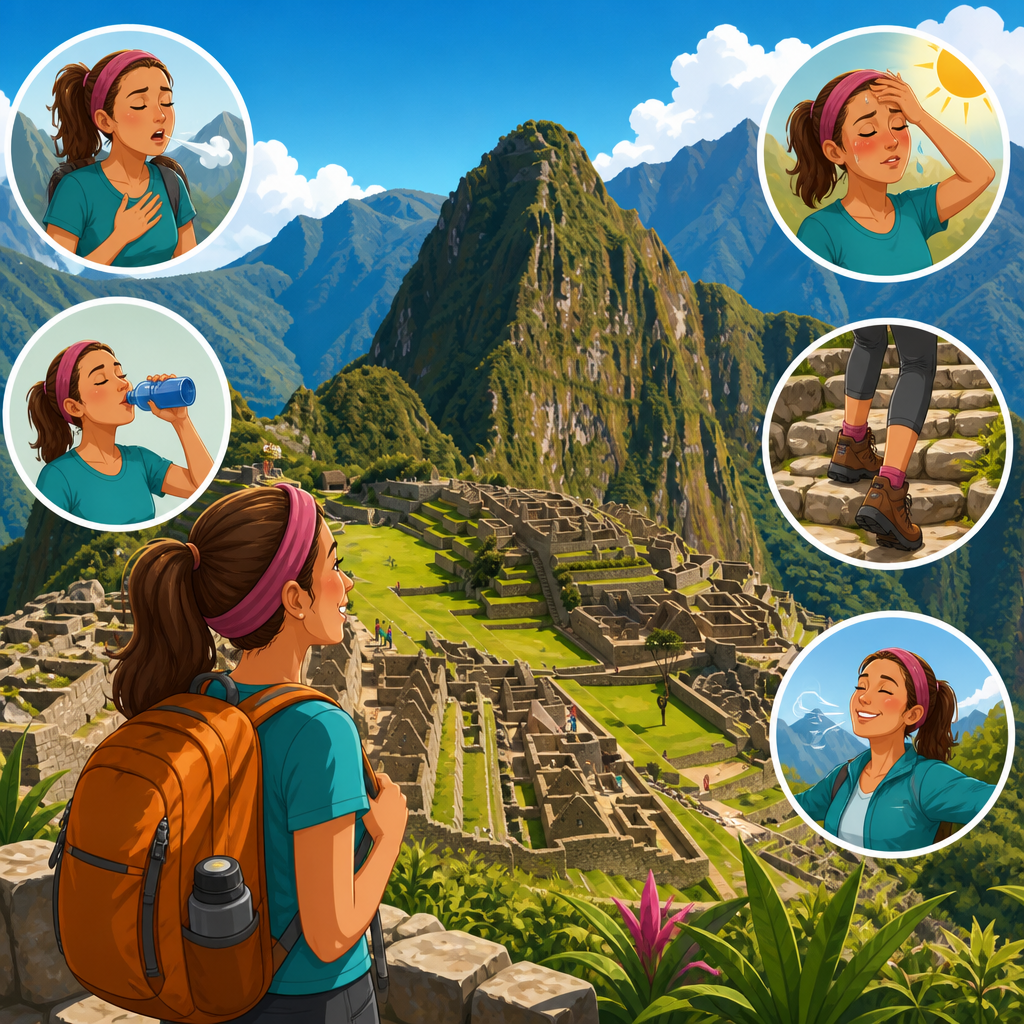
Most travelers asking what to expect physically when you arrive in Machu Picchu are really asking one immediate question: will the altitude hit me hard? The honest answer is that it might, but usually less dramatically than in Cusco, which stands around 3,400 meters. Because Machu Picchu is lower, many people feel relief once they descend from Cusco or the Sacred Valley. Even so, oxygen availability is still reduced compared with sea level, and your body compensates by increasing breathing rate and heart rate, especially during exertion. The first physical signs are often subtle: you pause more often on stairs, you feel your pulse rise on short climbs, and you notice that carrying a daypack seems slightly harder than expected. Those reactions are normal.
In my experience guiding travelers through high-altitude itineraries, the visitors who struggle most are not always the least fit; they are often the ones who rush. Machu Picchu includes narrow stone paths, irregular staircases, and viewpoints reached by uphill walking. Even a short burst of enthusiasm can leave you winded. A practical rule is to walk at a conversational pace. If speaking full sentences feels difficult, slow down. Mild altitude effects can include headache, light nausea, reduced appetite, dizziness when standing quickly, and unusual tiredness. The US Centers for Disease Control and Prevention and wilderness medicine guidelines consistently advise gradual ascent, hydration, light meals, and avoiding overexertion on day one. Those recommendations apply here directly.
Know the difference between manageable discomfort and warning signs. Mild breathlessness on steep steps is expected; chest pain at rest is not. A light headache can improve with water and rest; persistent severe headache with vomiting needs prompt attention. If you already have heart, lung, or blood-pressure conditions, ask your clinician before travel. Travelers who used time in the Sacred Valley for acclimatization usually arrive stronger than those who fly into Cusco and rush onward immediately.
What the terrain feels like underfoot
The second big surprise at Machu Picchu is the ground itself. Photographs make the site look open and gentle, but physically it is a place of stone edges, wet patches, narrow walkways, and steps built for function rather than modern comfort. Expect uneven surfaces almost everywhere. Some stairs are high and shallow, others narrow and worn smooth by centuries and weather. If you have ankle instability, knee pain, balance concerns, or limited mobility, this matters more than general fitness. I have watched strong runners slow down dramatically because the challenge was not stamina but precise foot placement.
Traction changes throughout the day. Morning mist and recent rain can make carved stone slippery, while midday sun may dry exposed sections quickly. Shoes with solid grip are not optional; they are one of the clearest differences between an enjoyable visit and a tense one. Lightweight hiking shoes or trail shoes usually outperform casual sneakers. Trekking poles can help on approach trails where permitted, but site-specific rules may restrict their use without medical need, so check current regulations before arrival.
Your legs will work in short, repeated efforts rather than one long continuous climb. That pattern can fool people into underestimating fatigue. You may feel fine on the first terrace, then notice your calves tightening on the third staircase and your quadriceps tiring on the descent. Descending is often harder on knees than climbing. If you are arriving after the Inca Trail, expect cumulative fatigue: the site may be the emotional reward at the end of the trek, but your body may already be depleted.
Weather, temperature, sun, and moisture on your skin
Machu Picchu sits in a cloud forest transition zone, which means the physical feel of the air can change quickly. Visitors often expect either mountain chill or tropical warmth, but the reality is both, sometimes within hours. Early mornings can feel cool and damp, especially when mist clings to the ridges. As clouds lift, sun intensity can become surprisingly strong because of elevation and reflection from exposed stone. Then a rain shower can arrive fast, dropping the temperature and soaking clothing. This variability is one of the defining physical experiences of arrival.
Humidity is another factor. Compared with the drier air of Cusco, Machu Picchu often feels softer but heavier. Some travelers breathe more comfortably there, yet sweat more during uphill walking. Clothes that seemed adequate at breakfast can feel wrong by midmorning. The best system is light layers: a moisture-wicking shirt, a compact waterproof shell, and sun protection including hat, sunglasses, and sunscreen. Dermatologists and travel medicine specialists routinely emphasize that ultraviolet exposure increases with altitude; even on cloudy days, skin can burn faster than expected.
Hair, skin, and lips also react to the mix of altitude and shifting moisture. You may feel dry from previous days in high Andean air, then sticky during humid exertion at the citadel. Lip balm and water help, but so does accepting that comfort will fluctuate. Travelers expecting one stable climate often overpack bulky layers or underpack rain gear. For an international destination guide, this is a useful lesson beyond Peru: mountain heritage sites from Petra’s high trails to Bhutan’s fortresses reward adaptable clothing, not heavy clothing.
Common physical scenarios and the best response
Because arrival conditions vary by route, season, age, and health, the most useful preparation is scenario-based. The patterns below reflect what visitors most commonly feel and what usually helps first.
| Physical experience | What it usually means | Best immediate response |
|---|---|---|
| Shortness of breath on steps | Normal exertion plus moderate altitude | Slow your pace, rest briefly, take smaller steps |
| Mild headache | Altitude, dehydration, poor sleep, or sun exposure | Drink water, eat lightly, rest in shade, monitor symptoms |
| Shaky legs or knee strain | Repeated stepping on uneven stone | Use handrails where available, shorten route, descend carefully |
| Sudden chill after sweating | Rapid weather shift and wet clothing | Add a dry layer or rain shell promptly |
| Nausea or appetite loss | Altitude adjustment, motion, fatigue, or heavy meals | Choose bland snacks, hydrate, avoid pushing uphill fast |
| Dizziness, severe headache, or vomiting | Possible significant altitude illness or another medical issue | Stop activity and seek medical help immediately |
These responses are simple, but they work because they address the most common causes directly. Most discomfort improves when visitors reduce speed, hydrate, eat something light, and stop trying to “beat the crowd” by sprinting between viewpoints.
How arrival differs by route: bus, train, or trekking approach
If you come by train to Aguas Calientes and then bus up to the entrance, your body usually arrives with more energy reserves, but you may also be stiffer from hours of sitting. The first steep steps can feel abrupt because your muscles have not warmed gradually. A few minutes of easy walking before tackling a climb helps. Travelers arriving this way sometimes assume the site will be gentle because transport did the hard part; then they discover that the interior circulation still requires real effort.
If you hike in, especially via the Classic Inca Trail, your experience is different. Fatigue, sore calves, sun exposure, and minor dehydration often arrive with you. Adrenaline can mask that for the first few minutes. Later, once you slow down for photos and exploration, the accumulated strain becomes obvious. This is when cramped hips, aching feet, or shaky descents show up. The smartest trekkers treat the first hour inside the site as active recovery rather than one final push.
Visitors using alternative treks such as Salkantay or Inca Jungle may carry a different fatigue profile: longer distance soreness, blister irritation, or sensitivity from varied climates. Internationally, this pattern repeats at major destination sites reached by hiking, from Torres del Paine viewpoints to Nepalese monastery trails. The route of arrival shapes what your body feels at the destination itself.
Who should prepare more carefully
Not every traveler needs the same strategy. Older adults, visitors with asthma or chronic obstructive pulmonary disease, travelers with recent injuries, and anyone prone to motion sickness or migraine should prepare with extra care. That does not mean Machu Picchu is off-limits; it means preparation matters more. I advise travelers to think in functional terms: can you climb several flights of stairs slowly, recover within a minute or two, and manage uneven ground without looking only at your feet? If not, train specifically for that.
Families should also set expectations. Children often have energy for the climbs but less patience for slow pacing, hydration, and sun management. Parents should watch for early signs of overexertion because children may crash suddenly after seeming fine. For travelers with limited mobility, current circuit rules and accessibility constraints should be reviewed in advance through official sources and reputable operators. Machu Picchu is not a smooth, barrier-free site, and pretending otherwise helps no one.
Medication decisions should be individualized. Some travelers use acetazolamide for altitude prevention under medical guidance; others do not need it. Coca tea is culturally familiar in Peru and many visitors try it, but it is not a substitute for acclimatization, water, and pacing. Build your plan around proven fundamentals first.
Preparation tips that make arrival easier
The most effective preparation for what to expect physically when you arrive in Machu Picchu is simple and specific. Spend at least a day, preferably more, acclimatizing in the Sacred Valley or Cusco before your visit. Sleep well the night before. Eat a moderate breakfast rather than a heavy one. Carry water, but drink steadily instead of all at once. Pack snacks that sit well in your stomach, such as fruit, crackers, or nuts. Wear layered clothing and shoes with grip. Keep your daypack light; every unnecessary kilogram feels heavier on stairs at altitude.
Physical training should match the site. Walking on inclines, climbing stairs, and practicing balance on uneven surfaces are more useful than only doing flat treadmill sessions. If you use a smartwatch or heart-rate monitor, do not obsess over the data, but do notice when your effort spikes earlier than usual. That is a cue to slow down.
For a broader international destination guide, Machu Picchu teaches a valuable travel principle: the most memorable places often demand physical adaptation. Researching terrain, elevation, climate, and access method in advance is part of responsible trip planning, not overthinking. Do that work, and arrival feels manageable rather than jarring.
Machu Picchu rewards visitors who respect the physical environment as much as the history. Expect moderate altitude effects, uneven stone terrain, quick weather changes, and more exertion than photos suggest. Expect your breathing to shorten on climbs, your legs to work harder on descents, and your comfort to depend heavily on pacing, footwear, hydration, and layers. None of that should discourage you. In most cases, the physical demands are manageable for travelers who prepare honestly and move deliberately.
The main benefit of knowing what to expect physically when you arrive in Machu Picchu is confidence. Instead of wondering whether every sensation is a problem, you can recognize what is normal, respond early, and keep enjoying the site. That confidence transfers to other international destination guides as well, because many iconic places challenge the body in predictable ways: altitude, heat, stairs, distance, and exposure. Learn the pattern once, and you travel better everywhere.
Use this article as your starting point for planning Peru and other long-haul destination trips. Build your itinerary around acclimatization, choose gear for terrain rather than style, and give yourself time to move slowly when you arrive. If Machu Picchu is on your list, prepare well, listen to your body, and let the experience impress you for its beauty instead of its discomfort.
Frequently Asked Questions
Will I feel the altitude when I arrive in Machu Picchu?
Many visitors do notice the altitude when they arrive in Machu Picchu, even though it sits lower than Cusco. At about 2,430 meters (7,970 feet), the site is high enough that your body may respond with mild shortness of breath, a faster heartbeat during uphill walking, and quicker fatigue than you might expect at lower elevations. This is especially noticeable on stone stairways, sloped paths, and any section that requires repeated climbing. You may also feel that your legs tire faster or that you need more frequent pauses to recover your breathing.
For most healthy travelers, these effects are manageable and temporary rather than dangerous, but they can be surprising if you are expecting a gentle stroll. Altitude affects people differently, and fitness does not always guarantee immunity. Even active travelers can feel winded because the issue is reduced oxygen availability, not simply conditioning. The best approach is to start slowly, walk at a steady pace, avoid rushing up stairs, and give yourself permission to stop and rest. Staying hydrated, eating light before exertion, and arriving after some time acclimatizing in the region can also make the physical adjustment easier.
How physically demanding is walking around Machu Picchu?
Walking around Machu Picchu is often more physically demanding than visitors expect. While not every route inside the citadel is strenuous, the site includes uneven stone paths, steep staircases, sloping walkways, and sections where balance and careful footing matter. There are few truly flat areas for long stretches, so even a standard visit can involve repeated starts, stops, climbs, and descents. This combination can make your legs work harder than they would on a regular city walk, especially if you are already dealing with travel fatigue or altitude.
The physical challenge comes less from distance alone and more from terrain. Ancient stones can be irregular in height and shape, and some steps are tall enough to demand extra effort from your knees, calves, and lungs. If it has rained, surfaces may also feel slick. Most visitors can enjoy the site without being athletes, but it helps to expect a moderate physical effort. Supportive shoes with good grip, a measured pace, and occasional breaks can make a major difference. If you know you have knee issues, limited mobility, or reduced stamina, plan conservatively and choose routes that match your comfort level rather than trying to see everything at once.
What kinds of physical sensations are normal during a visit?
It is normal to experience heavier breathing on climbs, a mild increase in heart rate, leg fatigue, and the need for more rest breaks than usual. Many people also notice that the combination of mountain air, excitement, and movement makes them feel tired sooner than expected. If you arrived after an early train, bus transfer, or several days of travel, general fatigue can add to that physical sensation. Warm sun combined with cool air can also create the impression that your body is working harder than it normally would.
Muscle tiredness in the calves and thighs is common because of the repeated stepping up and down on stone surfaces. Some travelers also feel slightly lightheaded if they move too fast, skip meals, or do not drink enough water. These responses are usually part of normal exertion in a highland environment. However, it is wise to pay attention to your body. Slowing down, resting in designated areas, drinking water regularly, and avoiding the urge to keep pace with faster visitors can help keep normal physical stress from becoming overwhelming. If symptoms feel intense, persistent, or out of proportion to your effort, it is sensible to stop and assess how you are feeling rather than pushing through.
How should I prepare my body before arriving at Machu Picchu?
The best preparation starts before the day of your visit. If possible, give yourself time to acclimatize somewhere in the Sacred Valley or after arriving from lower elevations, especially if you have just flown into the region. Even though Machu Picchu is lower than Cusco, the overall journey can still tax your body, and arriving already tired or dehydrated makes the physical adjustment harder. In the days leading up to your visit, prioritize sleep, regular hydration, and moderate meals rather than heavy eating or excessive alcohol.
From a fitness standpoint, you do not need elite endurance, but basic walking stamina helps a great deal. If you can comfortably handle hills, stairs, and extended walking before your trip, you are more likely to enjoy the experience physically. Good footwear is one of the most important choices you can make because the terrain is uneven and can become slippery. Stretching lightly before your visit, carrying only what you truly need, and pacing your energy from the beginning are also practical ways to reduce strain. Think of the visit less as a casual wander and more as a mountain heritage site where smart preparation allows you to move more comfortably and safely.
What should I do if I get tired or overwhelmed physically once I am there?
If you start feeling tired or physically overwhelmed at Machu Picchu, the most effective response is to slow down immediately. Many people make the mistake of trying to keep up with companions or sticking rigidly to a schedule, but your body usually responds better when you reduce your pace and let your breathing settle. Find a safe place to pause, stand or sit if permitted, drink some water, and give yourself several minutes to recover. Shortness of breath and elevated heart rate often improve quickly once you stop climbing and allow your body to catch up.
It also helps to break the visit into smaller segments rather than treating it as one continuous push. Focus on one section at a time, take deliberate steps on stairs, and use hand support where available. If the weather feels warm, protect yourself from sun exposure because heat can intensify fatigue. If you feel dizzy, unusually weak, nauseated, or unable to recover after resting, take those signs seriously and avoid further exertion. Most visitors simply need to pace themselves better, but listening to your body is essential in a place where altitude, exertion, and uneven terrain all combine. The goal is not to move fast, but to move steadily enough that you can enjoy the experience safely.