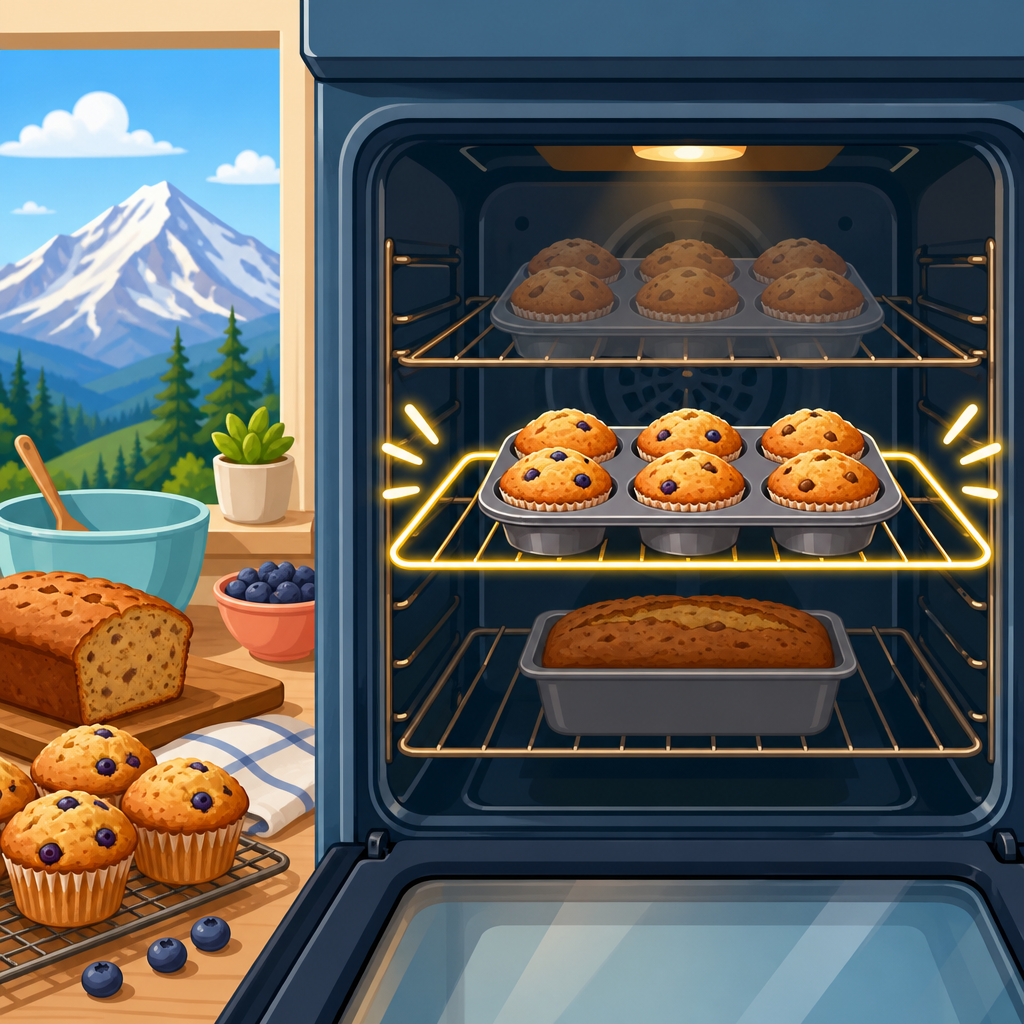
The best oven rack position for muffins and quick breads at altitude is usually the center rack, or one notch below center in ovens that brown aggressively from the top. That answer sounds simple, but it matters because altitude changes how batter rises, how fast moisture evaporates, and how quickly structure sets. In mountain kitchens, a muffin tin moved one rack too high can dome fast, crack, and dry out before the middle finishes. A loaf pan set too low can overbrown on the bottom while the center stays gummy. I have tested these patterns repeatedly in high-elevation baking, and rack placement is one of the easiest variables to correct before touching the formula.
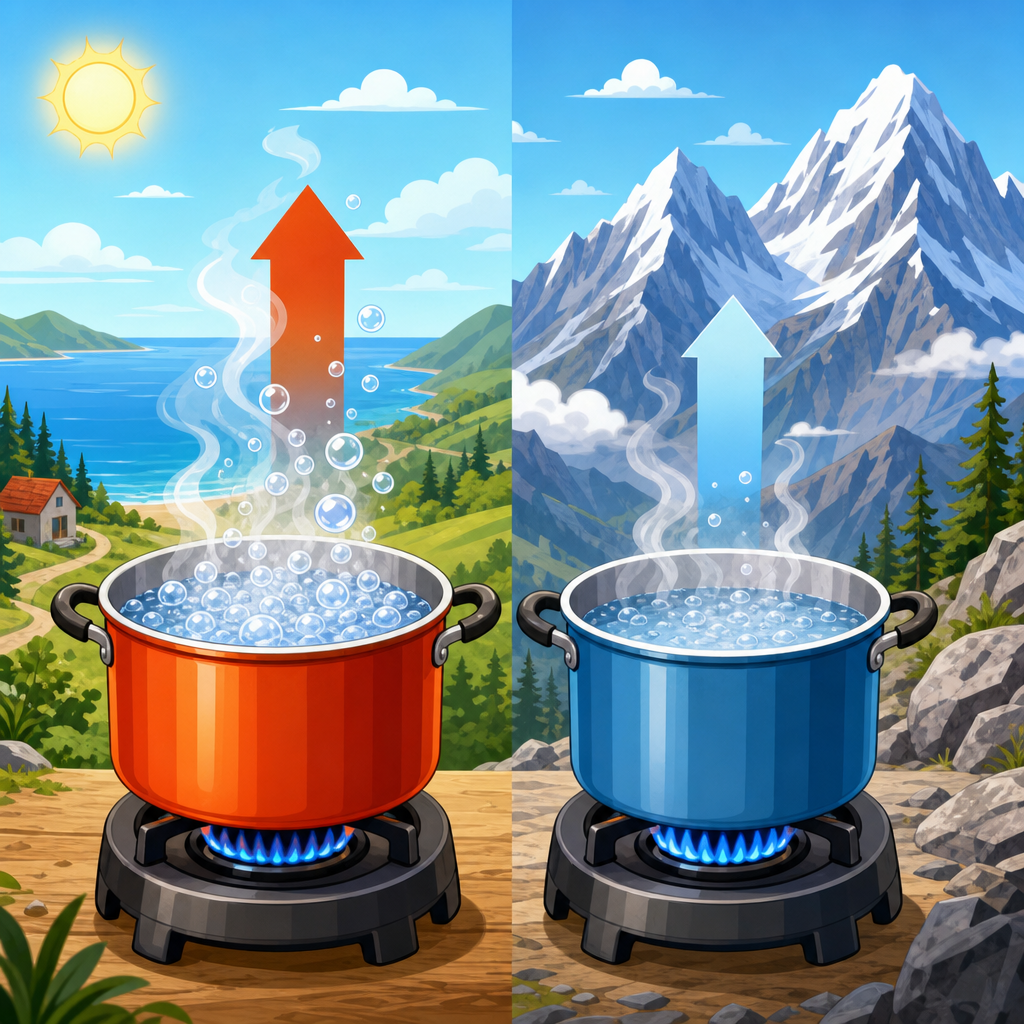
For this hub, quick breads means chemically leavened batters such as banana bread, zucchini bread, pumpkin bread, biscuits, scones, muffins, coffee cake, cornbread, and breakfast bakes that rely mainly on baking powder or baking soda rather than yeast. At altitude, lower air pressure allows gases to expand more readily. Batters rise faster, water boils at a lower temperature, and the balance between lift, moisture loss, and starch-and-protein setting shifts. That is why altitude baking advice often includes reducing leavening, slightly increasing oven temperature, adjusting sugar, and watching pan size. Rack position belongs on that same list because it controls radiant heat exposure and how evenly the batter sets.
This page serves as the hub for quick breads and breakfast bakes within the broader cooking and baking at altitude topic. If you are troubleshooting peaked muffins, tunnels, sunken centers, tough loaf cakes, dry edges, pale tops, or scorched bottoms, rack position is often the first practical fix. It also influences related decisions: whether dark metal pans are helping or hurting, when to tent a loaf with foil, how convection changes browning, and why glass and ceramic dishes behave differently from aluminum. Use this guide to choose the right rack placement, understand the heat mechanics behind it, and connect that decision to the rest of your altitude baking adjustments.
Why rack position matters more at altitude
Oven rack position affects three heat pathways: radiant heat from the oven ceiling and floor, convective heat from moving air, and conductive heat through the pan. At sea level, a sturdy muffin batter can sometimes tolerate imperfect placement because the baking window is wider. At altitude, that window narrows. Batter expands sooner, then loses moisture faster, so the period between “beautiful rise” and “collapsed or overbaked” is shorter. In practical terms, top heat matters more because it can set or brown the surface before the crumb underneath has stabilized. Bottom heat matters more because a loaf’s exterior can overcook while the center chases doneness.
The center rack gives the most balanced heat in most conventional ovens. It keeps muffins and quick breads away from the strongest top element exposure and the hottest floor radiation. In my experience, this is the default starting point for standard muffin pans, 8-by-4-inch and 9-by-5-inch loaf pans, square snack cakes, and breakfast casseroles with a batter-like base. If your oven consistently darkens tops before centers are baked through, move the rack down one position. That small change often solves dry crowns on banana bread and overbrowned muffin tops without requiring a major formula rewrite.
Altitude also amplifies the consequences of uneven ovens. Many home ovens run hot by 15 to 25 degrees Fahrenheit, cycle aggressively, or have hot spots near the back right corner. An inexpensive oven thermometer helps, but so does matching rack position to your oven’s personality. For example, if the broil element or upper heating element radiates strongly during bake mode, upper-third placement can create thick top crusts and split domes. If the lower element surges, lower-third placement can harden the base of cornbread before the middle sets. Balanced placement is not a preference; it is a control measure.
The best rack positions for common quick breads and breakfast bakes
For muffins, the ideal rack is usually center. Muffins bake quickly, and they benefit from even surrounding heat so the sides, base, and crown rise together. At altitude, this reduces dramatic mushroom tops and side tunneling. If your oven browns too fast on top, use the rack one notch below center. For mini muffins, which have very little interior distance to cook through, center is still best, but start checking several minutes early because moisture loss happens rapidly. For jumbo muffins, lower-middle placement is often safer because the tops are exposed longer before the center reaches about 200 to 205 degrees Fahrenheit.
For loaf-style quick breads such as pumpkin, zucchini, lemon poppy seed, or classic banana bread, center or lower-middle is the strongest choice. These batters are deeper, denser, and slower to set. A slightly lower rack protects the top while giving the loaf enough time to cook through. This is especially useful at altitude, where the loaf can rise quickly, split deeply, and then dry on the shoulders. Coffee cake in a square or round pan typically does best on the center rack. The crumb and topping need balanced heat, and streusel burns easily when placed too high. Biscuits and scones can tolerate center or upper-middle because they are intentionally browned, but at altitude I still favor center unless I need extra top color late in baking.
| Bake | Best rack position | Why it works at altitude |
|---|---|---|
| Standard muffins | Center | Promotes even doming and reduces overbrowned tops |
| Jumbo muffins | One below center | Protects the crown during the longer bake needed for the center |
| Loaf quick breads | Center or one below center | Balances top browning with deep interior baking |
| Coffee cake | Center | Helps crumb and streusel finish at the same rate |
| Biscuits and scones | Center | Delivers lift without scorching the bottoms |
| Breakfast bakes | Center | Supports even set across eggs, dairy, and starch components |
For breakfast bakes such as baked oatmeal, French toast casserole, and strata-style dishes, center is the clear default. These pans contain mixed textures: custard, bread, fruit, oats, nuts, and sometimes a sugary top. High placement can overcolor the surface while leaving the interior under-set. Low placement can make the bottom rubbery or too firm before the top finishes. If the topping is browning too fast, tent lightly with foil rather than moving the pan to a much lower rack mid-bake, which can interrupt the set and produce uneven texture.
How pan material, size, and oven type change the decision
Rack position is not isolated from pan choice. Dark nonstick metal absorbs and transfers heat more efficiently than light aluminum, so it browns faster, especially on the bottom and edges. If you bake a quick bread in a dark loaf pan at altitude, lower-middle placement can be too much if your lower element runs hot. In that case, staying at center and reducing the oven by 25 degrees Fahrenheit may work better. Light-colored aluminum is more forgiving and is my preferred material for altitude muffins and loaf breads because it gives more even crust development. Glass and ceramic retain heat well but heat more slowly; they often benefit from center placement and longer monitored bake time rather than lower placement.
Pan size also changes the heat path. A wide coffee cake in a 9-inch round pan has a shallow batter depth, so center works well because the middle does not need prolonged protection. A tall banana bread in an 8-by-4-inch loaf pan is more vulnerable to crust-over-center imbalance, so one notch below center may be smarter. Mini loaf pans behave differently again: because they have more exposed surface area relative to volume, they dry quickly at altitude. Keep them on center, use an accurate doneness check, and avoid the temptation to push them low for longer bakes.
Conventional and convection ovens require different thinking. In convection mode, moving hot air improves evenness and often increases browning. For muffins and quick breads at altitude, convection can be helpful, but only if you reduce the set temperature by about 25 degrees Fahrenheit and keep the pan at center. Using convection with a high rack often causes the tops to set and brown too quickly. In standard home ovens, conventional bake is usually safer for loaf cakes and tender breakfast bakes because it produces gentler top heat. If you only have convection, shield sensitive tops with foil during the final third of baking rather than dropping the rack too low.
Altitude troubleshooting by symptom
If muffins peak sharply, crack dramatically, or form tunnels, the problem may be too much leavening, overmixing, or too high a rack that encourages rapid top set. Start by moving the pan to center if it was above center. Then review formula adjustments common above 3,000 feet: slightly less baking powder or baking soda, a bit more liquid, and sometimes a modest temperature increase to set structure before overexpansion causes collapse. Rack placement will not solve every structural flaw, but it can remove one major source of uneven rise.
If your loaf quick bread is raw in the center but dark on top, the pan is often too high, the oven too hot, or both. Move the rack to one below center, verify temperature with a thermometer, and use an internal temperature check near the center of the loaf. Most quick breads finish around 200 to 205 degrees Fahrenheit, though enriched batters can vary slightly. If the loaf is already deeply browned and still not done, tent with foil. This is more reliable than lowering the oven dramatically, which can prolong the bake and increase dryness at altitude.
If bottoms scorch, examine the lower element, pan color, and whether a baking sheet under the pan is trapping heat. Move from lower-middle to center, switch to a lighter pan if possible, and avoid stacking pans unless a recipe specifically calls for insulation. If tops stay pale while interiors overbake, the rack may be too low, especially in larger ovens with weak upper browning. Move back to center and evaluate. If a breakfast casserole weeps liquid or seems firm at the edges but loose in the middle, center rack plus a slightly longer bake usually beats a lower rack. In every case, change one variable at a time and take notes. That is how altitude bakers build repeatable results instead of chasing randomness.
Best practices for this subtopic hub: muffins, loaf breads, biscuits, scones, and breakfast casseroles
Think of rack position as the starting point in a broader quick-bread workflow. Preheat fully, ideally 20 to 30 minutes after the oven signals ready, because many ovens lag behind the display. Bake one pan at a time on the center rack whenever possible. Overcrowding reduces airflow and creates uneven color, which is magnified at altitude. Rotate only if your oven has clear hot spots, and do it late enough that the batter has begun to set; rotating too early can deflate delicate muffins. Use the middle of the oven cavity, not just the rack named “middle,” because some ovens have asymmetrical spacing.
For muffins, fill cups consistently, usually about two-thirds to three-quarters full unless the formula specifies otherwise, and use the center rack as your baseline. For loaf breads, choose the pan size the recipe was developed for; an undersized pan forces batter upward and exaggerates cracking, especially at altitude. For biscuits and scones, cold fat and minimal mixing matter more than rack tweaks, but center placement still gives the most reliable lift and bottom color. For breakfast casseroles and baked oatmeal, allow enough time for the pan’s full mass to heat through; these dishes are often mistaken for underbaked when they simply need carryover time after leaving the oven.
As the hub for quick breads and breakfast bakes, this page connects the practical decisions that shape every recipe in this group. The central lesson is straightforward: start on the center rack, move one notch below center for taller or top-browning-sensitive loaves, and adjust only when your oven’s behavior gives you a clear reason. Combine that with altitude-aware formula changes, accurate temperature measurement, suitable pan material, and careful doneness checks. You will get muffins with balanced domes, quick breads that bake through without dry shoulders, biscuits and scones with even color, and breakfast bakes that set cleanly. Use this guidance as your default, then refine it recipe by recipe in your own kitchen, because the best altitude baker is the one who observes, records, and repeats what works.
Frequently Asked Questions
What is the best oven rack position for muffins and quick breads at altitude?
For most high-altitude baking, the best starting point is the center rack. That position gives muffins and quick breads the most balanced heat from the top and bottom, which is especially important when altitude already makes batter rise faster and lose moisture more quickly. If your oven tends to brown strongly from the top, move the pan one notch below center. That slight adjustment can help prevent tops from setting too fast, cracking prematurely, or becoming too dark before the interior is fully baked.
At altitude, small positioning changes matter more than many bakers expect. A muffin tin placed too high may dome rapidly and develop a thick, dry top crust before the crumb underneath has finished expanding and setting. A loaf pan placed too low can end up with an overbrowned or overly firm bottom crust while the center still needs more time. The center or just-below-center rack usually creates the most even environment for proper rise, controlled browning, and a tender interior.
Why does oven rack position matter more at high altitude than at sea level?
Rack position matters more at altitude because the baking process becomes less forgiving. Lower air pressure allows gases in the batter to expand more easily, so muffins and quick breads can rise quickly before their structure has had enough time to stabilize. At the same time, moisture evaporates faster, which means the batter can dry on the surface or along the edges before the center is fully baked. Where the pan sits in the oven directly affects how quickly the top browns, how strongly the bottom heats, and how evenly the batter sets.
In practical terms, a pan near the top of the oven gets more intense top heat, which can cause fast doming, splitting, and overbrowning. A pan too close to the bottom can pick up too much bottom heat, leading to a dark, tough base and underbaked middle. Since high-altitude baking already narrows the margin for error, the most even heat path becomes more important. That is why the center rack is such a reliable default: it helps moderate both top and bottom heat so the batter can rise, set, and brown in a more controlled way.
Should muffins and loaf-style quick breads use the same rack position?
Usually yes, but with a little flexibility. Both muffins and loaf-style quick breads generally bake best on the center rack at altitude because that position promotes even heat circulation and balanced browning. However, loaf pans are deeper and hold more batter than muffin tins, so they can be more sensitive to excessive bottom heat if placed too low, and more prone to top overbrowning if placed too high. In ovens that run hot on top, a loaf pan often benefits from being one notch below center, especially for banana bread, pumpkin bread, or other dense batters that need a longer bake.
Muffins, because they bake more quickly and have greater surface area, can also react dramatically to top heat. If the tops darken too fast or crack before the centers finish, lowering the rack slightly may improve the outcome. The best approach is to treat center rack as your baseline, then adjust based on pan type, batter density, and your oven’s behavior. If muffins brown evenly but loaf breads scorch on top, keep muffins centered and shift loaves slightly lower. High-altitude baking often rewards those small, oven-specific refinements.
How can I tell if my rack position is causing problems with my muffins or quick breads?
Your finished bake usually gives clear clues. If muffins have very dark tops, exaggerated domes, early cracking, or dry outer edges with a slightly underdone center, the pan may be too high in the oven. That position exposes the top to stronger radiant heat, which can set the crust too soon while the inside is still expanding. If a quick bread loaf has a thick, dark bottom crust, a pale top, or a gummy center despite a well-browned base, the rack may be too low. Uneven browning from one side to the other can also suggest an oven hot spot, though that is a separate issue from rack placement.
It helps to observe what happens around the midpoint of baking, not just at the end. Are the tops already deeply colored while the centers still wobble? Is the bottom browning faster than the top? Those are signs that heat is not balanced for the pan’s position. At altitude, because batter expansion and moisture loss happen faster, these symptoms can show up earlier and more dramatically. If you repeatedly see the same issue, adjust the rack by one notch rather than making a big jump. Small changes are often enough to noticeably improve texture, color, and overall bake quality.
What other baking adjustments work with the right rack position for better high-altitude results?
Rack position helps, but it works best alongside standard high-altitude baking adjustments. Many bakers need to reduce leavening slightly so muffins and quick breads do not rise too fast and then collapse or crack excessively. A modest increase in liquid can help offset faster moisture loss, and some recipes benefit from a small increase in oven temperature to help the structure set sooner. Reducing sugar slightly can also improve texture and keep the batter from becoming too fragile. The exact combination depends on the recipe, but the goal is always the same: control expansion, preserve moisture, and support structure.
Pan choice and oven habits matter too. Light-colored metal pans usually bake more evenly than dark pans, which can intensify browning on the bottom and sides. Avoid overcrowding the oven so air can circulate around the pan, and resist opening the door too early, since temperature fluctuations can interfere with rise and structure development. If your oven has a strong top element or obvious hot spots, rotating the pan late in the bake may help, but only after the batter has set enough to handle movement. In short, the center rack or one notch below center gives you the best foundation, and smart altitude adjustments help that placement do its job even better.