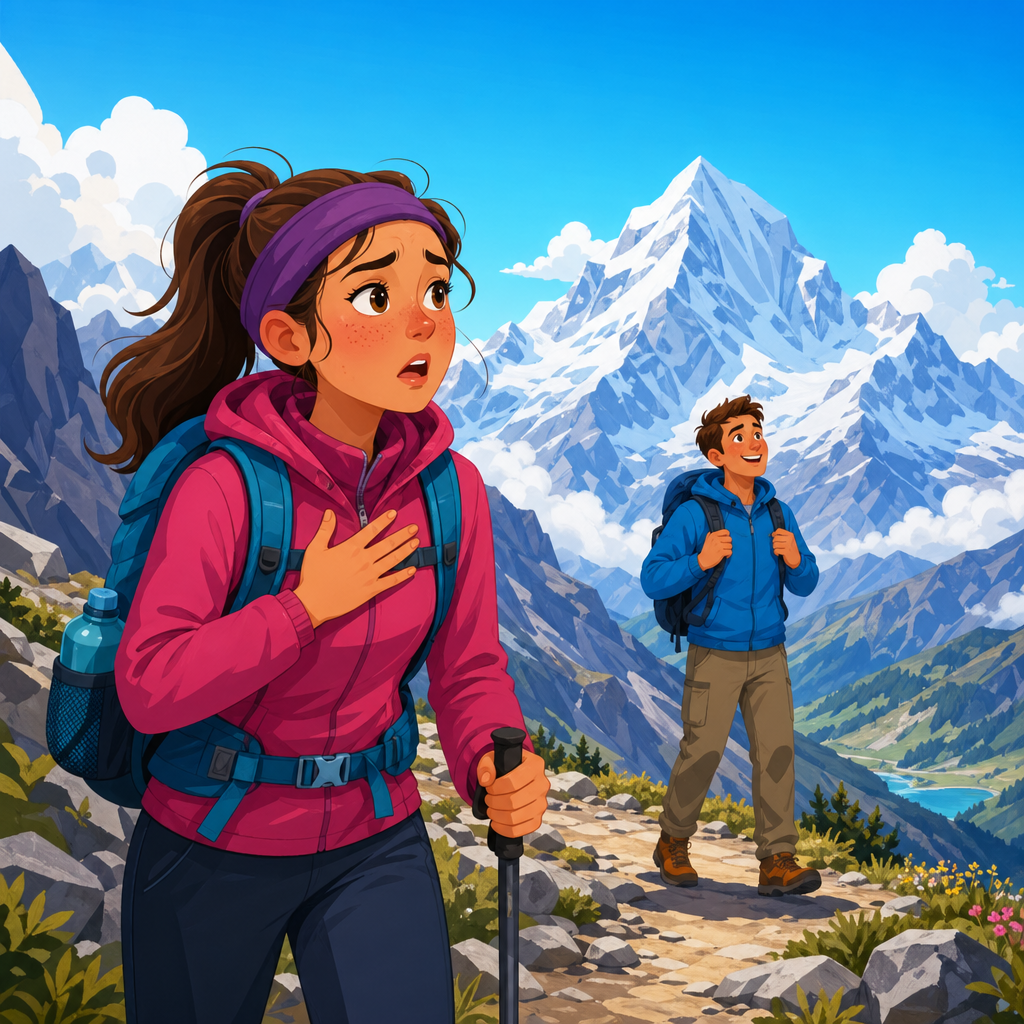
Shortness of breath at altitude is common, but it is not always harmless, and knowing the difference can prevent a miserable trip, an emergency evacuation, or worse. In mountain clinics and on trekking routes, I have seen the same question arise from hikers, skiers, climbers, and even fit endurance athletes: “Am I just adjusting, or is this altitude sickness?” The answer starts with understanding how the body responds when air pressure drops. At higher elevation, the percentage of oxygen in the air stays about the same, but the lower barometric pressure means each breath delivers fewer oxygen molecules. That reduction triggers faster breathing, a higher heart rate, sleep disruption, and reduced exercise capacity. Some breathlessness is expected. Severe or worsening shortness of breath, especially at rest, is not.
This article explains what normal shortness of breath at altitude feels like, what abnormal symptoms suggest acute mountain sickness and its complications, and how to judge risk in practical terms. It serves as a central guide to AMS symptoms and diagnosis, so it also covers headache, nausea, dizziness, fatigue, poor sleep, and the warning signs of high-altitude pulmonary edema and high-altitude cerebral edema. The key diagnostic idea is simple: AMS usually begins after recent ascent to roughly 2,500 meters or higher and typically includes headache plus one or more other symptoms. Breathlessness alone after a steep climb may be normal. Breathlessness that seems out of proportion, keeps worsening, or appears at rest needs immediate attention. Distinguishing these patterns matters because early recognition, stopping ascent, resting, and descending when needed are the most reliable ways to stay safe.
Why altitude causes shortness of breath
Shortness of breath at altitude happens because the body is trying to maintain oxygen delivery despite lower inspired oxygen pressure. The immediate response is hyperventilation: you breathe faster and deeper. That is not a sign of weakness; it is the correct physiologic compensation. Within hours, the kidneys begin adjusting acid-base balance to support sustained faster breathing. Over days, acclimatization improves oxygenation further through changes in ventilation, plasma volume, and eventually red blood cell production. Even with good acclimatization, however, exercise feels harder. A pace that is comfortable at sea level may feel demanding at 3,000 meters.
What feels normal? Mild breathlessness during exertion, needing more frequent rest breaks, and a sense that recovery between efforts is slower are all expected. Many people notice they cannot talk comfortably while hiking uphill at a pace that would be easy at lower elevation. Nighttime can feel odd too. Periodic breathing during sleep, with brief pauses followed by deeper breaths, is common at altitude and can cause a sensation of waking up short of breath. That can be unsettling, but by itself it does not prove illness. The pattern becomes concerning when daytime breathlessness is escalating, exercise tolerance is rapidly dropping, or symptoms cluster with headache, nausea, or confusion.
Altitude level, ascent speed, sleeping elevation, prior history of AMS, recent illness, and individual susceptibility all influence symptoms. Fitness helps with the workload of climbing but does not protect against AMS. I have seen strong runners develop symptoms because they ascended too fast, while slower trekkers remained well because they respected acclimatization. That is why diagnosis depends more on exposure history and symptom pattern than on athletic background.
What is normal at altitude and what is not
Normal shortness of breath at altitude is linked to exertion. You feel winded during climbing, recover with rest, and can still function, eat, think clearly, and sleep reasonably well. Your symptoms should not steadily worsen if you stay at the same sleeping elevation and take it easy. It is also normal to have a higher resting heart rate, slightly lower oxygen saturation than at sea level, and reduced top-end performance. Pulse oximeter readings can be useful for trends, but they are not diagnostic by themselves because normal values vary with elevation and device quality.
Abnormal shortness of breath is out of proportion to effort, appears during minimal activity, or occurs at rest. A red flag is a change from “I get winded on steep sections” to “I am struggling to catch my breath while walking across camp” or “I feel breathless lying in my sleeping bag.” Another red flag is a wet cough, chest tightness, crackling sounds in the lungs, or rapidly falling exercise capacity. Those findings raise concern for high-altitude pulmonary edema, the most dangerous lung complication of altitude exposure. It can develop without severe AMS first, so never dismiss unexplained breathlessness.
Breathlessness can also feel worse because of cold air, dehydration, asthma, viral infection, anxiety, or overexertion. Those factors matter, but they should not be used to explain away warning signs. When evaluating someone in the field, I start with three questions: What elevation did you sleep at, how quickly did you ascend, and are symptoms getting better, stable, or worse with rest? If symptoms are progressing at the same altitude, that is not normal acclimatization.
How acute mountain sickness is defined and diagnosed
Acute mountain sickness is a syndrome that develops after ascent to altitude, classically above about 2,500 meters, in someone who was previously at a lower elevation. The most widely used clinical framework is the Lake Louise Scoring System, updated by the Lake Louise Consensus group. In current practice, AMS is diagnosed when a person has a recent altitude gain, headache, and at least one additional symptom such as gastrointestinal upset, fatigue or weakness, dizziness or lightheadedness, or sleep disturbance. Severity is judged by symptom burden and functional impact. The diagnosis is clinical. There is no blood test, chest x-ray, or pulse oximeter threshold that confirms ordinary AMS in the mountains.
This distinction matters because many travelers focus on oxygen saturation numbers and miss the actual syndrome. I have evaluated trekkers whose pulse oximeter values looked similar, yet one had no meaningful symptoms and the other had classic AMS with severe headache, nausea, and inability to continue. The symptom pattern drives decision-making. Headache is especially important. Without headache, isolated poor sleep or exertional breathlessness usually points away from uncomplicated AMS, though it does not exclude other altitude problems.
Timing also helps. AMS usually begins within 6 to 24 hours after ascent, often after sleeping at a new elevation. It can worsen overnight and improve with rest, acclimatization, or descent. If a person develops headache and nausea before even reaching moderate altitude, another diagnosis is more likely. If symptoms start several days into a stable stay without a further ascent, consider dehydration, infection, migraine, carbon monoxide exposure, or another cause rather than assuming AMS automatically.
Key AMS symptoms every traveler should recognize
The hallmark symptom of AMS is headache. It is often described as steady, frontal, or pressure-like, and it tends to worsen with exertion, coughing, or bending over. Many people also develop loss of appetite, nausea, unusual fatigue, dizziness, and poor sleep. The combination matters more than any single complaint. A mild headache after a long day in the sun may be dehydration. A headache plus nausea and pronounced fatigue after a rapid ascent to 3,200 meters is much more suspicious for AMS.
Fatigue at altitude deserves careful interpretation. Everyone tires sooner at elevation, but AMS fatigue feels disproportionate. People describe feeling heavy, unmotivated, and much slower than expected even on easy terrain. Dizziness or lightheadedness can be mild, but if balance is impaired, coordination is clumsy, or mental status seems off, think beyond routine AMS and assess urgently for cerebral involvement. Sleep disturbance is common and included in symptom scoring, but poor sleep alone is nonspecific. Many healthy travelers sleep badly their first night high up.
Nausea and appetite loss are particularly useful clues because they often influence function. A trekker who no longer wants to eat, cannot finish water, and feels sick during simple camp tasks may be developing moderate AMS. Vomiting, severe weakness, or inability to maintain hydration raises the stakes. In practical mountain medicine, I treat functional decline as a major signal. If symptoms are strong enough that the person cannot keep pace, care for themselves, or think clearly, the situation has moved beyond “normal discomfort.”
Red flags that suggest a dangerous altitude illness
Not all altitude illness is routine AMS. Two life-threatening forms require immediate recognition: high-altitude pulmonary edema and high-altitude cerebral edema. HAPE causes fluid to accumulate in the lungs. Typical signs include shortness of breath at rest, breathlessness with minimal exertion, a persistent cough, reduced exercise tolerance, chest tightness, fast heart rate, and sometimes pink or frothy sputum. Oxygen saturation is usually lower than expected for the altitude, but again, symptoms matter more than the number. Crackles in the lungs, bluish lips, or inability to walk at a normal pace are emergency signs.
HACE is swelling of the brain related to altitude exposure and usually evolves from worsening AMS, though not always. The defining features are altered mental status and ataxia, meaning poor coordination or an unsteady gait. A person may seem confused, unusually irritable, slow to answer, unable to walk heel-to-toe, or too sleepy to stay engaged. Severe headache, vomiting, and visual changes may accompany it. HACE is a medical emergency. Descent should not wait for morning, better weather, or a second opinion if those signs are present.
| Condition | Typical symptoms | What to do |
|---|---|---|
| Normal acclimatization | Breathless on exertion, higher heart rate, mild sleep disruption, slower pace | Rest, hydrate, pace effort, monitor symptoms |
| Acute mountain sickness | Headache plus nausea, fatigue, dizziness, or poor sleep after ascent | Stop ascent, rest, consider acetazolamide, descend if worsening |
| High-altitude pulmonary edema | Breathlessness at rest, cough, chest tightness, marked decline in exercise tolerance | Immediate descent, oxygen if available, urgent medical treatment |
| High-altitude cerebral edema | Confusion, ataxia, severe headache, vomiting, altered behavior | Immediate descent, dexamethasone, oxygen, emergency care |
How to assess shortness of breath in the field
A practical field assessment starts with observation, not gadgets. Can the person speak full sentences? Are they comfortable sitting still? How far can they walk compared with yesterday? Are lips or fingernails blue? Is there a cough, and does it sound dry or wet? Ask whether symptoms improve after ten to fifteen minutes of rest. Normal exertional breathlessness should settle. Persistent distress after resting is abnormal.
Next, check for the rest of the AMS picture. Is there headache? Nausea? Loss of appetite? Dizziness? New insomnia after ascent? Then screen for neurologic danger signs by watching gait and asking simple orientation questions. A straight-line walking test is crude but useful. If the person is unusually unsteady, do not rationalize it as fatigue. If you have a pulse oximeter, use it to follow trends in the same person rather than comparing everyone to one cutoff. Cold fingers, motion, and poor circulation can distort readings.
Context is critical. A person who sprinted uphill with a heavy pack in dry cold air may be winded for understandable reasons. A person who became short of breath while slowly walking to the toilet at 3,500 meters is a different case. I also ask about asthma, recent respiratory infection, smoking, anemia, and medication use. These factors can complicate the picture, but they do not reduce the seriousness of worsening breathlessness at altitude. When in doubt, stop ascent and reassess after rest. Time spent observing early is often what prevents a nighttime evacuation later.
Prevention, treatment, and when to descend
The best prevention for AMS symptoms is a conservative ascent profile. Once above about 3,000 meters, standard mountain medicine guidance recommends limiting sleeping elevation gain to roughly 300 to 500 meters per night and adding a rest day every three to four days or after about 1,000 meters of gain. “Climb high, sleep low” can help, but it does not cancel the need for gradual sleeping ascent. Alcohol excess, sleeping pills that suppress breathing, and maximal effort on arrival all make adjustment harder.
Acetazolamide is the best-studied medication for prevention and early treatment of AMS because it speeds acclimatization by promoting ventilation. Dexamethasone can prevent and treat AMS and HACE but does not replace acclimatization and is usually reserved for specific situations. For HAPE, oxygen, descent, and often nifedipine are standard interventions under medical guidance. Portable hyperbaric bags can be lifesaving on remote expeditions, but they are a bridge, not definitive treatment.
When should you descend? Descend if symptoms are moderate and not improving with rest, if vomiting prevents hydration, if headache is severe and progressive, or if shortness of breath is more than mild exertional windedness. Descend immediately for ataxia, confusion, fainting, breathlessness at rest, or signs of HAPE or HACE. The central rule is straightforward: never ascend with symptoms of AMS, and never stay high with symptoms of severe altitude illness. If you are planning a trip in the mountains, review your itinerary, build in acclimatization days, and treat unusual shortness of breath as a signal to slow down and reassess.
Frequently Asked Questions
Is it normal to feel short of breath when you first arrive at altitude?
Yes, some shortness of breath at altitude is completely normal, especially during the first hours to first couple of days after ascent. As elevation increases, air pressure drops, which means each breath delivers less oxygen to the body even though the oxygen percentage in the air stays the same. Your body responds by breathing faster and deeper to bring in more oxygen. That adjustment can make you notice your breathing more than usual, particularly when walking uphill, carrying a pack, climbing stairs, skiing hard, or even talking while moving.
Normal altitude-related breathlessness is usually mild and proportional to effort. In other words, you may feel winded sooner than you would at sea level, but you recover with rest, and you are still able to speak in full sentences, walk at a reasonable pace, and function without distress. Many healthy people, including very fit athletes, are surprised by how quickly they become breathless at elevations where they expected to perform well. Fitness helps with workload, but it does not prevent the reduced oxygen availability that comes with altitude.
What is not considered normal is shortness of breath that seems out of proportion to activity, occurs at rest, worsens rapidly, or comes with other concerning symptoms such as persistent cough, chest tightness, blue lips, confusion, severe fatigue, poor coordination, or inability to lie flat because breathing gets harder. Those features raise concern for more serious altitude illness or another medical problem and should not be dismissed as simple acclimatization.
How can I tell the difference between normal acclimatization and altitude sickness?
The key difference is severity, timing, and what else is happening along with the shortness of breath. Normal acclimatization often includes faster breathing, a slightly elevated heart rate, reduced exercise capacity, poor sleep, and mild breathlessness with exertion. These symptoms are usually manageable and improve as your body adjusts over one to three days, especially if you avoid rapid ascent and give yourself time to acclimatize.
Altitude sickness, most commonly acute mountain sickness, usually includes headache plus one or more other symptoms such as nausea, loss of appetite, dizziness, unusual fatigue, or poor sleep. Shortness of breath can be part of the picture, but a headache is often one of the earliest clues that you are not adapting well. If symptoms are getting worse instead of better, if you feel ill even while resting, or if simple tasks become unexpectedly difficult, that is more concerning than ordinary adjustment.
More dangerous forms of altitude illness include high-altitude pulmonary edema and high-altitude cerebral edema. High-altitude pulmonary edema often begins with unusual breathlessness during activity, reduced performance, and a dry cough, then progresses to shortness of breath at rest, worsening cough, chest congestion, and profound fatigue. High-altitude cerebral edema can cause confusion, trouble walking straight, altered behavior, or extreme drowsiness. Both are medical emergencies. If you are asking yourself whether symptoms are “just altitude” but they are escalating, affecting your ability to function, or making rest difficult, it is safer to treat the situation seriously rather than wait and hope.
When is shortness of breath at altitude a warning sign that I should descend or get medical help?
Shortness of breath becomes a red flag when it happens at rest, wakes you gasping, prevents you from speaking comfortably, or worsens quickly over hours. It is especially concerning if you also have a persistent cough, frothy sputum, chest tightness, unusual weakness, bluish lips or fingernails, dizziness, confusion, or poor balance. These symptoms may suggest high-altitude pulmonary edema, which is one of the most serious altitude-related conditions and can deteriorate rapidly without treatment and descent.
A practical rule is this: feeling winded during exertion can be normal; feeling breathless while sitting still is not. Another warning sign is a dramatic drop in your usual ability. If a trail pace that should feel easy suddenly becomes impossible, if you are falling behind despite effort, or if recovery after minor exertion is unusually slow, do not ignore it. Many people minimize symptoms because they do not want to abandon a climb, ski day, or trek, but delayed action is one of the biggest reasons mild altitude illness turns into an emergency.
If severe symptoms are present, the safest response is to stop ascending, rest, and descend to a lower elevation as soon as possible. Supplemental oxygen, medical assessment, and medications may be needed depending on the cause. Emergency evaluation is warranted if breathing is labored at rest, mental status is altered, walking is unsteady, or symptoms continue to worsen despite rest. In the mountains, descending early is often the most effective treatment.
Does being fit protect you from abnormal shortness of breath or serious altitude illness?
No. Good fitness can improve your strength, efficiency, and stamina, but it does not make you immune to altitude problems. This is one of the most misunderstood points in mountain medicine. Elite runners, cyclists, climbers, and strong recreational hikers can all develop significant altitude symptoms. In fact, very fit people sometimes get into trouble because they are able to push harder, ascend faster, and overlook early warning signs, assuming their conditioning will carry them through.
Altitude illness is driven more by ascent profile, sleeping elevation, individual susceptibility, prior acclimatization, and sometimes illness or dehydration than by raw fitness. Two people of equal age and health can respond very differently at the same elevation. Someone who performs exceptionally well at sea level may still experience marked breathlessness, headache, poor sleep, or even more serious altitude complications if they ascend too quickly.
It is also worth noting that training at sea level does not fully prepare the body for hypobaric hypoxia, the low-oxygen environment created by lower air pressure at altitude. Some athletes interpret early breathlessness as poor fitness or anxiety when it is actually the expected effect of altitude. Others dismiss abnormal symptoms because they are “too fit” to be sick. The smarter approach is to respect elevation, pace conservatively, monitor symptoms honestly, and remember that physiology matters more than pride.
What can I do to reduce normal shortness of breath at altitude and lower the risk of something more serious?
The most effective strategy is gradual ascent. If possible, increase sleeping elevation slowly, build in acclimatization days, and avoid making a large jump in altitude followed immediately by intense activity. A common mistake is arriving at a high mountain destination and treating the first day like a normal training day. Instead, keep effort moderate at first, take frequent breaks, and let your breathing guide your pace. If you cannot talk comfortably while moving, you are probably going too hard for your current altitude.
Hydration, adequate calories, and rest also matter. Altitude often suppresses appetite, increases fluid loss through breathing, and disrupts sleep, all of which can make you feel worse and reduce your margin for safety. Eat regularly even if you are not very hungry, avoid excessive alcohol, and be cautious with sedatives because they can interfere with breathing and mask worsening symptoms. If you have a history of altitude illness or are ascending quickly for unavoidable reasons, preventive medication such as acetazolamide may be appropriate, but that decision should be made with a qualified medical professional.
Perhaps most important, pay attention to symptom patterns. Mild exertional breathlessness that stabilizes or improves is generally expected. Symptoms that intensify, spread beyond exercise, or come with headache, nausea, cough, weakness, confusion, or poor coordination deserve action. The best prevention is not toughness but awareness: climb high only as fast as your body can adapt, and if your breathing tells you something is wrong, listen to it.