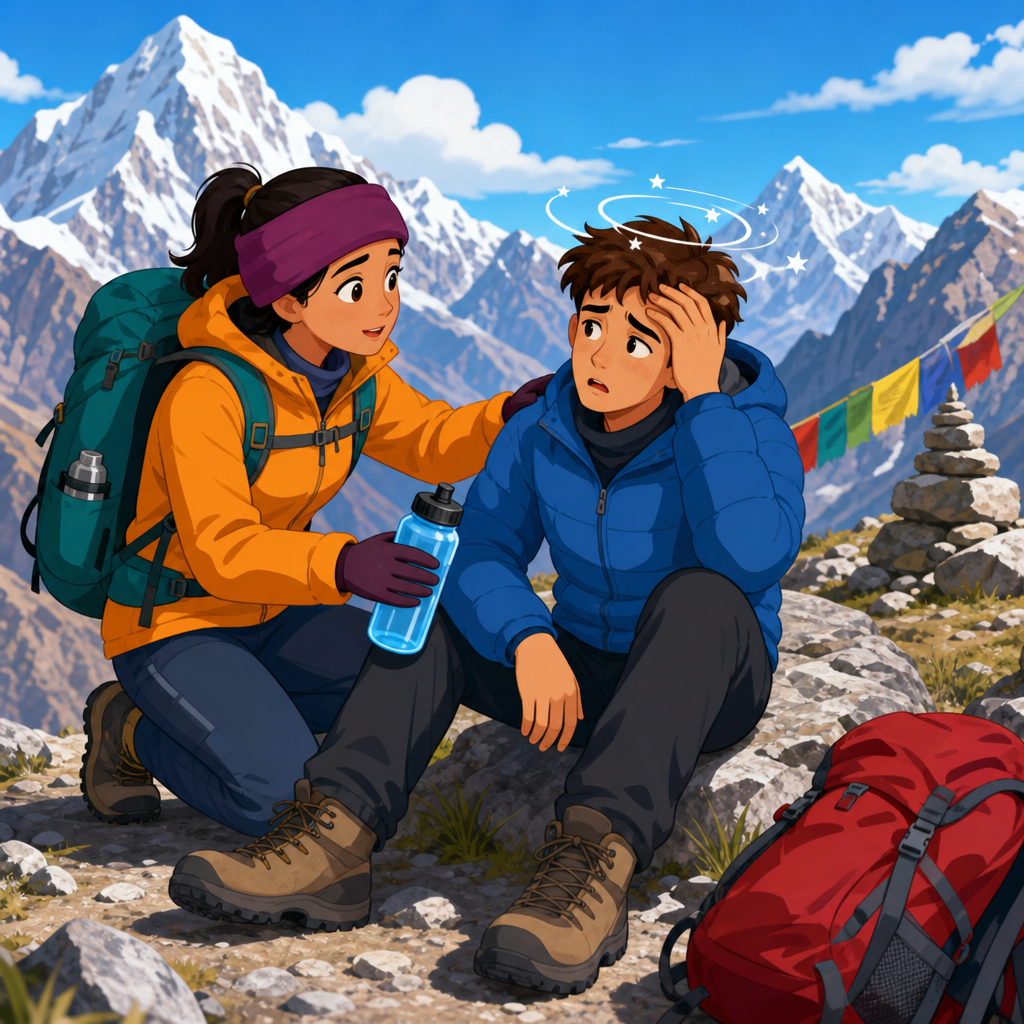
Disorientation at high altitude is a medical red flag, not a simple sign of fatigue, dehydration, or mood change. In mountain medicine, new confusion, poor judgment, clumsiness, unusual behavior, or trouble recognizing familiar people and places strongly suggests high altitude cerebral edema, usually shortened to HACE. HACE is the severe end of altitude illness, caused by swelling in the brain after rapid ascent to reduced oxygen pressure, and it can progress to coma or death within hours if the group delays action. I have managed confused trekkers and climbers in thin air, and the pattern is consistent: teams lose time because they hope the person will improve after rest, snacks, or a better attitude. That is the wrong instinct. If someone becomes disoriented at altitude, the correct default is to treat the situation as HACE until proven otherwise and begin descent immediately.
This topic matters because high altitude travel is now common far beyond technical expeditions. Trekkers on Kilimanjaro, hikers in Colorado, skiers in the Andes, pilgrims in the Himalaya, and workers at remote mines can all reach elevations where acute mountain sickness, high altitude pulmonary edema, and HACE occur. HACE usually develops from acute mountain sickness that was missed, minimized, or pushed through, although it can occasionally appear quickly. The key terms are straightforward. Disorientation means altered thinking or awareness. Ataxia means loss of coordination, often seen as staggering or inability to walk heel to toe. Acclimatization is the body’s gradual adaptation to altitude. The practical question is simple: what should you do, right now, if a person at altitude is mentally altered? The answer is immediate descent, supplemental oxygen if available, dexamethasone, protection from injury and cold, and urgent evacuation planning.
Recognize HACE early and assume the worst until the person is lower
HACE is a life-threatening altitude emergency marked by altered mental status and usually ataxia in a person recently exposed to altitude. The diagnosis is primarily clinical. You do not need a pulse oximeter, a perfect neurological exam, or a hospital to decide. If someone at altitude is acting confused, irrational, unusually sleepy, combative, forgetful, or unable to walk normally, you should presume HACE. The Lake Louise framework for altitude illness highlights central nervous system symptoms, but in the field the most useful question is whether the person is behaving like themselves and moving normally. If the answer is no, stop debating and start descending.
Early HACE can look deceptively mild. A strong hiker may repeatedly pack the wrong gear, deny obvious symptoms, wander away from camp, or insist they are fine while speaking slowly and making dangerous choices. Friends often label this stubbornness, panic, exhaustion, or intoxication. In practice, altitude can mimic all of those. Ataxia is especially important because it is objective. Ask the person to walk a straight line or perform a simple tandem gait test if it is safe. If they cannot coordinate their steps, that finding carries major weight. A progressively severe headache, vomiting, severe fatigue, and a recent history of acute mountain sickness increase suspicion further.
HACE often overlaps with high altitude pulmonary edema, or HAPE. A patient may be confused and also breathless at rest, coughing, or producing frothy sputum. That combination is particularly dangerous because low oxygen from HAPE can worsen brain dysfunction. If mental status changes are present, treat for HACE even if lung symptoms seem dominant. Common alternative explanations still matter, but they should not delay descent. Low blood sugar, hypothermia, head injury, stroke, seizure, substance use, carbon monoxide exposure from stoves, infection, and severe dehydration can all cause confusion. The field rule is practical: correct immediately reversible problems you can address in minutes, such as giving glucose if hypoglycemia is possible, but do not wait around to see what happens at the same altitude.
Take immediate action: descend, give oxygen, and reduce further harm
The first and most important treatment for disorientation at high altitude is descent. Even a drop of 500 to 1,000 meters can be lifesaving, and more is better if terrain and safety allow. Do not leave the person alone, and do not let them continue toward a higher camp. Stop the ascent completely. If the person can walk with support, begin descent at once with the strongest team members assisting. If they cannot walk safely, organize a carry, animal transport, litter, vehicle evacuation, or helicopter request depending on location. Time matters more than convenience. Waiting until morning for better weather, a planned itinerary, or a guide change can turn a survivable emergency into a fatal one.
Supplemental oxygen is the next priority when available. In practical field care, oxygen should be administered continuously during descent and evacuation. Many expedition medical kits target flow rates around 2 to 4 liters per minute by nasal cannula for moderate illness and higher flows by mask for severe cases, but the right goal is clinical improvement and safer oxygenation rather than a rigid number. If a pulse oximeter is available, use it as a trend tool, not a decision maker. Saturation readings can be low at altitude even in healthy people, and cold fingers give unreliable numbers. Improvement in alertness, speech, gait, and breathing is more meaningful than a single device reading.
Protect the patient from secondary threats while you move. Keep them warm, dry, and out of wind. Prevent falls, because confused patients wander and stumble. Avoid sedatives and alcohol. Encourage only small sips if they are awake enough to swallow safely; forced hydration does not treat HACE and can create aspiration risk. If they are vomiting or very drowsy, place them in a protected side-lying position when stopped. Reassure them with short, direct instructions. In my experience, teams do better when one person is clearly assigned to patient contact, one to route and logistics, and one to communications. Confused patients deteriorate fastest when everyone assumes someone else is in charge.
Use dexamethasone and pressure bag therapy correctly
Dexamethasone is the key medication for suspected HACE. It reduces brain swelling and often produces noticeable improvement within hours, but it is not a substitute for descent. Standard adult field dosing commonly begins with 8 milligrams immediately, followed by 4 milligrams every 6 hours. Oral, intramuscular, or intravenous routes can be used depending on circumstances and available training. If the person cannot swallow safely, use an injectable route if someone is trained and authorized. Improvement after dexamethasone supports the diagnosis, but do not be fooled into stopping evacuation. Patients can worsen again when the drug effect fades if they remain high.
A portable hyperbaric chamber, often called a pressure bag, can be a valuable bridge when descent is temporarily impossible. Devices such as the Gamow bag or Certec bag simulate descent by increasing ambient pressure around the patient. Used properly, they can improve oxygenation and mental status, especially during storms, darkness, avalanche hazard, or impossible terrain. The limitation is critical: the benefit lasts only while the patient is inside and shortly after treatment. A pressure bag buys time; it does not cure HACE. Teams should continue planning actual descent and evacuation the moment the chamber is deployed.
Other medicines have narrower roles. Acetazolamide helps acclimatization and can treat acute mountain sickness, but it is not first-line rescue therapy for a person who is already disoriented with probable HACE. Nifedipine is mainly used for HAPE, not isolated HACE. Pain medicine may help headache, but masking symptoms should never delay movement to lower altitude. If lung symptoms suggest concurrent HAPE, oxygen becomes even more important, and evacuation urgency increases. The practical medication hierarchy is simple: dexamethasone for HACE, oxygen whenever available, pressure bag if descent is delayed, and descent regardless of apparent improvement.
| Priority | What to do | Why it matters | Common mistake |
|---|---|---|---|
| 1 | Stop ascent and descend immediately | Lower altitude reduces the underlying hypoxic stress causing brain swelling | Waiting to see if rest fixes confusion |
| 2 | Give supplemental oxygen | Improves oxygen delivery and can rapidly improve symptoms | Using oxygen but not descending |
| 3 | Administer dexamethasone | Temporarily reduces cerebral edema and buys time | Treating medication as a complete solution |
| 4 | Use a portable hyperbaric bag if trapped high | Simulates descent when terrain or weather blocks movement | Stopping evacuation planning once the patient looks better |
| 5 | Monitor gait, behavior, breathing, and temperature | Tracks deterioration and detects overlap with HAPE or hypothermia | Relying only on pulse oximeter numbers |
Organize evacuation and monitor for complications
Evacuation planning should start the moment HACE is suspected. In front-country settings, call local emergency medical services and specify altered mental status at altitude with suspected cerebral edema. In remote ranges, activate satellite communication, expedition radios, or local rescue networks early because response times are long and weather windows are short. Give a concise report: current altitude, highest recent sleeping altitude, rate of ascent, symptoms, vital signs if known, medications given, oxygen use, and whether the person can walk. That information helps rescuers decide between ground support and aircraft response.
While evacuating, reassess frequently. The most useful field checks are simple: level of consciousness, ability to answer basic questions, gait if walking is attempted, respiratory rate, pulse, skin temperature, and urine output only if practical. Worsening drowsiness, inability to sit upright, repeated vomiting, seizures, severe breathlessness, blue lips, or collapse are signs of critical deterioration. If the person becomes unresponsive, manage the airway, place them in recovery position if breathing, continue oxygen, and expedite rescue. In mountain terrain, trauma often follows confusion, so inspect for head injury after falls and protect the spine if mechanism suggests it.
One of the hardest judgment calls is whether a patient who looks much better after oxygen and dexamethasone can remain at an intermediate camp. The answer is usually no. They should continue to lower altitude and receive medical evaluation because relapse is common and coexisting HAPE may not be obvious early. Hospital assessment can identify infection, electrolyte problems, bleeding, or other conditions that mimic altitude illness. Imaging is not needed to start treatment in the field, but formal care is important once available. A recovered appearance at 3,500 meters is not proof that the danger has passed.
Prevent recurrence and know when return to altitude is unsafe
The best way to manage HACE is to prevent it through conservative ascent and honest symptom reporting. Standard prevention advice remains sound: increase sleeping altitude gradually, add rest days after significant gains, avoid sleeping much higher immediately after arrival, and never ascend with unresolved acute mountain sickness symptoms. Many programs use the practical rule of limiting sleeping altitude gain to about 300 to 500 meters per day above 3,000 meters, with an extra acclimatization day every 1,000 meters. Real routes vary, but the principle does not: the faster the ascent, the higher the risk.
People with prior altitude illness need an especially careful plan. Acetazolamide prophylaxis can reduce acute mountain sickness risk and may help the overall acclimatization process on future trips. Dexamethasone can be used preventively in selected high-risk situations, but it is generally reserved for specific circumstances because it does not promote normal acclimatization the way acetazolamide does. Screening for contributing factors also matters. Respiratory infections, poor sleep, intense exertion immediately after ascent, alcohol misuse, and sedative medications all make early altitude symptoms easier to miss or worse to tolerate.
Return to altitude after HACE should be cautious and delayed until the person is fully recovered and medically cleared. They should not reascend while any neurological symptom remains, including headache, imbalance, slowed thinking, or unusual fatigue. On expeditions, I advise teams to treat HACE as a trip-ending event unless there is strong medical oversight, abundant logistical support, and a compelling reason to continue. The mountain will still be there. The patient’s job is to get home intact. If you are planning future travel, build a slower itinerary, consider prophylaxis, sleep lower when possible, and educate the whole group on warning signs so the next response is faster than the first.
When someone becomes disoriented at high altitude, your decision pathway should be immediate and nonnegotiable. Assume HACE, stop ascent, descend now, give oxygen if available, administer dexamethasone, protect the person from cold and falls, and organize evacuation without delay. Do not let temporary improvement, summit pressure, or debate over the exact diagnosis keep the patient high. HACE is dangerous precisely because impaired judgment affects both the patient and the people around them. A calm, decisive response saves lives.
The central lesson is simple: altered mental status at altitude is never normal acclimatization. It is a sign of possible brain swelling from hypoxia and demands action at once. Most fatalities happen after missed warning signs, delayed descent, or false reassurance from a short-lived improvement. By recognizing ataxia, confusion, and unusual behavior early, using oxygen and dexamethasone appropriately, and treating descent as the definitive therapy, you give the patient the best chance of full recovery. Review your group medical kit, emergency communications, and acclimatization plan before your next trip, and make sure every teammate knows that confusion at altitude means descend immediately.
Frequently Asked Questions
What does disorientation at high altitude usually mean?
Disorientation at high altitude should be treated as a medical emergency, not brushed off as simple tiredness, dehydration, irritability, or a bad mood. In mountain medicine, new confusion, poor judgment, memory problems, clumsiness, unusual behavior, trouble following simple instructions, or difficulty recognizing familiar people or places strongly points to high altitude cerebral edema, or HACE. HACE is a severe form of altitude illness caused by swelling in the brain after ascent to high elevation, especially when the body has not had enough time to acclimatize. It can worsen very quickly and may progress to severe coordination problems, loss of consciousness, coma, and death if the person remains at altitude.
One reason HACE is so dangerous is that it often affects judgment. The person may insist they are fine, deny symptoms, act irrationally, or resist help. That means companions need to make decisions for them. If someone at altitude suddenly seems mentally “off,” confused, unusually slow, strangely emotional, unsteady, or unable to do basic tasks they could do earlier, assume HACE until proven otherwise. The safest response is immediate descent and urgent medical attention.
What should you do first if someone becomes confused or acts strangely at high altitude?
The first priority is to stop the ascent immediately and begin descent as soon as it is safe to do so. Do not let the person continue climbing, skiing, hiking higher, or “rest and see if it passes.” With suspected HACE, time matters. Even a modest descent can make a major difference, and the general rule is to descend at once, ideally with assistance, because the person may not be able to walk safely on their own. Never leave them alone, since confusion can quickly become collapse, wandering, or inability to protect themselves.
At the same time, administer supplemental oxygen if available. Oxygen can help improve low blood oxygen levels and may reduce symptoms while descent is underway, but it is not a substitute for going lower. Keep the person warm, minimize exertion, and monitor their mental status and coordination closely. If you have access to a portable hyperbaric bag in a remote setting, it can be used as a temporary measure when descent is delayed by terrain or weather, but it should be viewed as a bridge, not definitive treatment. Arrange evacuation and emergency medical evaluation as soon as possible. If the person cannot walk, has worsening confusion, is vomiting repeatedly, has trouble staying awake, or shows severe unsteadiness, the situation is especially urgent.
How can you tell the difference between HACE and ordinary altitude fatigue or dehydration?
Fatigue, mild headache, poor sleep, and reduced appetite are common at altitude, and dehydration can cause weakness or headache, but those problems do not usually cause clear changes in thinking and behavior. HACE is different because the brain is being affected. Warning signs include confusion, slowed thinking, bizarre behavior, irritability out of proportion to the situation, inability to make simple decisions, stumbling, loss of coordination, slurred speech, and trouble performing straightforward tasks like putting on gear correctly or following directions. A person may seem intoxicated even if they have had no alcohol.
A useful field clue is ataxia, or impaired coordination. Ask the person to walk a straight line heel-to-toe if it is safe to do so, or observe whether they are suddenly much clumsier than before. Marked unsteadiness combined with mental changes is highly concerning for HACE. Do not rely on the assumption that fluids, food, or a nap will fix it. While dehydration can happen at the same time, giving water alone and waiting can dangerously delay lifesaving descent. If there is any doubt, it is safer to overreact than underreact. At high altitude, new neurologic symptoms should be presumed serious until evaluated by a medical professional.
Are there medications that help if someone has suspected HACE?
Yes, but medications support treatment; they do not replace descent. The most commonly used emergency medication for suspected HACE is dexamethasone, a steroid that can reduce brain swelling and may temporarily improve symptoms. It is often used in expedition, trekking, and rescue settings when HACE is suspected, especially if descent may take time. However, dexamethasone is an adjunct, not a cure. A person who improves after taking it still needs to descend and receive medical care, because symptoms can return or worsen if they remain at altitude.
Supplemental oxygen is one of the most important treatments when available, and portable hyperbaric therapy can also be valuable in remote areas where descent is delayed. In contrast, pain relievers, caffeine, sports drinks, or rest alone are not adequate treatment for disorientation due to altitude illness. Acetazolamide is useful for prevention and for some cases of acute mountain sickness, but it is not the primary rescue treatment for HACE. Because medication protocols can vary depending on the setting, trip leaders and climbers should know in advance what their medical kit contains and how it is meant to be used. Still, the central message remains the same: if mental status changes develop at altitude, descend now and seek urgent medical help.
Can someone recover fully after becoming disoriented at high altitude, and when is it safe to go back up?
Many people do recover fully if HACE is recognized early and treated aggressively with immediate descent, oxygen, appropriate medication, and medical evaluation. The key factors are speed of recognition and how quickly the person gets to a lower altitude. Delays increase the risk of permanent neurologic injury, coma, or death. Even if symptoms seem to improve soon after descent, the episode should still be taken very seriously. The person needs proper assessment because altitude-related brain swelling can coexist with other dangerous problems, including high altitude pulmonary edema, severe low oxygen levels, trauma from falls, or unrelated neurologic emergencies.
As for returning to altitude, it should not happen until the person is fully recovered and has been cleared by a qualified medical professional familiar with altitude illness. They should never re-ascend while symptoms are ongoing, and they should not go back up simply because they “feel better now.” Future trips should include a more gradual ascent profile, built-in acclimatization days, attention to sleeping altitude, and a clear plan for recognizing and responding to symptoms early. Someone who has had HACE may be at increased risk on future rapid ascents, so prevention matters. The safest mindset is simple: disorientation at altitude is not a minor inconvenience to push through. It is a red-flag emergency that demands immediate descent and decisive action.