Choosing the best sunscreen format for high-altitude hiking is not a cosmetic decision; it is a core safety choice that affects skin protection, eye comfort, pack efficiency, and your ability to stay outside for long days above treeline. High-altitude hiking increases ultraviolet exposure because the atmosphere is thinner, reflective surfaces such as snow, pale granite, and water bounce radiation back toward the face, and cooler air can hide the warning signs of sun damage until burns are already developing. In practice, that means a sunscreen that works well at sea level on a short walk may fail badly on an exposed ridge, glacier approach, or alpine traverse.
When hikers ask for the best sunscreen format, they usually mean the delivery form: lotion, stick, spray, gel, mineral cream, or hybrid formula. Format matters because it determines coverage accuracy, reapplication speed, leak risk, cold-weather usability, and compatibility with sunglasses, buffs, hats, and sweaty hands. It also affects whether you actually use enough product. Dermatology guidance is consistent on the big picture: broad-spectrum protection, SPF 30 or higher, water resistance, and regular reapplication are the baseline. For alpine use, however, the most effective choice is usually not one product but a system built around two formats: a primary sunscreen for full exposed areas and a secondary format for precision touch-ups on high-risk zones.
I have tested sunscreen on long Sierra passes, Colorado fourteeners, shoulder-season snowfields, and dry desert peaks where reflected light turns a half-day outing into a serious exposure event. The pattern is clear. Hikers skip reapplication when formulas are greasy, awkward with dirty hands, impossible to apply in wind, or packaged in ways that crack, freeze, or leak. The best sunscreen format for high-altitude hiking is the one that maintains a reliable film on skin despite sweat, friction, and repeated handling of trekking poles, map cases, and camera gear. That practical standard shapes every recommendation in this hub on sun, eye, and skin gear.
This guide covers the full subtopic comprehensively: which sunscreen formats perform best, how to choose by terrain and skin type, why SPF lip balm and glacier eyewear matter, how UPF clothing reduces chemical load on the skin, and what application habits prevent the classic alpine burn across the nose, ears, lips, and underside of the chin. If you are building a gear system under the broader gear, monitoring, and safety category, start here. The goal is simple: reduce ultraviolet injury without adding unnecessary weight, mess, or complexity.
Why high altitude changes the sunscreen equation
High altitude amplifies solar risk in several ways. Ultraviolet intensity increases as elevation rises; a widely cited rule of thumb is roughly 10 to 12 percent more UV for every 1,000 meters of elevation gain, though exact exposure varies with latitude, season, ozone, and cloud conditions. Snow can reflect up to 80 percent of UV radiation, while dry sand and light rock also increase bounce. This means you are hit from above and below. On a snowy switchback, the skin under the nose and the lower eyelids may receive more exposure than hikers expect.
Temperature is misleading. Cold wind reduces the sensation of heating, so people do not feel themselves burning. Sweat evaporation can also mask skin stress. Add the realities of mountain travel—frequent face wiping, shoulder strap abrasion, sunglasses pressing product off the nose bridge, and dehydration making skin more reactive—and sunscreen performance becomes more about persistence than label claims alone. That is why format selection matters.
The best sunscreen formats for alpine hiking
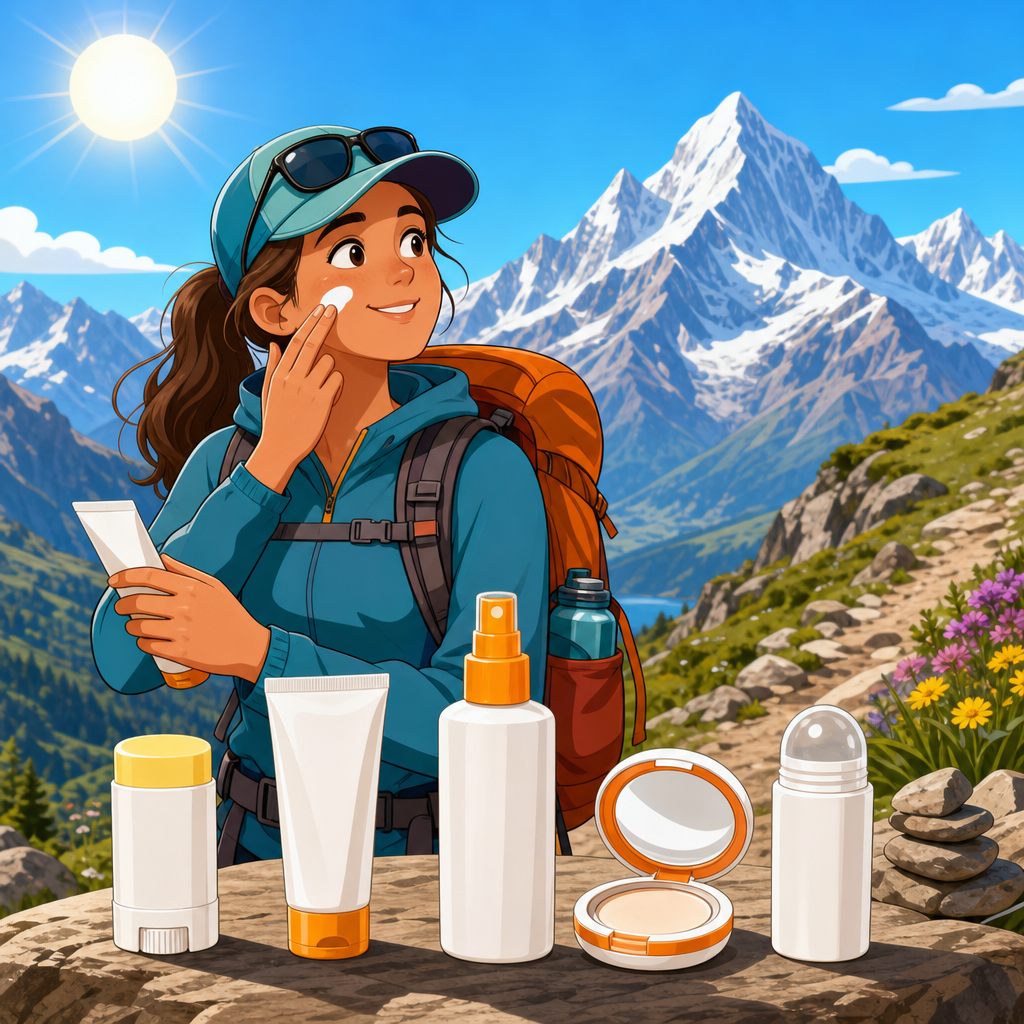
For most hikers, lotion is the best primary sunscreen format for high-altitude hiking because it delivers even coverage over larger areas, makes under-application easier to avoid, and is available in the broadest range of tested broad-spectrum, water-resistant formulas. A good lotion spreads into hairline edges, around the ears, across the neck, and over the backs of hands with fewer missed gaps than a stick. It is also easier to measure mentally: if your face, neck, ears, and hands are exposed, you can visibly confirm a complete film before rubbing it in.
Sticks are the best secondary format. They excel on the nose, cheekbones, ears, lips border, and around the orbital rim where precision matters and liquid formulas run into the eyes. A sunscreen stick is especially useful above treeline because reapplication can happen one-handed in wind without spilling product. It also works well in freezing temperatures where some lotions become stiff. For children, people with rosacea, and hikers prone to eye sting, sticks often provide the most reliable touch-up option.
Sprays are the least dependable alpine choice. Wind drift causes product loss, even when users think they are applying generously. Fine aerosol mist also makes dosage hard to judge, and inhalation is an avoidable concern. On a calm beach, sprays can be convenient. On a ridge, they are wasteful and inconsistent. If a spray is used at all, it should be sprayed into the hands first and then rubbed on, but that removes most of its convenience advantage.
Gels and fluids suit oily or acne-prone skin and feel lighter under helmets or hats, but they can be easier to miss during application because they disappear quickly. Mineral pastes offer visible coverage and often sting eyes less, yet some are thick enough to discourage proper use unless the hiker is already accustomed to them. In other words, no format wins on feel, precision, and area coverage all at once. The practical answer is a lotion-plus-stick pairing.
| Format | Best use | Main strengths | Main limitations |
|---|---|---|---|
| Lotion | Primary full-face and body coverage | Even film, easy dose control, broad product selection | Can leak, messy with dirty hands, some sting eyes |
| Stick | Nose, ears, lips border, cheekbones, touch-ups | Precise, portable, low leak risk, good in wind and cold | Slower on large areas, can leave gaps if rushed |
| Spray | Rare backup use in calm conditions | Fast on large limbs | Wind loss, hard to dose, inhalation concern |
| Gel/Fluid | Oily skin, hot-weather comfort | Light feel, less greasy | Easy to under-apply, may run with sweat |
| Mineral cream | Sensitive skin, eye-area use | Often less sting, visible placement | Thicker texture, possible white cast |
What to look for on the label
The minimum specification for high-altitude hiking is broad-spectrum SPF 30, but SPF 50 is a better default because real-world application is usually thinner than laboratory testing assumes. Water resistance matters even in dry climates because sweat, stream splashes, and face wiping degrade the protective film. Look for 80-minute water resistance when possible. Broad-spectrum means protection against both UVB, the main driver of sunburn, and UVA, which penetrates deeper and contributes to long-term skin damage.
You will also see two major filter families: mineral and chemical, plus hybrid products. Mineral filters, primarily zinc oxide and titanium dioxide, sit well on reactive skin and around the eyes for many hikers. Chemical filters can feel lighter and more transparent, but individual formulas vary widely in eye sting and sweat behavior. The right choice is the one you can tolerate and reapply every two hours, or more often after heavy sweating or wiping.
Skin type, route conditions, and personal constraints
Dry, windy alpine climates often favor creams or richer lotions because they protect without emphasizing skin irritation. Humid monsoon conditions may push hikers toward lighter fluids on the forehead and a stick for the eye area. If you have a beard, a lotion usually reaches skin beneath stubble better than a stick. If you are moving through talus with constant hand use, a hand-specific reapplication strategy matters because sunscreen rubs off quickly on trekking pole grips and rock contact.
Acne-prone hikers should look for non-comedogenic facial formulas, but they still need enough product quantity. Sensitive skin may benefit from fragrance-free mineral options. Darker skin tones should not be steered away from sun protection; while melanin offers some natural defense, high-altitude UV still causes damage and hyperpigmentation. The best system is always individualized, but the alpine principles stay the same.
Sun, eye, and skin gear beyond sunscreen
Sunscreen alone is not enough. The strongest sun-protection systems reduce exposed skin first. A brimmed cap or legionnaire-style hat blocks scalp and ear exposure that sunscreen often misses. UPF-rated hoodies are among the highest-value alpine clothing pieces because they protect the neck, forearms, and backs of hands while reducing the amount of sunscreen you need to carry. In summer mountaineering, sun gloves are underrated; they prevent repeated reapplication on the hands and lower cumulative UV dose.
Eye protection is equally important. At altitude, visible glare and ultraviolet exposure can contribute to photokeratitis, commonly called snow blindness. For snow travel, category 4 glacier glasses with side shields are the correct tool, not fashion sunglasses. On dry trail without snow, wraparound category 3 sunglasses usually suffice. Fit matters more than branding. If light leaks around the temples or below the frame, your eyes and surrounding skin still take reflected exposure.
Lips are another common failure point. Use SPF 30 or higher lip balm and reapply often, especially after drinking, eating, or breathing hard in dry wind. I see more preventable damage on lips and ears than almost anywhere else in mountain groups. A sunscreen kit that ignores those areas is incomplete.
Application technique that actually works on trail
Apply sunscreen before leaving the trailhead, ideally 15 minutes before exposure for many formulas, and do not rely on a quick swipe after the first switchback. Cover the hairline, ears, back of neck, nose, cheekbones, jawline, and any part line on the scalp. Reapply every two hours as a default, and sooner after heavy sweating, towel drying, or repeated face wiping. On summit days, I tie reapplication to specific habits: first long break, ridgeline transition, and descent start. Habit stacking works better than memory.
Use a stick for the nose bridge, under-eye edge, ears, and upper lip. If sunscreen stings your eyes, stop trying to force that formula to work. Switch to a more eye-friendly product and use a hat with a real brim. Better gear solves more problems than more tolerance.
Packing, storage, and environmental realities
Packaging matters in mountain conditions. Small leakproof tubes beat tall bottles. Heat inside a parked car can destabilize product, while repeated freeze-thaw cycles can separate some formulas. Replace old sunscreen annually if it has spent a season in a pack lid pocket through major temperature swings. Check expiration dates, but also trust texture changes: separated, grainy, or odd-smelling product is not worth betting your face on.
Weight-conscious hikers can decant lotion into a labeled travel container, but keep the original information somewhere accessible in case of irritation or recall. On routes that cross lakes, streams, or alpine tarns, apply away from water and let the film set before direct contact. No sunscreen is an ecological free pass, so protective clothing remains the cleanest way to reduce both exposure and product volume.
Building your high-altitude sun kit
The best sunscreen format for high-altitude hiking is a system: SPF 50 broad-spectrum water-resistant lotion for primary coverage, SPF stick for precision reapplication, SPF lip balm, a brimmed hat or sun hoodie, and proper mountain sunglasses matched to terrain. Add sun gloves for long exposed days, especially on snow, desert peaks, or routes above treeline. This setup covers the main failure points without overpacking.
As the central guide for sun, eye, and skin gear, this hub should inform every related gear choice you make. Start with exposure reduction through clothing and eyewear, then choose sunscreen formats that encourage accurate, frequent use. For most hikers, lotion plus stick is the most dependable answer because it balances coverage, speed, and real-world usability in wind, cold, and sweat. Review your current kit before your next trip, replace any weak links, and build a sun-protection system you will actually use from trailhead to summit.
Frequently Asked Questions
What sunscreen format works best for high-altitude hiking: lotion, stick, spray, or powder?
For most high-altitude hikes, lotion is the best all-around sunscreen format because it is the easiest to apply evenly, the easiest to measure, and usually the most reliable way to achieve the labeled protection. At altitude, ultraviolet exposure is more intense, and hikers are often dealing with wind, sweat, dry skin, and repeated friction from hats, buffs, sunglasses, and backpack straps. A lotion handles those conditions better than most alternatives because it spreads into the skin surface more completely and can cover large areas such as the face, neck, ears, arms, and legs without leaving as many gaps.
That said, the best real-world setup is often a combination of formats rather than one product alone. A lotion is ideal as the primary layer you apply before you start hiking and again during longer breaks. A stick is extremely useful for high-friction, high-burn zones such as the nose, cheekbones, lips area, ears, and the back of the hands. It is also more convenient for quick touch-ups in wind or cold, when squeezing and spreading lotion can be awkward. Sprays are usually the least dependable choice for alpine use because wind can carry away much of the product, coverage can be patchy, and hikers often underapply without realizing it. Powder sunscreens can be useful for small cosmetic touch-ups, but they should not be treated as a primary protective format for long, high-exposure mountain days.
If you want the most dependable answer, choose a broad-spectrum SPF 30 or higher lotion as your base, then carry a sunscreen stick for fast reapplication to exposed hotspots. That system balances protection, convenience, pack efficiency, and the realities of long days above treeline.
Why does sunscreen choice matter more at high altitude than on everyday hikes?
Sunscreen format matters more at high altitude because the environment makes mistakes more costly. As elevation increases, the atmosphere filters less ultraviolet radiation, so your skin receives stronger exposure even when temperatures feel cool. Many hikers get caught off guard because they associate sunburn with heat, but alpine burns often happen during crisp, breezy, comfortable conditions. On top of that, reflective terrain such as snowfields, light-colored rock, glacier surfaces, and water can bounce radiation upward, increasing exposure to the underside of the chin, the nose, and the area around the eyes.
The format matters because protection only works if you apply enough, apply it evenly, and can realistically reapply it when needed. A sunscreen that feels greasy, leaks in your pack, stings your eyes, or is hard to use with cold hands is much less likely to be used correctly. On a high-altitude hike, that becomes a safety issue rather than a minor inconvenience. Inadequate coverage can lead to painful burns, swollen skin, chapped lips, eye irritation from runoff, and dehydration stress from spending the day in a more exposed environment. Severe sun exposure can also affect decision-making and comfort, which matters when you are trying to navigate, descend safely, or continue hiking for several more hours.
In practical terms, the right sunscreen format helps you maintain consistent protection without interrupting the hike. It should be easy to carry, durable enough for mountain conditions, and simple to reapply on windy ridges or short rest stops. That is why high-altitude hikers usually do best with formats that prioritize dependable coverage and easy touch-ups over convenience marketing alone.
Is a sunscreen stick better for the face during high-altitude hiking?
For many hikers, yes, a sunscreen stick is one of the best formats for facial use at high altitude, especially as a companion to lotion. The biggest advantages are control and staying power. A stick lets you target the areas that burn fastest and most often: the bridge of the nose, cheekbones, forehead, ears, upper lip, and around the sunglasses line. Because the product is more solid, it is less likely to run into your eyes when you sweat, which can make a major difference on steep climbs or exposed traverses.
Sticks also perform well in windy conditions because the product goes directly onto the skin instead of being affected by airflow, and they are usually less messy when your hands are cold or dirty. That makes them excellent for reapplying throughout the day without needing a full bathroom-style routine on the side of a trail. Many hikers also prefer sticks around the eyes because careful application reduces the chance of irritation compared with thinner lotions that may migrate with sweat.
Still, a stick should not automatically replace lotion for every facial application. Some sticks can go on thickly and leave missed edges if you rush, especially around the hairline, jawline, and sides of the neck. The best approach is to use a lotion or cream for your first thorough morning application, then use a stick for efficient reapplication and reinforcement on exposed facial zones. If your skin is sensitive, dry, or prone to eye stinging, this combination is often the most comfortable and reliable setup for alpine days.
How often should you reapply sunscreen on a high-altitude hike, and which format makes that easiest?
As a general rule, reapply sunscreen every two hours during sustained sun exposure, and sooner if you are sweating heavily, wiping your face often, crossing snow, or spending long stretches above treeline with little shade. High-altitude hiking tends to create continuous exposure, which means the standard reapplication guidance becomes especially important. Even water-resistant formulas lose effectiveness over time through sweat, skin oils, friction from clothing and pack straps, and repeated face-touching.
The easiest format for reapplication on the move is usually a stick for the face and hands, combined with a lotion for larger areas during longer stops. A stick makes it much more likely that you will actually reapply because it is fast, portable, and less vulnerable to spills or wind. You can pull it from a pocket, hit the nose, cheeks, ears, and back of the neck in under a minute, and keep moving. For forearms, calves, and other larger exposed areas, lotion still tends to provide better coverage and more confidence that you have not missed a patch.
What matters most is building a routine before you are already burned. Apply generously before leaving the trailhead, reapply at breaks, and pay special attention after sweat-heavy climbs, lunch stops in full sun, and transitions onto reflective surfaces such as snowfields or alpine lakeshores. If reapplication feels inconvenient, that is usually a sign your format is not well matched to the hike. In mountain conditions, the best sunscreen is the one you can reapply thoroughly and consistently without talking yourself out of it.
What should hikers look for on the label when choosing the best sunscreen format for high-altitude hiking?
Start with broad-spectrum protection and SPF 30 or higher, with many hikers preferring SPF 50 for long alpine days. Broad-spectrum is essential because it means the product protects against both UVA and UVB radiation. UVB is strongly associated with burning, while UVA contributes to deeper skin damage and can still be significant during prolonged outdoor exposure. At high altitude, where sun intensity is elevated and reflection can increase total exposure, broad-spectrum coverage is non-negotiable.
Next, look for water resistance, ideally 80 minutes if you expect heavy sweating. Water-resistant formulas do not last forever, but they generally hold up better during climbs, hot ascents, and repeated face wiping. For format-specific choices, check whether the product is intended for face use if you are prone to eye irritation or breakouts. A well-formulated face lotion or stick may be more comfortable than a general body sunscreen, particularly on exposed all-day hikes where discomfort leads to poor compliance.
Also consider packaging and usability. A bottle that leaks, a cap that opens in your pack, or a spray that becomes useless in wind is not ideal for alpine travel. Compact lotions with secure closures and sturdy sticks are often the most trail-friendly. If you hike in cold conditions, test whether the product still spreads well with chilled hands. If you hike in snow or on highly reflective terrain, remember that lip protection matters too, so a lip balm with SPF is worth carrying alongside your main sunscreen.
Finally, treat format and label claims as part of a bigger sun-protection system. Sunscreen works best when paired with a brimmed hat, UV-blocking sunglasses, sun-protective clothing, and smart timing when possible. But among sunscreen options alone, the strongest label features for high-altitude hiking are broad-spectrum coverage, sufficient SPF, good water resistance, and a format you will use generously and repeatedly in real mountain conditions.