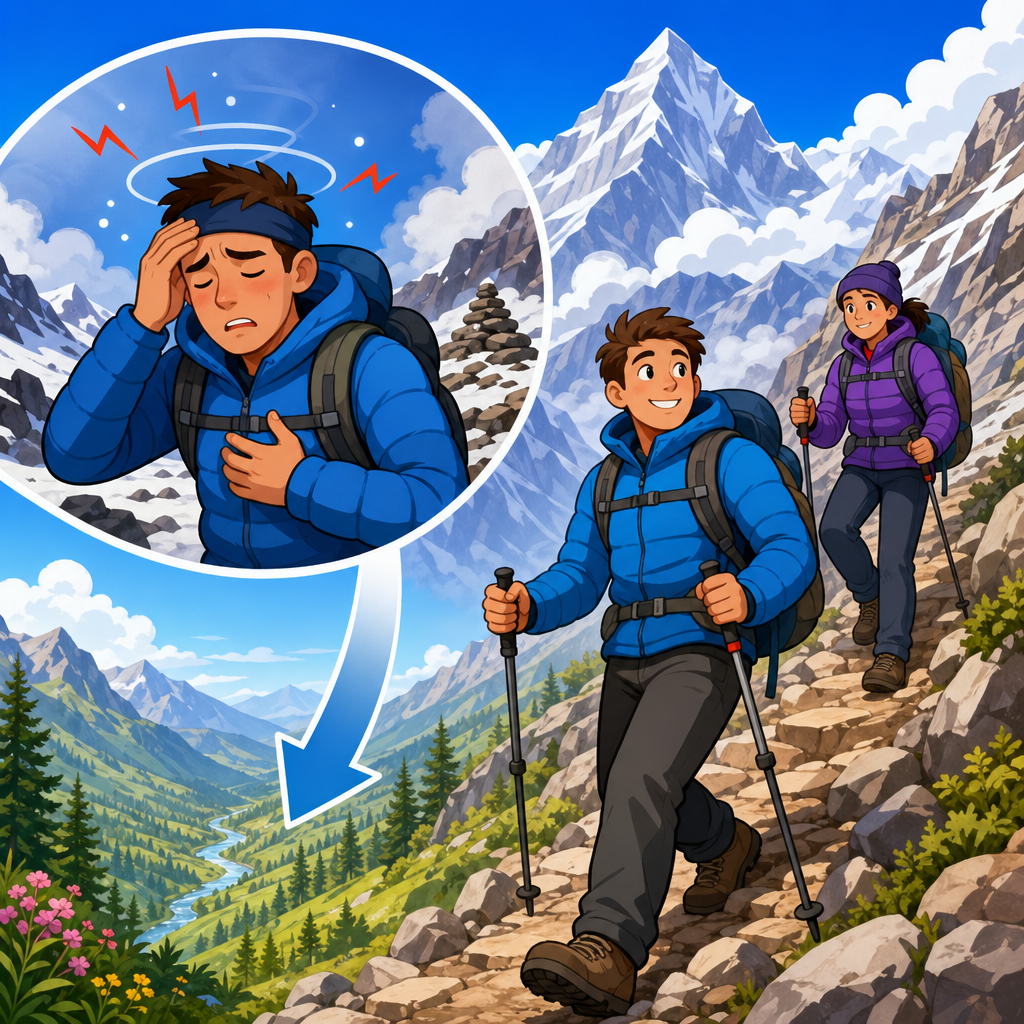
Descent remains the single most important treatment for severe altitude illness because it removes the patient from the low-oxygen environment causing the crisis, and no medication, device, or field technique reverses hypoxia as reliably or as quickly. In mountain medicine, severe altitude illness generally refers to high altitude cerebral edema, high altitude pulmonary edema, or acute mountain sickness that is rapidly worsening and impairing function. Descent means moving to a meaningfully lower sleeping elevation, ideally at least 500 to 1,000 meters, with continuous monitoring and support during the evacuation. Emergency response includes recognition, stabilization, communication, transport planning, and the selective use of oxygen, portable hyperbaric chambers, and medications as bridges rather than substitutes. That distinction matters. I have seen teams delay descent while debating dexamethasone doses, weather windows, or whether the patient can “sleep it off,” and those delays are exactly where bad outcomes begin. Severe altitude illness can deteriorate within hours, especially at night, and the physiologic problem is straightforward: reduced barometric pressure lowers inspired oxygen, tissues become hypoxic, and vulnerable organs start to fail. The brain swells in high altitude cerebral edema; the lungs leak fluid in high altitude pulmonary edema. Both conditions can kill otherwise healthy people. A hub article on descent, treatment, and emergency response has to make one point unmistakable: if severe symptoms are present, the mountain itself is the hazard, and the correct response is to go down.
Why descent works when other treatments only support
The reason descent is foundational is basic altitude physiology. As elevation falls, barometric pressure rises, the partial pressure of oxygen increases, and oxygen transfer across the alveoli improves. That directly targets the cause of altitude illness. Supplemental oxygen does the same chemically, but oxygen supplies are finite, flow rates may be inadequate, masks leak, and cylinders empty. Portable hyperbaric chambers simulate descent by increasing ambient pressure around the patient, but they require setup, labor, shelter from weather, and careful observation because symptoms often recur after the patient is removed. Medications help specific syndromes. Dexamethasone reduces cerebral edema symptoms and can dramatically improve a patient with high altitude cerebral edema or severe acute mountain sickness. Nifedipine lowers pulmonary artery pressure and can help high altitude pulmonary edema. Phosphodiesterase inhibitors such as tadalafil and sildenafil are sometimes used in selected cases, and acetazolamide supports acclimatization in milder scenarios. Yet none of these change the fact that the patient remains in the environment that triggered the illness. In practice, the hierarchy is clear: descent first, oxygen if available, pressure bag if descent is temporarily impossible, and medications as adjuncts.
This is also why the wording of many mountain medicine guidelines is so direct. The Wilderness Medical Society recommends immediate descent for high altitude cerebral edema and for high altitude pulmonary edema unless the condition is mild and resources allow close management, and even then descent is strongly favored. The UIAA MedCom guidance and expedition medicine protocols make the same point. The message is not anti-medication; it is anti-delay. If you can descend now, descend now. If weather, darkness, avalanche hazard, crevasse exposure, or technical terrain makes immediate movement impossible, use oxygen, a hyperbaric bag, and syndrome-specific drugs to buy time until descent can be completed safely. Those measures are bridges. The bridge is not the destination.
Recognizing when descent is mandatory
A practical emergency response starts with recognizing severe altitude illness early enough to act. High altitude cerebral edema often begins with severe headache, marked fatigue, nausea, and poor coordination, then progresses to ataxia, confusion, altered behavior, hallucinations, and reduced consciousness. Ataxia is one of the most useful field signs. If the patient cannot walk heel-to-toe in a straight line, staggers on flat ground, or cannot perform simple tasks they managed earlier, assume cerebral involvement until proven otherwise. High altitude pulmonary edema often presents with reduced exercise tolerance, breathlessness out of proportion to effort, dry cough that becomes wet, chest tightness, tachycardia, crackles, cyanosis, and falling oxygen saturation if you have a pulse oximeter. A climber who cannot keep pace at a normally easy gradient, needs frequent stops, or is breathless lying flat deserves immediate evaluation.
Descent is mandatory when there is altered mental status, ataxia, severe dyspnea at rest, inability to keep oxygen saturation acceptable despite oxygen if available, progressive weakness, or any combination of neurologic and respiratory symptoms. It is also mandatory when severe acute mountain sickness prevents eating, drinking, walking, or decision-making. One of the most dangerous mistakes I see is labeling a deteriorating patient as “just exhausted” or “dehydrated” at altitude. Dehydration, viral illness, cold stress, hypoglycemia, and fatigue can coexist, but they do not protect the patient from cerebral or pulmonary edema. When the symptoms fit, act as though severe altitude illness is present until descent or clinical improvement proves otherwise.
How to organize descent, treatment, and emergency response in the field
Once severe altitude illness is suspected, the response should be structured and fast. Stop ascent immediately. Protect the airway, breathing, and circulation. Keep the patient warm, sheltered, and accompanied. Reduce pack weight to the minimum, assign one leader for clinical decisions and one for logistics, and communicate with all team members using simple, repeated instructions. If a radio, satellite messenger, or emergency beacon is available, send an early status update with location, elevation, weather, number of helpers, and likely route of descent. Delayed communication is a common failure point on expeditions.
The next decision is whether the patient can walk with assistance or requires a litter, animal support, mechanized transport, or helicopter evacuation. A patient with high altitude cerebral edema often should not walk unassisted because ataxia increases fall risk, especially on exposed trails or snow. A patient with high altitude pulmonary edema may initially be able to walk slowly, but exertion can worsen hypoxemia, so frequent reassessment is essential. If oxygen is available, use it during descent. If a portable hyperbaric chamber is available and terrain or weather blocks immediate movement, place the patient inside while the route is prepared. Give dexamethasone for suspected cerebral edema and nifedipine for suspected pulmonary edema according to established dosing protocols, especially when descent will be delayed. Avoid unnecessary sedation. Opiates and benzodiazepines can worsen hypoventilation and cloud the neurological exam.
| Condition | Key field signs | Immediate priorities | Adjuncts while arranging descent |
|---|---|---|---|
| High altitude cerebral edema | Ataxia, confusion, severe headache, altered consciousness | Immediate descent, assisted walking or carry, airway protection | Oxygen, dexamethasone, portable hyperbaric chamber |
| High altitude pulmonary edema | Dyspnea at rest, cough, crackles, cyanosis, poor exercise tolerance | Immediate descent, minimize exertion, keep warm | Oxygen, nifedipine, portable hyperbaric chamber |
| Severe acute mountain sickness | Worsening headache, vomiting, profound fatigue, functional decline | Stop ascent, descend if symptoms are severe or progressive | Oxygen, dexamethasone, fluids if tolerated |
Real-world terrain changes how this plan looks. On Kilimanjaro, descent may be straightforward because trails are established and rescue support can sometimes be arranged quickly, though summit night cold and crowding complicate care. In the Everest region, helicopter evacuation is more available than in many ranges, but weather, cost, and landing limitations still make self-managed descent critical. In the Andes or on Denali, distance, storm exposure, and heavy sled or camp systems can slow everything. That is why teams need predefined triggers for descent before the climb begins. If your plan requires unanimous agreement from exhausted climbers at 6,000 meters, you do not have a plan.
Limits of oxygen, medications, and pressure bags
Clinicians and guides use these tools because they save lives, but they are often misunderstood. Oxygen is the most immediately effective adjunct because it raises inspired oxygen fraction without requiring movement. The limitation is supply. A single cylinder at moderate flow may last only a few hours, and improvised delivery systems are less reliable than people assume. Portable hyperbaric chambers can reduce symptoms dramatically, especially in high altitude cerebral edema, but they are labor intensive. Patients need repeated sessions if descent is delayed, and chamber treatment in a storm tent at high camp is physically demanding for the rescuers. Dexamethasone is highly effective for cerebral symptoms and can restore coherence enough to facilitate evacuation, but improvement after steroids is not permission to remain at altitude. Nifedipine can help pulmonary edema, yet if the patient stays high, relapse or progression remains likely. Acetazolamide has a role in prevention and in some cases of acute mountain sickness, but it is not a rescue treatment for high altitude cerebral edema and should not distract from evacuation priorities.
Another limitation is diagnostic overlap. Pneumonia, asthma, pulmonary embolism, carbon monoxide exposure from stoves, stroke, and diabetic emergencies can mimic or complicate altitude illness. Good field medicine acknowledges uncertainty while treating the immediate threat. If the patient is high, getting worse, and hypoxic, descent is the safest move across most of these possibilities. That is one reason descent remains the central intervention even when the exact diagnosis is unclear.
Common mistakes that turn altitude illness into an emergency
The first mistake is ascent despite symptoms. Many severe cases begin with a climber who had headache, nausea, or poor sleep at a previous camp but continued upward because the itinerary was tight or the summit window was short. The second is relying on pulse oximetry alone. Readings vary with cold fingers, device quality, and individual baseline acclimatization. A normal-looking number does not overrule obvious ataxia or severe breathlessness. The third mistake is underestimating nighttime deterioration. Ventilation drops during sleep, symptoms worsen, and a patient who looked stable at dinner may be critically ill before dawn. The fourth is separating the patient from support, whether by sending them down with one weak companion or leaving them alone in a tent to “rest.” Severe altitude illness impairs judgment, balance, and self-care. Continuous supervision matters.
Another common failure is logistical denial. Teams wait for a perfect helicopter that cannot fly, a guide who is hours away, or daylight when the route is actually safer descending immediately. I have also seen groups focus on hydration to the exclusion of everything else. Fluids are important if the patient is dehydrated and able to drink, but forcing large volumes does not treat cerebral edema and may worsen comfort or delay movement. Finally, many parties carry emergency medications without a dosing card, without knowing contraindications, or without assigning who makes the call. Treatment kits do not create competence. Training, rehearsal, and conservative decision thresholds do.
What good prevention and preparedness look like
The strongest emergency response is built before departure. It starts with ascent planning: conservative gain in sleeping elevation, rest days, and immediate halt to ascent when symptoms develop. Teams should screen for previous high altitude pulmonary edema, prior high altitude cerebral edema, cardiopulmonary disease, and recent respiratory infection because these factors affect risk and management. Every expedition should have a written descent plan covering routes, shelters, communications, transport options, local rescue contacts, and medication protocols. Guides and trip leaders should practice neurologic assessment, lung auscultation if trained, pulse oximeter use, and stretcher improvisation. Clients should know the simple rule that severe symptoms mean descent, not negotiation.
Preparedness also means choosing the right equipment. At minimum, groups operating far from road access need reliable insulation, weather protection, light sources, communication devices, and a documented medical kit. Higher-risk expeditions should strongly consider oxygen systems and, for remote high camps, a portable hyperbaric chamber. Yet equipment must match the team’s ability to use it. A pressure bag no one can deploy in wind, or oxygen regulators no one has tested, create false reassurance. The practical standard is straightforward: carry what you have trained with, know when to use it, and never let it delay getting the patient lower. If you lead, guide, or climb at altitude, review your emergency thresholds now and make descent the automatic response to severe altitude illness.
Frequently Asked Questions
Why is descent still considered the most important treatment for severe altitude illness?
Descent is still the most important treatment for severe altitude illness because it directly removes the person from the low-oxygen environment that is causing the emergency in the first place. Severe altitude illness develops when the body can no longer adapt to reduced oxygen pressure at high elevation, and the brain, lungs, or overall function begin to fail. This is why severe altitude illness includes conditions such as high altitude cerebral edema (HACE), high altitude pulmonary edema (HAPE), or acute mountain sickness that is rapidly worsening and interfering with the person’s ability to function safely.
No medication, portable device, or improvised field treatment corrects the underlying problem as reliably as getting lower. Drugs may reduce symptoms, buy time, or support the patient during evacuation, but they do not match the effectiveness of actually increasing available oxygen by descending. Portable hyperbaric bags can help in some situations, and supplemental oxygen can be extremely valuable if available, but both are temporary measures. Descent changes the environment itself, which is why it remains the definitive field treatment. In practical mountain medicine, the priority is simple: if severe altitude illness is suspected, descend as soon as possible, because the longer the person remains high, the greater the risk of rapid deterioration, loss of consciousness, respiratory failure, or death.
What counts as “descent” when treating severe altitude illness?
In mountain medicine, descent does not mean taking a short walk downhill and then reassessing hours later while staying essentially at the same elevation. It means moving the patient to a meaningfully lower altitude where the oxygen environment is improved enough to reduce stress on the body. The exact amount of descent needed depends on the severity of the illness, terrain, weather, and the altitude where symptoms began, but the principle is that the patient needs a clear and significant reduction in elevation, not a token drop that leaves them in the same physiological danger zone.
For severe cases, the goal is often to descend as far as possible and as fast as conditions safely allow. Even a few hundred meters of descent may help, but a larger loss of elevation is usually better when someone has signs of HACE or HAPE. Descent should continue until the patient is clearly improving and is no longer in immediate danger, or until they reach advanced medical care. Importantly, if the patient cannot walk safely, the team should organize assisted evacuation rather than waiting for them to “see if they get better.” A person with severe altitude illness may be confused, weak, short of breath, or unable to coordinate movement, and those are all reasons to treat descent as urgent rather than optional.
Can oxygen, medications, or a portable hyperbaric bag replace descent?
No. These treatments can be lifesaving adjuncts, but they do not replace descent. Supplemental oxygen can dramatically improve oxygenation and may stabilize someone with severe altitude illness, especially if they have HAPE with significant breathlessness or HACE with altered mental status. A portable hyperbaric chamber can simulate descent by increasing pressure around the patient, and in remote settings it can be an important bridge when immediate evacuation is delayed. Medications such as dexamethasone for suspected HACE or severe acute mountain sickness, and nifedipine for HAPE in selected cases, can also help reduce symptom severity and slow progression.
However, all of these interventions are best understood as temporary support measures, not substitutes for getting lower. Oxygen runs out. Hyperbaric bag effects stop once the patient is removed from the chamber. Medications can improve the clinical picture, but they do not eliminate the risk of recurrence or ongoing injury if the patient remains at altitude. That is why experienced mountain medicine providers consistently emphasize the same point: use oxygen, medications, and field devices if they are available and appropriate, but do not let them create false reassurance that allows a critically ill person to stay high. If severe altitude illness is present or strongly suspected, descent remains the cornerstone of treatment.
What are the warning signs that mean descent should happen immediately?
Immediate descent is indicated when a person shows signs of severe altitude illness rather than mild, self-limited symptoms. Concerning signs include confusion, unusual behavior, poor judgment, severe lethargy, inability to walk a straight line, loss of coordination, repeated vomiting, worsening headache with declining function, breathlessness at rest, persistent cough, chest tightness, bluish lips, gurgling breath sounds, and marked weakness. In HACE, the key red flags are altered mental status and ataxia, meaning the person seems mentally abnormal or physically unsteady in a way that suggests brain swelling. In HAPE, major warning signs include shortness of breath at rest, reduced exercise tolerance, worsening cough, and signs of low oxygen affecting breathing and performance.
One of the most dangerous mistakes is assuming the patient can “sleep it off” or improve by resting at the same elevation. Severe altitude illness can worsen rapidly, especially overnight. If a person is deteriorating, cannot keep up, cannot think clearly, or cannot move normally, that is not a watch-and-wait situation. Descent should begin immediately, ideally with supplemental oxygen and appropriate medication if available, and with plans for assisted evacuation if the person cannot descend independently. Early decisive action saves lives; delayed descent is a common factor in poor outcomes.
Why can’t someone with severe altitude illness just rest, acclimatize, and try to recover at the same elevation?
Once altitude illness has become severe, the body is no longer acclimatizing adequately to that elevation. Rest may reduce exertional stress, but it does not solve the central problem: the patient is still breathing air with too little available oxygen for their current condition. In mild altitude illness, stopping ascent and resting may sometimes be reasonable if symptoms are stable and closely monitored. But severe illness is different. At that stage, the brain or lungs may already be significantly affected, and continued exposure to altitude can drive ongoing swelling, worsening oxygen failure, and abrupt collapse.
This is especially important because severe altitude illness often impairs judgment. Patients may insist they are fine, minimize symptoms, or resist help even when they are clearly not safe. Team members and guides need to recognize that this is part of the illness, not evidence that staying put is acceptable. The proper response is not to negotiate with the mountain; it is to lower the patient’s altitude. Acclimatization is a preventive process, not an emergency treatment for someone already in crisis. In severe altitude illness, trying to recover at the same elevation can waste critical time and allow a reversible emergency to become fatal. That is why descent remains the most important intervention in both principle and practice.